Living with Pain and Finding My Way Through Rehabilitation — Left Humerus Fracture ーAugust 12, Wednesday, 2026 ,Reiwa8

On June 18, I fell and suffered a complicated fracture of my left upper arm, near the shoulder.
The pain at the moment of the fracture was intense. My arm was hanging loosely, and I could not control it myself. I knew immediately that it was not simply a dislocation. I believed that I had broken a bone.
I then spent about one week with the broken arm before surgery.
By the day of the operation, June 25, the bruising had spread all the way down to my wrist, and my arm had turned deep blue. I assumed that the injury to the bone and surrounding tissues, together with gravity, had caused the blood to move downward.
The operation itself lasted several hours, and the pain continued afterward.
There was the inconvenience of wearing a sling and an arm holder.
When I took them off and let my arm hang down, gravity itself caused pain.
If I lay on my back, my right side sometimes hurt. If I turned onto my right side, the broken left arm would suddenly give me a sharp pain.
Sometimes the front of my shoulder hurt.
Sometimes the back hurt.
Sometimes my shoulder blade itself hurt.
The pain seemed to move from place to place.
There was no single position where I could say, "This is completely comfortable."
Painkillers were changed several times, but they never made the pain disappear completely. Some did not work well enough, while others caused strong side effects.
I have experienced many kinds of pain in my life, including the severe ear pain I had when I suffered facial nerve paralysis, as well as the pain of childbirth.
Even so, the pain of this fracture was a completely new kind of experience for me.
It was the biggest fracture I had ever experienced in my life.
And even now, I am still in pain.
## The uncertainty of rehabilitation
After surgery, I was told that I could stop using the sling.
But then I wondered:
"What am I supposed to do now?"
There are people who can teach me about rehabilitation.
However, I have not had a specialist continuously observing my condition and telling me exactly which exercises I should do, how strongly I should do them, and how often I should do them.
At Eden, there is one rehabilitation therapist who has taught me exercises. There is also one rehabilitation machine.
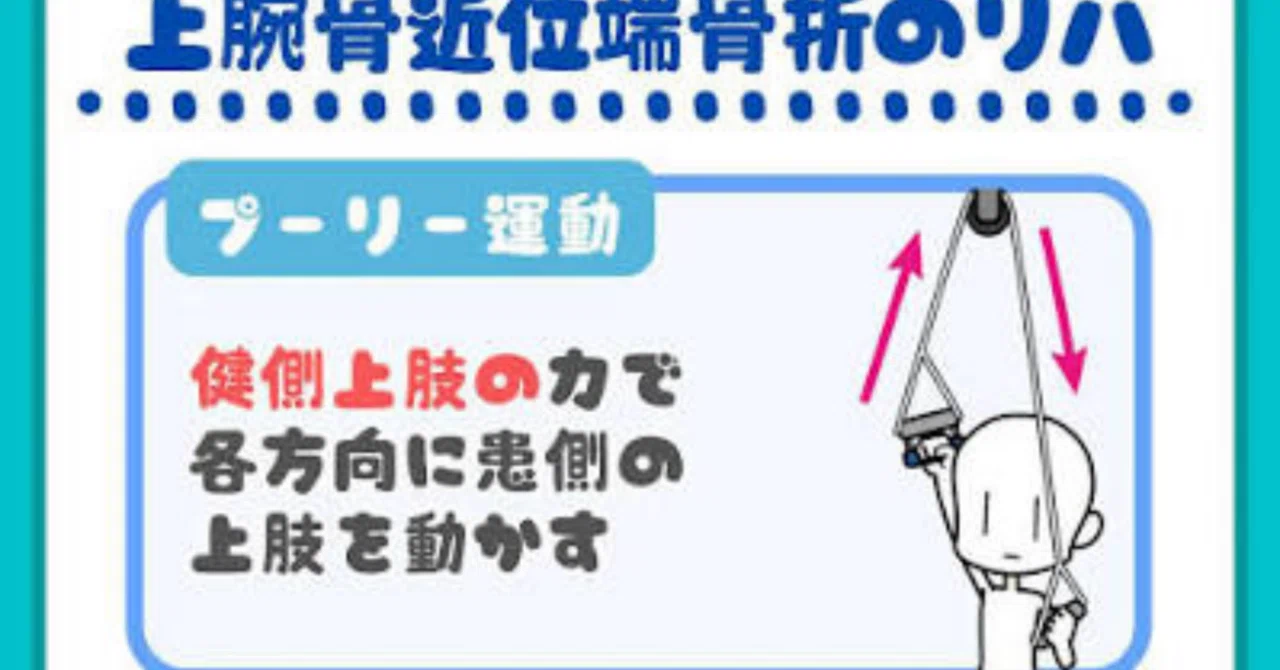
I have been using the machine to raise and lower my arm.
I have continued doing these exercises.
But eventually I began to wonder:
"Is this really the right thing for me?"
"How much will I actually recover if I continue doing this?"
"How much rehabilitation do I really need?"
I did not know the answers.
## Finally reaching a specialist
I therefore consulted an orthopedic doctor at Bethel Hospital.
I was then referred to Dogo Onsen Hospital and was able to see a specialist there.
The specialist told me:
"The stiffness is already quite significant. We should loosen it as soon as possible."
I was also told that rehabilitation three times a week would be desirable.
For the first time, I felt that I could finally see a path forward.
But in reality, the hospital did not have enough staff to provide rehabilitation as often as the doctor had recommended.
I was told that even once a week might be the most they could manage.
I was shocked.
"Can I really recover with rehabilitation only once a week?"
That was my question.
I do not want to blame the hospital.
Every hospital has its own circumstances.
Staff shortages are a reality.
But as the patient, I still have to figure out what I am supposed to do within those limitations.
That is what is hardest.
## When rehabilitation itself causes pain
I received rehabilitation on August 5.
For about thirty minutes, the therapist worked with me to increase my range of motion.
At the time, I was surprised and encouraged to realize, "My arm can actually move this much."
But afterward, the pain gradually became stronger.
When I told the doctor on August 10, he said that perhaps we had pushed a little too hard.
We therefore adjusted some of the exercises.
And now it is August 12.
Since last night, I have been unable to use the rehabilitation machine that I had been using regularly.
The machine raises and lowers my arm, but it has become too painful to use.
That was a little shocking for me.
"Something I was able to do yesterday is something I cannot do today."
How should I think about that?
Should I force myself to continue?
Should I rest for a while?
Should I reduce the amount of exercise?
I still do not have enough knowledge to make that judgment by myself.
## Trying harder and healing are not necessarily the same thing
Through this fracture, I am gradually learning something.
Rehabilitation is not simply a matter of trying harder.
Stopping everything because something hurts is probably not the answer.
But neither is forcing myself through pain simply because I believe that more exercise must be better.
What I need is:
the right exercises, at the right intensity, with the right amount of rest, according to the condition of my body.
The problem is that I do not yet know what "right" means for me.
That is why I want a specialist to teach me.
I am not asking someone simply to tell me, "Try harder."
What I want is something more specific:
"For your condition, this is how much you should do."
## Today, I made a phone call
Today, I called the hospital myself.
That took quite a bit of courage.
I may have been able to ask for advice and think things through beforehand, but when it comes to actually making the phone call, I am the one who has to do it.
Still, if I do not ask, I cannot know.
I want to know how often rehabilitation is actually provided during hospitalization.
How many sessions a day are possible?
Is rehabilitation available on weekends?
Would hospitalization really provide a greater benefit than outpatient rehabilitation?
Is it possible to receive rehabilitation three times a week as an outpatient?
If I continue my current rehabilitation, what kind of improvement might reasonably be expected after one month, two months, or three months?
I want to know these things.
If hospitalization would be the most effective option, I am willing to consider it.
But if hospitalization would not provide significantly more rehabilitation, then perhaps going to the hospital three times a week would be better.
And if even three times a week is impossible, then I want to know how I can make the best possible use of what is available to me now.
I am not simply asking someone to "cure me."
I want to receive treatment that I can understand and accept.
And I want to reach a point where I can honestly tell myself:
"I have recovered this much."
Of course, I do not expect my body to return exactly to the way it was before the fracture.
The bone has been broken.
So "exactly as before" is not my only goal.
But I do have a feeling inside me that says:
"I want to regain at least this much."
I want to work with a specialist to understand what "this much" can realistically mean.
## Right now, I am in the dark
Right now, I feel as though I am in the dark.
I do not clearly know what the right answer is.
Rehabilitation causes pain.
But if I do not move my shoulder, I worry about stiffness and contracture.
I have been told that three sessions a week would be desirable, but because of staffing limitations, once a week may be all that is possible.
And now even the rehabilitation machine I have been using has become too painful.
So I am trying to find out how I should live with my body at this stage.
But today, I made the phone call.
Because I did not know, I asked.
Perhaps that is like searching for a small light while standing in the dark.
## What I want to do from here
I do not have to fight this aggressively.
I can simply continue living my daily life, calmly, while doing what I can.
On days when the pain is strong, I can listen to my body.
If there is a day when I cannot do an exercise, I do not have to call that a failure.
And I can ask the specialists:
"What is my realistic goal for recovery?"
"How much rehabilitation do I need to reach that goal?"
"How much pain is acceptable during and after rehabilitation?"
I suffered a major fracture this time.
It was the first time in my life that I had experienced such a serious physical injury.
I may suffer another major injury someday, or perhaps I never will.
But I do not want this experience to end simply with the thought, "It was painful."
I have learned what pain feels like.
I have learned what it means when my body cannot move the way I want it to.
I have learned about the realities of medical care and staff shortages.
And I have learned that I have the courage to make a phone call and ask questions about my own body.
So for now:
I will neither rush my recovery nor give up on it. I will ask questions when I do not understand, and I will move forward together with my body.
I think that is enough.
Today, I am still in the dark.
But I made one phone call.
And that alone means that I am a little different from the person I was yesterday.
#LeftHumerusFracture
#BoneFracture
#ComplexFracture
#FractureRehabilitation
#Rehabilitation
#ShoulderRehabilitation
#Contracture
#LivingWithPain
#ListeningToMyBody
#RecoveringStepByStep
#MedicalJourney
#FacingRecovery
#LifeAfterInjury
#August122026
