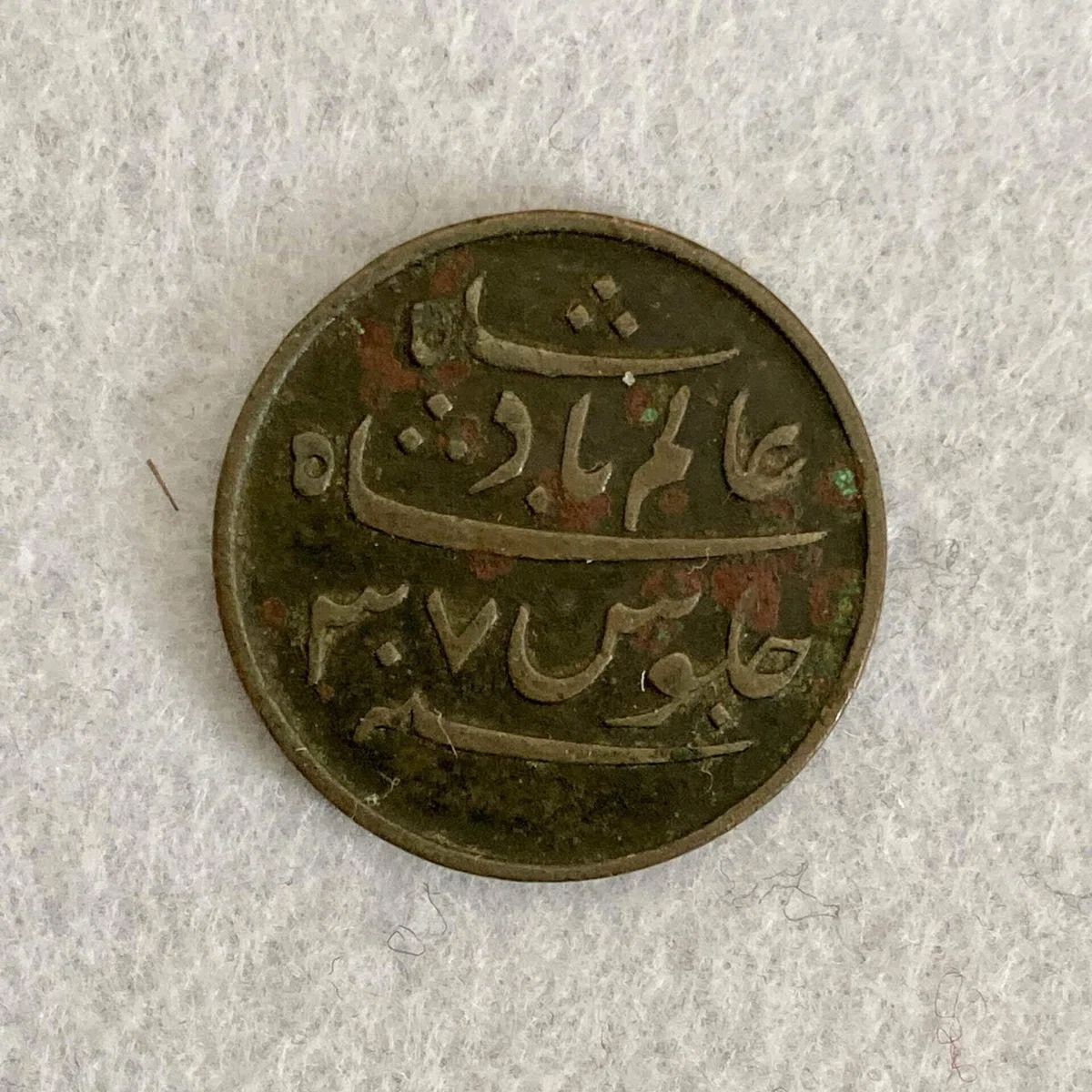
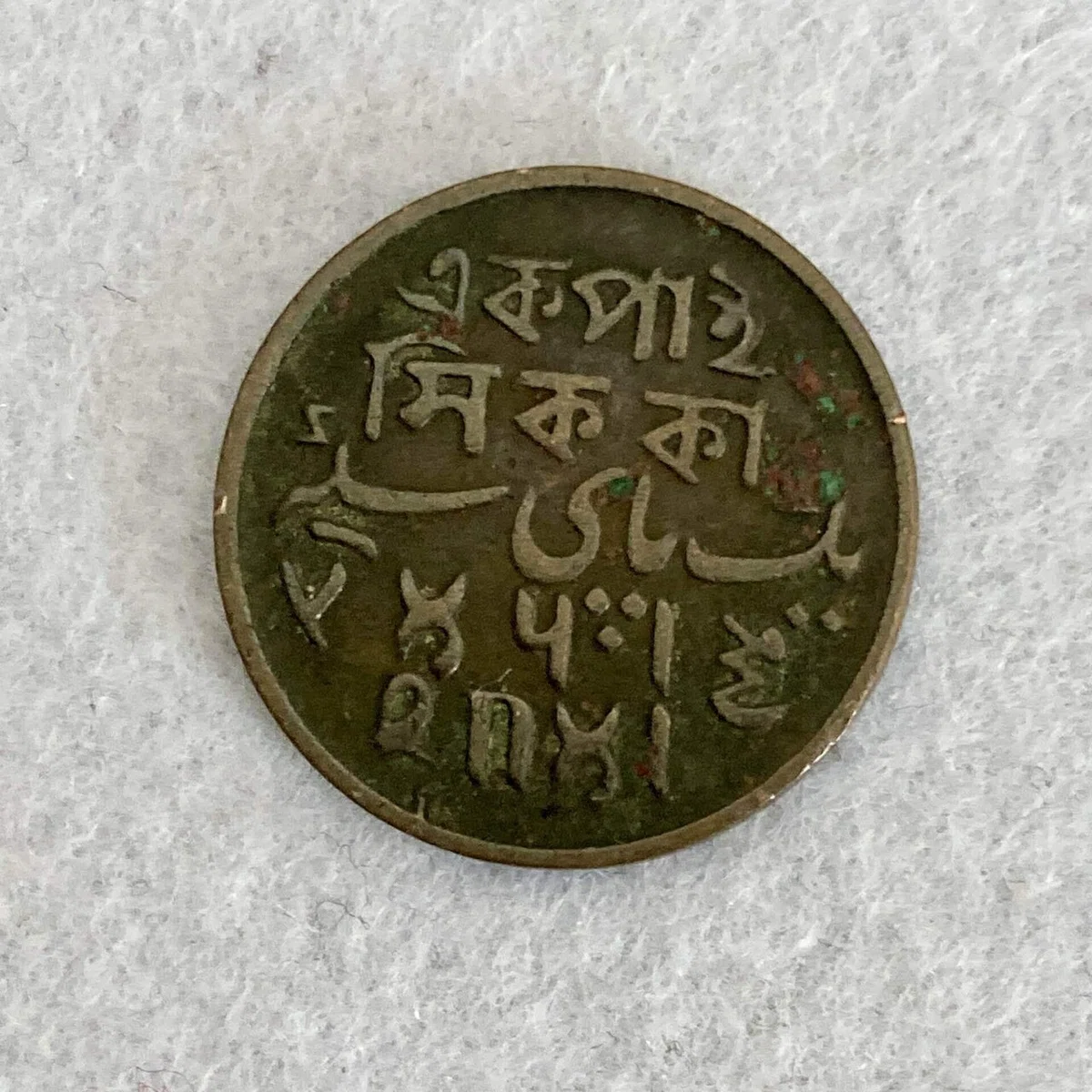
イギリス東インド会社(ベンガル管区Bengal Presidency)の 1パイス(Pice / Ek Pai Sikka)銅貨/British East India Company (Bengal Presidency) 1 Pice (Pice / Ek Pai Sikka) Copper Coin

イギリス東インド会社(ベンガル管区Bengal Presidency)の 1パイス(Pice / Ek Pai Sikka)銅貨/British East India Company (Bengal Presidency) 1 Pice (Pice / Ek Pai Sikka) Copper Coin年。 ムガル帝国皇帝シャー・アラム2世。(Shah Alam II)名義で1831年に鋳造。
KM#57 N#6658
この頃、やたらシャーアヤム名義で銅貨が発行されている。
イギリス東インド会社は1612年にムガール皇帝ジャハーンギールから貿易許可(ファルマーン)を得て、ベンガル地域(当時のベンガル・スバ)での活動を開始。しかし、ムガール帝国はアウラングゼーブ皇帝(在位1658-1707)の死後、内部抗争で弱体化。イギリス東インド会社はこの混乱を活用し、軍事力を強化。
1765年のプラッシーの戦いとブクサールの戦いでムガール皇帝シャー・アーラム2世の軍を撃破。イギリス東インド会社のロバート・クライヴがベンガル太守から徴税権を獲得しインド植民地化を推進。マドラス・ボンベイの両管区を統制した。インドの産業を破壊し、アヘンや綿花の原料供給地・市場へ変貌させた。1831年頃のムガール皇帝アクバル2世の支援要請をイギリス東インド会社は拒否、帝国の影響力はほぼ消滅。 1833年の特許状更新で商業活動が停止され、純粋な統治機関となった 1857年のインド大反乱(セポイの反乱)でムガール帝国は正式に終焉したが、この反乱により、イギリス政府は、東インド会社によるインド統治の限界を感じて、1858年8月2日、東インド会社が保有する全ての権限をイギリス国王に委譲させた。これによりイギリス東インド会社も終わり、英領インドになった。
1831. Minted in the name of Mughal Emperor Shah Alam II (Shah Alam II).
KM#57 N#6658
Around this time, copper coins were frequently issued in the name of Shah Alam II.
The British East India Company obtained a trade permit (farman) from Mughal Emperor Jahangir in 1612 and began operations in the Bengal region (then known as Bengal Subah). However, after the death of Emperor Aurangzeb (r. 1658–1707), the Mughal Empire weakened due to internal conflicts. The British East India Company exploited this chaos and strengthened its military power.
In the Battle of Plassey (1757) and the Battle of Buxar (1764), it defeated the forces of Mughal Emperor Shah Alam II. Robert Clive of the British East India Company obtained revenue collection rights (diwani) from the Nawab of Bengal, advancing the colonization of India. It brought the Madras and Bombay Presidencies under its control. The Company destroyed Indian industries and transformed the region into a supplier of raw materials (such as opium and cotton) and a market for British goods.
Around 1831, when Mughal Emperor Akbar II requested support, the British East India Company refused, and the empire’s influence virtually disappeared.
With the Charter Act of 1833, the Company’s commercial activities were terminated, and it became a purely administrative body.
The Indian Rebellion of 1857 (Sepoy Mutiny) marked the formal end of the Mughal Empire. Due to this uprising, the British government recognized the limitations of East India Company rule over India. On August 2, 1858, all powers held by the East India Company were transferred to the British Crown. This ended the East India Company, and British India (the British Raj) began