自動運転実用化、と言う事について南河内郡太子町で考えてみました。

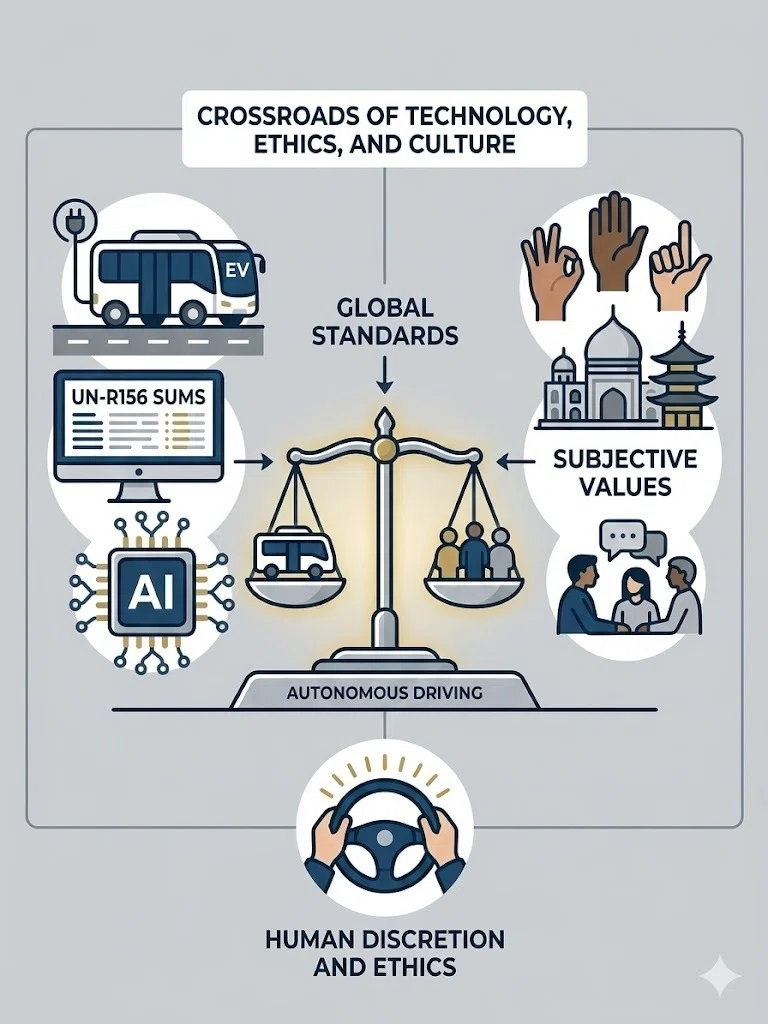
現時点での私のコメント「技術・倫理・文化の交差点」
(日経新聞2026年3月19日「自動運転実用化への道筋、上、必要な安全性、具体化が課題、小塚荘一郎学習院大学教授」 に基づいて考えました)
1. AIへの過信と「安全への熱意」の限界
安全技術の到達に向けた人間の執念や熱意は、すべてをAIのアルゴリズムに置換できるものではありません。AIは過去のデータから最適解を導きますが、未知の状況に対する「予見的守り」や、生命に対する「畏敬の念」に基づいた判断を 考え出す事は不可能です。自動運転技術を単なる「効率的な移動手段」とみなすのではなく、人間の安全度を高める情熱をどうシステムに 埋め込むかが問われています。
2. グローバル基準の策定と「主観」の衝突
自動運転の国際基準(UN-R156等)は存在しますが、その根底にある「倫理」や「モラル」の共通化は極めて困難と思われます。各地域の文化、宗教、交通マナーという「主観的な価値観」を無視したグローバル化は、地域社会に歪みをもたらすのではないでしょうか。共通の「枠組み」は必要ですが、その中身(挙動の意味付け)には、地域の声が反映される余地を残すべきです。
3. 「ヒヤリハット」の深層分析とアルゴリズムの壁
日本の生産現場で培われた「ヒヤリハット」の本質は、表面的な事象のカウントではなく、 背後に隠れた原因追求姿勢にあります。
課題: 現在のAI(ディープラーニング)は「相関関係(何が起きたか)」を見つけるのは得意ですが、「因果関係(なぜ多重の要因が重なったか)」を論理的に説明するのが苦手です。
提言: 単なるデータ量で勝負するのではなく、日本が誇る「なぜなぜ分析」のような 重層的に状況を考える深い洞察を、AIの監視系や評価系に組み込む手法を日本発の標準として提示できるのではないでしょうか。単にデータ量を競うのではなく、 人間的視点を込めた質の高い分析の勝負と言う方向性へ向きを変えるべきかもしれません
4. 低価格競争と安全の「透明性」への警鐘
安価を武器に市場を席巻しようとする他国製品や新興メーカーに対しては、慎重な監視が必要です。
リスク: コストカットが「ソフトウェアの更新管理(SUMS)」や「サイバーセキュリティ対策」といった、目に見えない安全管理体制の簡略化に繋がっていないか。
対策: 「安さ」の代償として、事故時のデータ開示拒否やブラックボックス化が許されるべきではありません。日本市場で展開する以上、等しく厳格なデータ提出と事故調査への協力を義務付けるべきです。
5. 【付け加えるべき視点】「責任の所在」から「救済の迅速化」へ
議論を補完する要素として、「無過失責任」の導入検討が挙げられます。 自動運転で事故が起きた際、誰が悪いか(刑事責任)を争っている間に被害者が放置されるのは最悪のシナリオです。「誰のせいか」を追求する仕組みと並行して、原因究明を待たずに被害者を救済する、自動運転専用の保険制度や補償基金の整備も、社会的な安心感(共通認識)を作るためには不可欠です。
まとめ
「機械が悪いでは済まない」という直感は、テクノロジーが人間社会に溶け込むための最終的な「関門」を示しています。技術は進歩しても、それを使う側の「人間の裁量と倫理」がそのハンドルを握り続けるべきである、という結論は、2026年の今であるから忘れてはいけない視点だと思います。
Autonomous Driving: The Crossroads of Technology, Ethics, and Culture
This commentary explores the challenges of implementing autonomous driving, based on an article by Professor Souichirou Kozuka (Nikkei, 19 March 2026).
1. Limits of AI and Human Passion for Safety;
Human dedication to safety cannot be fully replaced by AI algorithms. While AI finds optimal solutions from past data, it cannot replicate a human’s "proactive defence" against unknown risks or a deep respect for life. We must ask: how can we embed this human passion for safety into the system, rather than viewing autonomous driving merely as an "efficient means of transport"?
2. Global Standards vs Subjective Values;
Although international standards like UN-R156 exist, unifying ethics and morals globally is extremely difficult. Local cultures, religions, and driving manners represent subjective values. Ignoring these in favour of a forced globalisation could harm local societies. While we need a common framework, we must leave room for local voices to define the "meaning" of a vehicle’s behaviour. Regarding the question of whether China is within the circle of UN-R156, a critical issue remains: whilst they may draw inspiration from the substance of the rules, they are not playing under the same referee—that is to say, they do not participate in the system of international mutual recognition."
3. "Hiyari-hatto" and the Limits of Algorithms
In Japanese manufacturing, the "Hiyari-hatto" (near-miss) concept is about investigating hidden causes, not just counting incidents.
The Problem: Current AI is excellent at finding correlations (what happened) but struggles to explain causation (why multiple factors overlapped).
The Proposal: We should not compete solely on data volume. Instead, Japan could lead by proposing a standard that incorporates deep, multi-layered insights—like the "5 Whys" analysis—into AI monitoring and evaluation systems.
4. Low-Cost Competition and Transparency;
We must carefully monitor emerging manufacturers using low prices to dominate the market.
The Risk: Cost-cutting might lead to simplified safety management in areas like Software Update Management Systems (SUMS) or cybersecurity.
The Countermeasure: Low prices should never justify "black box" systems or a refusal to share data after accidents. Any manufacturer in the Japanese market must be legally required to provide data and cooperate with accident investigations.
5. From Legal Liability to Rapid Victim Support;
To build social trust, we should consider "no-fault liability". It is a worst-case scenario if victims are left without help while lawyers argue over criminal negligence. Alongside determining fault, we must establish dedicated insurance schemes or compensation funds to provide immediate relief to victims.
Summary;
The intuition that "we cannot simply blame the machine" is the final barrier to technology’s integration into society. Even as technology advances, the "human discretion and ethics" of the user must remain at the steering wheel. As of 2026, this perspective remains more vital than ever.