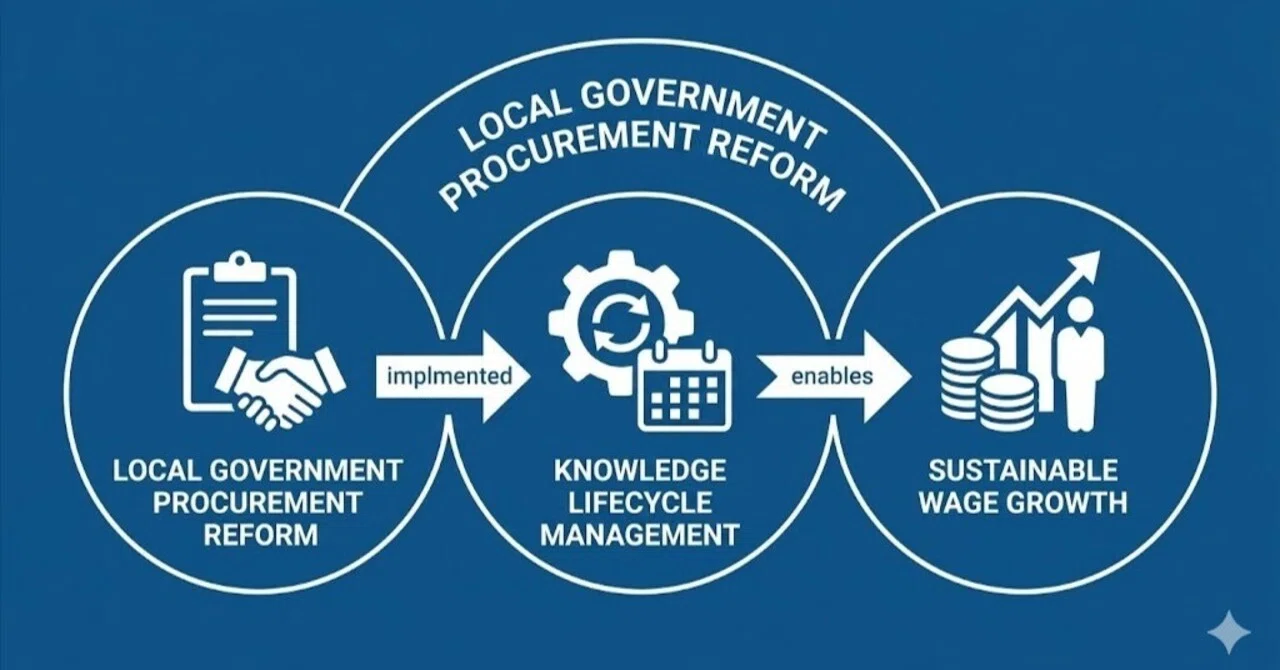
「地方自治体の発注適正化と賃上げ支援」について南河内郡太子町で考えてみました。

20260320 現時点での私のコメント「地方自治体の発注適正化と賃上げ支援」
日経新聞2026年3月20日「給食やごみ収集の発注額、自治体に引き上げ促す、交付税1000億円枠創設、企業の賃上げ支援」を読んで考えました。
地方自治体の発注適正化と賃上げ支援に関する問題点
今回の交付税1,000億円枠の創設に伴う「予備費(資金枠)」の設定は、 関連する業務の委託を受ける企業の賃上げを直接的に後押しする暫定措置として、心強い施策だと感じます。しかし、将来予測をめぐる環境条件は絶えず変動しており、従来の「過去の実績と独特の『勘』」に頼った単年度予算主義による配分には、限界に達しつつあるのではないでしょうか。
2. 知見に基づく契約レビュー(見直し)と「更新型」契約モデルの必要性
今後は、 落札時の契約の実行状況とその事業の効果、及び、実際の賃上げ実績を含めたや業務維持の実行状況を継続的にレビュー(検証)する仕組みが必要と考えます。ここで課題となる守秘義務や知的財産の取り扱いについて、条件を盛り込んだ「動的な契約管理」の導入を議論すべきだと考えます。
契約の有期性と更新: 守秘義務やデータ利用の範囲に明確な期限を設けること。
知見のライフサイクル管理: 一定期間ごとに内容を見直し、陳腐化した情報を「 圧縮」「消去」または「アーカイブ」するプロセスを契約に組み込む。これにより、自治体が限られた条件の中でも、官民が対等かつ透明性の高い環境でより「合理的な判断」を下せるようになると思われます。
3. 人材育成とAIガバナンスの調和について
これらの仕組みを実際に運用するのは地方公共団体の職員の皆様であり、外部専門家と連携しながら知見を吸収するローカル人材の育成が必要だと思います。 ここで重要な視点は、「人間がさばききれる情報量」と「AIが取り扱おうとする膨大なデータ量」の圧倒的な乖離(差)を正しく認識することです。AIによる効率化は避けられませんが、情報の「価値」や「倫理的な妥当性」を最終的に判断する責任までAIに丸投げすることはできないでしょう。人間が処理できる限界を認めた上で、AIの仕組みを正しく認証し情報を制御する高度な管理能力が、自治体職員に求められる専門性になると思います。
結論
自治体が制限のある条件の中で、データに基づき、かつ柔軟に予算配分を行うこと。この「EBPM(Evidence-Based Policy Making (証拠に基づく政策立案」)の実装」が、物価高を上回る持続的な賃上げを全国へ広げるための鍵となると思います。
Reflecting on Local Government Procurement Reform and Wage Growth Support
Following the Nikkei report on 20 March 2026, regarding the 1000 billion yen allocation to encourage local authorities to raise procurement prices for public services, I have developed the following observations.
1. Challenges in Procurement and Wage Support
The establishment of this special funding framework is a heartening interim measure to support wage increases for private contractors in sectors such as school meals and waste collection. However, environmental conditions are in constant flux. The traditional approach to budgeting—relying on a "single-year system" governed by past precedents and intuitive guesswork—is rapidly reaching its structural limits.
2. The Need for Knowledge-Based Reviews and "Renewable" Contract Models
We must implement a mechanism to continuously review the execution of contracts and their actual socio-economic impact, specifically monitoring whether wage increases are truly being realised. To facilitate this, I propose the introduction of "Dynamic Contract Management" that addresses confidentiality and intellectual property through:
Defined Terms and Renewals: Establishing clear expiry dates for non-disclosure agreements and data usage rights.
Knowledge Lifecycle Management: A process embedded in contracts to periodically review information. Obsolete data should be "compressed", "deleted", or "archived".
Such a framework would allow both the public and private sectors to make more rational decisions within an environment of transparency and mutual respect, even under restrictive conditions.
3. Harmonising Human Talent with AI Governance
The practical operation of these systems rests with local government officials. It is essential to cultivate "local talent" who can absorb expertise through collaboration with external specialists.
A crucial perspective here is recognising the vast disparity between the volume of data humans can process and the astronomical scale of data handled by AI. Whilst AI-driven efficiency is indispensable, the responsibility for final judgements regarding "value" and "ethical validity" cannot be abdicated to an algorithm. Acknowledging the limits of human processing, the new professionalism for civil servants must centre on the ability to authenticate AI systems and exercise sophisticated control over information.
Conclusion
The implementation of Evidence-Based Policy Making (EBPM)—where local authorities allocate budgets flexibly based on data—will become one of the keys to expanding sustainable wage growth across the nation.
