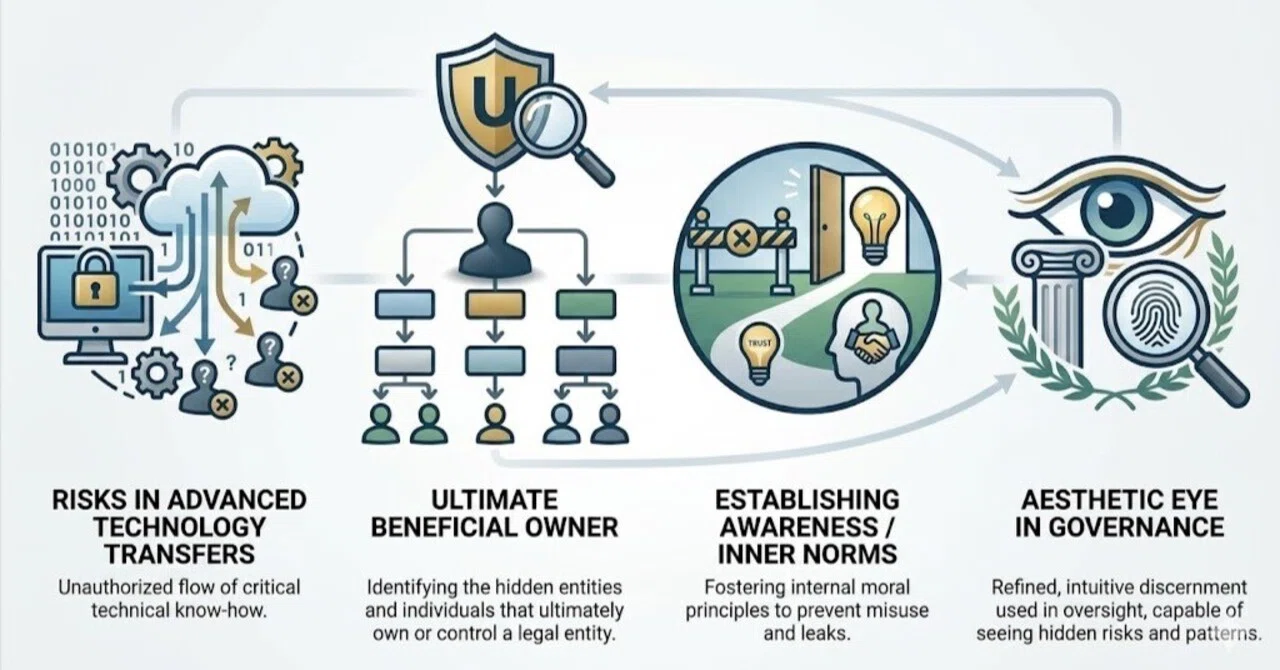
先端技術流出リスク判定について 南河内郡太子町で考えてみました。

20260411 日経朝刊 先端技術流出リスク判定 厩舎の海外関係把握 国AI 新興 信頼性を確保
20260411、 現時点での私のコメント「経済安全保障と「知のKYC」」
日経新聞朝刊2026年4月11日「先端技術流出リスク判定 厩舎の海外関係把握 国AI 新興 信頼性を確保 」を読みまして感じた問題です。
経済安全保障と「知のKYC」:人文学的素養が防ぐ技術流出の深層
昨今の経済安全保障を巡る動き、特に先端技術流出リスクをAIで判定するシステムの導入の文脈においては、リスク管理のあり方が大きな転換点を迎えていることが示唆されていると考えます。
1. 金融から研究へ:「UBO」特定の波及
国際金融の実務において徹底されつつあるKYC(本人確認)や、「究極の受益者(Ultimate Beneficial Owner = UBO)」の特定という概念が、今や「研究」の聖域にまで及んでいます。 KYC(Know Your Collaborator:共同研究者を知る)という新たな視点・角度の導入と言えるでしょう。インドでの隣接国投資規制やNGOの口座管理の厳格化に見られたような、「資金の背後にある実体」を洗う厳格さが、そのまま「研究者およびその背後にある組織」を洗い出す分野へと波及していると見るべきでしょう。
2. 人文科学、特に言語学が「防諜」の武器となる
3億本もの論文を比較調査し、リスクを可視化するAIの背後には、単なる科学的データ処理を超えた、人文学的なアプローチが不可欠です。
意味論・記号論的解析: 専門用語の巧妙な言い換えや、多層的な組織構造の中に隠された「真の意図」を読み解きます。
文体論(スタイロメトリー): 論文の書き癖や論理構成という「思考の癖」から、所属を偽る個人の特定や、文脈の裏側にある違和感を見抜くこと。 こうした「文脈の不自然さ」を察知する感性は、科学的知見もさることながら、言語学や文学を読み解く能力のような、人文科学的な知識があってこそ機能するものだと思われます。
3. 人間不信の懸念と「内なる規範」
しかし、こうした調査をあまりに徹底しすぎると、社会全体が人間不信に陥ってしまうのではないかという懸念も拭えません。 外側からの監視(ガバナンス)を強化するだけでは、「いたちごっこ」を終わらせることはできません。重要になるのは、個々の人間が持つ「Inner norms(内なる規範)」であり、それを育む土壌としての教育ではないでしょうか。
4. 教育の中で培うべき「感性」とは
これからの学校教育、とりわけ初等教育において、単なる知識の習得以上に、人間的な豊かな感性を培うことが求められていると感じます。
「違和感」を大切にする直感: 表面的に整えられた言葉の裏に潜む、 不自然さ、不誠実さや不整合を察知する審美眼。
文脈(コンテクスト)への想像力: 自分の発した言葉や技術が、世界のどこで、どのような文脈で利用され得るかを俯瞰する想像力。
信頼の価値の理解: 「言葉は人を裏切らない」と言える関係を築くために、自らが誠実であることの強さを知る道徳的感性。
結局のところ、複雑な問題を統治(ガバナンス)する中核的な「頭脳」とは、AIのアルゴリズムに任せきりにするのではなく、人間が培ってきた「洞察の深さ」そのものであるべきではないでしょうか。
Economic Security and 'Know Your Collaborator': The Humanistic Shield
The Nikkei’s report on AI systems designed to detect risks in advanced technology transfers signifies a major turning point in global risk management. This evolution mirrors the world of international finance, where 'Know Your Customer' (KYC) and the identification of the 'Ultimate Beneficial Owner' (UBO) are now mandatory. We are transitioning into an era of 'Know Your Collaborator', applying the same rigorous scrutiny used for Indian NGO funding or cross-border investment to the complex networks behind academic research.
To be effective, this new 'counter-intelligence' must look beyond raw data; it requires the profound analytical tools of the humanities. AI can now scan hundreds of millions of papers, but it is through semantics, semiotics, and stylometry that we truly unmask 'patterns of thought'. These linguistic fingerprints allow us to detect the 'hidden intent' behind technical jargon and identify individuals who disguise their affiliations. Such an intuitive grasp of 'contextual dissonance' is a skill rooted in philological and literary study rather than mere scientific data.
However, we must be wary. Over-surveillance risks plunging society into a state of chronic mistrust. To prevent a futile 'cat-and-mouse' game between monitors and evaders, we must prioritise the cultivation of 'Inner norms' through education. From primary school onwards, we should foster a moral 'aesthetic eye'—one capable of sensing insincerity, imagining the global consequences of one’s work, and cherishing the intrinsic value of trust. Ultimately, the 'brain' of effective governance should not be an algorithm, but the refined depth of human insight and integrity.
