Californium is a man-made element that was first produced at the University of California Radiation Laboratory at Berkeley by physics researchers Stanley Thompson, Kenneth Street, Albert Ghiorso, and Glenn Seaborg in February 1950. It was made by bombarding microgram quantities of curium with helium ions in the Berkeley 60-inch cyclotron. Californium was discovered almost simultaneously with berkelium. The discoverers named the new element after the university and the state. This was a break from the convention used for elements 95 to 97, which drew inspiration from how the lanthanide elements directly above them in the periodic table were named.
Californium
98
251
Cf
Californium
Element Stats
Select a temperature unit to update boiling and melting point values.
Physical
| Property | Value | Property | Value |
|---|---|---|---|
| Appearance | silvery | ||
| Classification | Actinides | Density | 15.1 g/cm³ at STP |
| Boiling Point | 1743 K | Melting Point | 1173 K |
Atomic
| Property | Value | Property | Value |
|---|---|---|---|
| Atomic Number | 98 | Atomic Mass | 251 |
| Van Der Waals Radius | 245 | Atomic Radius (empirical) | -- |
Electronic & Chemical
| Property | Value | Property | Value |
|---|---|---|---|
| Electronegativity | 1.3 | Electron Affinity | -97.31 kJ/mol |
| Electron Configuration | 1s2 2s2 2p6 3s2 3p6 4s2 3d10 4p6 5s2 4d10 5p6 6s2 4f14 5d10 6p6 7s2 5f10 | ||
| Oxidation States | 2, 3, 4 | ||
| Ionization Energies | Showing all 1 ionization energies.
| ||
History
Properties
Californium is, like most actinides, a silvery-white metal. It is pliable and easily cut with a razor blade, but don’t—it’s radioactive. Californium metal can act like a magnet. It forms alloys with lanthanide metals, but little is known about those materials. It is extremely radioactive. Californium slowly tarnishes in air at room temperature.
Uses
Californium is one of the few actinides that has practical applications. It is used to help start up nuclear reactors and is used as a source of neutrons in neutron diffraction and neutron spectroscopy. It is also used in treatments of certain cervical and brain cancers.
Compounds
Californium forms water-soluble chlorides, nitrates, perchlorates, and sulfates. It precipitates as a fluoride, oxalate, or hydroxide. Compound colors include yellow, dark violet, yellow green, bright green, emerald green, lemon yellow, pale green, black brown, and just plain green. Californium is the heaviest actinide to exhibit electron sharing, as in californium borate. Only a few of the compounds have been studied. These compounds include californium oxide, californium trichloride, and californium oxychloride.
Forms
Californium exists in two crystalline forms under normal pressure and one crystalline form that exists under high pressure.
Californium has 20 known isotopes from mass number 237 to 256. Half-lives range from 898 years to less than 20 minutes. The most stable isotope is californium-251 (898 years). Californium is formed from the beta decay of berkelium-249.
Sources
Californium can be found in traces near facilities that use it in mineral prospecting and in medical treatments. It can also be found in radioactive dust collections from atmospheric nuclear weapons testing fallout. It is believed that it occurred naturally in the Oklo natural nuclear reactor but is no longer present.
Fun Facts
I had no idea it would be so much, I won’t pay!
The global production rate of californium is only half a gram each year, and a single gram of this element would cost about 27 million dollars!
I’m not saying it’s aliens, but…
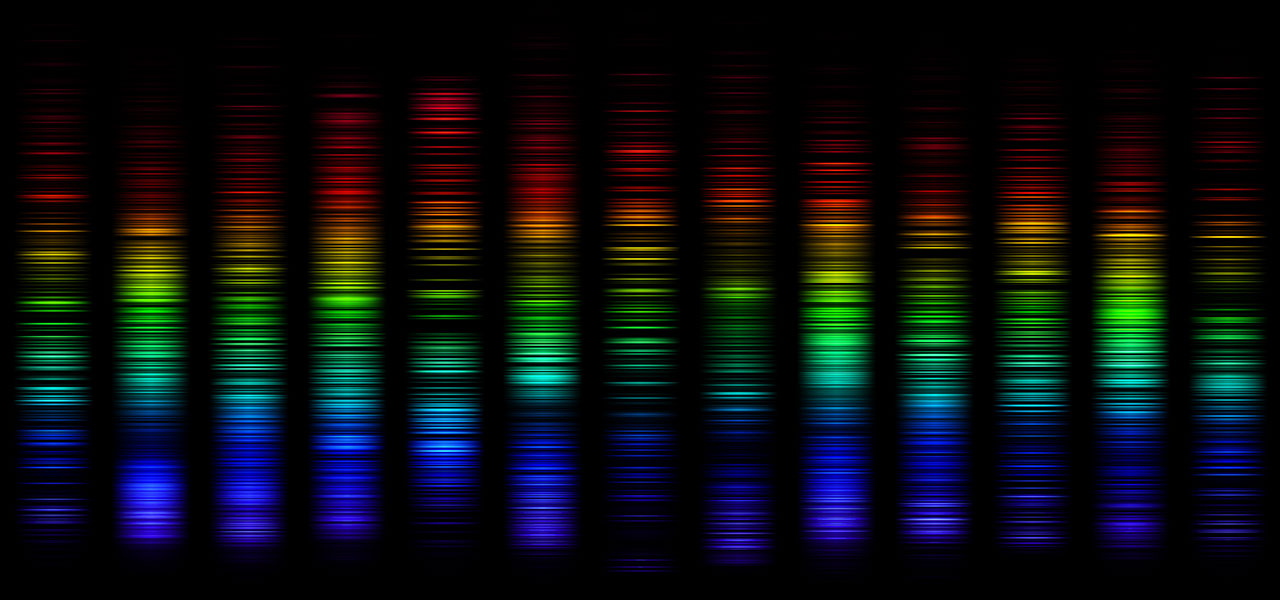
In 2008, spectral lines of californium were found in a star called Przybylski's Star about 356 light-years away from Earth. This is very unusual, because californium is considered a synthetic element and doesn’t occur naturally on Earth. Scientists have a few theories. It could have a neutron star companion, constantly bombarding the star with neutrons like the particle accelerators we use to make these synthetic elements on Earth. Or maybe it’s from the decay of hypothetical undiscovered heavy elements, like element 120. Or maybe it’s a sign of intelligent life. We just don’t know.
