Banned in Britain

1612
 

On December 3, 2025, a young British man, Henry Nowak, was murdered in Southampton, about 80 miles southwest of London. Henry was stabbed five times by Vikrum Digwa, a Sikh man. When police came upon the scene of the stabbing, they handcuffed Henry and ignored the young man’s pleas that he had been stabbed and needed help. The police dismissed Henry’s pleas altogether, believing that he had somehow insulted the Sikh man. Nowak died shortly after the police handcuffed him.

Some five months later, the video of the arrest and death of Nowak was finally released. The young man was celebrating his first semester at Southampton University, and his death while in police handcuffs has sparked outrage throughout Britain. The circumstance displays a stark example of Britain’s two-tier policing that turns a blind eye to rampant crime from supposed oppressed minority groups in Britain and instead targets law-abiding and peaceful Brits.

While several British outlets have reported on this murder and the police’s response to it, Mayar Tousi was informed that the British government has blocked his TousiTV report on it (though the video is still available for viewing outside the UK). The video below shows the police bodycam footage of the police response/non-response to the stabbing of Henry Nowak, as well as a very heated response from Tommy Robinson and a response from Reform Leader Nigel Farage.

To the Framers, happiness didn’t just mean fun. It meant the pursuit of a good life through hard work, discipline, and constant self-assessment. In Episode 2, National Constitution Center CEO Emeritus Jeffrey Rosen, attorney and author Timothy Sandefur, and Supreme Court advocate Alan Gura tell us what the “pursuit of happiness” meant, how that promise has been enshrined in the Constitution, and how the Supreme Court has all but gutted it in one of the most despised decisions of all time: The Slaughterhouse Cases.

Richard Epstein weighs in on war, deterrence, and the limits of modern military strategy. Drawing lessons from World War II, Vietnam, Gaza, and the current conflict with Iran, Epstein argues that wars are either fought to win or not fought at all. He contends that America’s fear of escalation, reliance on limited objectives, and preference for negotiated settlements have produced strategic drift rather than decisive victory. Professor Epstein also delivers a sharp critique of Donald Trump’s handling of Iran, defends the logic of unconditional surrender, and explains why he believes half-measures can be more dangerous—and more costly—than total commitment.

Ben can’t do pull-ups anymore, so it’s a great time to talk to Admiral William McRaven. The guys talk about the fine line between swagger and arrogance, the importance of clear communication, and the way McRaven built his teams of Navy Seals. Lots of conversation about failure as a teacher and McRaven’s top-5 must-read book recommendations.

Show Notes:

Remembering the 200th

2011
 

I’m so old that I was beyond childhood at our country’s 200th birthday. I was a young, cynical grown baby boomer who thought all the hoopla was a little overdone. We all watched just three TV networks back then (four if you counted PBS, which was new and not widely watched). The bicentennial was touted and celebrated by all four starting in January, and the hype slowly built to a climax on the 4th.

I spent the 4th at my folks’. They were hosting a block party, something they had never done before. The driveway was filled with picnic tables. The cleaned-out garage contained tubs of ice and soda, the keg, and our ping pong table masquerading as a red, white, and blue buffet table. The front yard had four or five grills operating.  

The Battle of Seven Pines. The Most Consequential Days of the Civil War. May 31 – June 1, 1862

75167
 

The Battle of Seven Pines (or Fair Oaks, depending on the account), part of the Peninsula Campaign, marks one of the most consequential days of the American Civil War.  Confederate Commander of the Army of Northern Virginia, Joseph E Johnson, was severely wounded.  Jefferson Davis appointed his own military advisor, Robert E Lee, as Johnson’s replacement.

The battle could have been, should have been, a resounding Confederate success.  Union General George McClellan was making a methodical push towards Richmond, moving east to west up the Virginia Peninsula, his army astride the Chickahominy River.  Three of McClellan’s five corps sat on the north bank.  Two Corps sat on the south bank.  What Southerners knew, which McClellan didn’t, was that the Chickahominy ran high in the Spring and the two corps on the southern side of the river were nearly isolated from the rest of the Union Army.  Meanwhile, all of Johnson’s strength was south of the river.  Johnson sought to concentrate his forces against the Union forces south of the river and destroy them before Union assistance could cross the river with support.  It was a solid idea.   

Quote of the Day: June 1, 2026

79
 

You know, when you’re young you think you always will be. As you become more fragile, you reflect and you realize how much comfort can come from the past.

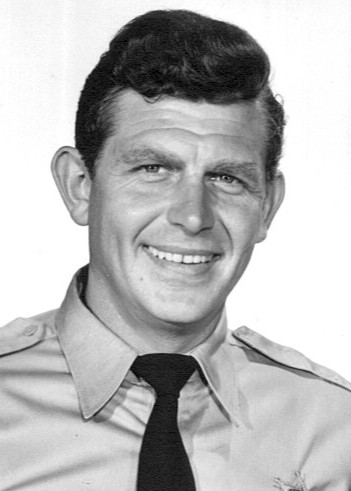
Today’s quote comes from the man who portrayed both Andy Taylor, America’s favorite 1960s small-town sheriff from 1960-1968, and Ben Matlock, America’s favorite corny country lawyer from 1986-1995.  Andy Griffith, who died in 2012, would have been 100 years old today, June 1, 2026.

Food Allergies and My Ancestors’ Lousy DNA Legacy

106
 

I’m writing this as I have a so-so gluten-free pizza in the oven alongside my husband’s Screamin’ Sicilian pizza with extra pepperoni.  I discovered my serious food allergies later in life after years of being rushed to the emergency room, or passing out on boats, planes and while driving.  No doctor steered me in the right direction.  It was a lightbulb moment each time, after experiencing great misery after eating something I was allergic to.

I started to realize a connection to food after several events.  The irregular heartbeat got to the point where my physician at the time fitted me with a heart monitor to record my beats for a few days.  He said I may need a procedure.  Really!?  I was in my forties.

Elections only work when deciding unimportant questions

910341
 

I’ve always been more interested in internecine debates.

Consider two people who strongly disagree about EVERYTHING.  They really can’t debate anything.  If their opinions are that polarized and inflexible, they’ve probably converted their ideology into their identity, which makes even reasonable questions seem like vicious personal attacks.  And they respond accordingly.  So their efforts at debate will end up being, best-case scenario, stupid.  Or, worst-case scenario, violent.  Neither is interesting to me.

I think this partially explains why elections only work when deciding unimportant questions.  If most citizens agree on most things, but seek consensus on, say, how much tax money to spend on schools, then that election can be a useful tool to guide public policy.  But if the citizens have divided themselves into two antagonistic groups who agree on almost nothing, and then we have an election regarding the future of Western Civilization, then that election almost can’t be helpful.

Speed Reading

1710
 

Does anyone remember that? It was a fashion in the 1970s. (And you thought you already knew them all!) There had been perceived, by educators or maybe just by people who deliver guest lectures at business schools, two problems with books: they were long and they didn’t always have pictures. In high school we had the option of taking a mini-course in speed reading. Which I did, though I don’t recall the technique.

But I am thinking of it now because, speaking of the 1970s and also fashions, I have been grunting through John Updike’s novel The Coup. It occurred to me that this book ought to be ideal for speed reading. Not much happens in it; the characters hardly develop; the point of the story seems simply to exist, not to convey information, and certainly not to entertain. No buildup is apparent; no climax is promised. That the story was told at all may be paramount. If I just sweep through the pages, can I confirm this? It is almost certainly what the author wanted most for his readers to get.

When Even the Winners Lose

86199
 

The sesquicentennial of George Armstrong Custer’s campaign for the Democratic nomination for President in the 1876 election is upon us. It ended as successfully as Joe Biden’s 2024 run, with Custer and his command dead at Little Bighorn.

Vengeance: The Last Stands of Custer, Crazy Horse, and Sitting Bull, by Tom Clavin, reappraises the battle. It examines Little Bighorn in its totality, including its impact on all participants, white and Indian.

Fought June 25–27, 1876, the battle (also called Custer’s Last Stand) pitted the combined Lakota Sioux, Northern Cheyenne, and Arapaho tribes against the United States Army’s 7th Cavalry Regiment. It was the worst defeat the US Army suffered during its Indian Wars.

Reflections of Arlington on Memorial Day

208
 

Memorial Day marks the beginning of summer, but more importantly, it is a time to honor those who gave their lives in service to our country. Every Memorial Day, I go to Arlington National Cemetery, and I would recommend the experience to everyone at least once.

To be clear, I do not go to the Tomb of the Unknown Soldier (which I highly recommend as well). I go to Section 60. Here lie many of those killed during the Global War on Terrorism.  As you walk, you’ll notice coins resting on many of the headstones. Most visitors pass by without knowing their meaning. A penny means someone visited. A nickel means you attended boot camp together. A dime means you served together in some capacity. A quarter signifies that you were there when that service member died. They are small tokens, but they speak volumes. Without a word being spoken, they tell families that someone still remembers, that someone came back, and that their loved one is not forgotten. I go each year to visit Bryan Black, a teammate of my son, who was killed in Niger in 2017, along with three others, when their Special Forces team was attacked by a force that vastly outnumbered them. I have heard firsthand accounts that none of them should have survived that day. I visit Bryan for a number of reasons, not the least of which is gratitude that I am not visiting my son’s grave.

Seattle’s Foolish Battle Against Reality

138296
 

Looks like another “Summer of Love” is setting up for the progressively virtuous city of Seattle.  The weather’s improving, and the bullets are flying.  It’s not exactly what Irving Berlin had in mind when he wrote, Nothing but blue skies from now on.  On the other hand, if you inhabit Bluesky, the leftist social media platform, your attitude about Seattle’s current crime wave is likely, nothing to see here.

Residents of Seattle’s Aurora Avenue corridor are particularly upset after a recent gun battle between, presumably, rival gang members.  They fired as many as forty rounds at each other from opposite sides of Aurora Avenue, so it must have been a pretty serious beef.  And this is how beefs are commonly settled in lightly policed, modern progressive cities where they just don’t want to have to put any more black and brown people in prison.  So the bullets fly and innocent bystanders best get out of the way.

Missing the Sunday Paper

2312
 

This is today’s San Antonio Express-News print edition.  We started home delivery in 1987 when we moved to a San Antonio suburb (also the competing San Antonio Light, long since closed).  Some years back, we converted to a digital subscription with a paper copy on Sundays only.  When we moved to this home in 1997, the newspaper delivery guy would spend an hour in our neighborhood, but nowadays he is in and out in ten or fifteen minutes.  The Sunday paper back in the day was enormous.  The ad sections on Sunday and sale flyers were bigger than the rest of the paper.  The paper is also physically slightly smaller and the paper thinner than old school newsprint.

I know the rise of the internet killed daily papers all over the place, but it’s sad to see them go.  My wife was working an EMS shift a couple of years ago and was sitting in the break room with the newspaper spread out on the table.  Another paramedic (about 25 years old) walked in and said he had literally never seen someone read a newspaper.  RIP.

Quote of the Day – The Man in the Arena

138
 

It is not the critic who counts: not the man who points out how the strong man stumbles or where the doer of deeds could have done better. The credit belongs to the man who is actually in the arena, whose face is marred by dust and sweat and blood, who strives valiantly, who errs and comes up short again and again, because there is no effort without error or shortcoming, but who knows the great enthusiasms, the great devotions, who spends himself in a worthy cause; who, at the best, knows, in the end, the triumph of high achievement, and who, at the worst, if he fails, at least he fails while daring greatly, so that his place shall never be with those cold and timid souls who knew neither victory nor defeat.
-Theodore Roosevelt

I first came across this quote when I was in my late 20s. I had just had a technical presentation shredded apart by a NASA manager whom I would later learn was famous for his ruthless criticisms of others’ work. (In his humble opinion, his work was technically impeccable. Although others disagreed, they kept silent because they were his employees. He was truly a legend in his own mind.)

In his powerful second appearance on The Dave Carter Show, Panama City native and leading Republican candidate Keith Gross joins Dave for a no-holds-barred conversation about his bid to represent Florida’s 2nd Congressional District. A self-made businessman, attorney, and U.S. Army National Guard veteran, Keith is funding his own campaign and has boldly pledged to donate his entire congressional salary to local private charities if elected. This move severs the financial puppet strings that control so many in Washington and at home, ensuring he answers only to the people of the Florida Panhandle—not special interests in D.C. or the local good ol’ boys network.

Keith shares his common-sense America First vision on the issues that matter most: securing the border and enforcing immigration laws, restoring American energy independence, fighting inflation and skyrocketing costs, reducing crime, and putting working families first. As a proven job creator who rose from a single-parent home through grit and entrepreneurship, he stands with the 80% of voters who are tired of politics as usual. With the primary approaching on August 18, 2026, and strong polling numbers against a crowded field, this episode dives deep into why Keith represents a genuine threat to the old order.

Why Cannot People Shut Up?

2013308
 

Criminals get caught when they brag. They seemingly cannot help it.

All these “hidden camera” interviews where government workers or politicians let the cat out of the bag to a perfect stranger over a drink (with perhaps some sexual attraction thrown in for good measure) are pretty much the same thing. Look at all the leaks to journalists by people whose job it is to keep a secret, yet are somehow incapable of doing so.

QoTD: Socialism Brings Servitude

2912148
 

“Democracy and socialism have nothing in common but one word, equality. But notice the difference: while democracy seeks equality in liberty, socialism seeks equality in restraint and servitude.” –Alexis de Tocqueville

We live in times where many believe that it’s important to be equal to everyone else. In America, we were proud to settle for the goal of equality of opportunity; everyone could grow and prosper as much as they chose, if they were willing to do the hard work. It seemed like an honorable and achievable goal.

Lots and lots of burning questions dominate the news. Do we need a $250 bill, and what or who should be on it? Mamdani flexes his communist urges in NYC, so what could possibly go wrong? And can a state tax a “slush fund” at 100%? James and Charles have thoughts.

But the question we really want an answer to is, “Do we have a deal with Iran or not?” To answer that, we welcome back our old friend Richard Goldberg, a senior advisor at the Foundation for Defense of Democracies and the former director for countering Iranian weapons of mass destruction for the White House National Security Council during the first Trump administration.

Richard Epstein analyzes the Trump administration’s controversial $1.776 billion settlement fund, arguing that it represents a profound breach of constitutional norms, public trust, and basic principles of good government. From standing doctrine and congressional power to taxation, impeachment, and the limits of executive authority, Epstein explains why he believes the scheme is legally dubious, politically explosive, and one of the most troubling examples of presidential overreach in modern American history.

The end of this week finds the 3WHH crew in situ in Enna, up in the highlands of Sicily, visiting the University of Kore for a conference on, well, everything, though it is hard to tell since half the speakers are speaking in Italian and the rest of us are speaking in English. John Yoo’s incoming plane was delayed—again—but it gave us the prompt we needed to have in John’s place, R.J. Pestritto, the Dean of graduate education at Hillsdale College, but above all, one of the most trenchant critics of the Progressive revolution of the early 20th century, and the insidious administrative state it birthed. If ever you want to throw down on Woodrow Wilson—and what sensible person doesn’t?—R.J. is your man.

For this episode we consider R.J.’s recent short monograph for the Claremont Institute’s “Provocations” series, Government by the Unelected: How It Happened, and How It Might Be Tamed. Settle in with your favorite Chianti for this one, as “D.J.—R.J.,” as I like to call him when he gets rolling on this subject, really gets rolling on this subject with us.

Two of my alma maters will soon be gone

77210
 

This year, my junior high school and my seminary will both be closing.

Comstock Junior High in Santa Rosa, California, which I attended for three years, and Trinity Evangelical Divinity School in Deerfield, Illinois, where I was a student for three and a half years, provided me with so many stories about gym classes and eschatology classes, dances and sermons, editing the school paper and organizing Sunday services at a rest home. They also provided countless tales about students and teachers, janitors and secretaries.