無料のKindleアプリをダウンロードして、スマートフォン、タブレット、またはコンピューターで今すぐKindle本を読むことができます。Kindleデバイスは必要ありません。
ウェブ版Kindleなら、お使いのブラウザですぐにお読みいただけます。
携帯電話のカメラを使用する - 以下のコードをスキャンし、Kindleアプリをダウンロードしてください。
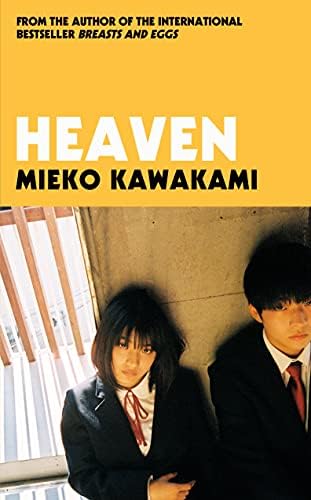
Heaven: Shortlisted for the International Booker Prize
Shortlisted for the International Booker Prize 2022
'Mieko Kawakami is a genius' - Naoise Dolan, author of Exciting Times
From the bestselling author of Breasts and Eggs and international literary sensation Mieko Kawakami, comes a sharp and illuminating novel about a fourteen-year-old boy subjected to relentless bullying.
In Heaven, a fourteen-year old boy is tormented for having a lazy eye. Instead of resisting, he chooses to suffer in silence. The only person who understands what he is going through is a female classmate, Kojima, who experiences similar treatment at the hands of her bullies. Providing each other with immeasurable consolation at a time in their lives when they need it most, the two young friends grow closer than ever. But what, ultimately, is the nature of a friendship when your shared bond is terror?
Unflinching yet tender, sharply observed, intimate and multi-layered, this simple yet profound novel stands as yet another dazzling testament to Mieko Kawakami’s uncontainable talent. There can be little doubt that it has cemented her reputation as one of the most important young authors at work today.
TIME's 100 Must-Read Books of 2021.
'An expertly told, deeply unsettling tale of adolescent violence' - Vogue
Translated from the Japanese by Sam Bett and David Boyd.
- 本の長さ176ページ
- 言語英語
- 出版社Picador
- 発売日2021/6/10
- 対象読者年齢18 歳以上
- 寸法13.8 x 1.7 x 21.7 cm
- ISBN-101509898247
- ISBN-13978-1509898244
この商品をチェックした人はこんな商品もチェックしています
- Butter: A Novel of Food and Murder ― The Cult Japanese Bestseller about a Serial Killer CookAsako Yuzukiペーパーバック送料: USD 19.59一時的に在庫切れ; 入荷時期は未定です。
商品の説明
レビュー
Kawakami never evangelizes, never wags a finger. She simply sets first-person narrations of suffering alongside stumbling dialogues, attempts to make that suffering intelligible to others . . . This is the real magic of Heaven, which shows us how to think about morality as an ongoing, dramatic activity. It can be maddening and ruinous and isolating. But it can also be shared, enlivened through writing and conversation, and momentarily redeemed through unheroic acts of solidarity, which come more naturally to the children in Heaven than to most grownups here on earth -- Merve Emre ― New Yorker
To read Heaven, by the author of Breasts and Eggs, and newly translated into English from Japanese by Sam Bett and David Boyd, is to bear witness to an unrelenting horror film of one boy’s youth ― The Washington Post
The second novel to appear in English by the bestselling Japanese author Mieko Kawakami is tauter and even more perceptive than its predecessor . . . Heaven is less than half the length and holds double the emotional force ― New Statesman
Reading Heaven is a rare, unforgettable experience. For me this is a perfect novel, and one I know I will return to before long -- Megan Nolan, author of Acts of Desperation
Sam Bett and David Boyd have translated Kawakami's novel into richly polychromatic English, bringing out her pitch-perfect dialogue and the lyricism of her descriptive language: rain falls like 'a numb static rising from the inner depths of town'. Heaven is a thoughtful novel about the value of the flaws that make us who we are ― Literary Review
Short but assured. . .by the end, the reader is so dizzily absorbed in its visceral details and philosophical complexity that, when the twist comes, it hits you with a strange and unexpected force ― Financial Times
Impeccably translated by Sam Bett and David Boyd, the book is full of masterly set pieces of violence, scenes of senseless bullying so lucid you can almost feel the pain yourself . . . the dissonances of the novel align into perfect vision for the breathtaking ending, which is an argument in favor of meaning, of beauty, of life. It is rare for a writer as complex as Kawakami to be so unafraid of closure, to be as capable of satisfying, profound resolution. But then again, to read her work is to feel that she is not afraid of anything at all ― New York Times Book Review
Heaven is told with astonishing frankness and economy. It will cut through all your defences down to every layer of fear, isolation, hope and need you’ve ever felt. The central pair of fourteen year old outcasts reckon with pain, belonging and the search for meaning in a way that’s heartbreaking and compelling. Mieko Kawakami is a genius -- Naoise Dolan
A raw, painful, and tender portrait of adolescent misery, reminiscent of both Elena Ferrante's fiction . . . I cannot, in good conscience, endorse it without a warning: This book is very likely to make you cry ― NPR
Brilliant . . . This captivating, quietly devastating book is about the relationship between two school misfits. The same vulnerabilities that expose them to their tormentors allow them to see one another with a pure sort of attention -- Megan Nolan ― New Statesman
Reading Heaven feels like there’s a beautiful, cruel teenage boy sitting on your chest, carelessly tossing his perfect hair while you are slowly suffocated by your own helplessness. In this horror film, oblivious authority figures walk on by as you grope for breath, wondering what it even means to be alive and free ― Independent
Simple and profound, Heaven is an undeniable masterpiece -- Mitsuyoshi Numano
A poignant odyssey into the haunted caverns of adolescence . . . Kawakami writes with jagged, visceral beauty about those early antagonists we carry around in our heads, scars we bear into adulthood, ‘caught in the undertow’ of hormones and sorrow ― Oprah Daily
Mieko Kawakami pulls from the all too familiar places we learn to accept as normal in our youth and gives them to us to reflect on as adults in a painful yet necessary way. Even if we could never learn the absolute truths behind humans' capacity for violence as well as empathy, we are certainly closer now with Heaven -- An Yu, author of Braised Pork
Kawakami unflinchingly takes the reader through the abyss of depraved, dehumanizing behavior with keen psychological insight, brilliant sensitivity, and compassionate understanding. With this, the author’s star continues to rise ― Publishers Weekly
Mieko Kawakami has spun a poignant tale on the theme of bullying . . . Heaven is a tour de force ― Tokyo Shimbun
Heaven covers new terrain, masterfully broadening the literary landscape ― Yomiuri Shimbun
Kawakami has a unique knack for burrowing into discomfort, and she does it in a startlingly graceful way. Like her last novel―an unsparing treatise on the pressures of being a woman in male-dominated Japan―this book isn’t for the fainthearted. Told from the perspective of a 14-year-old boy in present-day Japan, Kawakami’s tale follows the volatile lives of two teenagers relentlessly bullied by their peers . . . An unexpected classic ― Kirkus
Rises above the philosophical questions at its depths and delivers the reader to a devastating conclusion ― Elle Japan
Kawakami’s powerful and unassuming novel explores horrific accounts of bullying in a Japanese school . . . Her sensitive, evocative storytelling sets her apart as an incredible literary talent ― BookList
Kawakami is a writer who doesn’t shy away from hard truths and painful experiences, soHeaven will not be an easy read, but it’s guaranteed to be a rewarding one ― The Japan Times
It is difficult to write young voices well: easy to forget how smart teenagers are, or to portray them in terms of what adults might wish for them. Mieko Kawakami, however, is adept at understanding their perspective and capturing the despair and intractability of those difficult years . . . As with Kawakami's previously translated work, Breasts and Eggs, this is an adroit novel of real feeling and insight from a writer who wants her readers to think for themselves -- Rónán Hession ― Irish Times
Mesmerizing . . . Kawakami is a master of the interior voice. There is something about her prose that is so immediate and pressing it blocks out the future almost as if it were a threatening force. We are forced to deal with her characters as they are living now: alone, vulnerable, and unprotected ― World Literature Today
These raw and realistic portrayals of bullying are counterbalanced by textured exposition of the philosophical and religious debates concerning violence to which the weak are subjected ― Paperback Paris
Moving and intelligent. Kawakami gives us characters who speak to the heart and illustrate in one form or another the dilemma facing everyone in adolescence. Hopeful yet chilling in equal measures ― American Booksellers Association
Heaven takes on the issue of bullying, and why a victim might choose not to fight back. Two teenagers bond over their torment, and their passive response reveals many kinds of societal injustice ― Washington Post
This sharp new novel from Mieko Kawakami [is] a sucker-punch of a story that implores you to question even your own morality ― Cosmopolitan
With grace and clarity, Kawakami explores destructive nature of adolescent violence, and the power of empathetic friendships ― The Millions
How can a relationship really last when its foundation is built on shared experiences of humiliation? The author moves toward an answer in this quietly devastating tale of middle school drama ― TIME
If you enjoyed Mieko Kawakami’s brilliant Breasts and Eggs, you’re certain to be astonished by her latest novel exploring violence and bullying with fierce, feminist and damning candor ― Ms. Magazine
While Kawakami refuses to give us answers, the elegance and care with which she describes her characters’ lives invite the reader to ask such questions of themselves. This is not a cruel story, but rather one that understands hurt and pain for what it is: universal, unjust and material for new life ― BookPage
Mieko Kawakami is the reigning queen of contemporary Japanese literature for good reason ― Japan Times
Kawakami is taking the reader by the hand and guiding us through someone’s small, interior life as a method of contemplating wide-ranging, universal issues such as the body, ethics, and meaning ― Bad Form Review
A poignant and unsettling look at what makes a friendship and, on a macro level, what makes an unequal society. Kawakami’s writing is meticulous and assured, and Heaven leaves a bruise ― The Skinny
Exceptional -- David Hayden ― White Review 'Books of the Year'
著者について
Sam Bett studied Japanese at UMass-Amherst and Kwansei Gakuin University. Awarded the Grand Prize in the 2016 JLPP International Translation Competition, he has translated fiction by Yoko Ogawa, Yukio Mishima, and Nisio Isin. He is currently co-translating with David Boyd the novels of Mieko Kawakami.
David Boyd is Assistant Professor of Japanese at the University of North Carolina at Charlotte. He is the winner of the 2017/2018 Japan–U.S. Friendship Commission (JUSFC) Prize for the Translation of Japanese Literature for his translation of Hideo Furukawa’s Slow Boat (Pushkin Press, 2017). With Sam Bett, he is currently co-translating the novels of Mieko Kawakami.
登録情報
- 出版社 : Picador
- 発売日 : 2021/6/10
- 言語 : 英語
- 本の長さ : 176ページ
- ISBN-10 : 1509898247
- ISBN-13 : 978-1509898244
- 商品の重量 : 100 g
- 対象読者年齢 : 18 歳以上
- 寸法 : 13.8 x 1.7 x 21.7 cm
- Amazon 売れ筋ランキング: 洋書 - 11,442位 (洋書の売れ筋ランキングを見る)
- Coming of Age Fiction - 86位
- Literary Fiction - 561位
- カスタマーレビュー:
著者について

大阪府生まれ。2007年、デビュー小説『わたくし率イン 歯ー、または世界』で第1回早稲田大学坪内逍遥大賞奨励賞受賞。2008年、『乳と卵』で第138回芥川賞を受賞。2009年、詩集『先端で、さすわ さされるわ そらええわ』で第14回中原中也賞受賞。2010年、『ヘヴン』で平成21年度芸術選奨文部科学大臣新人賞、第20回紫式部文学賞受賞。2013年、詩集『水瓶』で第43回高見順賞受賞。短編集『愛の夢とか』で第49回谷崎潤一郎賞受賞。2016年、『あこがれ』で渡辺淳一文学賞受賞。「マリーの愛の証明」にてGranta Best of Young Japanese Novelists 2016に選出。村上春樹との共著『みみずくは黄昏に飛びたつ』、『すべて真夜中の恋人たち』など著書多数。
2019年、第73回毎日出版文化賞受賞した『夏物語』は、20年ニューヨーク・タイムズが選ぶ「今年読むべき100冊」やTIMEの「今年のベスト10冊」などにも選ばれ、現在40カ国以上で刊行が進められている。

著者の本をもっと見つけたり、似たような著者を調べたり、おすすめの本を読んだりできます。
カスタマーレビュー
日本からのトップレビュー
- 星5つ中5つ
Great read
2026年5月9日に日本でレビュー済みThis book is really touching. I bought to compare its style to a version translated to Spanish. If it makes any difference: I recommend this translation.
フィードバックを送信中...フィードバックを送信中...参考になったフィードバックをお寄せいただきありがとうございます。申し訳ありませんが、投票の記録に失敗しました。 もう一度お試しくださいありがとうございます。数日中に調査いたします。申し訳ありません。このレビューを報告できませんでした。 もう一度お試しください - 星5つ中1つ
Do not believe the hype... this book has one of the worst endings of any book ever
2021年12月8日に日本でレビュー済みI am not a huge fan of authors who are dubbed as "geniuses" because they write their books like they are writing poetry. Using beautiful, visceral language to tell a story about bullying is a good idea in theory, and for the most part, Mieko does it well. But this book would have been about thirty pages long if you take out the constant similes and metaphors that I swear occurs every other sentence. It's just... a bit too much and by the end of the book, I found myself skipping over parts because these things became huge distractions.
Then there is the issue of the story itself: A merciless tale about two Japanese school kids stuck in a vicious cycle of bullying, apparently because they go to school where there aren't actually any teachers around who witness the violence that occurs right in the middle of classrooms, or in gymnasiums where apparently the idea of a CC TV feed is foreign to one of the most technologically advanced nations in the world (you would think protecting children could be a priority in a place like Japan, who needs children to replace their ageing population that is dying off in droves... but nah, why do that? That makes too much sense). I still could see these things happening, as people can be sneaky about hurting others, but seriously... not one teacher, or a student, had the wits about them to say something or do something?
But this story takes place in Japan, where indifference and lack of communication are considered good things, necessary for the preservation of the self. And that kind of leads me to the biggest problem of this entire story: The ending.
Spoiler alert here, read no further if you don't want to know what happens (though I will only briefly talk about it and you could read this and still enjoy, or not enjoy, the ending on your own accord), but seriously, after all the brutality that the main character goes through... he has one conversation with his step-mother, and the entire situation gets fixed in less than a few paragraphs. And the other main character... well, who knows, because the book just... ends. No resolution, no sense of truly seeing a fulfillment in any kind of character arc... nothing. Just... yep, time's up, story's over. And the story could have been over by page 10, if the main character had told his Step-mother what was happening to him in the first place.
Japan has a serious problem with lack of communication skills. I guess in some ways, it makes sense. A friend of mine who is Japanese told me that he believes most Japanese people stop emotionally developing right around Junior High School. After that... it's like they are not permitted to be in touch with their feelings, or to stand up for themselves, because the goal is to "fit in" to society, and not to cause problems for the group. Conforming, if you will. And it's this exact kind of mentality that has been adopted by Japanese people as a whole which leads to things like inhumane bullying, and suicides in record numbers, and senseless attacks by Japanese people who just outburst out of nowhere, for no apparent reason, leading to deaths of innocent people.
If Mieko had even tried to not leave this so open-ended (which I'm not saying is a bad thing to do, per se, but in this case, it's truly not the right decision to make as an author) and just wrap everything up, literally saying in the last chapter or so that "everything is beautiful" and life is fixed and all the emotional and mental scars of the main character are just... over... and who even knows what happened to Kojima.... yeah, that's not how you end a book that is straight depressing for the entire book's length. You need to give the book some kind of purpose, or meaning, or how about even a little redemption? Yet none of that exists in this story... it's a tale about brutal bullying, a possible budding love story that goes nowhere, and then ultimately, one conversation that would be considered a normal thing to do anywhere else in the world except Japan, and the problems are solved, save for one problem: I spent money and time on reading this book, and I can't get that back. I'd say that qualifies as bullying to me too.
5人のユーザーが役に立ったと感じていますフィードバックを送信中...フィードバックを送信中...参考になったフィードバックをお寄せいただきありがとうございます。申し訳ありませんが、投票の記録に失敗しました。 もう一度お試しくださいありがとうございます。数日中に調査いたします。申し訳ありません。このレビューを報告できませんでした。 もう一度お試しください
他の国からのトップレビュー
Thelibraryoffabrizia星5つ中5つImpactful
2026年8月13日に英国でレビュー済みI have re-read this book two times since the start of the year and every time I cry a little more.
This is such an emotional and beautiful story that I can’t stop myself from wanting to re-read it.Haven gone through bullying myself when I was in school,this hit different,I felt very emotional about it and really connected with the main character,even though the extent of his bullying was brutal and different from what I had endured,it was still impactful.
An even more interesting decision by the author was not naming the main character and leaving him unnamed.
We can really see how much bullying impacts children and how so many times adults do not realise what is happening or(in most cases) turn a blind eye and do not intervene because “kids are being kids)
Overall I will definitely be reading this book again,it is amazing,deep and impactful.
Mario星5つ中5つQuello che volevo
2025年6月22日にイタリアでレビュー済みOttimo
Yumiko星5つ中5つ⭐⭐⭐⭐⭐ radikaler Blick auf Gewalt, Macht und Würde
2025年8月28日にドイツでレビュー済み⭐⭐⭐⭐⭐ (5/5)
„Heaven“ – ein radikaler Blick auf Gewalt, Macht und Würde
Kurzfazit
Mit Heaven (japanisch 2009, englische Übersetzung 2021/2022) legt Mieko Kawakami einen verstörenden, zugleich tief berührenden Roman vor. Er erzählt die Geschichte eines namenlosen 14-jährigen Jungen, der wegen seines Schielens in der Schule systematisch gemobbt wird, und seiner Freundschaft mit Kojima, einem ebenso ausgegrenzten Mädchen. Das Werk verbindet eine schonungslose Darstellung von Gewalt mit philosophischen Reflexionen über Leid, Moral und Menschlichkeit.
Literarische Analyse
Kawakamis Prosa ist präzise, direkt und von einer fast schmerzhaften Klarheit. Gewalt wird nicht beschönigt, sondern detailliert geschildert – zugleich verweigert sich die Autorin jeder plakativen Moral. Stattdessen zeigt sie, wie Opfer ihre Erfahrungen unterschiedlich deuten: Während Kojima Leid als Form der Erhebung verklärt, empfindet der Erzähler es als unerträgliche Erniedrigung. Diese Spannung macht den Kern des Romans aus.
Der Titel Heaven verweist auf ein Bild, das Kojima dem Erzähler schenkt, und dient als Kontrast zu ihrer irdischen Qual – eine fragile Hoffnung auf Schönheit und Transzendenz.
Einbettung in Literatur & Kultur
Mieko Kawakami gilt als eine der bedeutendsten Stimmen der Gegenwartsliteratur Japans. International bekannt wurde sie mit Breasts and Eggs (Natsu monogatari), doch Heaven brachte ihr eine breite Anerkennung im Westen und die Shortlist des International Booker Prize 2022.
Das Thema Mobbing ist in der japanischen Literatur und Gesellschaft stark präsent (vgl. Minoru Morita, Bullying in Japan’s Schools, 2010). Kawakami geht jedoch über eine Sozialkritik hinaus: Ihr Roman reiht sich in eine Tradition existenzialistischer Werke ein, die Gewalt nicht nur als soziales, sondern als philosophisches Problem begreifen – vergleichbar mit Kenzaburō Ōes A Personal Matter oder gar Dostojewskis Reflexionen über Leid.
Trivia & Hintergrund
Der Roman wurde von Sam Bett und David Boyd ins Englische übersetzt, die auch Kawakamis andere Werke ins Englische übertragen haben.
In Japan wurde Heaven 2010 mit dem Murasaki Shikibu Prize for Literature ausgezeichnet.
Kawakami selbst sagte in Interviews, sie wolle in Heaven zeigen, wie Gewalt „die Essenz dessen verändert, wer wir sind – und wie wir die Welt sehen“.
Fazit
Heaven ist ein schmerzlich schönes, radikal ehrliches Werk, das Gewalt nicht als Spektakel, sondern als menschliche Grundfrage behandelt. Literarisch präzise und philosophisch tief, gehört es zu den stärksten japanischen Romanen der letzten Jahrzehnte – ein Text, der lange nachhallt.
⭐️⭐️⭐️⭐️⭐️ – 5 von 5 Sternen
Melissa Menon星5つ中5つLove it
2023年5月10日にカナダでレビュー済みIt’s such a great book. It’s a contemporary literature, the message is there, feelings are presented perfectly in the book. I would totally recommend to anyone.
Nieryk Niekochanek星5つ中5つBardzo dobra książka pod względem różnych perspektyw postrzegania moralności
2025年3月27日にポーランドでレビュー済みBardzo ciekawa i wciągająca. Do tego czyta sie bardzo szybko. Mega polecam