この商品は選択したお届け先には発送できません。別のお届け先を選択してください。
アメリカ合衆国への類似商品の発送
US
アメリカ合衆国
次に追加されました:

申し訳ありません。問題が発生しました。

ウィッシュリストの取得中にエラーが発生しました。もう一度やり直してください。

申し訳ありません。問題が発生しました。

リストを利用できません。
Kindleアプリのロゴ画像

無料のKindleアプリをダウンロードして、スマートフォン、タブレット、またはコンピューターで今すぐKindle本を読むことができます。Kindleデバイスは必要ありません

ウェブ版Kindleなら、お使いのブラウザですぐにお読みいただけます。

携帯電話のカメラを使用する - 以下のコードをスキャンし、Kindleアプリをダウンロードしてください。

KindleアプリをダウンロードするためのQRコード

  • Heaven

著者をフォローする

新刊とおすすめタイトルの情報を入手
何か問題が発生しました。後で再度リクエストしてください。

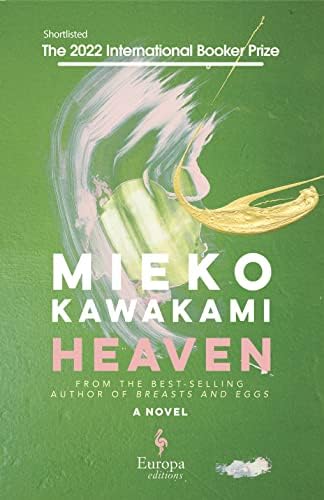
Heaven

5つ星のうち4.2 (4,001)

SHORTLISTED FOR THE 2022 INTERNATIONAL BOOKER PRIZE

From the bestselling author of Breasts and Eggs and international literary sensation Mieko Kawakami, a sharp and illuminating novel about the impact of violence and the power of solidarity.

A bold foray into new literary territory, Kawakami’s novel is told in the voice of a 14-year-old student subjected to relentless torment for having a lazy eye. Instead of resisting, the boy chooses to suffer in complete resignation. The only person who understands what he is going through is a female classmate who suffers similar treatment at the hands of her tormentors.

These raw and realistic portrayals of bullying are counterbalanced by textured exposition of the philosophical and religious debates concerning violence to which the weak are subjected.

Heaven stands as a dazzling testament to Kawakami’s literary talent. There can be little doubt that it has cemented her reputation as one of today’s most important young authors working to expand the boundaries of contemporary Japanese literature.

A New York Times, Washington Post, TIME, Oprah Daily, CNN, Bustle, and Ms. Magazine most anticipated book of the year.

A June 2021 Indie Next Pick

現在開催中のキャンペーン:
最大40%還元 紙書籍 夏のポイントキャンペーン

商品の説明

著者について

Mieko Kawakami is the author of the internationally best-selling novel, Breasts and Eggs, a New York Times Notable Book of the Year and one of TIME’s Best 10 Books of 2020. Born in Osaka, Kawakami made her literary debut as a poet in 2006, and published her first novella, My Ego, My Teeth, and the World, in 2007. Her writing is known for its poetic qualities and its insights into the female body, ethical questions, and the dilemmas of modern society. Her books have been translated into many languages and are available all over the world. She has received numerous prestigious literary awards in Japan, including the Akutagawa Prize, the Tanizaki Prize, and the Murasaki Shikibu Prize. Kawakami lives in Tokyo, Japan.


Mieko Kawakami is the author of the internationally best-selling novel, Breasts and Eggs, a New York Times Notable Book of the Year and one of TIME's Best 10 Books of 2020. Born in Osaka, Kawakami made her literary debut as a poet in 2006, and published her first novella, My Ego, My Teeth, and the World, in 2007. Her writing is known for its poetic qualities and its insights into the female body, ethical questions, and the dilemmas of modern society. Her books have been translated into many languages and are available all over the world. She has received numerous prestigious literary awards in Japan, including the Akutagawa Prize, the Tanizaki Prize, and the Murasaki Shikibu Prize. Kawakami lives in Tokyo, Japan.

登録情報

  • 出版社 ‏ : ‎ Europa Editions Inc
  • 発売日 ‏ : ‎ 2021/5/25
  • 言語 ‏ : ‎ 英語
  • 本の長さ ‏ : ‎ 190ページ
  • ISBN-10 ‏ : ‎ 1609456211
  • ISBN-13 ‏ : ‎ 978-1609456214
  • 商品の重量 ‏ : ‎ 295 g
  • 寸法 ‏ : ‎ 14.61 x 1.91 x 22.23 cm
  • Amazon 売れ筋ランキング: 洋書 - 11,442位 (洋書の売れ筋ランキングを見る)
  • カスタマーレビュー:
    5つ星のうち4.2 (4,001)

著者について

著者をフォローして、新作のアップデートや改善されたおすすめを入手してください。

カスタマーレビュー

星5つ中4.2つ
4,001グローバルレーティング

日本からのトップレビュー

    Amazonにより翻訳済み
    原文を見る
  • 星5つ中5つ
    Great read
    2026年5月9日に日本でレビュー済み
    Brief content visible, double tap to read full content.
    Full content visible, double tap to read brief content.

    This book is really touching. I bought to compare its style to a version translated to Spanish. If it makes any difference: I recommend this translation.

    フィードバックを送信中...
    フィードバックをお寄せいただきありがとうございます。
    フィードバックを送信中...
    ありがとうございます。数日中に調査いたします。
    Amazonにより英語から翻訳済み
    元の言語を参照する
  • 星5つ中1つ
    Do not believe the hype... this book has one of the worst endings of any book ever
    2021年12月8日に日本でレビュー済み
    Brief content visible, double tap to read full content.
    Full content visible, double tap to read brief content.

    I am not a huge fan of authors who are dubbed as "geniuses" because they write their books like they are writing poetry. Using beautiful, visceral language to tell a story about bullying is a good idea in theory, and for the most part, Mieko does it well. But this book would have been about thirty pages long if you take out the constant similes and metaphors that I swear occurs every other sentence. It's just... a bit too much and by the end of the book, I found myself skipping over parts because these things became huge distractions.

    Then there is the issue of the story itself: A merciless tale about two Japanese school kids stuck in a vicious cycle of bullying, apparently because they go to school where there aren't actually any teachers around who witness the violence that occurs right in the middle of classrooms, or in gymnasiums where apparently the idea of a CC TV feed is foreign to one of the most technologically advanced nations in the world (you would think protecting children could be a priority in a place like Japan, who needs children to replace their ageing population that is dying off in droves... but nah, why do that? That makes too much sense). I still could see these things happening, as people can be sneaky about hurting others, but seriously... not one teacher, or a student, had the wits about them to say something or do something?

    But this story takes place in Japan, where indifference and lack of communication are considered good things, necessary for the preservation of the self. And that kind of leads me to the biggest problem of this entire story: The ending.

    Spoiler alert here, read no further if you don't want to know what happens (though I will only briefly talk about it and you could read this and still enjoy, or not enjoy, the ending on your own accord), but seriously, after all the brutality that the main character goes through... he has one conversation with his step-mother, and the entire situation gets fixed in less than a few paragraphs. And the other main character... well, who knows, because the book just... ends. No resolution, no sense of truly seeing a fulfillment in any kind of character arc... nothing. Just... yep, time's up, story's over. And the story could have been over by page 10, if the main character had told his Step-mother what was happening to him in the first place.

    Japan has a serious problem with lack of communication skills. I guess in some ways, it makes sense. A friend of mine who is Japanese told me that he believes most Japanese people stop emotionally developing right around Junior High School. After that... it's like they are not permitted to be in touch with their feelings, or to stand up for themselves, because the goal is to "fit in" to society, and not to cause problems for the group. Conforming, if you will. And it's this exact kind of mentality that has been adopted by Japanese people as a whole which leads to things like inhumane bullying, and suicides in record numbers, and senseless attacks by Japanese people who just outburst out of nowhere, for no apparent reason, leading to deaths of innocent people.

    If Mieko had even tried to not leave this so open-ended (which I'm not saying is a bad thing to do, per se, but in this case, it's truly not the right decision to make as an author) and just wrap everything up, literally saying in the last chapter or so that "everything is beautiful" and life is fixed and all the emotional and mental scars of the main character are just... over... and who even knows what happened to Kojima.... yeah, that's not how you end a book that is straight depressing for the entire book's length. You need to give the book some kind of purpose, or meaning, or how about even a little redemption? Yet none of that exists in this story... it's a tale about brutal bullying, a possible budding love story that goes nowhere, and then ultimately, one conversation that would be considered a normal thing to do anywhere else in the world except Japan, and the problems are solved, save for one problem: I spent money and time on reading this book, and I can't get that back. I'd say that qualifies as bullying to me too.

    5人のユーザーが役に立ったと感じています
    フィードバックを送信中...
    フィードバックをお寄せいただきありがとうございます。
    フィードバックを送信中...
    ありがとうございます。数日中に調査いたします。
    Amazonにより英語から翻訳済み
    元の言語を参照する

他の国からのトップレビュー

    Amazonにより翻訳済み
    原文を見る
  • 星5つ中5つ
    Impactful
    2026年8月13日に英国でレビュー済み
    Brief content visible, double tap to read full content.
    Full content visible, double tap to read brief content.

    I have re-read this book two times since the start of the year and every time I cry a little more.

    This is such an emotional and beautiful story that I can’t stop myself from wanting to re-read it.Haven gone through bullying myself when I was in school,this hit different,I felt very emotional about it and really connected with the main character,even though the extent of his bullying was brutal and different from what I had endured,it was still impactful.

    An even more interesting decision by the author was not naming the main character and leaving him unnamed.

    We can really see how much bullying impacts children and how so many times adults do not realise what is happening or(in most cases) turn a blind eye and do not intervene because “kids are being kids)

    Overall I will definitely be reading this book again,it is amazing,deep and impactful.

    フィードバックを送信中...
    ありがとうございます。数日中に調査いたします。
    Amazonにより英語から翻訳済み
    元の言語を参照する
  • 星5つ中5つ
    Quello che volevo
    2025年6月22日にイタリアでレビュー済み
    Brief content visible, double tap to read full content.
    Full content visible, double tap to read brief content.
    フィードバックを送信中...
    ありがとうございます。数日中に調査いたします。
    Amazonによりイタリア語から翻訳済み
    元の言語を参照する
  • 星5つ中5つ
    ⭐⭐⭐⭐⭐ radikaler Blick auf Gewalt, Macht und Würde
    2025年8月28日にドイツでレビュー済み
    Brief content visible, double tap to read full content.
    Full content visible, double tap to read brief content.

    ⭐⭐⭐⭐⭐ (5/5)

    „Heaven“ – ein radikaler Blick auf Gewalt, Macht und Würde

    Kurzfazit

    Mit Heaven (japanisch 2009, englische Übersetzung 2021/2022) legt Mieko Kawakami einen verstörenden, zugleich tief berührenden Roman vor. Er erzählt die Geschichte eines namenlosen 14-jährigen Jungen, der wegen seines Schielens in der Schule systematisch gemobbt wird, und seiner Freundschaft mit Kojima, einem ebenso ausgegrenzten Mädchen. Das Werk verbindet eine schonungslose Darstellung von Gewalt mit philosophischen Reflexionen über Leid, Moral und Menschlichkeit.

    Literarische Analyse

    Kawakamis Prosa ist präzise, direkt und von einer fast schmerzhaften Klarheit. Gewalt wird nicht beschönigt, sondern detailliert geschildert – zugleich verweigert sich die Autorin jeder plakativen Moral. Stattdessen zeigt sie, wie Opfer ihre Erfahrungen unterschiedlich deuten: Während Kojima Leid als Form der Erhebung verklärt, empfindet der Erzähler es als unerträgliche Erniedrigung. Diese Spannung macht den Kern des Romans aus.

    Der Titel Heaven verweist auf ein Bild, das Kojima dem Erzähler schenkt, und dient als Kontrast zu ihrer irdischen Qual – eine fragile Hoffnung auf Schönheit und Transzendenz.

    Einbettung in Literatur & Kultur

    Mieko Kawakami gilt als eine der bedeutendsten Stimmen der Gegenwartsliteratur Japans. International bekannt wurde sie mit Breasts and Eggs (Natsu monogatari), doch Heaven brachte ihr eine breite Anerkennung im Westen und die Shortlist des International Booker Prize 2022.

    Das Thema Mobbing ist in der japanischen Literatur und Gesellschaft stark präsent (vgl. Minoru Morita, Bullying in Japan’s Schools, 2010). Kawakami geht jedoch über eine Sozialkritik hinaus: Ihr Roman reiht sich in eine Tradition existenzialistischer Werke ein, die Gewalt nicht nur als soziales, sondern als philosophisches Problem begreifen – vergleichbar mit Kenzaburō Ōes A Personal Matter oder gar Dostojewskis Reflexionen über Leid.

    Trivia & Hintergrund

    Der Roman wurde von Sam Bett und David Boyd ins Englische übersetzt, die auch Kawakamis andere Werke ins Englische übertragen haben.

    In Japan wurde Heaven 2010 mit dem Murasaki Shikibu Prize for Literature ausgezeichnet.

    Kawakami selbst sagte in Interviews, sie wolle in Heaven zeigen, wie Gewalt „die Essenz dessen verändert, wer wir sind – und wie wir die Welt sehen“.

    Fazit

    Heaven ist ein schmerzlich schönes, radikal ehrliches Werk, das Gewalt nicht als Spektakel, sondern als menschliche Grundfrage behandelt. Literarisch präzise und philosophisch tief, gehört es zu den stärksten japanischen Romanen der letzten Jahrzehnte – ein Text, der lange nachhallt.

    ⭐️⭐️⭐️⭐️⭐️ – 5 von 5 Sternen

    フィードバックを送信中...
    ありがとうございます。数日中に調査いたします。
    Amazonによりドイツ語から翻訳済み
    元の言語を参照する
  • 星5つ中5つ
    Love it
    2023年5月10日にカナダでレビュー済み
    Brief content visible, double tap to read full content.
    Full content visible, double tap to read brief content.

    It’s such a great book. It’s a contemporary literature, the message is there, feelings are presented perfectly in the book. I would totally recommend to anyone.

    フィードバックを送信中...
    ありがとうございます。数日中に調査いたします。
    Amazonにより英語から翻訳済み
    元の言語を参照する
  • 星5つ中5つ
    Bardzo dobra książka pod względem różnych perspektyw postrzegania moralności
    2025年3月27日にポーランドでレビュー済み
    Brief content visible, double tap to read full content.
    Full content visible, double tap to read brief content.

    Bardzo ciekawa i wciągająca. Do tego czyta sie bardzo szybko. Mega polecam

    フィードバックを送信中...
    ありがとうございます。数日中に調査いたします。
    Amazonによりポーランド語から翻訳済み
    元の言語を参照する