
Download the free Kindle app and start reading Kindle books instantly on your smartphone, tablet, or computer - no Kindle device required.
Read instantly on your browser with Kindle for Web.
Using your mobile phone camera - scan the code below and download the Kindle app.

Follow the authors
OK
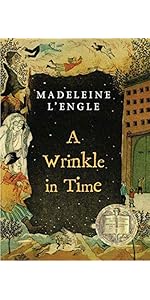
A Wrinkle in Time: (Newbery Medal Winner)
Purchase options and add-ons
As seen on Stranger Things, discover the ground-breaking, bestselling science fiction and fantasy classic that has delighted readers for over 60 years!
NEWBERY MEDAL WINNER • TIME MAGAZINE’S 100 BEST FANTASY BOOKS OF ALL TIME • NOW A MAJOR MOTION PICTURE FROM DISNEY
"A Wrinkle in Time is one of my favorite books of all time. I've read it so often, I know it by heart." ―Meg Cabot
Late one night, three otherworldly creatures appear and sweep Meg Murry, her brother Charles Wallace, and their friend Calvin O'Keefe away on a mission to save Mr. Murray, who has gone missing while doing top-secret work for the government. They travel via tesseract--a wrinkle that transports one across space and time--to the planet Camazotz, where Mr. Murray is being held captive. There they discover a dark force that threatens not only Mr. Murray but the safety of the whole universe.
A Wrinkle in Time is the first book in Madeleine L’Engle’s Time Quintet.
Includes an appreciation by Anna Quindlen and a personal interview with Madeleine L’Engle.
- Reading age9+ years, from customers
- Print length256 pages
- LanguageEnglish
- Grade levelKindergarten and up
- Dimensions5.1 x 0.7 x 7.55 inches
- PublisherSquare Fish
- Publication dateMay 1, 2007
- ISBN-100312367546
- ISBN-13978-0312367541
Book recommendations, author interviews, editors' picks, and more. Read it now.
Frequently bought together

Explore more items

Where the Red Fern GrowsPaperbackFREE Shipping on orders over $35 shipped by AmazonGet it as soon as Tuesday, Jun 23
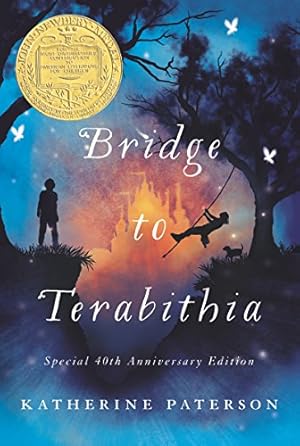
Bridge to Terabithia: A Story About Friendship, Imagination, and LossPaperbackFREE Shipping on orders over $35 shipped by AmazonGet it as soon as Tuesday, Jun 23
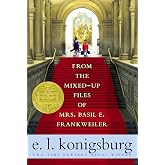
From the Mixed-Up Files of Mrs. Basil E. FrankweilerPaperbackFREE Shipping on orders over $35 shipped by AmazonGet it as soon as Tuesday, Jun 23
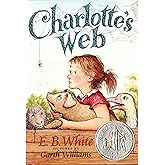
Charlotte's Web: A Newbery Honor Award Winner – The Beloved Classic Novel About a Pig, a Spider, and the Power of FriendshipPaperbackFREE Shipping on orders over $35 shipped by AmazonGet it as soon as Tuesday, Jun 23
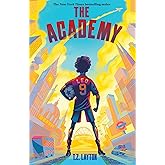
The Academy: A Middle Grade Soccer AdventurePaperbackFREE Shipping on orders over $35 shipped by AmazonGet it as soon as Tuesday, Jun 23
Customers also bought or read
- Bridge to Terabithia: A Story About Friendship, Imagination, and LossTeachers' pick
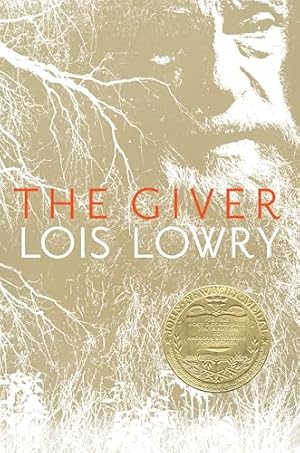
Paperback$6.37$6.37Delivery Tue, Jun 23 - The Giver: A Story About Conformity, Control, and Society (Giver Quartet, 1)#1 Best SellerTeen & Young Adult Fiction about Values & Virtues
Paperback$6.34$6.34Delivery Tue, Jun 23 - A Wrinkle in Time: Study Guide (Instructional material for 4–8th Grades)
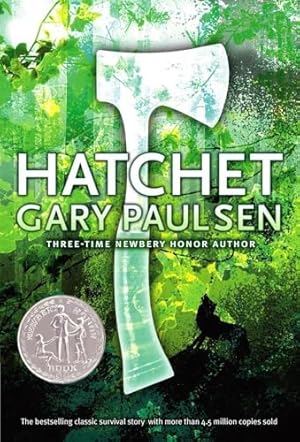
Paperback$12.99$12.99Delivery Thu, Jun 25 - Hatchet#1 Best SellerTeen & Young Adult Fiction about Being a Teen
Paperback$5.41$5.41Delivery Tue, Jun 23 - The Girl Who Drank the Moon (Winner of the 2017 Newbery Medal)Teachers' pick
Paperback$6.99$6.99Delivery Tue, Jun 23 - When You Reach Me: (Newbery Medal Winner) (Yearling Newbery)Teachers' pick
Paperback$4.88$4.88Delivery Tue, Jun 23 - The Lion, the Witch and the Wardrobe: Classic Fantasy Tale for KidsTeachers' pick
Paperback$6.27$6.27Delivery Tue, Jun 23 - Charlotte's Web: A Newbery Honor Award Winner – The Beloved Classic Novel About a Pig, a Spider, and the Power of Friendship
Paperback$5.09$5.09Delivery Tue, Jun 23 - My Side of the Mountain#1 Best SellerTeen & Young Adult Fiction on Runaways
Paperback$5.49$5.49Delivery Tue, Jun 23 - A Guide for Using A Wrinkle in Time in the Classroom (Literature Units)
Paperback$9.99$9.99Delivery Tue, Jun 23 - The One and Only Ivan: A Gentle Friendship Story About Patience, Kindness, and Everyday Adventures Together#1 Best SellerChildren's Elephant Books
Paperback$6.00$6.00Delivery Tue, Jun 23 - The Boy in the Striped Pajamas (Young Reader's Choice Award - Intermediate Division)Teachers' pick
Paperback$7.07$7.07Delivery Tue, Jun 23 - The Sign of the Beaver: A Newbery Honor Adventure of Survival and Friendship on the FrontierTeachers' pick
Paperback$6.99$6.99Delivery Tue, Jun 23 - A Long Walk to Water: A Powerful Adventure of Survival, Perseverance, and Hope in Sudan#1 Best SellerChildren's African Historical Fiction
Paperback$6.17$6.17Delivery Tue, Jun 23
From the Publisher
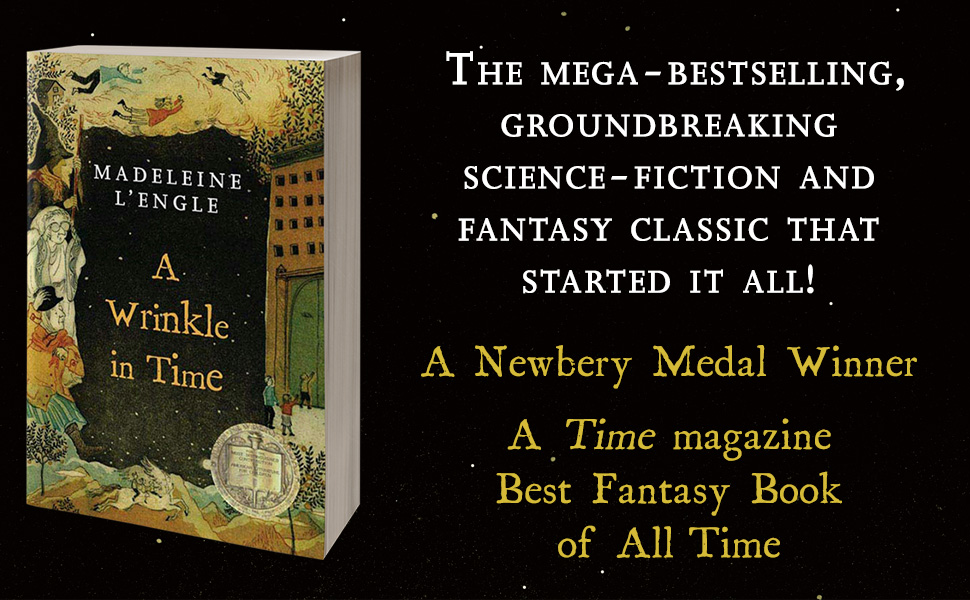
A Wrinkle in Time
|
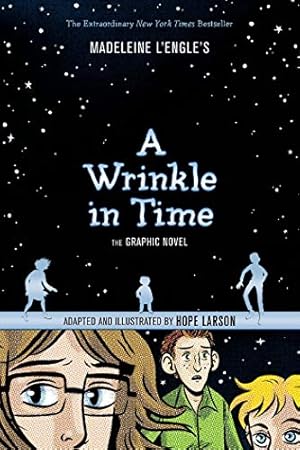
A Wrinkle in Time: The Graphic Novel
|
A Wind in the Door
|
A Swiftly Tilting Planet
|
Many Waters
|
An Acceptable Time
|
|
|---|---|---|---|---|---|---|
|
Add to Cart
|
Add to Cart
|
Add to Cart
|
Add to Cart
|
Add to Cart
|
Add to Cart
|
|
| Customer Reviews |
4.4 out of 5 stars 30,441
|
4.6 out of 5 stars 2,093
|
4.4 out of 5 stars 3,183
|
4.5 out of 5 stars 1,768
|
4.6 out of 5 stars 1,183
|
4.6 out of 5 stars 1,043
|
| Price | $5.00$5.00 | $14.96$14.96 | $8.38$8.38 | $7.18$7.18 | $7.52$7.52 | $6.39$6.39 |
| Read them all! | Meg, her brother Charles, and their friend Calvin are swept into an otherworldly adventure to save Meg's father in the groundbreaking science-fiction and fantasy classic, and the first in the Time Quintet. | A spellbinding graphic novel adaptation of Madeleine L'Engle's acclaimed classic, illustrated and adapted by award-winning creator Hope Larson. | In the second fantastic adventure story of the Time Quintet, Meg, Calvin, and their teacher must fight to save not only Charles Wallace but the balance of the universe itself. | In this third installment in The Time Quintet, Meg's brother Charles Wallace has twenty-four hours to stop the tragedy of nuclear war from occurring. | This fourth installment in The Time Quintet focuses on Meg's twin brothers and their own amazing time traveling adventure. | In the final book of The Time Quintet, Polly O'Keefe visits her grandparents in Connecticut, and finds herself caught up in the lives of three mysterious strangers who lived 3,000 years ago. |
Editorial Reviews
Review
“Yoo's cover art is enchanting.” ―Seven Impossible Things Before Breakfast (blog)
“A coming of age fantasy story that sympathizes with typical teen girl awkwardness and insecurity, highlighting courage, resourcefulness and the importance of famiyl ties as key to overcoming them.” ―Carol Platt Liebau, author, in the New York Post
“An exhilarating experience.” ―Kirkus Reviews
“This imaginative book will be read for a long time into the future.” ―Children's Literature
About the Author
Excerpt. © Reprinted by permission. All rights reserved.
A Wrinkle in Time
By Madeleine L'EngleSquare Fish
Copyright © 2007 Madeleine L'EngleAll right reserved.
ISBN: 9780312367541
Chapter One
"Now, don't be frightened, loves," Mrs. Whatsit said. Her plump little body began to shimmer, to quiver, to shift. The wild colors of her clothes became muted, whitened. The pudding-bag shape stretched, lengthened, merged. And suddenly before the children was a creature more beautiful than any Meg had even imagined, and the beauty lay in far more than the outward description. Outwardly Mrs. Whatsit was surely no longer a Mrs. Whatsit. She was a marble-white body with powerful flanks, something like a horse but at the same time completely unlike a horse, for from the magnificently modeled back sprang a nobly formed torso, arms, and a head resembling a man's, but a man with a perfection of dignity and virtue, an exaltation of joy such as Meg had never before seen. No, she thought, it's not like a Greek centaur. Not in the least.
From the shoulders slowly a pair of wings unfolded, wings made of rainbows, of light upon water, of poetry.
Calvin fell to his knees.
"No," Mrs. Whatsit said, though her voice was not Mrs. Whatsit's voice. "Not to me, Calvin. Never to me. Stand up."
"Ccarrry themm," Mrs. Which commanded.
With a gesture both delicate and strong Mrs. Whatsit knelt in front of the children, stretching her wings wide and holding them steady, but quivering. "Onto my back, now," the new voice said.
The children took hesitant steps toward the beautiful creature.
From the Paperback edition.
Continues...
Excerpted from A Wrinkle in Timeby Madeleine L'Engle Copyright © 2007 by Madeleine L'Engle. Excerpted by permission.
All rights reserved. No part of this excerpt may be reproduced or reprinted without permission in writing from the publisher.
Excerpts are provided by Dial-A-Book Inc. solely for the personal use of visitors to this web site.
Product details
- Publisher : Square Fish
- Publication date : May 1, 2007
- Edition : Reprint
- Language : English
- Print length : 256 pages
- ISBN-10 : 0312367546
- ISBN-13 : 978-0312367541
- Item Weight : 7.1 ounces
- Reading age : 9+ years, from customers
- Dimensions : 5.1 x 0.7 x 7.55 inches
- Book 1 of 5 : A Wrinkle in Time
- Grade level : Kindergarten and up
- Best Sellers Rank: #425 in Books (See Top 100 in Books)
- Customer Reviews:
About the authors

General Press publishes high-quality POD books and ebooks in almost all popular genres including Fiction, Nonfiction, Religion, Self-Help, Romance, Classics, etc.

Madeleine was born on November 29th, 1918, and spent her formative years in New York City. Instead of her school work, she found that she would much rather be writing stories, poems and journals for herself, which was reflected in her grades (not the best). However, she was not discouraged.
At age 12, she moved to the French Alps with her parents and went to an English boarding school where, thankfully, her passion for writing continued to grow. She flourished during her high school years back in the United States at Ashley Hall in Charleston, South Carolina, vacationing with her mother in a rambling old beach cottage on a beautiful stretch of Florida Beach.
She went to Smith College and studied English with some wonderful teachers as she read the classics and continued her own creative writing. She graduated with honors and moved into a Greenwich Village apartment in New York. She worked in the theater, where Equity union pay and a flexible schedule afforded her the time to write! She published her first two novels during these years—A Small Rain and Ilsa—before meeting Hugh Franklin, her future husband, when she was an understudy in Anton Chekov’s The Cherry Orchard. They married during The Joyous Season.
She had a baby girl and kept on writing, eventually moving to Connecticut to raise the family away from the city in a small dairy farm village with more cows than people. They bought a dead general store, and brought it to life for 9 years. They moved back to the city with three children, and Hugh revitalized his professional acting career.
As the years passed and the children grew, Madeleine continued to write and Hugh to act, and they to enjoy each other and life. Madeleine began her association with the Cathedral Church of St. John the Divine, where she was the librarian and maintained an office for more than thirty years. After Hugh’s death in 1986, it was her writing and lecturing that kept her going. She lived through the 20th century and into the 21st and wrote over 60 books. She enjoyed being with her friends, her children, her grandchildren, and her great grandchildren.

Discover more of the author’s books, see similar authors, read book recommendations and more.
Customer reviews
Customer Reviews, including Product Star Ratings help customers to learn more about the product and decide whether it is the right product for them.
To calculate the overall star rating and percentage breakdown by star, we don’t use a simple average. Instead, our system considers things like how recent a review is and if the reviewer bought the item on Amazon. It also analyzed reviews to verify trustworthiness.
Learn more how customers reviews work on AmazonCustomers say
Generated from the text of customer reviewsSelect to learn more
Reviews with images
SciFi, Brave Souls, Otherworldly Allies, Universal Truths
Top reviews from the United States
- 5 out of 5 stars
Fascinating Mix of Myth, Fantasy, and Science Fiction
Reviewed in the United States on October 13, 2017*A Wrinkle of Time* is a sci-fi fantasy novel by Madeleine L'Engle. The story is in many respects similar to the type of fiction that one would expect of CS Lewis' *The Chronicles of Narnia*, in that much religious mythology and symbolism are used. In some ways, this is more blatant, and in other ways, less blatant, than the *Narnia* books.
The story is about a teenage girl named Meg Murry, whose father has been missing for several years. Originally on a research mission for the US government, the brilliant scientist (both Meg's parents are brilliant scientists) vanished. While the government says that he is "serving his country", the family is worried, and most of the small town where they live has assumed the worst. Despite their worry, the family insists that the father is coming back someday.
This seems to be a point of contention between the Murrys and the rest of the town. The rest of the town wants the Murrys to see the truth, as they think it is, and they also are put off by the Meg and her behavior. You see, while all of the Murry children are quite brilliant, Meg and her youngest brother Charles Wallace, are brilliant but troubled in that their quirkiness gets them weird reactions from folks.
Into this situation come three strange older women, who look like typical, though extremely eccentric in their own right, senior citizens. But they are not. They know things no one else should. Things about the Murry family, Dr. Murry's (the vanished husband) research, and about everyone in general.
These three women, Mrs. Whatsit, Mrs. Which, and Mrs. Who, take Meg, Charles Wallace, and their new friend Calvin, on a trip through realms of magic and science to another world, one where there father is trapped and held captive by an insidiously evil force. This force has turned many planets toward it's ends, and while it didn't seek out Mr. Murry, it now is unwilling to release him, or anyone else, it can get in it's grasp.
The question for Meg, Calvin, and Charles Wallace is whether they can save Dr. Murry. For that matter, can they even save themselves? Because while their new friends in the form of the entities called Mrs. Who, Which, and Whatsit are powerful, even they have limits and such, for what they can and can't do.
I said at the beginning that this is both more, and less, blatant in it's religious imagery than the *Narnia* books. That is because while Lewis was writing as a (what he liked to call) "supposal" or a "what if" scenario, he largely stayed away from the actual words of the Bible. L'Engle, on the other hand, actually had the Scripture verses quoted quite often, and they seem to be words with power. Both authors stopped just shy of stating outright the biblical nature of the characters, though Lewis would quite quickly become more blatant, whereas L'Engle had the Scriptures quoted and other hints, but didn't outright state anything.
It's quite a contrast of approaches to story-telling with a theological and religious mythical framework. In the case of the Narnia books, the actions are done largely by God, and the characters,while important, are just there to perform actions until God saves the day. In L'Engle's books, or at least *Wrinkle*, God (through his angels obviously) still saves the day, but He and they leave the actions up to the characters to do what is necessary to save the day. I would probably liken this book to *The Silver Chair*, which is the most protagonist-centered and least Aslan-centered of the *Narnia* books.
It's interesting, because both approaches (God doing everything and the characters doing less, and the characters doing everything with God's help) are actually Scriptural in a way. In the end, God *does* do everything, because it is in His strength that we act, but *we* are supposed to take actions as well as God expects us to freely do good and avoid evil, with his help.
Don't get the wrong idea. This is not a religious book, and one can avoid the religious overtones and easily still enjoy the premise. There's a lot of fun stuff. Friendships, interplanetary travels, fighting a totalitarian menace, so on. The religious themes are there, but are not "in your face", in other words. My reason for exploring the religious concepts is that a) such philosophical stuff interests me, and b) they are there so getting that discussion out of the way is necessary. It's necessary to both understanding some of the deeper meanings of the book if one wishes to do so, and to understanding the cosmology of the series as a whole, even if one doesn't want to focus on any real-life connections to Scripture. It's like how in *The Dresden Files*, Christianity has a role (as do many myths), but one needn't be a believer to understand and cheer, because those books are NOT Christian fic, but understanding these myths or the Christian cosmology used by the author helps understand the books better.
Though brief, the authoress managed to give us some good characterization and sense of the cast, or the ones we spend much time with, at least. Meg is socially clumsy, self-conscious, and seems to not be bright via the school's standards. But she is, in fact, *brilliant*, and she is also loving, loyal, and kind, though also stubborn and prone to anger and other emotional extremes at times. These are part of who she is and not a bad thing (except the various emotional extremes bit), if they are channeled to good uses.
Charles Wallace seems to be on a different wave length than everyone else and closer to the land of the beings like the entities known as Mrs. Who, Which, and Whatsit. He is also, especially for his age, surprisingly mature, kind, and thoughtful, not to mention brave and quick on his feet. His main fault though is his pride. He is more brilliant than most people, his family included, as shown by his insights into many areas. And he *knows* this. While he never acts arrogant and condescending to anyone else, his knowledge of his own extraordinariness causes him to be unduly confident in his own abilities, which causes a LOT of problems.
Calvin is the most well-rounded character in that he is quite smart, though not nearly so much as the Murrys are, and very athletic for his age. He also is brave and empathetic to others, which given his very dysfunctional, and heartbreakingly so, home life is almost a small miracle. He doesn't have Charles amazing abilities, or any of the Murry's intelligence, but he has rhetorical skills, leadership qualities, is dependable, and has a strong will. He also is surprisingly insightful in ways that the uber-intelligent but quirky Murrys are not.
Mrs. Murry is sweet and kind, a good mother and a faithful wife who never gives up on her husband's return and holds the family together by her sheer force of will, personality and love. She doesn't have much of a presence, but she is impressive when we do see her. On top of all of this, she is a brilliant scientist herself who does experiments in her home laboratory while raising her children. She's pretty much super-Mom and super-scientist.
Mr. Murry I won't get into much because that is very spoilery about his appearances and what he does, who he is, so on. Suffice it to say that he is a good man whose families love and praise are realized mostly, but can never be as perfect as they have made him out to be in the years of his disappearance.
Before I close, as this review is getting rather longish, the system of a meld of science fiction and fantasy that L'Engle sets up here was impressive and fun. It's not hard sci-fi, by any means, but neither is it soft like *Star Wars* or *Star Trek*. It has some science fiction concepts and speculative ideas, but goes it's own way to engage the imagination and sense of awe of the reader, even where creative liberties occur. It's a fun and careful balance that L'Engle expertly maintained.
For such a thin volume, the authoress had a great deal of characterization, of carefully, though briefly explored, cosmology, and a fun adventure. I really did enjoy, and highly recommend, this story. I can't wait to read the future volumes in this series.
Rating: 5/5 Stars.
190 people found this helpfulSending feedback...Sending feedback...HelpfulThank you for your feedback.Sorry, we failed to record your vote. Please try againThanks, we'll investigate in the next few days.Sorry, We failed to report this review. Please try again - 5 out of 5 stars
Rekindle Your Childhood Belief in Possibility
Reviewed in the United States on June 23, 2017If I had read Madeleine L’Engle’s book, A Wrinkle in Time when I was young, there’s a good chance I would have pursued a career in science. First published in 1962 before the concept of Science, Technology, Engineering and Math (STEM) became a colloquialism for young women — a rallying cry, really — L’Engle’s book reads like a STEM Sisters manifesto, a how-to on being a girl and not being afraid to shine, even if it means being better than a boy in math or science. Today, a measly 12% of female bachelor students go into STEM careers, yet, I posit, that had more girls read A Wrinkle in Time as children, I’m pretty sure that number would be substantially higher. Did I mention that A Wrinkle in Time was rejected 26 times by different publishers until it was picked up by Farrar, Strauss and Giroux, because, as L’Engle has commented, it was “too different,” and she didn’t think anyone would publish it. It went on to win the distinguished Newberry Medal in 1963, http://www.ala.org/alsc/awardsgrants/bookmedia/newberymedal/newberymedal, proving that people will embrace “different” if it comes in the right package.
Given the groundbreaking nature of the story, it’s wonder the book was even published: a female protagonist, the concept of evil which wasn’t kid’s book fodder in 1962, and so much science talk, that there was no precedent for any of it. Would we have Dr. Who (first aired in November 1963) or Star Trek (first aired in 1966) without A Wrinkle in Time? Is it possible that L’Engle’s little book kickstarted the sci-fi craze that the modern-day public clings to like a free climber in Acadia National Park?
We earthlings need to stretch our imaginations beyond this little blue orb and our activities of daily living in order to experience fulfilling lives. Music, art, philosophy and books, books, books help us answer the darn eternal questions that plague us such as who am I? and where the heck am I going? L’Engle planted the sci-fi seed in a generation of kids who grew up to be Star Wars fans and believe in the power of possibility. No small feat there. Yeah, Madeleine. You go, girl. While Scientists have yet to figure out the time travel thing, you can bet that books like A Wrinkle in Time sparked the imagination like no physics class ever could.
L’Engle’s main character, Meg Murray, is a feisty firebrand of a girl who knows her way around a mathematical equation, but shrinks from the more traditional subjects that girls generally excel in. Meg’s brother, Charles Wallace, is a big genius hidden in the body of a small boy. When Meg’s dad goes missing while on a secret, scientific assignment for the government, Meg is distraught while Charles Wallace is busy gaining assistance from his secret contacts. When Mr. Murray doesn’t come back for almost a year, neighbors, teachers and friends all assume Meg’s dad ran off with another woman. Only Meg’s mom believes her husband is in danger; she works diligently in her lab — she’s a scientist, too — devising a way to bring him back.
Meg loves her father and knows that the man who taught her so much about math and science would never willingly leave his family so she and Charles Wallace and their friend, Calvin set off with Charles Wallace’s friends — Mrs Whatsit, who drapes herself in layers of colorful clothes and is the primary intermediary for the kids, Mrs Who, who speaks in only quotations, and Mrs Which, the wisest of the three and usually appearing as a shimmering light because 3-D is just too darn dense — on a quest to find Mr. Murray and bring him back. Meg and company travel the galaxy, encountering many bizarre creatures, including the inimitable Aunt Beast, all of whom assist the young travelers on their journey.
Thanks to the assistance of Mrs Whatsit, Mrs Who and Mrs Which, the crew finds Mr. Murray on the planet Chazmatazz, a dark foreboding place where independent thought is prohibited, where they are introduced to the Tesseract, a fifth-dimensional machine that allows you to jump through time, hence the wrinkle. The Tesseract is one amazing scientific advancement that the kids would love to learn more about, but with Meg’s dad being held in a bar-less prison, and Charles Wallace’s mind being taken over by It, there’s so little time to learn about all of the ramifications of time travel before they have to jump time again to make things right.
A Wrinkle in Time has all the best components of a sci-fi novel — other worlds, a special relationship rooted in earth, making it impossible to leave for good; crazy characters who, although foreign to us, endear us with their actions; a lovable, flawed protagonist possessed of true grit, heart, and purpose, and at her core, a mind for science and math — which, despite what the current elected officials of the American political system have to say, is the reason modern man has effloresced and is still thriving today in the 21st century. (Recall that the ruling elite of the 17th century imprisoned Galileo Galilei, the father of physics and modern astronomy and arguably one of the greatest thinkers of all time for being too science-y and, hence, heretical. Plus it has one of the best (read: corny) opening lines of any mystery novel although the Washington Post Style Invitational attributes it firstly to English author Paul Clifford, circa 1830. And of course, we can’t forget Snoopy. (https://en.wikipedia.org/wiki/Galileo_Galilei) Just sayin’.
Want to get down with your hidden science side? Want to read a YA novel with big adult themes? Then read A Wrinkle in Time to see how it all got started and rekindle your childhood belief in worlds of possibility.
41 people found this helpfulSending feedback...Sending feedback...HelpfulThank you for your feedback.Sorry, we failed to record your vote. Please try againThanks, we'll investigate in the next few days.Sorry, We failed to report this review. Please try again - 4 out of 5 stars
This novel is a very enjoyable cocktail of science fiction, fantasy, and more.
Reviewed in the United States on December 6, 2013A Wrinkle in Time by Madeleine L’Engle has been on my “To Read” list for many years because I have an affinity for time-travel novels. However, it is a children’s book or it is probably more appropriately described as a “Young Adult” novel. For some reason, that deterred me from reading it. However, this novel has cred. In 1963 it won the Newbery Medal, which is awarded by the Association for Library Service to Children, a division of the American Library Association, to the author of the most distinguished contribution to American literature for children. In addition, it is 7th in the Goodreads “Best Time Travel Books of All Time” list and 8th in the Goodreads “Best Time Travel Fiction” list. So, I read it now when I’m in my 60s and I enjoyed it very much (not because I’m in my second childhood either). This is a wonderfully written little novel that is packed with interesting, appealing, determined and brave characters. Meg, her extraordinary younger brother Charles Wallace, and their friend Calvin are transported to a very remote planet to attempt a rescue of their father from an evil imprisonment. Three benevolent beings took them on this rescue journey via a tesseract, i.e., a wrinkle in time that allows them to quickly move through time and space. However, the children must battle the evil by themselves. I found this novel to be a very enjoyable cocktail of science fiction, fantasy and adventure that left me with a sweet feeling at the end. Maybe I am in my second childhood! This novel is a worthwhile read for anyone.
4 people found this helpfulSending feedback...Sending feedback...HelpfulThank you for your feedback.Sorry, we failed to record your vote. Please try againThanks, we'll investigate in the next few days.Sorry, We failed to report this review. Please try again - 5 out of 5 stars
My Seven Year Old Self Still Loves it
Reviewed in the United States on July 20, 2017I had to channel my seven year old self this week because I had been away from this book for too long. After having read it a few times a year for many years in my youth, I fell out of the habit over the last decade or two. Nevertheless this book was, as a friend so aptly put it, my gateway drug into the world of science fiction and I retained a love for it that now seems somewhat out of proportion.
The first thing that jarred me was the ham-handed characterization, particularly of Meg, who spends so much of the book either complaining, or screaming, or obsessing about one thing to the exclusion of every other, often obvious, necessity. Meg is not a likeable creature, though not because she's both stubborn and angry, but because of how she chooses to use what Mrs. Whatsis calls her "gifts." Rather, it's her unwillingness to understand or even listen to what her brother and her friend, and her father are telling her because she's certain she knows what's going on and they don't.
And the screaming. Meg screams a lot, and it's wearing.
I understand what L'Engle was going for with Charles Wallace, but now that I'm older and have done a lot more writing, I recognize that at least some of his speech pattern is in aid of not having to write a small child's dialogue. Yes, he should be more adult in his speech than a normal child his age, but to make him sound like a professor puts the reader at such a distance from his reality that it become difficult to read him as anything but a miniature adult, and it blunts the sense of danger we might get from his predicament.
Calvin? Too slangy by half, and all that slang seems quaint and even prissy.
But the story does hold up. Three children travel across universes to rescue the father of two of them. He's being held by an evil entity which takes over worlds and turns the inhabitants into near zombies. There's a 1984-ish vibe to it. It reflects the fears about the rise of totalitarian powers, Nazi Germany, certainly, but even more so, the spread of Communism after WWII. L'Engle, a profoundly Christian writer, believes that the power of love can defeat that sort of evil, and that the love of God is the greatest expression of that power.
While I don't share L'Engle's sentiments about Christianity, I do think that the scene where Meg is called upon to save her brother is a powerful one because it's the moment when she focuses all her negative energies into something positive: her expression of love for Charles Wallace, and not only accomplishes her task, but turns a corner in her own development. She begins to understand how even negative energies can be made positive if they're properly applied. It's also our pay-off for having stuck with Meg, and cared about her even when she was at her most unlikeable.
After that it's wham, bam, thank you ma'am, and done. There are two or three other books in this series, though, so the story continues, though somewhat less successfully than in Wrinkle. I've read two more in the past, and have no real desire to reread them now or seek out the fourth if it exists (can't recall, sorry.)
Part of me wishes I hadn't reread this because after such a long absence I found it a bit of a chore, and I hate thinking of it that way. I want to remember the magic, not the flaws. But I still have high hopes for the upcoming film, so it's not a story I'll ever let go of.
7 people found this helpfulSending feedback...Sending feedback...HelpfulThank you for your feedback.Sorry, we failed to record your vote. Please try againThanks, we'll investigate in the next few days.Sorry, We failed to report this review. Please try again - 3 out of 5 stars
A Ride Through Children's Fantasy. Don't Read the Introduction - it Will Skew You!
Reviewed in the United States on December 2, 2013Here is a story aimed at a pre-teen audience. It's a fantastic story with all sorts of bizarre happenings and goings-ons. The characters and their progressive developments play central to a very humanistic motif throughout the work. However, if anything, the stories protagonist is very unlikable at times - needy, demanding, impatient and finding it hard to accept in learning that her daddy-o isn't God. Meg Murry becomes highly unlikable near the 2/3rds mark and persists in this annoying `I need it now; I blame you for not making it happen' vein right up until the end of the story - I felt like Peter Griffin (Family Guy) much of the time - `Why won't you just die, Meg?'
It is a mostly enjoyable story, with a few points of contention I bring forth which drop my overall rating. And sadly, true to the author's sentiment during her Newbury acceptance statement, I have grown out of my childhood's fantastical styled thinking; thusly this work was not nearly as entertaining as I recall it as a youth. I will probably have torn this apart a bit more than I'd needed to.
Potential Spoilers:
The story begins with another of the protagonists pointing out that: in the woods, in the haunted house out there, there resides Mrs. Whatsit and her friends. Hence forward, meeting Mrs. Whatsit in the midst of a bad pm thunderstorm late at night (ominous, right?), Meg Murry and her younger brother (neurologically different) Charles Wallace meet the other `witches' - Mrs. Who and Mrs. Which. They also meet Calvin O'Keefe, a befreckled an old-timey speaking (think: `Golly gee' and `humdinger') ginger befitting of his last name. They (Meg, Charles, Calvin) soon learn of the tesseract, a fifth dimension which in lay is expressed as `creating a shortcut', or a wrinkle between two points of a trip - the beginning and end - touching them together, essentially (but L'Engle finds it difficult to keep the related time / distance thing out of the conversation when the characters must talk about `tessering' - the sci-fi elements of this work really are sub-par if compared to other, more contemporary authors, but for children's sci-fi, it is passable).
The mission: to find Meg and Charles Wallace's father, a scientist whom the town gossips say ran off with another woman, but who disappeared while doing work for the government. The `witches' assist in this endeavor, as does the Happy Medium. They're also a good source for much of the stories wisdom, as Mrs. Who is constantly quoting, and always initially in the original language.
Individuality, its preciousness and uniqueness are heartily espoused throughout the work. The introduction to the work suggests that because the work was written in 1962 there are elements of revolt and repulsion against the rising tensions created by Communism's popularity as a political leaning. Once the children reach Camazotz and all of its `grayness' and `sameness' are described, we see the fear of the status quo, the bleakness behind the lack of variety. (1428) Yet, the author states in her Newbury Award address (included at the end) that it is science & mathematics - `the truth' - which is responsible for killing off the imagination and in turn it is making us into `Muffins', alike all the other muffins in the tin. (2939)
Related to this, I find interesting that while the primary notion seems to be placed upon mind control (I allude to the `Man with the Red Eyes'), as IT is only a big brain and when the children arrive at Camazotz and enter the town, its inhabitants are doing everything in strictest rhythm. The only exception being the boy would wasn't bouncing the ball in time. And he was punished. Punishing indicates an effort made to change behavior, behavior isn't an issue if you're being mind-controlled, so aside from IT being the `Happy Sadist' (1940), which is indeed the only real indicator that IT is evil, otherwise IT just `looks' scary - which is why I found the Beasts interesting, that they provided empathic confirmation that the Black Thing was bad - or IT is trying to talk them into giving up their responsibilities, concerns, cares and worries, pain, suffering and et cetera. The thing worth fighting for, evidently, is the happiness, joy and pleasures which would also be taken away in the one-mind world styled after Camazotz (see, back to mind control but not true mind-control, but intensive behavior modification).
More realistically, this evil, this `power of darkness' (1240) is manifest not in everyone being the same, but in everyone failing to acknowledge anybody who is different. Back to the boy with the ball - his mother flatly denied his lack of dribbling skills, then stated that the whole of the neighborhood was without deficit for `centuries' (1502) - the entire neighborhood heard this (because they all looked in) AND STILL persisted that there hadn't been any member of the community out of sync.
It is a fear of differences (and an inability to embrace them) that's propelling the story, it's why Meg is picked on and hate's herself, it's why Charles Wallace is called a `moron', it's why the towns folk fire up the rumor mill - because Mrs. Murry is a hot-mom, it's why the mother of the boy with the ball denies his failures and then so does that entire block on Camazotz. The major push is to embrace the differences each of us have.
I do feel the import our author gives to individuality is... a bit overrated. For all our individuality we are, at base, human. And that should draw us together much more readily than saying `I'm different' proudly and then recognizing that in others. It walks divisive lines and draws you into the seven-deadly sins arena, whereas a broader `we are all human' spiel may have played out a bit better for myself now. This is clearly a very Western motif being maintained, but how closely it relates to anti-communistic ideals, I wouldn't be able to say right up front, as the argument by the introducer is want to suggest. I'd personally think that L'Engle would be able to recognize that even under a Communist regime, one would still have concerns.
My last griping point, I think, is with the author, pretty ironically mentioning in admiration Erich Fromm (2964), a renowned psychologist who published much of his work during the 1940's & 50's. Fromm is mentioned for his philosophy regarding `Universal language' but maybe L'Engle would have been better served to have also read `Escape From Freedom' - for what the author describes on Camazotz we see according to Fromm's own philosophy isn't all that unusual - the herd mentality persists because being `different' still provokes our anxieties and there is a safety net provided by a degree of assimilation (see: 'Escape From Freedom', Fromm, pub. 1941).
To have the story end as it did, with love being that which saves the day, redeems Meg, draws the family together. It's a very heartfelt and touching close. And I do think L'Engle is correct - it does matter that much; it should matter that much.
Quotes:
`... one thing I've learned is that you don't have to understand things for them to be. (362)
`The only way to cope with something deadly serious is to try to treat it a little lightly.' - Mrs. Which (878)
`It's my worst trouble, getting fond. If I didn't get fond I could be happy all the time.' - Happy Medium (1365)
`On Camazotz we are all happy because we are all alike. Differences create problems.' (1925)
9 people found this helpfulSending feedback...Sending feedback...HelpfulThank you for your feedback.Sorry, we failed to record your vote. Please try againThanks, we'll investigate in the next few days.Sorry, We failed to report this review. Please try again - 5 out of 5 stars
Very memorable story though I have a few objections
Reviewed in the United States on February 7, 2001I am now in the middle of the first sequel to this book, going through the Time Quartet (don't understand why it isn't called the TIME QUINTET, the only logic I can come up with is AN ACCEPTABLE TIME deals with Polly and not one of the four Murry children) for the first time. A WRINKLE IN TIME is one of those books that have a sterling reputation, and a book I had been meaning to read for a long time. It was worth the wait, being one of the most memorable and unusual books I've read. For you old school gamers, perhaps Mother Brain off Metroid came from the villain here? Just a thought.
The story is tightly written, very good buildup of characters, dominant themes very apparent (acceptance, curiosity, and very importantly: love), plausible resolution. All the characters are very memorable, people you would love to meet in real life. Charles Wallace is one of the most intriguing of all characters I have met in literature, and it's a shame we don't get to see more of the REAL C. W. (to those of you who have read the book you know what I mean). The images and story are so diverse, so far reaching I consumed the story rather quickly. To those of you familiar with C. S. Lewis, he said one of the purposes of literature, and primarily myth, is to give you `stabs of joy', awaken a spiritually yearning that ultimately is consummated in the character of Christ Jesus. This book is myth. I wanted to go to the land of the centaurs and bask in that glory. This story awakens a longing and a yearning for things of the supernatural. It certainly did for me.
I would end it at that, but I do have some issues or problems with this book. One largely rests in the fact that the three Mrs. Ws are maintaining the illusion of haunting and witchcraft to scare away people. No angles of God would do this, as described in the book, for "a joke" (its in the passage where Meg is attempting to help Charles Wallace at Camazots). I do not object to magic in literature depending on how it is handled. But I do object to this simply because they are painted as such wonderful servants of God, and there's the whole feel to the book of goodness and holiness, and then this element which for me goes completely against everything L'Engle otherwise consistently maintains in this work.
Another is the inclusion of The Happy Medium. Medium is generally associated with sorcery and evil, and wish she had chosen a better title for her than this.
Yet another is the feeling of universalism that predominates a particular passage in the book where Charles Wallace is describing the heroes who have fought against the encroaching darkness. One is Jesus. Since the book plays with the time element extensively, L'Engle should have said the Jesus won the battle already, even though we must fight it. This I do not hold against L'Engle, simply because the doctrine is complex and very difficult to understand, but I do resent the inclusion of Buddha as one of the people who have fought against the darkness, which, oddly, is included a few lines down with a lists of artists. My own thoughts on universalism are clouded (no, I do not believe full-blown universalism: the one I waiver back and forth with is found in THE LAST BATTLE). But Buddhism is a false religion, and he did not fight the darkness, although he had been deceived into thinking he had.
While, for me, those things I've cited above do detract from this book, the story is wonderful, and one of the most remarkable books I've read. You will be changed by this book if you allow yourself to be. It's such an unusual book. I just soaked it up. Well done, L'Engle.
Another impression I have of L'Engle, and which she herself supports, she has a very large curiosity about the world. There's a definite shift from NARNIA to WRINKLE. With Lewis you feel like he's an uncle telling you this wonderful story, but he's wise. With L'Engle, you get the feeling she's just as amazed at this world that's been uncovered as you are. In an interview with L'Engle here on Amazon, she said Lewis had a lot more answers, and she had a lot more questions. Lets see what she can turn up.
Mike London
(P. S. Have you seen those dreadful illustrations, the cover art, to the other paperback edition? That edition has the three children standing in an egg-shaped circle with a white creature flying over. They are much to young looking for this book - I don't like the cover art at all on those. I much prefer the one with the centaur on the cover or the hardback edition).
154 people found this helpfulSending feedback...Sending feedback...HelpfulThank you for your feedback.Sorry, we failed to record your vote. Please try againThanks, we'll investigate in the next few days.Sorry, We failed to report this review. Please try again - 5 out of 5 stars
Easy to see what all the hype is about.
Reviewed in the United States on April 4, 2011After hearing some high praise of this children's classic, I finally decided to give it a try to see what all the hype was about. I had somehow missed being exposed to this as a child, so this review is really from an adult perspective. First, I found this book to be a very enjoyable, light read, with enough excitement and imagination-stimulating content to keep it interesting. The characters and settings were convincing, but vague and undefined enough to allow for plenty of fill-in-the-holes type visualizations. The story itself is a kind of fantasy/mystery/SciFi melding that succeeds at all three, and comes to a satisfactory ending (while leaving enough unsaid for there to be follow-up novels). I highly recommend this book to any reader who hasn't previously experienced it, and think it would be a great option for those looking for something to get their children to read (~11+).
Like many others, I was surprised by the repeated references to God and Jesus throughout this book. While the story is not overtly religious, the characters within, including time-travel-experimenting scientists and extraterrestrial beings, are obviously Christian. It makes the book seem a bit strange with our modern-day perspectives and sensibilities, but I think the God references are more of a sign of the times than they are an attempt at indoctrination. Written at a time when the vast majority of Americans at least identified themselves as Christian, these references probably went largely unnoticed in the past. And, unlike many other reviewers who seem to be somehow offended by the inclusion of God in the story, I didn't find it to be a problem, just a bit confusing and surprising to see in an otherwise secular novel.
As with all children's literature, the moral of this story is easy to discern. A lot of the moral content could have come right out of an Ayn Rand novel, praising individuality and independence while condemning conformation and reliance on others. IMO, these are some of the most powerful and important lessons to teach young people, so they greatly increased my appreciation for, and enjoyment of, this book. Obviously, many other readers disagree with that sentiment. Again, these themes were popular ones at the time of the book's writing, pertinent to the political happenings both at home (in the USA) and abroad, with fears of rising Communism. I'm not sure if the rest of Madeleine L'Engle's books contain such overt political messages, but as long as they are in the same vein as this one, it'd be fine by me if they do.
The Kindle version of this book is nicely formatted and contains chapter markers.
8 people found this helpfulSending feedback...Sending feedback...HelpfulThank you for your feedback.Sorry, we failed to record your vote. Please try againThanks, we'll investigate in the next few days.Sorry, We failed to report this review. Please try again - 4 out of 5 stars
Mi reseña
Reviewed in the United States on May 31, 2026Super buena el drama, un poco largos los capítulos si pero en total fue bien, lo que si hubieron partes de relleno pero igual algunas de climax y el final fue muy corto pero en promedio me gustó.
Sending feedback...Sending feedback...HelpfulThank you for your feedback.Sorry, we failed to record your vote. Please try againThanks, we'll investigate in the next few days.Sorry, We failed to report this review. Please try again
Top reviews from other countries
Muy buen producto. Llego a tiempo y cumple con todas las expectativas. Recomendado!5 out of 5 starsGreat!
Reviewed in Spain on December 3, 2025Great buy! Came quickly and everything went smoothly. I recommend this. I love this book!
Sending feedback...Thanks, we'll investigate in the next few days.Sorry, We failed to report this review. Please try again
rcog135 out of 5 starspiacevole
Reviewed in Italy on November 26, 2019l'ho preso per mio figlio, a lui è piacito molto
Sending feedback...Thanks, we'll investigate in the next few days.Sorry, We failed to report this review. Please try again
Miharifeno Andrianarivony5 out of 5 starstrès clair
Reviewed in France on March 17, 2025j'aime bien le livre
Sending feedback...Thanks, we'll investigate in the next few days.Sorry, We failed to report this review. Please try again
brefernandes5 out of 5 starsLeitura muito boa!
Reviewed in Brazil on June 12, 2021Recomendo esta leitura! Comecei a ler para treinar o inglês mesmo, mas acabei gostando bastante do enredo e me envolvi com a história. Me fez pensar bastante, além de aprender novo vocabulário e relaxar.
Sending feedback...Thanks, we'll investigate in the next few days.Sorry, We failed to report this review. Please try again
Rachel5 out of 5 starsvery good book
Reviewed in Canada on August 12, 2024I bought this book, and it did not come damaged. very good and interesting book definitely going to read the next one in the series!!!!
Sending feedback...Thanks, we'll investigate in the next few days.Sorry, We failed to report this review. Please try again