




FREE delivery Saturday, October 3 on orders shipped by Amazon over $35

FREE delivery Saturday, October 3 on orders shipped by Amazon over $35

FREE delivery October 7 - 13
FREE delivery October 7 - 13

Download the free Kindle app and start reading Kindle books instantly on your smartphone, tablet, or computer - no Kindle device required.
Read instantly on your browser with Kindle for Web.
Using your mobile phone camera - scan the code below and download the Kindle app.



Follow the authors
Follow authors for new release and deal updates, plus improved recommendations.

Something went wrong. Please try your request again later.

 Report an issue with this product or seller
Book recommendations, author interviews, editors' picks, and more. Read it now.
Frequently bought together
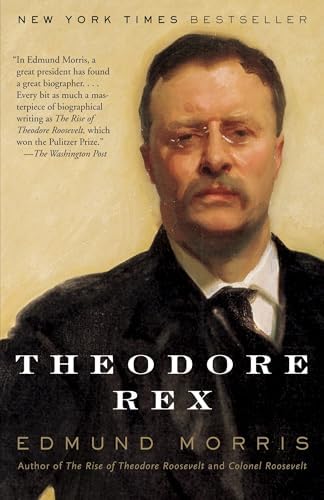
This item: Theodore Rex
$12.32
Get it as soon as Saturday, Oct 3
In Stock
+
$12.80
Get it as soon as Saturday, Oct 3
In Stock
+
$12.00
Get it as soon as Monday, Oct 19
Sold by ATILIMUSA and ships from Amazon Fulfillment.Total price: $00
To see our price, add these items to your cart.
Choose items to buy together.
Customers who viewed this item also viewed
Page 1 of 1 Start over
- The Rise of Theodore Roosevelt (Modern Library (Paperback))PaperbackGet it as soon as Monday, Oct 19
- Colonel Roosevelt (Theodore Roosevelt)HardcoverFREE Shipping on orders over $35 shipped by AmazonGet it as soon as Saturday, Oct 3
- Edmund Morris's Theodore Roosevelt Trilogy Bundle: The Rise of Theodore Roosevelt, Theodore Rex, and Colonel RooseveltHardcoverFREE Shipping by AmazonGet it as soon as Friday, Oct 9Only 4 left in stock - order soon.
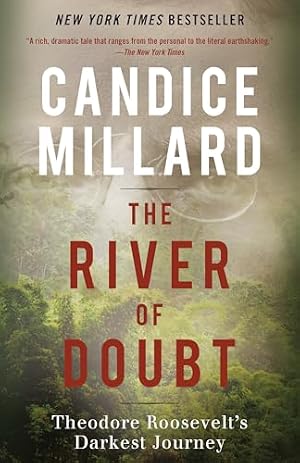
- The River of Doubt: Theodore Roosevelt's Darkest JourneyPaperbackFREE Shipping on orders over $35 shipped by AmazonGet it as soon as Saturday, Oct 3
- Washington: A Life (Pulitzer Prize Winner)PaperbackFREE Shipping on orders over $35 shipped by AmazonGet it as soon as Saturday, Oct 3
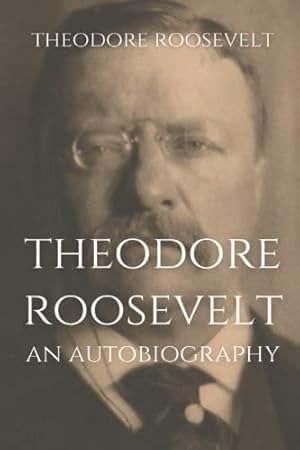
- Theodore Roosevelt: An AutobiographyPaperbackFREE Shipping on orders over $35 shipped by AmazonGet it as soon as Saturday, Oct 3











From the Publisher


Customers say
Customers find this biography highly readable and entertaining, with detailed historical information and a polished narrative. The writing style is brilliant, and customers consider it well worth their time. They describe Roosevelt as a remarkable man, and one customer notes how the author blends historical analysis with re-created scenes to keep the story lively. The political focus receives mixed reactions, with one customer appreciating how it brings the American political process to life.
AI Generated from the text of customer reviews

Select to learn more
120 customers mention readability, 108 positive, 12 negative
Great read. Have a hard time putting it down. Amazing the things Teddy was able to accomplish before he became president and during his presidency.Read more
...History but reads like a novel, almost a soap opera. That one individual could attempt and accomplish what TR did is amazing. Great book, fast read.Read more
Enjoyable and insightful look into the presidency of Theodore Roosevelt. Cannot wait to finish the series, although it will be bittersweet.Read more
A great man... a great President... a great read.Read more
110 customers mention informative, 106 positive, 4 negative
...Author's first volume, overall, this book was engaging, detailed, informative. And, at times, subtlety humorous....Read more
Great bio, I thoroughly enjoyed it.Read more
...Very informative, but not as thrilling as his life prior to his presidency.Read more
This is a great, thorough, biography...very detailed and readable....Makes me want to read the first oneRead more
62 customers mention writing style, 58 positive, 4 negative
...It was well written, and informative about our countries political climate. If your more interested in the man, then read the author's previous work.Read more
very well written. captured my attention immediately. pack with information about politics of the day, yet in a way to be intriguing....Read more
Brilliantly written, with a clarity of form and pace that pull you through the pages. Morris is a masterful biographer.Read more
Precisely written. Sorry it ended with TR's leaving the presidency. Wanting more!Read more
40 customers mention content, 36 positive, 4 negative
...This book is well written and worth the read.Read more
Enjoyed the writing from first book much better! Still very much worth reading though... Not enough stories about the real Teddy.Read more
...Make no mistake about it, this book is a page turner in the best sense of the word....Read more
...and fun as "The Rise of Theodore Roosevelt" but well worth the read.Read more
31 customers mention detail, 27 positive, 4 negative
I thought it was very detailed. Certain facts about his personal life could have been left out. But overall, it gave a good summary of his life.Read more
...flair of the Author's first volume, overall, this book was engaging, detailed, informative. And, at times, subtlety humorous....Read more
A very good read it goes into great detail about the life if one of our greatest presidents; Theodore Roosevelt had a dynamic personality and he was...Read more
The book is incredibly descriptive but balances it with an easily readable style of writing. If you like Theodore Roosevelt you will LOVE this.Read more
26 customers mention interesting, 26 positive, 0 negative
Reads like non fiction, great writer, great president, and a great book!Read more
Reads like a novel. Great story, great man.Read more
Very well done about a very interesting president that had the ability to polarize the American people of his timeRead more
A great man... a great President... a great read.Read more
24 customers mention story, 20 positive, 4 negative
13 customers mention political focus, 8 positive, 5 negative
Captures the political personalities and the events of what are a critical tipping point in the evolution of the US into a Great Power, all centered...Read more
...Politics seems a bit of a bore here, confining to TR's genius, keeping him strained at the leash in spite of his many successes and mastery of the...Read more
...I became completely engrossed in the political atmosphere at the beginning of the Twentieth Century and Roosevelt's actions and reactions as the...Read more
...His political success is very well covered in this account. Many of the fights he encountered sound familiar today....Read more