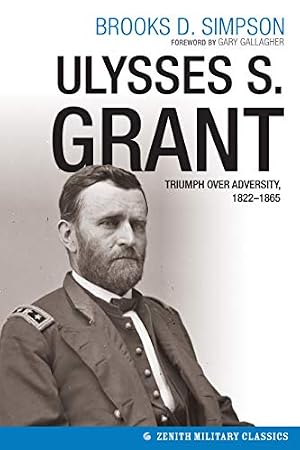
Review
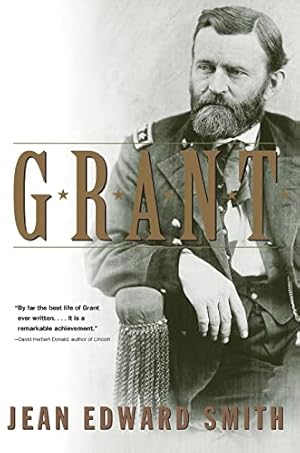
"Vivid, enjoyable and well-written."
―The New York Times
"The 60,000-word biography of American presidents, world conquerors, and classic authors―without footnotes―is the latest hot literary genre. . . have read many of them. None are more engagingly written or more attuned to clarity of thought and expression than Josiah Bunting’s. Grant, the stylist, would have approved."
―The New Criterion
"A richly written blow against ill-informed historical cynicism."
―Booklist
About the Author
A Rhodes Scholar and a decorated army officer, Josiah Bunting III served in Vietnam and was superintendent of the Virginia Military Institute for eight years. He is the author of the novels All Loves Excelling, The Lionheads, The Advent of Frederick Giles, and An Education for Our Time. Bunting is also a classical pianist and a long-distance runner. He lives in Newport, Rhode Island.
Arthur M. Schlesinger, Jr., (1917-2007) was the preeminent political historian of our time. For more than half a century, he was a cornerstone figure in the intellectual life of the nation and a fixture on the political scene. He won two Pulitzer prizes for The Age of Jackson (1946) and A Thousand Days (1966), and in 1988 received the National Humanities Medal. He published the first volume of his autobiography, A Life in the Twentieth Century, in 2000.
From The Washington Post
Presidential reputations rise and fall like the tides, though considerably less predictably. Harry Truman was derided for years after leaving office in 1953, but is now regarded (thanks in large measure to David McCullough's biography of him) as a great or near-great president. Dwight Eisenhower was regarded as ineffectual in many areas, especially civil rights, at the end of his term in 1961; now, thanks to general awareness of his probity and the prescience of his warning against the "military-industrial complex," he too is looked upon more favorably. John F. Kennedy, venerated after his assassination in 1963, is now seen in a less forgiving light, in particular because of endless disclosures about his womanizing. Now the time appears to be at hand for a reappraisal of Ulysses S. Grant, not merely as a general and a leader of men -- for which, in fact, his reputation has always been high -- but as a two-term president. This may have something to do with the war in Iraq; Grant's blunt, brutal pursuit of "unconditional surrender" and his understanding that war is not a halfway business look rather good to many who question the strategy and commitment of the present military leadership and the administration to whom it is accountable.
Whatever the explanation for the revival of interest in and sympathy for Grant, it certainly gives the appearance of being a major revision. As Josiah Bunting III puts it in the better of these two perceptive, well-written brief biographies, "the counts against him remain, sullen and immovable: drunk, butcher, scandal-monger." Though his performance during the Civil War has been widely if not universally admired -- Michael Korda points out that his most successful Civil War campaigns are "studied all over the world in staff colleges, still today" -- his presidency has been widely scorned, especially because of the many scandals that took place during his watch.
In both of these books that judgment is reconsidered and mostly, if not wholly, reversed. Korda (whose book, forthcoming Sept. 30, is among the first in a new series called "Eminent Lives") is more interested in Grant as general than as president, indeed devotes fewer than 20 pages to his presidency; nonetheless he concludes that Grant "exerted a calming influence on a country that had only just emerged from a bloody civil war" and that, "taking it all in all, his presidency was not the failure that historians have portrayed." Bunting understandably pays more attention to Grant's White House years since his book is part of a series called "The American Presidents," but in doing so he probably puts Grant's life into more accurate perspective, and the favorable judgments he reaches are less grudging than Korda's.
Both books are deeply sympathetic to Grant the human being; both authors clearly (and properly) admire him. Bunting: "He was hugely but modestly self-reliant; he was accustomed to making do with what he was given, without asking for more; he defined himself in action, not talk; he was dutiful, intensely loyal to superiors and friends, brave in the way that Tacitus called Agricola brave: unconsciously so." Korda: "Grant had that rare quality among professional soldiers, even at the very beginning of his career, of feeling deeply for the wounded and dead of both sides. It was not weakness -- it was that he spared himself nothing. Grant saw what happened in war, swallowed his revulsion, pity and disgust, and went on."
In many respects he was, as Bunting puts it, a "profound puzzle." He was taciturn to an extreme degree, "rarely an explainer or justifier." He often has been the victim of "ungovernable indulgence in a weird kind of class depredation: the distaste of the well-bred and educated for the provincial and, somehow, crude Ulysses," with the result that "in the 120 years since his death, friends, rivals and enemies, biographers, and historians have condescended" to him. Korda notes what he calls Grant's "touchiness," explaining that "it was not a question of vanity or personal pride so much as the fear on the part of a man who had always been underestimated as a boy and looked down on by people who assumed they were better than he was." The same words, obviously, could be written about Lyndon Johnson, though LBJ possessed nothing comparable to the gentlemanly reticence with which Grant disguised whatever insecurities he may have felt.
He seems to have been bothered by no doubts in his life as a soldier. He was all confidence and competence. After discovering, in an encounter early in his army days, that the enemy he was about to attack was every bit as fearful as he was, he set fear aside and acquired an implacable calm. Bunting, who served in Vietnam and later was superintendent of the Virginia Military Institute, says that "Grant was willing to make decisions and live with their consequences, sustained, as William Tecumseh Sherman once said, by a constant faith in victory. . . . Grant understood how to get men to do what he wanted them to do, and this quality led him to the victories that propelled him to his early fame. There was an elemental ordinariness to him that his soldiers liked and that made their relationship easy and productive." Korda, who served in the British armed forces, offers a complementary analysis:
"Grant understood topography, the importance of supply lines, the instant judgment of the balance between his own strengths and the enemy's weaknesses, and above all the need to keep his armies moving forward, despite casualties, even when things have gone wrong -- that and the simple importance of inflicting greater losses on the enemy than he can sustain, day after day, until he breaks. Grant the boy never retraced his steps. Grant the man did not retreat -- he advanced. Generals who do that win wars."
The American people understood that during and after the Civil War, and so did Abraham Lincoln. The bond between the two men was immediate and strong, and permitted Grant to pursue his plans without interference from above, indeed with unconditional support. It was entirely understandable that the people turned to him after Lincoln's assassination and Andrew Johnson's failed presidency. They felt about him just the way they felt more than eight decades later about Eisenhower: They wanted the conquering hero in the White House.
That he managed to serve there with not-inconsiderable distinction is attributable to his decency, his probity and, by no means least, his luck. As Bunting points out, Hamilton Fish was reluctant to serve him as secretary of state, but Grant persisted, and he finally agreed; Fish's eight years on the job were, in Bunting's judgment, "superb." Grant was unlucky in some of his personal and political associations -- he possessed, Korda writes, a "natural inability to distinguish cheats, sharpers, thieves, and con artists from honest men" -- with the unhappy consequence that his presidency was afflicted with scandals. Bunting, who analyzes these far more thoroughly than Korda does, concludes that Grant was in no way "personally culpable in any of these episodes" but that "there remains an unavoidable impression of a certain moral obtuseness in Grant." This no doubt is accurate, as has been all too true of all too many other presidents before and since.
Both authors understand that Grant was admired and loved because he was American to the core. As president he was, in Korda's view, "the symbol of . . . America's military power, the integrity of its institutions, its basic decency and good intentions, and above all its rock-solid common sense." Bunting, writing about the two-year world tour that Grant took (accompanied by his beloved wife, Julia) at the end of his presidency, strikes a similar chord:
"On arrival in England he was saluted as an American hero and champion of the interests of working-class people everywhere; as a man who had saved the American union and been the instrument in the ending of chattel slavery. He was viewed also as a kind of American everyman: as the incarnation of the great democracy's virtues and its ingratiating foibles. . . . Grant [was] an authentic national hero, he had become a hero of a particular kind, one whose reputation transcended flaws and mistakes in judgment and failures as president."
As all of these quotations make plain, both authors see Grant in strikingly similar terms. There is one notable exception. Korda sees Grant as "no great enthusiast for attempts 'to enfranchise the Negro, in all his ignorance,' " and suggests that he was lukewarm about black rights and opportunities. Bunting argues quite to the contrary, that "after the war, during Reconstruction and in the eight years of his presidency, Grant's commitment to the freedom of black Americans . . . sustained his work to preserve these gains long after most citizens in the North had lost interest in them or had given in to an indulged exasperation with their costs and difficulties." Like most white Americans of his (or any other) day, he moved slowly to that view, but once there he embraced it wholly, becoming "the central force in the achievement of civil rights for blacks, the most stalwart and reliable among all American presidents for the next eighty years." The evidence leaves little doubt that Bunting is right.
The end of Grant's life was both sad and noble. An investment firm to which he had foolishly committed such fortune as he had was undone by its founder's dishonesty, and Grant was bankrupt. At about the same time he learned that he had terminal throat cancer. Desperate to assure Julia's financial security after his death, he overcame his qualms and agreed to write his memoirs. He completed them barely hours before his death, his final bequest to the country he had served so nobly: a literary masterpiece, two volumes in which the stamp of his greatness is on every page.
Copyright 2004, The Washington Post Co. All Rights Reserved.
Excerpt. © Reprinted by permission. All rights reserved.
Ulysses S. Grant
1A Son of the WestFor most of his life Ulysses S. Grant thought of himself as a westerner. He was a child of the great Valley of Democracy, born on April 27, 1822, a hundred yards from the north bank of the Ohio. The country thereabouts was less than a generation removed from raw frontier, Ohio having achieved statehood only nineteen years earlier, and the village of Point Pleasant, some twenty-five miles southeast of Cincinnati, was but a tiny huddle of cabins and rude frame houses. Ohio was the easternmost of the states being carved from the old Northwest Territory, but to New England and New York, to the original states of the Atlantic seaboard, it seemed still a remote West: raw and bountiful, unfettered, rich in possibility.Forty years later, in 1862, it was as a western general that Grant achieved the sudden celebrity that seems peculiarly American, after his victory and successful demand for an unconditional surrender at Fort Donelson--a Union triumph that thrilled the country and resuscitated its hopes and confidence; and, just two years after that, it was as the famous leader of the western armies that he was selected to command all Union forces. He was "brought east." The small vignette of Grant's arrival in the grand lobby of Willard's Hotel in Washington, in March 1864, is an enduring cameo of American popular history: the most famous man in the country, next to Abraham Lincoln himself, signing the register as "U.S. Grantand son, Galena, Ill.," a traveler so small and dusty that the clerk did not recognize him; an unpretentious guest who could not, it appeared, have cared less. No doubt, too, the instinctive rapport between Abraham Lincoln and his new lieutenant general owed much to their common heritage as westerners--as James Russell Lowell said of Lincoln, "out of the very earth, unancestried, unprivileged, unknown"--and was demonstrated most powerfully in their common understanding of the needs of the South in the days just before, and just after, Appomattox.Grant, it is true, was "ancestried" in a way that Lincoln was not. It was known that Matthew Grant had landed in Massachusetts Bay in 1630. But Grant's paternal forebears had been moving west for two centuries: from Plymouth, Massachusetts, to the Connecticut River valley, across New York State and Pennsylvania. Ulysses Grant's grandfather, Captain Noah Grant, had fought in the Revolution, lost his first wife, remarried, and moved to western Pennsylvania. Here he and Rachel built a cabin on the Monongahela River, not far from modern Pittsburgh. They raised a large family. Noah, by trade a cobbler and by character an idler, would soon move the family again: first to Fawcettstown, Ohio, on the Ohio River, thence to Deerfield in the Western Reserve.There is a homely story--such tales cannot be authenticated--that Noah's son Jesse, the father of Ulysses Grant, just shy of his sixth birthday, came upon his mother, who was alone and weeping. "George Washington is dead," Rachel told her son. "Is he any relation of yours?" the boy asked. This was in December 1799.Rachel died only three years later, and, in the unhappy practice of the time, the family was eventually broken up, the younger children distributed among relatives, and the eldest, Jesse included, put out to make their way on their own. Jesse was eleven.He made his way by mother wit and determination. In adolescence Jesse's was already an avid, ambitious personality, close to the caricature of frontier Americans already familiar to English and European visitors and readers. A modern student of the Ohio of this time notes that Americans were "fidgety and nervous when not doing something that might be called work." Jesse did odd jobs, wasa roustabout for three years until, by serendipity, he was hired by Judge and Mrs. George Tod to work on their farm near Youngstown. It was the making of him. He lived with the Tods for five years, growing into a young man of Gatsbyan ambition. The Tods lived comfortably and well; they read, they had nice things; they challenged, worked, educated, and inspired him. Jesse developed an unassuageable determination to become rich, to be Somebody. He read voraciously; he became a lifelong autodidact, a man of words and opinions of whom it might be said that "he never had an unuttered thought." But the boy of six who wondered whether his mother was related to George Washington would survive to see his own son twice inaugurated as president: and, at one of those inaugurals, compared to Washington himself.Jesse moved on. He learned and worked at the tanner's trade under his half brother Peter, in Maysville, Kentucky; later with an Ohio tanner, Owen Brown, and his son (Jesse's contemporary), the future abolitionist John Brown; finally as the young partner of another Ohioan, in Ravenna, John Wells. Tanning to contemporary ears connotes little; it is no more helpful to our sense of its contemporary importance and standing as the fact that Saint Paul's father was a tent maker. Tanning was in fact an enormously lucrative trade in the first half of the nineteenth century. The demand for leather and worked leather goods was huge. This was a business in which, by the standards of rural Ohio, an ambitious, smart man could grow rich. The famous Galena address (U.S. Grant, Galena, Ill.) owes entirely to Jesse's success as a tanner whose business eventually expanded from southern Ohio to northwestern Illinois.Jesse Grant was now twenty-three. Four years later, in June 1821, he married Hannah Simpson, the third of four children of another widower, John Simpson of Pennsylvania, who, like Captain Noah Grant, had remarried, moved west, lighting finally in Bethel, near Point Pleasant. Here he bought and worked a substantial farm, and here Jesse began his brief courtship of Hannah.She is variously described as calm, imperturbable, taciturn, "cleanly," quietly devout in her Methodism--a natural complement to her garrulous husband. It is fair to say that in temperament andpersonality, in what psychiatrists call affect, Ulysses became far more his mother's than his father's son.Hannah and Jesse would have six children, three girls and three boys, but Ulysses--the first--remained the apple of his father's eye for the first thirty years of his life, and, after a gap of several years, thereafter. He served partly as an engine of his father's ambition. Christened Hiram Ulysses (an uneasy burden at best, the "Ulysses" contracted to "Useless" during his boyhood), the son was raised in an atmosphere of easy discipline and devoted attention. Jesse always introduced or spoke of him as "my Ulysses." He doted on him. He communicated both to his son and to the town of Georgetown, the county seat to which the family moved in 1823, that he was, indeed, a child of singular gifts and destiny. The boy would succeed as Jesse was succeeding; he would be, he had to be, noticed and admired. Historians and biographers have imputed a variety of qualities of adult character to the nature of Ulysses Grant's boyhood, but their speculations often seem forced. What is known is that Jesse, a self-important bustler in a small town, bragged about Ulysses at every opportunity and was determined that he have every advantage. For her part, Hannah disbelieved in praise. She was undemonstrative in her affections; she was not a mother to whom the son could repair for understanding and compassionate counsel.Grant's boyhood was conventional for its time, punctuated by those kinds of events and experiences that childhood friends remember much later on, when their subject has become famous. He was taught at the local subscription school; in adolescence he was sent off for one-year terms at two nearby boarding schools, the latter to prepare him for possible attendance at West Point. He was an unremarkable student: diffident and inward, watchful, reluctant to speak up. The town saw him as bashful, inferring that, because he did not talk much, he wasn't particularly bright.He was drawn to experiences and work that challenged his practical ingenuity, such as contriving means of moving heavy rocks or logs needed for Jesse's tanning business (which the boy hated and which, no doubt, planted in him a lifetime's revulsion for the sights and smells of slaughter and blood). He evinced an early practicalhandiness--skill for doing, usually alone, practical things that needed to be done, taking particular pleasure in persevering until they were completed. It is not too much to argue that that quality in Grant which Lincoln most admired, and for which he was most constantly appreciative, was already visible in the boy of ten or twelve: that of not asking for help or advice, not freighting problems with imagined difficulties, but just doing them. Forty years on, when General George B. McClellan was demanding and pleading for more soldiers, Grant was asking simply, when do I start? "What I want is to advance."His own Memoirs provide testimony both ironic and genial.One of my superstitions has always been when I started to go anywhere, or to do anything, not to have to turn back until the thing intended was accomplished. I have frequently started to go places where I had never been to and to which I did not know the way, depending upon making inquiries on the road. And if I got past the place without knowing it, instead of turning back, I would go on until a road was found turning in the right direction, take that, and come in on the other side.Grant evinced an early love for horses that was as powerful as his revulsion from the smells and sights of the tannery. There are several recorded memories of prodigies of horsemanship and of a rare and visible ability--what today might be called horse whispering--to communicate with them. By fourteen Ulysses had established a livery service, owned and operated alone, in which the young driver would deliver passengers all over Ohio. Earlier--an incident at the very epicenter of Grant lore, adduced as an example of the boy's dullness and credulity--Ulysses had visited a Mr. Ralston to buy a horse he wanted. Jesse had authorized him to go as high as twenty-five dollars, but to try to get the animal for twenty. "Papa says I can go as high as twenty-five," the boy said to the owner, who promptly sold him the horse for twenty-five dollars. Grant historiography has generally been unkind to the child, locating flaws which will bloomgrossly in later, political, life. But the anecdote may also illustrate other qualities: bottom-line directness and fairness. Grant knew the horse's worth. Nonetheless, the story achieved a wide contemporary currency, generally parsed by resentful neighbors as an example of stupidity. It is one of a small family of such tales; together they limn a portrait of a shy youngster sometimes slow on the uptake, driven in each successive encounter more and more upon his own resources, slowly becoming reluctant to say anything, to disclose to any but his closest companions his feelings and thoughts. Perhaps, as Churchill noted of his own ancestor Marlborough, such slights and twinges of adversity in youth are needed to "evoke that ruthless fixity of purpose and tenacious motherwit without which great purposes are seldom accomplished."Several Brown County boys had already attended the United States Military Academy at West Point, and one of them, Bartlett Bailey, had attended and failed. A vacancy was thus created. Jesse applied on Ulysses's behalf, seeking the nomination from Congressman Thomas L. Hamer, a former friend whom politics had estranged--Jesse was a Whig, Hamer a Jacksonian Democrat. Hamer now obliged Jesse, in a hurried final act of the spring 1839 congressional session, sending forward the name (so he imagined it to be) "Ulysses Simpson Grant."The son knew what was coming. Over the previous Christmas holiday Jesse had told him, "Ulysses, I believe you are going to receive your appointment.""What appointment?""To West Point. I have applied for it.""But I won't go."In his Memoirs, Ulysses recalled, "He said he thought I would, and I thought so too, if he did."Had there been an A. N. Wyeth or a Norman Rockwell in 1839, he would surely have been drawn to the scene: the youth, tiny, barely five feet tall, as apprehensive as eager, standing at the end of the dock on the shore of the gleaming broad river, entering upon an adventure that must have seemed cosmic in its dimension. No ardent patriotism or military vocation had brought Ulysses Grantto this pass. His was an opportunity unsought, an obligation laid upon him by a father with whom it would never have occurred to him to argue. The boy was game; he was curious; he seemed marked already by an easy fatalism that predisposed him to make the best of what he had been given, without complaint or undue worry. These qualities had already placed him at the observant edge of things: he was a watcher, slow in passing judgment, comfortable in going his own way, already full of the quiet self-reliance that made him act rather than explain himself. Neighbors and, much later, historians might smile at his horse whisperings, at the homely anecdotes retrofitted to make him look simple. It was widely expected that he would fail at West Point.All his life, and in the 120 years since his death, friends, rivals and enemies, biographers, and historians have condescended to Ulysses Grant. At seventeen he already understood that he produced such an effect on smart people. Not for the last time, he struck out on his own.Copyright © 2004 by Josiah Bunting III All rights reserved.








 Report an issue with this product or seller