How Do Crabs Reproduce?


 Add us on Google
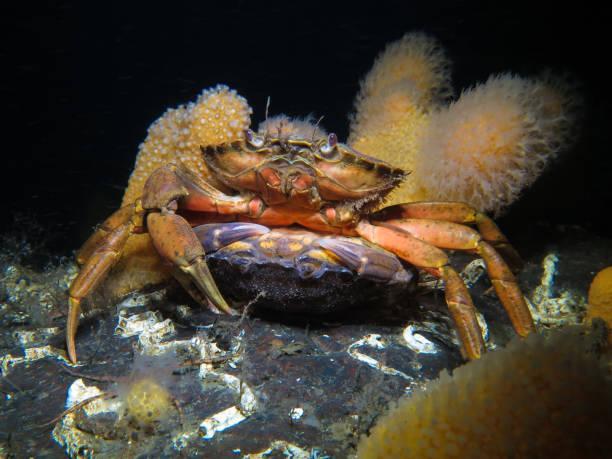
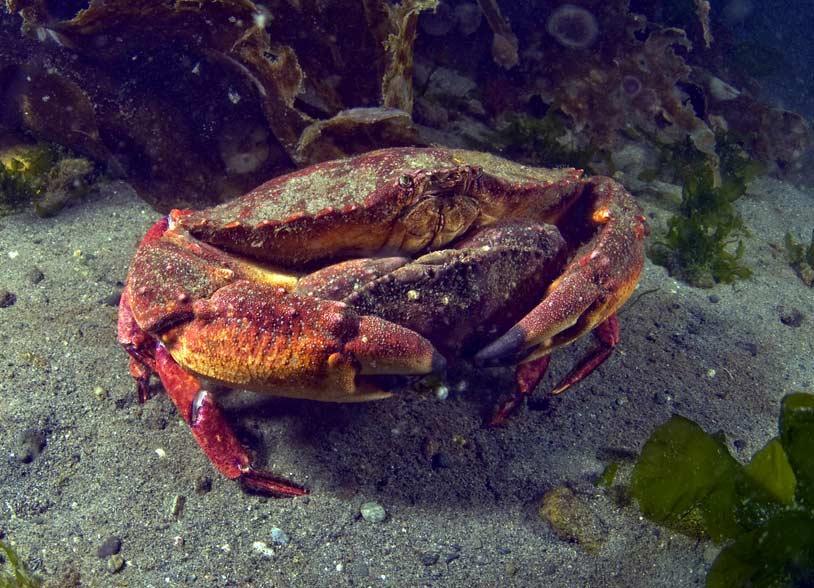
Crabs, with over 6,700 distinct species, are essential members of diverse ecosystems. They thrive in a remarkable range of habitats, some crabs are terrestrial while others are entirely aquatic. Additionally, their dietary needs vary greatly, with some acting as herbivores while others are carnivores. Unsurprisingly, their reproductive strategies are equally diverse, with adaptations that ensure success in their specific environments.
In the following AnimalWised article, we will explore how crabs reproduce, their different mating and courtship strategies, how they are born and their amazing journey from egg to adult, including their incredible metamorphosis.
How do crabs reproduce?
Crabs reproduce sexually, meaning two individuals (male and female) contribute genetic material to create offspring. This type of reproduction involves the fusion of specialized sex cells called gametes, which are sperm from the male and eggs from the female. This sexual reproduction ensures genetic diversity, which is crucial for the adaptability and survival of crab populations.
Crabs are also oviparous, meaning their embryos develop outside the mother's body after she lays eggs. While most crabs utilize internal fertilization, where the sperm is deposited within the female, some species, like the Paradorippe granulata, rely on external fertilization, where the sperm fertilizes eggs outside the body. Internal fertilization typically occurs after the female molts, with mating taking place belly-to-belly.
Following fertilization, females can store sperm for extended periods, in some cases weeks or even months. When ready, they release thousands of fertilized eggs that become attached to their underside, where they are carried and incubated until hatching. This ability to store sperm allows for flexible timing in egg-laying and can be advantageous in unpredictable environments.
Interestingly, some crab species, despite living on land as adults, return to water environments to release their eggs just before hatching. Certain species even undertake remarkable migrations over land to reach the sea and complete their reproductive cycle. This behavior highlights the importance of water in the life cycle of many crabs, even those that primarily dwell on land.
When do crabs breed?
Crab breeding season varies geographically within the same species due to local environmental conditions. This means that, for instance, crabs in tropical regions might breed year-round, while those in temperate regions have a more defined breeding season. These breeding times are often aligned with optimal environmental conditions, ensuring better survival rates for their offspring.
Head over to our other article to discover the incredible diversity of crab species and their fascinating kinds.

How do crabs attract females?
Crab courtship rituals showcase a remarkable diversity in the animal kingdom. These behaviors vary significantly across different species, employing a combination of visual displays, pheromone signaling, and even sound production to attract mates. Such diverse methods highlight the complexity and adaptability of crabs in their pursuit of successful reproduction.
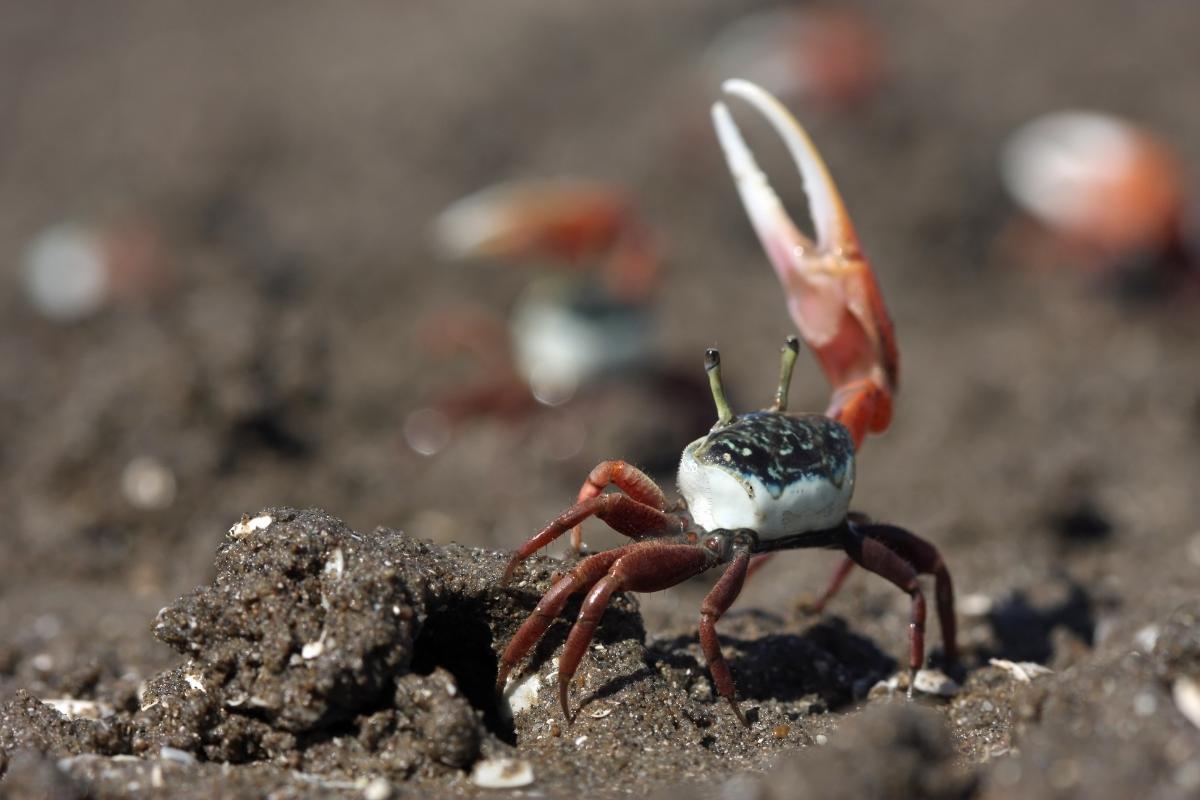
Many crab species use visual displays to capture the attention of potential partners. This can involve waving their claws, engaging in intricate dance-like movements, or producing striking colors on their bodies. A prominent example is the fiddler crab (Uca spp.), where males possess one enlarged claw specifically used for waving at females.
In some crab species, males establish and defend territories as a means of attracting females. These territories may serve as prime locations for finding food and shelter, making them desirable to potential mates. Additionally, males may engage in physical combat with other males to establish dominance and secure mating rights within their territories. This competition ensures that only the fittest males get the opportunity to reproduce, improving the overall gene pool.
Certain crab species use stridulation as part of their courtship rituals. This involves rubbing specific body parts together to generate sounds that act as additional signals for attracting mates. These auditory cues can be crucial in environments where visual signals are less effective.
For most crab species, the female becomes receptive to mating shortly after molting, when her new exoskeleton is still soft. This facilitates sperm transfer from the male. Interestingly, some male crabs strategize their mating attempts by guarding pre-molting females, ensuring mating rights once their new exoskeleton hardens. This guarding behavior can be seen as an investment in future reproductive success.
Do crabs mate for life?
No, mating behavior in crabs is typically short-lived, and they do not engage in lifelong pair bonding. Crabs generally focus on maximizing their reproductive opportunities within a single mating season.
How do crabs mate?
As mentioned earlier, mating typically occurs after the female molts, with the copulation process carried out belly-to-belly. This alignment is crucial for successful mating and sperm transfer. The male uses his specialized appendages to hold onto the female during copulation.
Males have specialized appendages called gonopods or pleopods, which they use to transfer sperm to the female. The gonopods are inserted into the female’s reproductive openings (gonopores), usually located on the underside of her abdomen. Then, the sperm is transferred in packets called spermatophores, which are deposited inside the female’s body. This method ensures that the sperm is securely delivered, increasing the chances of successful fertilization.
It is important to note that female crabs have specialized storage structures called spermathecae, where they can store sperm for extended periods, sometimes for weeks or months. This allows them to fertilize their eggs later, even if no males are present. When the female is ready, she fertilizes her eggs with the stored sperm and lays them. This adaptation provides flexibility and ensures that egg-laying can occur at the most opportune time.
Ever wondered what makes a crab tick (or scuttle)? In our other article, we delve into the fascinating anatomy of these crustaceans.

What is the incubation period of a crab egg?
The incubation period of crab eggs varies significantly depending on the species and environmental conditions. Understanding these variations is essential for conservation efforts and managing crab populations.
Generally, the duration can range from a few weeks to several months. The incubation period for crab eggs varies greatly depending on the species. Take the Blue Crab (Callinectes sapidus) for example. Their eggs only need around 14 to 20 days to develop before hatching. On the other hand, the Red King Crab (Paralithodes camtschaticus) takes a much longer journey. Their eggs require a significantly longer incubation period, lasting approximately 6 to 11 months. This difference reflects the diverse strategies crabs use to ensure their offspring's survival in various environments.
In any case, in most species, the fertilized eggs are attached to her pleopods (swimmerets) on the underside of her abdomen. The female carries the fertilized eggs, protecting and aerating them until they hatch and ensuring they receive enough oxygenated water. This maternal care is vital for the early development of the embryos, as it provides a stable environment.
Read on in our other article to learn whether crabs are classified as vertebrates or invertebrates.
How are crabs born?
When the eggs are ready to hatch, the female releases larvae into the water. The timing of larval release is often synchronized with environmental factors such as tidal cycles, lunar phases, and water temperature, which optimize the survival chances of the larvae. This process is known as oviposition, because the eggs hatch outside the mother's body. Such strategic timing is crucial for ensuring that the larvae have the best chances of finding food and avoiding predators.
Once released, the larvae undergo a series of developmental stages in the water column. These stages can vary greatly depending on the species, but typically involve molting several times before they develop into juvenile crabs. This metamorphic journey is essential for their growth and eventual transition to adulthood, adapting to different ecological niches along the way.
Once the incubation period is complete, the eggs hatch into tiny larvae called zoea. These larvae are planktonic, meaning they drift with the currents and feed on microscopic particles in the water. The zoea stage lasts for several molts, with the larvae gradually changing form. This stage is critical for dispersal, allowing crabs to colonize new areas and maintain genetic diversity.
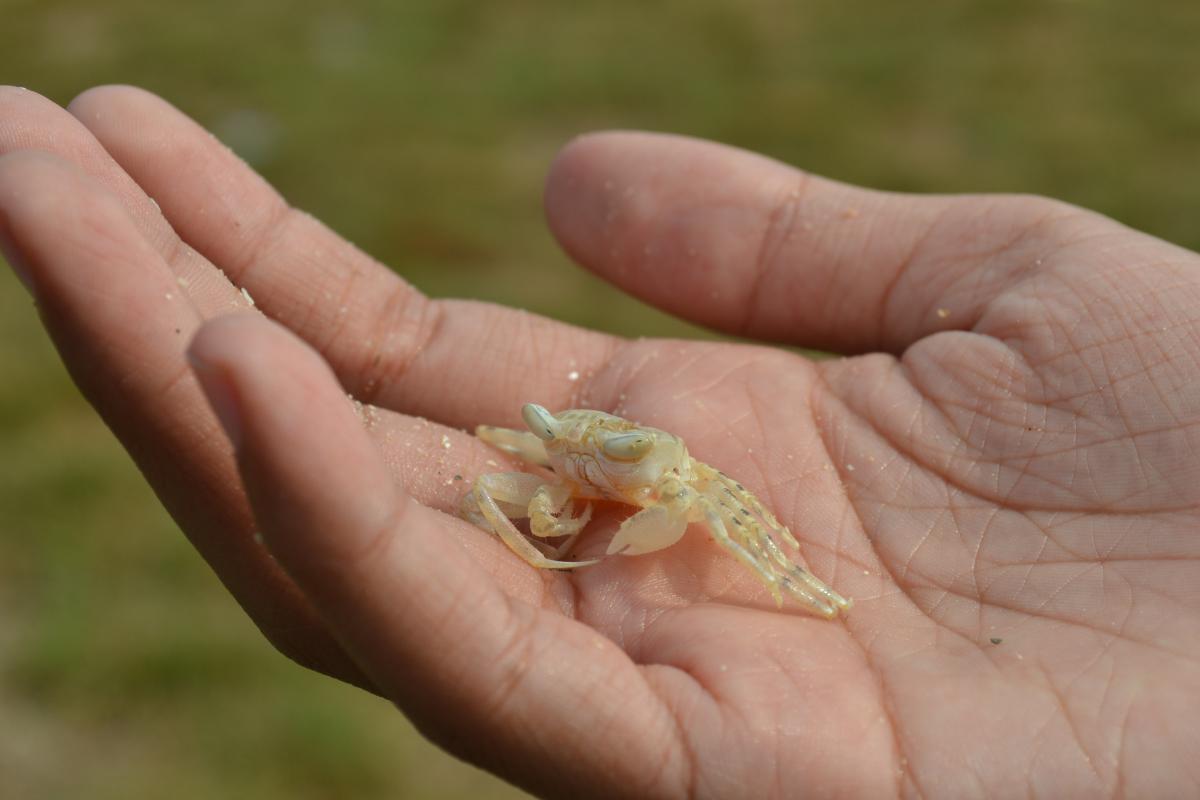
As the larvae go through multiple molting stages, they transform into a stage called megalopa, which begins to resemble a miniature crab. The megalopa stage eventually molts into a juvenile crab that looks like a smaller version of the adult. This transformation marks the end of the larval phase and the beginning of their life on the ocean floor or other habitats.
After completing their larval stages, the juvenile crabs settle back into the habitat as miniature versions of adults. Juvenile crabs typically live in sheltered areas with abundant food sources, avoiding predators until they grow large enough to fend for themselves. They undergo further growth and development before reaching adulthood. As they mature, they continue to molt and adapt, eventually becoming fully-grown members of their species.
Before you head off, be sure to check out our other article that explores the fascinating world of crab growth in detail. You'll learn all about the molting process, a crucial step in how these incredible creatures grow bigger and stronger.

If you want to read similar articles to How Do Crabs Reproduce?, we recommend you visit our Facts about the animal kingdom category.
- Adiyodi, R. G. (1988). Reproduction and development. Biology of the land crabs , 139-185.
- Animal Diversity Web (2020). Available at: https://animaldiversity.org/
- Hickman, C.P., Roberts, L.S., & Keen, S.L. (2009). Comprehensive principles of zoology.