What Do Pine Martens Eat?

 Add us on Google
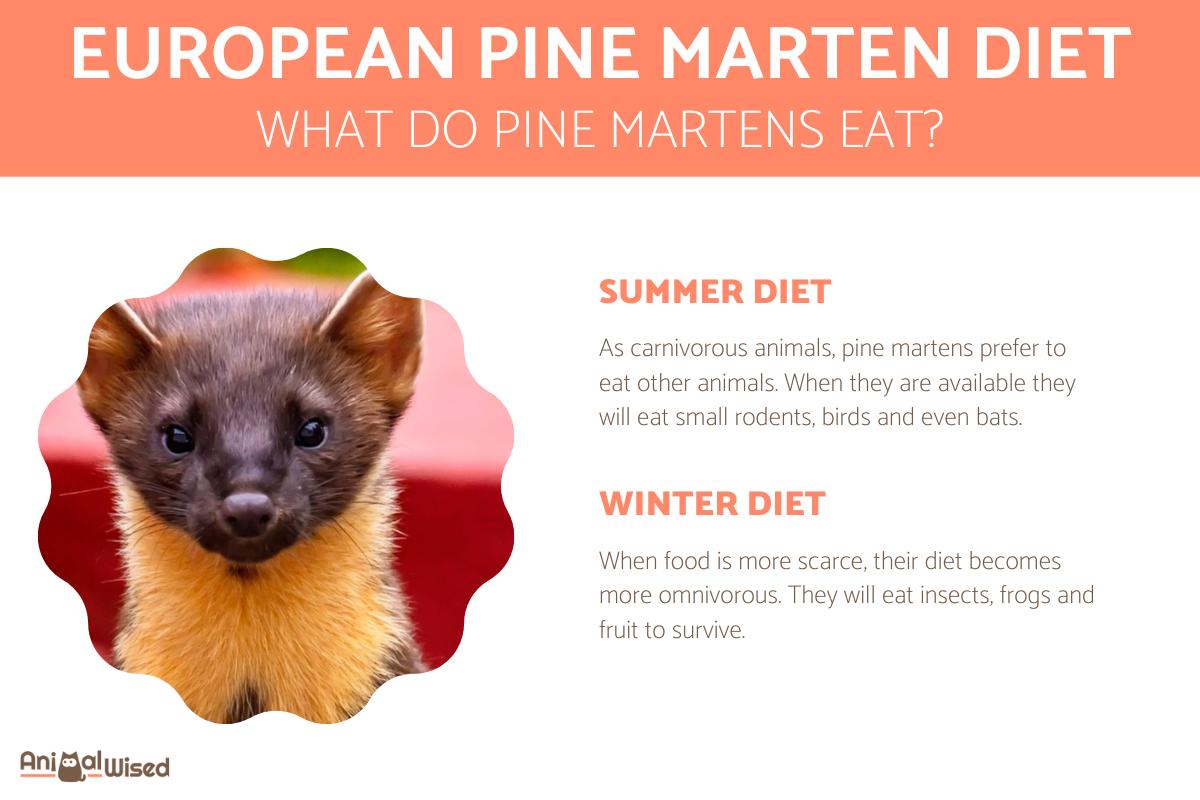
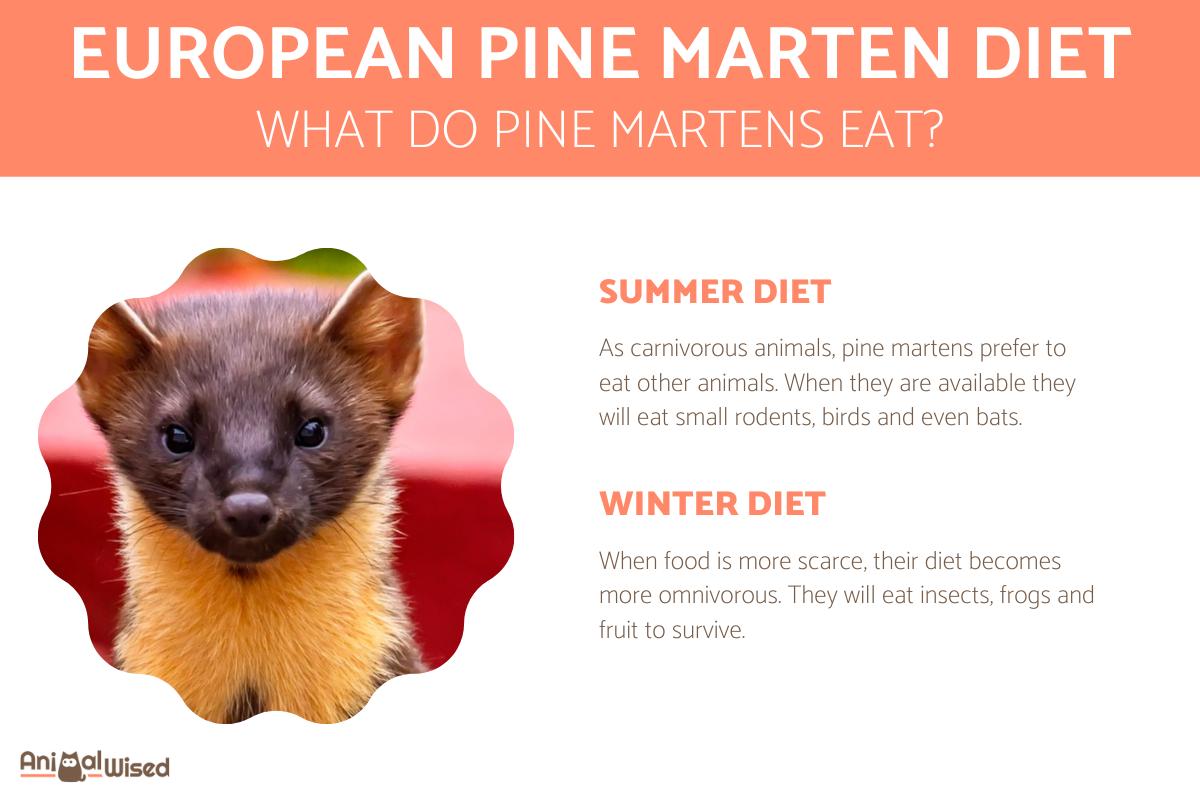
The European pine marten (Martes martes) is a member of the order Carnivora, meaning they are specially adapted to eating the flesh of other animals. Some consider the pine marten to be omnivorous since they can eat non-animal sources of food. Undoubtedly cute and far from an apex predator, the pine marten is nonetheless an incredibly adept hunter for the food they do consume.
At AnimalWised, we discover what do pine martens eat? By looking more closely at the European pine marten diet, we can have a better idea of how this mustelid interacts with their ecosystem. We also compare their diet to the American pine marten (Martes americana) to see what similarities or differences there may be.
What does a European pine marten eat?
Commonly known simply as a marten, the European pine marten is from the family Mustelidae. As stated in the introduction, they are from the order Carnivora meaning they are mainly carnivores. Although a carnivorous animal, the pine marten is not necessarily the deadliest hunter in their environment. In fact, many are prey to larger animals. Fortunately for the pine marten, they are also very nimble and quick, so can often evade capture.
What a European pine marten eats does not only depend on their ability to hunt. It largely depends on what food is available in their environment. As a carnivore, their preference is for other animals. What prey may be available is changeable according to factors such as climate since this can increase scarcity. When animals are available for predation, the European pine marten will eat the following:
Animals that a pine marten eats according to season
- Voles (spring and autumn)
- Bank voles (spring and autumn)
- Field voles (spring and autumn)
- Field mice (spring and autumn)
- Shrews (spring and autumn)
- Wild rabbits (spring and autumn)
- Squirrels (spring and autumn)
- Bats (various)
- Hares (spring and autumn)
- Certain birds such as blackbirds, finches, thrushes, or tits (summer)
- Certain amphibians such as frogs, toads, and salamanders (summer)
In spring and autumn, the marten feeds mainly on small rodents which make up 80% of its diet at different points of the year. These include voles, ground voles, wood voles, field mice, and shrews. During these seasons, they are also quite capable of capturing wild rabbits, squirrels, hares, and even bats. This last prey species is thanks to a pine marten's incredible climbing skills, making them partly arboreal mammals.
Rodents and other small mammals tend to be more scarce in the summer. During this time, it is more common for the pine marten to hunt birds and their eggs, as well as frogs, salamanders, and toads. Pine martens are less active in the winter and prey is generally not as easy to come by. However, they will try their luck if they come across any. They will also scavenge at times when food is less available.
Moreover, their diet can be influenced by the availability of alternative food sources within their habitat. During harsh winters or periods of food scarcity, pine martens have been known to adapt by expanding their diet to include carrion, allowing them to survive when live prey is scarce.
Fruits pine martens eat
Although a carnivore, European pine martens will supplement their diet with other food. In the summer, this can even be as much as 70% of their diet, although they will generally prefer to feed on other animals. Some fruits pine martens eat include:
- Strawberries
- Raspberries
- Cherries
- Apples
- Rosehips
In addition to these common fruits, pine martens might also consume other seasonal berries when available, such as blueberries and blackberries, further diversifying their diet.
Insects pine martens eat
When its favorite prey is not available, a marten can derive their necessary nutrition from insects, especially protein. They include:
- Bumblebees
- Beetles
- Grasshoppers
Although we know the European pine marten is a carnivorous animal, we can see they essentially become omnivorous when the seasons change.

Characteristics of a European pine marten
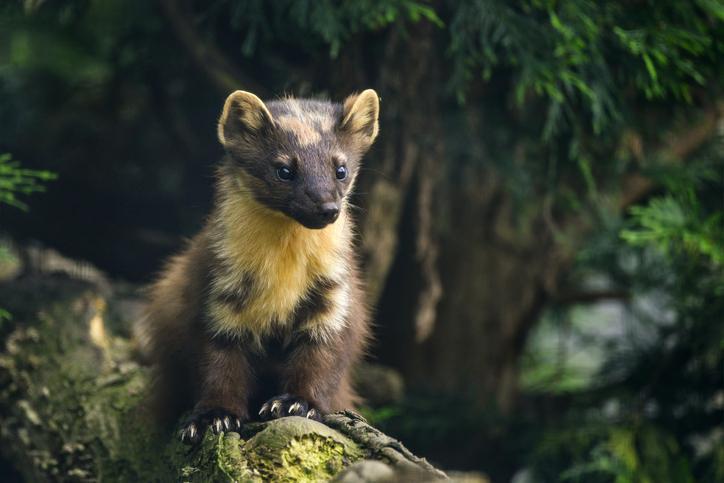
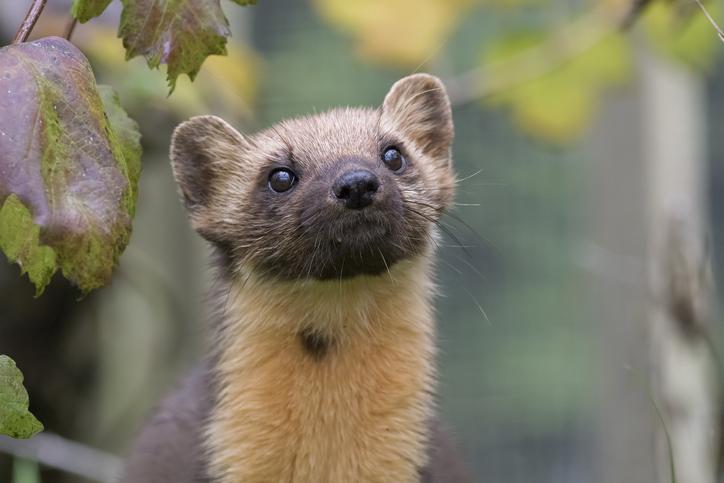
Now you know more about what a pine marten eats, we can discover more about this little mustelid's characteristics and behaviors. They are a small mammal with brown fur on their body, although they have a distinctive blond undercarriage known as their bib. The fur becomes darker on their extremities such as their feet and nose, with the exception of their ears which have a blond halo the same color as their chest.
The blond bib and similar morphology means the European pine marten is often confused with a weasel, ferrets or other mustelids. They are larger than many of these species, varying between 20-27" (51 to 70 cm) in length for males and between 18-23" (46 to 58 cm) for females. Males weigh between 1.8-4.4 lb (0.83 to 2 kg) and females weigh between 1.6-2.6 lb (0.75 to 1.2 kg). In the wild, the life expectancy of the European pine marten is between 10 to 12 years of age.
Another interesting aspect of their physical characteristics is their long bushy tail, which not only aids in balance while climbing but also serves as a tool for communication. The tail can be used to signal other martens, especially during territorial disputes or mating displays.
Find out about the pine marten's close relation with our article on the different types of ferrets.
European pine marten habitat
As their name suggests, the European pine marten is endemic to Europe. Their distribution extends from Eurasia to northern Spain in the west, Scandinavia in the North and Syria to the East. They are distributed over large areas, but they generally prefer coniferous forests or mixed forests. Males tend to cover a territory of around 150 hectares, but females have a smaller range of only around 30 hectares.
These habitats not only provide ample food sources but also offer numerous hiding spots and nesting areas. Pine martens often use hollow trees or abandoned nests as dens, which are crucial for raising their young and storing food. Moreover, the dense forest canopy provides protection from aerial predators and harsh weather conditions.
Take a look at our sister site for more information on the different types of forests in which you can find the European pine marten.
Reproduction of pine martens
Male pine martens are sexually mature around the end of their second year of life. Female martens will be sexually mature around their third year and they will be able to reproduce until they are 12 years old.
Females can reproduce between the months of June and August, during which they are able to have several periods of heat spaced by a few days of rest. The courtship ritual in martens can last almost a fortnight and is characterized by the setting up of games and fights. They carry out sexual reproduction with copulation lasting around 90 minutes, during which time the male will mount the female and bite her neck for purchase.
The gestation of the marten is very long and it lasts a up to 285 days. This is due to the fact that the fertilized eggs reach the stage of blastomeres before ceasing their development and they will descend into the uterus only after 240 days.
As we have seen, the female will give birth almost a year after mating. She will give birth to a maximum of 7 babies for an average of 3 young per female. As it is a mammal, the female will feed her young with the milk from her breasts, the lactation period lasting 45 days before the young are weaned. The little ones will leave the family nest as soon as they are three months old and at 5 months they will have their adult size.
Pregnant pine martens will carry out denning where they will create a den to give birth. Although pine martens do not hibernate in winter, they will store up food and can rest in the den for a long time. Research suggests that the pregnant female European pine marten diet changes during denning[1]. Analysis of their feces suggests they catch smaller prey such as frogs, likely so they don't have to leave their young for prolonged periods of time.
Additionally, the den serves as a safe haven not only from predators but also from harsh weather. The care and protection of the young are crucial during the early stages of life, as the survival rate of the offspring largely depends on the mother's ability to provide food and security.

What do American pine martens eat?
The American pine marten (Martes americana) is a very similar mustelid to the European pine marten. Their differences vary in appearance, with the American marten's coat being lighter and having a distinctive reddish tint. They are found all throughout the northern part of North America, their habitat range stopping in the Northern United States. American martens are also sexually dimorphic animals with males being much larger than females.
The diet of the American pine marten is similarly variable when compared to their European cousin. They are opportunistic predators and food depends on availability. They are majorly dependent on voles, but they will also eat larger mammals such as hares. Their diet is more diverse in summer.
American martens will also eat fruit. Similar to the European pine marten, this is important for their ecosystem as they act as seed dispersers[2]. When they eat the fruit, the seeds will pass through their digestive tract sufficiently intact to be able to grow once excreted. Learn more about granivores with our guide to seed-eating animals.
Additionally, the American pine marten has been observed to consume a variety of other foods such as birds, eggs, and insects. This adaptability is crucial in regions where food sources can fluctuate drastically between seasons. The marten’s ability to change its diet based on availability highlights its role as a resilient and adaptable member of the ecosystem.

If you want to read similar articles to What Do Pine Martens Eat?, we recommend you visit our Healthy diets category.
1. Grabham, A. A., Ventress, G., & Hayward, M. W. (2018). The diet of denning female European pine martens (Martes martes) in Galloway Forest District, South West Scotland, Great Britain. Mammal Research, 64(25).
https://link.springer.com/article/10.1007/s13364-018-0398-5
2. González-Varo, J. P., López-Bao, J. V., & Guitián, J. (2013). Functional diversity among seed dispersal kernels generated by carnivorous mammals. The Journal of animal ecology, 82(3), 562–571. https://doi.org/10.1111/1365-2656.12024