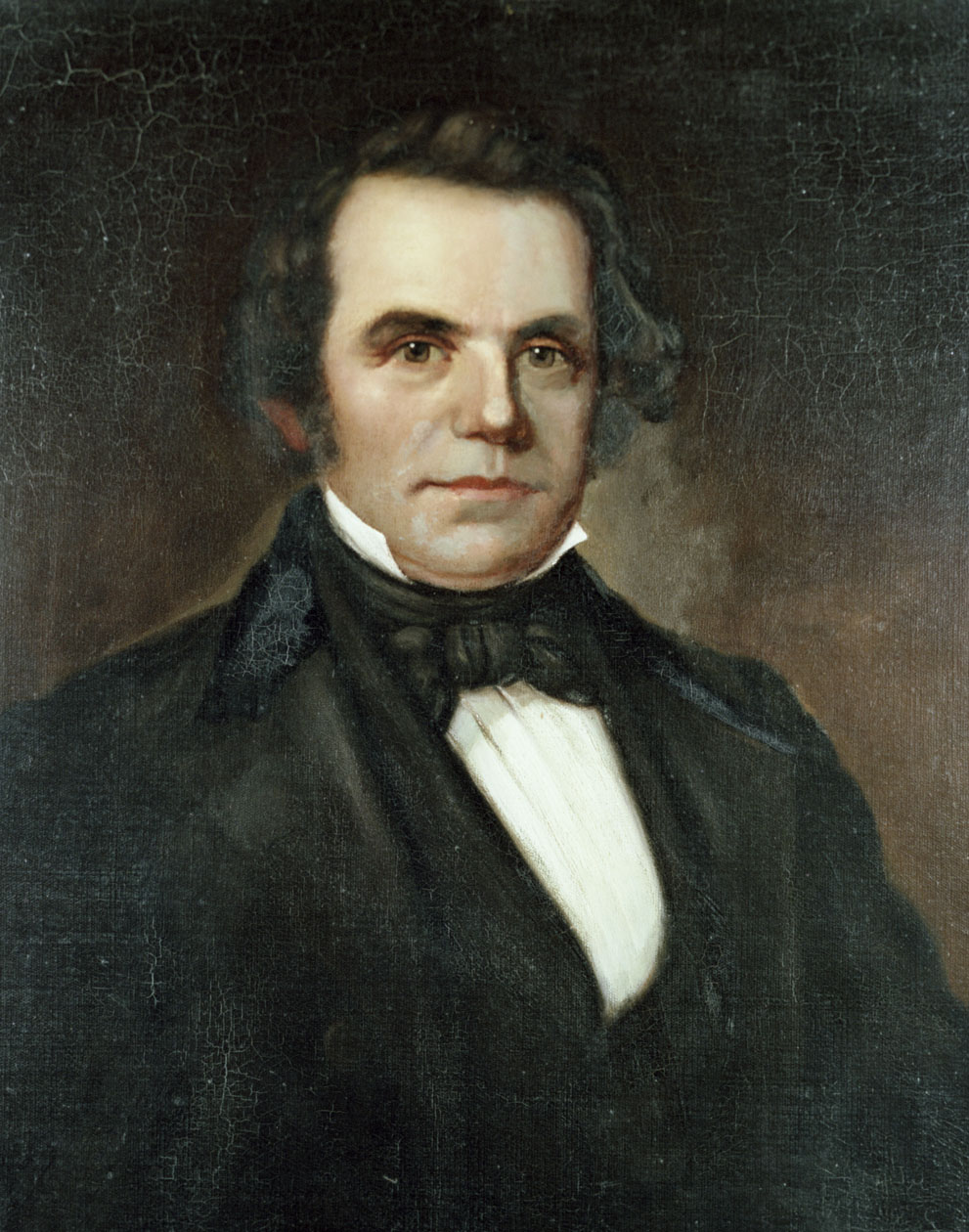
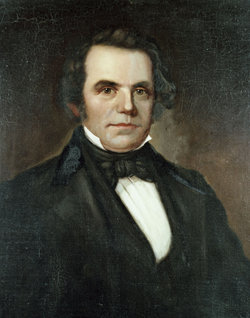
36th North Carolina Governor. He was a 19th-century Democratic politician who became the governor of North Carolina after the sudden death of the 35th governor. This occurred after weeks of the American Civil War had started, and North Carolina had seceded from the Union. He was the son of a U.S. Congressman, James Clark. After being educated at the Louisburg Academy, he graduated with honors from the University of North Carolina. With degrees in 1826 and A.M. in 1832, he studied law, but never practiced. Like his father, he was a planter who owned a plantation with a vast acreage that was worked by the enslaved. He had businesses in Alabama and Tennessee. In 1850, Clark was appointed colonel of the Twenty-first Regiment of North Carolina Militia by Whig Governor Charles Manly. Starting a political career, he was appointed a position as a court clerk in 1840 and was a member of the North Carolina Senate, serving 1850 to 1861. On July 7, 1861, when Governor John W. Ellis died of tuberculosis, he was elected to the governorship as he was Speaker of the State Senate, completing Ellis' term. With the American Civil War starting in April of 1861, volunteers were armed, and provisions were raised for the war effort. As the Governor, he was unable to maneuver in the political chaos of his state, which was ushered in by the American Civil War. He established a prison for Union soldiers and attempted to guard the state's coastline from invading Union troops. He served as the state's chief executive from July 1861 to September 8, 1862. He was replaced by Zebulon Baird Vance Sr. After leaving the governorship, he served again in the North Carolina Senate from 1866 to 1867. Following being chairman of the county court, he lived in retirement until his death at age 66. In 1850, Clark married his cousin, the widow Mrs. Mary Weeks Hargrave, and the couple had five children.
36th North Carolina Governor. He was a 19th-century Democratic politician who became the governor of North Carolina after the sudden death of the 35th governor. This occurred after weeks of the American Civil War had started, and North Carolina had seceded from the Union. He was the son of a U.S. Congressman, James Clark. After being educated at the Louisburg Academy, he graduated with honors from the University of North Carolina. With degrees in 1826 and A.M. in 1832, he studied law, but never practiced. Like his father, he was a planter who owned a plantation with a vast acreage that was worked by the enslaved. He had businesses in Alabama and Tennessee. In 1850, Clark was appointed colonel of the Twenty-first Regiment of North Carolina Militia by Whig Governor Charles Manly. Starting a political career, he was appointed a position as a court clerk in 1840 and was a member of the North Carolina Senate, serving 1850 to 1861. On July 7, 1861, when Governor John W. Ellis died of tuberculosis, he was elected to the governorship as he was Speaker of the State Senate, completing Ellis' term. With the American Civil War starting in April of 1861, volunteers were armed, and provisions were raised for the war effort. As the Governor, he was unable to maneuver in the political chaos of his state, which was ushered in by the American Civil War. He established a prison for Union soldiers and attempted to guard the state's coastline from invading Union troops. He served as the state's chief executive from July 1861 to September 8, 1862. He was replaced by Zebulon Baird Vance Sr. After leaving the governorship, he served again in the North Carolina Senate from 1866 to 1867. Following being chairman of the county court, he lived in retirement until his death at age 66. In 1850, Clark married his cousin, the widow Mrs. Mary Weeks Hargrave, and the couple had five children.
Bio by: Linda Davis
Inscription
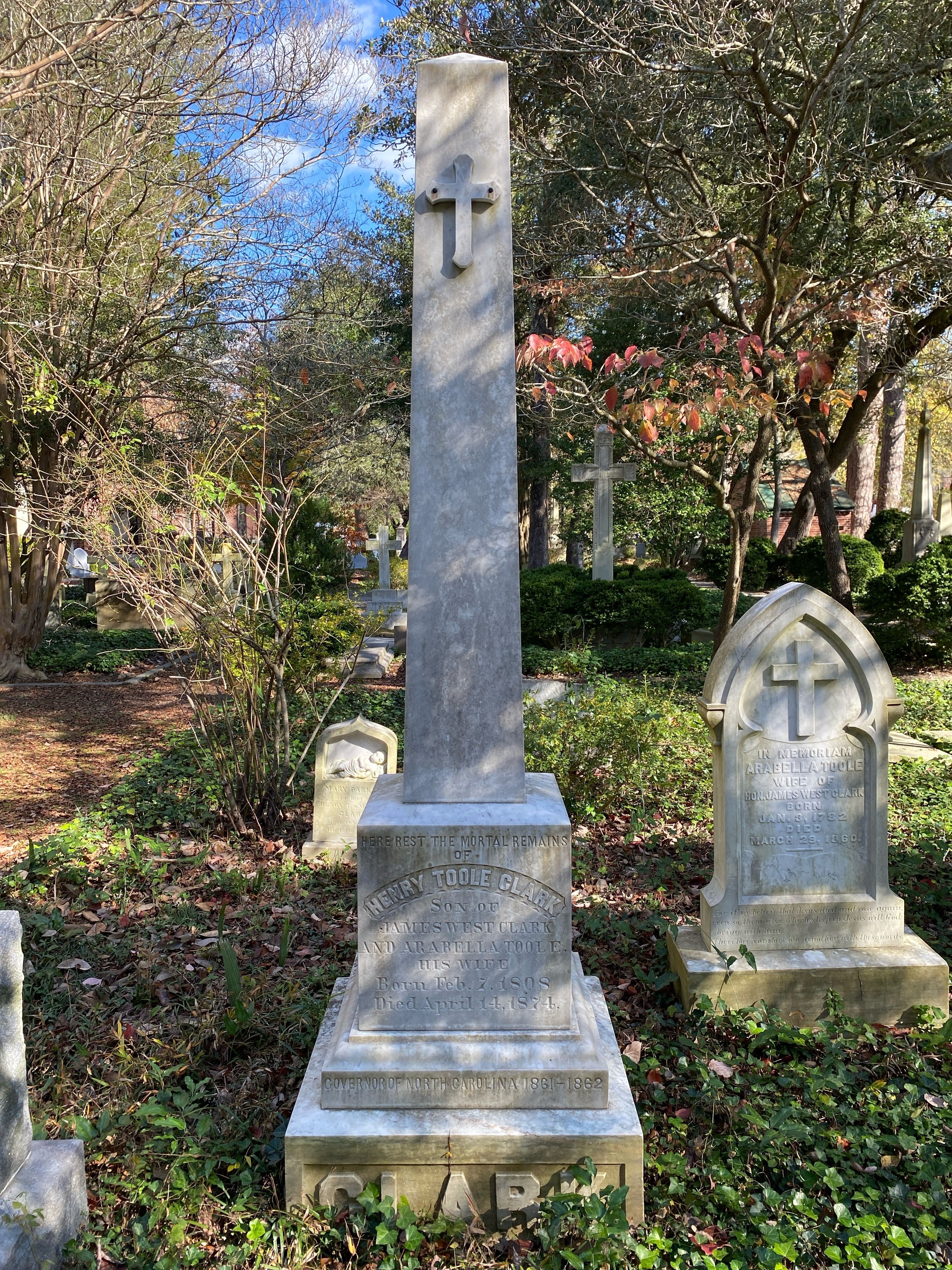
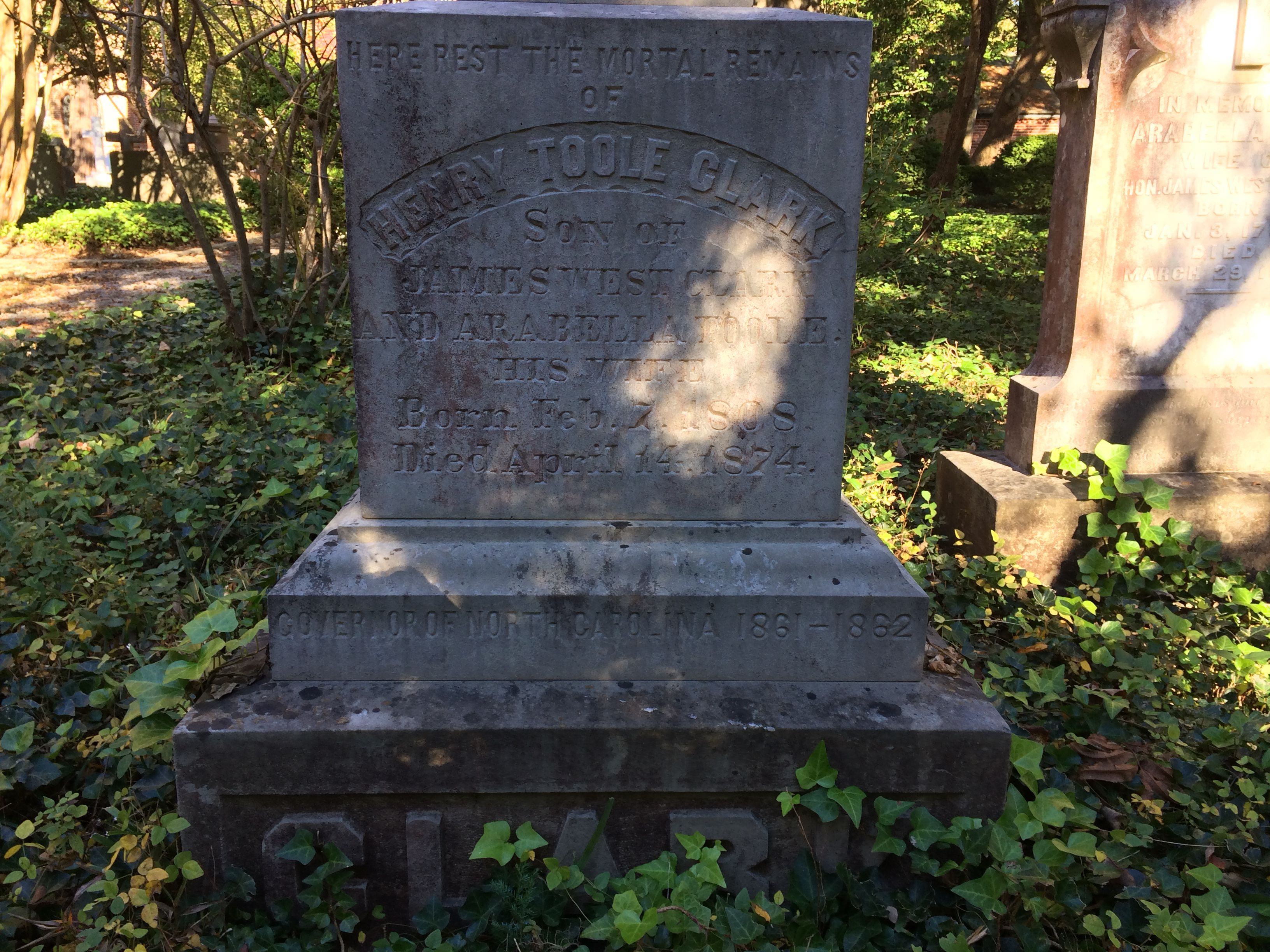
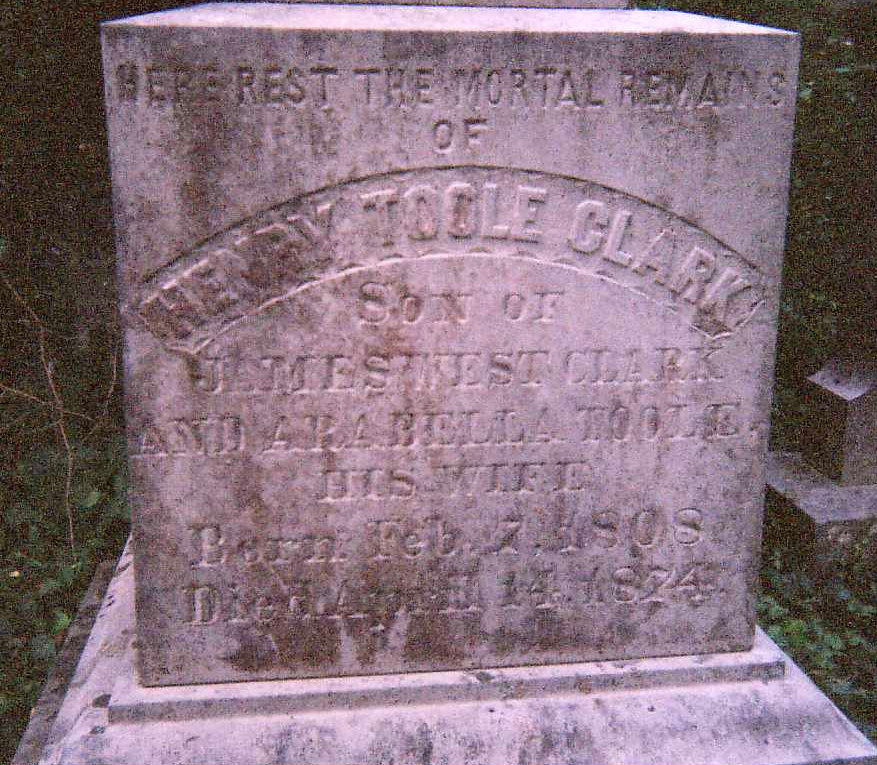
HERE REST THE MORTAL REMAINS OF
HENRY TOOLE CLARK
Son of
JAMES WEST CLARK
AND ARABELLA TOOLE,
HIS WIFE
Born Feb. 7, 1808
Died April 14, 1874.
GOVERNOR OF NORTH CAROLINA 1861--1862
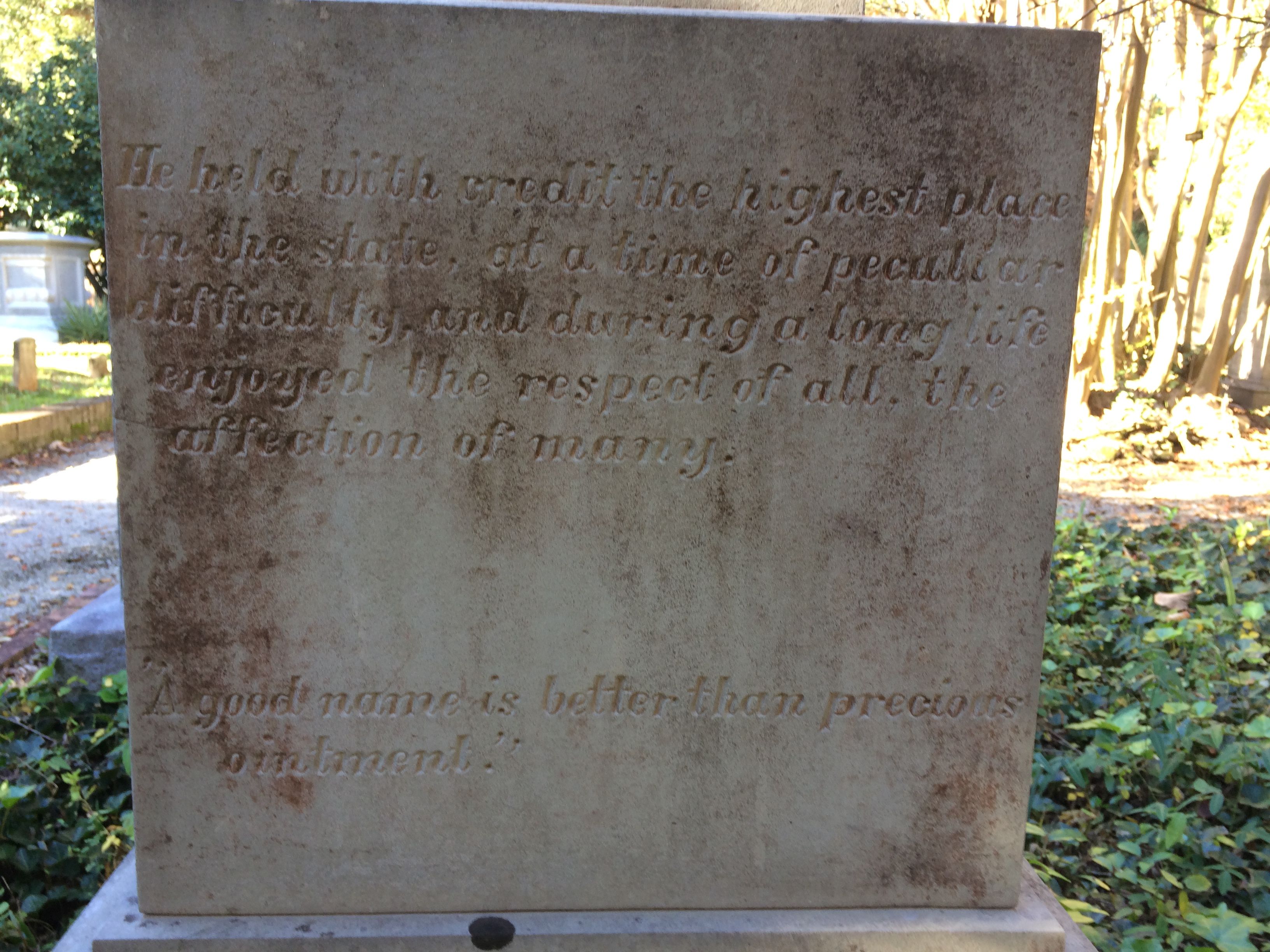
He held with great credit the highest place in the state, at a time of peculiar difficulty, and during a long life engaged the respect of all, the affection of many.
"A good name is better than precious ointment."
Gravesite Details
Buried next to his wife