
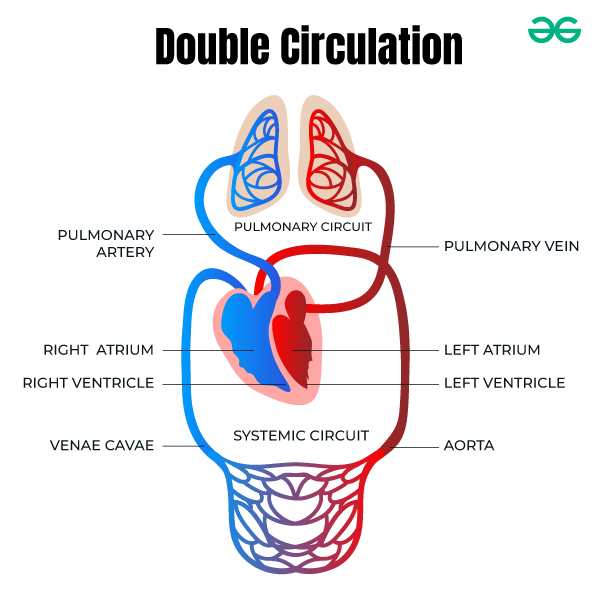
Blood circulation in the body is a continuous and systematic process guided by the heart, which acts as a pump. The circulation process can be divided into two main circuits: the systemic circulation and the pulmonary circulation.
1. Systemic Circulation:
- Oxygenated Blood: The left ventricle of the heart pumps oxygen-rich blood into the aorta, the body's largest artery.
- Distribution: From the aorta, blood travels through a network of arteries and arterioles to various tissues and organs, delivering oxygen and nutrients.
- Exchange: In the capillaries, oxygen and nutrients diffuse from the blood into the tissues, while carbon dioxide and waste products enter the blood.
- Return: Deoxygenated blood is collected by venules and veins, which converge into the superior and inferior vena cava, transporting it back to the right atrium of the heart.
2. Pulmonary Circulation:
- Deoxygenated Blood: The right ventricle pumps deoxygenated blood into the pulmonary arteries, which lead to the lungs.
- Oxygenation: In the lungs, carbon dioxide is exchanged for oxygen in the alveoli. Oxygenated blood then flows into the pulmonary veins.
- Return: Pulmonary veins carry the oxygen-rich blood back to the left atrium of the heart.
Relevant Links:
