
Cloud computing has become a game-changer in IT and business. Whether you are updating your Facebook status, using net banking, or saving files on Google Drive, you're already relying on the cloud. It’s not just for personal use—businesses use cloud solutions for scalability, cost savings, and flexibility. Those who embrace it stay ahead, while those who don’t may struggle to keep up. In today’s digital world, moving to the cloud isn’t just an upgrade—it’s a necessity.
If you're aiming to enhance your understanding of cloud technology and gain a competitive edge, the AWS Cloud Practitioner Certification course offers the perfect entry point. It equips you with essential knowledge to thrive in the cloud-driven landscape.
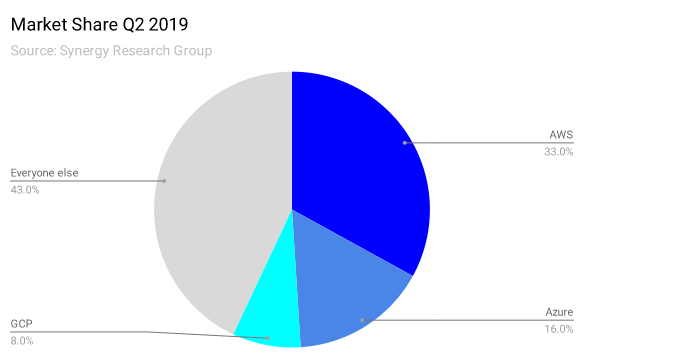
As per Forbes, the expenses on public cloud services is expected to rise at an annual growth of around 19.4% from $70B in 2015 to more than $141B in 2019. According to IDC, it has been also found that spending on public cloud services and infrastructure is forecast to reach $210 billion in 2019, an increase of 23.8% over 2018. The forecasted five-year compound annual growth rate (CAGR) from 2017 to 2022 is projected to be 22.5-percent to reach $370 billion. If we check out the market share of total cloud computing service and infrastructure then Amazon Web Services (AWS) currently leads and continues to grow. Take a look at the picture given below which says a lot about the market share and growth rate of AWS.

Major industries including hospital and healthcare, staffing & recruiting, consulting along with the major ones being software, ITES employing their services on AWS for their business operations and support. Around 5 billion dollars valuation giants have joined hands with AWS.
- Adobe adopted AWS Cloud because of the richest set of APIs and deep integration of all the automated softwares.
- AirBnB adopted AWS Cloud to launch their community driven app.
- Netflix used the model of the dynamic AWS infrastructure of about tons of instances over many geographical areas.
- Lyft spent, $300 million between 2019 and 2021
- Pinterest will spend around, $750 million between 2019 and 2023.
- Apple spends over, $360 million per year for iCloud and other services
AWS has also shaken hands with Nokia for 5G, IoT and cloud services, it is further attracting attention and trust of the cloud consumers/service providers. From all these data you can imagine that learning AWS is not a foolish idea from career and business perspective. Let’s discuss the services offered by AWS and the major benefits of choosing it, in case if you are confused about choosing this platform.
Services offered by AWS
AWS offers its services to businesses through dozens of data centers in Availability Zones (AZs) that are spread in different regions across the world. Each area has multiple AZs, which in turn have several physical data centers. The regions and AZs are all connected by low-latency network links that create a pool of highly reliable infrastructure resources that are resistant to failures of entire data centers or individual servers.
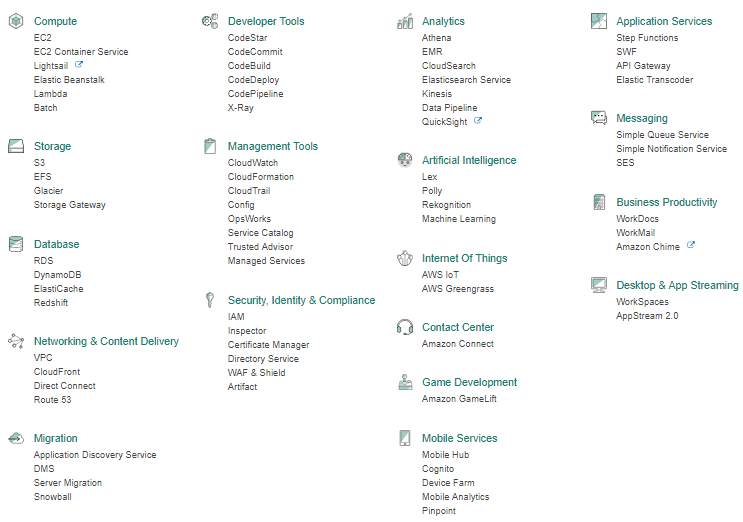
You can easily create your account on AWS and get a lot of benefits of AWS services. One of the best things is you have to pay only for those services that you are using and there is no need to pay extra. We are going to mention some of the services that are provided by AWS.
Reasons to learn AWS
AWS is safer, more cost-effective, and highly efficient compared to competitors like Google Cloud, Alibaba, and IBM, making it the top choice for businesses. With major companies adopting AWS, the demand for AWS professionals is skyrocketing. Google Trends shows a severe AWS skill gap, creating high-paying job opportunities. Whether you're a student or an industry leader, learning AWS opens doors to career growth, cloud computing expertise, and business innovation. Now let’s discuss some more reasons to learn AWS…
1. Global Data Center Network
AWS has data centers in over 30 regions worldwide, ensuring low latency and fast response times. With services like CloudFront, businesses can deliver content quickly to users across different locations.
2. Powerful AI and Machine Learning Tools
AWS leads in AI and machine learning with tools like SageMaker for model training, DeepLens for computer vision, and Lex for chatbots. This makes it the go-to choice for businesses using AI-powered applications.
3. Serverless and Container Support
If you don’t want to manage servers, AWS has Lambda for running code automatically. It also supports Docker and Kubernetes (EKS, ECS, Fargate), making containerized applications easy to deploy.
4. Built-in DevOps and CI/CD Features
Developers love AWS for its DevOps tools like CodePipeline, CodeBuild, and CodeDeploy, making it easy to automate software deployment. This speeds up development and ensures smooth releases.
5. Works Well with On-Premise Systems
AWS supports hybrid cloud setups with AWS Outposts and Direct Connect, allowing businesses to mix on-premise and cloud infrastructure smoothly. If you’re using multiple cloud providers, AWS integrates seamlessly with them.
6. Thousands of Pre-Built Solutions
The AWS Marketplace has 12,000+ ready-to-use applications, including cloud analytics, cybersecurity, and business tools. Plus, AWS has a huge network of trusted partners to help businesses adopt cloud technology efficiently.
7. Reliable Cloud Storage and Database Options
AWS provides scalable storage solutions like S3, EFS, and Glacier for backups and archives. It also offers managed databases like RDS, DynamoDB, and Redshift, making data handling fast and hassle-free.
8. Top-Notch Security and Compliance
AWS follows industry security standards like ISO 27001, HIPAA, and GDPR, ensuring your data is protected. With built-in security tools like AWS Shield, WAF, and IAM, businesses get enterprise-level security without extra costs.
9. Pay as you go pricing
Instead of paying a fixed fee, AWS offers a pay-as-you-go model. You can choose Reserved Instances or Spot Instances to save money, cutting cloud costs by up to 90% compared to traditional setups.
10. Easy to Scale Up or Down
AWS makes handling traffic spikes effortless with auto-scaling and load balancing features. Whether you're running a startup or a large enterprise, you can scale resources up or down as needed without worrying about downtime.
Getting started with AWS
Ready to start your journey with AWS? Setting up an account is easy, and AWS even offers a free-tier option for beginners. This allows you to try out many of AWS’s services without any cost, helping you get familiar with the platform before you commit to anything. Plus, for those serious about taking their skills to the next level, the AWS Cloud Practitioner certification is a great place to start. It covers the fundamentals of cloud technology and provides a solid foundation for more advanced AWS training.
To know more about AWS and benefits of AWS click here - Amazon Web Services (AWS) Tutorial
Conclusion
AWS is more than just a cloud provider—it’s a powerful platform that can help businesses grow while also offering incredible career opportunities for individuals looking to get into the tech industry. With its security features, scalability, and global reach, AWS is the platform of choice for many businesses. Whether you're a beginner or an experienced tech professional, learning AWS will help you stay ahead in today’s cloud-driven world.
So, what are you waiting for? Sign up for a free AWS account today and start exploring the endless possibilities that AWS has to offer!
