
An Organization Manual in management is an important document that provides the principles, policies, procedures, and guidelines necessary for managing an organization effectively. It serves as a valuable reference tool for managers by offering a structured framework that ensures consistency, coordination, and smooth functioning of organizational activities. The manual generally includes areas such as organizational structure, management policies, leadership roles and responsibilities, performance management, strategic planning, change management, and communication practices. By clearly defining managerial duties, decision-making processes, and organizational objectives, it helps managers perform their responsibilities with clarity and confidence. It also improves efficiency, strengthens coordination among departments, supports streamlined operations, and contributes to the overall success of the organization by establishing a standardized and systematic approach to management.
Contents of Organization Manual
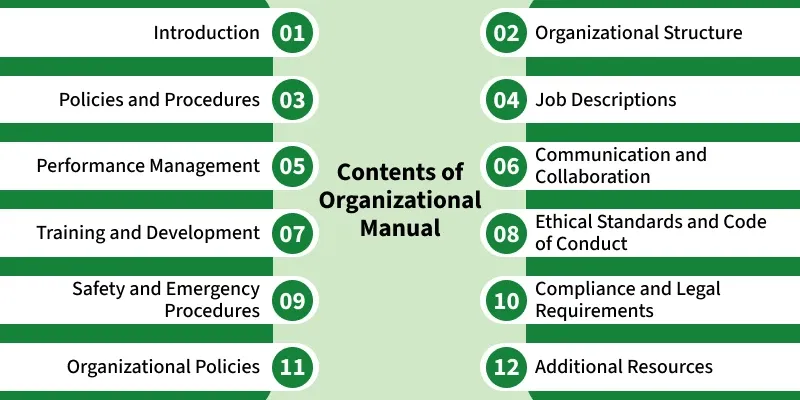
The contents of an organization manual may vary depending on the organization and its industry. However, these are some common elements that are typically included:
Introduction: This section provides a broad overview of the organization's mission, vision, and core values. It explains why the organization exists, what it aims to achieve in the long run, and the principles that guide its decisions. By setting this foundation, employees gain a clear sense of direction and purpose, helping them understand how their roles contribute to the larger goals of the organization.
Organizational Structure: This part of the manual explains the hierarchy and reporting lines within the organization. It describes how different departments, units, and roles are connected, ensuring that employees understand who they report to and how workflows move across teams. A clear structure promotes coordination, reduces confusion, and helps individuals identify key areas of responsibility.
Policies and Procedures: This section outlines all major guidelines, rules, and standard procedures that govern daily operations. It includes policies related to human resources, finance, marketing, operations, and information technology. Topics like employee conduct, recruitment processes, performance management, financial controls, safety rules, and data security are explained in detail. These guidelines ensure consistency, fairness, and compliance across the organization.
Job Descriptions: The manual provides clear and detailed descriptions of every job role within the organization. Each description explains the primary responsibilities, required skills, reporting relationships, and performance expectations. This helps employees understand their duties, avoid role confusion, and work more efficiently toward organizational goals.
Performance Management: This section describes how the organization evaluates employee performance and encourages professional growth. It explains the process of setting goals, conducting performance reviews, offering constructive feedback, and creating development plans. By understanding the performance system, employees know how their contributions will be assessed and supported.
Communication and Collaboration: Guidelines for effective communication within the organization are included here. This covers communication channels, meeting practices, documentation standards, and the use of collaboration tools. The purpose is to promote smooth interaction between teams, reduce delays, and ensure that everyone shares information clearly and promptly. Internal communication platforms and strategies are also explained.
Training and Development: This part lists the various training programs, skill development workshops, and learning resources available to employees. It explains how the organization invests in continuous learning to improve employee performance and prepare them for future roles. Information on onboarding, mentorship, and career development pathways is also provided.
Ethical Standards and Code of Conduct: The manual outlines the ethical expectations that every employee must follow. It emphasizes integrity, professionalism, confidentiality, fairness, and respect in all workplace interactions. By clearly stating acceptable and unacceptable behaviour, the section encourages a healthy and responsible work culture.
Safety and Emergency Procedures: This section focuses on maintaining a safe and secure working environment. It includes instructions for handling workplace hazards, fire emergencies, medical situations, and other safety risks. Guidelines for using safety equipment and reporting accidents are also explained so that employees know how to respond quickly and responsibly.
Compliance and Legal Requirements: The manual highlights the laws, regulations, and industry standards that the organization must follow. It explains compliance requirements related to labour laws, environmental regulations, data protection, financial reporting, and other legal obligations. This ensures that employees understand their role in maintaining lawful and ethical operations.
Organizational Policies: Detailed descriptions of various internal policies are provided here. This includes rules for leave management, travel and expense claims, dress code, attendance, remote work, IT system usage, and other workplace expectations. Clear policies help employees function smoothly and maintain discipline and consistency across the organization.
Additional Resources: This section offers references to supporting materials such as handbooks, department-specific manuals, forms, templates, and links to internal portals. These resources help employees find additional information easily and complete their tasks with accuracy and efficiency.
Types of Organization Manual
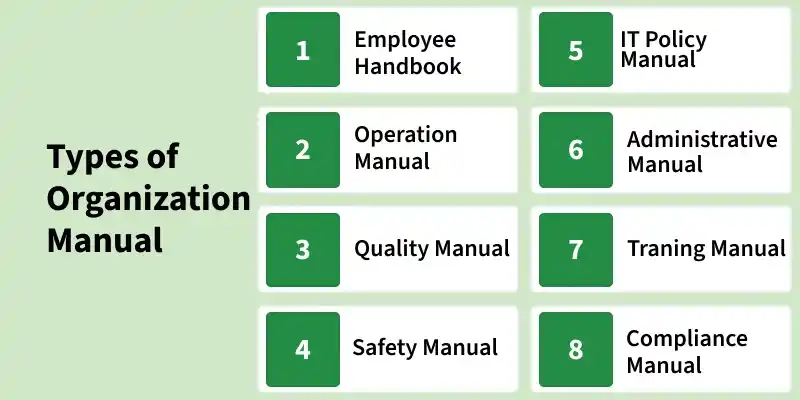
Various types of organization manuals can be tailored to meet the specific needs of an organization. Here are some commonly used types:
Employee Handbook: This manual provides employees with comprehensive information about the organization's policies, procedures, benefits, and expectations. It covers topics such as employment terms, code of conduct, leave policies, performance expectations, and employee rights and responsibilities.
Operations Manual: An operations manual focuses on the day-to-day operational procedures of the organization. It includes guidelines and instructions for various operational processes, such as production, logistics, quality control, inventory management, and customer service. This type of manual ensures consistency and efficiency in operational activities.
Quality Manual: A quality manual outlines the organization's quality management system. It describes the quality objectives, processes, and procedures implemented to ensure product or service quality. This manual typically includes information on quality control, quality assurance, quality improvement initiatives, and relevant industry standards or certifications.
Safety Manual: A safety manual is developed to promote a safe and healthy working environment for employees. It includes safety policies, procedures, and guidelines to prevent workplace accidents, address hazards, and ensure compliance with occupational health and safety regulations. This manual may cover topics, such as emergency response protocols, safety equipment usage, hazard identification, and employee training requirements.
IT Policy Manual: This manual focuses on the organization's information technology policies, procedures, and guidelines. It covers topics such as acceptable use of technology resources, data security and privacy, network and system administration, software licensing, and IT support procedures. The IT policy manual helps ensure the proper and secure use of technology within the organization.
Administrative Manual: An administrative manual provides guidelines and procedures for administrative tasks and functions within the organization. It may cover areas, such as office management, record keeping, procurement, travel and expense management, communication protocols, and administrative support services.
Training Manual: A training manual guides trainers or facilitators in conducting training programs within the organization. It includes training objectives, content outlines, instructional methodologies, and assessment tools. This manual ensures consistency and effectiveness in delivering training initiatives.
Compliance Manual: A compliance manual focuses on ensuring adherence to legal and regulatory requirements relevant to the organization. It guides compliance policies, procedures, and controls to mitigate risks and maintain legal compliance in areas, such as finance, data protection, environmental regulations, and industry-specific regulations.
