
Quality Control (QC) is the process of checking products or services to ensure they meet set standards and are free from defects. It involves inspecting and testing different stages of production to identify and fix problems. By doing this, QC helps maintain consistency, improve customer satisfaction, and ensure that the final output is reliable and meets expectations.
Example: In a manufacturing unit producing light bulbs, a QC inspector tests each batch to ensure they meet brightness and durability standards. Bulbs that don’t meet the criteria are rejected.
Types of Quality Control
Quality control can be classified into different types based on the stage and purpose of quality checking. The main types of quality control are as follows:
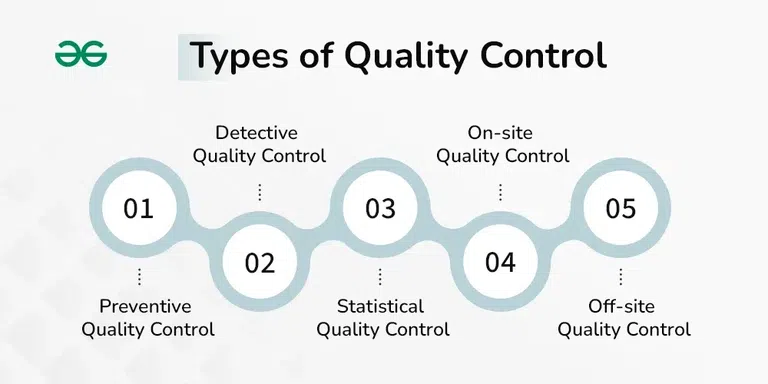
Preventive Quality Control
Preventive QC focuses on identifying and addressing potential issues before they occur in the production process. This involves implementing measures such as employee training, proper equipment maintenance, and process optimization to minimize the likelihood of defects.
Detective Quality Control
Detective QC involves identifying and correcting issues during or after the production process. This may include inspections, testing, and monitoring to catch defects that may have occurred despite preventive measures. The goal is to detect and address problems promptly.
Statistical Quality Control
Statistical QC utilizes statistical methods to monitor and control processes. This involves collecting and analyzing data to identify variations and trends, allowing organizations to make informed decisions and adjustments to maintain consistent quality.
On-site Quality Control
On-site QC involves conducting inspections and tests at the production site. This ensures that products meet quality standards before they are released to the market. On-site QC is particularly crucial in industries where variations in production conditions can impact quality.
Off-site Quality Control
Off-site QC refers to inspections and tests conducted away from the production site. This could involve sending samples to a third-party laboratory for testing, and providing an independent assessment of product quality to ensure objectivity and transparency.
Quality Control Process
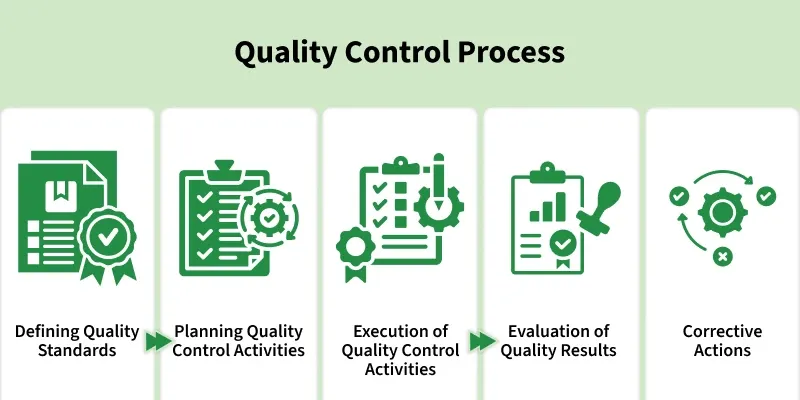
Define Standards
Establishing clear and detailed quality standards is the initial step in the Quality Control (QC) process. These standards serve as benchmarks against which products or services are mostly evaluated. Defining precise criteria ensures a common understanding within the organization and provides a basis for consistent quality assessment.
Plan Quality Control Activities
Once standards are in place, a comprehensive plan is developed to outline the specific QC activities that need to be conducted. This plan includes the frequency of inspections, testing protocols, and the responsibilities of various team members. Planning ensures that QC efforts are systematic, thorough, and aligned with organizational goals.
Execute Quality Control Activities
The planned QC activities are implemented during the production process. This involves inspections, tests, and measurements conducted according to the predetermined plan. Regular and systematic execution of these activities helps in identifying deviations from established standards and ensures that quality is monitored throughout the entire production cycle.
Evaluate Results
Data collected from inspections and tests are thoroughly evaluated to determine whether the products or services meet the defined quality standards. This evaluation may involve statistical analysis, trend identification, and comparison against benchmarks. Understanding the results allows for informed decision-making regarding the acceptability of the output.
Take Corrective Action
Based on the evaluation, any identified deviations or non-conformities trigger corrective actions. These actions can range from immediate adjustments in the production process to long-term process improvements. The goal is not only to address current issues but also to prevent their recurrence in future productions.
Benefits of Quality Control
Consistency
One of the primary benefits of QC is the establishment and maintenance of consistency in the quality of products or services. By adhering to predefined standards, organizations ensure that each output meets the same level of excellence, fostering reliability and predictability.
Cost Savings
QC contributes to cost savings by identifying and addressing defects early in the production process. Early detection minimizes the need for expensive rework, reduces waste, and optimizes resource utilization. As a result, operational costs associated with poor quality are significantly lowered.
Customer Satisfaction
QC plays a pivotal role in enhancing customer satisfaction. Products or services that consistently meet or exceed quality standards lead to satisfied customers. This satisfaction not only ensures repeat business but also contributes to positive word-of-mouth, attracting new customers.
Market Credibility
The consistent delivery of high-quality products or services enhances the market credibility of an organization. A positive reputation for quality builds trust among consumers, partners, and stakeholders. This credibility can be a powerful differentiator in a competitive business landscape.
Continuous Improvement
QC fosters a culture of continuous improvement within an organization. By regularly evaluating results and implementing corrective actions, companies can identify areas for enhancement in processes and products. This commitment to ongoing improvement ensures adaptability and competitiveness in the market.
Quality Control Roles and Responsibilities
Quality Control Manager
The Quality Control Manager oversees the entire QC process. Responsibilities include defining quality standards, developing QC plans, and ensuring the effective execution of QC activities. The manager also plays a crucial role in communicating quality expectations across the organization.
Inspector/Tester
Inspectors and testers are responsible for conducting on-site inspections and tests. They closely examine products or services to ensure they meet established standards. These individuals play a hands-on role in identifying any deviations and contribute to the overall quality assurance process.
Quality Analyst
Quality analysts are involved in analyzing data and results obtained from QC activities. They use statistical methods and data analysis tools to identify trends, patterns, and areas for improvement. Their insights contribute to informed decision-making and long-term quality enhancement.
Process Improvement Specialist
This role focuses on identifying opportunities for process improvement based on QC data. Process improvement specialists collaborate with various teams to implement changes that enhance efficiency, reduce defects, and contribute to overall quality optimization.
Training Coordination
Training coordinators are responsible for developing and implementing training programs related to QC. They ensure that team members are adequately trained in QC procedures, standards, and methodologies. Continuous training contributes to a skilled and knowledgeable workforce.
Quality Control Methods
Quality control methods are the techniques used by organisations to ensure that products or services meet predetermined quality standards. These methods help in identifying defects and maintaining consistency in output.
Inspection
Inspection involves the careful examination of products, components, or services to check whether they conform to specified quality standards. It may be conducted at different stages, such as before production, during production, or after completion. Inspection is widely used in manufacturing, construction, and engineering industries where physical characteristics like size, shape, finish, and appearance are crucial. Through inspection, defective items can be identified and rejected before reaching customers.
Testing
Testing refers to evaluating products or services by subjecting them to various functional, performance, or stress tests. This method helps determine whether a product performs reliably under normal or extreme conditions. Testing is commonly used in industries such as electronics, automotive, pharmaceuticals, and software development, where safety, durability, and functionality are critical. It ensures that the final output meets technical and operational requirements.
Statistical Sampling
Statistical sampling involves selecting a representative sample from a large batch or population and testing it to draw conclusions about the overall quality of the entire lot. This method is cost effective and time saving, especially in mass production, where inspecting every item may not be feasible. By using statistical techniques, organisations can estimate defect rates and maintain quality standards with reasonable accuracy.
On-site Quality Control
On-site quality control is carried out directly at the production or service location. Inspections and tests are performed in real time as the production process continues. This method allows for immediate detection of defects and quick corrective action, reducing waste and rework. On-site QC is particularly useful in manufacturing plants and construction sites where continuous monitoring is essential.
Off-site Quality Control
Off-site quality control involves sending products or samples to external laboratories or third party agencies for inspection and testing. This method provides an independent and unbiased evaluation of quality. It is commonly used when specialised testing equipment is required or when objectivity and impartiality are important, such as in food safety, pharmaceuticals, and compliance testing.
Quality Control Careers
Quality Control Engineer
Quality Control Engineers are professionals responsible for designing, implementing, and managing quality control systems. They ensure adherence to quality standards, analyze data, and identify areas for improvement in production processes.
Quality Inspector
Quality Inspectors play a hands-on role in conducting inspections and tests on products during or after the production process. They are responsible for identifying defects, ensuring compliance with standards, and maintaining quality records.
Data Analyst in Quality Control
Data Analysts in Quality Control focus on analyzing data collected from QC activities. They use statistical methods and data analysis tools to identify trends, patterns, and areas for improvement, contributing valuable insights to the decision-making process.
Quality Assurance Coordinator
While related to Quality Control, Quality Assurance Coordinators focus on developing and implementing overall quality assurance processes. They work to prevent defects and ensure that processes are designed to produce consistent and high-quality outputs.
Quality Control Manager
Quality Control Managers oversee the entire QC process within an organization. They define quality standards, develop QC plans, and ensure effective execution. Managers also play a key role in communicating quality expectations across the organization.
Real-Life Examples of Quality Control
1. Manufacturing: In manufacturing, quality control involves inspecting products on the production line to ensure they meet specific standards. This may include visual inspections, measurements, and testing to identify and address defects before products are released.
2. Software Development: In software development, quality control is achieved through code reviews, testing, and validation processes. Software testers ensure that the software meets functional and performance requirements, identifying and fixing bugs before deployment.
3. Food Industry: The food industry employs quality control to ensure the safety and quality of food products. This includes inspections, testing for contaminants, and adherence to hygiene standards to guarantee that food items meet regulatory requirements.
4. Construction: In construction, quality control involves inspecting materials, monitoring construction processes, and conducting tests on structures. This ensures that buildings and infrastructure projects meet safety standards and adhere to design specifications.
5. Healthcare: In healthcare, quality control is vital in maintaining the accuracy of medical diagnoses and treatments. Laboratories employ quality control measures in testing procedures, ensuring the reliability and precision of medical test results.
Quality Control vs Quality Assurance
Quality Control (QC) | Quality Assurance (QA) |
|---|---|
| Emphasizes detecting and correcting defects. | Emphasizes preventing defects and improving processes. |
| Applied during or after the production process. | Applied before or during the development process. |
| Involves checking products or services. | Involves setting standards and creating processes. |
| Ensures the end product meets quality standards. | Ensures processes are designed for quality outcomes. |
| Narrow focus on specific outputs. | Broad focus on overall process improvement. |
