
Crafting an impactful resume is crucial for securing your ideal supply chain analyst role. A well-organized resume effectively communicates your skills, experiences, and qualifications to potential employers. In this guide, we’ll guide you through the steps to create a standout resume tailored for the role of a Supply Chain Analyst, including key strategies to grab attention and showcase your abilities effectively.
Tips to Write a Supply Chain Analyst Resume
For a Supply Chain Analyst’s resume, it’s vital to highlight a diverse skill set, extensive work experience, relevant certifications, and educational background. Additionally, emphasize your proficiency in supply chain analysis, data interpretation, and effective communication.
- Showcase Technical Expertise: Highlight your proficiency in supply chain analysis tools and methodologies such as SAP, Oracle, or Tableau. Demonstrate your ability to analyze data, identify trends, and make data-driven recommendations for process improvements.
- Detail Work Experience: Provide a comprehensive overview of your supply chain analysis experience, including key projects you’ve managed, industries you’ve worked in, and your contributions to optimizing supply chain processes. Use specific examples to showcase your analytical skills, problem-solving abilities, and impact on operational efficiency.
- Highlight Certifications: List any relevant certifications in supply chain management or data analysis, such as Certified Supply Chain Professional (CSCP) or Six Sigma Green Belt. These certifications validate your expertise and commitment to professional development in the supply chain field.
- Emphasize Education: Outline your educational background, including degrees, diplomas, or relevant coursework related to supply chain management, logistics, or data analytics. Highlight any additional training or certifications that enhance your qualifications in supply chain analysis and optimization.
- Illustrate Communication Skills: Emphasize your strong communication skills, both verbal and written. Describe how you’ve effectively communicated analysis findings, recommendations, and risk assessments to stakeholders across different levels of the organization.
- Use Action-Oriented Language: Utilize action verbs such as “analyzed,” “optimized,” and “implemented” to describe your accomplishments and responsibilities. This adds impact to your resume, showcasing your proactive approach and contributions to supply chain optimization.
- Customize for Each Application: Tailor your resume to each job opportunity by highlighting skills and experiences that align with the specific requirements of the supply chain analyst position. Incorporate keywords from the job description to ensure your resume passes applicant tracking systems (ATS) and stands out to hiring managers.
Supply Chain Analyst Resume Template
[Your Name] [Your Address] [Your Email] [Your Phone Number] Dedicated and detail-oriented Supply Chain Analyst with a proven track record of optimizing supply chain processes and ensuring operational efficiency. Adept at analyzing data, identifying trends, and implementing solutions to enhance supply chain performance. Seeking to leverage analytical skills and supply chain expertise in a challenging environment. Technical Skills:
Work Experience:Supply Chain Analyst | XYZ Logistics, City, State | MM/YYYY – Present
Projects:Demand Forecasting Optimization
Inventory Optimization
Education:
Certifications:
References:Available upon request. |
|---|
Tailor this template to reflect your unique experiences, skills, and accomplishments. Customize the technical skills section to include relevant supply chain analysis tools and methodologies. Highlight your achievements and contributions in optimizing supply chain processes and improving operational efficiency. Use action-oriented language to showcase your proactive approach and impact in the supply chain field.
Use this template to create your own: Supply Chain Analyst Resume Template
Supply Chain Analyst Sample Resume
Here is a sample Supply Chain Analyst resume:
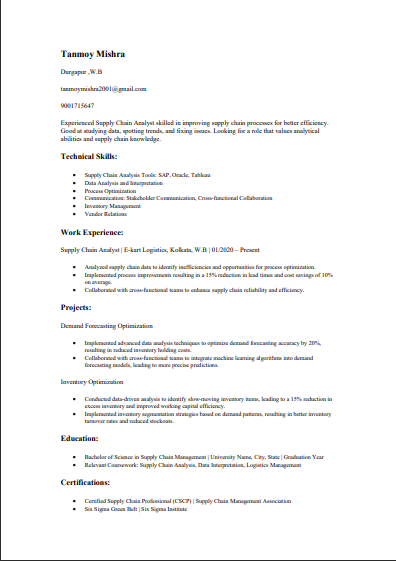
Why this Supply Chain Analyst Resume is works?
This resume is effective for several reasons:
Strong Structure and Formatting
- Clear organization: The resume is well-structured with distinct sections and subheadings, facilitating easy navigation and comprehension for the reader.
- Concise and focused: The content is succinct and relevant, avoiding unnecessary details and emphasizing key aspects pertinent to the supply chain analyst role.
- Visually appealing: The layout utilizes ample white space, consistent fonts, and clear headings, presenting a polished and professional appearance in line with industry standards.
Compelling Summary
- Highlights key skills and experience: The introduction succinctly outlines the candidate’s competencies and career objectives, providing a quick overview of qualifications.
- Quantifiable achievements: Measurable accomplishments, such as optimizing lead times by 15% and achieving cost savings of 10%, demonstrate the candidate’s impactful contributions in previous roles.
- Keywords: The summary incorporates industry-specific terms like “data analysis,” “process optimization,” and “vendor relations,” aligning with recruiter expectations and improving discoverability.
Technical Skills Section
- Variety of tools and methodologies: The inclusion of diverse tools such as SAP, Oracle, and Tableau showcases the candidate’s versatility and proficiency in supply chain analysis.
- Organized and scannable: Skills are logically categorized, making it easy for the reader to identify the candidate's areas of expertise relevant to the supply chain analyst position.
- Relevant to the job: The listed skills directly align with the requirements of a Supply Chain Analyst role, demonstrating the candidate’s suitability and competency for the position.
Work Experience Section
- Quantifiable achievements: Accomplishments are quantified, providing tangible evidence of the candidate’s impact, such as optimizing lead times and achieving cost savings.
- Action verbs: Dynamic action verbs like “analyzed,” “implemented,” and “collaborated” convey the candidate’s proactive approach and contribution to supply chain success.
- Tailored to the role: Each work experience entry emphasizes relevant skills and accomplishments tailored to the requirements of a Supply Chain Analyst position, showcasing the candidate’s aptitude for the role.
Projects Section
- Specific projects and methodologies: Each project description highlights the methodologies utilized, such as demand forecasting optimization and inventory optimization, showcasing proficiency in supply chain optimization.
- Tangible outcomes: Projects are described in terms of their tangible outcomes and impact on supply chain objectives, further substantiating the candidate’s ability to deliver results and drive supply chain success.
Education and Certifications Section
- Relevant coursework: The listing of relevant coursework underscores the candidate’s strong educational background and alignment with the requirements of the supply chain analyst role.
- Certifications and achievements: The inclusion of certifications like Certified Supply Chain Professional (CSCP) and Six Sigma Green Belt highlights the candidate’s commitment to professional development and recognition of their achievements.
This resume effectively showcases the candidate’s skills, experience, and achievements, positioning them as a strong contender for Supply Chain Analyst roles in the industry.
Conclusion
By integrating the valuable insights and strategies detailed in this guide, you can develop a compelling Supply Chain Analyst resume that distinguishes you from other applicants. It's crucial to customize your resume for each job application, emphasizing the skills and experiences most relevant to the desired position in supply chain analysis. With a meticulously crafted resume showcasing your exceptional analytical skills and supply chain expertise, you'll enhance your prospects of securing your ideal role as a Supply Chain Analyst.
