
In today’s digital age, data is the lifeblood of businesses because it provides insights, supports decision-making, and drives innovation. However, raw data is often scattered and unorganized, making it difficult to use effectively. This is where data entry plays a crucial role by collecting, organizing, and inputting information into digital systems in an accurate and structured manner. Proper data entry helps businesses maintain reliable records, improve efficiency, analyse trends, and make informed decisions across industries such as healthcare, finance, retail, and education. By transforming raw information into usable data, data entry serves as the foundation of effective data management and business success.
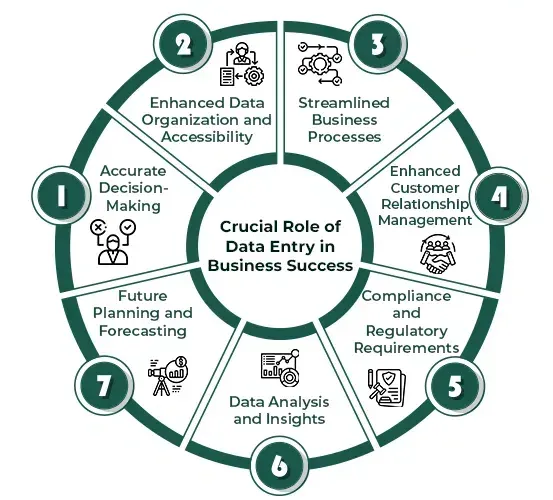
The key roles of data entry in ensuring business success are explained below:
Accurate Decision-Making:
Accurate data entry ensures that businesses have reliable and updated information for decision-making. It helps managers analyze trends, understand customer needs, and evaluate business performance effectively. With correct data, organizations can make smarter strategies and reduce the risk of errors.
Enhanced Data Organization and Accessibility:
Data entry helps organize information in a structured and systematic way. Properly stored data can be easily accessed whenever required, saving time and effort. This improves productivity and allows employees to focus on more important tasks
Streamlined Business Processes:
Effective data entry supports automation and reduces manual work in business operations. It minimizes errors, improves workflow efficiency, and speeds up daily tasks. As a result, businesses can save costs and operate more smoothly.
Enhanced Customer Relationship Management:
Data entry helps maintain accurate customer records, including contact details, purchase history, and preferences. This information enables businesses to provide personalized services and targeted marketing. Better customer management increases satisfaction and loyalty
Compliance and Regulatory Requirements:
Businesses must maintain accurate records to follow legal and industry regulations. Proper data entry ensures financial, healthcare, and customer information is correctly stored and protected. This helps organizations avoid penalties and maintain trust and credibility
Data Analysis and Insights:
Accurate data entry provides a strong foundation for meaningful data analysis. Businesses can generate reports, identify trends, and gain valuable insights from organized data. These insights help companies improve strategies and respond quickly to market changes..
Future Planning and Forecasting:
Historical data entered correctly helps businesses predict future trends and challenges. It supports planning for budgets, inventory, staffing, and business growth. Reliable forecasting allows organizations to make informed long-term decisions.
Challenges in Data Entry Processes
Human Errors: Data entry is largely dependent on manual input, which makes it prone to errors caused by fatigue, workload pressure, or lack of proper training. Even small mistakes such as incorrect figures or spelling errors can negatively impact business analysis and decision making.
Data Duplication and Inconsistency: When data is collected from multiple sources or entered by different individuals, duplication and inconsistencies may arise. This results in unreliable databases, confusion among departments, and difficulty in maintaining data accuracy.
Time Consuming Processes" Manual data entry requires significant time and effort, especially when dealing with large volumes of information. This slows down business processes and diverts human resources from more strategic tasks.
Data Security Risks: Data entry often involves handling sensitive information such as financial records and customer details. Without proper security measures, there is a risk of data breaches, unauthorized access, or misuse of information.
Lack of Standardisation: In the absence of clear data entry guidelines, different formats and methods may be used. This lack of uniformity makes data integration, comparison, and analysis more difficult for organizations.
Best Practices for Effective Data Entry
Standardised Data Entry Procedures: Establishing clear and uniform rules for data formats, abbreviations, and entry methods ensures consistency across all records. Standardisation improves data quality and makes information easier to analyze and manage.
Proper Training of Personnel: Well trained data entry staff are more accurate, efficient, and aware of data handling responsibilities. Regular training programs help employees stay updated with tools, techniques, and security practices.
Use of Automation Tools: Automation tools such as data validation systems, auto fill features, and optical character recognition reduce manual effort and minimize errors. These tools improve speed and enhance overall efficiency.
Regular Data Verification: Periodic checking and auditing of data helps identify errors, duplicates, and outdated information. Continuous monitoring ensures that databases remain accurate and reliable.
Strong Data Security Measures: Implementing access controls, encryption, and regular data backups protects sensitive information from unauthorized access and data loss. Strong security practices also help organizations comply with legal and regulatory requirements.
