
Data Abstraction is one of the most important concepts in DBMS. Data abstraction is the process of hiding unwanted and irrelevant details from the end user. It helps to store information in such a way that the end user can access data which is necessary, the user will not be able to see what data is stored or how it is stored in a database.
- Data abstraction hides unwanted details, showing users only relevant data.
- It keeps data safe by hiding how and where data is stored.
- Abstraction simplifies access while maintaining data security and efficiency.
- For example, while buying clothes, users see only color, size, and brand, not production details.
Levels of Abstraction in DBMS
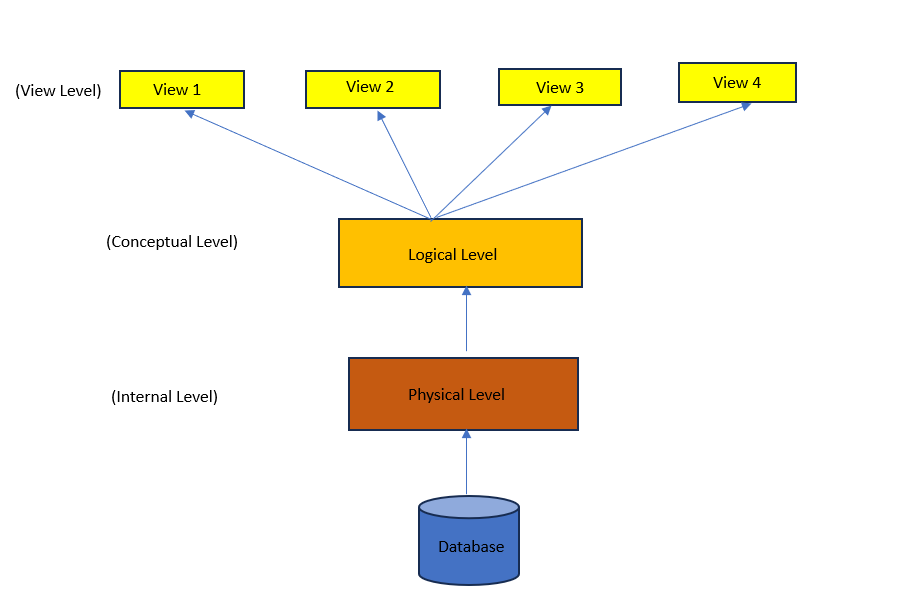
There are three levels of data abstraction in DBMS that are mentioned below:
- Physical or Internal level
- Logical or Conceptual level
- View or External level
Physical or Internal Level
It is the lowest level of data abstraction which defines how data is stored in database . It defines data structures used to store data and methods to access data in database. It is very complex to understand and hence kept hidden from user. Database administrator decides how and where to store the data in database.
Physical level deals with actual storage details like data organization, disk space allocation and data access methods.
Logical or Conceptual Level
It is intermediate level present next to physical level. It defines what data is present in database and their relationships between them . It is less complex as compared to physical level. Programmers generally work at this level and depending on data, structure of tables, relationships and their constraints is decided at this level.
View or External Level
It is the highest level in abstraction. There are different levels of views and each view defines only a part of whole data required to user. This level defines many views of same database for simplification of view to user. This is the highest level and easiest to understand for user.
