
Given an N-ary tree root, the task is to find the count of nodes such that their subtree is a binary tree.
Example:
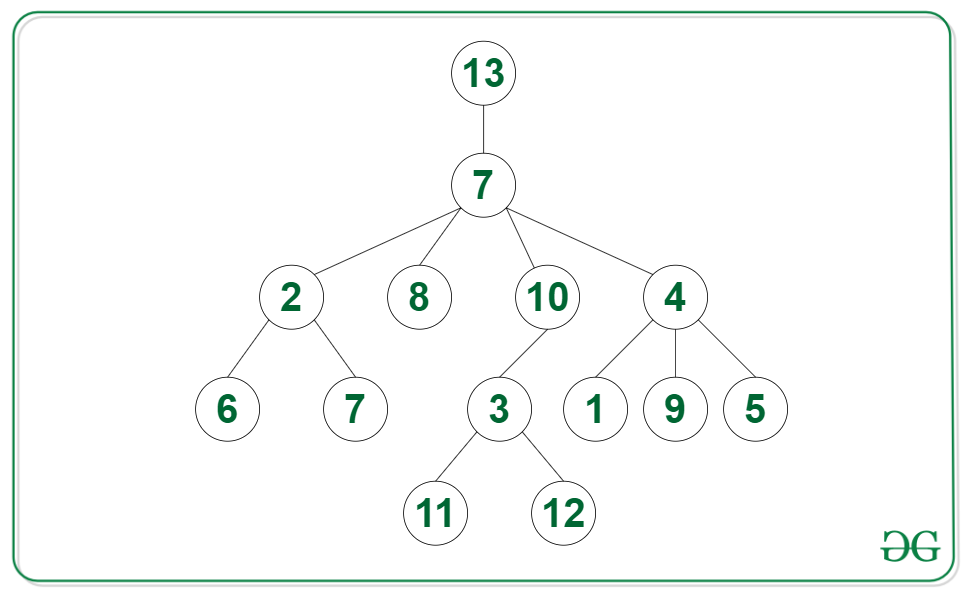
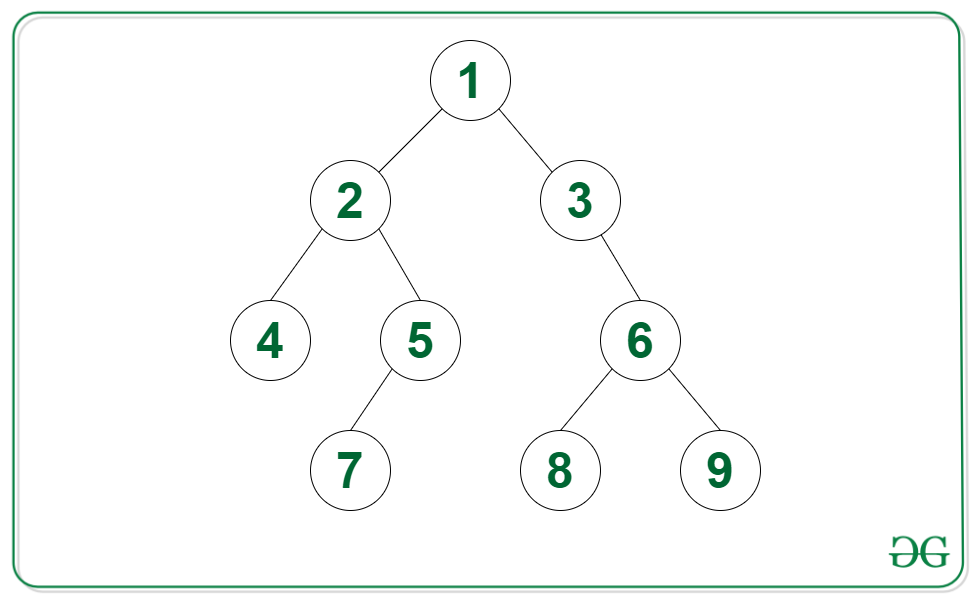
Input: Tree in the image below
Output: 11
Explanation: The nodes such that there subtree is a binary tree are {2, 8, 10, 6, 7, 3, 1, 9, 5, 11, 12}.Input: Tree in the image below
Output: 9
Approach: The given problem can be solved by using the post-order traversal. The idea is to use recursion and check if the current node contains at most 2 children and if the children are valid binary trees. Below steps can be followed to solve the problem:
- Apply post-order traversal on the N-ary tree:
- Add the returned values of every child node to calculate the number of binary trees found at that node and store it in sum
- If the root has at most two children which are valid binary trees then the root is also a binary tree, so return a pair of sum + 1 and 1 to indicate a valid binary tree
- If the root has more than two child nodes or any of the children are not valid binary trees, then return the pair of sum and 0 to indicate an invalid binary tree
- Return the value at first index sum, from the pair returned from the post-order traversal.
Below is the implementation of the above approach:
// C++ code for the above approach
#include <bits/stdc++.h>
using namespace std;

class Node
{
public:
    vector<Node *> children;
    int val;

    // constructor
    Node(int v)
    {

        val = v;
        children = {};
    }
};
// Post-order traversal to find
// depth of all branches of every
// node of the tree
vector<int> postOrder(Node *root)
{

    // Initialize a variable sum to
    // count number of binary trees
    int sum = 0;

    // Integer to indicate if the tree
    // rooted at current root is a
    // valid binary tree
    int valid = 1;

    // Use recursion on all child nodes
    for (Node *child : root->children)
    {

        // Get the number of binary trees
        vector<int> binTrees = postOrder(child);

        // If tree rooted at current child
        // is not a valid binary tree then
        // tree rooted at current root is
        // also not a valid binary tree
        if (binTrees[1] == 0)
            valid = 0;

        // If branches are unbalanced
        // then store -1 in height
        sum += binTrees[0];
    }

    // Children are valid binary trees
    // and the number of children
    // are less than 3
    if (valid == 1 && root->children.size() < 3)
    {

        // Root is also a valid binary tree
        sum++;
    }

    // Children are leaf nodes but number
    // of children are greater than 2
    else
        valid = 0;

    // Return the answer
    return {sum, valid};
}

// Function to find the number of
// binary trees in an N-ary tree
int binTreesGeneric(Node *root)
{

    // Base case
    if (root == NULL)
        return 0;

    // Apply post-order traversal on
    // the root and return the answer
    return postOrder(root)[0];
}

// Driver code
int main()
{

    // Initialize the graph
    Node *twenty = new Node(20);
    Node *seven = new Node(7);
    Node *seven2 = new Node(7);
    Node *five = new Node(5);
    Node *four = new Node(4);
    Node *nine = new Node(9);
    Node *one = new Node(1);
    Node *two = new Node(2);
    Node *six = new Node(6);
    Node *eight = new Node(8);
    Node *ten = new Node(10);
    Node *three = new Node(3);
    Node *mfour = new Node(11);
    Node *zero = new Node(12);
    three->children.push_back(mfour);
    three->children.push_back(zero);
    ten->children.push_back(three);
    two->children.push_back(six);
    two->children.push_back(seven2);
    four->children.push_back(nine);
    four->children.push_back(one);
    four->children.push_back(five);
    seven->children.push_back(ten);
    seven->children.push_back(two);
    seven->children.push_back(eight);
    seven->children.push_back(four);
    twenty->children.push_back(seven);

    // Call the function
    // and print the result
    cout << (binTreesGeneric(twenty));
}

// This code is contributed by Potta Lokesh
// Java implementation for the above approach

import java.io.*;
import java.util.*;

class GFG {

    static class Node {

        List<Node> children;
        int val;

        // constructor
        public Node(int val)
        {

            this.val = val;
            children = new ArrayList<>();
        }
    }

    // Function to find the number of
    // binary trees in an N-ary tree
    public static int binTreesGeneric(Node root)
    {

        // Base case
        if (root == null)
            return 0;

        // Apply post-order traversal on
        // the root and return the answer
        return postOrder(root)[0];
    }

    // Post-order traversal to find
    // depth of all branches of every
    // node of the tree
    public static int[] postOrder(Node root)
    {

        // Initialize a variable sum to
        // count number of binary trees
        int sum = 0;

        // Integer to indicate if the tree
        // rooted at current root is a
        // valid binary tree
        int valid = 1;

        // Use recursion on all child nodes
        for (Node child : root.children) {

            // Get the number of binary trees
            int[] binTrees = postOrder(child);

            // If tree rooted at current child
            // is not a valid binary tree then
            // tree rooted at current root is
            // also not a valid binary tree
            if (binTrees[1] == 0)
                valid = 0;

            // If branches are unbalanced
            // then store -1 in height
            sum += binTrees[0];
        }

        // Children are valid binary trees
        // and the number of children
        // are less than 3
        if (valid == 1 && root.children.size() < 3) {

            // Root is also a valid binary tree
            sum++;
        }

        // Children are leaf nodes but number
        // of children are greater than 2
        else
            valid = 0;

        // Return the answer
        return new int[] { sum, valid };
    }

    // Driver code
    public static void main(String[] args)
    {

        // Initialize the graph
        Node twenty = new Node(20);
        Node seven = new Node(7);
        Node seven2 = new Node(7);
        Node five = new Node(5);
        Node four = new Node(4);
        Node nine = new Node(9);
        Node one = new Node(1);
        Node two = new Node(2);
        Node six = new Node(6);
        Node eight = new Node(8);
        Node ten = new Node(10);
        Node three = new Node(3);
        Node mfour = new Node(11);
        Node zero = new Node(12);
        three.children.add(mfour);
        three.children.add(zero);
        ten.children.add(three);
        two.children.add(six);
        two.children.add(seven2);
        four.children.add(nine);
        four.children.add(one);
        four.children.add(five);
        seven.children.add(ten);
        seven.children.add(two);
        seven.children.add(eight);
        seven.children.add(four);
        twenty.children.add(seven);

        // Call the function
        // and print the result
        System.out.println(
            binTreesGeneric(twenty));
    }
}
# Python code for the above approach
class Node:

  # constructor
  def __init__(self, v):
    self.val = v;
    self.children = [];

# Post-order traversal to find
# depth of all branches of every
# node of the tree
def postOrder(root):

  # Initialize a variable sum to
  # count number of binary trees
  sum = 0;

  # Integer to indicate if the tree
  # rooted at current root is a
  # valid binary tree
  valid = 1;

  # Use recursion on all child nodes
  for child in root.children:

    # Get the number of binary trees
    binTrees = postOrder(child);

    # If tree rooted at current child
    # is not a valid binary tree then
    # tree rooted at current root is
    # also not a valid binary tree
    if (binTrees[1] == 0):
      valid = 0;

    # If branches are unbalanced
    # then store -1 in height
    sum += binTrees[0];


  # Children are valid binary trees
  # and the number of children
  # are less than 3
  if (valid == 1 and len(root.children) < 3):

    # Root is also a valid binary tree
    sum += 1


  # Children are leaf nodes but number
  # of children are greater than 2
  else:
    valid = 0;

  # Return the answer
  return [ sum, valid ];


# Function to find the number of
# binary trees in an N-ary tree
def binTreesGeneric(root):

  # Base case
  if (root == None):
    return 0;

  # Apply post-order traversal on
  # the root and return the answer
  return postOrder(root)[0];


# Driver code

# Initialize the graph
twenty = Node(20);
seven = Node(7);
seven2 = Node(7);
five = Node(5);
four = Node(4);
nine = Node(9);
one = Node(1);
two = Node(2);
six = Node(6);
eight = Node(8);
ten = Node(10);
three = Node(3);
mfour = Node(11);
zero = Node(12);
three.children.append(mfour);
three.children.append(zero);
ten.children.append(three);
two.children.append(six);
two.children.append(seven2);
four.children.append(nine);
four.children.append(one);
four.children.append(five);
seven.children.append(ten);
seven.children.append(two);
seven.children.append(eight);
seven.children.append(four);
twenty.children.append(seven);

# Call the function
# and print the result
print((binTreesGeneric(twenty)));

# This code is contributed by gfgking
using System;
using System.Collections.Generic;

namespace GFG
{
  class Program
  {
    static void Main(string[] args)
    {
      // Initialize the graph
      Node twenty = new Node(20);
      Node seven = new Node(7);
      Node seven2 = new Node(7);
      Node five = new Node(5);
      Node four = new Node(4);
      Node nine = new Node(9);
      Node one = new Node(1);
      Node two = new Node(2);
      Node six = new Node(6);
      Node eight = new Node(8);
      Node ten = new Node(10);
      Node three = new Node(3);
      Node mfour = new Node(11);
      Node zero = new Node(12);
      three.children.Add(mfour);
      three.children.Add(zero);
      ten.children.Add(three);
      two.children.Add(six);
      two.children.Add(seven2);
      four.children.Add(nine);
      four.children.Add(one);
      four.children.Add(five);
      seven.children.Add(ten);
      seven.children.Add(two);
      seven.children.Add(eight);
      seven.children.Add(four);
      twenty.children.Add(seven);


      // Call the function and print the result
      Console.WriteLine(binTreesGeneric(twenty));
    }

    static int binTreesGeneric(Node root)
    {
      // Base case
      if (root == null)
        return 0;

      // Apply post-order traversal on the root and return the answer
      return postOrder(root)[0];
    }

    static int[] postOrder(Node root)
    {
      // Initialize a variable sum to count number of binary trees
      int sum = 0;

      // Integer to indicate if the tree rooted at current root is a valid binary tree
      int valid = 1;

      // Use recursion on all child nodes
      foreach (Node child in root.children)
      {
        // Get the number of binary trees
        int[] binTrees = postOrder(child);

        // If tree rooted at current child is not a valid binary tree then
        // tree rooted at current root is also not a valid binary tree
        if (binTrees[1] == 0)
          valid = 0;

        // If branches are unbalanced then store -1 in height
        sum += binTrees[0];
      }

      // Children are valid binary trees and the number of children are less than 3
      if (valid == 1 && root.children.Count < 3)
      {
        // Root is also a valid binary tree
        sum++;
      }
      // Children are leaf nodes but number of children are greater than 2
      else
        valid = 0;

      // Return the answer
      return new int[] { sum, valid };
    }

    class Node
    {
      public List<Node> children;
      public int val;

      // constructor
      public Node(int val)
      {
        this.val = val;
        children = new List<Node>();
      }
    }
  }
}
<script>
// Javascript code for the above approach
class Node {

  // constructor
  constructor(v) {

    this.val = v;
    this.children = [];
  }
};

// Post-order traversal to find
// depth of all branches of every
// node of the tree
function postOrder(root) {

  // Initialize a variable sum to
  // count number of binary trees
  let sum = 0;

  // Integer to indicate if the tree
  // rooted at current root is a
  // valid binary tree
  let valid = 1;

  // Use recursion on all child nodes
  for (child of root.children) {

    // Get the number of binary trees
    let binTrees = postOrder(child);

    // If tree rooted at current child
    // is not a valid binary tree then
    // tree rooted at current root is
    // also not a valid binary tree
    if (binTrees[1] == 0)
      valid = 0;

    // If branches are unbalanced
    // then store -1 in height
    sum += binTrees[0];
  }

  // Children are valid binary trees
  // and the number of children
  // are less than 3
  if (valid == 1 && root.children.length < 3) {

    // Root is also a valid binary tree
    sum++;
  }

  // Children are leaf nodes but number
  // of children are greater than 2
  else
    valid = 0;

  // Return the answer
  return [ sum, valid ];
}

// Function to find the number of
// binary trees in an N-ary tree
function binTreesGeneric(root) {

  // Base case
  if (root == null)
    return 0;

  // Apply post-order traversal on
  // the root and return the answer
  return postOrder(root)[0];
}

// Driver code

// Initialize the graph
let twenty = new Node(20);
let seven = new Node(7);
let seven2 = new Node(7);
let five = new Node(5);
let four = new Node(4);
let nine = new Node(9);
let one = new Node(1);
let two = new Node(2);
let six = new Node(6);
let eight = new Node(8);
let ten = new Node(10);
let three = new Node(3);
let mfour = new Node(11);
let zero = new Node(12);
three.children.push(mfour);
three.children.push(zero);
ten.children.push(three);
two.children.push(six);
two.children.push(seven2);
four.children.push(nine);
four.children.push(one);
four.children.push(five);
seven.children.push(ten);
seven.children.push(two);
seven.children.push(eight);
seven.children.push(four);
twenty.children.push(seven);

// Call the function
// and print the result
document.write((binTreesGeneric(twenty)));

// This code is contributed by gfgking
</script>
Output
11
Time Complexity: O(N)
Auxiliary Space: O(N)
