
An Isosceles triangle is a triangle that has two equal sides. Also, the two angles opposite the two equal sides are equal. In this article, we will study the What are Isosceles Triangle, Parts of an Isosceles Triangle, Angles of Isosceles Triangle, Types of Isosceles Triangle, Area of an Isosceles Triangle etc.

Table of Content
What is an Isosceles Triangle
An isosceles triangle is a type of triangle that has at least two sides of equal length. The angles opposite the equal sides are also equal . This property gives the isosceles triangle its different shape and symmetry.
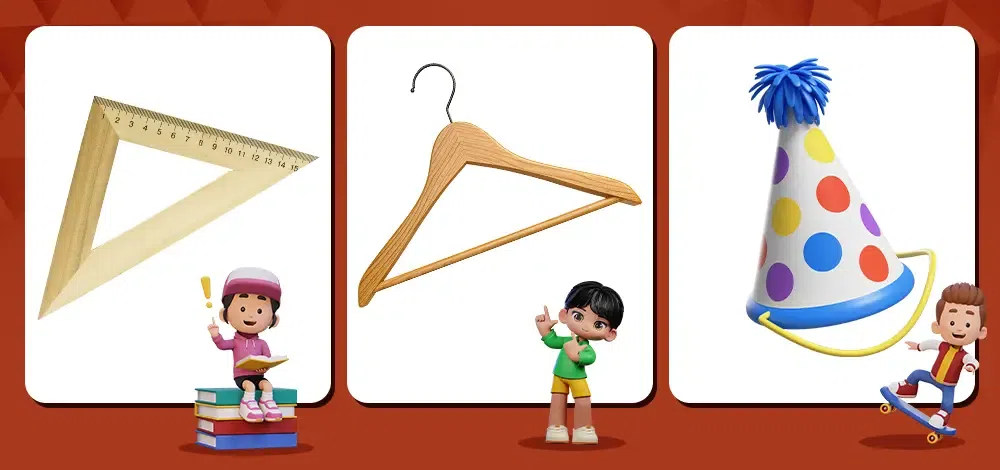
Examples of Isosceles Triangles in Real Life
Isosceles triangles, which have two sides of equal length and two equal angles, can be found in various real-life situations and structures. Here are some examples:
- Roof Trusses: Many roof trusses and bridges are designed using isosceles triangles for structural stability.
- Kites: Many traditional kites are shaped like isosceles triangles, which help them maintain balance and stability in the air.
- Towers and Pylons: Transmission towers and pylons often use isosceles triangular shapes for their frames.
Parts of an Isosceles Triangle
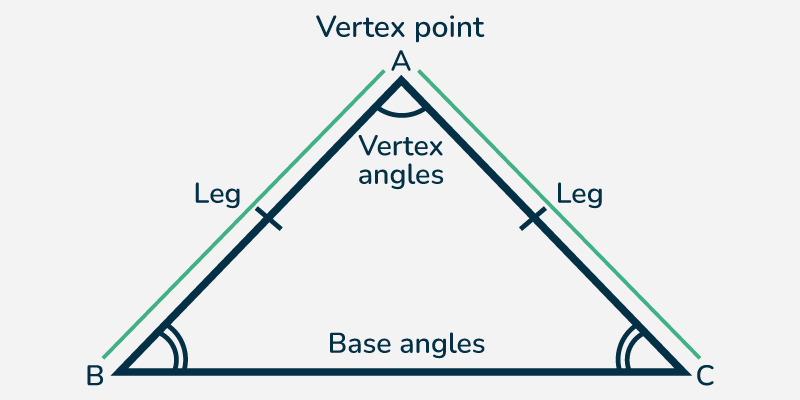
Here are Parts of an isosceles triangle is described below:
- Equal Sides: The two sides of equal length are called the legs of the triangle. In triangle ABC, sides AB and BC are the two legs of the isosceles triangle.
- Base: The ‘base’ of an isosceles triangle is the third and unequal side of the triangle. Here, side BC is the base of the isosceles triangle ABC.
- Equal Angles: The angles opposite the equal sides are called base angles and are equal to each other. ∠ABC and ∠ACB are the two base angles of the isosceles triangle.
- Vertex Angle: The angle formed by the two equal sides is called the vertex angle. ∠BAC is the vertex angle of the isosceles triangle.
Properties of an Isosceles Triangle
Some of the common properties of isosceles triangle are:
- Equal Sides: The two equal sides are called the "legs," and the third side is called the "base."
- Equal Angles: The angles opposite the equal sides are equal.
- Symmetry: An isosceles triangle has a line of symmetry along the perpendicular bisector of the base, dividing the triangle into two congruent right triangles.
- Perimeter: The perimeter is the sum of the lengths of all three sides.
- Vertex Angle: The angle between the two equal sides is called the vertex angle.
- Base Angles: The angles adjacent to the base are equal and are called base angles.
- Area: The area can be calculated using the formula (\text{Area} = \frac{1}{2} \times \text{base} \times \text{height}).
Angles of Isosceles Triangle
The theorem says: If sides A and B are the same length, then angles X and Y will be equal too.In other words, in an isosceles triangle (a triangle with two equal sides), the angles opposite those equal sides are also equal.
Example: Given an isosceles triangle.
Let the measure of the unequal angle is 70° and the other two equal angles measures x; then, as per the angle sum rule,
70° + x + x = 180°
⇒ 70° + 2x = 180°
⇒ 2x = 180 – 70 = 110°
⇒ x = 110/2 = 55°
Hence, the measure of the other two angles of an isosceles triangle is 55°.
Isosceles Triangle Theorem
As per Theorem , if two sides are congruent in an isosceles triangle, then the angles opposite to the two sides are also congruent. Alternatively, if two angles are congruent in an isosceles triangle, then the sides opposite to them are also congruent.
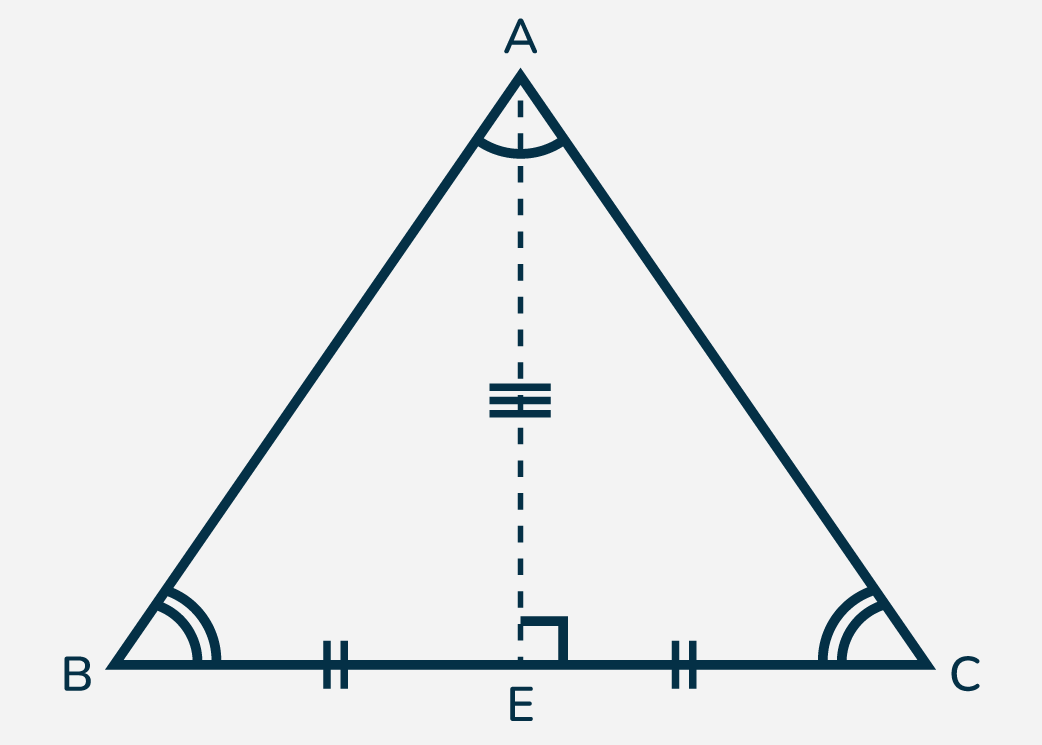
In the above triangle ABC,
AB = AC then ∠ABC = ∠ADC
Types of Isosceles Triangle
Some of the common types of isosceles triangles are:
- Isosceles Acute Triangle
- Isosceles Right Triangle
- Isosceles Obtuse Triangle
Isosceles Acute Triangle
An isosceles acute triangle is a triangle in which all three angles are less than 90 degrees, and at least two of its angles are equal in measurement. One example of isosceles acute triangle angles is 65°, 65° and 50°.

Isosceles Right Triangle
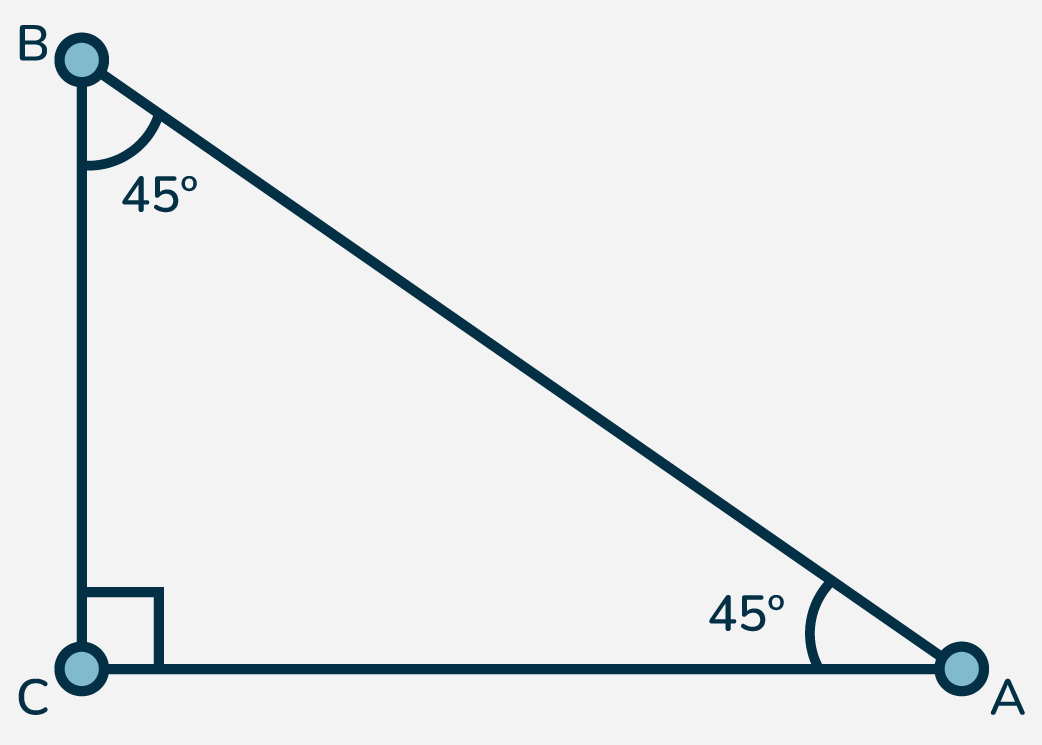
This is a right triangle with two legs (and their corresponding angles) of equal measure.
For example: One angle that is right angle is 90° and other angles are of 45° , 45° .
Isosceles Obtuse Triangle
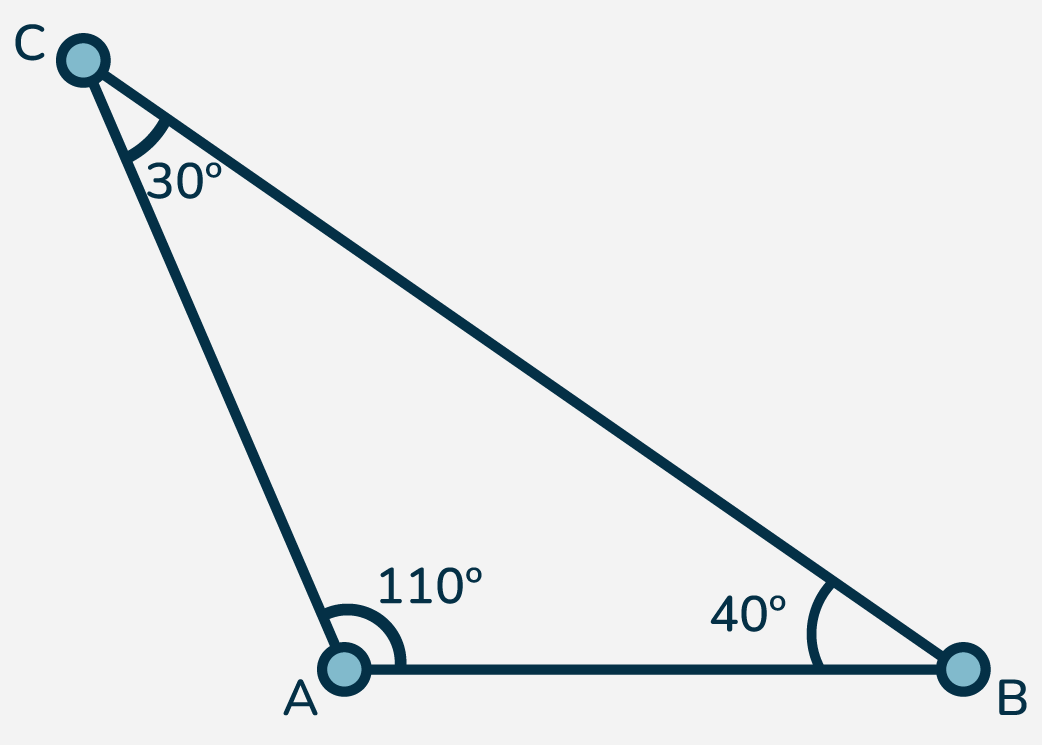
An isosceles obtuse triangle is a triangle in which one of the three angles is obtuse (lies between 90 degrees and 180 degrees), and the other two acute angles are equal in measurement. One example of isosceles obtuse triangle angles is 30°, 40°, and 110°.
Isosceles Triangle Formulas
An isosceles triangle is a two-dimensional shape with three sides. The measures to compute the isosceles triangle are the area and perimeter. Let us discuss the area and perimeter below.
Area of an Isosceles Triangle
The area of an isosceles triangle is given by the following formula:
Area = 1/2 × base × Height = 1/2 × b × H
Perimeter of an Isosceles Triangle
The perimeter of the isosceles triangle is given by
Perimeter = Sum of Equal Sides + Base = 2a + b
Conclusion
In conclusion, isosceles triangles are unique because they have two sides that are the same length and two angles that are equal. We've seen how they appear in real life, like in the design of bridges and the shape of rooftops. Understanding isosceles triangles helps us recognize patterns and symmetry in the world around us. Remember, whether you're drawing or building, isosceles triangles offer both stability and beauty.
Read More,
