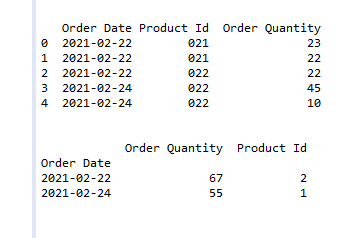
In this article, let's see how we can count distinct in pandas aggregation. So to count the distinct in pandas aggregation we are going to use groupby() and agg() method.
- groupby(): This method is used to split the data into groups based on some criteria. Pandas objects can be split on any of their axes. We can create a grouping of categories and apply a function to the categories. The abstract definition of grouping is to provide a mapping of labels to group names
- agg(): This method is used to pass a function or list of functions to be applied on a series or even each element of series separately. In the case of a list of functions, multiple results are returned by agg() method.
Below are some examples which depict how to count distinct in Pandas aggregation:
Example 1:
# import module
import pandas as pd
import numpy as np

# create Data frame
df = pd.DataFrame({'Video_Upload_Date': ['2020-01-17',
                                         '2020-01-17',
                                         '2020-01-19',
                                         '2020-01-19',
                                         '2020-01-19'],
                   'Viewer_Id': ['031', '031', '032',
                                 '032', '032'],
                   'Watch_Time': [34, 43, 43, 41, 40]})

# print original Dataframe
print(df)

# let's Count distinct in Pandas aggregation
df = df.groupby("Video_Upload_Date").agg(
    {"Watch_Time": np.sum, "Viewer_Id": pd.Series.nunique})

# print final output
print(df)
Output:
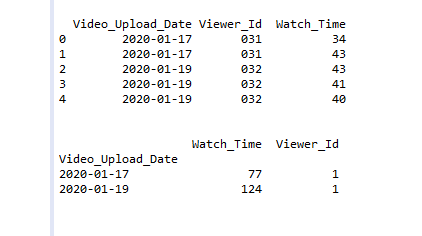
Example 2:
# import module
import pandas as pd
import numpy as np

# create Data frame
df = pd.DataFrame({'Order Date': ['2021-02-22',
                                  '2021-02-22',
                                  '2021-02-22',
                                  '2021-02-24',
                                  '2021-02-24'],
                   'Product Id': ['021', '021',
                                  '022', '022', '022'],
                   'Order Quantity': [23, 22, 22,
                                      45, 10]})

# print original Dataframe
print(df)

# let's Count distinct in Pandas aggregation
df = df.groupby("Order Date").agg({"Order Quantity": np.sum,
                                   "Product Id": pd.Series.nunique})

# print final output
print(df)
Output: