
API Contracts are agreements that define how two systems communicate through an API. They specify request formats, response structures, methods, and rules to ensure reliable and consistent interaction between services.
- API contracts clearly describe how requests and responses should be structured, including endpoints, methods, headers, and data formats.
- They help API providers and consumers understand expectations clearly, reducing errors and ensuring smooth system integration.
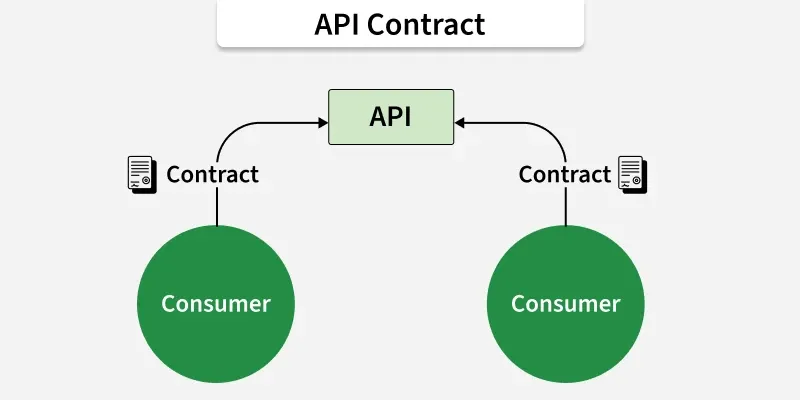
Real-World Examples of API Contracts
- GitHub API: The GitHub API provides a comprehensive set of endpoints for interacting with GitHub's features, such as repositories, issues, and pull requests. The API contract clearly defines the methods, parameters, and response formats. The documentation includes detailed examples and usage guidelines.
- Stripe API: Stripe's API for payment processing includes detailed documentation on endpoints for handling payments, customers, subscriptions, and more. The contract specifies the required and optional parameters, response structures, and error handling. Stripe's API documentation is known for its clarity and comprehensiveness.
- Twitter API: The Twitter API allows developers to interact with Twitter's features, such as tweeting, following, and searching tweets. The API contract outlines the endpoints, methods, parameters, and response formats. The documentation includes examples and best practices for using the API.
Importance of API Contracts in System Design
API contracts play a crucial role in system design, providing a clear and formalized definition of the interactions between different components of a system. Here are some key reasons why API contracts are important:
1. Clarity & Consistency
API contracts ensure all teams have a shared understanding of how the API behaves.
- Clear Specs: Define endpoints, parameters, responses, and error formats clearly.
- Consistency: Maintain uniform behavior across implementations and API versions.
2. Parallel Development
They allow multiple teams to work independently without blocking each other.
- Team Collaboration: Frontend and backend teams can develop simultaneously using the contract.
- Fewer Dependencies: Reduces waiting time and coordination issues between teams.
3. Interoperability
API contracts simplify communication between different systems and technologies.
- Standardization: Promote common protocols and data formats across services.
- Easy Integration: Simplify integration with third-party and external systems.
4. Testing & Validation
Contracts improve API quality through validation and early testing.
- Automated Testing: Ensures APIs follow the defined contract correctly.
- Mocking: Enables testing using mock APIs before actual implementation is completed.
5. Error Handling & Reliability
Clearly defined error structures improve stability and user experience.
- Defined Errors: Standard error responses help clients handle failures properly.
- Better Reliability: Reduces misunderstandings and minimizes system failures.
Key Components of an API Contract
- Endpoints: The specific URLs or paths where the API can be accessed.
- HTTP Methods: The allowed methods for each endpoint, such as GET, POST, PUT, DELETE, etc.
- Request Parameters: The expected parameters for each request, including query parameters, path parameters, and headers.
- Request Body: The structure and format of the data that must be sent in the body of the request, typically for POST and PUT methods.
- Response Format: The structure and format of the data that will be returned in the response, often in JSON or XML.
- Status Codes: The HTTP status codes that the API might return, such as 200 for success, 404 for not found, and 500 for server error.
- Authentication: The methods required to authenticate and authorize requests, such as API keys, OAuth tokens, or JWTs.
- Error Handling: The way errors are communicated, including the structure of error messages and the codes used to signify different types of errors.
Steps for Designing API Contracts
Designing API contracts involves defining clear communication rules, request/response formats, and security standards to ensure reliable integration between systems.
- Step 1: Define the Purpose: Identify the goals of the API, user requirements, and the problems the API is intended to solve.
- Step 2: Identify Endpoints: Determine the API endpoints that represent specific resources or related functionalities.
- Step 3: Specify HTTP Methods: Choose appropriate HTTP methods such as GET, POST, PUT, and DELETE based on the required operations.
- Step 4: Detail Request and Response Formats: Define request bodies, headers, parameters, response structures, and validation rules using formats like JSON Schema.
- Step 5: Implement Authentication and Authorization: Specify security mechanisms such as OAuth 2.0, authentication methods, and access control rules.
- Step 6: Outline Error Handling: Define standard error responses, status codes, and meaningful error messages for better troubleshooting.
- Step 7: Document the API: Create detailed API documentation including endpoint descriptions, request/response examples, and usage guidelines.
Software for the Creation of API Contracts
- Swagger/OpenAPI: An open description for API contracts, documentation, and tool generation, and API Consumer Interface creation. It incorporates JSON and YAML for the specification of the APIs;
- Postman: One of the most commonly used applications for API testing and also for documenting API and API contract verification. This conclusion indicates that with the use of postman, one is able to develop and run automated tests which checks whether or not the API is implementing the contract set.
- RAML (RESTful API Modeling Language): The API description language specifically for the RESTful APIs, that allows for defining the contract-first APIs. This means that API definitions can easily be sharable and reusable in the formulation of RAML.
- API Blueprint: Openly described, powerful high-level API description language meant for designing and documenting constantly changing APIs. It concentrates on generating documentation in the form of HTML files for the APIs.
Best Practices for API Contracts
Following best practices for API contracts improves usability, consistency, security, and long-term maintainability of APIs.
- Keep it Simple: Design APIs with simple and easy-to-understand endpoints to improve usability and developer experience.
- Be Consistent: Use consistent naming conventions, data formats, and response structures across all APIs.
- Versioning: Implement API versioning (e.g.,
/v1/users) to manage changes while maintaining backward compatibility. - Provide Comprehensive Documentation: Create clear and detailed documentation with endpoint descriptions, examples, and use cases.
- Handle Errors Gracefully: Use meaningful error messages and standard status codes consistently across endpoints.
- Secure Your API: Implement strong authentication, authorization, and secure communication using HTTPS.
- Test Thoroughly: Perform automated functional and regression testing to ensure APIs follow the contract and remain stable.
API Documentation
API documentation is a detailed guide that explains how developers can use and interact with an API. It includes information about endpoints, request and response formats, authentication methods, error codes, and usage examples.
- Helps developers clearly understand how the API works, including available operations and expected data formats.
- Provides examples, authentication details, and error handling information to make API integration and debugging easier.
Detailed Elements of API Documentation
These elements define the structure, usage, and security details of an API.
- Endpoints and Methods: Describes available API endpoints and supported HTTP methods such as GET, POST, PUT, and DELETE.
- Request Parameters: Explains path parameters, query parameters, headers, and request body details required for API requests.
- Response Formats: Defines response structures, data types, status codes, and example API responses.
- Authentication and Authorization: Provides details about API keys, tokens, user roles, and authentication mechanisms used to secure the API.
Common Challenges in API Contract Design
Designing API contracts involves balancing usability, compatibility, and security while keeping APIs maintainable and reliable.
- Complexity Management: APIs should provide necessary functionality without becoming too difficult to understand or implement.
- Backward Compatibility: Changes to APIs should not break existing clients, requiring proper versioning and change management.
- Security: Strong security measures such as encryption, authentication, and authorization must be implemented without significantly affecting performance or usability.
