
In the digital world, terms like "megabit" and "megabyte" frequently pop up, especially when discussing internet speeds and data storage. Though they may sound similar, these units measure different aspects of digital information, and confusing them can lead to misunderstandings about the capabilities of your devices or internet service. Understanding the distinction between a megabit (Mb) and a megabyte (MB) is crucial for anyone dealing with digital data, whether you're choosing a broadband package, configuring networking equipment, or managing files and backups.
In this blog post, we’ll dive deep into what exactly megabits and megabytes mean, how they are used, and why recognizing the difference matters. We'll clarify common misconceptions and provide you with the knowledge to make informed decisions about your digital and networking needs.
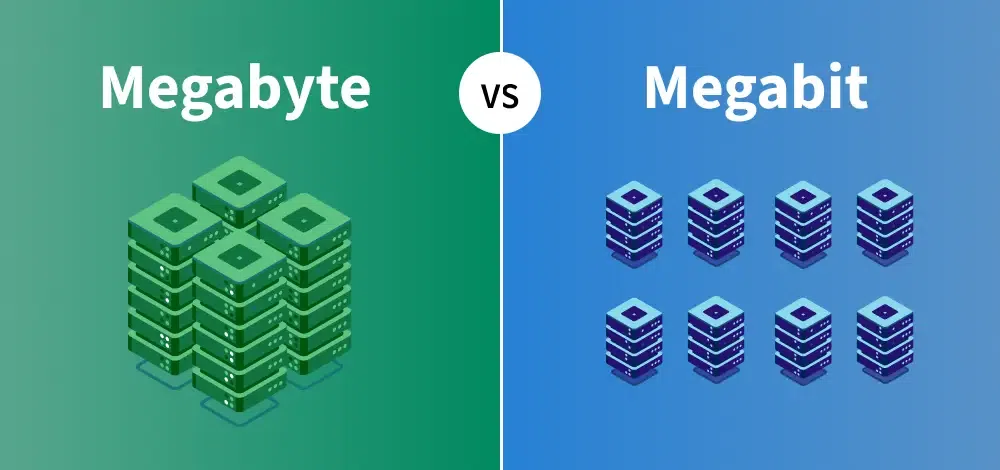
Megabit vs Megabyte
A megabit (Mb) and a megabyte (MB) are units used to measure digital information but differ significantly in size and common usage. One megabit is equal to 1 million bits of data. It's commonly used to measure data transfer speeds, particularly for internet connections, where speeds are often stated in megabits per second (Mbps). For example, if an internet service offers a speed of 100 Mbps, it means it can transfer 100 million bits per second.
On the other hand, a megabyte (MB) is a unit of data storage size equal to 1 million bytes. Since a byte consists of 8 bits, one megabyte is equivalent to 8 million bits, making it eight times larger than a megabit. Megabytes are typically used to express the size of files or storage capacity, such as a 10 MB image or a 500 GB hard drive.
| Unit | Equal to | Example |
|---|---|---|
Bit | One bit | 1 or 0 |
Byte | Eight bits | One letter |
Megabit(Mb) | 1000000 bits | 1525 page Word doc |
Megabyte(MB) | 8000000 bits | 250 HD Photos |
Key Difference Between Megabit and Megabyte
The primary difference between a Megabit and a Megabyte lies in the size of the unit:
| Aspect | Megabit (Mb) | Megabyte (MB) |
|---|---|---|
| Definition | 1 Megabit = 1,000,000 bits | 1 Megabyte = 8,000,000 bits (8 Megabits) |
| Common Usage | Used for internet speeds and data transfer rates | Used for measuring file sizes and storage |
| Abbreviation | Mb | MB |
| Conversion | 1 MB = 8 Mb | 1 Mb = 0.125 MB |
| Unit Size | Smaller unit (used for speed/transfer) | Larger unit (used for storage/files) |
Why Does This Matter?
Distinction between Megabit (Mb) and Megabyte (MB) is important in understanding of speed and net usage.
- Internet Speed: The user's normal unit of measure when it comes to Internet speeds is the Megabits per second or Mbps when they advertise. An Internet connection has the ability to download a maximum of 12.5 Megabytes (MB) in a second (100 / 8 = 12.5) for example, the 100 Mbps connection.
- File Size: Most of the time your file is measured in Megabytes (MB) because you're downloading it. For instance, if you have a file of 500 MB, the amount being transferred is likely describing the speed as in Megabits per second, which tells the user the conversion for download time.
- Data Plan: Mobile Data Plan or Internet services provider gives certain amounts of data use in Gigabytes (GB) or Megabytes (MB). This is crucial to know because, most of the time, data transfer is measured in Megabits per second (Mbps), while your data plan usage is normally counted in Megabytes or Gigabytes.
How to Convert Between Megabits and Megabytes
If you need to convert between Megabits (Mb) and Megabytes (MB), the conversion is simple:
- To convert Megabits (Mb) to Megabytes (MB), divide by 8
Formula: Megabytes(MB)=Megabits(Mb)/8
- To convert Megabytes (MB) to Megabits (Mb), multiply by 8
Formula: Megabits(Mb)=Megabytes(MB)×8
Example 1: Converting Megabits to Megabytes
If you have a download speed of 100 Megabits per second (Mbps), you can convert it to Megabytes:
100Mbps÷8=12.5MBps
This means that with a 100 Mbps connection, you can download 12.5 Megabytes per second.
Practical Implications
- Faster Downloading: speed is measured in Megabits per second (Mbps) but does not in itself translate into download rates because file sizes are generally indicated as MegaBytes (MB). You should realistically consider the file size and the internet speed to estimate the download duration.
- Data Usage: It's also important to understand how the data is measured; a mobile data plan for instance, will measure data usage in almost all cases in Megabytes (MB) or Gigabytes (GB) with the best speeds usually reported in Megabits (Mbps). It can really make sense to analyze it to effectively check usage and avoid surpassing the limit.
Alos Read: Understanding file sizes | Bytes, KB, MB, GB, TB, PB, EB, ZB, YB
Conclusion
While Megabits (Mb) and Megabytes (MB) may seem to sound very homonymous to most, they are quite different from each other in terms of quantities. A Megabit is a smaller unit that will be used more commonly by the internet speed, while a Megabyte will be used to express how much file size or storage space exists. This information will be necessary to differentiate the two units so that one can make more informed decisions about internet speeds, estimated file downloads, and data usage.
