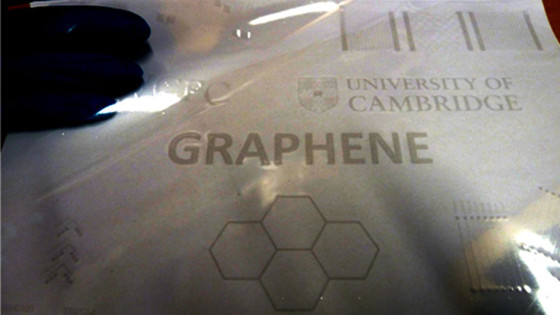



The mission of the Cambridge Graphene Centre is to investigate the science and technology of graphene, carbon allotropes, layered crystals and hybrid nanomaterials. This engineering innovation centre allows our partners to meet, and effectively establish joint industrial-academic activities to promote innovative and adventurous research with an emphasis on applications.
The facilities and equipment have been selected to promote alignment with industry, by filling two main vacuums. The first is the lack of intermediate scale printing and processing systems where the industrial upscale and optimization of inks based on graphene, related carbon nanomaterials, and novel two dimensional crystals can be tested and optimized. The second vacuum stems from the challenge posed by the unique properties of graphene: the centre facilities aim to fully cover those properties necessary to achieve the goal of "graphene-augmented" smart integrated devices on flexible/transparent substrates, with the necessary energy storage capability to work autonomously and wireless connected. We investigate the science and technology of graphene, carbon allotropes, layered crystals and hybrid nanomaterials. This engineering innovation centre allows our partners to meet, and effectively establish joint industrial-academic activities to promote innovative and adventurous research with an emphasis on applications.
The strategic focus are activities built around the central challenge of flexible and energy efficient (opto)electronics, for which graphene and related materials are a unique enabling platform. This will be achieved through four main themes. T1: growth, transfer and printing; T2: energy; T3: connectivity; T4: detectors.
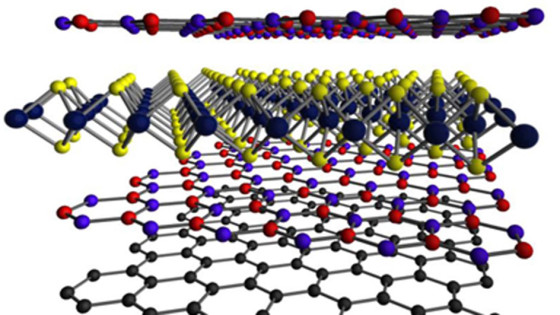
The core funding to establish the Centre comes from two programme grants and one equipment grant under the "EPSRC Graphene Engineering" call, from the Graphene Flagship, the Quantum Flagship, and the ERC Synergy Grant Hetero2D. Within the ERC framework, the Cambridge Graphene Centre is part of a Synergy group with the Graphene National Institute in Manchester, and the University of Lancaster, targeting heterostructures and superstructures based on two-dimensional atomic crystals and their hybrids with metallic and semiconducting quantum dots. This new concept of "materials on demand" will enable a large number of different artificial three-dimensional materials, with tailored properties, to be used in new multifunctional devices.
|
|
|
|