
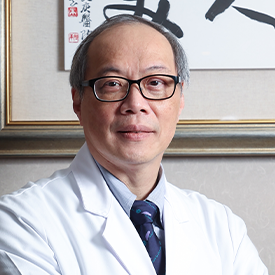
Chien-Tzung, Chen, M.D.
Chang Gung Memorial Hospital, Linkou
Superintendent
Company Info
Chang Gung Memorial Hospital, Linkou
Taoyuan City 33305 Taiwan
About
Prof. Chien-Tzung Chen, the Superintendent of Chang Gung Memorial Hospital in Linkou, Taiwan, is known for his contributions to plastic surgery and hospital administration, including authoring over 130 publications and book chapters. Prof. Chen has held several leadership positions within the Chang Gung Memorial Hospital system, including Superintendent of Chang Gung Memorial Hospital at Keelung and Chairman of the Division of Trauma Plastic Surgery at Chang Gung Memorial Hospital Linkou. Prof. Chen is the President of the Taiwan Medical Center Association and has also served as the President of the Taiwan Society of Plastic Surgery, the President of the Taiwan Craniofacial Association. He has also served on the editorial boards of the Journal of Taiwan Society of Plastic Surgery, Plastic Reconstructive Surgery and the International Journal of Cranio-Maxillofacial Trauma. Prof. Chen began his medical studies at Kaoshiung Medical University and completed a clinical and research fellowship at the University of Texas Southwestern Medical School in Dallas.
Education
-
Plastic Surgery Fellowship
University of Texas Southwestern Medical School -
Medical Degree
Kaoshiung Medical University
Awards & Certifications
-
HIMSS Digital Health Indicator (DHI), 2025
Perfect score globally - HIMSS Digital Imaging Adoption Model (DIAM) Stage 7, 2025
-
International Hospital Federation 2024
Dr Kwang Tae Kim Grand Hospital Award - HIMSS Digital Imaging Adoption Model (DIAM) Stage 6, 2024
- HIMSS Infrastructure Adoption Model (INFRAM) Stage 7, 2024
- HIMSS Analytics Maturity Assessment Model (AMAM) Stage 6, 2024
-
Healthcare Asia Awards 2024
Hospital of the Year – Taiwan -
Healthcare Asia Awards 2024
Smart Hospital Initiative of the Year - Taiwan
- HIMSS Electronic Medical Record Adoption Model (EMRAM) Stage 7, 2023
- HIMSS Infrastructure Adoption Model (INFRAM) Stage 6, 2023
-
HIMSS Digital Health Indicator
Second highest score globally 2022
-
Kaohsiung Medical University, 2024
Distinguished Alumni -
Harvard Business Review, 2024
Digital Transformation Award Leader of the Year (Large Enterprise) -
International Society of Aesthetic Plastic Surgery (ISAPS) 2014-2024
National Secretary - LEED (Leadership in Energy and Environmental Design) – Platinum
-
Academy of Medicine, Singapore
2018 Visiting Lecturer -
Taiwan Medical Association 2018
Annual Medical Paragon Award - Research Award, National Science Council 20001st Continuous medical education paper of Plastic and Reconstructive Surgery, 1999: “Endoscopic-Assisted Reconstruction of Orbital Medial Wall Fractures.” Plastic and Reconstructive Surgery 103(2): 714-720, Feb. 1999
-
Taiwanese Association of Plastic Surgery, 1993
Best paper of Dr. Ted Huang Award
“Distal Phalanx Replantation” Microsurgery 1994: 15: 77-82
Philanthropic Endeavors
- Noordhoff Craniofacial Foundation
- Down Syndrome Foundation R.O.C
- Mouth and Foot Painting Artists
- Blind Massage Therapists
Links to Rankings during tenure
Past Rankings Appearances
Chien-Tzung Chen is superintendent of Chang Gung Memorial Hospital in Linkou, Taiwan as well as a plastic surgeon. Chang Gung has about 2,000 attending physicians and about 21,000 staff members across 11 branches. The Linkou Branch handles almost 3 million outpatients annually and hundreds of thousands of patients for admission.
Can you tell us about when you first joined Chang Gung Memorial?
In 1987, I was in the first year of my surgical residency and was undergoing further training in the surgical department. Then I became a practicing surgeon. That was my first year as an attending physician. After that, I began providing surgical care for my patients.
What attracted you to Chang Gung Memorial?
I think Chang Gung Memorial Hospital, Linkou, has extensive education and training—and the most important is the surgical training. The surgical department has the largest surgical team and the most powerful faculty team in Taiwan.
What was your childhood like, and what initially drew you to the field of medicine?
My grandfather, he was a physician, medical doctor, in the Japanese Empire. That was many years ago. When I got sick in childhood, I slept on the bed in the aisle of the emergency room. At that time, I really suffered from disease. At that time, I thought maybe I could become a physician to help patients.
Can you walk us through some of the key steps in your career prior to becoming the superintendent?
I became a practicing surgeon when I finished my surgical training. I started my surgical career and was very interested in education. So, I joined the AO Foundation. They had a cranial muscular fasciitis team in Asia about 25 years ago. They tried to find surgeons who were really interested in teaching young people. We had several participants from Asian countries like Singapore, the Philippines, Taiwan and Hong Kong, so we formed the CMF education team. That was founded by the AO CMF Foundation. So, after that, we started the education course. In each country and in Taiwan, I led the course, starting 25 years ago. We have offered the educational course each year. And now we have already passed on that role to my successor.
Now we have two teaching courses. That's why I became an education leader. I can teach more people. I can help patients and help my team members deliver their skills and help more people.
So it had as much to do about educating future doctors as it did with helping patients? Why is education in the medical field so important?
As a physician, we don't only need surgical techniques, but also some basic science. It's only through education that we can really teach the young generations to know what's important during their practice.
Education for the young generation is really important. This is the way we teach the young generation, so your knowledge, your experience can transmit to our next generation.
What really prompted you to begin the transition into leadership?
When I became the department chief of the trauma divisions, one day, Prof. Charng, now the chairman of the Chang Gung Committee, asked me to go to Keelung branch. He said, "You already became the chief of the trauma plastic surgery department and a professor. You might be thinking about more you can do, more to help not only the patients, but also your faculty."
I thought that would be a good challenge for me. This is another career for me. I try to accept such a challenge. At that time, I said, 'OK, I'm trying to do that.'
When you were presented with that opportunity, did any part of you think, maybe I don't want to go into administration and I'd rather focus more on practicing, or was the challenge just too irresistible for you?
I struggled a little bit at that time. Maybe I would have to sacrifice my time doing research and skill improvement, but I thought, maybe this was another challenge for me. Actually, I like to take on some challenges in my career.
If I cannot do the job, well, I can go back to the medical research career. So I liked taking on the challenge.
Could you explain a little bit about why you do what you do and how you maintain your commitment to that personal why as an administrator?
The core concept is that we want the patient to have the best care. Every day, we really think about how we can improve patient care with the advancements in technology or the most advanced medicine for patients. That's the thing that we think about: Our commitment to patients.
At the end of each day, how do you measure whether you've fulfilled your responsibilities as a health care leader?
As the CEO or superintendent, we don't think about the end of the day. But think about "Are we really making progress toward our mid-term or long-term goals?" When I have a conference in the daytime, do we solve anything in the department?
The other thing, I think everyone, including myself, has to think about whether we learned new things today? I think everyone will think about the new things. I think about the improvement in patient care or public care. Do we really learn every day?
Can you share a leadership lesson that you've learned since becoming superintendent that helps shape your decision-making?
As superintendent or the leader, I think that we have to solve problems, but the decision may not be only made by yourself—you should discuss it with your colleagues, your partners. We have to listen to our colleagues to learn what their opinion is. Very good communication is really important to make the right decisions. Because if you think about everything only by yourself, some of your choices might be wrong. We have to listen to other people, then we let everyone know the goal we want to choose, so everyone can move together. We need to move everyone together—not moving by ourselves.
What would you say your biggest challenge has been so far in leading?
I think the biggest challenge is how to cultivate people, because experts and staff are the most valuable assets to this hospital. I am always thinking about how to cultivate experts in every department and how to persuade them to stay with us to achieve our common goal. So that's why I always say that when you really educate people, they really want to work. Even the younger generation, they have the same feeling.
It's really not easy to stay in the hospital. Some of the younger generation would rather go to a private practice or clinic. They say the jobs are easier, so they don't want to stay in the medical center, which has more work and a bigger mission to achieve.
It can be hard work. But if you really find interesting things, and I can encourage them and they work together, they really want to stay with us to move forward. Not only physicians, but the other medical personnel are important to us.
In your words, what makes Chang Gung Memorial Hospital special?
Chang Gung Memorial Hospital, Linkou, has many specialties because we have centralized systems. We deliver everything, and we are encouraging every staff member as they move. They can deliver their specialty, if they want—we can really provide modern devices. If they want to go abroad for education, we can provide a scholarship. We encourage every aspect of the staff. They can achieve their goals. In every department, they can achieve.
The most unique part of Chang Gung Memorial Hospital, Linkou, is that we deliver every answer in every department, not focused on one department or only one person. We want every department to develop their specialty. They deliver their advantage by themselves, but we provide good equipment for them.
What about from a patient perspective?
From the patient perspective, we facilitate patient care for the outpatient and also the clinical visits and hospitalizations, not only the medical care, but also the surgical care. In every aspect we have modern technology like an AI-assisted tool.
We have the technology to help patients improve their visits to the hospital. Patient care is really important for us in many aspects: outpatient, inpatient and emergency room services.
The patients' values are the most important. The reason they choose Chang Gung Memorial Hospital, Linkou, is because we provide the best and most efficient service.
Looking ahead, what do you see as the greatest opportunity for advancement, in both health care innovation as well as delivery?
In the future, we see AI as the most innovative for patient health care.
We are currently experiencing a shortage of manpower, and we can introduce AI in aspects that can help our medical care providers. They can take efficient care of patients. We developed generative AI, so the nurse in the baby room really can speak about what they're evaluating and hold the baby at the same time. They can speak to the computers, and the computer can automatically read what is important into the chart. They don't have to go back to the workstations to record this value again. They really can save their time. They can take care of the patient efficiently. In the future, smart care and also AI applications will be important in many, many aspects.
We already have robotics in the operating room to convey heavy objects from the warehouse to the operation room. We really can save on labor for the nurse. This new technology will help a health care provider facilitate their daily work in the future.
What long-term impact do you hope that your leadership and Chang Gung Memorial Hospital will have on Taiwan's health care landscape and beyond?
For the long term, we have a very good education system. We provided scholarships for our younger generation. They can go abroad to learn new technology from more advanced institutes in other countries.
We recently established a surgical scale lab that is one of the largest surgical scale labs. Also, we have a research building. We set out all kinds of research at the core lab and in the research building. All the new things, the new research building, provide a high level of education that will attract people. If we can inspire a colleague in Taiwan, they can achieve the same goal. If they want to achieve the goal, we move forward for Taiwanese health care.
Are you optimistic about the future of health care?
Definitely. Although we will have more challenges for the expert or the patient deficiencies in the future, we are also looking for new technology. We can overcome the problems we have encountered right now.
Chien-Tzung Chen is a member of the Newsweek CEO Circle, an invite-only executive community of subscribers.
 Visit our rankings portal
