
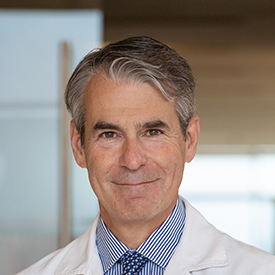
Guillermo Torre, MD
Hospital Zambrano Hellion TecSalud
Rector of TecSalud

Company Info
Hospital Zambrano Hellion TecSalud
Real San Agustín San Pedro Garza García N.L. 66260
MÉXICO
About
Dr. Guillermo Torre-Amione is Rector of TecSalud at Tecnológico de Monterrey, Mexico, and co-founder of the Transplant Laboratory at Houston Methodist Hospital. He holds a medical degree from Tecnológico de Monterrey, with specializations in internal medicine and interventional cardiology from Baylor College of Medicine, and a doctorate in immunology from the University of Chicago. A Level 3 member of the CONACYT national research system, Dr. Torre-Amione has published over 200 scientific articles and received the Scopus Elsevier Award for medical research. He is a member of prestigious medical organizations including the National Academy of Medicine, the American College of Cardiology, and the American Heart Association. Dr. Torre-Amione is also a certified specialist in clinical cardiology by the Mexican Council of Cardiology and in internal medicine, cardiology, heart failure, and transplantation by the American Board of Internal Medicine.
Education
-
Interventional Cardiology, Heart Failure, and Transplantation
Baylor College of Medicine, 1996 -
Internal Medicine
Baylor College of Medicine, 1992 -
Doctorate in Immunology
University of Chicago, 1990 -
Surgery and Medicine
Tecnológico de Monterrey, 1985 -
Awards & Certifications
- Conacyt National Research System, 2010 - Researcher Level III
-
American Board of Internal Medicine
Internal Medicine, Cardiology, Heart Failure, and Transplantation -
Elsevier Publishing, 2012
Scopus Elsevier Award for the country's most cited author
Links to Rankings during tenure
Past Rankings Appearances
Can you just share a little bit about where you grew up? Is there an early memory that eventually drew you towards medicine?
I grew up in Monterrey, Mexico, at a time when the city was rather small. I grew up in a normal middle upper-class family. My parents were both first-generation immigrants. My grandparents were from Spain on one side, and on the other side, they migrated from Lebanon and came straight to Mexico to work.
What drove me to medicine? To tell you the truth, I'm not sure, but I never really had another question in my life as to what I wanted to do.
Why in particular do you think you gravitated towards cardiology as opposed to other fields?
I became very interested in immunology, a field that will help you understand transplantation but, at the same time, oncology. With transplantation, I wanted to cure heart disease, kidney failure and diabetes. But at the same time, the attractiveness of fighting cancer was in the back of my mind. Immunology helped me understand both.
If you could understand why cancer cells evade the immune system, you also could develop therapies to prevent an organ from being rejected. That was in the back of my mind when I finished immunology at the University of Chicago. I wanted to develop therapies for cancer and transplantation.
I applied to become a resident at Baylor College of Medicine, and at that time, the president was probably one of the greatest cardiovascular surgeons who existed, Dr. Michael DeBakey.
Cardiology was exploiting a field with a lot of innovation, but also heart transplantation was becoming an everyday practice. My idea of becoming an oncologist transformed because of the exposure that I had in a place where cardiology was the most attractive.
My career was even more changed by the fact that when I completed my training, the head of the program was recruited to be the head of the Cleveland Clinic and there was an opportunity to hire someone to lead the transplant program. Rather than thinking I was the best person, I think none of the faculty wanted to do that work because it's very hard work.
I took that job, and I did it for like 20 years.
Even though I do administration, I do not consider my primary responsibility administration, but rather to push this strategy of the entire health division of the university to advance the practice of medicine, through better practices in the hospital to an academic environment for physician practices. Clinical practice develops the best environment for teaching and also pushes clinical translational work.
Is there a particular patient story from your clinical days that shaped your perspective on patient care?
A patient was in the hospital for maybe two months, waiting for a heart transplant. Every day, as the person in charge of the program, I would come into the patient's room with five or six people, and I always pat them in the back. One day, this particular man, a rancher, wasn't doing well. I'm leaving without touching him. He said, 'Hey, doc, stop, there's something missing. You didn't touch me on the back.'
That has stuck with me for many years. It taught me that patients want your scientific accomplishments to help them heal. But healing is more than that. Healing is feeling that they understand that you recognize them as a person.
Eventually we transplanted, and he did great for a number of years.
People talk about virtual interactions, and they have a value, but there is nothing that replaces human touch. That will never be replaced by AI or a virtual visit.
Those are complementary things.
In your current role as rector, how do you measure success at the end of the day?
Success from an institutional perspective would be that the medical community would recognize us as the leading institution. We have a clear objective that they recognize academic medicine in Mexico and Latin America as being able to solve major problems that others cannot. They will recognize our ability to generate solutions to complex medical conditions that others cannot, and in the process, we create the best formative environment for the clinical problem.
The community is already recognizing what we have been able to do. I'm not satisfied with it, but we're pushing and advancing in ways that would not have occurred at the level if we had not joined the strategy, the tech, the monetary presence and the investment that the board has made.
What are some concrete developments that help you mark success?
We're probably the only institution in Mexico that has a directorship, a medical school, a hospital, physician practices and a research enterprise. It's not easy to develop, and you may have great hospitals eventually develop a medical school and eventually need research. Today, we have all the components, and others in Mexico are looking at us to lead. Success to me has been to create an academic medical center in Mexico in ways that had never been done before.
That has attracted investment from companies from the outside. This financial commitment to create a new health sciences campus is without precedent and would not have occurred if the board or the community did not see the results. That is very clear evidence that we're probably doing the right thing.
How are you and your group making that reality?
We have a physician practice of over 300 doctors totally committed to the same vision. These doctors are not our employees. They have a partnership through a relationship that we've developed in the academic program of the hospital, where they are committed to the best clinical practice. This hospital today is the result of this group of physicians that are the driving force of clinical care.
What would you say has been the hardest lesson you've learned as a leader?
I came here when the hospital was a private practice community hospital like in the U.S. And we now are in a transition for people, the administration, the doctors who practice, and the students here to be in a culture that is more of an academic medical center.
That transformation takes time and effort. And for me, the hardest part has been to develop the patience to see that change. We are transitioning to create a cultural transformation that will last for a long time.
As a doctor, you have to respond quickly. And that's how my mind is formed and trained. So, to lead an organization through a cultural transformation, it's a different story.
Were there ever moments after you made that initial transition that you wondered whether you had made the right decision?
Coming to Mexico was a big challenge because I was coming to a place without a clear definition of what I could do. The hospital was a small private hospital. I didn't know the community. It was a time in Mexico when there was a lot of crime. That was a difficult decision for me because I traded safety, financial security, prestige for something that was totally uncertain.
The first couple of years I questioned it, but there was some internal force in me that said, 'This is a great challenge, and I get to make it happen.'
I worked for many years to come to a totally uncertain environment. I had no idea how the doctors would accept a new cultural transformation, whether we're going to have financial resources to do research and the things that we do today.
Can you tell us about the Cardiogenic Shock Initiative and how it's making a difference in patient outcomes?
For me personally, the Cardiogenic Shock Initiative is going back to the field where I developed a big part of my clinical expertise. But I am very happy today not pretending to lead it. I use my relationships, my interactions, but I want the junior faculty here to take a leadership position.
I want some of our junior faculty to take leadership positions so that they can get international exposure. In the end, it will develop better practices for us, not only for patients, but for education.
How do you and TecSalud stay at the forefront of the fields you're active in?
For TecSalud, we cannot develop the best clinical practice if the doctors are not thinking about innovation in the practice. That is part of the cultural transformation. We want to innovate, but we need to understand where we can make a difference.
A few years ago, we said we want to create science that's actionable. We are embarking on a variety of relationships that will provide a unique edge in their ability to do clinical translational work.
We have now built a Good Manufacturing Practice facility to be leaders in cell-based therapies in Mexico. We've assembled a team that is world class. But we're not going to create the fundamental biology to do that. We will translate what exists to deliver it to patients.
We've also made a commitment to transform cardiometabolic disease in a variety of ways. We already have the basis to do the first eyelid transplantation program for diabetes. We're in the process of building a cardiometabolic outpatient clinical research facility.
All of that will have a basic understanding of the genetic composition of Mexicans due to a project that we call oriGen, where we have already assembled data and genetic information in over 80,000 Mexicans that represent a wide spread of the population. We use tools of AI to answer fundamental questions for cardiometabolic disease, oncological problems and neurodiversity.
Those were the areas where we are working and where we'll probably in the near future develop significant contributions. Not only here, but contributions that can impact these major problems in the world.
How do those innovations influence health care delivery to a patient?
For example, we want to understand what medicine will help a Mexican diabetic patient. And we're going to do that by understanding the genetic background of Mexicans versus other populations, so that we can link that information with the outcomes with new clinical trials.
Genetic differences make medications more likely to be effective in one group versus the other, and for that, we built project oriGen.
What is the AI component of that?
The amount of data that we generate through the repository of information and a hundred thousand Mexicans with clinical data, bioinformatics and genetics is incredible. The only way to answer that is through utilizing AI tools to ask the questions that I've asked you. We are strategically at TecSalud developing a group of people that will tackle major medical problems, taking advantage of AI technology.
We developed a partnership with Microsoft to do that. The opportunities to answer and to provide new solutions are great. The next five years will really be transformative for TecSalud.
Are you optimistic about collaboration and partnership between the United States and Mexico?
We have a very good partnership with MIT, and we have a very good partnership with the Ragon Institute, which is the leading institute in immunology. When we talk to people like that, we have the same ideas. We want to come up with novel ideas. We want to create research that will be actionable to solve major problems.
MIT has developed a strong relationship with TecSalud for the last 10 years, and that was the result of an interaction with the board 10 years ago. The former president of MIT, Rafael Reif, arrived and created a partnership, which means Educating professors and exchange program develop research activities where, where students and faculty from honorary has spent time on MIT.
The Ragon Institute is a board that's composed of MIT, Mass General Brigham and Harvard Medical School. The faculty belong to all three institutions. We now have developed a partnership with Ragon to train and to do collaborative research just started last year.
We'll develop training programs for Mexican researchers and collaborative research programs where we not only provide labor work at MIT, but we provide the opportunity to do actionable translational clinical work.
Guillermo Torre is a member of the Newsweek CEO Circle, an invite-only executive community of subscribers.
 Visit our rankings portal
