Mike Huckabee toured the Clow Valve plant in Oskaloosa, Iowa, on Wednesday.Credit Charlie Neibergall/Associated Press
OSKALOOSA, Iowa — In announcing his presidential candidacy, Mike Huckabee on Tuesday pledged to champion men “who sweat through their clothes” at work but whose wages have stagnated for
decades.
On Wednesday, he visited a valve factory in Iowa and, surrounded by workers in overalls and safety glasses, he again struck a blue-collar populism that he hopes will make him stand out with conservatives, who
delivered victory for him in the state’s caucuses in 2008.
But as Mr. Huckabee emphasizes economics over social issues in seeking the Republican nomination, his pro-worker stance can be hard to separate from that of liberal Democrats. He praised the privately owned
valve company, Clow Valve in Oskaloosa, for still offering worker benefits that many American companies have cut. “I don’t see many companies that still take care of things like pensions and
health insurance for employees and their families,’’ Mr. Huckabee said. “That’s remarkable. It’s pretty rare these days.’’
He expanded on earlier criticism of a new trade deal working its way through Congress, and the calls of rival Republican candidates for entitlement reform.
Mr. Huckabee said he opposed fast-tracking the Pacific trade deal, a position aligning him with unions and environmental groups. The principle beneficiaries of a trade deal would be large corporations in agriculture,
technology and other industries that could expand exports.
“I know some people are saying the only thing that matters are corporate profits,’’ Mr. Huckabee said. “I’d like to think the United States government would stand up for United
States workers rather than let them take it in the backside and have to tough it out because somebody got wealthy at their expense.’’
In his announcement Tuesday, Mr. Huckabee also strongly opposed reducing Social Security benefits, in contrast to Republican rivals like Senator Marco Rubio of Florida and Jeb Bush, the former Florida governor,
who have called for raising the retirement age, and Gov. Chris Christie of New Jersey, who proposed means-testing benefits.
On Wednesday, Mr. Huckabee, a former Arkansas governor, also defended the disability program under Social Security, whose costs have risen rapidly. Some Republicans have said it cannot be sustained, and Senator
Rand Paul of Kentucky in January suggested, partly in jest, that “over half” of beneficiaries were malingering.
“To assume that anybody who is disabled is really fraudulent, I think that’s an insult to a person,’’ Mr. Huckabee told reporters at Clow, which has made fire hydrants and waterworks
valves since 1890. “You should make the government prove that person isn’t in need rather than the person having to.’’
President Obama took executive action last year to reshape the nation’s immigration system.Credit Zach Gibson/The New York Times
When President Obama issued an executive order in November sparing millions of illegal immigrants from deportation and offering them work permits, he argued that he was doing as much as the law would allow.
Now Hillary Rodham Clinton says she will do even more if she becomes president.
Her campaign promise put the White House in an awkward position on Wednesday. If Mr. Obama had pushed presidential legal authority as far as it would go, does that mean that Mrs. Clinton would be violating the
law if she were to go further?
“I’m not a judge,” said Josh Earnest, the White House press secretary, sidestepping an overt split between the two Democrats. “I didn’t go to law school. So I’m not
going to be in a position to render a legal opinion.”
The situation underscored the challenge facing Mr. Obama over the next 18 months as Mrs. Clinton tries to succeed him. Mrs. Clinton is courting immigration activists and liberals who argue that Mr. Obama should
have gone further to ease immigration rules without Congress’s approval. Republicans contend he went too far, abusing his power, and a federal judge has temporarily blocked the president’s
action to consider whether it is legal.
Mr. Earnest labored to stand by Mr. Obama’s interpretation of his executive power, as determined by a Justice Department opinion, without arguing that Mrs. Clinton was wrong.
He said the White House still “absolutely” believed that the president did everything he could within the law. “The president’s views on this have not changed,” Mr. Earnest
said. “The president is determined to use as much of his authority as he could to try to bring some much-needed accountability to our broken immigration system.”
Would it be illegal for Mrs. Clinton to take action that went beyond what the Justice Department said a president could do? “That’ll be something for future presidents, and ultimately future courts,
to decide,” Mr. Earnest said.
Hillary Rodham Clinton led a round-table discussion at Rancho High School in Las Vegas on Tuesday.Credit Isaac Brekken for The New York Times
Since she declared her candidacy on April 12, Hillary Rodham Clinton has answered just seven questions from reporters. This is the first installment of a regular First Draft feature in which The Times will publish questions we would have asked Mrs. Clinton had we had the opportunity.
On Tuesday, at an event in Las Vegas, Mrs. Clinton laid out an extensive
and ambitious plan to overhaul the nation’s immigration system, including expanding the Dream Act, which defers deportation for the children of undocumented immigrants, to include their parents, a
step President Obama has not taken. Our question for Mrs. Clinton would have been:
“President Obama said his executive action on immigration went as far as the law will allow. You say you would go beyond what he did. How could you stretch the law further than the president of your
own party and his Justice Department says it can go?”
Hillary Rodham Clinton sang "Take Me Out To the Ball Game" with Harry Caray, the Chicago Cubs' announcer, at Wrigley Field in 1994.Credit John Zich/Associated Press
The cacophony of presidential candidates is getting louder by the day, and while they have a variety of views on political matters, many of them have at least one thing in common — a love of music.
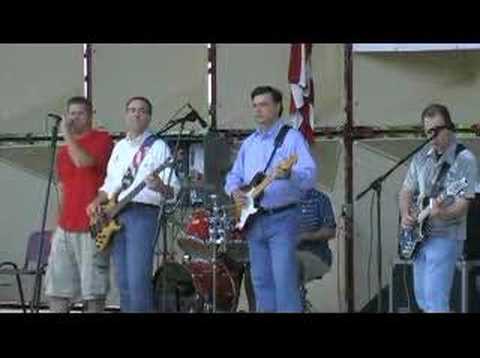
Senator Bernie Sanders, the Vermont independent, has roots as a folk singer. Former Gov. Martin O’Malley of Maryland leads a Celtic rock band. Former Gov. Mike Huckabee of Arkansas strums the bass guitar.
The campaign of Carly Fiorina, the former chief executive of Hewlett-Packard, says she is a proficient pianist. Senator Marco Rubio, Republican of Florida, showed off his voice in high school talent shows.
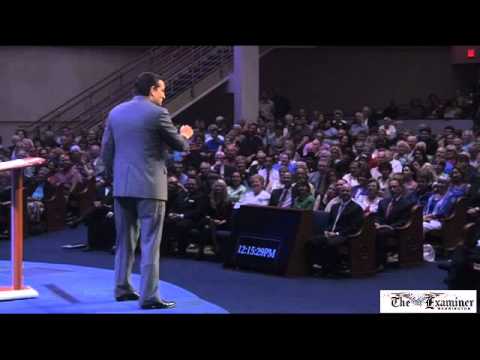
And although Senator Ted Cruz, Republican of Texas, struggles to carry a tune, he occasionally tries.
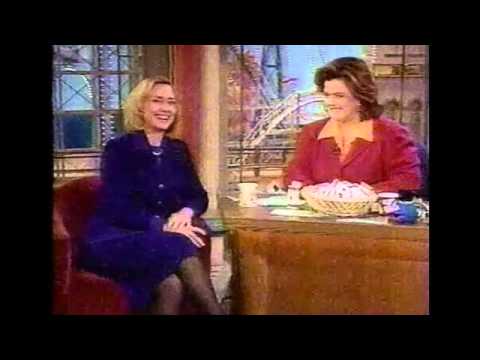
Hillary Rodham Clinton, a self-described lip-syncer who once called herself the original Milli Vanilli, has even been known to do a rendition of “Bye Bye Birdie.”
First Draft dug up some of our favorite footage of the presidential candidates (or possible candidates, in Mr. O’Malley’s case). Drop us a line at FirstDraft@nytimes.com and we’ll let you
know who readers think has the most musical talent.
Mike Huckabee playing “Free Bird” in New Hampshire.
Martin O’Malley playing at the Recher Theater in Maryland
Senator Bernie Sanders of Vermont sings “This Land Is Your Land” and other folks songs in 1987.
Hillary Rodham Clinton performed “Bye Bye Birdie” on Rosie O’Donnell’s show in 1997.
Senator Ted Cruz sings “Amazing Grace” to the tune of “Gilligan’s Island” in Dallas.
Senator Bernie Sanders, Independent of Vermont, held a news conference in Washington on Wednesday.Credit Zach Gibson/The New York Times
Senator Bernie Sanders, Independent of Vermont and a 2016 Democratic candidate for president, is pushing his new role as a voice to the left of Hillary Rodham Clinton.
On Wednesday, despite refusing to answer any questions about his Democratic rival, Mr. Sanders offered yet another glimpse at the sort of populist issues he planned to inject into the Democratic nominating fight.
“Today, 99 percent of all new income is going to the top 1 percent,” Mr. Sanders said in a news conference in the Capitol to introduce legislation that would break up the banks that are deemed
“too big to fail.”
“The top one-tenth of 1 percent now owns almost as much wealth as the bottom 90 percent,” he said.
Mrs. Clinton has come under fire for her family’s close ties to the financial sector, including highly paid speeches made for Wall Street bankers.
Mr. Sanders’s legislation, which he introduced with Representative Brad Sherman, Democrat of California, would require regulators at the Financial Stability Oversight Council to establish a list of banks
that are “too big to fail” — and then call on the Treasury secretary to break up those financial institutions within a year.
“If an institution is too big to fail, it is too big to exist, and that is the bottom line,” Mr. Sanders said.
Jeb Bush, the former governor of Florida, in San Juan, P.R., last month.Credit Dennis
M. Rivera Pichardo for The New York Times
Former Gov. Jeb Bush of Florida has been on a fund-raising tear as he prepares before a probable announcement that he is running for president, but he might want to spend some more time in Iowa.
The crucial caucus state that kicks off nominating season is not particularly impressed with Mr. Bush so far, according to a new poll released on Wednesday by Quinnipiac University.
In a survey of 667 Republicans who are most likely to participate in the Iowa caucuses, Mr. Bush comes in seventh with just 5 percent saying they would probably support him. A quarter of Iowa Republicans who
might caucus said they would definitely not support him.
The poll shows that 45 percent of the Iowans surveyed had an unfavorable opinion of Mr. Bush, with the same number saying he is not sufficiently conservative.
The figures show the challenge that Mr. Bush could face charting a path to securing the Republican nomination and consolidating conservative voters. The poll has a margin of sampling error of plus or minus 4
percentage points.
Quinnipiac’s poll shows Gov. Scott Walker of Wisconsin as the early favorite in Iowa, with 21 percent of likely Republican caucus-goers most likely to back him. Senators Rand Paul of Kentucky, Marco Rubio
of Florida and Ted Cruz of Texas are all vying for second place.
“For national unknowns like Walker and Rubio, a fast start in Iowa may be critical to their chances of overall success, while supporters of national names like Bush note that fewer than half of Iowa winners
wind up inhabiting the Oval Office,” said Peter Brown, assistant director of Quinnipiac’s poll.
Hillary Rodham Clinton greeted supporters after a round-table discussion in Las Vegas on Tuesday.Credit Isaac Brekken for The New York Times
Good Wednesday morning from Washington, where the Senate has passed a budget, and is thinking about giving some help to the United States bourbon industry. Hillary Rodham Clinton heads to California to raise some cash and might be breathing a little easier since controversies have seemed to gain little traction with voters.
Mrs. Clinton’s campaign has been under siege with questions about the Clinton Foundation’s foreign donations. But so far, there’s little evidence it has sunk in with voters.
In a New York Times/CBS News poll, a plurality of Americans – 44 percent – said they didn’t know enough to answer questions about whether the Clinton Foundation’s
focus is mostly charitable, mostly political or both. That included 45 percent of self-described independents.
On the question of whether foreign donations affected Mrs. Clinton’s decisions while she was secretary of state, 55 percent said they didn’t know enough to answer. Among them were 61 percent of
independents.
The survey had 1,027 respondents and was conducted from April 30 through May 3.
The numbers could mean that voters aren’t engaged at this early stage of the campaign. Or it could mean they’re aware of the stories about the foundation but are tuning them out.
The poll also shows that Mrs. Clinton’s favorability has improved and that Democrats do not appear troubled by the email and foundation issues.
The discussion around the foundation was prompted primarily by the book “Clinton Cash” by Peter Schweizer, a Republican. It focuses on possible overlaps with the Clintons’
personal wealth, donations to the foundation and her tenure at the State Department. Mrs. Clinton’s campaign responded with an aggressive pushback effort against the book.
Unlike the stories about Mrs. Clinton’s use of a private email server while she was secretary of state, the issues around the foundation are diffuse, more complicated and less stark. Most readers have
an email account; far fewer have foundations, making the email story, perhaps, more accessible for voters.
Ben Carson and former Gov. Mike Huckabee of Arkansas, both Republicans, and former Senator Jim Webb of Virginia, a Democrat, will each hold events in Iowa,
where Mr. Huckabee won the caucuses in 2008.
Vice President Joseph R. Biden Jr. will meet with Masoud Barzani, the president of Iraq’s autonomous Kurdish region, at the Naval Observatory.
Aside from the strategy to combat “Clinton Cash,” Mrs. Clinton’s campaign has placed a premium on small events, including fund-raisers.
But that will change when she arrives in California on Wednesday for a series of money events. One, on Thursday, will be at the home of her close ally, the media mogul Haim Saban, where, two
people involved in the planning said, more than 500 people are expected to attend.
The fund-raiser will be the biggest event Mrs. Clinton has held since announcing her candidacy. Most of her appearances have been confined to just over 100 people.
The Clinton team is trying to focus on being low key in the race so far. That includes the candidate herself, who is keeping a restricted schedule and who has yet to engage any Democratic groups focused on policy.
The strategy has meant, as one veteran Democratic strategist put it, that they are fighting “with one arm tied behind their back,” and that they are not hustling for money as hard as they could
be.
Mrs. Clinton has told her aides she wanted to step up the pace amid concerns about the tens of millions of dollars that Jeb Bush, the Republican former governor of Florida, is raising for his “super PAC.”
Senators Mitch McConnell and Rand Paul, Republicans from Kentucky, are pitching a new tax break that might even appeal to some Democrats. At least those who love bourbon.
They have introduced a bourbon bill that would allow distillers to save money by deducting the interest expenses they pay on their stocks of spirits that age in warehouses. The “pro-growth”
measure would make it easier for bourbon makers to compete with international sellers, they say.
Under current law, distillers cannot deduct the expenses they incur for aging their bourbon until the liquor is bottled and sold – a process that in some cases can take more than a decade. Mr. McConnell
compared the situation to a “homeowner not being able to deduct the interest on a home mortgage until the sale of the house.”
Republicans will most likely get the measure to the floor of the Senate as part of a larger tax bill rather than passing it as stand-alone legislation.
However, with Mr. McConnell in charge of the chamber, introducing a bill backing his local bourbon industry was apparently worth a shot.
The Senate gave final approval on Tuesday to the first joint congressional
budget plan in six years, ratifying a blueprint that would cut spending by $5.3 trillion. But it appeared moribund even before its passage.
Once again, Chuck Norrisis ready to backMr. Huckabee in a campaign fight.
Meeting in Morocco, the Clinton Foundation is coming under scrutiny for taking donations from a Moroccan government-owned mining company that is sponsoring the gathering, The Washington Post reports.
NPR details another setback in what has been somewhat of
a rough week for Gov. Chris Christie of New Jersey.
The three newest Republicans in the campaign received widespread attention in their first days, as The Wall Street Journal considers their chances; Yahoo News breaks downMr. Huckabee‘s
finances; and Time reports that Carly Fiorina, a former chief executive of Hewlett-Packard, would “roll back” net neutrality regulations.
Politico reports that Senator Elizabeth Warren of Massachusetts recently met with members of a “Draft Warren” movement, but that they stuck to discussing how she could influence
the 2016 race — not whether she would run.
Barney Frank, the former congressman from Massachusetts, is not running for president, but he seems worried that Gov. Scott Walker of Wisconsin might be.
Mr. Frank was speaking at the National Museum of Natural History in Washington on Tuesday at an event hosted by the Smithsonian Associates. He revealed small compromises he made to get the Dodd-Frank Act signed
and told stories about his long career in politics, like the time he tried to come out as gay to the speaker of the House at the time, Tip O’Neill, who misunderstood and was grief-stricken
because he thought Mr. Frank was dying.
But he was much less nostalgic when asked about his thoughts on the 2016 election. He said Mrs. Clinton should not be subjected to the same partisan battle that Mitt Romney faced in 2012, especially,
he argued, because Democrats’ main focus should be on defeating a “very scary” potential challenger from the right.
“The Republican I am most afraid of is Scott Walker,” he said, citing the governor’s past clashes with labor unions and widespread economic inequalities. “He has the best chance to
unify that party.”
— Jada F. Smith
Correction: Because of an editing error, the newsletter on Tuesday referred incorrectly to an 81 percent rating for Mrs. Clinton. That is her favorability rating among Democratic primary voters, not her overall approval rating.