Clear Retainers: Benefits, Limitations and What to Expect
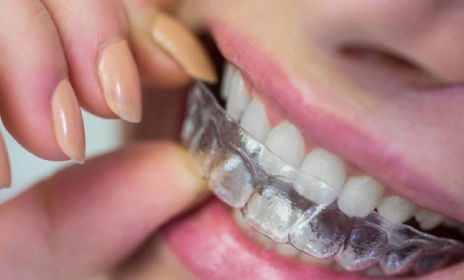
A clear retainer is a thin, transparent removable appliance made to fit closely over your teeth after orthodontic treatment. It is discreet and easy to remove, but it must be worn consistently and protected from heat, damage and loss.
Clear retainers work well for many patients after braces or clear aligners. Whether one is right for you depends on your tooth stability, bite, oral habits and ability to follow a removable-retainer routine.
What Is a Clear Retainer?
A clear retainer is made from transparent thermoplastic and shaped to match a specific arrangement of your teeth. It covers the visible surfaces and biting edges, creating a close-fitting shell.
You may hear this category described as:
- Clear plastic retainers
- Vacuum-formed retainers
- Thermoplastic retainers
- Essix-style retainers
“Essix” is often used informally for clear retainers, although products, manufacturers and materials can differ. Vivera retainers are a branded clear-retainer system made by Align Technology. A clear retainer is therefore a category, not one single product.
The exact material, thickness and design may vary according to the laboratory, manufacturer and clinical requirements.
How Does a Clear Retainer Work?
The retainer is formed to fit the intended tooth positions. When worn, it acts as a physical barrier against unwanted movement.
A conventional clear retainer is passive. It holds one arrangement rather than moving the teeth through a planned sequence.
This distinction matters because clear retainers can look very similar to clear aligners:
| Clear retainer | Clear aligner |
|---|---|
| Made to maintain one tooth position | Made as part of a planned movement sequence |
| Worn according to a retention schedule | Changed at prescribed treatment stages |
| Primarily passive | Active orthodontic appliance |
| Replaced when worn, damaged or inaccurate | Replaced by the next aligner as treatment progresses |
If your clear retainer is tight or no longer seats fully, do not treat it as an aligner. Have the fit assessed before trying to use it to correct movement.
What Are the Benefits of Clear Retainers?
They are discreet
The transparent material makes the appliance less noticeable than a traditional Hawley retainer. This can be important for patients who need daytime wear during the initial retention phase.
The retainer is not completely invisible. Its edges may be noticeable at close range, and the material can become cloudy or stained without appropriate care.
They fit closely over the teeth
Clear retainers are compact and do not cover as much of the roof of the mouth as a conventional upper Hawley retainer. Many patients find this close fit comfortable once they adjust to wearing the appliance.
They are easy to remove
You can take the retainer out for eating, brushing and flossing. This allows you to clean your teeth normally without working around a bonded wire.
Removability is also the design’s main behavioral weakness: the appliance only works when it is being worn.
They show changes in fit
Because a clear retainer closely follows the teeth, gaps or lifting may provide an early sign that the appliance has distorted or that a tooth has moved.
Do not respond by biting it into place. A visible fit change should be evaluated.
What Are the Limitations?
Clear plastic can wear or crack
Daily insertion, removal and biting forces gradually affect the material. Grinding or clenching may shorten the appliance’s useful life or create wear spots.
A crack can spread even when the retainer remains wearable. Once the appliance loses its shape, it may no longer retain the teeth accurately.
Heat can distort the appliance
Hot water, dishwashers, direct sunlight and other heat sources can change the plastic’s shape. The distortion may be subtle but still affect the fit.
Use cool or lukewarm water unless the manufacturer or your orthodontist gives different instructions.
Compliance matters
A clear retainer can spend the entire day in its case and provide no retention. Patients who frequently forget, lose or avoid removable appliances may need to discuss whether another design or a combined approach would be more reliable.
It may not be ideal for every bite
A clear retainer covers the biting surfaces of the teeth. That coverage may influence appliance selection in certain bite relationships or clinical situations.
Your orthodontist should evaluate the bite rather than choosing a retainer based only on appearance.
Repair options can be limited
A distorted or extensively cracked clear retainer generally needs replacement. In contrast, some components of a Hawley retainer can occasionally be repaired or adjusted.
What Does a Clear Retainer Feel Like?
A new clear retainer should feel snug and secure. It may temporarily increase saliva or slightly affect speech, but these changes often improve as you become accustomed to it.
The appliance should seat completely without being forced. You should not see a persistent gap between the retainer and the edge of a tooth.
Contact your orthodontist if:
- It stops before fully covering the teeth
- One side lifts or rocks
- The edge cuts your mouth
- It causes significant or persistent pain
- It suddenly becomes loose
- It develops a crack, hole or distorted area
A retainer can appear clear and undamaged while no longer fitting accurately. Fit is more important than appearance alone.
How Do You Put In and Remove a Clear Retainer?
Place the retainer over the correct teeth and press it into position evenly with your fingers. Do not bite down to seat it.
To remove it, release the edges gently from both sides rather than pulling repeatedly from one point. Uneven removal can stress the material and contribute to cracks.
Your orthodontic team can show you where to grip your specific appliance. The safest technique may differ slightly depending on the design and any dental restorations.
How Long Should You Wear It Each Day?
Your wearing schedule is based on your treatment and tooth stability, not on the fact that the appliance is clear.
Many patients begin with full-time removable-retainer wear and later transition to nighttime use. Others receive a different schedule. Follow the instructions provided for your case rather than copying another patient’s routine.
For the complete schedule guide, read
How Long Do You Have to Wear a Retainer?Can You Eat or Drink With a Clear Retainer?
Remove a conventional clear retainer for meals unless your orthodontist has instructed otherwise. Eating with it can trap food, place unnecessary stress on the material and increase the risk of damage.
Plain water is generally the safest drink while it is in place. Remove the retainer for colored, acidic, sugary or hot beverages. These drinks may stain the appliance, expose the teeth to liquid trapped under the plastic or distort the material through heat.
Brush or rinse your teeth as appropriate before replacing the retainer so food and sugars are not held against the enamel.
How Do You Keep It Clear?
Rinse the retainer when you remove it, and clean it with a method suitable for its material. Use a dedicated soft brush rather than scrubbing aggressively with an abrasive toothpaste.
Avoid boiling water, bleach and household chemicals. Some soaking products are suitable only for certain materials or frequencies, so follow your orthodontist’s or manufacturer’s directions.
Cloudiness is not always surface buildup. Fine scratches and material wear can make an older retainer look dull even after cleaning.
For step-by-step instructions, read How to Clean a Retainer.
How Long Does a Clear Retainer Last?
Clear retainers often need replacement sooner than more durable Hawley designs, but there is no universal expiration date.
The useful life depends on material, wearing frequency, grinding, removal technique, cleaning and storage. Replace or evaluate the appliance when it cracks, develops holes, becomes distorted, feels loose or no longer fits accurately.
Some patients are given more than one set, but replacement arrangements differ among providers and products.
See How Long Do Retainers Last? for lifespan planning and replacement signs.
Clear, Hawley or Permanent: Which Retainer Is Better?
No design is best for everyone.
| Priority | Option that may be considered |
|---|---|
| Low visibility | Clear retainer or permanent retainer |
| Removable for normal brushing and flossing | Clear or Hawley retainer |
| Greater repairability or professional adjustability | Hawley retainer |
| Retention that does not rely on remembering nightly wear | Permanent retainer |
| Continuous retention of selected front teeth | Permanent retainer |
| Broad removable coverage of an arch | Clear or Hawley retainer |
These are general considerations, not a prescription. Your original tooth positions, bite and risk of movement may make one option more appropriate.
A combination can also be useful. Some patients have a fixed retainer behind the lower front teeth and wear a clear removable retainer at night.
Who May Need a Different Option?
A clear retainer may be less suitable for someone who repeatedly loses removable appliances, grinds through the material quickly or has a bite in which full tooth coverage is undesirable.
It may also require reconsideration if extensive dental work is planned. A new crown or other restoration can alter the shape of a tooth and prevent the old appliance from seating.
These factors do not automatically rule out clear retention. They help the orthodontist decide whether the design, material or combination of appliances should change.
Clear Retainers at Orthodontic Experts
The right clear retainer should be based on accurate tooth positions and a clear retention goal.
Orthodontic Experts can evaluate whether a clear retainer is suitable, check an existing appliance that feels different and determine whether shifted teeth should be corrected or retained in their current position before a replacement is made.
Bring your current retainer to the appointment whenever possible.
Frequently Asked Questions
Are clear retainers the same as Invisalign aligners?
No. Invisalign aligners are active treatment appliances made as a planned sequence to move teeth. A clear retainer is generally designed to hold one position after treatment.
Do clear retainers turn yellow?
They can become stained, cloudy or discolored through food residue, colored beverages, tobacco, material wear or inappropriate cleaning. Removing them for meals and cleaning them correctly can help preserve their appearance.
Can clear retainers close a small gap?
A conventional clear retainer is intended to hold teeth rather than close spaces. If a gap has reopened, an orthodontist should determine whether active treatment is needed.
Can I wear a clear retainer if I grind my teeth?
Possibly, but grinding may wear through or crack the material. A retainer is not automatically a substitute for a night guard. Your orthodontist or dentist should evaluate whether one appliance can safely address both needs.
Do clear retainers affect speech?
A temporary change is possible while your tongue adjusts to the appliance. Persistent speech difficulty may require a fit or design review.
Table of Content
More Retainers Information


Book a No-Cost consultation
Book your consultation or choose the location that works best for you.
Find Retainers Treatment Near You!
Treatment should fit into your routine, not disrupt it. Orthodontic Experts offers multiple locations across:
Get the confidence you deserve and discover your new true smile with Orthodontic Experts.
