Download Mendeley
The nuclear receptor PPARgamma individually responds to serotonin- and fatty acid-metabolites
Waku, T., Shiraki, T., Oyama, T., Maebara, K., Nakamori, R., Morikawa, K.(2010) EMBO J 29: 3395-3407
- PubMed: 20717101 Search on PubMedSearch on PubMed Central
- DOI: https://doi.org/10.1038/emboj.2010.197
- Primary Citation Related Structures:
2ZK6, 3ADS, 3ADT, 3ADU, 3ADV, 3ADW, 3ADX - PubMed Abstract:
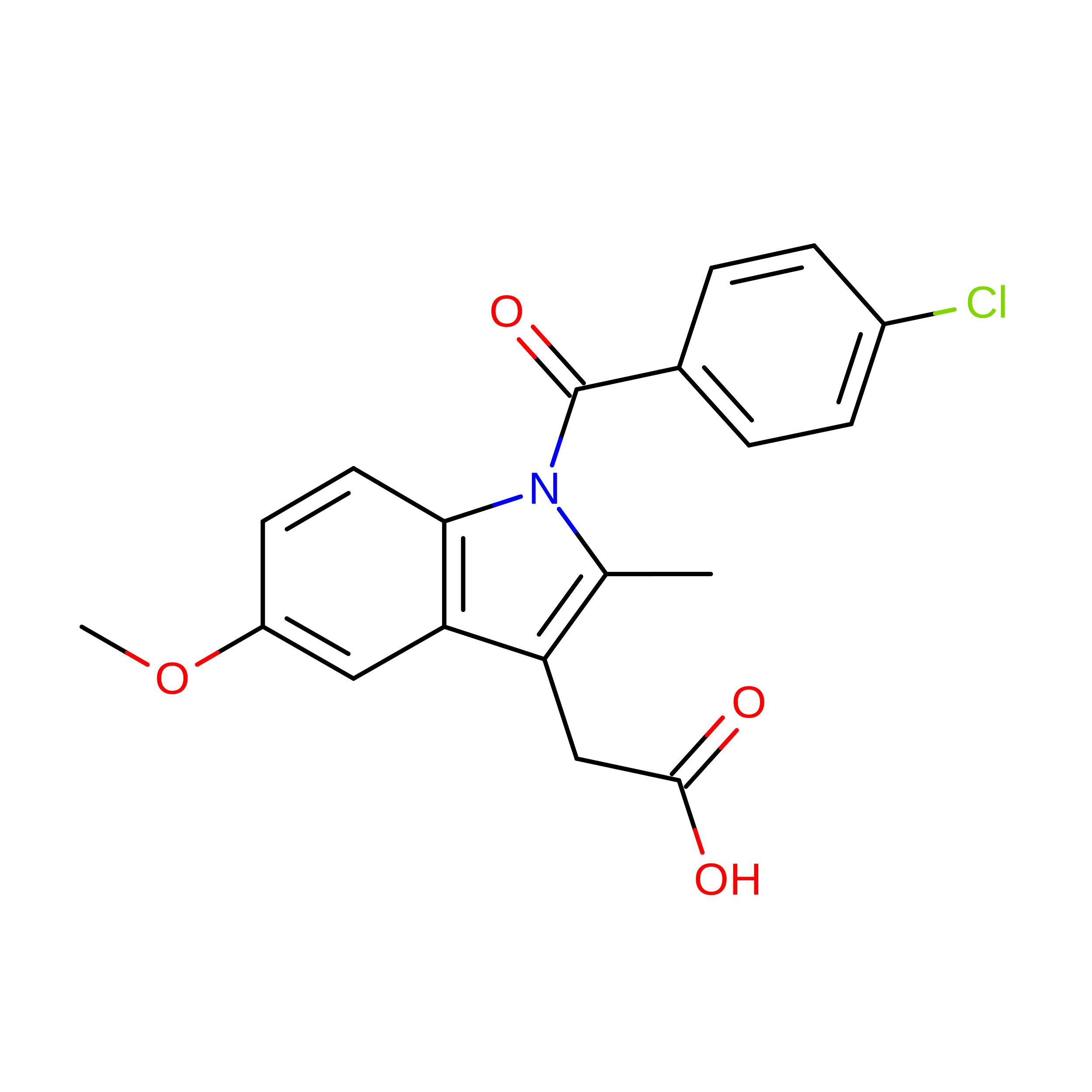
The nuclear receptor, peroxisome proliferator-activated receptor γ (PPARγ), recognizes various synthetic and endogenous ligands by the ligand-binding domain. Fatty-acid metabolites reportedly activate PPARγ through conformational changes of the Ω loop. Here, we report that serotonin metabolites act as endogenous agonists for PPARγ to regulate macrophage function and adipogenesis by directly binding to helix H12. A cyclooxygenase inhibitor, indomethacin, is a mimetic agonist of these metabolites. Crystallographic analyses revealed that an indole acetate functions as a common moiety for the recognition by the sub-pocket near helix H12. Intriguingly, a serotonin metabolite and a fatty-acid metabolite each bind to distinct sub-pockets, and the PPARγ antagonist, T0070907, blocked the fatty-acid agonism, but not that of the serotonin metabolites. Mutational analyses on receptor-mediated transcription and coactivator binding revealed that each metabolite individually uses coregulator and/or heterodimer interfaces in a ligand-type-specific manner. Furthermore, the inhibition of the serotonin metabolism reduced the expression of the endogenous PPARγ-target gene. Collectively, these results suggest a novel agonism, in which PPARγ functions as a multiple sensor in response to distinct metabolites.
- The Takara Bio Endowed Division, Department of Biomolecular Recognition, Institute for Protein Research, Osaka University, Open Laboratories of Advanced Bioscience and Biotechnology, Furuedai, Suita, Osaka, Japan.
Organizational Affiliation: