Download Mendeley
Pharmacological repression of PPAR gamma promotes osteogenesis.
Marciano, D.P., Kuruvilla, D.S., Boregowda, S.V., Asteian, A., Hughes, T.S., Garcia-Ordonez, R., Corzo, C.A., Khan, T.M., Novick, S.J., Park, H., Kojetin, D.J., Phinney, D.G., Bruning, J.B., Kamenecka, T.M., Griffin, P.R.(2015) Nat Commun 6: 7443-7443
- PubMed: 26068133 Search on PubMedSearch on PubMed Central
- DOI: https://doi.org/10.1038/ncomms8443
- Primary Citation Related Structures:
4R2U, 4R6S - PubMed Abstract:
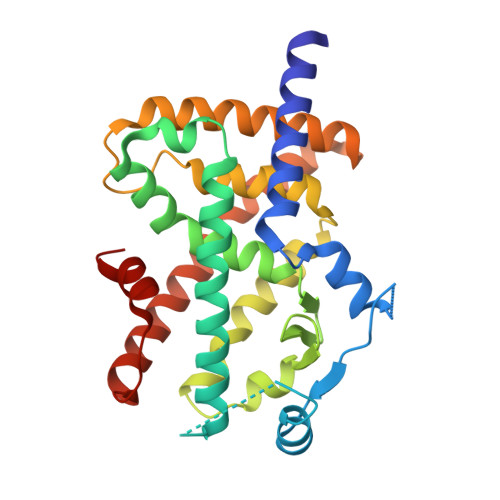
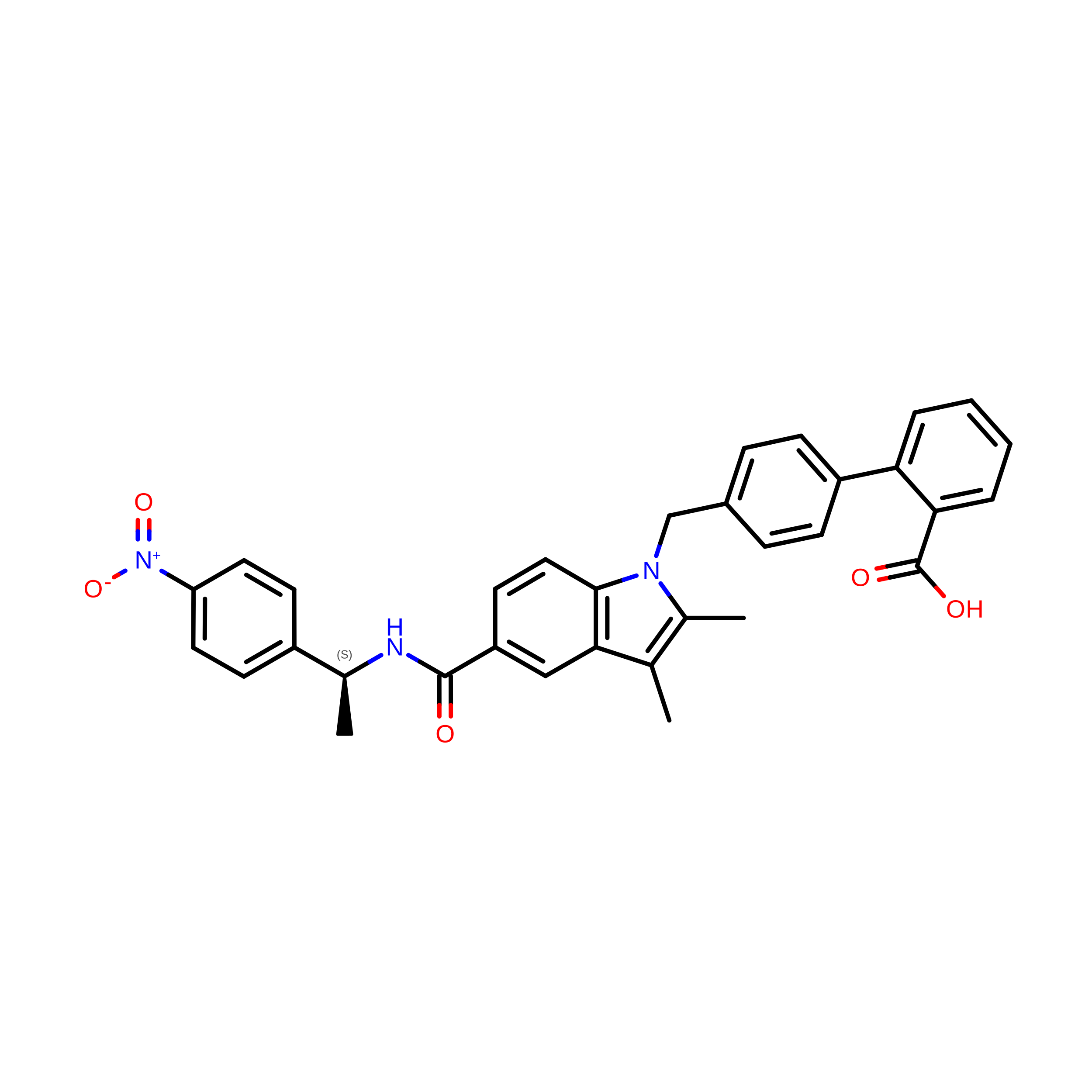
The nuclear receptor peroxisome proliferator-activated receptor gamma (PPARγ) is the master regulator of adipogenesis and the pharmacological target of the thiazolidinedione (TZD) class of insulin sensitizers. Activation of PPARγ by TZDs promotes adipogenesis at the expense of osteoblast formation, contributing to their associated adverse effects on bone. Recently, we reported the development of PPARγ antagonist SR1664, designed to block the obesity-induced phosphorylation of serine 273 (S273) in the absence of classical agonism, to derive insulin-sensitizing efficacy with improved therapeutic index. Here we identify the structural mechanism by which SR1664 actively antagonizes PPARγ, and extend these findings to develop the inverse agonist SR2595. Treatment of isolated bone marrow-derived mesenchymal stem cells with SR2595 promotes induction of osteogenic differentiation. Together these results identify the structural determinants of ligand-mediated PPARγ repression, and suggest a therapeutic approach to promote bone formation.
- Departments of Molecular Therapeutics, The Scripps Research Institute, Scripps Florida, Jupiter FL33458, USA.
Organizational Affiliation: