








Send Time Optimization taps into AI to determine when Pardot (Account Engagement) emails should be sent based on past engagement data from your database. The idea behind it is that by optimizing the time the email is sent, your audience is most likely to open and click.
When an email lands in a recipient’s inbox can make or break its success; when prospects are active in their inbox is key for B2B marketing where prospects are often not glued to their work emails! Scroll down to view our infographic that gives an introduction to Pardot Einstein Send Time Optimization.
What is Einstein Optimized?
‘Einstein Optimized’ is an option available when sending an email from Pardot (Account Engagement). There are three sending options from the Lightning email builder. Choosing “Einstein Optimized” will mean your email is sent within the experiment timeframe you set (minimum 3 hours, maximum 7 days).
How to Send an Einstein Optimized Email in Pardot
You now have three options available to choose from when an email should be sent:
- Send now
Send later: Schedule at a specific time and date.
Einstein Optimized: Allow the technology to crunch the past engagement data from your database.

How to Use Send Time Optimization
Here’s an example. You have prospects in multiple time zones but that doesn’t mean they’re working their set 9-5 hours!
In a reality where flexible working/one team on different time zones has become standard (fortunately!) each prospect will be looking at their work email inbox on their agenda.
Selecting ‘Einstein Optimized’ means you:
- Set a timeframe to experiment with, from 3 hours to 7 days.

Tip: you can hover to calculate the correct number of hours you want:

2. Monitor who has been sent the email (and who has engaged) with the standard Pardot email reporting. Select “Queued” from the dropdown list:

Marketing AI: What to Be Aware Of
When it comes to AI, always be aware of what data the AI models are actually using behind the scenes. It’s nice to have a shiny new dashboard, but what data has been considered, which trends are being reinforced.
Send time optimization is a perfect example. Treat the technology with some skepticism, as certain behavioral trends can be continually reinforced; sending at the time that send time optimization recommends, inevitably will show that subscribers are engaging with emails during that period. Without data to compare with other send times, the model won’t recommend other periods.
Einstein Send Time Optimization: Infographic

How excited are you for Send Time Optimization?
Short answer: very. We heard rumours about this new feature for some time. While this has been the case in other email marketing platforms for some time (Marketing Cloud being one drawn up as a comparison), I really welcome this addition to Pardot.
When the Summer ‘21 release notes were first published, I put out a poll to gauge which were the most interesting features to other Pardot marketers. Send Time Optimization came out on top*
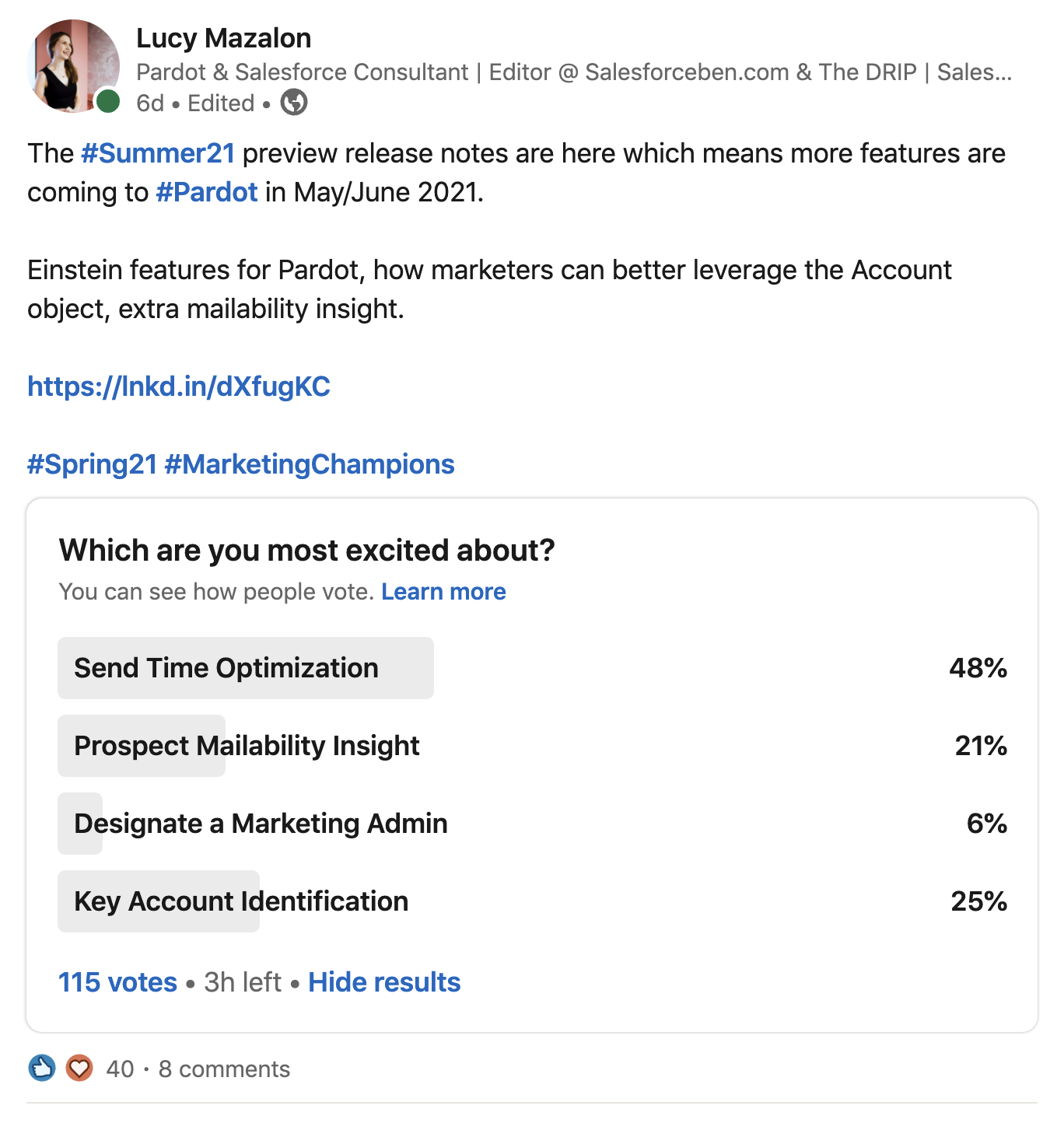
*I suppose you need to take this with a pinch of salt, as respondents could only choose one option!






Comments: