

Free Privacy Policy Generator

Generate a Privacy Policy with the Privacy Policy Generator from TermsFeed to comply with GDPR, CCPA+CPRA and many other privacy laws worldwide.

Generate Privacy Policy in minutes. 100% free.

Where will your Privacy Policy be used?

Click all that apply

Highlights

  • Excellent service rated 4.7+

  • Incredible fast customer support

  • Easy and enjoyable user experience

  • Free hosting page for your Privacy Policy

  • Download your Privacy Policy as document

  • Edit your Privacy Policy with Live Editor

  • Update your Privacy Policy anytime

  • Get notified when it's time to update

Features of the Privacy Policy Generator.

The TermsFeed Privacy Policy Generator simplifies creating a Privacy Policy for your website, app, ecommerce store, SaaS, or any business that requires a Privacy Policy to comply with privacy laws like GDPR, CCPA+CPRA, and more.

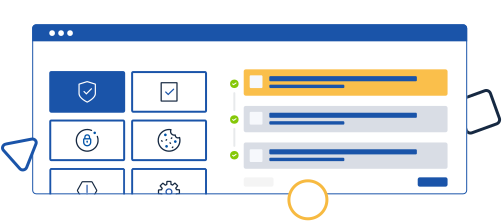
Generate custom Privacy Policies

Generate custom Privacy Policies

Create a fully customized Privacy Policy tailored to your business in just minutes.

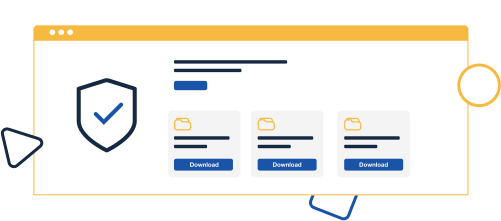
Download in multiple formats

Download in multiple formats

Easily download your Privacy Policy in multiple formats — HTML, DOCX, Plain Text, or Markdown.

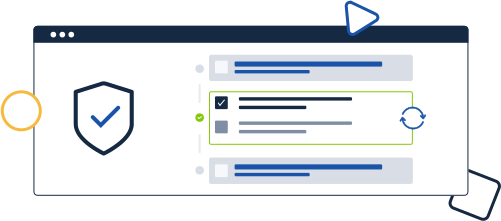
Update anytime

Update anytime

Missed an option or changed your business practices? No problem. Return to the TermsFeed and update it anytime.

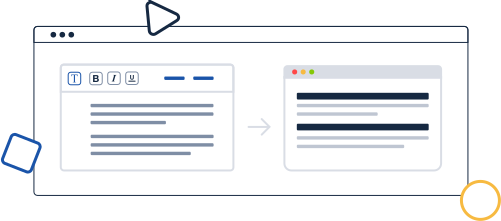
Edit with Live Editor

Edit with Live Editor

Need to add custom text? Use our Live Editor to apply personalized edits with ease.

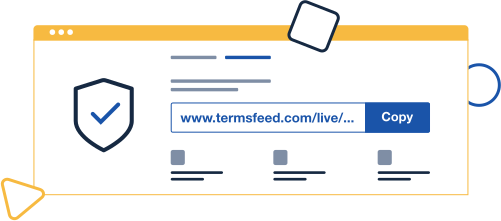
Free hosting

Free hosting

Every Privacy Policy generated is hosted for free with a permanent link — perfect for your website footer or app store listing.

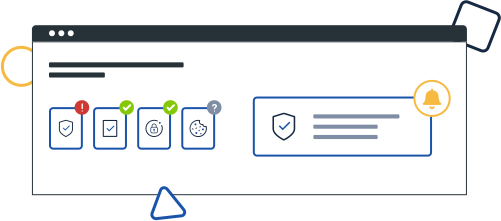
Stay up to date

Stay up to date

Get notified by TermsFeed when it's time to update your Privacy Policy.

A Privacy Policy is mandatory by law.

A Privacy Policy is legally required if you collect personal data from users, regardless of the platform—website, mobile app, desktop app, etc. Most privacy laws around the world mandate having a Privacy Policy.

United States

United States

Several state-level laws, such as CCPA+CPRA, require a Privacy Policy.

Europe

Europe

The GDPR mandates a Privacy Policy for businesses in or operating within the EU.

Canada

Canada

Privacy laws like PIPEDA require businesses to have a Privacy Policy.

United Kingdom

United Kingdom

The UK's privacy regulations also require a Privacy Policy.

Australia

Australia

Australia's privacy laws mandate having a Privacy Policy for businesses.

CCPA+CPRA

CCPA+CPRA

The California Consumer Privacy Act, amended by the California Privacy Rights Act, requires a Privacy Policy

CalOPPA

CalOPPA

The California Online Privacy Protection Act (CalOPPA) mandates a Privacy Policy for websites and online services.

GDPR

GDPR

The General Data Protection Regulation (GDPR) requires businesses in the EU or those operating in the EU to have a Privacy Policy.

PIPEDA

PIPEDA

The Personal Information Protection and Electronic Documents Act (PIPEDA) requires a Privacy Policy for businesses handling personal data.

Many more

Many more

Support for more privacy laws around the world.

Helping businesses since 2012.

Tens of thousands rely on the Privacy Policy Generator from TermsFeed to simplify compliance and protect their businesses.

G2

It makes creation of a long Terms and Conditions easier by just putting the important details and ticking some boxes.


Capterra

Excellent. Very Happy. TermsFeed gave me everything I needed with minimal effort on my part. Their support team is great and able to troubleshoot and make any changes that are needed for your site. Even with email support, Customer Support is very responsive. I have total confidence in using this service and their support.


Capterra

Elegant solution, reasonable cost and fantastic support.


Capterra

Great Service! 10 out of 10 experience with them. Very fast and easy to use system. Very quick turnaround times with customer support and super easy system to use.


G2

Termsfeed is really easy to use. I don't need any legal knowledge to create legal documents. It might be pricey for small companies and startups.


G2

TermsFeed is very easy to use with user-friendly interface. It helps me to draw out the Terms & Conditions along with Privacy Policies for the business and stay in grounds with the regulations and compliance. The cookie content for websites is very easy to manage with TermsFeed. The technical support team is great in assisting the users. A little expensive than the other similar products available in the market. The payment interface should be updated to be more clear to the users.


G2

TermsFeed is easy to use and understand. TermsFeed has great customer service and offers many features.


Capterra

Excellent customer support! Fully functional system at low cost. Easy to understand.


Capterra

Simple and Impressive. I especially loved that there were questions to help me make the best choice. But what I really loved was how very easily I was able to get policies and terms and conditions tailored to my needs. This can be an intimidating process since I wanted to ensure compliance, but their software made it easy and definitely left me feeling very confident.


Watch the Privacy Policy Generator in action.

See how the TermsFeed Generator can create a custom Privacy Policy for your business in just minutes.

Highlights

  • Excellent service rated 4.7+

  • Incredible fast customer support

  • Easy and enjoyable user experience

  • Free hosting page for your Privacy Policy

  • Download your Privacy Policy as document

  • Edit your Privacy Policy with Live Editor

  • Update your Privacy Policy anytime

  • Get notified when it's time to update

Sign Up

Watch

Frequently asked questions.

Have questions about our Privacy Policy Generator before you sign up? Find the most popular questions answered below.

A Privacy Policy is a legal agreement between you and your website/app users that explains how you collect, use, and protect their personal data.

It details what data you collect, how you use it, who you share it with, and how you keep it secure. It also covers your use of cookies and tracking technologies.

Most global privacy laws require a Privacy Policy if you collect personal information.

Yes, the Privacy Policy Generator from TermsFeed is free to use.

You can also purchase optional premium versions with additional clauses for a one-time fee.

Yes, you can download the Privacy Policy generated by TermsFeed as HTML, DOCX, or plain text.

Use the Privacy Policy Generator from TermsFeed to create a free Privacy Policy for your business.

No, copying someone else's Privacy Policy is illegal. These documents are protected by copyright laws.

You need a Privacy Policy for two key reasons:

  1. Legal Requirement: If you collect personal data, you must comply with privacy laws that apply regardless of where your business is located.
  2. Customer Trust: Consumers expect transparency. Not having a Privacy Policy can damage your reputation and drive customers away.

If you truly don’t collect any personal data, you must still have a Privacy Policy to state that fact.

However, review your data practices carefully. Services like Google Analytics may collect data without you realizing it.

Many countries require a Privacy Policy if you collect personal data, including Canada, the EU, the UK, the U.S., and Australia. Privacy laws are expanding globally.

For details by country, see our article: Privacy Laws by Country.

Privacy laws protect residents of specific regions. Even if your business is not in California, you must comply with California privacy laws if you serve California customers.

Key laws to know:

  • CCPA: California law requiring a Privacy Policy.
  • GDPR: EU law with global impact, setting the standard for privacy regulations.
  • CalOPPA: Requires Privacy Policies for businesses collecting data from California residents.
  • COPPA: U.S. law protecting children’s privacy (under 13).
  • PIPEDA: Canadian law for businesses handling personal data.
  • UK DPA: UK law regulating data collection and processing.
  • Australia Privacy Act: Regulates data collection and storage practices in Australia.

Cookies are small files stored on a user’s device when they visit a website. They help remember user activity like shopping cart contents or form data.

Whether cookies count as personal data depends on their function and the user’s legal jurisdiction.

No, requesting email addresses without a Privacy Policy is not recommended. Email addresses are considered personal data, and you may face legal liability if you collect them without a Privacy Policy.

Your Privacy Policy must explain why you collect email addresses, how you use them, and users' rights (e.g., opting out).

Your Privacy Policy must be easy to access at all times. Place a link in your website footer and on any page where you collect personal information, such as sign-up forms or checkout pages.

The best way to get user acceptance is through click-wrap, which is clear and legally compliant.

Provide a link to the Privacy Policy with a checkbox or button labeled with a statement like, "By clicking Agree, you accept our Privacy Policy."

Write your Privacy Policy in simple, clear language.

Privacy laws have different requirements, so start by reviewing what personal data your business collects, why you collect it, and how you use it. Use our Privacy Policy Generator or templates for help:

A Privacy Policy explains how you collect and use personal information. A disclaimer limits liability for misunderstandings or misuse of your content.

For example, a medical disclaimer states that content is for informational purposes only and not a replacement for medical advice.

A Privacy Policy protects your users by explaining how you handle their data. A Terms & Conditions (T&C) agreement protects you by outlining the rules for using your website or app.

Privacy Policies are legally required, but T&Cs are optional. However, having a T&C helps you enforce rules and terminate accounts for violations.

Everything you need to know about Privacy Policies.

Practical insights on Privacy Policies to help your business stay compliant and protect user data.