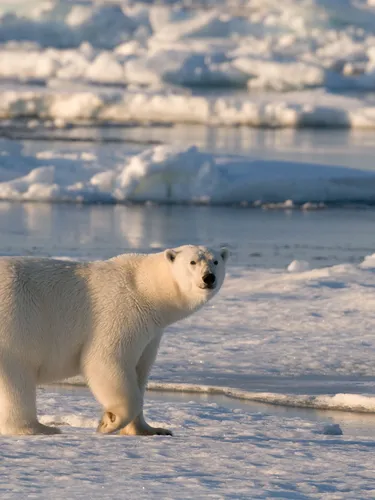
© Steve Morello / WWF-Canon
Polar bears
About WWF's polar bear work
- WWF works in four out of five countries where polar bears live
- WWF works to protect polar bear habitat from the impacts of climate change and industry threats
- We support local strategies for living with polar bears
- WWF scientists study and track polar bears
- We support scientifically based laws and policies that help polar bears
- WWF’s work on polar bear conservation is rooted in respect: for wildlife, for cultural traditions and rights, and for evidence-based conservation solutions
Learn more about how WWF works on polar bear conservation
About polar bears
The largest bear in the world and the Arctic's top predator, polar bears are a powerful symbol of the strength and endurance of the Arctic. The polar bear's Latin name, Ursus maritimus, means "sea bear." It's an apt name for this majestic species, which spends much of its life in, around, or on the ocean–predominantly on or near the sea ice. In the United States, Alaska is home to two polar bear subpopulations.
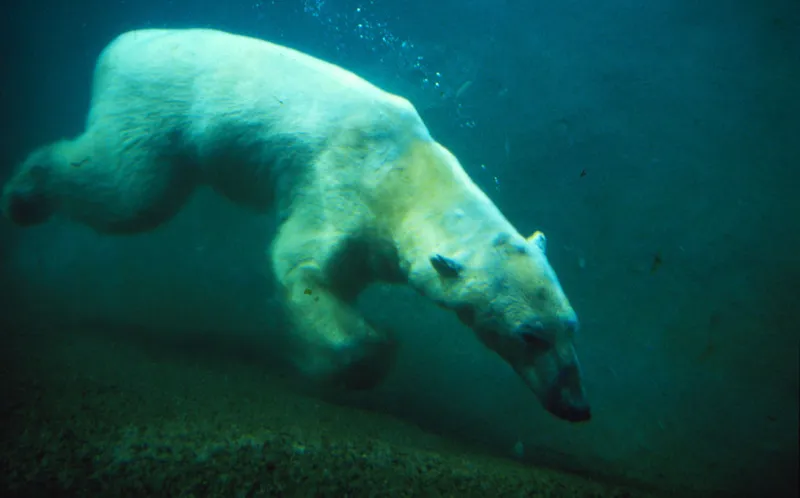
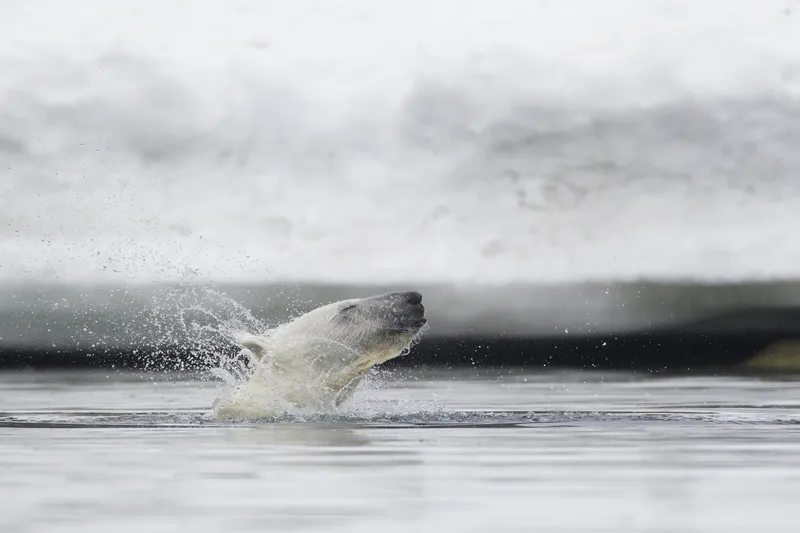
Considered talented swimmers, polar bears can sustain a pace of six miles per hour by paddling with their front paws and holding their hind legs flat like a rudder. They have a thick layer of body fat and a water-repellent coat that insulates them from the cold air and water.
Polar bears' diet mainly consists of ringed and bearded seals because they need large amounts of fat to survive.
Polar bears rely heavily on sea ice for traveling, hunting, resting, mating and, in some areas, maternal dens. But because of ongoing and potential loss of their sea ice habitat resulting from climate change–the primary threat to polar bears Arctic-wide–polar bears were listed as a threatened species in the US under the Endangered Species Act in May 2008. As their sea ice habitat recedes earlier in the spring and forms later in the fall, polar bears are increasingly spending longer periods on land, where they are often attracted to areas where humans live.
The survival and protection of the polar bear habitat are urgent issues for WWF. The International Union for the Conservation of Nature (IUCN) Polar Bear Specialist Group releases regular polar bear population updates on the 20 polar bear subpopulations.
Fun facts
- Polar bears are the largest and most carnivorous of all the bear species, with claws and teeth perfectly shaped for catching and eating seals.
- Polar bears take great care of their cubs, nursing them for up to two and a half years. The milk they give their newborn cubs is rich, about 32% fat, which is like drinking whipping cream!
- Enormous paws—up to the size of a dinner plate—act as natural snowshoes that help the bear trek across treacherous ice and deep snow
- Polar bears are great at storing energy for a rainy day. They can pack on the pounds when food is plentiful, storing up to 50% of their body weight as fat! This fat helps keep them warm and provides energy between feedings.
- Unlike other North American bears, most polar bears are out and about all year long. Only pregnant females overwinter in dens, where they give birth and raise the cubs for their first few months of life.
Polar bear facts
- Status View status categories and descriptions
- Vulnerable
- Population
- About 26,000
- Scientific name
- Ursus maritimus
- Weight
- 800–1,300 lbs. (males), 300–700 lbs. (females)
- Length
- 6–9 ft.
- Habitats
- Arctic Ocean, sea ice, and adjacent coastal areas
News and stories
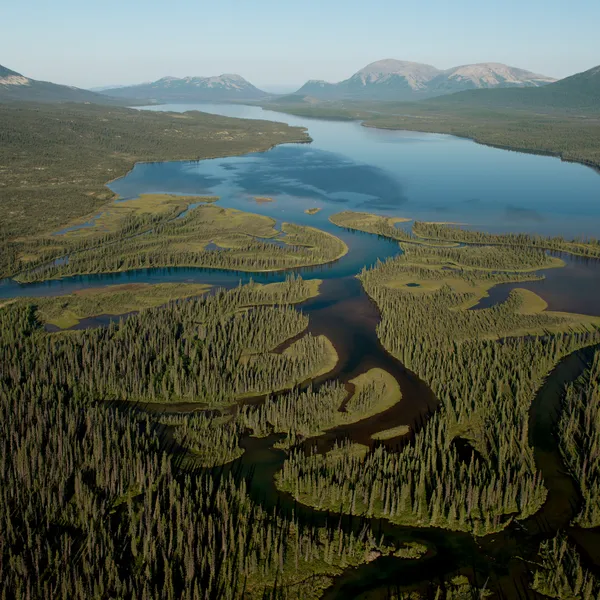
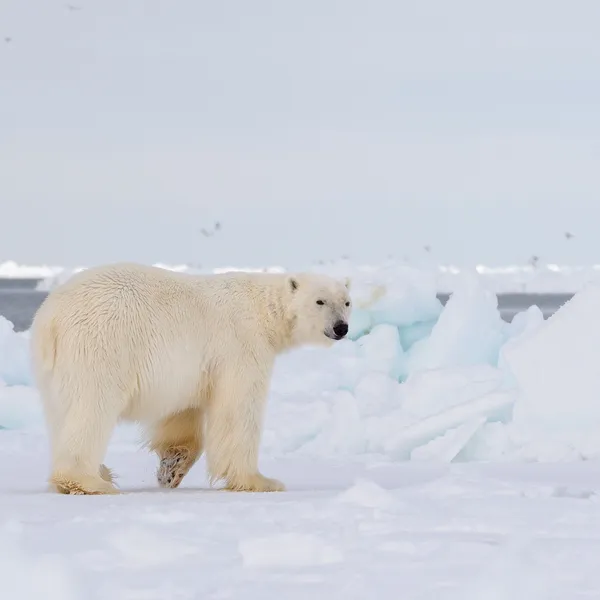
Importance of polar bears
© Debra Garside
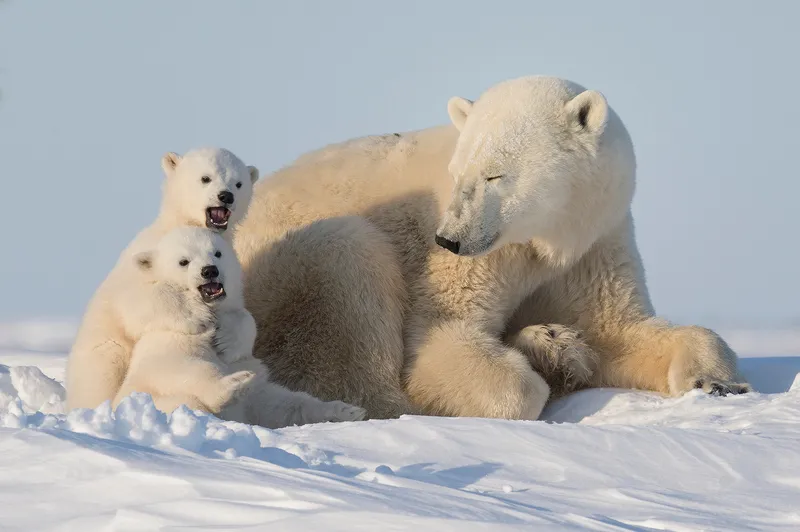
Polar bears are at the top of the food web and have an important role in the overall health of the marine environment. Over thousands of years, polar bears have also been an important part of the cultures and economies of Arctic peoples.
© Debra Garside
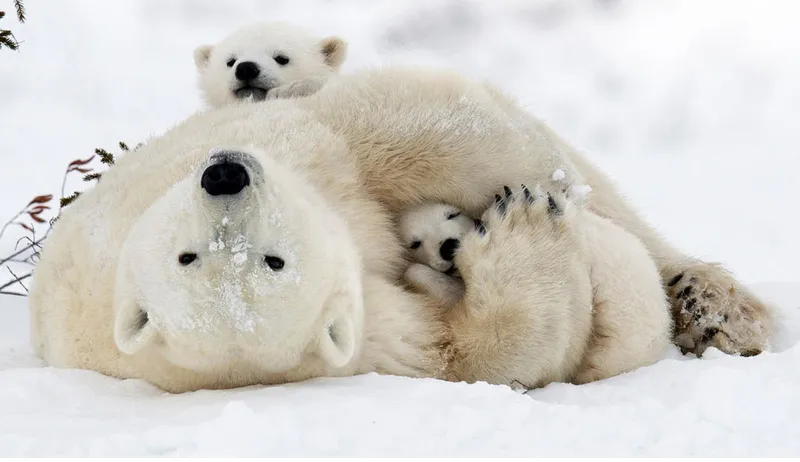
Today, polar bears are among the few large carnivores that are still found in roughly their original habitat and range–and in some places, in roughly their natural numbers.
© Terry Domico / WWF
Polar bears are an integral part of the Arctic ecosystem and the food web for Indigenous peoples who have hunted polar bears sustainably for millennia. But beginning in the 1700s, large-scale hunting by European, Russian, and North American hunters and trappers took place, raising concerns about the future survival of polar bears.
© Fotofeeling
Although most of the world's 19 populations have returned to healthy numbers, there are differences between them. Some are stable, some seem to be increasing, and some are decreasing due to various pressures.
© naturepl.com/Steven Kazlowski/WWF
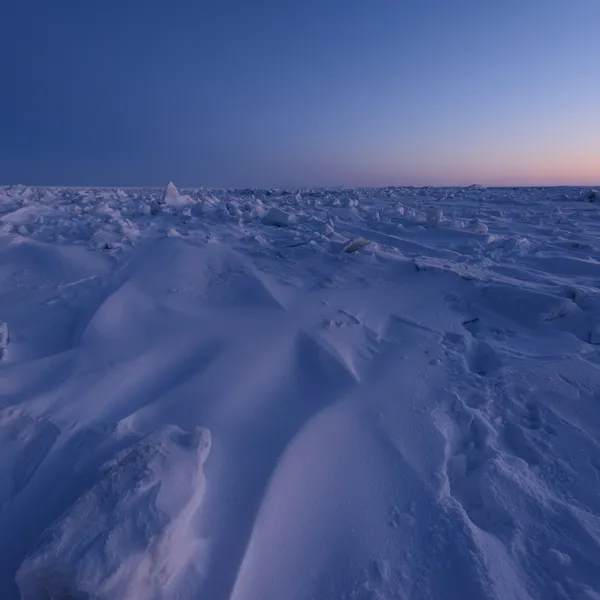
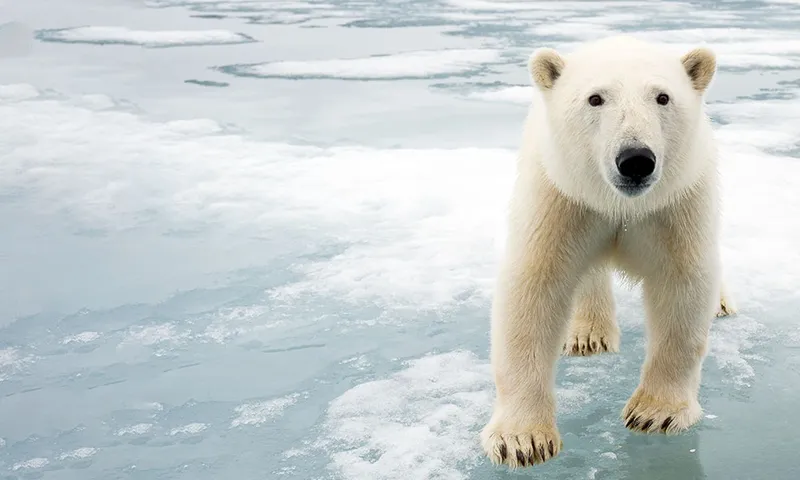
Polar bears depend on sea ice for their existence and are directly impacted by climate change–serving as an important indicator species. By 2040, scientists predict that only a fringe of ice will remain in Northeast Canada and Northern Greenland when all other large areas of summer ice are gone. This "Last Ice Area" is likely to become important for polar bears and other life that depends on ice.
© WWF-US / Elisabeth Kruger
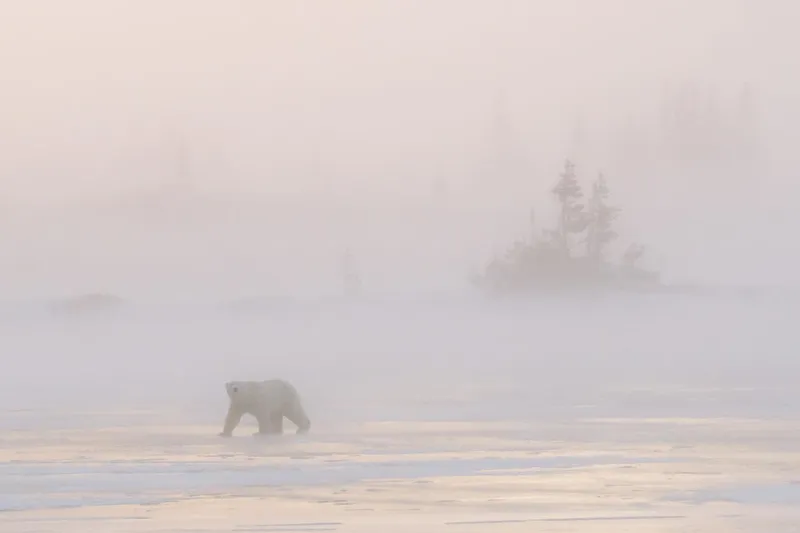
A projection of sea ice in the archipelago, supported by WWF, shows that much of the region is facing significant ice loss in the coming decades–with potentially serious consequences for polar bears. Global polar bear numbers are projected to decline by 30% by 2050. This needs to be addressed immediately if polar bears and other species unique to the region are to survive.
Threats to polar bears

© Richard Barrett / WWF-UK
The loss of sea ice habitat from climate change is the biggest threat to the survival of polar bears. Human-caused greenhouse gas emissions are contributing to the loss and fragmentation of sea ice habitats, which polar bears rely on for hunting, living, breeding, and in some cases, creating maternal dens. But sea ice is not just a platform; it is an entire ecosystem inhabited by plankton and microorganisms that support a rich food chain, including the most important source of food for polar bears, seals. The outcome for polar bears depends on how the global community acts now and reduces greenhouse gas emissions.
In the US, polar bears have experienced significant changes to seasonal variability and the availability of sea ice habitat. For example, polar bears in the southern Beaufort Sea have recently experienced about twice as many reduced ice days over continental shelf waters as polar bears in the Chukchi and Bering Seas nearby. As a result, polar bears studied in the Chukchi and Bering Seas were larger, in better condition, and had higher reproduction rates, likely since they had more access to food and did not have to fast for as long in the spring as those living in the southern Beaufort Sea.
Other concerns for polar bears in Alaska include a lack of adequate scientific information for management of polar bears, toxic pollution in the environment, and potential direct impacts from industrial development, such as disturbance of maternal dens or contact with an oil spill.
People and polar bears
As Arctic sea ice thins and retreats, increasing numbers of polar bears are spending longer periods in the summer open-water season along Arctic coastlines. Here, their powerful sense of smell attracts them to human communities: garbage, stored food, dog teams, and animal carcasses bring them into greater conflict with Arctic people.
As powerful predators, polar bears pose a major risk to human life and property. WWF is supporting community initiatives to ensure they can live safely alongside the Arctic's top predator.
Effects of climate change
Due to climate change, the Arctic is heating up twice as fast as anywhere else on the planet, shrinking Arctic summer sea ice cover by an average of 15.7% per decade.
Human-caused greenhouse gas emissions are contributing to the loss and fragmentation of sea ice habitats, which polar bears rely upon for hunting, living, breeding, and in some cases, creating maternal dens. But sea ice is not just a platform; it is an entire ecosystem inhabited by plankton and microorganisms that support a rich food chain, including the most important source of food for polar bears, seals. The outcome for polar bears depends on how the global community acts now and reduces greenhouse gas emissions. A recent study suggests that even if we moderately reduce our greenhouse gas emissions, local extinctions of polar bears from certain parts of the Arctic are likely by 2100.
Industrial impacts
In the US Arctic, industrial development threatens polar bears directly and indirectly. On shore, parts of the Arctic National Wildlife Refuge are still under threat from oil and gas exploration and drilling. Exploration usually includes seismic testing to help determine the location of deposits of oil and gas.
Seismic testing is a very disruptive activity requiring big, heavy trucks that drive across the snow-covered tundra, laying lines in a grid pattern. The equipment vibrates and produces noisy blasts. While companies try to detect dens before they conduct the testing, the technology to detect polar bear dens is not perfect, and experts believe that some bears would definitely be impacted, or even killed.
Offshore, in the polar bears’ sea ice environment, increasing ship traffic by barges, oil tankers, and cargo ships elevates the risk of oil spills and human disturbance to polar bears. In a small study, oil products were applied to three captive polar bears. Of these, one survived after intensive intervention, but the other two ingested the oil and perished. Oil contamination of the Arctic marine environment could negatively impact an entire food web, ultimately affecting the Arctic’s top predator, polar bears.
Commercial hunting
Polar bears are an integral part of the Arctic ecosystem and the food web for Indigenous peoples who have hunted polar bears sustainably for millennia. But beginning in the 1700s, large-scale hunting by European, Russian, and North American hunters and trappers took place, raising concerns about the future survival of polar bears. In the United States, the Marine Mammal Protection Act (MMPA) was signed in 1972 and included polar bears as one of many species protected under the new legislation. In 1973, Canada, the United States, Denmark, Norway, and the former USSR signed the International Agreement on the Conservation of Polar Bears and their Habitat, strictly regulating commercial hunting. Now, polar bears are among the few large carnivores that are still found in roughly their original habitat and range—and in some places, in roughly their natural numbers. Although most of the world's 20 populations have returned to healthy numbers, there are differences among them. Some are stable, some seem to be increasing, and some are decreasing due to various pressures.
WWF is working to address the most pressing threats to polar bear populations.
How WWF is taking action to protect polar bears

© naturepl.com / Tony Wu / WWF
Addressing climate change
WWF has a dedicated worldwide team working on issues of climate and energy, working regionally, nationally, and internationally. We partner with local communities, governments, and others around the world to help people and nature become more resilient to the impacts of extreme weather.
The good news is, we know the solutions and are dedicated to creating real-world results using carbon reduction strategies, innovative finance, and nature-based solutions.
Current WWF climate programs are working to:
- Advance policies to reduce carbon emissions
- Promote the rapid deployment of renewable energy for a clean energy future
- Engage with businesses to decrease their carbon footprint
- Help people and nature adapt to a changing climate
- Mobilize private and public finance to combat deforestation and biodiversity loss
Reducing conflict
As climate change forces polar bears to spend more time onshore, they come in contact more often with Arctic communities. WWF addresses this challenge by supporting local efforts to protect people and polar bears.
Keeping polar bears separate from people is better for both, since polar bears that wander into communities pose a risk to people, and people often respond by killing the bears. WWF has responded with a variety of locally led initiatives to help reduce conflict.
Monitoring populations
To implement effective polar bear conservation interventions, we have to understand how polar bears are doing, now and into the future.
In addition to supporting ongoing work to monitor polar bear populations and to understand the impact that different threats, such as climate change and the expansion of industry in the Arctic, are having on different polar bear populations, WWF and our partners are working to catalyze development of new technology that will make polar bear research more cost effective, less invasive, and deliver more useful data. For example:
From our work developing satellite telemetry ear tags to pioneering new ways to use environmental DNA to gather genetic information in a completely non-invasive way, WWF works to ensure that researchers have the tools to get the data they need to monitor polar bear populations.
Valuing knowledge
Knowledge comes from many places. In the Arctic, we speak of our work as being "knowledge-based" rather than solely "science-based." Indigenous peoples of the Arctic have a store of ecological knowledge based on their own observations of the environment and on information handed down over generations.
WWF encourages the use of Traditional Ecological Knowledge (TEK) to inform management policies in the Arctic. We have supported several projects that collect this form of knowledge, helping to provide a more rounded knowledge base.
Reducing industrial impacts
WWF's goal is to ensure that wherever industrial development takes place, it is sustainable and does not damage wildlife populations and ecosystems to any great extent. We offer technical expertise on oil spill prevention and response. We also advocate for the highest development standards through national and international venues.
WWF collaborates with scientists, conservationists, and local people to oppose oil and gas development in areas whose ecological value is far too great for risking exposure to spills.
Protecting important habitat
WWF recognizes the urgency of protecting habitat for polar bears as they rapidly lose their sea ice habitat due to climate change.
We support the identification and protection of important polar bear denning areas, movement corridors, seasonal feeding areas, and key resting areas during summer ice-free periods.
Ensuring sustainable hunting
WWF supports the right of Indigenous peoples to continue to sustainably hunt local animals.
Protecting important polar bear denning habitat
Terrestrial and marine denning habitats for polar bears are increasingly disappearing and under threat from climate change and human and industrial influence. Sea ice is essential for polar bears and, in addition to hunting, resting, and finding mates, many polar bears have historically used sea ice as a platform for their maternal dens. But climate change is melting and fragmenting sea ice across the Arctic, forcing more pregnant females to make their dens on land instead. In addition, new oil and gas exploration and drilling threaten vulnerable polar bear populations. These activities not only compound the climate crisis but can disturb or even crush polar bears in their dens. WWF is working to ensure that places like the Arctic National Wildlife Refuge are protected for securing the survival of America’s polar bears.
Timeline of polar bear conservation
Before 1972
Polar bears are an integral part of the Arctic ecosystem and the food web for Indigenous peoples who have hunted polar bears sustainably for millennia. But beginning in the 1700s, large-scale hunting by European, Russian and North American hunters and trappers took place, raising concerns about the future survival of polar bears.
1972
The Marine Mammal Protection Act (MMPA) was signed, and included polar bears as one of many species protected under the new legislation.
1973
Canada, the United States, Denmark, Norway and the former USSR signed the International Agreement on the Conservation of Polar Bears and their Habitat, strictly regulating commercial hunting.
2005
The polar bear was upgraded from Least Concern to Vulnerable by the IUCN Polar Bear Specialist Group.
2008
The US Government classified the Polar Bear under its Endangered Species Act (ESA).
2013
Ministers and other leaders from the five polar bear range states met in Moscow for the first International Forum on Polar Bear Conservation. The leaders made significant commitments to address issues of polar bear habitat, research and trade. This event was supported by WWF.
Today
Today, polar bears are among the few large carnivores that are still found in roughly their original habitat and range--and in some places, in roughly their natural numbers.
Although most of the world's 19 populations have returned to healthy numbers, there are differences between them. Some are stable, some seem to be increasing, and some are decreasing due to various pressures.
Status of the polar bear populations

© WWF
Less Arctic sea ice affects polar bears in many ways, including changes to bears’ physical condition, behaviors, and survival rates.
Polar bears across the Arctic are experiencing the impacts of climate change differently. In the high Arctic, melting of thick, multi-year sea ice is resulting in more prey for polar bears, leading to temporarily stable and even improved conditions for the Kane Basin and M’Clintok Channel polar bear populations.
In other parts of the Arctic, sea ice is shrinking far too quickly for polar bears to adapt, and subpopulations are declining. For example, in the Southern Beaufort Sea, Western Hudson Bay, and Southern Hudson Bay.
How the different subpopulations of polar bears respond to climate change is still unfolding.
However, a recent study shows that by 2100, even if we moderately reduce our greenhouse gas emissions, local extinctions of polar bears in some parts of the Arctic are likely. If we fail to reduce our emissions, by 2100 we may lose all but a few high-Arctic subpopulations.
Additional resources
Experts
How you can help
© WWF-US OGC
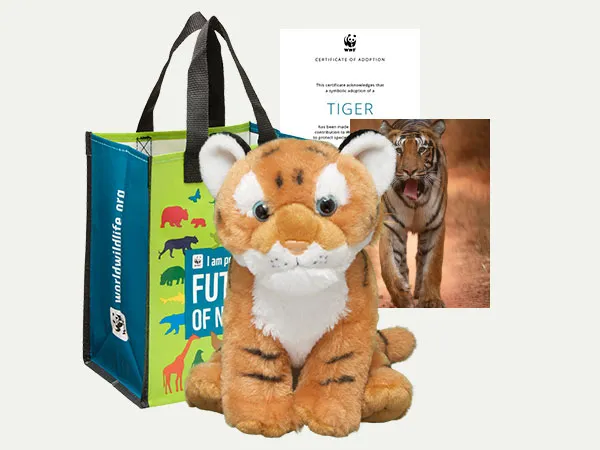
Symbolic species adoptions
Support WWF’s global efforts to protect wild animals and their habitats and choose from kits with plush and more.
