—メラネシアニューギニア島嶼における先住民の事業と冒険の一記録—
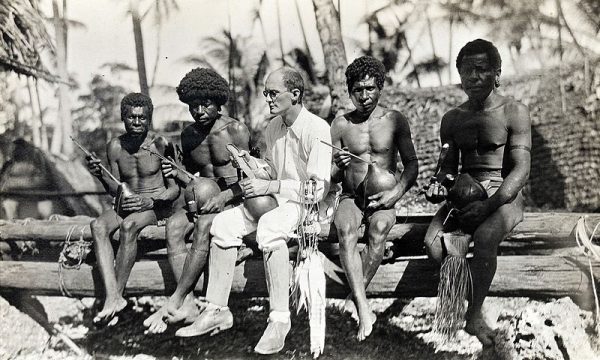
西太平洋の遠洋航海者
—メラネシアニューギニア島嶼における先住民の事業と冒険の一記録—
Argonauts of the western Pacific : an account of native enterprise and adventure in the archipelagoes of Melanesian New Guinea / by Bronisla w Malinowski ; with a preface by James George Frazer. -- George Routle dge & Sons, Ltd., 1922. -- (Studies in economics and political science ; no. 65)
フ ルテキスト:ARGONAUTS OF THE WESTERN PACIFIC
私は現地人の思考と異質な、作為的カテゴリーを決して用いなかった。民族学的報告のなか で、われわれの社会から借用した言葉を助けにして事実や未開社会を記述するほど欺瞞的なことはない。——マリノフスキー[田原音和・水島和 則訳、ブルデュ、シャンボルドン、パスロン『社会学者のメチエ』]
※御注意:1922年当時の状況ですから「現地人の視点か
ら(from native point of
view)」のスローガン(あえてそう書きます)の歴史的意義は重要です。もし、今の文化人類学がそれを歴史的文脈化できずに、その始祖の恩恵に被ってい
たとしたら、これは完全に学問に携わるものとして怠慢です。これはブルデュ一派の教科書からの引用ですので、それはそれで「社会学者の存在意義のメチエ」
を想定したものだと思われます。
序 論:Introduction: The Subject The Method and Scope of This Enquiry.
1)実生活の不可量部分をめぐる問題
資料や記述ではないものを参与観察を通して得ることができる。またそれに関する確固とした記述があるというのが著者の主張だ。しかし、現実 生活の 不可量部分(the imponderabilia of actual life, p.18)が資料として確立する民族誌を、ほかの資料から特権的な 優位な資料として保証するものが何であるか、それが明確には説明されていない。[※実際のつづりではinpondelabiliaと記して あるが、正書法はimpondelable からくるものである]
2)民族誌を記述する個人的資質の問題
マリノフスキーは民族誌記述の客観化とその正当化のモデルとして自然科学を範にしたと学説史では簡単に言われるところだが、序論を読む 限り、民族誌記述には個人的な資質によって記述が左右しうることの危うさを実は正直に述べている。
■私自身が経験した民族学者の苦 難をざっと書くだけで……
「ク ラの説明にはいるまえに、民族誌的材料を集めるのに使う方法を述べておいたほうがよ いと思う。どんな学問分野であれ、学術的研究の結果は、絶対に公明、率直に発表されるべ きである。物理学あるいは化学の実験的研究ならば、実験の仕方の詳細な説明、使用した器 具、観察の方法やその回数、それに費やした時間、測定の近似度などについての正確な記載 なしに、その結果が役にたとうなどとは夢にも考えられまい。物理学、化学ほど精密科学で ない、生物学や地質学のような学問では、研究を同様の厳密さで行なうことはできない。し かし、どんな研究者でも、実験または観察が行なわれたあらゆる条件を、読者にわからせよ うとして最善をつくすだろう。/ 民族誌学では、そのようなデータの率直な説明が、おそらくもっと必要であるとさえ思わ れるのに、いままでは不幸にして、つねに十分なぺージをさいてその説明がなされたとはか ぎらず、また多くの報告者は、事実の堆積のなかに分けいり、暗闇のなかからそれらをつか みだしてみせるときに、方法論的に十分な誠実さをもって自分のやり方をあきらかにしよう としない。[p.31]/ 評判も高く、科学的であると折紙をつけられた研究でありながら、大ざっぱにまとめただ けの説明を呈示し、しかも著者が、どのような実地の経験からその結論に達したかがぜんぜ ん説明されていないような例を引くのはたやすい。観察を行ない、情報を集めたさいの状況 を読者に知らせるための特別の一章はおろか、一節もないのである。/ 私の考えでは、そのような点を記載した民族学的資料だけが、まぎれもなく学問的価値を もつものであって、それがあってはじめて、直接の観察結果および現地住民による口述説明 と、著者の常識や心理学的洞察にもとづく推測との二つのあいだに明瞭な一線を画すること ができるのである。/ 本当のところ、あとにあげる表に含まれているような調査が、これからは 行なわれねばならず、そうしてこそはじめて、著者が記述している事実をどのていど個人的 に知っているか、読者は一目ではっきりと知ることができるのであり、また、どのような状 況下で現地住民からの資料が得られたかが理解される。/ また、歴史科学においては、もし学者が資料の出所を神秘のヴェールに隠し、あたかも直 感によって知っているかのように過去のことを語るならば、だれも本気で相手にしないこと は十分わかりきっているだろう。/ 民族誌学では、著者はみずから記録者であると同時に、歴史家でもある。そして一方、彼 にとっての資料は、たしかに簡単に手を触れられるような近さにありながら、同時にひどく とらえがたく、複雑なものである。つまり、それは固定した具体的な文書の形で存在するの[p.33] ではなく、生きた人間の行動と記憶のなかに含まれているのである。/ 民族誌学では、情報という生の材料と——これは研究者自身の観察、住民たちの陳述、部 族生活の種々相から得られる——研究成果の正式の最終発表とのあいだには、しばしばはな はだしい距離がある。民族誌学者は、対象住民の土地の浜辺に足をふみいれて、そこに住む 人々と接触しようと努力をはじめた瞬間から、結果をまとめて文章に綴りおわるときまで、 何年間も骨折って、この距離を歩まねばならないのである。私自身が経験した民族学者の苦 難をざっと書くだけで、どのような長い抽象的議論よりも、その問題に多くの照明をあてる ことができるかもしれない」(マリノフスキー 2010:31-33)※増田訳
"Before
proceeding to the account of the Kula, it will be well
to give a description of the methods used in the collecting of
the ethnographic material. The results of scientific research
in any branch of learning ought to be presented in a manner
absolutely candid and above board. No one would dream
of making an experimental contribution to physical or chemical
science, without giving a detailed account of all the arrange-
ments of the experiments ; an exact description of the apparatus
used ; of the manner in which the observations were conducted ;
of their number ; of the length of time devoted to them, and
of the degree of approximation with which each measurement
was made. In less exact sciences, as in biology or geology,this cannot
be done as rigorously, but every student will do
his best to bring home to the reader all the conditions in which
the experiment or the observations were made. In Ethno-
graphy, where a candid account of such data is perhaps even
more necessary, it has unfortunately in the past not always
been supplied with sufficient generosity, and many writers do
not ply the full searchlight of methodic sincerity, as they move
among their facts and produce them before us out of complete
obscurity." -ARGONAUTS
OF THE WESTERN
PACIFIC.
■■あなたが突然、住民
たちの集落に近い熱帯の浜辺に置き去りにされ……
「あ なたが突然、住民たちの集落に近い熱帯の浜辺に置き去りにされ、荷物のなかにただひとり 立っているとご想像願いたい。あなたを乗せてきたランチ[小船]か小舟はすでに去って影も見え ない。隣人となる白人の商人か宣教師のなかに住居を定めてからあとは、すぐに民族誌学的 調査をはじめる以外、何もすることはない。さらに、あなたが経験のない初心者で、手引き となるものもなく、助ける人もいないとご承知いただきたい。/ 白人はたまたま留守であるか、さもなければあなたのために時間を浪費することができな いか、そんな気持はもっていないとしよう。ニューギニアの南海岸で、生まれて初めての[p.34] 野外調査にとりかかったときの私の状態は、まさにこのとおりであった。初めの何週間か、 村々をたずねまわった長い期間のことを、いまでもよく覚えている。住民たちとほんとうに 接触し、材料を手に入れようとなんども執搬に努力してみたがむだだったときの絶望感、情 けなさを思い出す。それは落胆の時期であった。熱帯の退屈とれるように、私は小説を読みふけった。/ それから、白人の案内者といっしょに、または一人で、集落のなかにはじめてはいったと ご想像願いたい。何人かの村人たちが、あなたをとりまく。とくに、た つけたときには。しかしえらぶった人や年配の者たちは、すわったきりである。あなたの連 れの白人は、住民たちを扱うのに型にはまったやり方を身につけている。彼は、あなたが民 族誌学者として現地の住民に接触するときにとるべき方法を理解しないし、たいしてそんな ことに関心をもちもしない。/ この第一回訪問で、あなたは、もしここでひとりでここにもう一度くれば、万事うまくいくだろうとという希望的な感情をもつことになるだろう。すくなくとも 私はそのように希望した」(マリノフスキー 2010:33-34)※増田訳
"Imagine
yourself suddenly set down surrounded by all
your gear, alone on a tropical' beach close to a native village,
while the launch or dinghy which has brought you sails away
out of sight. Since you take up your abode in the compound of
some neighbouring white man, trader or missionary, you have
nothing to do, but to start at once on your ethnographic work.
Imagine further that you are a beginner, without previous
experience, with nothing to guide you and no one to help you.
For the white man is temporarily absent, or else unable or
unwilling to waste any of his time on you. This exactly
describes my first initiation into field work on the south coast
of New Guinea. I well remember the long visits I paid to the
villages during the first weeks ; the feeling of hopelessness and
despair after many obstinate but futile attempts had entirely
failed to bring me into real touch with the natives, or supply
me with any material. I had periods of despondency, when I
buried myself in the reading ot novels, as a man might take
to drink in a fit of tropical depression and boredom." - ARGONAUTS OF THE WESTERN
PACIFIC.
第 1章:The Country and Inhabitants of the Kula District.
3)視覚表象に訴えるレトリックの意味を 考える
マリノフスキーのレトリック;いわゆる西太平洋のエキゾチックな環礁での出来事を読者に想起させるマリノフスキー一流のレトリックで、 これまで多くの人類学者が愛し、また自家薬籠中のものにしてきた者もすくなくないものです。したがって、またこのレトリックについては多くの人類学者が議 論をしてきたものです。
このレトリックは読者の視覚経験に強く訴えるものです。
このレトリックは相反する2つの機能をもつと考えることができます。
ひとつは、視覚表象に強く訴えることで、読者に疑似体験的感情を励起し、民族誌を<読ませる>演出的効果をもたらすことです。これは我 々がトロブリアンド島民の中に入りこませる親密さのテクニックを構成します。
他のひとつは、視覚表象に強く訴えることで、擬似的環境の中(今ならヴァーチャルリアリティといえるでしょうね)に読者を引きずり込む ことで、自己のことを忘却させる(=他者性を忘却させる)ことを通して、逆に、我々とトロブリアンド島民のあいだに楔を打ち込む(=永遠に切断する)こと を構成します。
その部分は、翻訳のp.102の上段の第三パラグラフです
第 2章:The Natives of the Trobriand Islands.
4)エピソード主義
この章はク ラ交換の説明に入る前に、トロブリアンドの生活の全体像を描くべき部分と、後の私 たちは考えなければならないところですが、意外や意外! 彼はトロブリアンドの生活の全体像を西洋人には珍奇や奇妙に写る事例をこれでもか!これでもか! と事例をあげて、一見とりとめのない説明になっていますが、前章で紹介されたような、きわめて洗練されたレトリックの使い手がメチャなことをする訳はない と思うのです。この記述とスタイル、さらには、それが読者に生み出す効果とは何なのでしょうか?重要な課題として考えたいと思います。
"Bronislaw Malinowski's pathbreaking Argonauts of the Western Pacific is at once a detailed account of exchange in the Melanesian islands and a manifesto of a modernist anthropology. Malinowski argued that the goal of which the ethnographer should never lose sight is 'to grasp the native's point of view, his relation to life, to realise his vision of his world.' Through vivid evocations of Kula life, including the building and launching of canoes, fishing expeditions and the role of myth and magic amongst the Kula people, Malinowski brilliantly describes an inter-island system of exchange - from gifts from father to son to swapping fish for yams - around which an entire community revolves. A classic of anthropology that did much to establish the primacy of painstaking fieldwork over the earlier anecdotal reports of travel writers, journalists and missionaries, it is a compelling insight into a world now largely lost from view. With a new foreword by Adam Kuper."(Nielsen BookData)
3. The Essentials of The Kula.
クラ交換の実際

4.
Canoes and Sailing.
5. The Ceremonial Building of A Waga.
6. Launching of a Conoe and Ceremonial Visiting - Tribal Economics in
The Trobriands.
7. The Departure of an Overseas Expedition.
8. The First Halt of The Fleet on Muwa.
9. Sailing on the Sea-Arm of Pilolu
10. The Story of Shipwreck.
11. In the Amphletts- Sociology of The Kula.
12. In Teewara and Sanaroa- Mythology of the Kula.
13. On the Beach of Sarubwoyna.
14. The Kula in Dobu-Technicalities of The Exchange.
15. The Journey Home- The Fishing and Working of The Kaloma Shell.
16. The Return Visit of The Dobuans to Sinaketa.
17. Magic and the Kula.
18. The Power of Words in Magic-Some Linguistic Data.
19. The Inland Kula.
20. Expeditions Between Kiriwina and Kitava.
21. The Remaining Branches and Offshoots of The Kula.
22. The Meaning of Kula.
*********
複数の特定のパートナーの間で、ソラヴァ (首飾り)とムワリ(腕輪)をやりとりする。
ソラヴァは時計回りに循環し、ムワリは反 時計回りに循環する。
ソラヴァとムワリは同時的に交換されるこ とはない。
ソラヴァとムワリは贈与と返礼という形を り、間を開けてやりとりする。
クラ交換では、パートナーから受けた贈与 に対しそれを上回る価値の財宝で返礼するために、人々(=男性)の「気前の良さ」を競 うこ とに なる。
[→関連ページ:民族誌の批判的読解:Kula: トロブリアンド諸島民の実践
●フィールドワークの研究倫理/調査倫理
●地理的な情報
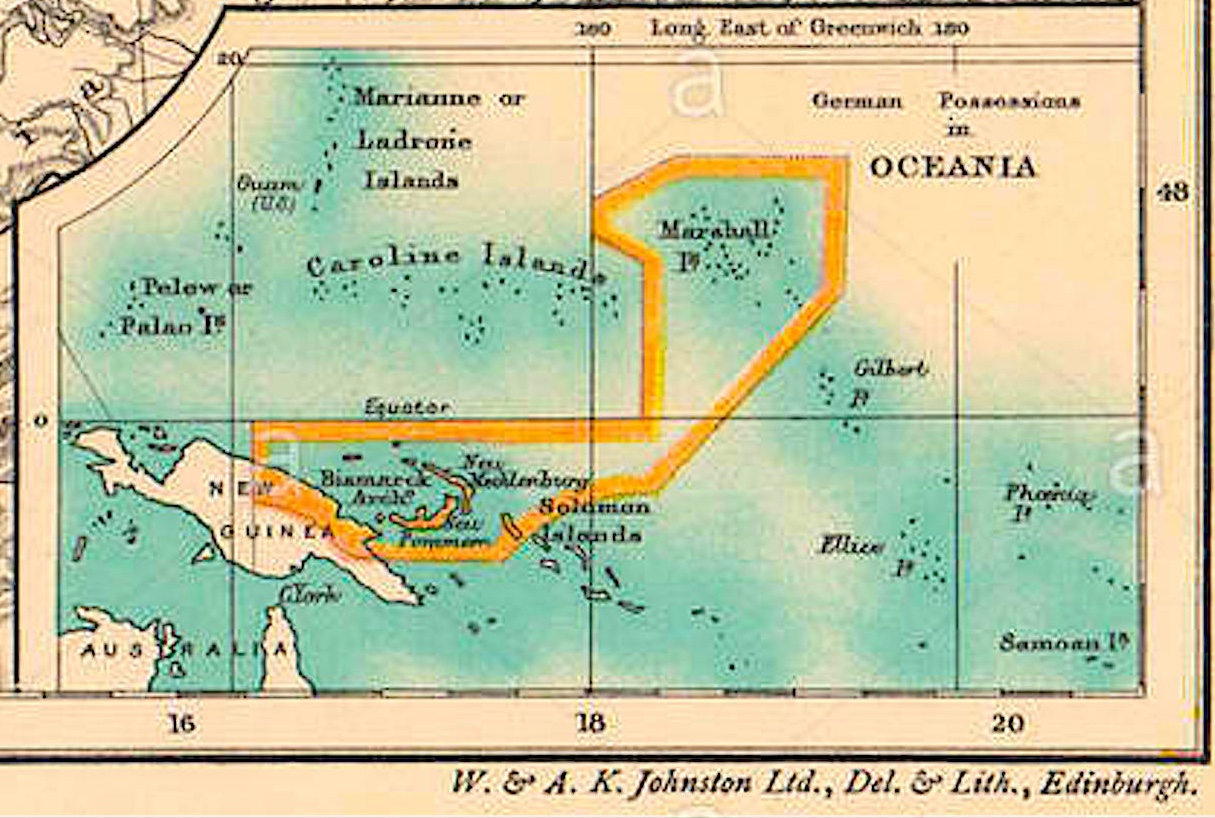
20世紀初頭の南太平洋のドイツ領(出典:http://bit.ly/2Yj6TRC )
やさしいクイズ!
問 題:この地図の中でトロブリアンド諸島はだいたいどの辺りにあるでしょう?(画像をクリックすると答えがでてきます)
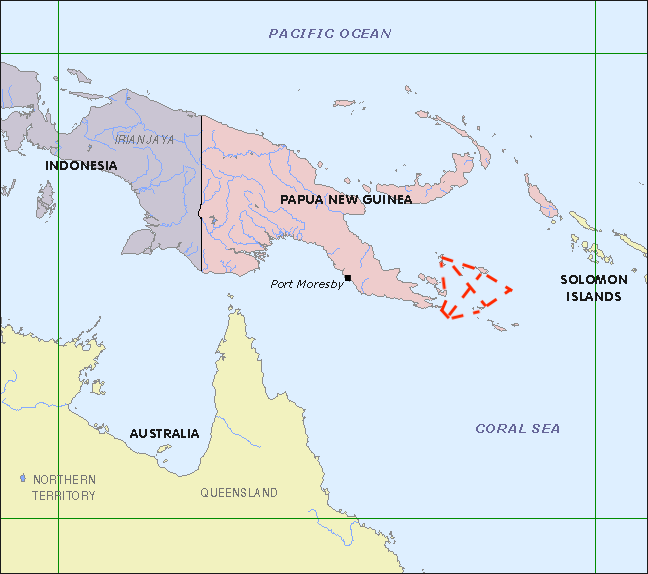
●
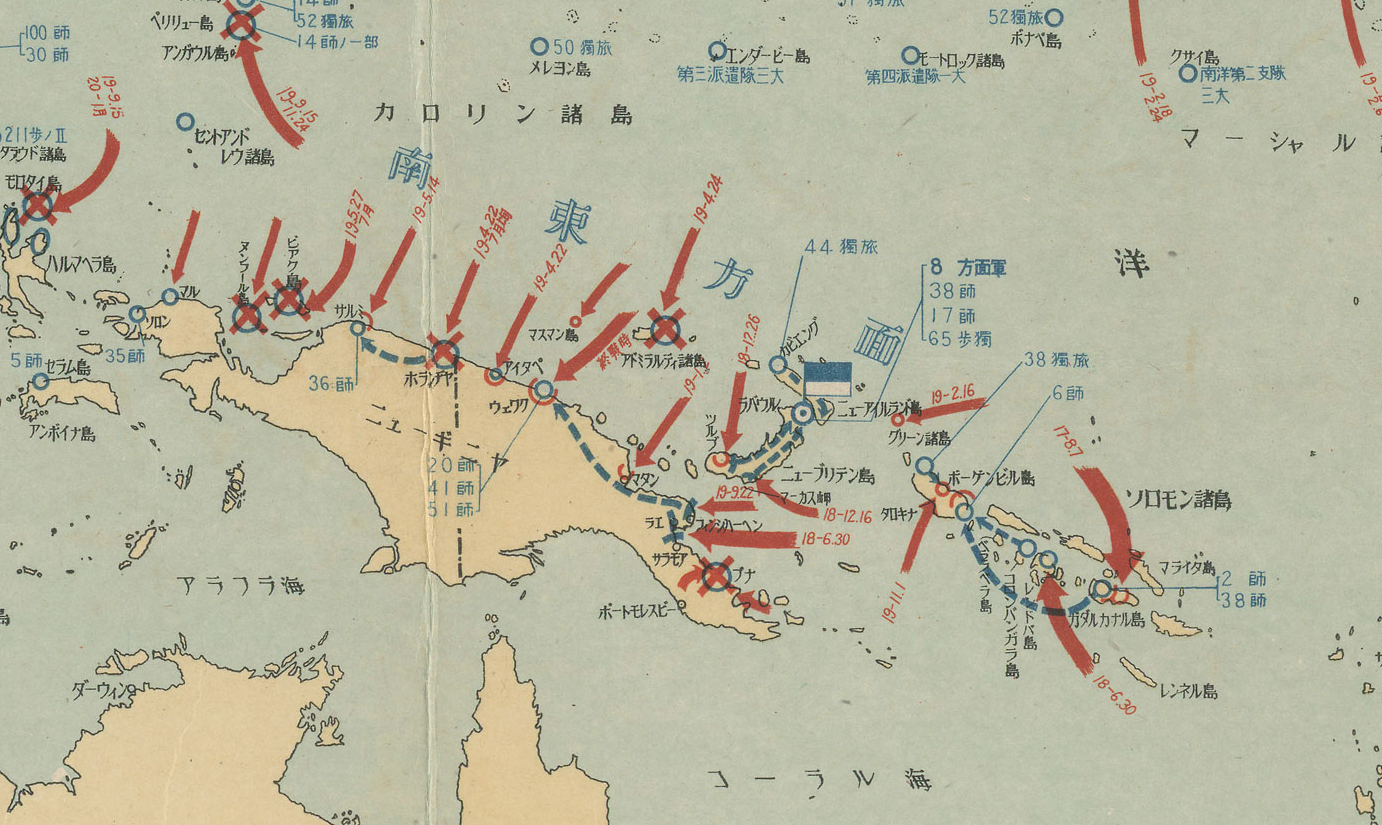
マリノフスキーの調査から30年後には、同地域では何があったのか?
日
本陸軍戦力喪失一覧圖、ニューギニア・ソロモン、1945年
+
リ ンク(関連概念)
文 献
そ
の他の情報

仮 想の西太平洋の遠洋航海者

実 際の西太平洋の遠洋航海者
Copyleft, CC, Mitzub'ixi Quq Chi'j, 2000-2099
