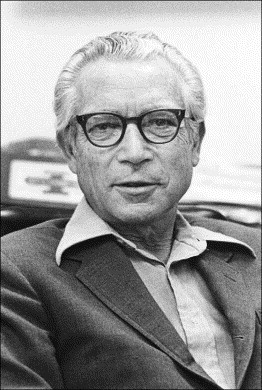
ベンジャミン・ポール
Benjamin Paul, 1911-2005
☆ベンジャミン・ポールと医療人類学と冷戦時代
冷 戦の初期、米国政府は発展途上国のエリート層が共産主義に傾くのを防ぐため、同国における開発プロジェクトに資金を提供したが、米国インディアナ州ブルー ミントンにあるインディアナ大学の人類学教授チャールズ・レスリーによれば、こうしたプログラムには医療分野が含まれていた。「なぜなら、医療は最も人道 的な援助形態であると考えられていたからだ」と彼は述べている。しかし、これらのプロジェクトが困難に直面すると、医療従事者たちは地元の伝統を非難する 傾向があった。こうした問題を解決するため、ラッセル・セージ財団は、医学の実践に社会科学の知見をより多く取り入れる研究を行う研究者たちに資金を提供 した。ベンジャミン・ポールはその研究者の一人だった。彼の著書『健康、文化、そしてコミュニティ:保健プログラムに対する公衆の反応に関する事例研究』 は、「より広範な領域、より多くの社会や状況を網羅していたため、他のどの研究よりも大きな影響力を持った」と、レスリー氏は『ランセット』誌に語った。
出典:Ivan Oransky, OBITUARY of Benjamin Paul, The Lancet, Volume 366, Issue 9481P198July 16, 2005
| A
founder of medical anthropology who introduced social science
methodology into medical treatment in diverse cultures. Born on Jan 25,
1911, in New York, NY, USA, he died in Atlanta, GA, USA, on May 24,
2005, of complications after a stroke, aged 94 years. 多様な文化における医療に社会科学の手法を取り入れた、医療人類学の創始者の一人。1911年1月25日、米国ニューヨーク州ニューヨーク市に生まれ、2005年5月24日、脳卒中の合併症により米国ジョージア州アトランタで死去、享年94歳。 |
|
| At
the start of the Cold War, the US government funded developmental
projects in developing countries to prevent the elites of those nations
from becoming Communist, but a component of such programmes was medical
“because medicine was thought of as the most humanitarian kind of aid”,
according to Charles Leslie, professor of anthropology at Indiana
University, Bloomington, IN, USA. But when these projects ran into
trouble the health professionals tended to blame local traditions. To
solve problems like these, the Russell Sage Foundation funded
researchers whose work would increase the input of social science into
the practice of medicine. Benjamin Paul was one of those researchers.
His book, Health, Culture, and Community: Case Studies of Public
Reactions to Health Programs, “had more influence than any of the
others because it covered more ground, many more societies and
situations”, Leslie told The Lancet. 冷戦の初期、米国政府は発展途上国のエリート層が共産主義に傾くのを防ぐため、同国における開発プロジェクトに資金を提供したが、米国インディアナ州ブ ルーミントンにあるインディアナ大学の人類学教授チャールズ・レスリーによれば、こうしたプログラムには医療分野が含まれていた。「なぜなら、医療は最も 人道的な援助形態であると考えられていたからだ」と彼は述べている。しかし、これらのプロジェクトが困難に直面すると、医療従事者たちは地元の伝統を非難 する傾向があった。こうした問題を解決するため、ラッセル・セージ財団は、医学の実践に社会科学の知見をより多く取り入れる研究を行う研究者たちに資金を 提供した。ベンジャミン・ポールはその研究者の一人だった。彼の著書『健康、文化、そしてコミュニティ:保健プログラムに対する公衆の反応に関する事例研 究』は、「より広範な領域、より多くの社会や状況を網羅していたため、他のどの研究よりも大きな影響力を持った」と、レスリー氏は『ランセット』誌に語っ た。 |
|
| For
10 years, Paul's book was the primary text on which everyone in the
burgeoning field of medical anthropology based their work, Leslie said.
Some of the articles in the 16-chapter collection, which were written
by sociologists whom had not previously written about health, “are
classic”, said Peter Brown, professor of anthropology at Emory
University in Atlanta, GA, USA. “I still use it to teach.” Paul
proposed that “The principle that health programmes should ‘start with
people as they are and the community as it is’ applies both at home and
abroad”. He wrote “It is equally applicable whether the goal is to
persuade Peruvian housewives to boil their drinking water or to
convince the citizens of Seattle to accept fluoridation.” レスリー氏によると、10年間にわたり、ポール氏の著書は、急成長していた医療人類学の分野に携わるすべての研究者が、その研究の基盤としていた主要なテ キストであったという。全16章からなるこの論文集には、それまで健康問題について執筆したことのなかった社会学者たちによる論文も含まれているが、米国 ジョージア州アトランタのエモリー大学人類学教授であるピーター・ブラウン氏は、そのうちのいくつかは「古典的な作品」であると述べている。「今でも授業 で活用している」とポールは述べた。彼は、「保健プログラムは『人々をありのままに、地域社会をあるがままに受け入れる』という原則は、国内外を問わず適 用される」と提唱した。また、「その目的が、ペルーの主婦たちに飲料水を煮沸するよう説得することであれ、シアトルの市民にフッ素添加を受け入れさせるこ とであれ、この原則は同様に適用される」と記している。 |
|
| Paul,
who was teaching at Harvard University when he edited his 1955 book,
was appointed a professor at Stanford University, Palo Alto, CA, USA,
in 1963. He would chair Stanford's department of anthropology from 1967
to 1971. “I think of Ben Paul as somebody who played a major role in
1950s, 1960s, and 1970s in terms of bringing culture into a highlighted
position in public health and medicine”, Brown told The Lancet. “It has
since become an important concept in studies of crosscultural medicine
and clinical care, but he was one of the founders of the field of
medical anthropology, pushing this central idea that people, or
patients, or communities, aren't empty vessels but already have
existing ethnomedical belief systems and values that have to be taken
into account if we want to change behaviour.” 1955年に著書を編集した当時、ハーバード大学で教鞭をとっていたポールは、1963年に米国カリフォルニア州パロアルトのスタンフォード大学の教授に 任命された。彼は1967年から1971年まで、スタンフォード大学人類学部の学部長を務めた。「ベン・ポールは、1950年代、1960年代、そして 1970年代において、公衆衛生や医学の分野で文化を重要な位置に据える上で、大きな役割を果たした人物だと私は考えている」と、ブラウンは『ランセッ ト』誌に語った。「それ以来、文化は異文化間医療や臨床ケアの研究において重要な概念となったが、彼は医療人類学という分野の創始者の一人であり、人々や 患者、あるいはコミュニティは『空っぽの器』ではなく、すでに既存の民族医学的信念体系や価値観を持っており、行動を変えようとするならばそれらを考慮に 入れなければならないという、この中心的な考えを推進した人物だった。」 |
|
| Paul
worked in the field in San Pedro, La Laguna, Guatemala, for more than
50 years, beginning in 1941. His 1988 book, co-authored with William
Demarest, The Operation of a Death Squad in San Pedro La Laguna,
detailed the murder and betrayal that took place in the village in the
1980s. Paul was unusual among anthropologists at the time for his
political stance. During the genocide of the Mayan Indians in
Guatemala, Paul stepped forward and became a spokesperson for the Mayan
community. ポールは1941年から50年以上にわたり、グアテマラのサン・ペドロ・ラ・ラグーナで現地調査に従事した。1988年にウィリアム・デマレストと共著し た著書『サン・ペドロ・ラ・ラグーナにおける死の部隊の活動』(原題:The Operation of a Death Squad in San Pedro La Laguna)では、1980年代にこの村で起きた殺害や裏切りについて詳述している。当時の人類学者の中では、ポールの政治的立場は異例のものだった。 グアテマラにおけるマヤ先住民の虐殺の際、ポールは立ち上がり、マヤ共同体の代弁者となった。 |
|
| Paul
worked in the field in San Pedro, La Laguna, Guatemala, for more than
50 years, beginning in 1941. His 1988 book, co-authored with William
Demarest, The Operation of a Death Squad in San Pedro La Laguna,
detailed the murder and betrayal that took place in the village in the
1980s. Paul was unusual among anthropologists at the time for his
political stance. During the genocide of the Mayan Indians in
Guatemala, Paul stepped forward and became a spokesperson for the Mayan
community. ポールは1941年から50年以上にわたり、グアテマラのサン・ペドロ・ラ・ラグーナで現地調査に従事した。1988年にウィリアム・デマレストと共著した著書『サン・ペドロ・ラ・ラグーナにおける死の部隊の活動』(原題:The Operation of a Death Squad in San Pedro La Laguna)では、1980年代にこの村で起きた殺害や裏切りについて詳述している。当時の人類学者の中では、ポールの政治的立場は異例のものだった。グアテマラにおけるマヤ先住民の虐殺の際、ポールは立ち上がり、マヤ共同体の代弁者となった。 |
|
| David
Sencer, director of the US Centers for Disease Control and Prevention
(CDC) from 1966 to 1977, was a student of Paul's in 1957 at the Harvard
School of Public Health. “He was a very good teacher, and he brought up
things and put it in a way that you remembered them”, he said. Paul's
work would also inform Sencer's tenure at the CDC. For example, “we
became involved in an antismoking programme that required more looking
and utilising techniques that Dr Paul had used”, Sencer said. “After I
left the CDC and was in New York at the beginning of AIDS epidemic, the
whole concept of culture and behaviour patterns became exceedingly
important. Understanding the culture of a people is important whether
it's controlling diarrhoea or AIDS.” 1966年から1977年まで米国疾病予防管理センター(CDC)の所長を務めたデビッド・センサーは、1957年にハーバード大学公衆衛生大学院でポー ルの教え子だった。「彼は非常に優れた教師であり、物事を巧みに引き出し、記憶に残るような言い方で説明してくれた」と彼は語った。ポールの研究は、セン サーのCDC在任期間にも大きな影響を与えた。例えば、「我々は禁煙プログラムに携わることになったが、その際には、ポール博士が用いていた手法をより深 く考察し、活用する必要があった」とセンサーは語った。「私がCDCを離れてニューヨークにいた頃、エイズ流行が始まったが、文化や行動パターンという概 念全体が極めて重要になった。下痢の抑制であれエイズの対策であれ、人々の文化を理解することは重要だ。」 |
|
| Brown
said Paul was “a real gentleman, a real kind soul. He had this ability
to always be curious in interviewing. I thought of him as the
anthropologist's anthropologist.” He is survived by his sister, Fannie
Zuckerburg, his brother, Elias Paul, his son, Robert Paul, an
anthropologist and dean of Emory University's undergraduate college,
and his daughter, Janice Paul. His wife Lois, also an anthropologist,
died in 1975. ブラウン氏は、ポール氏について「真の紳士であり、心優しい人だった。彼はインタビューにおいて常に好奇心を抱き続ける才能を持っていた。私は彼を『人類 学者のための人類学者』だと考えていた。」彼には、妹のファニー・ザッカーバーグ、弟のエリアス・ポール、人類学者でありエモリー大学学部学部長を務める 息子のロバート・ポール、そして娘のジャニス・ポールが遺された。同じく人類学者であった妻のロイスは1975年に亡くなっている。 |
|
| Ivan Oransky, OBITUARY of Benjamin Paul, The Lancet, Volume 366, Issue 9481P198July 16, 2005 | |
★Benjamin D. Paul, Stanford University & William Demarest, The Operation of a Death Squad in San Pedro la Laguna. 1988. [ウェブページにリンク]
| [This article was
first published in Harvest of Violence: The Maya Indians and the
Guatemalan Crisis; edited by Robert M. Carmack; University of Oklahoma
Press: Norman and London, 1988. It is reprinted here with the kind
permission of the authors. It is illustrated with paintings by Mayan
artists of San Pedro la Laguna and San Juan la Laguna.] https://www.artemaya.org/death_squad.htm |
[本稿は、ロバート・M・カーマック編『Harvest of
Violence: The Maya Indians and the Guatemalan
Crisis』(オクラホマ大学出版局:ノーマンおよびロンドン、1988年)に初出である。著者のご厚意により、ここに再掲する。本文には、サン・ペド
ロ・ラ・ラグーナおよびサン・フアン・ラ・ラグーナのマヤ人アーティストによる絵画が掲載されている。] |
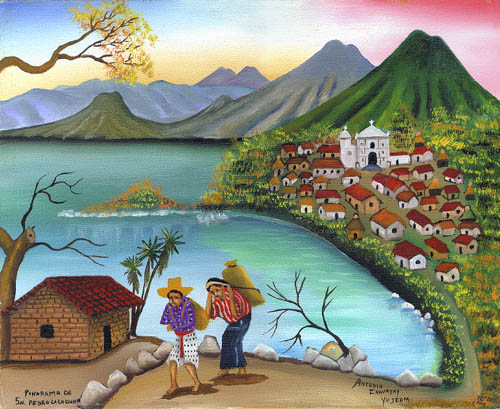 "Viajeros," travelers, a small painting by Antonio Chavajay Yojcom. View of San Pedro la Laguna, the San Pedro Volcano, Toliman Volcano, and the Cerro de Oro from the road to San Juan la Laguna. |
「ビアヘロス(旅人たち)」――アントニオ・チャバハイ・ヨフコムによる小品。サン・フアン・ラ・ラグーナへと続く道から望む、サン・ペドロ・ラ・ラグーナ、サン・ペドロ火山、トリマン火山、そしてセロ・デ・オロの風景。 |
| Introduction In 1941, when one of us (Paul) first worked in peaceful San Pedro la Laguna, there was no sign that the Maya Indians of highland Guatemala were destined to be caught in the toils of a brutal civil war and that the trouble would eventually reach the shores of Lake Atitlán, claiming the lives of informants who had become good friends in the course of a dozen return visits during the ensuing years. San Pedro, an all-Indian town, has proved to be an instructive example of the process of rapid social transformation at the community level. The shift from a predominantly subsistence economy to a mainly market economy has been accompanied by remarkable changes in San Pedro's technology, political system, and religious organization. Gone are the six cofradías (religious brotherhoods) and their colorful processions on saints' days. Gone, too, is the monopoly enjoyed by traditional Catholicism; a vigorous Protestant movement has generated fourteen separate fundamentalist churches, embracing nearly 40 percent of the town's six thousand inhabitants. By the time of our visit to San Pedro in 1979, the massacre of the Kekchí Indians at Panzós had already been condemned in the world press. But Panzós seemed remote from the tranquil Lake Atitlán area, and guerrilla action far to the north and west was scarcely in the news. The purpose of our 1979 trip was to gather information on social change at San Pedro. San Pedro had contributed more migrants to the city than other Indian municipios in the area, and we knew that one reason for this was prior experience in Guatemala City of Pedranos who had been volunteering for two-year hitches in the army ever since the late 1930s when Gen. Jorge Ubico Castañeda was president. In 1979 we wanted to find out how many of the current residents had a history of army service. Adolfo (all names of living Pedranos mentioned here are pseudonyms), a man known to us from prior visits, told us that he was a close friend of another Pedrano, Jacinto, who could supply an estimate because, as comisionado militar (military commissioner), he was in charge of recruiting soldiers from the village. It was troubling to learn that some young men in San Pedro tried to hide from Jacinto for fear of being captured and forced to enter army service. Military training, once an attractive opportunity for Pedranos, was now considered a harsh experience to be avoided if at all possible. Our final interview on that 1979 trip was memorable. We conversed with an old friend named Francisco. The father of six children, he was a successful baker, a Protestant pastor, an astute man with an engaging personality. Having heard something about anthropology, he asked whether we really believed that man descended from monkeys. Although we did not quite convince him that evolution and the Bible could be reconciled, we left with a resolve to seek him out on our next trip to San Pedro for an account of his involvement in the cause of evangelical Protestantism. But there would be no next time for Francisco. Jacinto, his friend Adolfo, and the baker Francisco—each would play a role in the deadly drama that began to unfold the year after we left San Pedro in 1979. In July 1980, a middle-aged woman named Marta wrote author Paul to acknowledge receipt of a check, adding that the price of corn had risen sharply, that her most able-bodied son was out of work, that a local electrical employee had been accidentally electrocuted (carbonizado), and that another man had been found dead in a bar, the victim of alcohol. In San Pedro only bad news qualifies as reportable news. Marta concluded her letter by writing, "And recently a group of guerrillas arrived and we were very fearful, but they didn't do anything (to us)." Author Paul has known Marta since 1941, when, at age fifteen, she served as house helper, errand girl, and occasional interpreter (in those days very few women spoke Spanish). She is now a poor widow with eight children. The oldest is Adolfo, friend of Jacinto, the military commissioner. Late in 1980, Marta again had occasion to acknowledge receipt of money. This time her letter sounded a note of alarm: things were critical in San Pedro. The baker Francisco had been abducted in the middle of the night, and a few weeks later they had carried off another man. Now people were afraid to walk the streets after dark. This was no time, she warned, to visit San Pedro; it was too dangerous. Far from the scene of action, we could only speculate about the identity of the abductors. Were they guerrillas? Were they army soldiers? Would we indeed be in danger if we went to San Pedro? In an atmosphere of heightened tension, would informants assent to interviews? Would their association with us put them under suspicion? \ Eventually we learned that the abductions, which continued during a two-year reign of terror, came to a halt in October 1982. Calm had been restored by the time we paid our next visit to San Pedro in April 1983. We found Pedranos to be as informative as ever. Relatives of the victims and many others supplied a host of details that enabled us to reconstruct the course of recent events. Four events had followed each other in rapid order during 1980, when General Lucas García was in power. On May 20, an Organización del Pueblo en Armas (ORPA) guerrilla group had addressed the villagers in the central plaza and denounced the injustices of Guatemala's oppressive regime. Some of the younger and better-educated Pedranos cheered the group. Within hours the guerrillas vanished, and to this date none have reappeared in San Pedro. Another event was the establishment of an army post near neighboring Santiago Atitlán. Before that there had been no military encampment anywhere on Lake Atitlán. Still another event was the expansion of Jacinto's role. He had been empowered by the army to appoint a large number of assistants so that there was now a corpus of military commissioners made up mainly of Pedranos with a history of military service. They were to guard against subversion and had been given arms to protect the town from guerrilla activity. Jacinto was chief military commissioner, with Marta's son Adolfo second-in-command. The fourth event of 1980 shook the town: the abduction of Francisco the baker, the first of about twenty-five abductions and killings. https://www.artemaya.org/death_squad.htm |
はじめに 1941年、私たちの一人(ポール)が初めて平和なサン・ペドロ・ラ・ラグーナで活動した当時、グアテマラ高地のマヤ先住民が残酷な内戦の渦に巻き込まれ ることになるとは、また、その混乱がやがてアティトラン湖の湖岸にまで及び、その後の十数年にわたる度重なる訪問の中で良き友人となった情報提供者たちの 命を奪うことになるとは、微塵も予感されなかった。先住民のみで構成される町サン・ペドロは、地域社会レベルにおける急速な社会変容の過程を示す、示唆に 富む事例となった。自給自足経済が主流であった状態から、主に市場経済へと移行する過程において、サン・ペドロの技術、政治体制、そして宗教組織には著し い変化が伴った。聖人の祝日に見られた6つのコフラディア(宗教的兄弟会)とその色鮮やかな行列は、もはや過去のものとなった。伝統的なカトリック教が享 受していた独占もまた消え去り、活発なプロテスタント運動によって14の独立した原理主義教会が誕生し、町の6,000人の住民のうち40%近くを擁する に至っている。 1979年に私たちがサン・ペドロを訪れた頃には、パンソスでのケクチ族インディオ虐殺事件はすでに世界各国の報道機関によって非難されていた。しかし、 パンソスは静かなアティトラン湖地域からは遠く離れた場所のように思われ、はるか北や西で行われているゲリラ活動については、ニュースでほとんど報じられ ていなかった。1979年の私たちの旅の目的は、サン・ペドロにおける社会変化に関する情報を収集することだった。サン・ペドロは、この地域の他の先住民 自治体に比べて、都市部への移住者を多く送り出していた。その理由の一つとして、1930年代後半のホルヘ・ウビコ・カスタニェダ将軍政権時代以来、サ ン・ペドロ出身者たちが2年間の兵役を志願してきたという、グアテマラシティでの先行経験があることを私たちは知っていた。1979年、私たちは現在の住 民のうち、どれだけの人が軍務経験を持っているのかを知りたかった。以前の訪問で知り合ったアドルフォ(ここで言及される存命のペドラノの人名はすべて仮 名である)は、別のペドラノであるハシントと親しい友人だと語った。ハシントはコミシオナド・ミリタル(軍事委員)として村からの兵士募集を担当していた ため、その概数を教えてくれるはずだった。サン・ペドロの若者の中には、徴兵されて軍務に就かされるのを恐れて、ハシントから身を隠そうとする者もいると 知り、私たちは心を痛めた。かつてペドラノの人々にとって魅力的な機会であった軍事訓練は、今や可能な限り避けたい過酷な経験と見なされていたのである。 1979年の旅における最後のインタビューは、忘れがたいものとなった。私たちはフランシスコという名の旧友と語り合った。6人の子の父である彼は、成功 したパン屋であり、プロテスタントの牧師でもあり、魅力的な人柄を持つ聡明な人物だった。人類学について何か耳にしていた彼は、人間が本当に猿から進化し たと私たちが信じているのかと尋ねてきた。進化論と聖書は両立し得ると彼を完全に納得させることはできなかったが、私たちは次回のサン・ペドロ訪問時に彼 を訪ね、福音派プロテスタント運動への関与について話を聞くことを決意してその場を後にした。しかし、フランシスコにとって「次回」は訪れなかった。ハシ ント、彼の友人アドルフォ、そしてパン職人のフランシスコ――彼ら一人ひとりが、1979年に私たちがサン・ペドロを去った翌年から幕を開けた、死を招く 悲劇の中でそれぞれの役割を果たすことになるのである。 1980年7月、マルタという中年の女性が著者のポールに小切手の受領を知らせる手紙を送ってきた。その手紙には、トウモロコシの価格が急騰したこと、最 も働き盛りの息子が職を失ったこと、地元の電気工事員が誤って感電死(カーボニザド)したこと、そして別の男が酒のせいでバーで死体となって発見されたこ とが記されていた。サン・ペドロでは、悪いニュースだけが報道に値するのだ。マルタは手紙の結びにこう記した。「それに最近、ゲリラの一団がやって来て、 私たちはとても怖かったけれど、彼らは(私たちに)何もしなかったわ」。著者のポールは1941年からマルタを知っている。当時15歳だった彼女は、家政 婦、使い走り、そして時折通訳(当時はスペイン語を話せる女性はごくわずかだった)を務めていた。彼女は今や、8人の子供を抱える貧しい未亡人だ。長男は アドルフォで、軍事委員のハシントの友人だ。 1980年の終わり頃、マルタは再び送金を受け取ったことを知らせる機会があった。今回、彼女の手紙には危機感をにじませた口調があった。サン・ペドロの 状況は深刻だったのだ。パン屋のフランシスコが真夜中に拉致され、数週間後には別の男も連れ去られた。今や人々は、暗くなってから街を歩くのを恐れてい た。「今はサン・ペドロを訪れるべき時ではない」と彼女は警告した。「あまりにも危険すぎる」 現場から遠く離れた私たちは、誘拐犯の正体について推測するしかなかった。ゲリラなのか? それとも軍兵士なのか? もしサン・ペドロに行けば、本当に危険にさらされるのだろうか? 緊張が高まる中、情報提供者たちはインタビューに応じてくれるだろうか? 私たちと関わったことで、彼らも疑いの目を向けられることになるのではないか? \ 結局、2年間にわたる恐怖政治の期間中も続いた拉致事件は、1982年10月に終息したことが判明した。1983年4月に私たちが再びサン・ペドロを訪れ た頃には、平穏が戻っていた。ペドロの人々は相変わらず情報に詳しかった。犠牲者の親族やその他多くの人々が、近年の出来事の経緯を再構築できるほどの詳 細な情報を提供してくれた。 1980年、ルーカス・ガルシア将軍が政権を握っていた時期に、4つの出来事が立て続けに起こった。5月20日、「武装人民組織(ORPA)」というゲリ ラ集団が中央広場で村人たちに演説し、グアテマラの抑圧的な政権による不正を糾弾した。ペドラノスの若者や教育水準の高い住民の一部は、このグループに歓 声を上げた。数時間後にはゲリラたちは姿を消し、今日に至るまでサン・ペドロに再出現した者はいない。もう一つの出来事は、隣接するサンティアゴ・アティ トラン近郊に軍駐屯地が設置されたことである。それ以前、アティトラン湖のどこにも軍の野営地は存在しなかった。 さらに別の出来事として、ハシントの役割の拡大が挙げられる。彼は軍から多数の補佐官を任命する権限を与えられており、その結果、主に軍歴を持つペドラノ の住民で構成される軍事委員団が形成された。彼らは反体制活動への警戒を任され、ゲリラ活動から町を守るために武器を支給されていた。ハシントが軍事委員 長の座に就き、マルタの息子アドルフォが副委員長を務めた。1980年の4つ目の出来事は町を震撼させた。パン屋のフランシスコが拉致された事件である。 これは、その後約25件に及ぶ拉致・殺害事件の第一弾となった。 |
| Chapter One The Long Black Night Many Pedranos described what happened on the fateful night of September 29, 1980. At 11:00 p.m., Francisco heard someone knock on the door. He thought it was a harmless drunk. When he opened the door, he was seized by armed men dressed as soldiers and wearing masks. Some surrounded the house, while others rushed in and demanded to know where Francisco hid his pistol. Wildly searching everywhere for a nonexistent weapon, they turned the house into a shambles. Francisco directed his wife to produce a bag with $2,000 in cash he had borrowed only a few days earlier from a development bank to help pay for the construction of a new church for his congregation, El Redentor Alianza Cristiana y Misionera. He offered the money to the hooded intruders in return for setting him free. They made off with the money, as well as Francisco, but not before snatching everything else of value—a new pair of boots, clothes, a record player, baskets of bread, four dozen eggs, and two pounds of meat. |
第一章 長い漆黒の夜 多くのペドラノの住民が、1980年9月29日の運命的な夜に何が起きたかを語っている。午後11時、フランシスコは誰かがドアをノックする音を聞いた。 彼は、ただの酔っ払いだと思った。ドアを開けると、兵士の格好をしてマスクを被った武装した男たちに取り押さえられた。何人かは家を包囲し、他の者たちは 家の中に押し入り、フランシスコが拳銃をどこに隠したのかを問い詰めた。存在しない武器を必死に探し回った彼らは、家の中をめちゃくちゃにした。フランシ スコは妻に、数日前に開発銀行から借りた現金2,000ドルが入った袋を出すよう命じた。その金は、彼が所属する教会「エル・レデントール・アリアンサ・ クリスティアナ・イ・ミシオネラ」の新教会建設費の一部に充てるためのものであった。彼は、解放の見返りとして、フードを被った侵入者たちにその金銭を差 し出した。彼らは金銭とフランシスコを連れ去ったが、その前に、新しいブーツ一足、衣類、レコードプレーヤー、パンが入った籠、卵4ダース、そして肉2ポ ンドなど、価値のあるものはすべて奪い去っていった。 |
 "El Ultimo Grito," the last cry. Men wearing "traje" (the traditional attire) of San Pedro abduct a man at gunpoint. The abductors would have been wearing masks to hide their identity. Painting by Mario González Chavajay, 2013. Collection: Arte Maya Tz'utujil. |
「エル・ウルティモ・グリト(最後の叫び)」。サン・ペドロの伝統衣装「トラヘ」を身にまとった男たちが、銃を突きつけてある男を拉致している。拉致犯た ちは正体を隠すため、仮面を被っていたに違いない。マリオ・ゴンサレス・チャバハイ作、2013年。所蔵:アルテ・マヤ・ツトゥヒル。 |
| As the men marched off on the
road to the neighboring town of San Juan la Laguna, they encountered a
truck returning in the night to San Pedro. They halted the vehicle and
relieved the driver and his helper of their watches and some items of
food. Not until next day did the Pedrano truckers realize that the band
had Francisco with them. As soon as the men left town with their captive, Francisco's wife ran to the municipal building to tell the guards on duty what had happened. The guards were stunned; nothing like this had occurred before. it was thought that Francisco had been dragged off to Santa Clara la Laguna, the town above San Juan la Laguna. A relative of Francisco with army experience and connections went to ask the colonel in command of the military post in Santa Clara to help find the captive. The commander promised that he would make inquiries in the capital and that the man would be released if he was in the custody of the army, but nothing came of it. It was doubtful, the colonel concluded, that Francisco was being held by the army. Nor was the body ever located. For a while there was a vague rumor that it had been abandoned in Nahualá. Francisco's father went to Sololá to inspect a corpse that might have been his son's. It was not. When asked why Francisco was a target for abduction, Pedrano informants came up with several possible reasons. First, because Francisco had openly objected to the presence of policemen in San Pedro and of soldiers stationed in the vicinity, and because he had cheered the guerrillas when they appeared in San Pedro, secret informers had doubtless turned in his name as a "subversive." In the second place, he was a prominent member of a rural cooperative. In the third place, he was sometimes seen boarding a bus early in the morning to sell his freshly baked bread, and some may have suspected him of secretly provisioning guerrillas in the hills. |
男たちが隣町のサン・フアン・ラ・ラグーナへと向かう道を進んでいる
と、夜道でサン・ペドロへ戻ってくるトラックと遭遇した。彼らはその車を止め、運転手とその助手から腕時計と食料を奪い取った。サン・ペドロのトラック運
転手たちが、その一味がフランシスコを連れていることに気づいたのは、翌日のことだった。 男たちが捕虜を連れて町を出るとすぐに、フランシスコの妻は市庁舎へ駆け込み、当直の警備員たちに何が起きたかを伝えた。警備員たちは呆然とした。これほ どの事態はかつてなかったからだ。フランシスコは、サン・フアン・ラ・ラグーナの上流にある町、サンタ・クララ・ラ・ラグーナへと連行されたと思われた。 軍隊での経験と人脈を持つフランシスコの親戚が、サンタ・クララの軍事拠点の指揮官である大佐を訪ね、捕虜の捜索協力を求めた。指揮官は首都に問い合わせ を行い、もしその男が軍の拘束下にあるなら解放すると約束したが、何の進展もなかった。大佐は、フランシスコが軍に拘束されている可能性は低いと結論付け た。遺体も結局見つからなかった。一時期、ナワラに遺棄されたという漠然とした噂が流れた。フランシスコの父親は、息子のものかもしれない遺体を確認する ためソロラへ向かったが、それは息子ではなかった。 なぜフランシスコが拉致の標的となったのかと尋ねられると、ペドラノの情報提供者たちはいくつかの理由を挙げた。第一に、フランシスコがサン・ペドロへの 警察官の駐在や近隣への兵士の駐屯に公然と反対し、ゲリラがサン・ペドロに現れた際には彼らを歓呼したため、秘密の情報提供者が間違いなく彼を「反体制分 子」として密告したからである。第二に、彼は農村協同組合の有力なメンバーだった。第三に、彼は朝早くバスに乗り込み、焼きたてのパンを売りに行く姿が時 折目撃されており、山中のゲリラに密かに物資を供給しているのではないかと疑った者もいたのかもしれない。 |
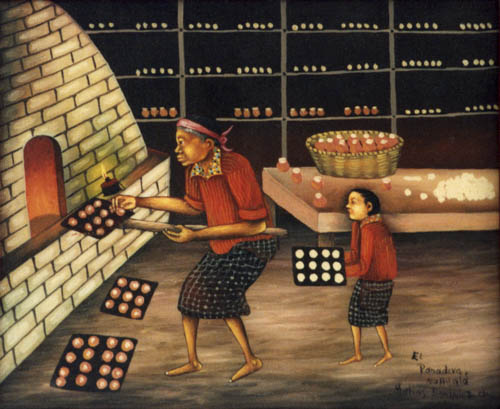 "El Panadero, Nahuala" The painting depicts a baker in the nearby town of Nahuala. Painting by Matías González Chavajay, 1992. |
「ナワラのパン屋」この絵画は、近隣の町ナワラに住むパン屋を描いています。マティアス・ゴンサレス・チャバハイ作、1992年。 |
| The same wrenching scenario—a
nighttime knock on the door, a capture, a vain effort to find the
victim or his body—was replayed in San Pedro again and again over the
next two years. People slept fitfully, fearing the sound of a footfall
and finally blessing the arrival of dawn.. At the outset people assumed that the kidnapping was the work of the army, but when the third man was hauled off, it became evident that San Pedro's own military commissioners were responsible, or at least deeply implicated. Disguises and cover of night did not prevent victims' families from overhearing snatches of Tzutuhil, the local Maya language, or recognizing the voices of particular Pedranos. As time went on and the commissioners became drunk with power—and with liquor as well—their tongues loosened, divulging details within earshot of other tavern patrons, who channeled the news through the town's gossip circuits. But knowing who were responsible was not enough to dispel the darkness of what became, in one Pedrano's words, an endless noche negra ("black night"). The commissioners played a duplicitous game, doing their dirty work by night, posing as protectors by day. They feigned a guerrilla presence by firing shots and setting off bombs after dark. They painted ORPA and other guerrilla signs on walls, and they scattered guerrilla-type leaflets around. They ordered a six o'clock curfew. When it suited their purposes, they made the town electrician turn off the switch of the central power plant. Their rule was unabridged. One informant overheard a conversation in which the chief of the army reserves assured two of the local commissioners that they wielded maximum authority and could overrule the mayor of San Pedro. They had guns; the mayor did not.. On two occasions the commissioners alerted the army to a supposedly impending guerrilla attack and told people living near the forested mountainside, in the higher part of town, to leave their homes. The army landed troops on the shore beyond San Pedro. In a pincer movement the soldiers converged on the area above town, but there were no guerrillas to be caught. Once an army officer, encountered on the road to Santiago Atitlán, told a Pedrano truck driver that he feared to enter San Pedro because it was reputed to be a hotbed of guerrilla activity and that the army at one point had even considered bombing the town. In fact, however, no guerrilla groups operate in San Pedro territory, which extends up the northern, or lakeside, flank of huge San Pedro Volcano. On the southern or Pacific side of the more distant Atitlán Volcano is where ORPA has its headquarters, under the command of Rodrigo Asturias, son of Miguel Angel Asturias, winner of the Nobel prize for literature in 1967, according to the Economist (September 21, 1985, p. 29).. When the San Pedro commissioners staged what was to be their final abduction late in 1982, they tried to throw villagers off their scent by leaving behind two of their own men tied up with ropes to create the impression that the commissioners had fought with guerrillas during the night and had been beaten before the intruders made off with the victim. Actually the gang had disposed of their captive by tying him to a sandbag and sinking him in the lake.. One of the many victims was a woman living in a nearby town. She was fingered by a commissioner who had asked the woman, a seamstress by trade, to sell him on credit two fine skirts for his daughter's wedding. She delivered the skirts and repeatedly asked for payment. Her payment was death. Wearing clothes typical of the town of Santiago Atitlán, the Pedrano commissioner led soldiers to her house at night. He told her to come out. She tried to escape from a window but was killed by machine-gun fire. The identity of the Pedrano is known because the victim's daughter recognized his voice and his tall, portly figure.. We inquired whether the seamstress, like the baker Francisco, might have been blacklisted as a "subversive." Well, yes, we were told. In her travels about the country to sell her clothes, she reportedly attended a gathering in Quirigua to celebrate the second anniversary of the Sandinista victory in Nicaragua. Another "error" she made, we were told, was to collaborate with the director of the short-wave radio station set up in Santiago Atitlán by the priests of Mision Catolica de Oklahoma (Micatokia) to promote adult education in the local Maya language.. The blacklisting of Pedranos apparently began at Christmastime 1979 when one of the three policemen posted to San Pedro two years earlier shot a man from another town who had come to a holiday fair in San Pedro to operate a a Ferris wheel. The policeman was drunk; he fired his gun wildly and killed the man by accident. The people of San Pedro, long accustomed to policing their own community, had been nursing a grudge against the officers for ordering them off the streets and generally pushing them around. Enraged by the shooting incident, a pack of Pedranos assaulted the trigger-happy policeman and chased his companions out of town. The names of those who led the attack, including the baker Francisco, were turned in to the army by informers on the lockout for individuals who showed disrespect for authority. A number of the victims, however, were doomed for reasons other than presumed disloyalty. Personal vengeance was a recurrent motive. Adolfo killed his brother-in-law in a tavern. The brother-in-law was celebrating the birth of a baby boy. In the midst of a crowd and emboldened by drink, he incautiously accused Adolfo, who was armed, of involvement in the abduction of the baker. In a heated argument, Adolfo drew his pistol and shot the man point-blank in the chest. Adolfo's ire was fueled by more than alcohol and momentary taunts. The son of a poor widow, propertyless Adolfo had long been envious of the advantages his brother-in-law enjoyed as the scion of an intact family of moderate means. It rankled him that his father-in-law, for instance, would pay the son's bar bill but not the son-in-law's. |
夜中にドアをノックする音、拉致、そして被害者やその遺体を探し求めるも徒労に終わる――この胸が張り裂けるような光景が、その後2年間にわたりサン・ペドロで何度も繰り返された。人々は足音を恐れて安らかな眠りにつけず、ついには夜明けを待ちわびるようになった。 当初、人々は誘拐が軍によるものだと考えていたが、3人目の男が連れ去られたとき、サン・ペドロの軍事委員たちが責任を負っている、あるいは少なくとも深 く関与していることが明らかになった。変装や夜の闇も、被害者の家族が地元のマヤ語であるツトゥヒル語の断片を耳にしたり、特定のペドラノたちの声を聞き 分けたりするのを防ぐことはできなかった。時が経つにつれ、委員たちは権力――そして酒にも――酔いしれ、舌が緩んで、酒場の他の客の耳にも届くような場 所で詳細を漏らした。その情報は町の噂話を通じて広まっていった。しかし、誰が責任者なのかを知ったところで、あるペドラノの言葉を借りれば「終わりのな いノチェ・ネグラ(黒い夜)」となった状況の闇を払拭するには不十分だった。 委員たちは二面性のあるゲームを演じ、夜は汚い仕事をこなし、昼は守護者のふりをした。彼らは暗くなってから発砲や爆弾を爆発させ、ゲリラが存在するかの ように装った。壁にはORPAやその他のゲリラの標語を書き、ゲリラ風のビラを撒き散らした。彼らは午後6時の夜間外出禁止令を発令した。都合がよけれ ば、町の電気技師に中央発電所のスイッチを切らせた。彼らの支配は絶対的だった。ある情報提供者は、陸軍予備役の司令官が地元の委員2人に、自分たちが最 大の権限を握っており、サン・ペドロの市長を覆すこともできると断言する会話を耳にした。彼らには銃があったが、市長にはなかった。 委員たちは二度にわたり、ゲリラの攻撃が差し迫っていると軍に警告し、町の高台にある森林に覆われた山腹近くに住む人々に避難するよう命じた。軍はサン・ ペドロの対岸に兵士を上陸させた。挟み撃ちの態勢で兵士たちは町の上方地域へと集結したが、捕らえるべきゲリラは一人もいなかった。ある時、サンティア ゴ・アティトランへの道中で出会った陸軍将校が、サンペドロのトラック運転手にこう語った。「サンペドロはゲリラ活動の温床として知られているため、入る のを恐れている。軍は一時期、町を爆撃することさえ検討していたほどだ」。しかし実際には、巨大なサンペドロ火山の北側、つまり湖畔の斜面を北上するサン ペドロの領土内では、ゲリラ組織は活動していない。『エコノミスト』(1985年9月21日号、29ページ)によると、より遠く離れたアティトラン火山の 南側、すなわち太平洋側には、1967年のノーベル文学賞受賞者ミゲル・アンヘル・アストゥリアスの息子ロドリゴ・アストゥリアスの指揮下にあるORPA の本部が置かれている。 1982年後半、サン・ペドロの委員たちが最後となる拉致事件を企てた際、彼らは村人の目を欺こうと、仲間2人を縄で縛ったまま現場に残した。これは、委 員たちが夜間にゲリラと交戦し、殴打された後に侵入者たちが被害者を連れ去ったかのような印象を与えるためであった。実際には、一味は捕虜を砂袋に縛り付 け、湖に沈めて処分していた。 数多くの犠牲者の一人に、近隣の町に住む女性がいた。彼女は、娘の結婚式用に上質なスカート2枚を信用販売で売ってほしいと頼んできた委員に目をつけられ た。彼女はスカートを届けたが、何度も代金の支払いを求めた。その代償は死だった。サンティアゴ・アティトランの町特有の服装を身にまとったペドラノ委員 は、夜間に兵士たちを率いて彼女の家に向かった。彼は彼女に出てくるよう命じた。彼女は窓から逃げようとしたが、機関銃の銃弾に倒れた。ペドラノの正体が 判明したのは、被害者の娘が彼の声と、背が高くがっしりとした体格を認識したためである。 私たちは、その仕立て屋がパン屋のフランシスコと同様に、「反体制分子」としてブラックリストに載せられていたのではないか、と尋ねた。そう、と答えが 返ってきた。彼女は服を売るために国内を旅する中で、ニカラグアでのサンディニスタ勝利2周年を祝う集まりにキリグアで参加したと伝えられている。また、 彼女が犯したもう一つの「過ち」は、地元のマヤ語による成人教育を推進するために、オクラホマ・カトリック宣教団(ミカトキア)の司祭たちがサンティア ゴ・アティトランに設立した短波ラジオ局の局長と協力したことだったと、我々は聞かされた。 ペドラノ一家がブラックリストに載せられたのは、1979年のクリスマス頃のことだったようだ。その2年前にサン・ペドロに配属された3人の警官のうちの 1人が、サン・ペドロのホリデーフェアで観覧車の操作をしに来ていた別の町の男性を射殺した事件がきっかけだった。その警官は酔っ払っており、銃を無差別 に発砲した結果、誤ってその男性を殺してしまったのだ。サン・ペドロの人々は、長い間自分たちのコミュニティを自分たちで取り締まることに慣れており、警 察官たちが街から追い出したり、全般的に横暴な態度をとったりすることに、以前から恨みを抱いていた。この発砲事件に激怒したペドラノスの集団は、発砲し た警察官を襲撃し、その仲間たちを町から追い出した。パン屋のフランシスコを含む襲撃の首謀者たちの名前は、権威への不敬を示す者に対する通報を待ってい た密告者たちによって、軍に告発された。 しかし、犠牲者の中には、不忠と見なされたこと以外の理由で運命づけられた者もいた。個人的な復讐が繰り返される動機となっていた。アドルフォは酒場で義 理の兄弟を殺害した。義理の兄弟は、生まれたばかりの男の子の誕生を祝っていた。人混みの中で酒に勢いづいた彼は、武装していたアドルフォに対し、パン職 人の誘拐に関与していると軽率にも非難した。激しい口論の末、アドルフォは拳銃を抜き、至近距離から男の胸を撃ち抜いた。アドルフォの怒りは、酒やその場 の挑発以上のものによって煽られていた。貧しい未亡人の息子であり、財産を持たないアドルフォは、中流の家庭に生まれ、家族が揃っている義兄が享受してい る恵まれた境遇を、かねてから羨ましく思っていた。例えば、義父が息子の酒代は払うのに、婿の分は払わないといったことが、彼をひどく苛立たせていた。 |
 "Los Bolos," the drunks. Painting by Matías González Chavajay, 1988. Collection: Arte Maya Tz'utujil. |
「ロス・ボロス(酔っ払いたち)」。マティアス・ゴンサレス・チャバハイ作、1988年。所蔵:アルテ・マヤ・ツトゥヒル。 |
| Adolfo argued that he did not
kill his brother-in-law. He claimed, implausibly in the opinion of
numerous witnesses, that in a scuffle for possession of Adolfo's
revolver the other man had accidentally shot himself. The slain man's
father refused to press charges, not because he held Adolfo to be
innocent but because, as he told us, Adolfo was armed and because he
heeded the counsel of the resident nuns, who advised him to pray and
let God do the judging. In any case, Adolfo's commissioner status put
him beyond reach of punishment. His chief, Jacinto, had only to assure
his army superiors that the murdered man was a subversive. On another occasion, Adolfo was angry when he learned that one of his younger brothers had been mauled by a muscular Pedrano in a bar fight. The injured brother brought charges against his assailant in the local courthouse, and the defendant was ordered to pay for the medical treatment the brother needed. But Adolfo was not satisfied, vowing that the attacker would have to pay more dearly. He did. He was captured by soldiers and became one of the "disappeared" of San Pedro. By no means was Adolfo the only commissioner to use his office to settle personal scores. One abduction, for example, was explained as a commissioner's retaliation against a man who had married a woman who was formerly the commissioner's wife. Personal animosity was often a compounding factor, not the only cause. Thus one of the commissioners thought to have participated in Francisco's abduction is said to have had personal reasons for vengeance, as though the baker's outspoken stance, along with the reasons already listed, were not enough to spell his doom. There seems to be little doubt that the army authorities kept a blacklist and that they were responsible for kidnappings in San Pedro. But they could not have acted alone. Insiders had to show soldiers where the targets resided in a large, crowded town with no named streets. And insiders, whether local commissioners or other Pedrano informers, had to supply the names of "subversives" for blacklisting. There can be no doubt that the commissioners collaborated with the army. The army expected them to do so. Often however, the commissioners acted entirely on their own. In fact, more than one of our informants speculated that the baker was captured not by soldiers but by commissioners disguised as soldiers, that they were not really searching for Francisco's pistol but for his cash, and that their success created a taste for easy money. One of the two ringleaders of this first kidnapping was said to be the same commissioner who later led soldiers to the home of the seamstress who had sold him skirts on credit. That commissioner, the oldest of the group, was characterized by some as the most villainous (el mas picaro) of the lot. It was even suspected that he, and possibly other Pedranos, had a hand in the slaying on July 28, 1981, of Father Stanley Rother, the American priest in charge of the Catholic mission in Santiago Atitlán. If a commissioner developed misgivings, he could not easily withdraw from the gang. One of our most trustworthy informants recalled that Adolfo had come to him at about the halfway point in the reign of terror. He was obviously worried about something. The two of them, both Protestants, prayed together, and they talked, but Adolfo said only that he was anxious to renounce his commission. He had gone to army headquarters in Huehuetenango and Chichicastenango asking for permission to resign, but had been refused. He said that he had also told his confederates of his wish but had been warned that they could not be responsible for him if he resigned. Unable to extricate himself from the mire, Adolfo sank deeper into it. Another commissioner, unlike Adolfo who continued to run with the pack, ran afoul of his companions and paid for his lapse with his life. He was a butcher who failed to turn over to his cronies the money received from Pedrano housewives for the meat of a steer the gang had commandeered, claiming he had lost the money. But he became a marked man for an additional, more compelling reason. His companions learned that the butcher was tipping off intended victims to stay on guard and was beginning to leak incriminating information. In gangland fashion, he was taken for a "ride," or rather a walk on the beach near the pier at night with two of the commissioners. One shot him twice at point-blank range (the 22-caliber bullet wounds were less than one inch apart in the area of the right kidney), while the other fired shots into the air with a carbine to support their claim that they had seen a tall, blonde guerrilla jump from behind the pier and shout, "Hands up!" before killing the butcher. A Pedrano who had just returned from military duty as a paratrooper told people that he had heard soldiers gossiping that local commissioners were to blame for the epidemic of abductions in San Pedro. By carelessly repeating what he had heard in the army, the former soldier forfeited his life. Disrespect for the commissioners' authority could be fatal. One man repeatedly defied the commissioner's curfew by drinking and walking the streets at night. He disappeared. The appetite for easy money was readily satisfied by resort to extortion. Typically, a commissioner would approach a family man, informing him that his son's name appeared on a blacklist and offering to save the son's life if the father could produce a few hundred dollars. The money ostensibly would be used to persuade the army personnel—the commissioner had connections—to eliminate the name from the list. Alternatively, the commissioners would simply demand money from someone, under the threat of denouncing him as a subversive if he balked. Protests of innocence were unavailing. Defiance could be fatal. Nor did payment always ensure survival. One of the wealthier citizens delivered nine hundred dollars to keep from losing a son who had openly expressed his opposition to the military commissioners. The son continued to oppose the clique and lost his life. The commissioners sank him in the lake and, as already indicated, tied up two of their own men to make it appear that guerrillas had been at work. The aggrieved father later compiled a list of forty-four Pedranos who had paid extortion money totaling tens of thousands of dollars. |
アドルフォは、義理の兄弟を殺害したわけではないと主張した。彼は、ア
ドルフォのリボルバーを巡るもみ合いの最中に、相手が誤って自らを撃ってしまったのだと主張したが、多くの目撃者からは、その説明は信憑性に欠けると見な
されていた。殺害された男の父親は告訴を断った。それはアドルフォが無実だと信じていたからではなく、彼が語ったところによれば、アドルフォが武装してい
たこと、そして祈り、裁きは神に委ねるよう助言した地元の修道女たちの言葉に従ったからであった。いずれにせよ、アドルフォは警察委員という立場ゆえに、
処罰の手が及ばない存在だった。彼の上司であるハシントは、殺害された男が反体制分子であると軍の上層部に保証するだけでよかったのだ。 別の機会には、アドルフォは、弟の一人が酒場での乱闘で屈強なペドラノの男に殴り倒されたと知って激怒した。負傷した弟は地元の裁判所で加害者を告訴し、 被告は弟の治療費を支払うよう命じられた。しかしアドルフォは満足せず、加害者にはもっと痛い目を見させてやると誓った。そして、その通りになった。彼は 兵士たちに捕らえられ、サン・ペドロの「失踪者」の一人となった。 職権を利用して私怨を晴らした委員は、決してアドルフォだけではない。例えばある拉致事件は、ある委員が、かつて自分の妻だった女性と結婚した男に対する 報復として行われたと説明されている。個人的な敵意はしばしば要因の一つではあったが、唯一の原因ではなかった。したがって、フランシスコの拉致に関与し たとされる委員の一人は、個人的な復讐の動機を持っていたと言われている。まるで、パン屋の率直な姿勢や、すでに挙げた理由だけでは、彼の破滅を招くには 不十分だったかのように。 軍当局がブラックリストを保持しており、サン・ペドロでの拉致事件の責任を負っていたことに疑いの余地はほとんどないようだ。しかし、彼らが単独で行動で きたはずはない。通り名のない、広大で混雑した町の中で、標的がどこに住んでいるかを兵士たちに教えるには、内部の協力者が必要だった。そして、地元の委 員であれ、その他のペドラノの情報提供者であれ、内部の協力者たちは、ブラックリストに載せる「反体制派」の名前を提供しなければならなかった。委員たち が軍と協力していたことに疑いの余地はない。軍は彼らにそうすることを期待していたのだ。 しかし、多くの場合、委員たちは完全に独自に行動していた。実際、情報提供者の何人かは、パン屋が兵士ではなく兵士に扮した委員たちによって捕らえられた のではないか、彼らが本当に探していたのはフランシスコの拳銃ではなく現金だったのではないか、そしてその成功が「手っ取り早い金」への欲求を掻き立てた のではないかと推測していた。この最初の誘拐事件の首謀者二人のうちの一人は、後に自分にスカートを信用販売した仕立て屋の家に兵士たちを案内したのと同 じ委員だったと言われている。その委員はグループの中で最年長であり、一部からは一味の中で最も悪辣な男(エル・マス・ピカロ)と評されていた。彼、そし ておそらく他のペドラノの者たちが、1981年7月28日にサンティアゴ・アティトランのカトリック宣教所を統括していたアメリカ人司祭、スタンリー・ロ ザー神父の殺害に関与したのではないかとさえ疑われた。 委員が疑念を抱いたとしても、簡単に組織から離脱することはできなかった。我々の最も信頼できる情報提供者の一人は、恐怖政治の半ば頃、アドルフォが自分 のもとを訪れたことを回想している。彼は明らかに何かを心配していた。二人ともプロテスタントだったため、共に祈り、話し合ったが、アドルフォは委員の職 を辞したいと切望していることだけを口にした。彼は辞任の許可を求めてウエウエテナンゴとチチカステナンゴの軍司令部を訪ねたが、拒否された。また、共犯 者たちにもその意向を伝えたが、辞任すれば彼らの責任の範囲外になると警告されたとも語った。泥沼から抜け出せないアドルフォは、さらに深く沈んでいっ た。 別の委員は、集団に付き従い続けたアドルフォとは異なり、仲間と対立し、その過ちの代償として命を落とした。彼は肉屋だったが、ギャングが徴発した雄牛の 肉代としてペドラノの主婦たちから受け取った金を仲間に渡さず、「金を失くした」と主張したのだ。しかし、彼に標的の烙印が押されたのには、さらに決定的 な理由があった。仲間たちは、その肉屋が標的となる被害者に警戒するよう密かに知らせており、自分たちを不利にする情報を漏らし始めていることを突き止め たのだ。ギャングの世界の常套手段として、彼は「ドライブ」に連れ出された――正確には、夜間に委員の2人と共に桟橋近くの浜辺を散歩させられたのであ る。一人が至近距離から2発発砲し(22口径の銃弾による傷は右腎臓付近で1インチ未満の間隔だった)、もう一人はカービン銃で空砲を撃ち、桟橋の陰から 背の高い金髪のゲリラが飛び出し、「手を上げろ!」と叫んでから肉屋を殺害したと主張するのを裏付けた。 空挺兵として兵役を終え、帰還したばかりのペドラノ出身の男は、サン・ペドロで頻発する拉致事件の責任は地元の委員たちにあると兵士たちが噂しているのを 耳にしたと人々に語った。軍で聞いた話を不用意に口にしたことで、この元兵士は命を落とした。委員たちの権威を軽んじることは、死を招きかねなかった。あ る男は、夜間に酒を飲み、街を歩き回るという行為で、委員が定めた夜間外出禁止令に繰り返し違反した。彼は姿を消した。 手っ取り早い金への欲求は、恐喝によって容易に満たされた。典型的な手口は、委員が一家の父親に近づき、息子の名前がブラックリストに載っていると告げ、 数百ドルを用意できれば息子の命を救うと持ちかけるというものだった。その金は表向き、委員のコネを使って軍関係者を説得し、リストから名前を削除するた めに使われることになっていた。あるいは、委員たちは単に金銭を要求し、拒否すれば反体制分子として告発すると脅すこともあった。無実を訴えても無駄だっ た。反抗すれば命取りになりかねなかった。 また、金を払ったからといって必ずしも生き延びられるとは限らなかった。ある裕福な市民は、軍事委員たちへの反対を公然と表明していた息子を失わないよ う、900ドルを支払った。その息子は引き続き一派に反対し続け、命を落とした。委員たちは彼を湖に沈め、前述の通り、ゲリラの仕業に見せかけるために自 分たちの部下二人を縛り付けた。悲嘆に暮れた父親は後に、総額数万ドルに上る恐喝金を支払った44人のペドラノ住民の名簿を作成した。 |
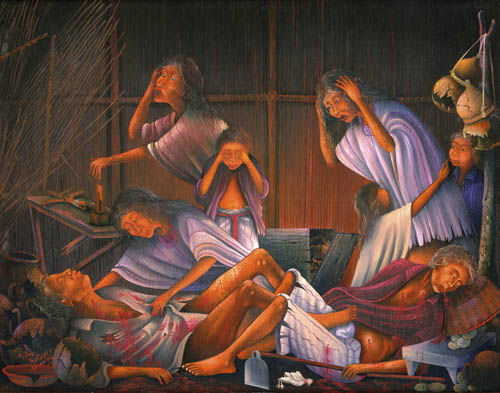 "Trajedia" tragedy. Painting by Pedro Rafael González Chavajay, 1992. Collection: Smithsonian National Museum of the American Indian. |
「トラジェディア(悲劇)」。ペドロ・ラファエル・ゴンサレス・チャバハイ作、1992年。所蔵:スミソニアン・アメリカン・インディアン博物館。 |
| Money was not the only thing the
gangsters appropriated. They got a fair haul when they called late one
night at the home of a Pedrano living in the coastal settlement San
Pedro Cutzán. They roused the man out of bed, demanded the keys to his
pickup, and drove away with it, as well as with the owner clad only in
his underwear. They sold the vehicle; some claimed that it was later
seen in Quezaltenango. The kidnapped man was never seen again. The commissioners roamed widely in search of loot, picking up a goat in Santa Clara la Laguna, two hogs in Panyevar (a distant hamlet of San Juan la Laguna), and other booty elsewhere. They reached out around the lake as far as Tzununá (a hamlet of Santa Cruz la Laguna) to extort goods. They also stole cameras and other valuables at gun-point from foreign tourists who rented dollar-a-night rooms on San Pedro's lakefront. According to one inn owner, Jacinto, the chief military commissioner, once wanted him to give his daughter on loan for a month to a friend of the commissioner living in Guatemala City. The girl was the town's beauty queen that year. Her father promptly sent her off to Mexico. Of course, only a limited number of Pedranos had the means and the connections to send threatened family members to distant places. Some of those families did just that, for it was generally the richer Pedranos who had the most to fear from the predatory commissioners. The gang was able to live high off the hogs they commandeered. They held lavish saturnalias on the beach, feasting and drinking and enjoying sex with women they invited or coerced. Some of the revelers had two women, one informant told us, and squandered most of the money they collected on alcohol. Their chief, Jacinto, drank so continuously toward the end of his reign that he was unable to do any work. Rape was no rare event. The commissioners molested female jípis ("hippies") staying in lakeside inns. They stripped one Pedrano woman and made her appear naked in the streets. Another woman was gang-raped by a dozen men. Because of the army's perception—manipulated by the commissioners—that San Pedro was a dangerous place, a military officer came to town in May 1981 to announce that the number of commissioners would have to be expanded. A leading citizen, the more respected of the town's two güizaches (paralegal aides), then spoke up. He requested that all the commissioners be replaced. The visiting officer replied that that would not be done, that if the town had problems with the existing group, that was a matter to be taken up with the local justice of the peace. Accordingly, the güizache and the mayor (who doubles as the justice of the peace in San Pedro) drew up a document requesting the change. Although challenging the corrupt commissioners was a dangerous thing to do, twenty-seven citizens bravely signed the petition. (It may be no coincidence that two of the güizache's sons later vanished, one never to reappear, the other to return with a gunshot wound sustained in an attempt to escape.) Copies of the petition were sent to the governor, the minister of defense in the capital, and President Lucas García. The appeal was ignored, and the crime wave rolled on. For their part, the commissioners, only some of whom had weapons—a few old pistols and shotguns—moved to strengthen their grip by appealing for more weapons. On February 27, 1982, they drew up a petition in which their leader, Jacinto, asked the defense minister, General Anibal Guevara, to supply arms to all the commissioners listed in the petition. Jacinto's list ran to twenty-six names. Several months later the petitioners received carbines. From the beginning, the exact number of commissioners operating in San Pedro could only be surmised. There were covert as well as overt members, and the numbers increased over time. Apparently Jacinto was given a free hand to select his assistants. Some members of the group were coerced into joining, we were told, by the threat that they would be denounced as subversives if they failed to cooperate. Some of the Pedranos who scorned the threat disappeared. On March 23, 1982, shortly after Jacinto submitted his request for more arms, a coup brought Ríos Montt to power. The new president publicly promised to eliminate unnecessary violence and clean up corruption in the army. He invited citizens to report abuses. Pedranos, encouraged, redoubled their efforts to expel the evil commissioners. Individuals and delegations protested and appealed in all directions. A document signed by a multitude of townsmen and endorsed by the mayor was taken to Guatemala City by Antonio, a singularly civic-minded individual. As former mayor, he had formed a political relationship with someone working as secretary to Ríos Montt. The secretary took the petition, saying that he would have the president consider it. Antonio was advised to return in ten days. He did and was informed that the petition was being studied by the minister of government. Ten days later Antonio again traveled to the city and was told by the secretary that arrest of the commissioners was unlikely; Ríos Montt reportedly had said that the country needed men with the strength to kill. Antonio then tried to deliver a copy of the petition to the commander of Military Zone 14 (Department of Sololá) where it was rejected on the grounds that it had already been considered by the president. A similar petition by the town's permanent force, a group of about one hundred Pedranos with military-service experience, was no more successful. It was a policy of the Ríos Montt regime to rotate military commanders periodically and replace municipal officeholders. Accordingly, the mayor of San Pedro was ordered out of office on June 15, 1982. He had been elected by popular vote, he was well regarded, and his term was not yet up. The town wanted to keep him on or at least be allowed to select his successor but had to accept Jorge, favored by the clique of commissioners and designated mayor from above. Jorge took office June 16, 1982. Jorge had gone to Guatemala City in 1956 as a youth to sign up for military training and had stayed on to make a career of army service. He was an honor guard, then a president's guard, then a driver and doorkeeper at the presidential residence, and finally a cook at the residence of the defense minister. Periodically he would visit San Pedro, where he married and maintained a family. He inherited land in San Pedro and after many years of service in the military establishment decided to return to his hometown. When the opportunity came to be mayor, he obtained a recommendation from the minister whom he had loyally served, and this in turn secured him the backing of the military commander in Sololá, whose approval of Jorge's appointment was decisive. People realized that Jorge, unlike the mayor he replaced, would be more hindrance than help in their campaign to end the violence. They were convinced that he sided with the evildoers who had initiated or supported his appointment. But they did not give up their fight to rid the town of criminals. At a meeting in August 1982, members of the permanent force demanded of the visiting colonel, who chaired the assembly, that the present commissioners be replaced because, among other things, some of them did not even have army training. The colonel was not swayed by their argument, saying that he was interested in expansion, not replacement. Among the former soldiers demanding a change was the young man who was later seized and dropped into the lake tied to a bag of sand. When the victim's father went to the mayor's office to report the abduction. Jorge told him that his son had been taken away by guerrillas. The father retorted that it was not so: "Things are really bad when we kill our own kind. You should repent." Jorge was the target of other accusations during his tenure in office, which lasted more than a year. Fernando, one of several potential candidates for mayor at the time Jorge gained the post, added the latter to the list of individuals he denounced as criminals and collaborators in a stream of telegrams he sent to higher authorities. The mayor and several commissioners in turn accused Fernando of indulging in character assassination. They denounced him to the commander of the military post in Santiago Atitlán, who ordered Fernando to appear for judgment. Not knowing what fate had in store for him, Fernando gave his wife the text of a telegram to be dispatched to Ríos Montt in case he failed to return home that evening. Fernando had been active in the Christian Democrat party when it supported Ríos Montt’s unsuccessful bid for the presidency in 1974. An official document (the minutes of the meeting signed by all the participants) dated October 25, 1982, summarizes what happened that day in Santiago Atitlán. Fernando was charged with the crime of disseminating false accusations against the six Pedranos confronting him. Four of the plaintiffs were commissioners: Jacinto, Adolfo, and two others. Jorge, the mayor, was another plaintiff. Still another was Mario, a litigious güizache with an unsavory reputation in San Pedro. Exhibited as evidence were copies of numerous documents that Fernando had presented to "the highest authorities of the nation." There was no witness for the defense. Testimony by the plaintiffs, said the minutes, proved Fernando's accusations to be false, without foundation, and the product of acrimony stemming from the defendant's frustrated desire to be named mayor of San Pedro without popular support. For having committed calumny and false testimony the commander of the army post ordered that Fernando be detained at the military base until he could be transferred to the appropriate prison. When Fernando failed to return that evening, his wife sent the prepared telegram to Ríos Montt. A few days later seven of San Pedro's military commissioners were arrested, and Fernando was released. |
ギャングたちが奪ったのは金だけではなかった。ある夜遅く、海岸沿いの
集落サン・ペドロ・クツァンに住むペドラノ族の家を訪ねた際、彼らはかなりの戦利品を手に入れた。男を寝床から引きずり出し、ピックアップトラックの鍵を
要求すると、その車と共に、下着姿のままの所有者まで乗せて走り去った。彼らはその車を売り払ったが、後にケサルテナンゴで目撃されたという噂もあった。
誘拐された男は二度と姿を見せなかった。 委員たちは略奪品を求めて広範囲にわたり徘徊し、サンタ・クララ・ラ・ラグーナでヤギ1頭、パニエバル(サン・フアン・ラ・ラグーナの遠隔集落)で豚2 頭、その他各地で戦利品を奪った。彼らは湖の周囲を回り、ツヌナ(サンタ・クルス・ラ・ラグーナの集落)にまで足を延ばして物資を強要した。また、サン・ ペドロの湖畔で一泊1ドルの部屋を借りていた外国人観光客から、銃を突きつけてカメラやその他の貴重品を強奪した。ある宿屋の主人によると、軍事委員長の ハシントはかつて、グアテマラシティに住む委員長の友人に、自分の娘を1ヶ月間「貸し出す」よう要求したことがあるという。その娘は、その年の町のミス・ コンテストの優勝者だった。父親は直ちに彼女をメキシコへ送り出した。もちろん、脅迫された家族を遠方へ逃がすだけの資金やコネを持つペドラノ(サン・ペ ドロの住民)は限られていた。そうした家族の中には実際にそうした者もいた。なぜなら、略奪的な委員たちから最も恐れられるのは、概して裕福なペドラノた ちだったからだ。 一味は、強奪した豚肉を贅沢に食らい、豪勢な生活を送っていた。彼らはビーチで盛大な酒宴を開き、招いたり強要したりした女性たちと、酒を酌み交わし、食 事を楽しみ、性行為にふけった。ある情報提供者によると、宴の参加者の中には女性を2人連れ、集めた金のほとんどを酒に浪費する者もいたという。首領のハ シントは、支配の末期には絶えず酒を飲み続け、もはや何の仕事もできなくなっていた。強姦も珍しいことではなかった。委員たちは湖畔の宿に滞在する女性ジ ピス(「ヒッピー」)たちに手を出した。あるペドラノの女性を裸にし、街中で裸のまま歩かせた。別の女性は、十数人の男たちに集団レイプされた。 委員たちによって操作された「サン・ペドロは危険な場所である」という軍の認識により、1981年5月、ある軍将校が町を訪れ、委員の数を増やす必要があ ると通告した。そこで、町の2人のグイサチェ(司法補助官)のうち、より尊敬されていた有力な市民が声を上げた。彼は、すべての委員を交代させるよう求め た。訪問した将校は、それはできないと答え、もし町が既存のグループに問題を抱えているのであれば、それは地元の治安判事と話し合うべき問題だと述べた。 そこで、グイサチェと町長(サン・ペドロでは治安判事を兼任している)は、変更を求める文書を作成した。腐敗した委員たちに異議を唱えることは危険な行為 だったが、27人の市民が勇敢にも請願書に署名した。(その後、グイサチェの息子2人が行方不明になったのは偶然ではないかもしれない。1人は二度と戻ら ず、もう1人は逃走中に銃弾を受けて負傷し、戻ってきた。) 請願書の写しは、州知事、首都の国防大臣、そしてルーカス・ガルシア大統領に送られた。この訴えは無視され、犯罪の波は止むことなく続いた。 一方、委員たち(そのうちのほんの一部しか武器を持っておらず、数丁の古い拳銃や散弾銃がすべてだった)は、さらなる武器の供給を要請することで、自らの 支配力を強化しようとした。1982年2月27日、彼らは請願書を作成し、そのリーダーであるハシントが、アニバル・ゲバラ国防相に対し、請願書に記載さ れたすべての委員に武器を供給するよう要請した。ハシントのリストには26名の名前が連なっていた。数ヶ月後、請願者たちはカービン銃を受け取った。 当初から、サン・ペドロで活動する委員の正確な人数は推測するしかなかった。表立ったメンバーもいれば、隠密に活動するメンバーもおり、その数は時ととも に増えていった。どうやらハシントは、補佐役を選ぶことに関して自由裁量を与えられていたようだ。グループの一部のメンバーは、協力しなければ反体制分子 として告発されるという脅迫によって、参加を強要されたと伝えられている。その脅迫を嘲笑したペドラノ(サン・ペドロの住民)の一部は、行方不明になっ た。 1982年3月23日、ハシントがさらなる武器の供給を要請した直後、クーデターによりリオス・モントが政権を掌握した。新大統領は、不必要な暴力を排除 し、軍内の汚職を一掃することを公約した。彼は市民に対し、虐待行為を通報するよう呼びかけた。これに勇気づけられたペドラノの住民たちは、邪悪な委員た ちを追い出すための努力を倍加させた。個人や代表団が四方八方に抗議し、訴えかけた。多くの町民が署名し、町長も承認した文書を、並外れて市民意識の高い アントニオがグアテマラシティへ持ち込んだ。元町長であった彼は、リオス・モントの秘書を務める人物と政治的なつながりを持っていた。その秘書は請願書を 受け取り、大統領に検討してもらうと述べた。アントニオには10日後に戻ってくるよう告げられた。彼はその通りに戻り、請願書が内務大臣によって検討中で あると知らされた。 10日後、アントニオは再びグアテマラシティへ向かい、秘書から委員たちの逮捕はあり得ないだろうと言われた。リオス・モントは、この国には人を殺す力を 持つ男たちが必要だと述べたと伝えられていた。その後、アントニオは第14軍管区(ソロラ県)の司令官に請願書の写しを届けようとしたが、大統領によって すでに検討済みであるという理由で拒否された。町の常備隊――兵役経験を持つ約100人のペドラノスからなるグループ――による同様の請願も、やはり成功 しなかった。 リオス・モント政権の方針として、軍司令官を定期的に交代させ、地方自治体の公職者を更迭することが定められていた。その結果、1982年6月15日、サ ン・ペドロの町長は職を解くよう命じられた。彼は一般投票で選出され、評判も良く、任期もまだ満了していなかった。町民は彼を留任させたい、あるいは少な くとも後任を自ら選任することを望んでいたが、委員たちの派閥に支持され、上層部から指名されたホルヘを受け入れざるを得なかった。ホルヘは1982年6 月16日に就任した。 ホルヘは1956年、若き日に軍事訓練を受けるためグアテマラシティへ赴き、そのまま軍務に身を捧げる道を選んだ。彼は儀仗兵を経て大統領警護隊員とな り、その後は大統領官邸の運転手兼門番、最終的には国防相公邸の料理人となった。時折サン・ペドロを訪れ、そこで結婚し、家族を養っていた。彼はサン・ペ ドロに相続した土地を持ち、軍組織で長年勤務した後、故郷に戻ることを決意した。市長になる機会が訪れた際、彼は忠実に仕えてきた大臣からの推薦を得て、 これがソローラ駐屯地の軍司令官の支持を確かなものにした。同司令官によるホルヘの任命承認が決定的な役割を果たしたのである。人々は、前任の市長とは異 なり、ホルヘが暴力を終わらせるための彼らの運動において、助けになるどころかむしろ足手まといになるだろうと悟った。人々は、ホルヘが自身の任命を画策 したり支持したりした悪党たちの味方だと確信していた。しかし、町から犯罪者を一掃するための闘いを諦めることはなかった。 1982年8月の集会で、常備軍の隊員たちは、議長を務めていた来訪中の大佐に対し、現職の委員を交代させるよう要求した。その理由の一つとして、委員の 中には軍隊での訓練さえ受けていない者がいることが挙げられた。大佐は彼らの主張に動じず、自分が関心があるのは拡大であって、交代ではないと述べた。交 代を求めた元兵士たちの中には、後に拉致され、砂袋に縛られて湖に投げ込まれた若者もいた。被害者の父親が市長室へ拉致を届け出に行った際、ホルヘは息子 をゲリラに連れ去られたのだと告げた。父親は「そんなことはない」と反論した。「同胞を殺すなんて、事態は本当に深刻だ。あなたは悔い改めるべきだ。」 ホルヘは、1年以上続いた在任期間中、他にも告発の対象となった。ホルヘが市長に就任した当時、数人の有力な候補者の一人だったフェルナンドは、上層部へ 送った一連の電報の中で、ホルヘを犯罪者や協力者として告発する人物リストに加えた。これに対し、市長と数名の委員は、フェルナンドが中傷にふけっている と非難した。彼らはサンティアゴ・アティトランの駐屯地司令官にフェルナンドを通報し、司令官はフェルナンドに審理への出頭を命じた。自分にどのような運 命が待ち受けているか分からないフェルナンドは、もしその晩帰宅できなくなった場合に備え、妻にリオス・モント宛ての電報文を手渡した。フェルナンドは、 1974年にキリスト教民主党がリオス・モントの大統領選への出馬(落選)を支持した際、同党で活動していた。 1982年10月25日付の公式文書(全参加者が署名した会議議事録)には、その日サンティアゴ・アティトランで起きた出来事が要約されている。フェルナ ンドは、彼と対峙した6人のペドラノ人に対する虚偽の告発を流布した罪で告発された。原告のうち4人は委員であった。ハシント、アドルフォ、そして他の2 名である。ホルヘ、すなわち市長もまた原告の一人であった。さらに別の原告はマリオで、サン・ペドロでは評判の悪い、訴訟好きなグイサチェ(町内会役員) であった。証拠として提出されたのは、フェルナンドが「国家の最高権力者」に提出したとされる多数の文書の写しであった。被告側の証人はいなかった。議事 録によれば、原告らの証言により、フェルナンドの告発は虚偽であり、根拠がなく、民衆の支持を得られずにサン・ペドロの市長に就任したいという被告の叶わ ぬ願望から生じた怨恨の産物であることが証明された。誹謗中傷および虚偽の証言を行ったとして、駐屯地司令官は、フェルナンドを適切な刑務所へ移送できる まで軍事基地に拘留するよう命じた。その夜、フェルナンドが帰宅しなかったため、妻は用意していた電報をリオス・モントに送った。数日後、サン・ペドロの 軍事委員7名が逮捕され、フェルナンドは釈放された。 |
| https://www.artemaya.org/death_i.htm |
|
★Benjamin D. Paul, Stanford University & William Demarest, The Operation of a Death Squad in San Pedro la Laguna. 1988. [ウェブページにリンク]
| Chapter Two Sudden Daylight The long noche negra ended as suddenly as it had begun twenty-five months earlier when Francisco the baker was kidnapped. On October 28, 1982, a company of military men crossed the lake in two launches and arrested Jacinto, Adolfo, and five other commissioners. This swift operation put a sudden stop to kidnappings, threats, and demands for money, as well as signs of purported guerrilla activity: shots in the night, slogans on walls, provocative leaflets. To be sure, only some of the evil commissioners were hauled away while other members of the gang remained at liberty, but that was enough to restore peace to San Pedro—for just over two years. Why the military command decided to crack down when it did, turning against the same two top-level commissioners it had found innocent of Fernando's charges only three days earlier, or why the military struck at all, given its record of repeatedly ignoring complaints, remains a matter of conjecture. At what level was the decision to strike made? Was there a change of heart or of military commanders?. One woman in San Pedro attributed the crackdown to information she supplied. She was a seamstress who traveled to different places to sell her goods, like the seamstress who was killed in a neighboring town. Jacinto and Adolfo had told her that she was suspected of taking food to the guerrillas and was on a blacklist but that a payment of three hundred dollars plus sexual favors would save her life. With great difficulty she raised the money but decided that before handing it over she would make inquiries directly at the army post. She did this on the advice and with the help of an intermediary in Santiago Atitlán. When she asked a major at the post to whom she should give the money to get her name off the list, he said that she was on no list and asked her to name the Pedrano commissioners who were demanding payment. She did. She thinks, as do some others in town, that what she revealed at the base played a significant part in getting the military to make the arrests.. Many believed that the decision to strike was made at a higher level. Five or six months had elapsed since Antonio made three trips to the city in what seemed at the time to be a vain effort to persuade Ríos Montt to act on the community's request for intervention. In retrospect, however, it was thought that the president was only biding his time until he could rotate or rein in his field officers and that the crackdown on the commissioners was his delayed response to the petition Antonio had delivered or perhaps to the demand submitted by the permanent force. Others thought that the president was moved to act by the telegrams he received from Fernando, his one-time political supporter.. Still others had reason to believe that the decision to end the town's suffering was made at a yet higher level. The bereaved father who admonished Jorge, the mayor, to repent, told us that after his son's abduction he and the pastor of his church, the Assembly of God, prayed day and night for one month until, finally, the commissioners were arrested.. In point of fact, there were two military posts across the lake, the army post outside Santiago Atitlán, and a naval station near Cerro de Oro, a hamlet of Santiago Atitlán. The arrest was made by marinos (navy men) traveling in naval launches. It is not clear whether the commanders of the two military posts acted separately or in concert or in response to orders from above. Just before making the arrest, a lieutenant from across the lake went about the town soliciting testimony from some of the many Pedranos who had been threatened or victimized by the commissioners. The lieutenant then went to the municipal headquarters. Mayor Jorge, accompanied by Chief Commissioner Jacinto, was away on a mission of some kind. But, as in all such cases, the vice-mayor was on duty, and he later recounted what happened that day. The lieutenant, who was working under orders from Rios Montt to be very severe (in the opinion of the vice-mayor), demanded to talk to a certain commissioner, who happened to be seated with a companion in the municipal office. The two commissioners greeted the lieutenant cheerily: "How goes it, chief! What is your wish?" The officer whirled around and hissed at them not to move. He and his men then proceeded to round up the other commissioners, including Jacinto, returning from his trip. Under the ceiba tree shading the town square, the officer shouted at the men in chains that they were the real guerrillas who had been operating in San Pedro. |
第2章 突然の夜明け パン屋のフランシスコが誘拐された25カ月前、始まったのと同じくらい突然に、長い「ノチェ・ネグラ(暗黒の夜)」は幕を閉じた。1982年10月28 日、一隊の軍人が2隻のボートで湖を渡り、ハシント、アドルフォ、そして他の5人の委員を逮捕した。この迅速な作戦により、誘拐、脅迫、金銭の要求、そし てゲリラ活動とされる兆候――夜間の銃声、壁に書かれたスローガン、挑発的なビラ――は突然終止符を打たれた。確かに、悪辣な委員のうち連行されたのは一 部に過ぎず、一味の他のメンバーは依然として自由の身であったが、それでもサン・ペドロに平和を取り戻すには十分だった――わずか2年余りの間ではある が。 なぜ軍司令部が、わずか3日前にフェルナンドの告発について無罪と認定したばかりの、まさにその2人の最高位委員に対して、あのタイミングで取り締まりに 乗り出したのか。あるいは、これまで度重なる苦情を無視してきた前歴があるにもかかわらず、なぜ軍が行動を起こしたのか。その理由は依然として推測の域を 出ない。攻撃の決定はどのレベルで下されたのか。軍司令部の心変わり、あるいは指揮官の交代があったのだろうか。 サン・ペドロのある女性は、この弾圧の原因を自分が提供した情報にあると語った。彼女は、近隣の町で殺害された仕立て屋と同様に、商品を売るために各地を 回る仕立て屋だった。ハシントとアドルフォは彼女に、ゲリラに食料を運んでいる疑いが持たれてブラックリストに載っているが、300ドルの支払いに加え性 的奉仕をすれば命は助かると告げていた。彼女は苦労の末にその金を工面したが、手渡す前に軍駐屯所に直接問い合わせることに決めた。これはサンティアゴ・ アティトランの仲介者の助言と協力を得て行ったことだった。駐屯所の少佐に、リストから名前を消してもらうために誰に金を渡せばよいか尋ねると、少佐は 「君の名はどのリストにも載っていない」と言い、金銭を要求しているペドラノの委員たちの名前を挙げるよう求めた。彼女はそうした。彼女は、町の一部の住 民と同様に、基地で明かした事実が、軍による逮捕につながった重要な要因だったと考えている。 多くの者は、ストライキを決行する決定が上層部で下されたと信じていた。アントニオが、コミュニティの介入要請に応じるようリオス・モントを説得しよう と、当時は無駄な努力に思えた3度の都市への出張を行ってから、5、6ヶ月が経過していた。しかし、後になって振り返ると、大統領は現場の将校たちを異動 させたり手綱を締めたりできるまで時機を待っていたに過ぎず、委員たちへの弾圧は、アントニオが届けたり、あるいは常駐部隊が提出した要求に対する遅れた 反応だったと考えられた。また、大統領がかつての政治的支持者であったフェルナンドから受け取った電報によって行動を起こすよう促されたと考える者もい た。 さらに別の者たちは、町の苦しみ終わらせるという決定が、それよりもさらに上層部で下されたのだと信じる理由を持っていた。ホルヘ市長に悔い改めるよう諭 した、息子を亡くした父親は、息子が拉致された後、彼と彼が通うアッセンブリー・オブ・ゴッド教会の牧師が、委員たちがようやく逮捕されるまで一ヶ月間、 昼夜を問わず祈り続けたと私たちに語った。 実のところ、湖の対岸には二つの軍事拠点があった。サンティアゴ・アティトラン郊外の陸軍駐屯地と、サンティアゴ・アティトランの集落であるセロ・デ・オ ロ近郊の海軍基地である。逮捕を行ったのは、海軍艇で移動してきた海軍兵士たちだった。二つの軍事拠点の指揮官たちが、それぞれ独自に行動したのか、連携 して行動したのか、あるいは上層部からの命令に応じて行動したのかは定かではない。 逮捕の直前に、湖の対岸から来たある中尉が町を回り、委員たちから脅迫や被害を受けた多くのペドラノ(ペドラナスの住民)から証言を集めていた。その後、 その中尉は市役所へ向かった。ホルヘ市長は、ジャシント首席委員を伴い、何らかの用事で外出中だった。しかし、こうした場合いつもそうであるように、副市 長が当直しており、彼は後にその日の出来事を語った。(副市長の見解によれば)リオス・モントの命令により極めて厳格な対応を求められていたその中尉は、 たまたま市役所で仲間と座っていたある委員との面会を要求した。二人の警部は中尉に陽気に挨拶した。「お元気ですか、ボス!ご用件は?」すると中尉はくる りと振り返り、動くなと彼らに鋭く言い放った。その後、中尉と部下たちは、出張から戻ってきたハシントを含む他の警部たちを次々と連行していった。町の広 場を覆うセイバの木の下で、中尉は手錠をかけられた男たちに向かって、彼らこそがサン・ペドロで活動していた本物のゲリラだと怒鳴りつけた。 |
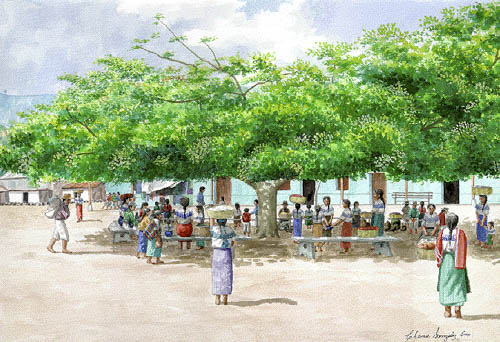 The ceiba tree that used to shade the town square in San Pedro. A market and basketball court now occupy the space. Painting by Chemz Cox, 1998. |
かつてサン・ペドロの町の広場に木陰を落としていたセイバの木。現在は、その場所に市場とバスケットボールコートが建っている。1998年、ケムズ・コックス作。 |
| The seven captives were taken to
the military base near Santiago Atitlán, where they remained ten days
while confessions were extracted from them. On November 7. 1982, they
were taken back to San Pedro for complaints to be presented. The
prisoners appeared haggard and beaten. A thousand or more people
assembled in the central square. About twenty heavily armed soldiers
guarded a cleared space between the crowd and the municipal building.
Over a loudspeaker set up for the occasion, a spokesman explained that
the military was there to protect, not to threaten, people and that
anyone seeing something wrong should tell the military authorities
about it. The speaker added that civil patrols would soon be organized
in San Pedro. The captives were held incommunicado in the local jail
for four days, and then taken to Sololá. The families of the arrested
men, like the families of their earlier victims, sought desperately to
locate captured relatives. In January 1983 we received a letter from
one of Marta's younger sons, the only truly literate member of the
family. He was working as a teacher in a remote hamlet of Uspantán, in
El Quiche. After returning from a vacation in San Pedro, he wrote to
describe the sad situation he had witnessed in Marta’s household. His
account can be paraphrased as follows: My mother is sick and depressed because my brother Adolfo is now one of the seven prisoners. I wasn't there at the time of the arrest and don't know just what happened, but everyone turned against the commissioners, condemning them in many testimonials filled with slander and false accusation. A document denouncing the commissioners was taken to the military post at Santiago Atitlán, and the men were arrested that same day. After suffering for nearly a fortnight at that post, they were handed over to the mayor of San Pedro, but he did not want to try their case. They were then transferred to Sololá, but the judge there didn't settle anything. They were then shifted to the capital, but we don't know where. My mother grieves, not knowing whether Adolfo is dead or alive. She suffers from bilis (bile attack) and hovers near death. We were sad during Christmas and New Years because a member of our family was missing. Adolfo's wife, my sister-in-law, is all undone. Together with my mother, she weeps day and night. Only God knows what's happening to Adolfo. A month later Marta wrote to say that she had learned where the prisoners were kept in Guatemala City. They were in the custody of the Second Corps of National Police. Adolfo could be set free, she wrote, in exchange for $400, a sum utterly beyond impoverished Marta’s means. She did not say who was the source of this information, but two months later, in April 1983, when we visited San Pedro, we were told that the source was Mario, the güizache with an unsavory reputation who had earlier gone with five others to the commander of the post in Santiago Atitlán to accuse Fernando of slander. None of the seven former commissioners was released. In fact, in January 1983 they were joined in jail by an eighth former commissioner, who had been arrested on new evidence implicating him in murder. He was accused of stuffng sand into the sack used to sink the last man seized by the imprisoned commissioners. The town waited for the prisoners to be sentenced, worried that the culprits would return and again terrorize the town. But the people did not sit still. A four-man delegation traveled to Guatemala City to present a petition to President Rios Montt, giving an extra copy of the document to the editors of the newspaper Prensa Libre. \ On April 12, 1983, the newspaper ran a story on the contents of the document, listing the names of the eight former commissioners and their crimes: theft, kidnapping, extortion, blackmail, rape, abuse of power, and others. According to the newspaper, "about 8,000" Pedranos (an overgenerous estimate of the town's population) demanded trial without further delay and swift application of the death penalty. The petition, said the newspaper, also named and demanded the arrest of ten additional suspects "who are still going about freely as though they hadn't done a thing." The Prensa Libre article also carried a photograph and listed the names of the petition-bearers. One of those pictured, the leader of the four-man delegation, was a man named Pedro, who was to distinguish himself—and imperil his life—as an indefatigable foe of the criminal commissioners. The eight prisoners continued to be transferred from one locality to another. From Guatemala City they were moved to Quezaltenango. By the time we visited San Pedro in April 1983, they had been moved again, this time to Huehuetenango. Months elapsed, and the prisoners still were not tried. In an effort to win freedom they resorted to a wily stratagem. Rios Montt had offered amnesty to subversives who turned themselves in, and Mejía Victores, his successor, repeated the offer. On August 12, 1983, only days after Mejía Victores assumed power, the eight prisoners signed a petition addressed to the new president, claiming that they had been members of a guerrilla faction called "lxim" and had been "100 percent subversive." They were responsible, the petition stated, for murder, blackmail, rape, and other criminal acts but were now determined to reform their ways and become loyal and productive citizens. Their request for amnesty was not granted. After the arrest of seven commissioners, including their chief, in October 1982, one of the remaining commissioners, Salvador, took over unofficially as acting chief. His companions tried to have him named official chief of a fifteen-man slate of military commissioners they proposed. The Sololá military commander accepted their proposal, but the town objected vehemently to Salvador and his cohorts. At a meeting with the commander, veterans making up San Pedro's permanent force shouted down the commander's list and insisted that he endorse their own list of fifteen, with a chief other than Salvador. The commander backed down, accepting the town's new slate. The new chief military commissioner promptly sought to gain the community's confidence by making the rounds of all the churches in town to vow that he would defend his community. |
7人の捕虜はサンティアゴ・アティトラン近郊の軍事基地に連行され、そ
こで10日間拘束され、自白を強要された。1982年11月7日、彼らは告発を行うためサン・ペドロに戻された。囚人たちは憔悴し、殴打された様子だっ
た。中央広場には1000人以上の人々が集まった。群衆と市庁舎の間の空地には、重武装した兵士約20名が警備にあたっていた。その場のために設置された
拡声器を通じて、スポークスマンは、軍は人々を脅かすためではなく守るために来ていること、そして何か不審な点を見かけた者は軍当局に報告すべきだと説明
した。また、サン・ペドロではまもなく市民パトロールが組織される予定であるとも付け加えた。捕虜たちは地元の刑務所で4日間、外部との連絡を絶たれた状
態で拘束された後、ソロラへと連行された。逮捕された男たちの家族は、以前の犠牲者の家族と同様、捕らえられた親族の行方を必死に探した。1983年1
月、私たちはマルタの末息子の一人から手紙を受け取った。彼は家族の中で唯一、文字が読める人物だった。彼はエル・キチェのウスパタンにある辺鄙な集落で
教師として働いていた。サン・ペドロでの休暇から戻った後、彼はマルタの家で目撃した悲惨な状況を綴って手紙を送ってきた。彼の証言は次のように要約でき
る: 兄のアドルフォが7人の囚人の一人となったため、母は病気で落ち込んでいる。私は逮捕の現場にいなかったし、何が起きたのか正確には知らないが、皆が委員 たちに反旗を翻し、中傷や虚偽の告発に満ちた多くの証言で彼らを非難した。委員たちを告発する文書がサンティアゴ・アティトランの軍駐屯所に届けられ、そ の日のうちに彼らは逮捕された。その駐屯所で2週間近く苦しんだ後、彼らはサン・ペドロの市長に引き渡されたが、市長は彼らの裁判を行うことを拒んだ。そ の後、彼らはソロラに移送されたが、そこの判事も何の決着もつけなかった。さらに首都へ移送されたが、どこへ連れて行かれたのかは分からない。 母はアドルフォが生きたままなのか死んだのか分からず、悲しみに暮れています。母は胆汁発作を患っており、死の淵にいます。家族の一人が行方不明だったた め、クリスマスと新年は悲しみに包まれました。アドルフォの妻、つまり私の義姉は取り乱しています。母と共に、彼女は昼夜を問わず泣き続けています。アド ルフォに何が起きているのか、神のみぞ知ることです。 一ヶ月後、マルタから手紙が届き、グアテマラシティで囚人たちがどこに収容されているかを知ったと伝えてきた。彼らは国家警察第2部隊の管理下にあった。 手紙には、400ドルを支払えばアドルフォは解放されるかもしれないと書かれていたが、それは貧困に苦しむマルタには到底払える額ではなかった。 彼女はこの情報の出所については明かさなかったが、2ヶ月後の1983年4月、私たちがサン・ペドロを訪れた際、その出所はマリオだと聞かされた。マリオ とは、以前、サンティアゴ・アティトランの駐屯地司令官のもとへ他の5人と共に赴き、フェルナンドを誹謗中傷で告発した、評判の悪い「グイサチェ(密告 者)」である。 7人の元委員のうち、釈放された者は一人もいなかった。実際、1983年1月には、殺人への関与を示す新たな証拠により逮捕された8人目の元委員が、彼ら に加わって収監された。彼は、投獄中の委員たちが拘束した最後の男性を沈めるために使われた袋に砂を詰め込んだとして告発されていた。町の人々は、犯人た ちが戻ってきて再び町を恐怖に陥れるのではないかと懸念し、囚人たちの判決を待っていた。しかし、人々はただ手をこまねいてはいなかった。4人の代表団が グアテマラシティへ赴き、リオス・モント大統領に請願書を提出するとともに、その写しを新聞『プレンサ・リブレ』の編集部に手渡した。 \ 1983年4月12日、同紙は請願書の内容を報じ、8人の元委員の名前と、窃盗、誘拐、恐喝、脅迫、強姦、職権乱用などの罪状を列挙した。同紙によれば、 「約8,000人」のペドラノ住民(町の人口を過大に見積もった数字)が、遅滞なき裁判と死刑の迅速な執行を要求した。また同紙は、請願書には「まるで何 事もなかったかのように依然として自由に行き来している」追加の容疑者10名の氏名も記載され、その逮捕が求められていたと報じた。『プレンサ・リブレ』 の記事には写真も掲載され、請願書の署名者の名前が列挙されていた。写真に写っていた4人の代表団のリーダーの一人はペドロという男で、彼は犯罪者たちの 手先に対する不屈の敵として名を馳せ、そのために自らの命を危険にさらすことになる。 8人の囚人は、各地へと移送され続けた。グアテマラシティからケサルテナンゴへ移送された。1983年4月に私たちがサン・ペドロを訪れた頃には、彼らは 再び移送され、今度はウエウエテナンゴにいた。数ヶ月が経過したが、囚人たちは依然として裁判にかけられていなかった。自由を勝ち取るため、彼らは狡猾な 策略に訴えた。リオス・モントは自首した反体制派に恩赦を提示しており、後任のメヒア・ビクトレスもその提案を繰り返した。1983年8月12日、メヒ ア・ビクトレスが政権を掌握してわずか数日後、8人の囚人は新大統領宛ての嘆願書に署名し、自分たちが「リシム」と呼ばれるゲリラ組織の構成員であり、 「100パーセント反体制派」であったと主張した。請願書には、彼らが殺人、恐喝、強姦、その他の犯罪行為に関与していたが、今は改心し、忠実で生産的な 市民になる決意であると記されていた。しかし、彼らの恩赦請求は認められなかった。 1982年10月、委員長を含む7人の委員が逮捕された後、残った委員の一人であるサルバドールが非公式に代理委員長を引き受けた。彼の仲間たちは、彼ら が提案した15人の軍事委員名簿の正式な委員長に彼を指名するよう働きかけた。ソロラ軍事司令官は彼らの提案を受け入れたが、町民はサルバドールとその一 派に激しく反対した。司令官との会合で、サン・ペドロの常備部隊を構成する退役軍人たちは、司令官が提示した名簿を大声で非難し、サルバドール以外の者を 委員長とする自分たちの15名の名簿を承認するよう強く求めた。司令官は折れ、町の新たな名簿を受け入れた。新任の軍事委員長は、直ちに町のすべての教会 を巡回し、地域社会を守ることを誓うことで、住民の信頼を得ようと努めた。 |
 "Nos Obligaron a Patrular," we are obligated to patrol. During the time of violence, in addition to the military, the government of Guatemala required able body men to patrol areas of Guatemala. Painting by Mario González Chavajay, 2007. Collection: Rita Moran: mayawomeninart.org |
「Nos Obligaron a Patrular(パトロールを強いられた)」――私たちはパトロールを強いられた。暴力が横行していた当時、グアテマラ政府は軍に加え、健常な男性たち に国内各地のパトロールを義務付けた。マリオ・ゴンサレス・チャバハイ作、2007年。所蔵:リタ・モラン:mayawomeninart.org |
| With a trusted complement of
commissioners in place, Pedranos at last consented, late in November,
to organize a "voluntary" civil patrol system consisting of all
able-bodied men between the ages of eighteen and fifty, a force of more
than 1,000 divided into squads and platoons with rotating on-duty
assignments. Before the change of commissioners, Pedranos had resisted
pressure from the army to institute a civil patrol system. In San
Pedro, as elsewhere, the civil patrol serves under the command of the
chief commissioner, who takes his orders from the army command in
Sololá. The new chief commissioner was replaced after about a year of
service because of personal shortcomings: he had a weakness for women
and drink. On October 5, 1983, he was succeeded by Lencho, a
thirty-four-year-old Pedrano with an unimpeachable character, who was
to sacrifice his life in the service of his community. As 1983 drew to a close, five more former commissioners were arrested, four of them among the ten named in the April 12 newspaper article as collaborators still at large. They were detained in Sololá but were released after a fortnight. Another, more enduring year-end development was the dismissal of Jorge from the mayor's office by a colonel named Rébuli, who assumed command of Military Zone 14 on November 1,1983. Colonel Rébuli was asked to attend a meeting in San Pedro to hear complaints against Jorge, who was accused of being party to the plans and crimes of the former commissioners. It was pointed out, for instance, that before one abduction Jorge told the prospective victim that he was on the blacklist and would be killed. Realizing that the town was rebelling against the authority of a leader who worked against their interests, the commander told the mayor: "Jorge, the town doesn't want you any more. Resign!" Jorge did so. Colonel Rébuli was well regarded in San Pedro not only because he had agreed to make Jorge step down but also because he had seen fit to send a one-hundred-pound sack of black beans and five sacks of corn to each of the widows of kidnapped Pedrano men. Unfortunately for San Pedro, Rébuli did not live long enough to authorize the appointment of Jorge's successor. On November 20, 1983, the colonel was killed in an ambush near Cerro de Oro on a side of the lake distant from San Pedro. To replace Jorge, the town had installed a mayor they could trust, but after one week of service he had to vacate his office to make room for the Pedrano selected by authorities in Sololá. With the untimely death of Colonel Rébuli, the conspiring supporters of the deposed mayor apparently could exert enough influence in Sololá to block the appointment of a person who would be their enemy. The mayor selected by Sololá was the man who had been vice-mayor under Jorge and who had assumed office at the same time (June 16, 1982). He became mayor on December 3, 1983. Most townsmen did not think he had collaborated with the evil former commissioners, although some citizens had reason to believe that he would be less than forceful in pressing the town's case against the criminals still walking the streets. Colonel Rebuli was presumably killed by guerrilla forces. The ORPA guerrillas took credit for the action, claiming in a publicity release that the deed was in retaliation for the fierce counterinsurgency campaigns the colonel had launched in the departments of San Marcos and Quezaltenango before his appointment as commander of the Sololá military zone. Nevertheless, some Pedranos suspect that Jorge and his cronies had a hand in Rébuli's assassination. The year 1984 passed without major incident, thanks to the determination and unimpeachable character of Lencho, the new chief commissioner. In sharp contrast to the imprisoned Jacinto, who had used his position to prey on his own people, Lencho was unswervingly responsive to the interests of his community, to his Protestant church (Pentecostés de America), and to his wife and three small children. He divided his time between work in the field and his official duties. Each day he mustered the men on civil patrol duty. Periodically he traveled to Sololá to report to a lieutenant named Rolando, his contact in military zone headquarters. Members of the old gang still at liberty tried to draw him into their orbit, to make him play their game. They tried unsuccessfully to extort three hundred dollars from him. Antagonized by his rectitude, they sought ways to undermine his standing with the army. "If they kill me, let them kill me." Lencho told his townspeople. Since he was not paid for his service as chief commissioner, Lencho had trouble meeting the cost of traveling to Sololá by launch and bus. He had been orphaned at an early age, had inherited little land, and always had to work hard for a living. The permanent force, realizing that in Lencho the town at last had found a staunch defender, suggested that each member of the civil patrol contribute five cents a month to pay Lencho's transportation costs. Out of the fifty dollars a month thus raised, Lencho was given seven dollars each time he had to make an official trip. Salvador, piqued that he had been rejected as chief commissioner after Jacinto was arrested, informed the military intelligence unit in Sololá that Lencho was illegally taxing the personnel of the civil patrol. Lencho was summoned to Sololá for questioning. Although the military officers seemed to accept his explanation that the idea of a collection was not his but that of the permanent force, he resolved nevertheless to accept no more money for trips. When Lencho was asked to turn in allegedly subversive Pedranos, he refused to cooperate without proof of culpability, pointing out that killing an innocent person went against the word of God. His protective policy, which won no favor with the military forces or their local collaborators, was demonstrated in December 1984 when soldiers arrived from Sololá to seize a certain Pedrano. The soldiers woke up Lencho late at night, ordering him to turn the man over to them, it being the responsibility of a town's chief military commissioner to approve an army arrest order. Lencho would not sanction the order, insisting that a hearing must be held the next day to consider charges and evidence. The inquiry that followed revealed a chain of events that began with Marta and her daughter-in-law, the women who had wept together during the 1982 year-end holidays when the whereabouts of Adolfo, their arrested son and husband, was unknown. The episode throws a shaft of light on the kinds of behind-the-scenes motives and maneuvers that can prompt "disappearances." Marta knew from the start, of course, that her son Adolfo was a military commissioner. But for months she was apparently unaware that the commissioners were involved in the kidnappings. Her letters had expressed shock at the abduction in September 1980 of the baker Francisco and other abductions that followed. After mid-1981, however, she ceased writing. The tavern quarrel between Adolfo and his brother-in-law that resulted in the latter's death occurred about six weeks after Marta's last letter. In mid-1982, after a year of silence, she wrote again to say that she was deathly ill, but the letter made no mention of the continuing string of kidnappings or the murder scandal involving her son Adolfo. For more than a year following the arrest of Adolfo and other commissioners, Adolfo's wife and two small children continued to live in their tiny cane-walled hut adjoining Marta's house. The two women shared their meals and their sorrows. But at the end of 1984, Adolfo's wife became interested in another man, who had courted her before she married Adolfo. Marta flew into a rage on discovering the lovers alone in a closed room. The younger woman left Marta's home and took up residence in her parents' compound. Marta, possibly encouraged by former associates of her imprisoned son, sought out a military officer temporarily in town to denounce the man who had stolen her daughter-in-law's affections. Marta claimed that he was a subversive. And that is why soldiers woke up Lencho one night in December and told him to order the capture of this supposedly subversive Pedrano. The ensuing inquiry disclosed that the army was acting on derogatory information supplied by Marta. Called in to explain the basis for her accusation, Marta told the investigating officer that the man delivered food to guerrillas hiding in the hills and held guerrilla meetings in his house. When asked how she knew these things, she replied that she got the information from the man's seven-year-old daughter while she and the girl were washing clothes on the shore of the lake. The girl was summoned and swore that she had never said what Marta claimed she had said. It developed, moreover, that the two customarily did their washing at different locations on the lake. Lencho and others testified that the accused man was a good worker and a law-abiding citizen. With no proof that he consorted with guerrillas, the case against him was dropped Lencho's determination to protect the lives of innocent Pedranos did not please collaborators of the imprisoned commissioners, who, therefore, accused Lencho of supporting the guerrilla cause. Military authorities confronted Lencho with the fact that he was not turning in anyone from San Pedro. He stood his ground, asserting that the accusers lied and that no man should be condemned without a hearing. While Lencho was earning the people's gratitude for courage under pressure, his elderly uncle Pedro was leading a struggle to prevent the eight prisoners from being set free. As indicated earlier, Pedro had led the four-man delegation that gave the newspaper a copy of the town's petition urging Ríos Montt to speed the trial of the arrested former commissioners and to effect the arrest of ten additional suspects named in the document. For a long time the prisoners were shunted from one city to another without trial. |
信頼できる委員団が整ったことで、ペドラノスは11月下旬、ついに18
歳から50歳までの健常な男性全員で構成される「自発的」な市民パトロール制度の組織化に同意した。これは1,000人以上の部隊であり、小隊や分隊に分
けられ、当番制で交代勤務を行うものだった。委員が交代する前、ペドラノスは軍からの市民パトロール制度導入の圧力に抵抗していた。サン・ペドロでも他の
地域と同様、市民パトロールは首席委員長の指揮下で活動しており、同委員長はソロラにある陸軍司令部から命令を受けている。新任の首席委員長は、女性や酒
に目がないという個人的な欠点のため、約1年の任期を経て交代することになった。1983年10月5日、彼の後任として、非の打ち所のない人柄を持つ34
歳のペドラノ人、レンチョが就任した。彼は地域社会への奉仕の過程で命を落とすこととなる。 1983年が終わりに近づくにつれ、さらに5人の元委員長が逮捕された。そのうち4人は、4月12日の新聞記事で「依然として逃亡中の協力者」として名指 しされた10人のうちであった。彼らはソロラで拘束されたが、2週間後に釈放された。年末のもう一つの、より長期にわたる動きは、1983年11月1日に 第14軍管区の指揮を執ったレブリ大佐による、ホルヘの市長職からの解任であった。 レブリ大佐は、サン・ペドロでの会議に出席し、元委員たちの計画や犯罪に加担したとして告発されていたホルヘに対する苦情を聞くよう求められた。例えば、 ある拉致事件の前に、ホルヘが被害者となる予定の男性に対し、「お前はブラックリストに載っており、殺されるだろう」と告げていたことが指摘された。町民 が自分たちの利益に反する行動をとる指導者の権威に反旗を翻していることを悟った司令官は、市長にこう告げた。「ホルヘ、町はもはやお前を望んでいない。 辞めろ!」ホルヘはそれに従った。 レブリ大佐は、ホルヘの辞任を受け入れただけでなく、拉致されたペドラノの男性たちの未亡人一人ひとりに、100ポンド入りの黒豆の袋1つとトウモロコシ の袋5つを送ることを適切と判断したため、サン・ペドロで高く評価されていた。サン・ペドロにとって不幸なことに、レブリはホルヘの後任の任命を承認する まで生き延びることができなかった。1983年11月20日、大佐はサン・ペドロから離れた湖畔のセロ・デ・オロ付近で待ち伏せ攻撃を受け、殺害された。 ホルヘの後任として、町は信頼できる市長を据えたが、就任から1週間で、ソローラ当局が選んだペドラノ出身者に席を譲るため、その職を退かなければならな かった。レブリ大佐の早すぎる死により、罷免された元市長の支持者たちは、ソローラにおいて十分な影響力を行使し、自分たちの敵となる人物の任命を阻止で きたようだ。ソローラが選んだ市長は、ホルヘの下で副市長を務め、彼と同時に(1982年6月16日)就任した人物であった。彼は1983年12月3日に 市長に就任した。町民の多くは、彼が邪悪な元委員たちと共謀していたとは考えていなかったが、一部の市民は、依然として街を徘徊する犯罪者たちに対する町 の訴えを、彼が十分に力強く推し進めることはないだろうと信じる理由を持っていた。 レブリ大佐はおそらくゲリラ部隊によって殺害された。ORPAゲリラはこの犯行を自認し、プレスリリースで、この行為はレブリ大佐がソロラ軍事地区司令官 に任命される前にサン・マルコス県とケサルテナンゴ県で展開した激しい対ゲリラ作戦への報復であると主張した。それにもかかわらず、ペドラの住民の中に は、ホルヘとその取り巻きがレブリの暗殺に関与していたのではないかと疑う者もいた。 1984年は、新任の首席委員レンチョの断固たる決意と非の打ち所のない人柄のおかげで、大きな事件もなく過ぎ去った。自らの地位を利用して同胞を搾取し ていた収監中のハシントとは対照的に、レンチョは地域社会の利益、自身が所属するプロテスタント教会(ペンテコステス・デ・アメリカ)、そして妻と3人の 幼い子供たちに対して、揺るぎない献身を示していた。彼は現場での活動と公務の間に時間を割いていた。毎日、市民パトロール任務に就く男たちを召集した。 定期的にソロラへ赴き、軍事地区本部の連絡役であるロランド中尉に報告を行った。まだ自由の身だった旧勢力のメンバーたちは、彼を自分たちの勢力圏に引き 込み、自分たちのゲームに参加させようと画策した。彼らは彼から300ドルをゆすり取ろうとしたが、失敗に終わった。彼の正直さに反感を抱いた連中は、軍 内での彼の立場を揺るがす方法を模索した。「殺すなら殺せばいい」とレンチョは町の人々に語った。 首席委員としての職務には報酬がなかったため、レンチョはモーターボートやバスでソロラへ行く旅費を工面するのに苦労していた。彼は幼くして孤児となり、 相続した土地もわずかで、生計を立てるために常に懸命に働かなければならなかった。常駐部隊は、町がようやくレンチョという堅固な守護者を得たことを悟 り、市民パトロールの各メンバーが毎月5セントを拠出し、レンチョの交通費に充てるよう提案した。こうして集められた月50ドルのうち、レンチョは公務で 出向くたびに7ドルを受け取ることになった。ハシントが逮捕された後、首席委員の座を拒絶されたことに腹を立てたサルバドールは、ソロラの軍事情報部に、 レンチョが市民パトロールの隊員から違法に徴収を行っていると通報した。レンチョは取り調べのためソロラへ召喚された。徴収の案は自分ではなく常駐部隊の 発案であるという彼の説明を軍将校たちは受け入れたようだったが、彼はそれにもかかわらず、出張のための金を受け取らないと決心した。 レンチョは、反体制派とされるペドラノ一族を引き渡すよう求められた際、有罪の証拠がない限り協力しないと拒否し、無実の人を殺すことは神の言葉に背くこ とだと指摘した。軍やその地元の協力者たちからは好意を持たれなかった彼の保護政策は、1984年12月、ソロラから兵士たちがやって来てあるペドラノを 連行しようとした際に明らかになった。兵士たちは深夜にレンチョを起こし、その男を引き渡すよう命じた。軍の逮捕令状を承認するのは、町の軍事委員長の責 任であったからだ。レンチョはその命令を承認せず、翌日に聴聞会を開き、容疑と証拠を検討すべきだと主張した。その後の調査により、一連の出来事が明らか になった。その端緒は、1982年の年末休暇中、逮捕された息子であり夫であるアドルフォの行方が分からず、共に涙を流したマルタとその嫁に遡る。この出 来事は、「失踪」を引き起こしうる、舞台裏の動機や駆け引きの一端を浮き彫りにしている。 もちろん、マルタは当初から息子のアドルフォが軍事委員であることを知っていた。しかし数ヶ月の間、彼女は委員たちが拉致に関与していることを明らかに知 らなかったようだ。彼女の手紙には、1980年9月のパン職人フランシスコの拉致や、それに続く他の拉致事件に対する衝撃が綴られていた。しかし1981 年半ば以降、彼女は手紙を書くのをやめてしまった。マルタの最後の手紙から約6週間後、アドルフォと義理の兄弟との間で酒場での口論が起こり、義理の兄弟 が死亡した。1982年半ば、1年間の沈黙を経て、彼女は再び手紙を書き、自分が重病であることを伝えたが、その手紙には、相次ぐ拉致事件や、息子のアド ルフォが関与した殺人スキャンダルについては一切触れられていなかった。 アドルフォや他の委員たちが逮捕されてから1年以上、アドルフォの妻と2人の幼い子供たちは、マルタの家に隣接する小さな葦壁の小屋で暮らし続けた。二人 の女性は食事も悲しみも分かち合った。しかし1984年の終わり頃、アドルフォの妻は、アドルフォと結婚する前に求愛していた別の男性に興味を抱くように なった。密室で二人きりになっている恋人たちの姿を目撃したマルタは激怒した。若い女性はマルタの家を出て、実家の敷地内に身を寄せた。マルタは、投獄さ れた息子の旧知の仲間に煽られたのか、一時的に町に滞在していた軍将校を訪ね、息子の妻の心を奪った男を告発した。マルタは、その男が反体制分子だと主張 した。それゆえ、12月のある夜、兵士たちがレンチョを起こし、この「反体制分子」とされるペドラノの逮捕を命じるよう告げたのである。 その後の調査で、軍がマルタから提供された中傷的な情報に基づいて行動していたことが明らかになった。告発の根拠を説明するよう求められたマルタは、調査 官に対し、その男が丘に潜伏するゲリラに食料を届け、自宅でゲリラの会合を開いていたと語った。どうやってそれを知ったのかと問われると、彼女は、湖の岸 でその男の7歳の娘と一緒に洗濯をしていた時に情報を得たと答えた。少女は呼び出され、マルタが主張するようなことは決して言っていないと断言した。さら に、二人は普段、湖の別々の場所で洗濯をしていたことが判明した。レンチョら証人は、被告人が勤勉で法を守る市民であると証言した。ゲリラと結託した証拠 がないため、彼に対する訴追は取り下げられた 無実のペドラノの人々の命を守ろうとするレンチョの決意は、投獄された委員たちの協力者たちの意に反し、彼らはレンチョをゲリラを支援していると告発し た。軍当局は、レンチョに対し、サン・ペドロの住民を誰一人として密告していないという事実を突きつけた。彼は動じることなく、告発者たちは嘘をついてい ると主張し、審理なしに誰をも有罪にしてはならないと断言した。 レンチョがプレッシャーの中でも勇気を示し、人々の感謝を集めていた一方で、彼の年老いた叔父ペドロは、8人の囚人が釈放されるのを阻止するための闘いを 率いていた。前述の通り、ペドロは4人の代表団を率いて新聞社に町の請願書の写しを提出していた。その請願書は、逮捕された元委員たちの裁判を早急に進 め、文書に名指しされた追加の容疑者10名の逮捕を実行するよう、リオス・モントに強く求めていた。長い間、囚人たちは裁判を受けることなく、ある都市か ら別の都市へと移送され続けていた。 |
 "El Encarcelado de San Pedro la Laguna," (a prisoner in San Pedro la Laguna) by Mariano González Chavajay. The families of jailed people are responsible for providing food. Collection: Arte Maya Tzutuhil. |
マリアーノ・ゴンサレス・チャバハイ作『エル・エンカルセラド・デ・サン・ペドロ・ラ・ラグーナ』(サン・ペドロ・ラ・ラグーナの囚人)。投獄された人々の家族は、食糧を調達する責任を負っている。コレクション:アルテ・マヤ・ツトゥヒル。 |
| Finally on February 28, 1984,
sixteen months after they had been arrested, their sentences were
pronounced. Jacinto, who had been chief military commissioner, was
sentenced to serve twelve years in prison; Adolfo, second-in-command,
ten years; the six others, two to four years each. The convicted men
were committed to the Cantel penal colony near Quezaltenango. They had
served only a fraction of their time, however, when rumors began to
reach San Pedro that they would soon be released. To forestall this
unwanted development, Pedro, the indefatigable foe of the former
commissioners, traveled repeatedly to Sololá, presenting evidence and
submitting documents designed to persuade authorities to keep the
culprits safely locked up. Such was the situation through the end of 1984 and the beginning of 1985—Pedro fending off efforts to set the prisoners free, his nephew Lencho fending off attempts to capture alleged subversives—when a tragic blow rocked the town. Nephew and uncle were seized and brutally murdered, their corpses discovered at dawn on Wednesday, February 27, 1985. |
ついに1984年2月28日、逮捕から16か月を経て、判決が言い渡さ
れた。軍事委員長を務めていたハシントには懲役12年、副委員長のアドルフォには10年、残りの6人にはそれぞれ2年から4年の刑が言い渡された。有罪判
決を受けた男たちは、ケサルテナンゴ近郊のカンテル刑務所に移送された。しかし、彼らが刑期のほんの一部しか服役していないうちに、サン・ペドロには彼ら
がまもなく釈放されるという噂が流れ始めた。この望ましくない事態を未然に防ぐため、元委員たちの不屈の敵であるペドロは、ソローラへ何度も足を運び、当
局に犯人たちを確実に収監し続けるよう説得するための証拠や書類を提出した。 1984年の終わりから1985年の初めにかけて、ペドロは囚人の釈放を阻止し、甥のレンチョは反体制派とされる者たちの逮捕を阻止するという状況が続い ていたが、その時、悲劇的な出来事が町を震撼させた。甥と叔父は拉致され、残忍に殺害され、その遺体は1985年2月27日(水)の夜明けに発見された。 |
| https://www.artemaya.org/death_ii.htm |
☆
★Benjamin D. Paul, Stanford University & William Demarest, The Operation of a Death Squad in San Pedro la Laguna. 1988. [ウェブページにリンク]
| Chapter Three The Tragic Blow The impending calamity had cast its shadow on San Pedro one night a week earlier, when two strangers were seen walking about the town at 9:00 p.m. a Pedrano on civil patrol duty informed Lencho that an alguacil (errand man in the municipal service system) was showing the strangers the houses of military commissioners. When Lencho asked what the strangers were up to, the alguacil replied that they had been hired as boatmen by his uncle, the owner of a tavern and of several launches. Lencho found the two strangers at the boat owners tavern. They were drinking with the proprietor and Jorge, the man who had been imposed and deposed as mayor of San Pedro. The strangers identified themselves as army agents and told Lencho that they were investigating a matter that did not concern him. A day or two later, heeding the advice of fellow commissioners, Lencho had a memorandum drawn up at town headquarters. It stated that if a commissioner disappeared the alguacil would he held responsible. On Tuesday, February 26, 1985, Lencho went to plant corn on his brother-in-law's land. At home in the late afternoon he was visited by a neighbor who had just returned by boat from Panajachel. The visitor reported that Lencho’s uncle Pedro had not come back on the afternoon launch. As Pedro was about to board the boat in Panajachel the day before, he had been suddenly summoned to appear in Sololá and had asked a passenger to tell his wife that he would be home the next day. But Pedro had not returned. This news troubled Lencho. He went out to supervise the rotation of the civil patrol, urging the men to be particularly alert that night. Instead of eating his dinner, he decided to confer with one of his church brethren. That evening he did not attend church service. He was distraught, stayed up late, joined his wife in prayers, and eventually went to bed. |
第三章 悲劇的な一撃 一週間前の夜、サン・ペドロには差し迫った災難の影が落ちていた。午後9時頃、2人の見知らぬ男が町を歩き回っているのが目撃されたのだ。市民パトロール 当番のペドラノの住民がレンチョに、アルグアシル(自治体の用務係)が、その見知らぬ男たちに軍事委員の家々を案内していることを伝えた。レンチョが、そ の見知らぬ者たちが何をしているのかと尋ねると、アルグアシルは、酒場の主人であり数隻の小型船を所有する自分の叔父に、船頭として雇われたのだと答え た。レンチョは、その船主の酒場で二人の見知らぬ者を見つけた。彼らは、店主と、サン・ペドロの市長として押し付けられ、その後解任されたホルヘと共に酒 を飲んでいた。見知らぬ者たちは自分たちが軍の代理人であると名乗り、レンチョには関係のない件を調査しているのだと告げた。その一、二日後、他の委員た ちの助言に従い、レンチョは町役場で覚書を作成させた。そこには、委員が一人でも行方不明になった場合、アルグアシルがその責任を負うことが明記されてい た。 1985年2月26日火曜日、レンチョは義理の兄弟の土地でトウモロコシを植えるために出かけた。夕方遅く、自宅にパナハチェルからボートで戻ったばかり の隣人が訪ねてきた。その訪問者は、レンチョの叔父ペドロが午後の船で戻ってこなかったと報告した。前日、ペドロがパナハチェルで船に乗ろうとした際、突 然ソロラへ出頭するよう呼び出され、乗客に妻へ「明日には帰る」と伝えてほしいと頼んでいた。しかし、ペドロは戻ってこなかった。 この知らせにレンチョは心を痛めた。彼は市民パトロールの交代を監督するために外へ出ると、その夜は特に警戒を怠らないよう男たちに促した。夕食をとる代 わりに、教会の兄弟の一人と相談することにした。その晩、彼は礼拝には出席しなかった。彼は取り乱し、夜遅くまで起きていたが、妻と共に祈りを捧げ、やが て寝床についた。 |
 El Ultimo Grito," the last cry. Painting by Mario González Chavajay, 2001. |
『エル・ウルティモ・グリト(最後の叫び)』。マリオ・ゴンサレス・チャバハイ作、2001年。 |
| Around
midnight Lencho's sister answered a knock on the door. The callers said
that they were looking for Lencho. She assumed that they were civil
patrollers with some routine problem that could wait and told them that
her brother was not there. She knew that Lencho had worked hard in the
field that day, and she did not want to disturb his sleep. The men left
but soon came back and broke in forcibly. Lencho's wife rose, snapped
on the lights, and saw four armed men in civilian clothes, their faces
hidden by woolen gorras (stocking caps). "Fetch Lencho and make it
fast," they demanded. She went to the other room and warned Lencho,
"They want to grab and kill you." "Very well," replied Lencho. "Bring
me my pants and shirt and jacket." "Hurry up. It's urgent," the men
commanded. Lencho entered the lighted room and calmly addressed a man
in the doorway whose gorra was pulled halfway up: "Buenos noches, mi
teniente Rolando." The man jerked the gorra down over his face. The
captors swiftly bound Lencho's arms and hustled him into the street.
"Adios, Mama," were Lencho's last words. Lencho's wife, joined by his sister and brother, tried to run after the men, but they spun around and ordered, "Stay back or be killed." The three doubled back and reached the main street in time to see a yellow pickup turn the corner and head up the road toward Santiago Atitlán. A lone civil patrolman on duty saw the vehicle coming; his companions were taking a coffee break. He signaled the pickup to stop, but it raced on. The three relatives ran to the town center to report the abduction to the municipal guards and the on-duty commissioners. The church bells rang as they had never rung before, waking the town. By half-past midnight a great crowd had formed to learn what had happened to Lencho. Women sobbed. Men shouted: "Make a list! Let's get them?" They first rushed to seize the alguacil and forced him to name his accomplices. He named his uncle, the boat owner; he named Salvador, Jorge, Mario, others. The elicited names only confirmed what the enraged citizens had long suspected. They did not need to draw up a list. In their collective mind they had already identified at least fifteen resident enemies, including the ten suspects listed in the petition Pedro and three companions had presented to the president and the press nearly two years earlier. |
真
夜中頃、レンチョの姉がドアをノックする音に応じました。訪ねてきた男たちは、レンチョを探していると言いました。彼女は、彼らが日常的な用件で来た市民
パトロール隊員だろうと思い、それは後回しにできることだと判断して、兄はいないと伝えました。その日、レンチョが畑で懸命に働いていたことを知っていた
彼女は、彼の睡眠を妨げたくなかったのです。男たちは一旦立ち去りましたが、すぐに戻ってきて、無理やり押し入りました。レンチョの妻は起き上がり、電気
を点けると、ウールのゴラ(ニット帽)で顔を隠した、武装した私服の男4人の姿が見えた。「レンチョを連れて来い、急げ」と彼らは要求した。彼女は別の部
屋へ行き、レンチョに「奴ら、あなたを捕まえて殺そうとしているわ」と警告した。「わかった」とレンチョは答えた。「ズボンとシャツ、ジャケットを持って
きてくれ」
「急げ。急ぎだ」と男たちは命じた。レンチョは明かりのついた部屋に入り、ドアの脇でゴラを半分まで引き上げた男に冷静に声をかけた。「ブエノス・ノチェ
ス、ミ・テニエンテ・ロランド」男はゴラを顔まで引き下ろした。連行者たちは素早くレンチョの両腕を縛り、彼を路上へと引きずり出した。「アディオス、マ
マ」それがレンチョの最後の言葉だった。 レンチョの妻は、妹と弟を連れて男たちの後を追おうとしたが、男たちは振り返り、「近づくな、さもなくば殺す」と命じた。三人は引き返し、大通りにたどり 着いた時には、黄色いピックアップトラックが角を曲がり、サンティアゴ・アティトラン方面へと走り去るのを目撃した。勤務中の民間パトロール隊員が一人、 その車両が近づいてくるのを見かけた。彼の仲間たちはコーヒーブレイク中だった。彼はピックアップに停止を合図したが、車は猛スピードで走り去った。 3人の親族は町の中心部へ駆けつけ、市警と当直の委員たちに拉致の件を報告した。教会の鐘がかつてないほど激しく鳴り響き、町を目覚めさせた。真夜中を過 ぎた頃には、レンチョに何が起きたのかを知ろうと大勢の人だかりができていた。女性たちは泣きじゃくり、男性たちは叫んだ。「リストを作れ!捕まえよ う!」と叫んだ。彼らはまずアルグアシル(治安判事)に飛びかかり、共犯者の名を吐かせた。彼は、船の所有者である叔父、そしてサルバドール、ホルヘ、マ リオ、その他数名の名前を挙げた。聞き出された名前は、激怒した市民たちがかねてから疑っていたことを裏付けるだけだった。彼らは名簿を作成する必要など なかった。彼らの集合意識の中では、ペドロと三人の仲間がほぼ二年前に大統領と報道陣に提出した請願書に挙げられた十人の容疑者を含め、少なくとも十五人 の敵対者がすでに特定されていたのだ。 |
 "La captura de los comisionados Militrais," the capture of the militray commissioners. This is the only painting I know of that depicts a specific event in the history of the death squads in San Pedro. Painting by Mariano González Chavajay. |
「ミリトライス委員らの捕縛」。これは、サン・ペドロの死の部隊の歴史における特定の出来事を描いた、私が知る限り唯一の絵画である。マリアーノ・ゴンサレス・チャバハイ作。 |
| That
night the mob captured as many of the fifteen as they could find. The
boat owner and some others could not immediately be found. When they
entered Salvador's house, his wife tried to hold them off with a
machete. They knocked it from her hand and searched the premises. They
found Salvador hiding in a clump of bushes, beat him soundly to make
him confess and name co-conspirators, and hauled him off to jail. They
nearly killed another man when they pulled him out of his house. In
their rage they destroyed suspects' property. Not finding Jorge in his
house, they proceeded to wreck his television and smash his stereo set.
Jorge, who was hiding elsewhere, turned himself in after the fury had
abated. By 1:30 a.m., a document had been drawn up in the town hall setting forth the facts and circumstances that would provide the basis for later legal proceedings. It stated that Lencho had been abducted at 12:01 a.m. on February 27. Referring to the memorandum drawn up a few days earlier, it implicated the alguacil, the two disguised military men he was escorting, the boat owner, and others. It accused the alleged conspirators of holding secret meetings at such-and-such a time and place, etc. Before daybreak, Lencho's brother and several military commissioners who had served under Lencho left for Sololá to get help from army officials but reportedly found them unsympathetic. At dawn another Pedrano drove off toward Santiago Atitlán to get firewood. Three miles out of town at a place called Xequistel he came upon the bodies of Lencho and Pedro. Their throats had been cut, and they had been stabbed in the chest. Hanks of hair had been torn from their heads. Pedro's wrists and ankles were bound with nylon cord. Blood and skin were found on the trunk of a tree to which one of the victims had apparently been tied. When they heard the dismaying news, many Pedranos hurried to Xequistel to recover the bodies. The corpses were taken to Sololá for autopsy and returned to San Pedro for burial. That day more of the wanted fifteen were seized and jailed. The next day, Thursday, the last of the fifteen were rounded up. Newspaper reporters arrived the same day to photograph the jailed suspects, take pictures of the thousands of mourners in the funeral procession, and hear Lencho's widow tell how her husband was kidnapped. Soldiers arrived to take the captured men to Sololá. |
そ
の夜、暴徒たちは15人のうち見つけられる限りの者を捕らえた。船の所有者やその他数名は、すぐには見つからなかった。彼らがサルバドールの家に入ると、
妻がマチェーテで抵抗しようとした。暴徒たちは彼女の手からマチェーテを叩き落とし、家の中を捜索した。茂みに隠れていたサルバドールを見つけ出すと、自
白させ共犯者の名前を吐かせるために激しく殴打し、刑務所へと連行した。彼らは別の男を家から引きずり出した際、殺しかけた。怒りに任せて、容疑者たちの
所有物を破壊した。ホルヘが家にいないことを確認すると、彼らは彼のテレビを壊し、ステレオセットを粉砕した。別の場所に隠れていたホルヘは、騒ぎが収
まった後に自首した。 午前1時30分までに、後の法的手続きの基礎となる事実と状況を記した文書が町役場で作成された。そこには、レンチョが2月27日午前0時1分に拉致され たと記されていた。数日前に作成された覚書に言及し、アルグアシル、彼が護衛していた変装した軍人2名、ボートの所有者、その他数名を関与させた。また、 容疑者たちが特定の時間と場所で秘密の会合を開いていたなどと非難していた。 夜明け前、レンチョの兄と、かつてレンチョの下で仕えていた数名の軍事委員が、軍当局に助けを求めるためソロラへ向かったが、伝えられるところによれば、 当局は冷淡な態度だったという。夜明け頃、別のペドラノの住民が薪を調達するためにサンティアゴ・アティトランへと車で向かった。町から3マイル離れた シェキステルと呼ばれる場所で、彼はレンチョとペドロの遺体を発見した。二人の喉は切り裂かれ、胸部を刺されていた。頭からは一房の髪が引き抜かれてい た。ペドロの手首と足首はナイロン紐で縛られていた。犠牲者の一人が縛られていたと思われる木の幹には、血と皮膚が付着していた。この衝撃的な知らせを聞 いた多くのペドラノの住民が、遺体を回収するためにセキステルへと急いだ。遺体は検死のためソロラへ運ばれ、その後、埋葬のためにサン・ペドロへ戻され た。その日、指名手配されていた15人のうちさらに数人が逮捕され、投獄された。 翌日、木曜日、15人のうち残りの者たちが一網打尽にされた。同日、新聞記者たちが到着し、投獄された容疑者の写真を撮り、葬列に列をなす数千人の弔問客 を撮影し、レンチョの未亡人から夫が誘拐された経緯を聞き取った。兵士たちが到着し、捕らえられた男たちをソロラへ連行した。 |
 "Al Sepulcro," at the sepulcher. Painting by Mario González Chavajay, 2002 Collection Arte Maya Tz'utujil |
「アル・セプルクロ(墓所にて)」。マリオ・ゴンサレス・チャバハイ作、2002年 アルテ・マヤ・ツトゥヒル・コレクション |
| On the afternoon of the next
day, Friday, the Sololá military commander, accompanied by three aides,
went to San Pedro to preside at a general meeting he had called.
Whether he wanted mainly to assure himself about the town's position or
to reassure the assembly is uncertain. He found an enormous crowd
awaiting him and was seemingly impressed by the Pedranos' unanimity in
condemning the recently arrested fifteen. A leading citizen opened the meeting with a prayer that made people cry. All the women who had lost husbands during the 1980-82 reign of terror were in the audience. Some of them spoke up. One widow said that she had noticed Jorge, Salvador, and other alleged conspirators convening at the boat owner's home and had overheard them plotting to kill the current commissioners. The people demanded that the fifteen captured men be tried and punished. They assured the commander that they sided with the army and not with the guerrillas. The commander promised to cooperate, asserting that the suspects would be duly tried. On the following day, Saturday, the Pedranos themselves called a general meeting to consider forming a town defense committee, a proposal that was swiftly approved. Then and there committee officers were elected: chairman, vice-chairman, secretary, and treasurer. Papers were drawn up formalizing the committee and expressing the town's demand that the criminals be brought to book. The intent of the committee was to assemble testimony and produce documents for the courts, and to do so in a more forceful and official manner than the murdered Pedro had been able to do acting semi-covertly as a private citizen without official backing. As a public entity, the town defense committee hoped to raise enough money to pay for legal and other costs. But when the committee's officers presented themselves to the governor of Sololá Department, their hopes were dashed. The committee was refused official authorization, without which it had no right to exist or collect funds. Why the committee was quashed remains unclear. The explanation given by a Pedrano in the best position to know is simple: "The governor is against us." Pedro had complained that, despite efforts to work quietly, he had been shadowed by confederates of the imprisoned men whenever he traveled to Sololá. On his last trip to give authorities yet more evidence and arguments, the day he was lured away from the Panajachel dock with the message that he was awaited in Sololá, he had been driven off in a yellow pickup. This was observed by the Pedrano who had told Lencho that Pedro had failed to return on the boat as expected. The same man had observed one of the alleged Pedrano conspirators sitting in the yellow pickup, which presumably then made its way around the lake to haul Lencho to the place where the two bodies were found the next morning. In retrospect it was realized that the two military men in civilian dress seen walking about San Pedro with the alguacil a few days earlier were there to help lay the groundwork for the abductions of Pedro and Lencho. Informants offered reasons for Lencho's murder: he had been denounced to the army as a subversive for repeatedly failing to cooperate in the capture of alleged subversives; the assassins knew that if he was not killed along with Pedro he would work assiduously to avenge his uncle's death and would carry on the slain man's battle to keep the killers safely locked up. Lencho's wife had said that when she ran after the kidnappers she saw and recognized four of the alleged Pedrano conspirators leaving an alley. Informants believe that some of the suspects could not be found at home on the night of Lencho's abduction because hours earlier they had already left for Xequistel, outside San Pedro, to participate in the torture and killing. The fifteen suspects taken to Sololá after Lencho was kidnapped apparently suffered few restrictions; on the day after their arrest they were reportedly seen disporting themselves on the Panajachcl beach below Sololá. In two weeks they were returned to San Pedro, accompanied by a contingent of eighty soldiers. The suspects were said to be under house arrest and the soldiers to be in town to protect them from harm. The soldiers were encamped on the outskirts of town and provisioned by the army. The fifteen suspects seldom ventured out of their homes. The protected suspects, in all likelihood, were due to be released before long without punishment. That indeed was the confident prediction of the lawyer residing in Sololá who had been engaged to defend the fifteen Pedranos. He expressed the opinion that the violence in San Pedro was merely the settling of old scores by vindictive individuals in the bitterly divided town—a judgment that might well have applied to several of the men—and that the fifteen suspects were the objects of false accusations. But in June 1985, the unlikely occurred. After encamping in San Pedro for three months, the contingent of eighty soldiers was withdrawn, but the men they guarded were not set free. Instead they were once again sent to jail in Sololá. This probably would not have happened had a man named Arturo not entered the picture in May. Arturo, a capable young Pedrano, was about to complete his law training at a university in Guatemala City. Apparently well versed in the country's legal code, he devoted himself vigorously to the task of bringing the suspects to book. His youth and lack of political clout placed him at a disadvantage in comparison to the experienced and well-connected Sololá lawyer who was defending the accused. We asked Pedranos why they did not hire an outside lawyer with more influence than Arturo and were told that that would require more money than they could raise (or were permitted to raise) and that, even if they had the money, no other lawyer would risk his life by taking on a case that challenged the military establishment. When Arturo went to Sololá to look into the record, he discovered, to his and the town's surprise, that there was absolutely nothing pending with respect to the murder of Pedro and Lencho a few months earlier. The mayor of San Pedro, it seems, had failed in his duty to initiate diligencias (investigations). According to articles 318 and 319 of Guatemala's penal code, the mayor (who is also justice of the peace), is to begin the investigation and turn his findings over to a judge within three days of the crime. The mayor at the time of the double murder—who had been vice-mayor under Jorge until the latter was removed from office—was a friend of Jorge (though .presumably not •n accomplice). The mayor was also a son-in-law of the boat owner, mother of the fifteen suspects. One can understand why the mayor would hesitate to initiate proceedings, but in these circumstances, as Arturo was quick to point out, it was incumbent on the mayor to call on a judge and explain his conflict of interest. Despite the mayor's inaction, Arturo was able to start up the litigation process by arranging for a "reconstruction of the facts" at a meeting early in May 1985 attended by himself, the lawyer for the defendants, and the judge of the trial court in Sololá. Subsequently Arturo made numerous trips to Sololá, often accompanied by Lencho's twenty-six-year-old widow. The fifteen defendants were summoned from San Pedro to make declarations and, as already noted, were transferred to the Sololá jail in June. Acting through an intermediary, the Sololá lawyer reportedly offered Arturo a handsome sum of money if he would drop the case. Arturo refused, and for six months the suspects bided their time in jail while their attorney and Arturo kept filing briefs and petitions for and against them. On December 20, 1985, they were declared not guilty. Arturo immediately appealed the verdict, and for month after month the men remained in jail awaiting the decision of the appellate court in Antigua. Meanwhile there were developments in the case of the eight former commissioners who had been captured in October 1982 and were serving time in the Cantel penitentiary. On June 25, 1985, six of them were set free on payment of money put up by their families. Before their release the town had drawn up a petition asking the authorities to prohibit any of the convicted men from setting foot in San Pedro. This request was never granted, either because the papers were stalled in the mayor's office or because the petition found no favor in Sololá. Of the six men released from Cantel, only two returned to San Pedro. One worked in the field by day, always accompanied by a relative, but stayed home evenings. The other kept to his house, fearful of attack by Pedranos whose sons or brothers had been kidnapped. Four of the freed men decided to live elsewhere: one in Santiago Atitlán, one in Quezaltenango, and two on the coast. Jacinto and Adolfo, who had been chief and assistant chief of commissioners, respectively, during the long noche negra, were serving longer sentences and were not released with the others. That was the situation as recorded during a visit to San Pedro in March 1986. But by the time we made another visit in October 1986, the situation had changed considerably. Except for Jacinto, all the Pedranos imprisoned in Cantel or Sololá had been released. Adolfo, freed from Cantel, went to live in Guatemala City. Freed also were the many suspects who had been unceremoniously rounded up after word of Lencho's abduction aroused the town after midnight on February 27, 1985. Most of the freed men returned to San Pedro. Originally fifteen in number, the group had been reduced to twelve before the time of release. Three of the group, including José, the deposed mayor, had disappeared under mysterious circumstances in June 1985 when the fifteen suspects kept under house arrest were remanded to jail in Sololá. The three were reportedly seized by military police and vanished without trace. Informants conjecture that they may no longer be alive. One night a brood of penned-in piglets was set afire. The owner was a former commissioner back from prison, and neighbors speculated that the damage was an act of vengeance. Other than that minor incident, however, no serious harm has so far befallen any of the returned men held responsible for having inflicted suffering on Pedrano families. The returned citizens venture into the streets only when necessary and only in the company of kinsmen. With good luck San Pedro may be spared yet another flare-up of the violence for which the military authorities, like their local collaborators, bear part of the blame. |
翌日金曜日の午後、ソロラ軍の司令官は3人の側近を伴い、自ら招集した
総会を主宰するためサン・ペドロへと向かった。彼が主に町の動向を確かめようとしたのか、それとも集まった人々を安心させようとしたのかは定かではない。
彼を待ち受けていたのは膨大な群衆であり、最近逮捕された15人を非難するペドロの人々の意見の一致に、彼は感銘を受けたようだった。 ある有力な市民が、人々を涙ぐませる祈りの言葉で集会を開いた。1980年から82年にかけての恐怖政治の時代に夫を亡くした女性たちが、全員聴衆の中に いた。彼女たちのうち数人が声を上げた。ある未亡人は、ホルヘやサルバドール、その他の陰謀の容疑者たちが船主の家に集まっているのを目撃し、彼らが現職 の委員たちを殺害する計画を立てているのを耳にしたと語った。人々は、捕らえられた15人の男たちを裁判にかけ、処罰するよう求めた。住民たちは司令官に 対し、自分たちはゲリラではなく軍隊の味方であると確約した。司令官は協力することを約束し、容疑者たちは適正な裁判を受けると断言した。 翌日、土曜日、ペドラノの住民たち自身が総会を招集し、町防衛委員会の結成を検討した。この提案は即座に承認された。その場で委員会の役員――委員長、副 委員長、書記、会計――が選出された。委員会を正式に発足させ、犯罪者を法の下に裁くよう町が要求することを明記した文書が作成された。委員会の目的は、 証言を集め、裁判所に提出する書類を作成することであり、それは、公的な後ろ盾もなく一市民として半ば秘密裏に行動せざるを得なかった殺害されたペドロが 成し得たことよりも、より強力かつ公式な方法で行うことだった。公的機関として、町防衛委員会は法廷費用やその他の経費を賄うのに十分な資金を調達するこ とを望んでいた。しかし、委員会の役員たちがソロラ県知事に面会した際、彼らの期待は打ち砕かれた。委員会は公式の認可を拒否されたのである。これなしで は、委員会は存続する権利も、資金を集める権利も持たない。なぜ委員会が潰されたのかは依然として不明である。事情に最も詳しいペドラノの住民による説明 は単純明快だ。「知事は我々に反対している」 ペドロは、目立たないように活動しようとしていたにもかかわらず、ソロラへ出向くたびに、投獄された男たちの仲間たちに尾行されていたと訴えていた。当局 にさらなる証拠と主張を提示するために行った最後の旅で、ソロラで待っているという連絡を受けてパナハチェルの埠頭から引き離されたその日、彼は黄色い ピックアップトラックに乗せられて連れ去られた。この様子を目撃したペドラノの一人が、ペドロが予定通り船で戻ってこなかったことをレンチョに伝えてい た。その同じ男は、ペドラノ一味とされる人物の一人がその黄色いピックアップトラックに乗っているのを目撃しており、その車はその後、湖の周囲を回り、レ ンチョを翌朝2人の遺体が発見された場所へと連行したものと推定される。後になって、数日前にサン・ペドロでアルグアシルと共に歩き回っていた私服の軍人 2人は、ペドロとレンチョの拉致に向けた下準備を手助けするためにそこにいたのだと判明した。 情報提供者たちは、レンチョが殺害された理由として次のような点を挙げた。彼は、反体制派とされる人物の逮捕に繰り返し協力を拒んだため、反体制分子とし て軍に通報されていた。また、暗殺者たちは、もし彼がペドロと共に殺されなければ、叔父の死を復讐するために懸命に活動し、殺害された男の闘いを引き継い で、殺人犯たちを確実に投獄し続けるだろうと知っていたのだ。レンチョの妻は、誘拐犯を追いかけた際、路地から出てくるペドラノの共謀者とされる4人の男 を見かけ、彼らだと認識したと語っていた。情報提供者らは、レンチョが拉致された夜、一部の容疑者が自宅にいなかったのは、数時間前にすでにサン・ペドロ 郊外のシェキステルへ向かい、拷問と殺害に加担していたためだと考えている。 レンチョが誘拐された後にソロラへ連行された15人の容疑者たちは、ほとんど制限を受けていなかったようだ。逮捕の翌日、彼らはソロラの下流にあるパナ ハッチクル海岸で遊んでいるのが目撃されたと報じられている。2週間後、彼らは80人の兵士の一隊に護衛されてサン・ペドロに戻された。容疑者たちは自宅 軟禁下にあり、兵士たちは彼らを危害から守るために町に駐留しているとされた。兵士たちは町の郊外に野営し、軍から物資の供給を受けていた。15人の容疑 者はめったに自宅の外に出ようとはしなかった。 保護されていた容疑者たちは、おそらく間もなく処罰を受けることなく釈放される予定だった。実際、15人のペドラノ人の弁護を引き受けていたソロラ在住の 弁護士は、そう確信を持って予測していた。彼は、サン・ペドロでの暴力は、激しく対立する町における恨み深い者たちによる単なる因縁の清算に過ぎない―― この判断は数名の男たちには当てはまるかもしれないが――と述べ、15人の容疑者は冤罪の犠牲者であると主張した。しかし1985年6月、思いがけない事 態が起きた。サン・ペドロに3ヶ月間駐屯した後、80人の兵士部隊は撤収したが、彼らが守っていた男たちは解放されなかった。その代わりに、彼らは再びソ ロラ刑務所に送られた。5月にアルトゥーロという男が登場していなければ、おそらくこのような事態にはならなかっただろう。 有能な若きペドラノ家の一員であるアルトゥーロは、グアテマラシティの大学で法学の修業を終えようとしていた。同国の法典に精通しているようだった彼は、 容疑者たちを法の下に裁くという任務に精力的に取り組んだ。彼の若さと政治的な影響力の欠如は、被告人を弁護する、経験豊富で人脈の広いソロラの弁護士と 比べれば不利な立場に彼を置いた。我々がペドラノの人々に、なぜアルトゥーロよりも影響力のある外部の弁護士を雇わなかったのかと尋ねたところ、それには 彼らが調達できる(あるいは調達を許可される)金額以上の資金が必要であり、たとえ資金があったとしても、軍部体制に異議を唱えるような事件を引き受けて 命を危険にさらす弁護士は他にいない、と答えられた。 アルトゥーロが記録を確認するためにソロラへ赴いた際、彼自身も町の人々も驚いたことに、数ヶ月前に起きたペドロとレンチョの殺害事件に関して、未解決の 事項が全くないことが判明した。どうやらサン・ペドロの町長は、ディリジェンシア(捜査)を開始するという職務を怠っていたようだ。グアテマラ刑法第 318条および第319条によれば、市長(兼治安判事)は、犯罪発生から3日以内に捜査を開始し、その結果を裁判官に引き渡さなければならない。この二重 殺人事件当時の市長——ホルヘが解任されるまで副市長を務めていた人物——は、ホルヘの友人であった(もっとも、共犯者ではなかったと思われる)。また、 この市長は、15人の容疑者の母親であるボート所有者の娘婿でもあった。市長が手続きを開始することに躊躇した理由は理解できるが、こうした状況下では、 アルトゥーロが即座に指摘したように、市長には裁判官を呼び出し、自身の利益相反について説明する義務があった。 市長の不作為にもかかわらず、アルトゥーロは1985年5月初旬、自身と被告側の弁護士、そしてソロラ地方裁判所の判事が同席した会合で「事実関係の再構 成」を手配することで、訴訟手続きを開始することができた。その後、アルトゥーロはソロラへ何度も足を運んだが、その際にはしばしば、26歳のレンチョの 未亡人を伴っていた。15人の被告はサン・ペドロから召喚され、供述を行うこととなり、前述の通り、6月にソロラの刑務所に移送された。伝えられるところ によると、ソロラの弁護士は仲介者を通じて、アルトゥーロに訴訟を取り下げるなら多額の金銭を支払うと持ちかけた。アルトゥーロはこれを拒否し、6ヶ月 間、容疑者たちは刑務所で時を待ちながら、彼らの弁護士とアルトゥーロは、彼らに対する、あるいは彼らのための答弁書や請願書を提出し続けた。1985年 12月20日、彼らは無罪判決を受けた。アルトゥーロは直ちに判決を不服として控訴し、男たちはアンティグアの控訴裁判所の決定を待つ間、月日が経つにつ れて刑務所に留まり続けた。 一方、1982年10月に逮捕され、カンテル刑務所で服役していた8人の元委員たちの事件にも進展があった。1985年6月25日、そのうちの6人が、家 族が立て替えた保釈金を支払って釈放された。釈放に先立ち、町は有罪判決を受けた男たちがサン・ペドロに足を踏み入れることを禁止するよう当局に求める請 願書を作成していた。この要請は、書類が市長室で滞っていたか、あるいはソロラで請願が受け入れられなかったためか、結局認められることはなかった。カン テル刑務所から釈放された6人のうち、サン・ペドロに戻ったのは2人だけだった。1人は日中は親族に付き添われて畑仕事をしたが、夜は家にいた。もう1人 は、息子や兄弟が誘拐されたペドラノ(サン・ペドロの住民)からの襲撃を恐れ、家に閉じこもっていた。釈放された男たちのうち4人は、他の場所で暮らすこ とを決めた。1人はサンティアゴ・アティトラン、1人はケサルテナンゴ、そして2人は海岸地方へ移った。長い「ノチェ・ネグラ(暗黒の夜)」の期間中、そ れぞれ委員長と副委員長を務めていたハシントとアドルフォは、より長い刑期を科されており、他の者たちと共に釈放されなかった。 これが、1986年3月にサン・ペドロを訪問した際に記録された状況である。しかし、1986年10月に再び訪問した頃には、状況は大きく変化していた。 ハシントを除き、カンテルやソロラに収監されていたサン・ペドロの住民は全員釈放されていた。カンテルから解放されたアドルフォは、グアテマラシティへ移 り住んだ。1985年2月27日深夜、レンチョの拉致の報が町を騒がせた後、無造作に一斉検挙された多くの容疑者たちもまた釈放されていた。釈放された男 たちのほとんどはサン・ペドロに戻った。当初15人いたグループは、釈放される頃には12人に減っていた。1985年6月、自宅軟禁下にあった15人の容 疑者がソロラの刑務所へ送致された際、解任されたホセ市長を含む3人が不可解な状況下で姿を消していた。3人は憲兵に連行され、その後音信不通になったと 伝えられている。情報筋は、彼らはもはや生存していないのではないかと推測している。 ある夜、囲いの中にいた子豚の群れに火が放たれた。飼い主は刑務所から戻った元委員であり、近隣住民は、この被害が報復行為ではないかと推測した。しか し、その些細な事件を除けば、ペドラノの家族に苦痛を与えたとして責任を問われた帰還者たちに、これまでに深刻な危害が及んだことはない。帰還した市民た ちは、必要な時のみ、そして親族に付き添われて初めて街へ出かける。運が良ければ、サン・ペドロは、軍当局とその地元の協力者たちが一端の責任を負うべき 暴力の再燃を、まだ免れることができるかもしれない。 |
| https://www.artemaya.org/death_iii.htm |
☆
★Benjamin D. Paul, Stanford University & William Demarest, The Operation of a Death Squad in San Pedro la Laguna. 1988. [ウェブページにリンク]
| Cahapter Four The Army Connection On the day the tortured bodies of Lencho and Pedro were found in Xequistel, townsmen notified the press as well as the army. On Friday, March 1, 1985, a detailed story, with pictures, on the double murder in San Pedro appeared in the Prensa Libre under a six-column streamer: "Commotion over Crimes." The account stated that, according to his widow, Lencho recognized one of his captors and said, "Good evening, my lieutenant." It also named the suspected alguacil, stating that he had confessed that he was one of the accomplices and that a lieutenant was another. The full name of the lieutenant had been given to the army, according to the article, but the newspaper did not print his name. On March 2, the Prensa Libre, under a six-column heading, "Army Opens Investigation," quoted a colonel in charge of public relations for the nation's armed forces as saying that there was no army official in San Pedro but that, nevertheless, in view of the seriousness of the information appearing in the press, an investigation had been ordered to establish the truth of the claims. The colonel assured readers that the army would never retain in its ranks persons who acted illegally and that any officer accused of a crime, with evidence, would be turned over to the proper tribunal for judgment. On March 3, under a six-column banner, "Calm Returns to San Pedro la Laguna," the Prensa Libre reported that the colonel in command of Military Zone 14 (Sololá) had spent a few hours in San Pedro talking with municipal officials and Lencho's widow and concluded that certain unnamed parties had coerced the widow to claim that an army lieutenant had been involved. According to the newspaper article, the commander said that the widow herself had disavowed the claim and that the stories of the army's participation in the crime were therefore totally discredited. He also said, according to the article, that the Pedranos informed him that they blamed the kidnapping and assassination of the commissioner and his uncle on a group of guerrillas known as lxchil (lxim) who previously were military commissioners. The commander assured the Pedranos, the paper reported, that the army would stay watchful to see that the forces of "subversive delinquency" did not continue to use the Pedranos as instruments for casting blame on the armed forces, whose only mission, he said, was to ensure "peace, tranquility, and harmony." The next day, another article appeared in the Prensa Libre under the headline "Army Affirms No Lieutenant Involved in San Pedro's Crimes." The story, based on a communique issued by the army's department of public relations, asserted that a subversive group self-styled Ixim had committed the crimes, that the perpetrators had been captured, and that they had induced Lencho's widow to make a false accusation. |
第4章 軍とのつながり シェキステルでレンチョとペドロの拷問を受けた遺体が発見された当日、町の人々は報道機関だけでなく軍にも通報した。1985年3月1日金曜日、『プレン サ・リブレ』紙には、サン・ペドロでの二重殺人事件に関する写真付きの詳細な記事が、6段見出し「犯罪をめぐる騒動」の下に掲載された。記事によると、未 亡人の話では、レンチョは自分を拉致した者の1人を認識し、「こんばんは、中尉」と言ったという。また、容疑者のアルグアシル(治安官)の名も挙げられ、 彼が共犯者の1人であることを自供しており、もう1人は中尉であるとされていた。記事によれば、その中尉のフルネームは軍に伝えられていたが、新聞は彼の 名前を掲載しなかった。 3月2日、『プレンサ・リブレ』紙は6段見出し「軍が調査を開始」の下で、国軍広報担当の大佐の発言として、サン・ペドロには軍関係者はいないものの、報 道された情報の重大性を鑑み、申し立ての真偽を明らかにするため調査を命じたと伝えた。同大佐は、軍が違法行為を行った者を決して組織内に留め置くことは なく、犯罪の証拠がある将校はすべて、適切な裁判所に引き渡され裁かれると読者に保証した。 3月3日、「サン・ペドロ・ラ・ラグーナに平穏が戻る」という6段見出しの下、プレンサ・リブレ紙は、第14軍管区(ソロラ)の司令官である大佐が、サ ン・ペドロで数時間、市当局者やレンチョの未亡人と話し合い、特定の(名指しされていない)者たちが未亡人に、陸軍中尉が関与していたと主張するよう強要 したと結論付けたと報じた。同紙の記事によると、司令官は未亡人自身がその主張を撤回しており、したがって軍が犯罪に関与したという話は完全に信用を失っ たと述べた。また記事によれば、ペドラノ族は、コミサリオとその叔父の誘拐・暗殺について、かつて軍事コミサリオを務めていた「イシル(イシム)」と呼ば れるゲリラ集団の仕業だと彼に伝えたという。同紙の報道によれば、司令官はペドラノ一家に対し、軍は「破壊的な犯罪勢力」が、軍を非難するための道具とし てペドラノ一家を利用し続けることのないよう警戒を続けると保証した。司令官は、軍の唯一の使命は「平和、平穏、そして調和」を確保することであると述べ た。 翌日、『プレンサ・リブレ』紙には「軍、サン・ペドロの犯罪に関与した中尉はいないと断言」という見出しの記事が掲載された。この記事は、軍の広報部が発 表した声明に基づき、自らを「イシム」と称する反体制派グループが犯罪を犯したこと、犯人は逮捕されたこと、そして彼らがレンチョの未亡人に虚偽の告発を させるよう仕向けたことを主張していた。 |
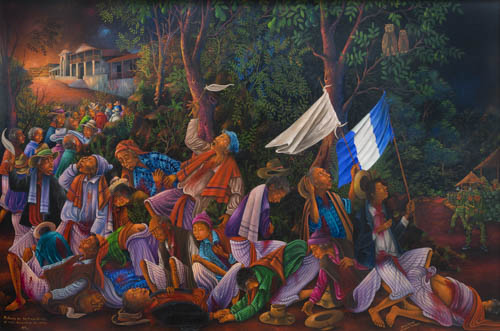 "Matanza en Santiago Atitlán, el 3 de Diciembre 1990," Massacre in Santiago Atitlán, December 3, 1990. This massacre of 13 people at the hands of the military in the neighboring town of Santiago Atitlán was covered internationally, not just by the Guatemala newspaper Prensa Libre. this ultimately was a victory for the Maya because it was the first time the Maya stood up to the military and got the military to back down. Painting by Pedro Rafael González Chavajay, 1993. Arte Maya Tz'utujil Collection. |
「1990年12月3日、サンティアゴ・アティトランでの虐殺」 隣町サンティアゴ・アティトランで軍によって13人が虐殺されたこの事件は、グアテマラの新聞『プレンサ・リブレ』だけでなく、国際的にも報じられた。こ れは、マヤ族が初めて軍に立ち向かい、軍を退かせたという点で、最終的にはマヤ族にとっての勝利となった。 ペドロ・ラファエル・ゴンサレス・チャバハイ作、1993年。アルテ・マヤ・ツトゥヒル・コレクション。 |
| On
March 3, under a six-column banner, "Calm Returns to San Pedro la
Laguna," the Prensa Libre reported that the colonel in command of
Military Zone 14 (Sololá) had spent a few hours in San Pedro talking
with municipal officials and Lencho's widow and concluded that certain
unnamed parties had coerced the widow to claim that an army lieutenant
had been involved. According to the newspaper article, the commander
said that the widow herself had disavowed the claim and that the
stories of the army's participation in the crime were therefore totally
discredited. He also said, according to the article, that the Pedranos
informed him that they blamed the kidnapping and assassination of the
commissioner and his uncle on a group of guerrillas known as lxchil
(lxim) who previously were military commissioners. The commander
assured the Pedranos, the paper reported, that the army would stay
watchful to see that the forces of "subversive delinquency" did not
continue to use the Pedranos as instruments for casting blame on the
armed forces, whose only mission, he said, was to ensure "peace,
tranquility, and harmony." The next day, another article appeared in the Prensa Libre under the headline "Army Affirms No Lieutenant Involved in San Pedro's Crimes." The story, based on a communique issued by the army's department of public relations, asserted that a subversive group self-styled Ixim had committed the crimes, that the perpetrators had been captured, and that they had induced Lencho's widow to make a false accusation. The army's reconstruction of the events departs from the Pedranos' version. The story Lencho's widow tells is the same one she told reporters at the outset. She claimed from the first and she continues to claim that her husband recognized the lieutenant and greeted him by name. She does not recall ever being interviewed by the military zonal commander, as reported in the newspaper. According to knowledgeable sources, the lieutenant named by Lencho was quietly transferred from Sololá to a military prison in Guatemala City to await trial in a military court for kidnapping and murder. These same sources had persuasive evidence, they said, that the lieutenant had been paid seven hundred dollars to kill Lencho and his uncle and that they knew who had delivered themoney. The payment had allegedly been delivered by one of the five Pedranos who had recently been exposed as confidenciales (secret agents) working for army intelligence (G-2). The five were among the fifteen suspects rounded up after Lencho and Pedro were murdered. The other ten were virtually the same as the ten suspects described in the April 12, 1983, newspaper article as "still going about freely as though they hadn't done a thing." Two of the secret agents had also doubled as military commissioners during San Pedro's two-year noche negra. One was the man seen in the yellow pickup that drove Pedro away from the Panajachel dock. He was also one of the two commissioners who took a third commissioner for a fatal walk along the beach in San Pedro in August 1982. The other military commissioner who doubled as a secret agent was Salvador, who became acting chief after Commissioner Jacinto was arrested but whose bid to become formal chief was vigorously opposed by the community. The three other individuals revealed to be secret agents were the boat owner, the deposed mayor Jorge, and the güizache Mario. It is interesting and ironic to recall that three of the secret agents— Salvador, Jorge, and Mario—had tried to silence Fernando, the shrillest of the w histle blowers, by accusing him of calumny at the hearing held by the commander of the army post at Santiago Atitlán only days before two of the other plaintiffs in that suit (Jacinto and Adolfo) were themselves arrested on October 28, 1982. The sixth plaintiff later turned out to be one of the first of the fifteen suspects captured after news of Lencho's abduction raced through the town. Thus all six of Fernando's accusers eventually found themselves in jail, while Fernando was free to get himself elected mayor of San Pedro in the November 3, 1985, elections. The appointment of secret agents apparently was part of an extensive change in army strategy initiated during the Lucas García regime to counter the threat of insurgency. Previously based only in the capital and a few other cities, the army extended into the countryside to establish a center of strength, a zonal command, in each of the republic's twenty-two departments. The zonal command in turn infiltrated local communities such as San Pedro to create an espionage network. It remains unclear how the work of secret agents such as Salvador, Jorge, and Mario, was coordinated with that of the military commissioners to compile blacklists and stage abductions during the period when Jacinto was chief military commissioner. The two army-connected groups were composed in the main of different kinds of people. Inspection of the characteristics of the eighteen former commissioners named in the April 1983 newspaper article— the eight prisoners who were awaiting trial and the ten others whose arrests were being sought—reveals that they tended to be rather impecunious, powerless, and undistinguished individuals. Most of them were laborers, fishermen, or petty traders. All were married with children; most were in their thirties. What they mainly sought was instant gratification. One informant, when asked why former commissioners had abused their offices, replied by making three digital gestures signifying money, liquor, and sex. Some of the men showed signs of corruptibility even before they became involved in extortion and violence. One commissioner, for instance, is said to have doctored the books when he was a municipal employee, paying workmen less than the amount he recorded and keeping the difference. In earlier days, when Jacinto was merely a recruiting agent, he would accept ten-dollar bribes not to recruit particular young Pedranos. |
3
月3日、『プレンサ・リブレ』紙は「サン・ペドロ・ラ・ラグーナに平穏が戻る」という6段見出しの下、第14軍管区(ソロラ)を指揮する大佐がサン・ペド
ロで数時間過ごし、市当局者やレンチョの未亡人と話し合った結果、特定の(名指しされていない)勢力が未亡人に圧力をかけ、陸軍中尉が事件に関与していた
と主張させたとの結論に達したと報じた。同紙の記事によると、司令官は、未亡人自身がその主張を撤回しており、したがって軍が犯罪に関与したという話は完
全に信用を失ったと述べた。また記事によれば、司令官は、ペドラノ族から、コミサリオとその叔父の誘拐および暗殺の責任は、かつて軍事コミサリオを務めて
いた「イシル(lxim)」として知られるゲリラ集団にあると告げられたとも語った。同紙の報道によれば、司令官はペドラノ一家に対し、軍は「破壊的な犯
罪勢力」が、軍を非難するための道具としてペドラノ一家を利用し続けることのないよう警戒を続けると保証した。司令官は、軍の唯一の使命は「平和、平穏、
そして調和」を確保することであると述べた。 翌日、『プレンサ・リブレ』紙に「軍、サン・ペドロの犯罪に中尉の関与はないと断言」という見出しの記事が掲載された。軍の広報部が発表した声明に基づく この記事は、イシムと名乗る反体制派グループが犯罪を犯し、犯人は逮捕されており、彼らがレンチョの未亡人に虚偽の告発をさせたのだと主張していた。 軍の事件の再構成は、ペドラノ家の主張とは異なっている。レンチョの未亡人が語る話は、当初記者団に語ったものと同じである。彼女は当初から、そして今も なお、夫がその中尉を認識し、名前を呼んで挨拶したと主張している。また、新聞で報じられたような、軍管区司令官による事情聴取を受けた記憶はないとして いる。事情に詳しい情報筋によると、レンチョが名指しした中尉は、誘拐および殺人罪で軍事法廷での裁判を待つため、ソロラからグアテマラシティの軍事刑務 所へ密かに移送されたという。同情報筋は、その中尉がレンチョとその叔父を殺害するために700ドルを受け取っていたこと、そして誰がその金を渡したかを 知っているという説得力のある証拠を握っていると語った。 その報酬は、最近、陸軍情報部(G-2)のために働く「コンフィデンシアル(秘密工作員)」として正体が暴かれた5人のペドラノ家のうちの1人によって渡 されたとされている。この5人は、レンチョとペドロが殺害された後に一斉検挙された15人の容疑者のうちの一人だった。残りの10人は、1983年4月 12日の新聞記事で「まるで何もしていないかのように依然として自由に動き回っている」と描写された10人の容疑者とほぼ同一人物であった。 その秘密工作員のうち2名は、サン・ペドロで2年間続いた「ノチェ・ネグラ(暗黒の夜)」の期間中、軍事委員を兼任していた。その1人は、パナハチェルの 埠頭からペドロを連れ去った黄色いピックアップトラックに乗っていた男である。彼はまた、1982年8月にサン・ペドロの海岸沿いで、別の軍事委員を連れ 出し、命を落とすことになった散歩に連れ出した2人の委員のうちの1人でもあった。秘密工作員を兼任していたもう一人の軍事委員はサルバドールで、ジャシ ント委員が逮捕された後に代理委員長となったが、正式な委員長に就任しようとする彼の試みは地域社会から激しく反対された。秘密工作員であることが明らか になった他の3人は、ボートの所有者、解任されたホルヘ元市長、そして「グイサチェ」のマリオであった。 興味深くも皮肉なことに、秘密工作員のうち3人――サルバドール、ホルヘ、マリオ――は、1982年10月28日に同訴訟の他の原告2人(ハシントとアド ルフォ)が逮捕されるわずか数日前に、サンティアゴ・アティトランの陸軍駐屯地司令官が主催した聴聞会で、告発者の中で最も声高に訴えていたフェルナンド を誹謗中傷で告発し、彼を黙らせようとしていたのである。6人目の原告は、後にレンチョの拉致のニュースが町中に広まった後、逮捕された15人の容疑者の うち最初の1人であることが判明した。こうして、フェルナンドを告発した6人全員が最終的に投獄されることになった一方で、フェルナンドは自由の身とな り、1985年11月3日の選挙でサン・ペドロの市長に当選した。 秘密工作員の任命は、反乱の脅威に対抗するためにルーカス・ガルシア政権下で開始された、軍戦略の広範な転換の一環であったようだ。以前は首都と他の数都 市にのみ拠点を置いていた軍は、地方へと進出を拡大し、共和国の22の州それぞれに「勢力拠点」である「地域司令部」を設立した。この地域司令部はさら に、サン・ペドロのような地域社会に潜入し、スパイ網を構築した。ハシントが軍事委員長を務めていた時期に、サルバドール、ホルヘ、マリオといった秘密工 作員たちの活動が、ブラックリストの作成や拉致事件の仕掛けといった軍事委員たちの活動とどのように連携していたのかは、依然として不明である。 軍と結びついたこれら2つのグループは、主に異なるタイプの人々で構成されていた。1983年4月の新聞記事で名指しされた18人の元軍事委員――公判待 ちの囚人8人と、逮捕状が出されていた他の10人――の特徴を検証すると、彼らは概して貧しく、権力もなく、目立たない人物であったことがわかる。彼らの 大半は労働者、漁師、あるいは小商人であった。全員が既婚で子供もおり、多くは30代だった。彼らが主に求めていたのは、即座の快楽であった。ある情報提 供者は、元委員たちがなぜ職権を乱用したのかと問われると、金、酒、セックスを意味する3本の指を立てるジェスチャーで答えた。一部の男たちは、恐喝や暴 力に関与する以前から、すでに腐敗の兆しを見せていた。例えば、ある委員は、市職員だった頃、帳簿を改ざんし、作業員への支払額を記録額より少なくして、 その差額を懐に入れていたと言われている。かつて、ハシントが単なる徴兵担当官だった頃、特定のペドラノの若者たちを徴兵しない見返りに、10ドルの賄賂 を受け取っていた。 |
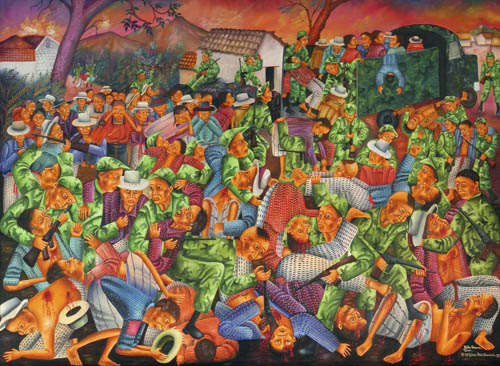 "El Ultimo Reclutamiento de 1995," the last recrutment in 1995. Before the peace accords were signed, the military would go into Maya towns and villages grapping young men off the street and forcing the to join the Guatemalan Army. Painting by Victor Vasquez Temó. Collection fo the Smithsonian National Museum of the America Indian. |
「1995年の最後の徴兵(El Ultimo Reclutamiento de 1995)」。和平協定が締結される前、軍はマヤ族の町や村に侵入し、路上で若い男性を捕まえてグアテマラ陸軍への入隊を強制していた。 ビクター・バスケス・テモ作。スミソニアン国立アメリカインディアン博物館所蔵。 |
| In
contrast to the former commissioners, the secret agents were older men
in their fifties and sixties, prominent in the community, ambitious,
and fairly well-off. Three of them owned productive coffee land. Two
owned commercial property—trucks for hauling goods long distances or
launches for transporting passengers and cargo between San Pedro and
the market town Santiago Atitlán. Two of the secret agents, with
histories of extended service in the armed forces, had friends and
connections in the military; one or two had political connections in
high places. The boat owner took advantage of his secret-agent status to negotiate profitable deals for himself. He accused a man in Tzununá, across the lake, of transporting guerrillas in a launch the man owned. The Pedrano flashed his army carnet (identification card) to frighten him. He then forced the man to sell the launch for a very low price, giving him only a small down payment and saying that he would pay the rest later. The Tzununa man lost more than one thousand dollars in the deal. He became despondent and reportedly drank himself to death. In a similar manner the unscrupulous boat owner is said to have acquired another launch for a low price from the administrator of a coffee plantation near San Pedro. But what the secret agents mainly wanted, in contrast to the former commissioners, was political power. They sought to capture the two key posts, the mayor's office and that of chief military commissioner. For a while they were successful. Jorge was imposed as mayor and held onto his office for more than a year before the town persuaded the Sololá commander to remove him. Salvador, who had operated as a military commissioner overtly and as an intelligence officer covertly, was reputed to be the real leader of the commissioners, even while Jacinto, a less forceful person, was officially in charge. When Jacinto was taken prisoner, Salvador made an unsuccessful bid to be named chief commissioner. Of the five secret agents, Mario, the güizache with an unsavory reputation, was undoubtedly the most noteworthy. According to our sources, it was he who had advised Marta that a four-hundred-dollar payment could ransom arrested Adolfo, and who later counseled the eight imprisoned former commissioners to apply for amnesty by claiming to be repentent Ixim guerrillas. He allegedly is the person who delivered seven hundred dollars to Lieutenant Rolando in payment for kidnapping Lencho, and he was one of the four men (all secret agents) whom Lencho's widow said she had seen leaving an alley while masked men were carrying off her husband. It may seem strange that the army would punish operatives for deeds presumably committed in collaboration with army units, but it should be remembered that the army is a complex organization made up of separate suborganizations and subject to changing directives over time. One unit may punish people for actions ordered by a different, possibly clandestine, unit. The policy of a post commander may be reversed by the commander who succeeds him. But it is unlikely that the eight Pedranos sentenced by an army court were convicted of crimes committed jointly with army personnel. There was no need of that. Victimized Pedranos supplied enough evidence to convict the conspirators of crimes committed independently—rape, extortion, murder. In addition, the army wrung confessions out of the arrested men by methods of its own. One informant told us what he had learned on this score from former commissioners whom he visited in prison. During the ten days they were held at the Santiago Atitlán post following their capture on October 28, 1982, they were beaten with clubs. They were also put in a pit with water in it. The prisoners said that they thought this treatment was going to kill them. We do not know whether any of the kidnapped Pedranos were taken to the same place or subjected to similar treatment, but we do know that the pit treatment was applied to suspected subversives in 1983. In the fall of that year an interview with a soldier stationed outside the army barracks in Santiago Atitlán was recorded on tape and printed verbatim in Americas Watch Report (January 1984) entitled, "Guatemala: A Nation of Prisoners." The soldier was asked how long captured persons generally remained in the camp. He replied, "Here, about two months, and if they don't want to talk then they get put in the hole with water." "And how do they feel there in the hole?" "Well, of course, they're going to feel terrible. Once you put them in there, they can't take it, and they die." "How many are in there now?" "There are two in there. They've been in there for two days; we take them out to tell us what they do, and if they don't say anything, we stick them in again." |
か
つての委員たちとは対照的に、秘密工作員たちは50代から60代の年配の男性たちで、地域社会で名高く、野心があり、経済的にも比較的裕福だった。そのう
ち3人は収益性の高いコーヒー農園を所有していた。2人は商業用資産――長距離の貨物輸送用のトラックや、サン・ペドロと市場町サンティアゴ・アティトラ
ンの間で乗客や貨物を運ぶ小型船――を所有していた。秘密工作員のうち2人は、軍隊での長期勤務歴があり、軍内に友人やコネを持っていた。また、1、2人
は政界の要人とのつながりを持っていた。 ボートの所有者は、秘密工作員という立場を利用して、自分にとって有利な取引を成立させた。彼は、湖の対岸にあるツヌナに住むある男に対し、その男が所有 する小型船でゲリラを輸送していると告発した。ペドラノは、その男を威嚇するために軍人証(身分証明書)をちらつかせた。その後、彼はその男にボートを極 めて安値で売却するよう強要し、わずかな頭金しか支払わず、残金は後で支払うと約束した。ツヌナの男はこの取引で1,000ドル以上の損失を被った。彼は 意気消沈し、噂によれば酒に溺れて死んだという。同様に、この悪徳な船主は、サン・ペドロ近郊のコーヒー農園の管理者から、別のボートを安値で手に入れた と言われている。 しかし、以前の委員たちとは対照的に、秘密工作員たちが主に求めていたのは政治的な権力だった。彼らは、町長職と軍事委員長職という二つの要職を掌握しよ うとした。しばらくの間、彼らは成功を収めた。ホルヘが町長に押し上げられ、町民がソロラ司令官に彼を解任するよう説得するまで、1年以上その職に留まっ た。表向きは軍事委員として、裏では諜報員として活動していたサルバドールは、公式にはより控えめな性格のハシントが指揮を執っていたにもかかわらず、委 員たちの真のリーダーであると見なされていた。ハシントが捕虜となった際、サルバドールは首席委員に指名されるよう画策したが、失敗に終わった。 5人の秘密工作員のうち、悪評高いグイサチェのマリオが、間違いなく最も注目すべき人物であった。情報筋によれば、逮捕されたアドルフォを身代金400ド ルで解放できるとマルタに助言したのは彼であり、後に投獄された元委員8名に対し、悔い改めたイシム・ゲリラであると主張して恩赦を申請するよう勧めたの も彼であった。彼は、レンチョの誘拐の対価としてロランド中尉に700ドルを手渡した人物であるとされ、また、レンチョの未亡人が、覆面をした男たちが夫 を連れ去っている最中に路地から立ち去るのを見たと証言した4人の男(全員が秘密工作員)の一人でもあった。 軍が、おそらくは軍部隊と共謀して行われたとされる行為について工作員を処罰するのは奇妙に思えるかもしれないが、軍は独立した下部組織から成り立ち、時 とともに指令が変化する複雑な組織であることを忘れてはならない。ある部隊が、別の(おそらくは秘密の)部隊によって命じられた行動に対して人々を処罰す ることもあり得るのだ。駐屯地司令官の方針は、後任の司令官によって覆されることもある。しかし、軍法会議で有罪判決を受けた8人のペドラノ族が、軍関係 者との共犯行為で有罪となった可能性は低い。そのような必要はなかったからだ。被害を受けたペドラノ族は、強姦、恐喝、殺人といった単独犯行について、共 謀者を有罪とするのに十分な証拠を提出していた。さらに、軍は独自の手段を用いて逮捕された男たちから自白を引き出していた。ある情報提供者は、刑務所で 面会した元委員たちからこの件について聞いた話を私たちに語った。1982年10月28日に捕らえられ、サンティアゴ・アティトラン駐屯所に10日間拘束 されていた間、彼らは棍棒で殴打された。また、水が入った穴に放り込まれた。囚人たちは、この扱いで死ぬかと思ったと語った。 拉致されたペドラノスのうち、誰かが同じ場所に連行されたり、同様の扱いを受けたりしたかどうかは不明だが、1983年には反体制派と疑われた者たちに対 して、この「穴への投下」という拷問が施されていたことは確かである。その年の秋、サンティアゴ・アティトランの陸軍兵舎外に駐屯していた兵士へのインタ ビューが録音され、『アメリカズ・ウォッチ・レポート』(1984年1月号)の「グアテマラ:囚人の国」と題された記事に逐語的に掲載された。その兵士 は、捕らえられた人々が通常どれくらいの期間、収容所に留め置かれるのかと尋ねられた。彼はこう答えた。「ここでは、だいたい2ヶ月くらいだ。もし話そう としないなら、水を入れた穴に放り込まれる。」 「それで、穴の中にいるとどんな気分になるんだ?」 「まあ、当然、ひどい気分になるだろう。一度そこに放り込めば、耐えられずに死んでしまう。」 「今、何人入っているのですか?」 「2人入っています。2日間そこにいます。何をしていたのか話させるために外に出しますが、何も言わなければ、また中に放り込みます。」 |
| https://www.artemaya.org/death_iv.htm |
☆
★Benjamin D. Paul, Stanford University & William Demarest, The Operation of a Death Squad in San Pedro la Laguna. 1988. [ウェブページにリンク]
| Chapter Five Divisiveness & Democracy We must finally ask to what extent the trouble in San Pedro can be ascribed to social cleavages within the community. The answer varies with the category of offenders being considered. Jacinto, Adolfo, and the rest of the venal former commissioners were mainly driven by greed and the desire to settle personal scores. There is no need to seek explanations in lines of cleavage dividing San Pedro society. They were waging no interfaith warfare. Their group and the people they victimized included Catholics and Protestants in about the same proportion. Their chief, Jacinto, was nominally Catholic; his close friend and second-in-command was Protestant. The former commissioners were not members of one political faction in battle against another; they were not politically active as individuals. The secret agents, in contrast to the former commissioners, were politically ambitious. Now in his sixties, Mario, the most thoroughly political of the several secret agents, has a history of continuous, often acrimonious involvement in town politics dating back to the time local political partics first sprang up under the democratic Arévalo-Arbenz regime of 1945-54. Since 1968, Mario has been the leader of the local branch of the ultrarightist National Liberation Movement (MLN), which has been termed "the party of organized violence." This is the party of Sandoval Alarcón, generally reputed to be the founder of Guatemala's Mano Blanca, the notorious paramilitary "death squad" organization. MLN leaders have counted on Mario to deliver votes during national and local elections. Mario in turn has counted on his friendship with Sandoval to receive expert legal assistance to help him in his role as güizache, win court cases in Sololá for his Pedrano clients—disputes over land titles and inheritances are common—and defend Mario himself whenever political opponents charge him with corrupt practices. Over the course of years, political parties and coalitions have waxed, waned, and vied for power in San Pedro. By the mid-1970s, the political groups had sorted themselves into two opposing coalitions led by contending champions. The rival leaders were Mario on one side and civic-minded Antonio on the other. In 1974, Mario's slate lost, and Antonio served as mayor for a two-year term. In 1976, Mario's slate won, remaining in office four years. In 1980 a prosperous merchant ran for mayor. He had been a political ally of Antonio and, like him, known for his upright character and respect for the law. To run against the merchant, Mario's MLN party fielded a slate of candidates that included the unscrupulous boat owner and Salvador, the would-be chief of the military commissioners—men who, like Jorge and like Mario himself, were later revealed as secret agents for army intelligence. Mario's men, who labeled their platform "The Best Anti-Communist Program" (this was under the García Lucas regime), were defeated at the polls by the prosperous merchant, who began what was to be a four-year term but who was removed in June 1982 (no commissioner had yet been arrested) when Jorge was imposed as mayor. If Mario and his association failed to win power overtly in 1980, they nevertheless were able to carry out at least part of their anti-Communist agenda by virtue of their covert army connections. Informants claim that by the time Mario was arrested, however, he had ceased being a protégé of Sandoval Alarcon because he had not been able to swing enough votes for the MLN. It is interesting, if not surprising, to note that the alignment of political leadership prevailing before the onset of violence in San Pedro prefigured the antagonism between the exposed secret agents—the leaders in the group of fifteen suspects arrested after Lencho was kidnapped—and those who led the fight to have them arrested and punished: civic-minded Antonio, the prosperous merchant, the more respected of the town's two güizaches, and Fernando, one-time political ally of Ríos Montt. It may be tempting to blame the outbreak of violence in San Pedro on social divisiveness and the settling of old scores, but the temptation should be resisted. Religious competition and vigorous political infighting were features of San Pedro life for decades before 1980 without producing violence. The same can be said for interpersonal antagonisms. They arose in the past and were settled by means short of murder. What disrupted the peace in San Pedro was not the presence of differences and divisions but the army's recruitment of agents and spies that had the effect of exploiting these cleavages. |
第5章 分断と民主主義 最後に、サン・ペドロで起きた騒動が、コミュニティ内の社会的分断にどの程度起因するものなのかを問わなければならない。その答えは、対象とする加害者の カテゴリーによって異なる。ハシント、アドルフォ、そしてその他の貪欲な元委員たちは、主に強欲と個人的な恨みを晴らしたいという欲望に駆られていた。サ ン・ペドロ社会を分断する対立軸に説明を求める必要はない。彼らは宗教間の争いを繰り広げていたわけではない。彼らのグループや彼らが被害を与えた人々に は、カトリック教徒とプロテスタントがほぼ同数含まれていた。彼らの首謀者であるハシントは名目上カトリック教徒だったが、彼の親友であり右腕だった人物 はプロテスタントだった。元委員たちは、ある政治派閥が別の派閥と争っているような関係にはなく、個人として政治活動を行っていたわけでもなかった。 これに対し、秘密工作員たちは政治的な野心を持っていた。数人の秘密工作員の中で最も徹底して政治的な人物であるマリオは、現在60代だが、1945年か ら54年にかけての民主的なアレバロ・アルベンツ政権下で地元の政治団体が初めて出現した頃から、絶え間なく、しばしば激しい対立を伴う形で町の政治に関 与してきた経歴を持つ。1968年以来、マリオは「組織的暴力の党」と称される極右の国民解放運動(MLN)の地方支部長を務めている。これは、グアテマ ラの悪名高い準軍事組織「死の部隊」であるマノ・ブランカの創設者と一般にされるサンドバル・アラルコンの党である。MLNの指導者たちは、国政選挙や地 方選挙において、マリオが票を確実に集めてくれることを期待してきた。一方、マリオはサンドバルとの親交を頼りに、法律の専門家としての支援を受けてき た。それは、彼が「グイサチェ(法廷代理人)」としての役割を果たし、ソロラ県でペドラノの依頼人(土地の所有権や相続をめぐる紛争はよくある)のために 訴訟に勝ち、また政敵から汚職行為で告発された際には自身を弁護するためであった。 長年にわたり、サン・ペドロでは政党や連合が台頭したり衰退したりしながら、権力を巡って争ってきた。1970年代半ばまでに、政治勢力は対立する二大連 合へと再編され、それぞれが主導的な指導者を擁していた。対立する指導者とは、一方にマリオ、もう一方に市民意識の高いアントニオであった。1974年、 マリオの陣営は敗北し、アントニオが2年間の任期で市長を務めた。1976年、マリオの陣営が勝利し、4年間政権を維持した。1980年、ある裕福な商人 が市長選に出馬した。彼はアントニオの政治的盟友であり、彼と同様に、高潔な人柄と法への敬意で知られていた。この商人に対抗するため、マリオ率いる MLN党は、不埒な船主や、軍事委員長の座を狙っていたサルバドールを含む候補者リストを擁立した。彼らは、ホルヘやマリオ自身と同様に、後に陸軍情報部 の秘密工作員であることが明らかになった人物たちであった。(ガルシア・ルカス政権下において)自らの公約を「最高の反共産主義プログラム」と銘打ったマ リオの陣営は、選挙でその裕福な商人に敗北した。商人は4年間の任期を開始したが、1982年6月、ホルヘが市長として押し付けられた際に解任された(こ の時点では、まだどの委員も逮捕されていなかった)。 1980年にマリオとその団体が公然と権力を掌握することはできなかったものの、彼らは軍との秘密のつながりを利用して、反共主義的な政策の少なくとも一 部を実行に移すことができた。しかし、情報提供者によれば、マリオが逮捕された頃には、彼はMLNのために十分な票を集めることができなかったため、サン ドバル・アラコンの庇護下から外れていたという。 サン・ペドロで暴力が勃発する前の政治指導層の構図が、レンチョ誘拐後に逮捕された15人の容疑者グループのリーダーたち――その正体が露見した秘密工作 員――と、彼らを逮捕・処罰するために戦った指導者たちとの対立を予兆していたことは、驚くべきことではないにせよ、興味深い。市民意識の高いアントニオ (町の2人のグイサチェのうち、より尊敬を集める裕福な商人)と、かつてリオス・モントの政治的同盟者であったフェルナンドである。 サン・ペドロでの暴力の勃発を、社会的分断や因縁の清算のせいだと決めつけたくなるかもしれないが、その誘惑には抗うべきである。1980年以前の数十年 もの間、サン・ペドロの生活には宗教間の対立や激しい政治的内紛が常態として存在していたが、それらが暴力を引き起こすことはなかった。対人関係の対立に ついても同様である。過去にもそうした対立は生じていたが、殺人に至らない手段で解決されてきた。サン・ペドロの平和を乱したのは、相違や分裂の存在その ものではなく、こうした亀裂を悪用する結果となった軍による工作員やスパイの勧誘であった。 |
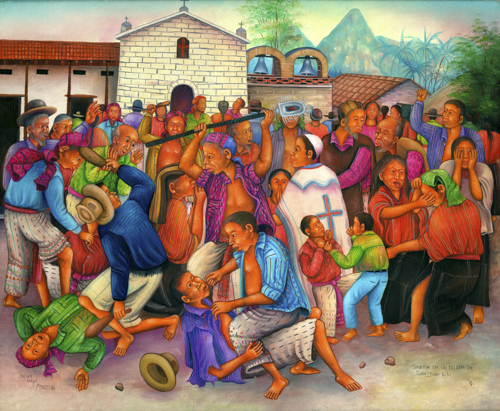 "División en la Iglesia de San Juan la Laguna," division in the church of San Juan la Laguna. Catholic priest John Vesey, who for a time was head of the parishes of San Pedro and San Juan, caused more divisiveness in the church than other priests before and after ‰him. He tried to close down the church in San Juan until the cofradias were abolished. This painting which represented a confrontation that came to blows, was censored and not allowed to be exhibited in the week long fair of San Juan.Painting by Julian Coche Mendoza, 1994. Collection of Arte Maya Tz'utujil. |
「サン・フアン・ラ・ラグーナ教会の分裂」。かつてサン・ペドロとサン・フアンの両教区を統括していたカトリック司祭ジョン・ヴェシーは、彼の前任者や後 任者たちよりも、教会内にさらなる分裂をもたらした。彼は、コフラディアが廃止されるまで、サン・フアンの教会を閉鎖しようとした。殴り合いにまで発展し た対立を描いたこの絵画は、検閲を受け、1週間にわたるサン・フアンの祭りの期間中に展示されることは許されなかった。1994年、フリアン・コチェ・メ ンドーサ作。アルテ・マヤ・ツトゥヒル所蔵。 |
| Competition
between parties is, after all, one of the hallmarks of political
democracy. Another hallmark is an informed electorate. By this token
San Pedro has become increasingly democratic. Compared to the time
during the Arévalo-Arbenz era (1945-54) when elections for local office
were introduced, Pedranos are now more literate and informed about
history and the world around them. The local school system has been
extended, and a good number of Pedranos have gone on to acquire
professional training in such fields as accounting, agronomy, and
especially education. Two or three are physicians. Still another
hallmark of democracy is freedom of expression. With experience and
education, many Pedranos have learned to express their differing
opinions about justice, religion, and government. Ever since the Arévalo-Arbenz era, San Pedro society has been moving in the direction of greater democracy, while the Guatemalan government has been moving in the opposite direction. Increasing divergence between the two tendencies, the local and the national, can be seen as a source of the affliction that befell San Pedro. Francisco the baker spoke his mind about the abusive police and the militarization of the lake area and was the first Pedrano to be "disappeared" by "unknown parties" (desconocidos)—two terms that have become common parlance in Guatemala, along with "criminal subversives" (subversivos delinquentes). Lencho, the fearless chief commissioner, spoke up in defense of civil liberties and fell victim to the violation of human rights. It can be said that San Pedro has suffered punishment not for the sin of displaying divisiveness but for the virtue of practicing democracy. |
政
党間の競争は、何と言っても政治的民主主義の特徴の一つである。もう一つの特徴は、十分な知識を持つ有権者の存在だ。この点において、サン・ペドロはます
ます民主的になってきている。地方選挙が導入されたアレバロ・アルベンツ時代(1945~54年)と比べ、現在のペドラノの人々はより識字率が高く、歴史
や周囲の世界についてより多くの知識を持っている。地元の学校制度は拡充され、多くのペドラノ人が会計、農学、そしてとりわけ教育といった分野で専門的な
訓練を受けるようになった。医師も2、3人いる。民主主義のもう一つの特徴は表現の自由である。経験と教育を通じて、多くのペドラノ人は正義、宗教、政府
について異なる意見を表明する術を身につけた。 アレバロ・アルベンツ時代以来、サン・ペドロの社会はより大きな民主主義へと向かってきた一方で、グアテマラ政府は逆の方向へと進んできた。地方と国家と いう二つの傾向の間の乖離の拡大は、サン・ペドロを襲った災難の原因と見なすことができる。パン屋のフランシスコは、横暴な警察や湖周辺地域の軍事化につ いて率直に意見を述べたが、その結果、「正体不明の者たち」(desconocidos)によって「失踪」させられた最初のペドラノとなった。これら二つ の用語は、「犯罪的破壊分子」(subversivos delinquentes)と同様に、グアテマラでは日常語となっている。恐れを知らない警察本部長レンチョは、市民の自由を守るために声を上げたが、人 権侵害の犠牲となった。サン・ペドロが受けた罰は、分裂を露呈したという罪に対するものではなく、民主主義を実践したという美徳に対するものだったと言え るだろう。 |
| https://www.artemaya.org/death_v.htm |
|
| Hsitories of Guatemala Indians. |
|
☆
リ ンク
文 献
そ の他の情報
CC
Copyleft,
CC, Mitzub'ixi Quq Chi'j, 1996-2099
