
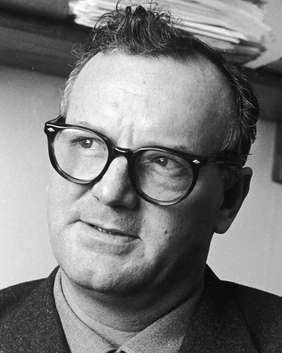
チャールズ・ライト・ミルズ
C. Wright Mills, 1916-1962
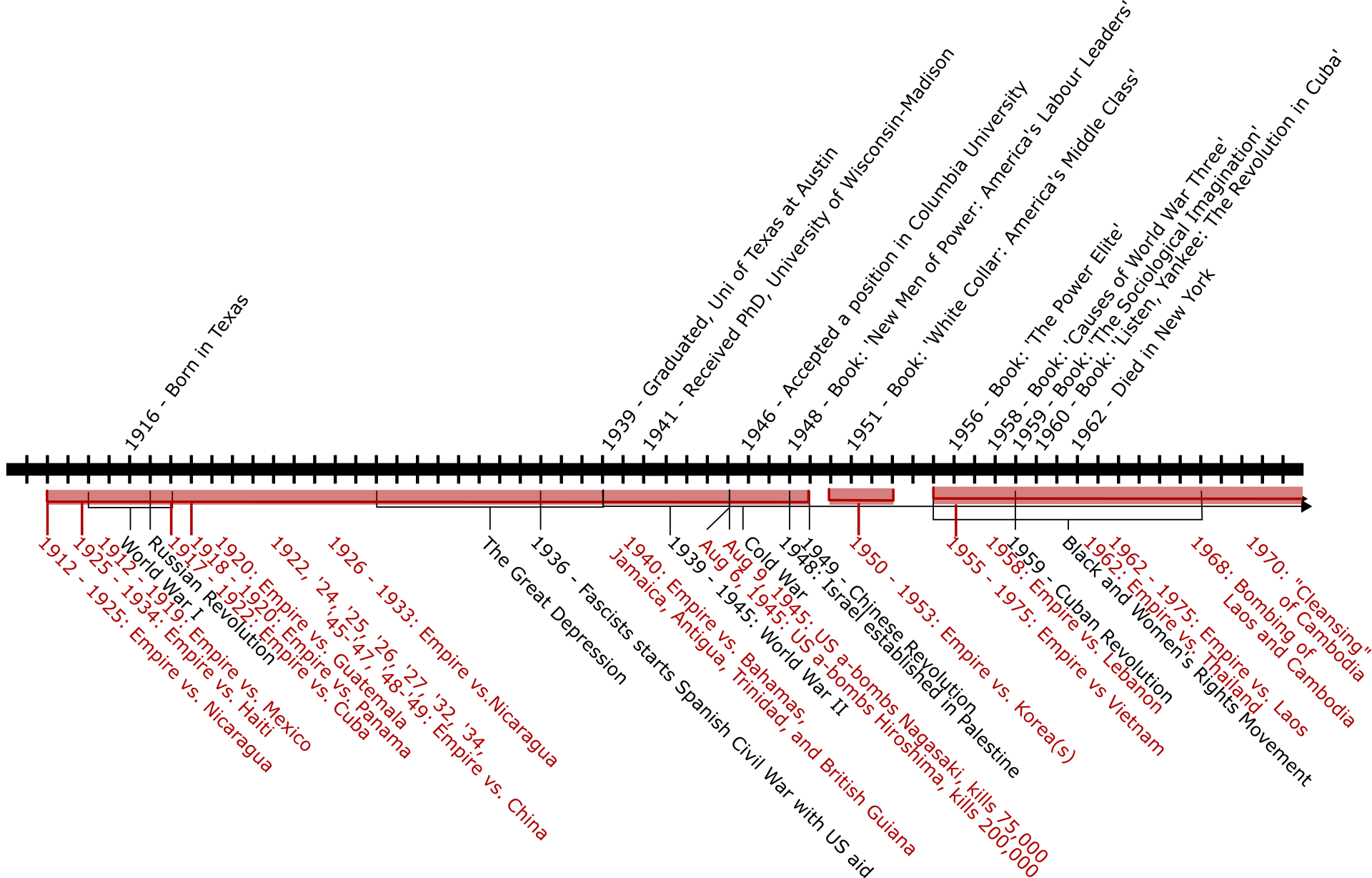
☆ チャールズ・ライト・ミルズ(Charles Wright Mills;1916 年8月28日-1962年3月20日)はアメリカの社会学者で、1946年から1962年に亡くなるまでコロンビア大学の社会学教授を務めた。ミルズがポ ピュラーな雑誌と知的な雑誌の両方で広く発表し、『パワー・エリート』、『ホワイトカラー』、『アメリカの中流階級』などの著書で知られている: ミルズは第二次世界大戦後の社会における知識人の責任に関心を持ち、無関心な観察よりも公共的・政治的関与を提唱した。ミルズの伝記作家の一人であるダニ エル・ギアリーは、ミルズの著作は「1960年代の新左翼社会運動に特に大きな影響を与えた」と書いている。1960年の公開書簡「新左翼への手紙」にお いて、アメリカで新左翼という言葉を広めたのはミルズであった(→「チャールズ・ライト・ミル ズ年譜」)。
| Charles Wright
Mills
(August 28, 1916 – March 20, 1962) was an American sociologist, and a
professor of sociology at Columbia University from 1946 until his death
in 1962. Mills published widely in both popular and intellectual
journals, and is remembered for several books, such as The Power Elite,
White Collar: The American Middle Classes, and The Sociological
Imagination.[13] Mills was concerned with the responsibilities of
intellectuals in post–World War II society, and he advocated public and
political engagement over disinterested observation. One of Mills's
biographers, Daniel Geary, writes that Mills's writings had a
"particularly significant impact on New Left social movements of the
1960s era."[13] It was Mills who popularized the term New Left in the
U.S. in a 1960 open letter, "Letter to the New Left".[14] |
チャー
ルズ・ライト・ミルズ(1916年8月28日-1962年3月20日)はアメリカの社会学者で、1946年から1962年に亡くなるまでコロンビア大学の
社会学教授を務めた。ミルズがポピュラーな雑誌と知的な雑誌の両方で広く発表し、『パワー・エリート』、『ホワイトカラー』、『アメリカの中流階級』など
の著書で知られている:
ミルズは第二次世界大戦後の社会における知識人の責任に関心を持ち、無関心な観察よりも公共的・政治的関与を提唱した。ミルズの伝記作家の一人であるダニ
エル・ギアリーは、ミルズの著作は「1960年代の新左翼社会運動に特に大きな影響を与えた」と書いている[13]。1960年の公開書簡「新左翼への手
紙」において、アメリカで新左翼という言葉を広めたのはミルズであった[14]。 |
| Biography Early life C. Wright Mills was born in Waco, Texas, on August 28, 1916. His father, Charles Grover Mills (1889-1973), worked as an insurance broker, leaving his family to constantly move around; his mother, Frances Ursula (Wright) Mills (1893-1989), was a homemaker.[15] His parents were pious and middle class, with an Irish-English background. Mills was a choirboy in the Catholic Church of Waco, and he developed a lifelong aversion to Christianity. Although being brought up in an Anglo-Irish Catholic family, Mills strayed away from the church, defining himself as an atheist.[16] Mills attended Dallas Technical High School, with an interest in engineering, and his parents were preparing him for a practical career in a rapidly industrializing world of Texas. His focuses of study besides engineering were algebra, physics, and mechanical drawing.[17] Education In 1934, Mills graduated from Dallas Technical High School, and his father pressed him to attend Texas A&M University. To fulfill his father’s wishes, Mills attended the university, but he found the atmosphere "suffocating" and left after his first year.[18] He transferred to the University of Texas at Austin where he studied anthropology, social psychology, sociology, and philosophy.[19] At this time, the university was developing a strong department of graduate instruction in both the social and physical sciences.[17] Mills' benefited from this unique development, and he impressed professors with his powerful intellect.[15] In 1939, he graduated with a bachelor's degree in sociology, as well as a master's in philosophy. By the time he graduated, he had already been published in the two leading sociology journals, the American Sociological Review and The American Journal of Sociology.[20] While studying at Texas, Mills met his first wife, Dorothy Helen Smith,[21] a fellow student seeking a master's degree in sociology. She had previously attended Oklahoma College for Women, where she graduated with a bachelor's degree in commerce.[22] After their marriage, in 1937, Dorothy Helen, or "Freya", worked as a staff member of the director of the Women's Residence Hall at the University of Texas. She supported the couple while Mills completed his graduate work; she also typed, copied and edited much of his work, including his Ph.D. dissertation.[23] There, he met Hans Gerth, a German political refugee and a professor in the Department of Sociology. Although Mills did not take any courses with him, Gerth became a mentor and close friend. Together, Mills and Gerth translated and edited a few of Max Weber's works. Both collaborated on Character and Social Structure, a social psychology text.[19] This work combined Mills's understanding of socialization from his work in American Pragmatisim and Gerth's understanding of past and present societies.[19] Mills received his Ph.D. in Sociology from the University of Wisconsin–Madison in 1942. His dissertation was entitled A Sociological Account of Pragmatism: An Essay on the Sociology of Knowledge.[24] Mills refused to revise his dissertation while it was reviewed by his committee. It was later accepted without approval from the review committee.[25][verification needed] Mills left Wisconsin in early 1942, after he had been appointed Professor of Sociology at the University of Maryland, College Park. Early career Before Mills furthered his career, he avoided the draft by failing his physical due to high blood pressure and received a deferment. He was divorced from Freya in August 1940, but after a year he convinced Freya to change her mind. The couple remarried in March 1941. A few years later, their daughter, Pamela Mills, was born on January 15, 1943.[26] During this time, his work as an Associate Professor of Sociology from 1941 until 1945 at the University of Maryland, College Park, Mills's awareness and involvement in American politics grew. During World War II, Mills befriended the historians Richard Hofstadter, Frank Freidel, and Ken Stampp. The four academics collaborated on many topics, and each wrote about contemporary issues of the war and how it affected American society.[27] While still at the University of Maryland, Mills began contributing "journalistic sociology" and opinion pieces to intellectual journals such as The New Republic, The New Leader, as well as Politics, a journal established by his friend Dwight Macdonald in 1944.[28][29] During his time at the University of Maryland, William Form befriended Mills and quickly recognized that "work overwhelmingly dominated" Mills's life.[19] Mills continued his work with Gerth while trying to publish Weber's "Class, Status, and Parties".[19] Form explains that Mills was determined to improve his writing after receiving criticism on one of his works; "Setting his portable Corona on the large coffee table in the living room, he would type triple-spaced on coarse yellow paper, revising the manuscript by writing between the lines with a sharp pencil. Unscrambling the additions and changes could present a formidable challenge. Each day before leaving for campus, he left a manuscript for Freya to retype."[19] In 1945, Mills moved to New York after earning a research associate position at Columbia University's Bureau of Applied Social Research. He separated from Freya with this move, and the couple later divorced a second time in 1947.[30] Mills was appointed assistant professor in the university's sociology department in 1946.[30] Mills received a grant of $2,500 from the Guggenheim Foundation in April 1945 to fund his research in 1946. During that time, he wrote White Collar, which was later published in 1951.[31] In 1946, Mills published From Max Weber: Essays in Sociology, a translation of Weber's essays co-authored with Hans Gerth.[27] In 1953, the two published a second work, Character and Social Structure: The Psychology of Social Institutions.[32] In 1947, Mills married his second wife, Ruth Harper, a statistician at the Bureau of Applied Social Research. She worked with Mills on New Men of Power (1948), White Collar (1951), and The Power Elite (1956). In 1949, Mills and Harper moved to Chicago so that Mills could serve as a visiting professor at the University of Chicago. Mills returned to teaching at Columbia University after a quarter at the University of Chicago, and was promoted to Associate Professor of Sociology on July 1, 1950. In only six years, Mills was promoted to Professor of Sociology at Columbia on July 1, 1956. In 1955, Harper gave birth to their daughter Kathryn. From 1956 to 1957, the family moved to Copenhagen, where Mills acted as a Fulbright lecturer at the University of Copenhagen. Mills and Harper separated in December 1957 and officially divorced in 1959.[33][page needed] Later career Mills married his third wife, Yaroslava Surmach, an American artist of Ukrainian descent, and settled in Rockland County, New York, in 1959. Their son, Nikolas Charles, was born on June 19, 1960.[34][page needed] In August 1960, Mills spent time in Cuba, where he worked on developing his text Listen, Yankee. He spent 16 days there, interviewing Cuban government officials and Cuban civilians. Mills asked them questions about whether the guerrilla organization that made the revolution was the same as a political party.[35] Additionally, Mills interviewed President Fidel Castro, who claimed to have read and studied Mills's The Power Elite.[36] Although Mills only spent a short amount of his time in Cuba with Castro, they got along well and Castro sent flowers when Mills passed a few years later. Mills was described as a man in a hurry. Aside from his hurried nature, he was largely known for his combativeness. Both his private life – four marriages to three women, a child from each, and several affairs – and his professional life, which involved challenging and criticizing many of his professors and coworkers, have been characterized as "tumultuous.” He wrote a fairly obvious, though slightly veiled, essay in which he criticized the former chairman[who?] of the Wisconsin department, and called the senior theorist there, Howard P. Becker, a "real fool.” [37] During a visit to the Soviet Union, Mills was honored as a major critic of American society. While there he criticized censorship in the Soviet Union through his toast to an early Soviet leader who was "purged and murdered by the Stalinists." He toasted "To the day when the complete works of Leon Trotsky are published in the Soviet Union!"[37] Health C. Wright Mills struggled with poor health due to his heart. After receiving his doctorate in 1942, Mills had failed his Army physical exam due to having high blood pressure. Because of this he was excused from serving in the United States military during World War II.[38] Death In a biography of Mills by Irving Louis Horowitz, the author writes about Mills's acute awareness of his heart condition. He speculates that it affected the way he lived his adult life. Mills was described as someone who worked quickly, yet efficiently. Horowitz suggests that Mills worked at a fast pace because he felt that he would not live long, describing him as "a man in search of his destiny".[39] In 1942, Mills' wife Freya had characterized him as being in excellent health and having no heart issue. His cardiac problem was not identified until 1956, and he did not have a major heart attack until December 1960, despite his excessive blood pressure. In 1962, Mills suffered his fourth and final heart attack at the age of 45, and died on March 20 in West Nyack, New York.[40][41] Roughly fifteen months prior, Mills’s doctors had warned him that his next heart attack would be his last one. His service was held at Columbia University, where Hans Gerth and Daniel Bell both travelled to speak on his behalf. A service for friends and family was held at the interfaith pacifist Fellowship of Reconciliation in Nyack.[41] |
略歴 生い立ち C. ライト・ミルズは1916年8月28日、テキサス州ウェイコに生まれた。父チャールズ・グローバー・ミルズ(1889-1973)は保険ブローカーとして 働き、家族は常に転居を余儀なくされた。ミルズが聖歌隊員だったウェーコのカトリック教会では、生涯キリスト教に嫌悪感を抱くようになる。アングロ・アイ リッシュ系のカトリックの家庭に育ちながら、ミルズ自身は教会から離れ、無神論者と定義していた[16]。ミルズがダラス工業高校に通ったのは、工学に興 味があったからで、両親は急速に工業化が進むテキサスで実用的な職業に就く準備をしていた。工学の他に彼が勉強したのは代数学、物理学、機械製図だった [17]。 教育 1934年、ミルズがダラス工業高校を卒業すると、父親は彼にテキサスA&M大学への進学を勧めた。テキサス大学オースティン校に編入し、人類 学、社会心理学、社会学、哲学を学んだ[18]。 [ミルズ はこのユニークな発展の恩恵を受け、その強力な知性で教授たちを感心 させた[15]。卒業するまでに、彼はすでに2つの主要な社会学雑誌、American Sociological ReviewとThe American Journal of Sociologyに掲載されていた[20]。 テキサス大学在学中に、ミルズ は最初の妻であるドロシー・ヘレン・スミス[21]と出会う。彼女はそれまでオクラホマ女子大学に在籍し、商学部を卒業していた[22]。 結婚後の1937年、ドロシー・ヘレン(通称「フレイヤ」)は、テキサス大学の女子学生寮の館長のスタッフとして働いた。彼女は、ミルズが大学院での研究 を終えている間、夫妻を支えた。彼女はまた、博士論文を含む彼の仕事の多くをタイプし、コピーし、編集した[23]。ミルズがゲルトの講義を受講したわけ ではなかったが、ゲルトはミルズを指導し、親しい友人となった。ミルズとゲルトは一緒にマックス・ウェーバーの著作のいくつかを翻訳し、編集した。この著 作は、ミルズが『アメリカン・プラグマティズム』の研究から得た社会化についての理解と、ガースの過去と現在の社会についての理解を組み合わせたもので あった[19]。 ミルズは1942年にウィスコンシン大学マディソン校で社会学の博士号を取得した。学位論文のタイトルは『プラグマティズムの社会学的説明(A Sociological Account of Pragmatism)』であった: ミルズが学位論文を修正することを拒否したのは、学位論文が委員会によって審査される間だけであった[24]。ミルズがメリーランド大学カレッジパーク校 の社会学教授に任命された後、1942年初めにウィスコンシン大学を去った。 初期のキャリア ミルズがさらにキャリアを積む前に、彼は高血圧のため身体検査で不合格となり、徴兵猶予を受けることで徴兵を免れた。1940年8月にフレイアと離婚した が、1年後にフレイアの考えを変えるよう説得。夫妻は1941年3月に再婚した。その数年後、1943年1月15日に娘のパメラ・ミルズが生まれた [26]。この間、1941年から1945年までメリーランド大学カレッジパーク校で社会学の助教授として働き、ミルズがアメリカ政治への意識と関与を深 めていった。第二次世界大戦中、ミルズは歴史家のリチャード・ホフスタッター、フランク・フライデル、ケン・スタンプと親しくなった。この4人の学者は多 くのテーマで共同研究を行い、それぞれが戦争の現代的な問題と、それがアメリカ社会にどのような影響を与えたかについて執筆した[27]。 メリーランド大学在学中、ミルズ は「ジャーナリスティックな社会学」とオピニオン・ピースを、『ニュー・リパブリック』、『ニュー・リーダー』、そして1944年に友人のドワイト・マク ドナルドによって創刊された『ポリティックス』などの知的雑誌に寄稿し始めた[28][29]。 メリーランド大学在学中、ウィリアム・フォルムはミルズと親しくなり、ミルズが「圧倒的に仕事が人生を支配している」ことをすぐに認識した[19]。ミル ズはウェーバーの『階級、地位、政党』を出版しようとしながら、ガースとの仕事を続けていた。 [携帯用のコロナを居間の大きなコーヒーテーブルの上に置き、粗い黄色の紙にトリプル・スペースでタイプし、シャープペンシルで行間を書いて原稿を修正し た。追加や変更のスクランブルを解除するのは大変な作業だった。毎日キャンパスに行く前に、彼はフレイアに原稿を残してタイプし直させた」[19]。 1945年、コロンビア大学応用社会調査局で研究助手の職を得た後、ミルズはニューヨークに移った。この引っ越しを機にフレイアとは別居し、夫妻はその後 1947年に2度目の離婚をした[30]。 ミルズは1946年に同大学の社会学部の助教授に任命された[30]。ミルズは1945年4月にグッゲンハイム財団から2,500ドルの助成金を受け取 り、1946年の研究資金とした。その間、後に1951年に出版される『ホワイトカラー』を執筆した[31]。 1946年、ミルズは『マックス・ウェーバーより』を出版した: 1953年、二人は第二の著作『性格と社会構造』を出版した: 社会制度の心理学』である[32]。 1947年、ミルズは2番目の妻であり、応用社会調査局の統計学者であったルース・ハーパーと結婚した。彼女はミルズとともに『権力の新人たち』 (1948年)、『ホワイトカラー』(1951年)、『パワー・エリート』(1956年)を執筆した。1949年、ミルズとハーパーはシカゴに移り、ミル ズがシカゴ大学の客員教授を務めることになった。ミルズがシカゴ大学での四半期を終えてコロンビア大学で教鞭をとるようになり、1950年7月1日に社会 学の助教授に昇進した。1956年7月1日には、わずか6年でコロンビア大学の社会学教授に昇進した。 1955年、ハーパーは娘のキャサリンを出産した。1956年から1957年にかけて、一家はコペンハーゲンに移り住み、ミルズがコペンハーゲン大学でフ ルブライト講師を務めた。ミルズとハーパーは1957年12月に別居し、1959年に正式に離婚した[33][要ページ]。 その後のキャリア ミルズとハーパーは1957年12月に別居し、1959年に正式に離婚した[33][要出典]。ミルズは3番目の妻であるウクライナ系のアメリカ人アー ティスト、ヤロスラーヴァ・スルマックと結婚し、1959年にニューヨーク州ロックランド郡に定住した。1960年6月19日に息子のニコラス・チャール ズが生まれた[34][要ページ]。 1960年8月、ミルズ監督はキューバに滞在し、『Listen, Yankee』というテキストを作成した。彼はそこで16日間を過ごし、キューバ政府高官やキューバの市民にインタビューを行った。ミルズが彼らに質問し たのは、革命を起こしたゲリラ組織は政党と同じなのかということだった[35]。さらにミルズがインタビューしたのはフィデル・カストロ大統領で、カスト ロはミルズの『パワー・エリート』を読んで勉強したと主張した[36]。ミルズがカストロとキューバで過ごした時間は短かったが、2人は仲良くなり、数年 後にミルズが亡くなったときにはカストロが花を贈ってくれた。 ミルズは急ぐ男と評された。そのせっかちな性格もさることながら、彼は戦闘的なことで大きく知られていた。人の女性と4度の結婚をし、それぞれから子供を もうけ、何度か不倫をした-という私生活も、多くの教授や同僚に異議を唱え、批判した職業生活も、「波乱万丈 」と特徴づけられてきた。彼は、ウィスコンシン大学の前理事長[誰?]を批判し、そこの上級理論家であるハワード・P・ベッカーを 「本物の愚か者 」と呼んだ、少しベールに包まれてはいるが、かなり明白なエッセイを書いている。[37] ソビエト連邦を訪問した際、ミルズはアメリカ社会の主要な批評家として表彰された。ソ連訪問中、彼は「スターリニストによって粛清され、殺害された」初期 のソ連の指導者に乾杯し、ソ連の検閲を批判した。彼は「レオン・トロツキーの全著作がソビエト連邦で出版される日に乾杯!」[37]と乾杯した。 健康 C. ライト・ミルズは、心臓のために不健康と闘った。1942年に博士号を取得した後、ミルズが高血圧であったために陸軍の身体検査で不合格となった。このた め、彼は第二次世界大戦中のアメリカ軍への従軍を免除された[38]。 死 アーヴィング・ルイス・ホロヴィッツによるミルズ伝の中で、著者はミルズが心臓の状態を強く自覚していたことについて書いている。彼は、それが彼の成人後 の生き方に影響を与えたと推測している。ミルズ氏は、てきぱきと、しかも効率的に仕事をこなす人物として描かれている。ホロヴィッツは、ミルズが速いペー スで仕事をしたのは、自分が長くは生きられないと感じていたからだと示唆し、彼を「運命を求める男」と表現している[39]。1942年、ミルズ夫人のフ レイヤは、ミルズが健康で心臓に問題はないと評していた。彼の心臓の問題は1956年まで特定されず、過度の血圧にもかかわらず、1960年12月まで大 きな心臓発作を起こさなかった。1962年、ミルズが45歳のときに4回目の、そして最後の心臓発作を起こし、3月20日にニューヨークのウェストナイ アックで亡くなった。彼の葬儀はコロンビア大学で行われ、ハンス・ゲルトとダニエル・ベルが彼のために講演した。友人と家族のための礼拝は、ナイアックに ある宗教間の平和主義者であるFellowship of Reconciliationで行われた[41]。 |
| Relationships to other theorists Mills was an intense student of philosophy before he became a sociologist. His vision of radical, egalitarian democracy was a direct result of the influence of ideas from Thorstein Veblen, John Dewey, and Mead.[42] During his time at the University of Wisconsin, Mills was deeply influenced by Hans Gerth, a sociology professor from Germany. Mills gained an insight into European learning and sociological theory from Gerth.[43] Mills and Gerth began their thirteen year collaboration in 1940. Almost immediately, Gerth expressed his doubts about working collaboratively with Mills. He ended up being right, as they had critical tensions in their collaboration in relation to intellectual ethics. They both recruited advocates to support their sides, and they used ethical positions as a weapon. They still worked together though, and each had their own jobs within the collaboration. Mills worked out a division of labor, edited, organized and rewrote Gerth's drafts. Gerth interpreted and translated the German material. Their first publication together was "A Marx for the Managers", which was a critique of The Managerial Revolution: What is Happening in the World by James Burnham. Mills and Gerth took most of their position from German sources. They had their disagreements, yet they grew a partnership and became fruitful collaborators who worked together for a long time to create influential viewpoints for the field of sociology.[44] C. Wright Mills was strongly influenced by pragmatism, specifically the works of George Herbert Mead, John Dewey, Charles Sanders Peirce, and William James.[45] Although it is commonly recognized that Mills was influenced by Karl Marx and Thorstein Veblen, the social structure aspects of Mills's works are shaped largely by Max Weber and the writing of Karl Mannheim, who followed Weber's work closely.[46] Max Weber's works contributed greatly to Mills's view of the world overall.[46] Being one of Weber's students, Mills's work focuses a great deal on rationalism.[46] Mills also acknowledged a general influence of Marxism; he noted that Marxism had become an essential tool for sociologists, and therefore all must naturally be educated on the subject; any Marxist influence was then a result of sufficient education. Neo-Freudianism also helped shape Mills's work.[47] Influenced by Mills This section does not cite any sources. Please help improve this section by adding citations to reliable sources. Unsourced material may be challenged and removed. (November 2022) (Learn how and when to remove this message) Stanley Cohen: was a sociologist and criminologist, Professor of Sociology at the London School of Economics, known for breaking academic ground on "emotional management", including the mismanagement of emotions in the form of sentimentality, overreaction, and emotional denial.[48] G. William Domhoff: is a Distinguished Professor Emeritus and research professor of psychology and sociology at the University of California, Santa Cruz, and a founding faculty member of UCSC's Cowell College.[49] Tom Hayden: was an American social and political activist, author, and politician.[50] Rosabeth Moss Kanter: is the Ernest L. Arbuckle professor of business at Harvard Business School; Her book Men and Women of the Corporation won the 1977 C. Wright Mills Award for the year's outstanding book on social issues.[51] Arnold Kaufman: was a French engineer, professor of Applied Mechanics and Operations Research at the Mines ParisTech in Paris, at the Grenoble Institute of Technology and the Université catholique de Louvain, and scientific advisor at Bull Group .[52] Ralph Miliband: was a British sociologist and has been described as "one of the best known academic Marxists of his generation",[53] Teodor Shanin: was a British sociologist who was for many years Professor of Sociology at the University of Manchester.[54] William Appleman Williams: was one of the 20th century's most prominent revisionist historians of American diplomacy.[55] Jock Young: was a British sociologist and an influential criminologis.t[56] Jock holds the titles of Distinguished Professor of Sociology and Criminal Justice at The Graduate Center in New York City and Professor of Sociology at the University of Kent in the United Kingdom.[57] |
他の理論家との関係 ミルズは社会学者になる前から哲学を熱心に学んでいた。彼の急進的で平等主義的な民主主義というビジョンは、ソーシュタイン・ヴェブレン、ジョン・デュー イ、ミードからのアイデアの影響を直接受けた結果であった[42]。ウィスコンシン大学時代、ミルズが深く影響を受けたのは、ドイツ出身の社会学教授ハン ス・ゲルトであった。ミルズがゲルトから得たのは、ヨーロッパの学問と社会学理論に対する洞察であった[43]。 ミルズとゲルトは1940年から13年間の共同研究を開始した。ミルズとゲルトは1940年から13年にわたる共同研究を開始した。彼らは知的倫理に関連 して、共同作業において決定的な緊張を抱えたからである。二人はそれぞれの立場を支持する擁護者を募り、倫理的立場を武器にした。しかし、それでも二人は 協力し合い、共同作業の中でそれぞれが自分の仕事を持っていた。ミルズが分業体制をとり、ゲルトの草稿を編集し、整理し、書き直した。ゲルトはドイツ語の 資料を解釈し翻訳した。彼らの最初の共同出版物は『経営者のためのマルクス』で、『経営者革命』の批評であった: ジェームズ・バーナムの『経営者革命:世界で起きていること』を批判したものである。ミルズとガースは、自分たちの立場のほとんどをドイツの資料から得 た。彼らは意見の相違を抱えながらも、パートナーシップを育み、社会学の分野に影響力のある視点を生み出すために長い間協力し合う実りある共同研究者と なった[44]。 C. ミルズがカール・マルクスとソーシュタイン・ヴェブレンから影響を受けていたことは一般的に認識されているが、ミルズ作品の社会構造的側面はマックス・ ウェーバーとウェーバーの研究に忠実に従ったカール・マンハイムによって形成されている。 [46]マックス・ウェーバーの著作は、ミルズが全体的に世界観を持っていることに大きく寄与している[46]。ネオ・フロイト主義もまたミルズの仕事を 形成するのに役立った[47]。 ミルズからの影響 このセクションでは出典を引用していない。信頼できる情報源への引用を追加することで、このセクションの改善にご協力いただきたい。出典のないものは、異 議を唱えられ、削除される可能性がある。(2022年11月) (このメッセージを削除する方法とタイミングを学ぶ) スタンレー・コーエン:社会学者、犯罪学者であり、ロンドン・スクール・オブ・エコノミクスの社会学教授であり、感傷、過剰反応、感情的否定といった形の 感情の誤った管理を含む「感情管理」に関する学問的境地を切り開いたことで知られている[48]。 G・ウィリアム・ドムホフ:カリフォルニア大学サンタクルーズ校の特別名誉教授であり、心理学と社会学の研究教授である。 トム・ヘイデン:アメリカの社会・政治活動家、作家、政治家である[50]。 ロザベス・モス・カンター:ハーバード・ビジネス・スクールのアーネスト・L・アーバックル教授。彼女の著書『Men and Women of the Corporation』は、社会問題に関するその年の優れた書籍に贈られる1977年C・ライト・ミルズ賞を受賞した[51]。 アーノルド・カウフマン:フランスのエンジニアで、パリのミネ・パリ工科大学、グルノーブル工科大学、ルーバン大学の応用力学とオペレーションズ・リサー チの教授であり、ブル・グループの科学顧問であった[52]。 ラルフ・ミリバンド:イギリスの社会学者であり、「彼の世代で最も有名なアカデミック・マルクス主義者の一人」と評されている[53]。 テオドール・シャニン:イギリスの社会学者で、長年マンチェスター大学の社会学教授を務めていた[54]。 ウィリアム・アップルマン・ウィリアムズ:20世紀で最も著名なアメリカ外交の修正主義的歴史家の一人である[55]。 ジョック・ヤング:イギリスの社会学者であり、影響力のある犯罪学者である[56]。ジョックはニューヨークの大学院センターの社会学・刑事司法特別教 授、イギリスのケント大学の社会学教授の肩書きを持つ[57]。 |
| Outlook "I do not believe that social science will 'save the world', although I see nothing at all wrong with 'trying to save the world' ... If there are any ways out of the crises of our period by means of intellect, is it not up to the social scientist to state them? ... It is on the level of human awareness that virtually all solutions to great problems must now lie" – Mills 1959:193[58] There has long been debate over Mills's intellectual outlook. Mills is often seen as a "closet Marxist" because of his emphasis on social classes and their roles in historical progress, as well as his attempt to keep Marxist traditions alive in social theory. Just as often, however, others argue Mills more closely identified with the work of Max Weber, whom many sociologists interpret as an exemplar of sophisticated (and intellectually adequate) anti-Marxism and modern liberalism. However, Mills clearly gives precedence to social structure described by the political, economic and military institutions, and not culture, which is presented in its massified form as a means to the ends sought by the power elite. Therefore placing him firmly in the Marxist and not Weberian camp, so much so that in his collection of classical essays, Weber's Protestant Ethic is not included. Although Mills embraced Weber's idea of bureaucracy as internalized social control, as was the historicity of his[whose?] method, he[who?] was far from liberalism (being its critic). Mills was a radical who was culturally forced[how?] to distance himself from Marx while being "near" him[citation needed]. While Mills never embraced the "Marxist" label, he told his closest associates that he felt much closer to what he saw as the best currents of a flexible humanist Marxism than to alternatives. He considered himself a "plain Marxist", working in the spirit of young Marx as he claims in his collected essays: "Power, Politics and People" (Oxford University Press, 1963). In a November 1956 letter to his friends Bette and Harvey Swados, Mills declared "[i]n the meantime, let's not forget that there's more [that's] still useful in even the Sweezy[a] kind of Marxism than in all the routineers of J. S. Mill[b] put together." There is an important quotation from Letters to Tovarich (an autobiographical essay) dated Fall 1957 titled "On Who I Might Be and How I Got That Way": You've asked me, 'What might you be?' Now I answer you: 'I am a Wobbly.' I mean this spiritually and politically. In saying this I refer less to political orientation than to political ethos, and I take Wobbly to mean one thing: the opposite of bureaucrat. ... I am a Wobbly, personally, down deep, and for good. I am outside the whale, and I got that way through social isolation and self-help. But do you know what a Wobbly is? It's a kind of spiritual condition. Don't be afraid of the word, Tovarich. A Wobbly is not only a man who takes orders from himself. He's also a man who's often in the situation where there are no regulations to fall back upon that he hasn't made up himself. He doesn't like bosses—capitalistic or communistic—they are all the same to him. He wants to be, and he wants everyone else to be, his own boss at all times under all conditions and for any purposes they may want to follow up. This kind of spiritual condition, and only this, is Wobbly freedom.[59][c] These two[clarification needed] quotations are the ones chosen by Kathryn Mills for the better acknowledgement of his nuanced thinking.[citation needed] It appears that Mills understood his position as being much closer to Marx than to Weber but influenced by both, as Stanley Aronowitz argued in "A Mills Revival?".[60] Mills argues that micro and macro levels of analysis can be linked together by the sociological imagination, which enables its possessor to understand the large historical sense in terms of its meaning for the inner life and the external career of a variety of individuals. Individuals can only understand their own experiences fully if they locate themselves within their period of history. The key factor is the combination of private problems with public issues: the combination of troubles that occur within the individual's immediate milieu and relations with other people with matters that have to do with institutions of an historical society as a whole. Mills shares with Marxist sociology and other "conflict theorists" the view that American society is sharply divided and systematically shaped by the relationship between the powerful and powerless. He also shares their concerns for alienation, the effects of social structure on the personality, and the manipulation of people by elites and the mass media. Mills combined such conventional Marxian concerns with careful attention to the dynamics of personal meaning and small-group motivations, topics for which Weberian scholars are more noted. Mills had a very combative outlook regarding and towards many parts of his life, the people in it, and his works. In that way, he was a self-proclaimed outsider: "I am an outlander, not only regionally, but deep down and for good."[61][page needed] Above all, Mills understood sociology, when properly approached, as an inherently political endeavor and a servant of the democratic process. In The Sociological Imagination, Mills wrote: It is the political task of the social scientist – as of any liberal educator – continually to translate personal troubles into public issues, and public issues into the terms of their human meaning for a variety of individuals. It is his task to display in his work – and, as an educator, in his life as well – this kind of sociological imagination. And it is his purpose to cultivate such habits of mind among the men and women who are publicly exposed to him. To secure these ends is to secure reason and individuality, and to make these the predominant values of a democratic society.[62][page needed] — C. Wright Mills, The Sociological Imagination, page 187 Contemporary American scholar Cornel West argued in his text American Evasion of Philosophy that Mills follows the tradition of pragmatism. Mills shared Dewey's goal of a "creative democracy" and emphasis on the importance of political practice but criticized Dewey for his inattention to the rigidity of power structure in the U.S. Mills's dissertation was titled Sociology and Pragmatism: The Higher Learning in America, and West categorized him along with pragmatists in his time Sidney Hook and Reinhold Niebuhr as thinkers during pragmatism's "mid-century crisis." |
展望 私は社会科学が 「世界を救う 」とは思っていないが、「世界を救おうとする 」こと自体は悪いことだとは思わない。知性によってこの時代の危機を打開する方法があるとすれば、それを示すのは社会科学者ではないだろうか?... 大問題に対する事実上すべての解決策は、今や人間の意識のレベルにあるに違いない」-ミルズ1959:193[58]。 ミルズの知的展望をめぐっては長い間議論があった。ミルズがしばしば「クローゼット・マルクス主義者」とみなされるのは、社会階級と歴史的進歩におけるそ の役割を重視し、マルクス主義の伝統を社会理論に生かそうとしたからである。しかし、それと同様に、多くの社会学者が洗練された(そして知的に適切な)反 マルクス主義と近代自由主義の模範として解釈しているマックス・ウェーバーの仕事とミルズをより密接に同一視していると主張する者もいる。しかし、ミルズ が政治的、経済的、軍事的制度によって説明される社会構造を優先していることは明らかであり、パワーエリートが求める目的のための手段として大衆化された 形で提示される文化は優先していない。そのため、ミルズをウェーバー派ではなくマルクス主義派にしっかりと位置づけ、彼の古典的エッセイ集にはウェーバー の『プロテスタント倫理』が含まれていないほどである。ミルズがウェーバーの官僚制を内面化された社会的統制とする考え方を受け入れたのは、彼[誰?]の 方法の歴史性と同様であったが、彼[誰?]は(その批判者である)リベラリズムからはかけ離れていた。ミルズが急進主義者であったのは、文化的にマルクス から距離を置くことを余儀なくされた[方法?]一方で、マルクスに「近い」存在であった[要出典]。 ミルズが「マルクス主義者」というレッテルを受け入れることはなかったが、親しい仲間には、代替案よりも、柔軟な人文主義的マルクス主義の最良の潮流と思 われるものにずっと近いものを感じていると語っていた。彼は自らを「平凡なマルクス主義者」だと考えており、エッセイ集『権力・政治・人間』(オックス フォード大学出版局、1963年)で主張しているように、若きマルクスの精神に則って活動していた。1956年11月、友人のベットとハーヴェイ・スワド ス夫妻に宛てた手紙の中で、ミルズはこう宣言している。「とりあえず、スウィージー[a]のようなマルクス主義にも、J.S.ミル[b]のルーチナーたち を合わせたものよりも、まだ役に立つものがあることを忘れてはならない」。 1957年秋の『トヴァーリッチへの手紙』(自伝的エッセイ)には、「私が誰であるかもしれないか、そしてどのようにしてそのようになったかについて」と 題された重要な引用がある: あなたは私に『あなたは何であるかもしれないか』と尋ねた。と聞かれた: 私はウォブリーだ。これは精神的な意味でも政治的な意味でもだ。私は、政治的志向というよりも政治的エートスを指しているのであり、Wobblyとは、官 僚の反対を意味するものだと考えている。... 私は個人的に、心の底から、そして善意から、ウォブリーなのだ。私はクジラの外にいて、社会的孤立と自助努力によってそうなった。しかし、「ウォブリー 」とは何かご存知だろうか?一種の精神状態だ。その言葉を恐れるな、トバリッチ。「ふらふら 」とは、自分から命令する人間だけではない。彼はまた、自分自身で作り上げたものでない規則がない状況に置かれることが多い人間でもある。資本主義的であ ろうと共産主義的であろうと、上司は嫌いだ。資本主義的であろうと共産主義的であろうと、彼にとってはどれも同じなのだ。彼は、どんな状況でも、どんな目 的でも、常に自分自身のボスになりたいと願っているし、他のみんなにもそうなってほしいと願っている。このような精神的な状態、そしてこれだけがグラグラ の自由なのである[59][c]。 この2つの[clarification needed]引用は、キャサリン・ミルズが彼のニュアンスに富んだ考え方をよりよく認めるために選んだものである[citation needed]。 スタンリー・アロノヴィッツが「ミルズ・リヴァイヴァル? ミルズが主張するのは、ミクロとマクロの分析レベルは社会学的想像力によって結びつけられるということであり、その想像力は、様々な個人の内的生活と外的 キャリアにとっての意味という観点から、大きな歴史的意味を理解することを可能にする。個人が自分自身の経験を完全に理解できるのは、自分自身を歴史の時 代の中に位置づける場合だけである。重要な要素は、私的な問題と公的な問題との組み合わせである。個人の身近な環境や他の人々との関係の中で起こる問題 と、歴史的社会全体の制度に関係する問題との組み合わせである。 ミルズはマルクス主義社会学や他の「コンフリクト理論家」たちと、アメリカ社会は権力者と無権力者の関係によって鋭く分断され、組織的に形成されていると いう見解を共有している。彼はまた、疎外、社会構造が人格に及ぼす影響、エリートやマスメディアによる人々の操作に対する懸念も共有している。ミルズは、 このような従来のマルクス主義的な懸念と、ウェーバー派の学者がより得意とする個人的な意味や小集団の動機の力学への注意深い注意を組み合わせた。 ミルズには、自分の人生、そこに登場する人々、そして自分の作品の多くの部分に関して、またそれに対して、非常に闘争的な見通しがあった。その意味で、彼 は自称アウトサイダーであった: 「私は地域的にだけでなく、心の底から、そして善良な意味において、よそ者である」[61][要ページ]。 とりわけミルズ は、社会学が適切にアプローチされた場 合、本質的に政治的な試みであり、民主的プ ロセスの奉仕者であると理解していた。社会学的想像力』の中で、ミルズ はこう書いている: 個人的な問題を公共的な問題に変換し、公共的な問題をさまざまな個人にとっての人間的な意味の用語に変換しつづけることは、社会科学者の政治的な仕事であ り、あらゆるリベラルな教育者の仕事である。このような社会学的想像力を仕事において、そして教育者として人生においても発揮することが彼の仕事である。 そして、公に彼の目に触れる男女の間に、そのような心の習慣を培うことが彼の目的である。これらの目的を確保することは、理性と個性を確保することであ り、これらを民主主義社会の優勢な価値観とすることである[62][要ページ]。 - C・ライト・ミルズ『社会学的想像力』187ページ 現代のアメリカ人学者コーネル・ウェストは、その著書『アメリカ人の哲学回避』の中で、ミルズがプラグマティズムの伝統に従っていると論じている。ミルズ はデューイの「創造的民主主義」という目標と政治的実践の重要性を共有していたが、デューイがアメリカにおける権力構造の硬直性に無頓着であったことを批 判した: ウェストは彼を、同時代のプラグマティストであるシドニー・フックやラインホルド・ニーバーとともに、プラグマティズムの 「世紀半ばの危機 」における思想家に分類した。 |
| Mills's critique of sociology at
the time Since he was a sociologist himself, some[who?] may be surprised to learn that Mills was quite critical of the sociological approach during his time. In fact, scholars saw The Sociological Imagination as "Mills' final break with academic sociology."[63] In this work, Mills was critical of specific people, such as Parsons and Paul Lazarsfeld, a member of his department at Columbia. While Mills did have frustrations with Parsons's theories and the Columbia department, his arguments in The Sociological Imagination are based in more than retaliatory remarks.[63] While The Sociological Imagination was and is still sometimes read as "an attack on empirical research" when it is really "a critique of a certain research style."[63] Mills was worried about sociology falling into the traps of normative thinking and ceasing to be a critic of social life. Throughout his academic career, Mills fought with mainstream sociology about different conflicting sociological styles.[63] Mills was primarily worried about social sciences being susceptible to the "power and prestige of normative culture" and veering away from its original objective.[63] It is difficult to say whether or not sociology moved in the direction that Mills feared. However, scholars do know that until his death, Mills fought to maintain what he thought was the integrity of sociology.[editorializing] |
当時のミルズによる社会学批判 ミルズ自身が社会学者であったため、ミルズが同時代の社会学的アプローチに対してかなり批判的であったことに驚く人もいるかもしれない。事実、学者たちは 『社会学的想像力』を「ミルズがアカデミックな社会学と最後に決別した作品」[63]とみなしている。この作品の中でミルズが批判しているのは、パーソン ズやコロンビア大学で教鞭をとっていたポール・ラザースフェルドといった特定の人物たちである。ミルズにはパーソンズの理論やコロンビア大学学部に対する 不満があったとはいえ、『社会学的想像力』における彼の主張は報復的な発言以上のものである[63]。『社会学的想像力』は、本当は「ある研究スタイルに 対する批判」であるにもかかわらず、「経験的研究に対する攻撃」として読まれることがあったし、今でもそう読まれている。ミルズが主に心配していたのは、 社会科学が「規範文化の権力と威信」の影響を受けやすくなり、本来の目的から遠ざかってしまうことであった。しかし学者たちは、ミルズが死ぬまで、社会学 の完全性だと考えるものを維持するために戦っていたことを知っている[論説]。 |
| Published work This section relies excessively on references to primary sources. Please improve this section by adding secondary or tertiary sources. (November 2021) (Learn how and when to remove this message) From Max Weber: Essays in Sociology (1946) was edited and translated in collaboration with Gerth.[64][page needed] Mills and Gerth had begun collaborating in 1940, selected a few of Weber's original German text, and translated them into English.[65] The preface of the book begins by explaining the disputable difference of meaning that English words give to German writing. The authors attempt to explain their devotion to being as accurate as possible in translating Weber's writing. The New Men of Power: America's Labor Leaders (1948) studies the "Labor Metaphysic" and the dynamic of labor leaders cooperating with business officials. The book concludes that the labor movement had effectively renounced its traditional oppositional role and become reconciled to life within a capitalist system. The Puerto Rican Journey (1950), published in New York, was written in collaboration with Clarence Senior and Rose Kohn Goldsen. Clarence Senior was a Socialist Political activist who specialized in Puerto Rican affairs. Rose Kohn Goldsen was a sociology professor at Cornell University who studied the social effects of television and popular culture. The book documents a methodological study and does not address a theoretical sociological framework. White Collar: The American Middle Classes (1951) offers a rich historical account of the middle classes in the United States and contends that bureaucracies have overwhelmed middle-class workers, robbing them of all independent thought and turning them into near-automatons, oppressed but cheerful. Mills states there are three types of power within the workplace: coercion or physical force; authority; and manipulation.[66] Through this piece, the thoughts of Mills and Weber seem to coincide in their belief that Western Society is trapped within the iron cage of bureaucratic rationality, which would lead society to focus more on rationality and less on reason.[66] Mills's fear was that the middle class was becoming "politically emasculated and culturally stultified," which would allow a shift in power from the middle class to the strong social elite.[67][page needed] Middle-class workers receive an adequate salary but have become alienated from the world because of their inability to affect or change it. Frank W. Elwell describes this work as "an elaboration and update on Weber's bureaucratization process, detailing the effects of the increasing division of labor on the tone and character of American social life."[46] Character and Social Structure (1953) was co-authored with Gerth. This was considered his most theoretically sophisticated work. Mills later came into conflict with Gerth, though Gerth positively referred to him as, "an excellent operator, a whippersnapper, promising young man on the make, and Texas cowboy à la ride and shoot."[37] Generally speaking, Character and Social Structure combines the social behaviorism and personality structure of pragmatism with the social structure of Weberian sociology. It is centered on roles, how they are interpersonal, and how they are related to institutions.[68][page needed] The Power Elite (1956) describes the relationships among the political, military, and economic elites, noting that they share a common world view; that power rests in the centralization of authority within the elites of American society.[69][page needed] The centralization of authority is made up of the following components: a "military metaphysic", in other words a military definition of reality; "class identity", recognizing themselves as separate from and superior to the rest of society; "interchangeability" (they move within and between the three institutional structures and hold interlocking positions of power therein); cooperation/socialization, in other words, socialization of prospective new members is done based on how well they "clone" themselves socially after already established elites. Mills's view on the power elite is that they represent their own interest, which include maintaining a "permanent war economy" to control the ebbs and flow of American Capitalism and the masking of "a manipulative social and political order through the mass media."[67][page needed] Additionally, this work can be described as "an exploration of rational-legal bureaucratic authority and its effects on the wielders and subjects of this power."[46] President Dwight D. Eisenhower referenced Mills and this book in his farewell address of 1961. He warned about the dangers of a "military-industrial complex" as he had slowed the push for increased military defense in his time as president for two terms. This idea of a "military-industrial complex" is a reference to Mills' writing in The Power Elite, showing what influence this book had on certain powerful figures.[70] The Causes of World War Three (1958) and Listen, Yankee (1960) were important works that followed. In both, Mills attempts to create a moral voice for society and make the power elite responsible to the "public".[71][page needed] Although Listen, Yankee was considered highly controversial, it was an exploration of the Cuban Revolution written from the viewpoint of a Cuban revolutionary and was a very innovative style of writing for that period in American history.[72][page needed] In his paper on Mills's work, Elwell describes The Causes of World War Three as a jeremiad on Weber's ideas. More specifically on his view of "crackpot realism" (" the disjunction between institutional rationality and human reason").[46] The Sociological Imagination (1959), which is considered Mills's most influential book,[d] describes a mindset for studying sociology, the sociological imagination, that stresses being able to connect individual experiences and societal relationships. The three components that form the sociological imagination are history, biography, and social structure. Mills asserts that a critical task for social scientists is to "translate personal troubles into public issues".[74][page needed] The distinction between troubles and issues is that troubles relate to how a single person feels about something while issues refer to how a society affects groups of people. For instance, a man who cannot find employment is experiencing a trouble, while a city with a massive unemployment rate makes it not just a personal trouble but a public issue.[75] This book helped the "penetration of a field by a new generation of social scientists dedicated to problems of social change rather than system maintenance".[76] Mills bridged the gap between truth and purpose in sociology[citation needed]. Another important part of this book is the interpersonal relations Mills talks about, specifically marriage and divorce. Mills rejects all external class attempts at change because he sees them as a contradiction to the sociological imagination. Mills had[dubious – discuss] a lot of sociologists talk about his book, and the feedback was varied. Mills' writing can be seen as a critique of some of his colleagues, which resulted in the book generating a large debate. His critique of the sociological profession is one that was monumental in the field of sociology and that got lots of attention as his most famous work. One can interpret Mills's claim in The Sociological Imagination as the difficulty humans have in balancing biography and history, personal challenges and societal issues. Sociologists, then, rightly connect their autobiographical, personal challenges to social institutions. Social scientists should then connect those institutions to social structures and locate them within a historical narrative. The version of Images of Man: The Classic Tradition in Sociological Thinking (1960) worked on by C. Wright Mills is simply an edited copy with the addition of an introduction written himself.[77][page needed] Through this work, Mills explains that he believes the use of models is the characteristic of classical sociologists, and that these models are the reason classical sociologists maintain relevance.[68][page needed] The Marxists (1962) takes Mills's explanation of sociological models from Images of Man and uses it to criticize modern liberalism and Marxism. He believes that the liberalist model does not work and cannot create an overarching view of society, but rather it is more of an ideology for the entrepreneurial middle class. Marxism, however, may be incorrect in its overall view, but it has a working model for societal structure, the mechanics of the history of society, and the roles of individuals. One of Mills's problems with the Marxist model is that it uses units that are small and autonomous, which he finds too simple to explain capitalism. Mills then provides discussion on Marx as a determinist.[68][page needed] |
出版物 このセクションは、一次資料への言及に過度に依存している。二次または 三次ソースを追加することで、このセクションを改善していただきたい。(2021年11月) (このメッセージを削除する方法とタイミングを学ぶ) マックス・ウェーバーより ミルズとゲルトは1940年に共同研究を始めており、ウェーバーのドイツ語の原文から数編を選び、英語に翻訳した[65]。本書の序文は、英語の単語がド イツ語の文章に与える意味の違いについて説明することから始まる。著者は、ウェーバーの文章をできるだけ正確に翻訳することに専念していることを説明しよ うとしている。 新しい権力者たち アメリカの労働指導者たち』(1948年)は、「労働形而上学」と労働指導者が企業幹部と協力するダイナミズムについて研究している。本書は、労働運動が 伝統的な反対運動の役割を事実上放棄し、資本主義体制内での生活に和解したと結論付けている。 ニューヨークで出版された『プエルトリコの旅』(1950年)は、クラレンス・シニアとローズ・コーン・ゴールドセンとの共著である。クラレンス・シニア はプエルトリコ問題を専門とする社会主義政治活動家であった。ローズ・コーン・ゴールドセンはコーネル大学の社会学教授で、テレビと大衆文化の社会的影響 を研究していた。本書は方法論的研究の記録であり、理論的な社会学の枠組みには触れていない。 ホワイトカラー アメリカの中流階級』(1951年)は、アメリカの中流階級について豊かな歴史的説明を提供し、官僚機構が中流階級の労働者を圧倒し、自主的な思考を奪 い、抑圧されているが陽気なオートマトンに近い存在に変えてしまったと論じている。ミルズとウェーバーの考えは、この作品を通して、西洋社会が官僚的合理 性という鉄の檻の中に閉じ込められ、社会が合理性を重視するようになり、理性を重視しなくなるという信念において一致しているように見える。 [ミルズが恐れていたのは、中産階級が「政治的に男性化し、文化的に文化化」していくことであり、それによって中産階級から強力な社会的エリートへと権力 がシフトしていくことであった[67][要出典]。中産階級の労働者は十分な給与を受け取っているが、世界に影響を与えたり変えたりすることができないた めに、世界から疎外されるようになっている。フランク・W・エルウェルはこの著作を「ウェーバーの官僚化プロセスの精緻化と更新であり、分業の増大がアメ リカの社会生活の基調と性格に及ぼす影響を詳述している」と評している[46]。 性格と社会構造』(1953年)はガースとの共著である。これは彼の最も理論的に洗練された著作と考えられていた。ミルズは後にガースと対立するようにな るが、ガースは彼のことを「優秀な工作員であり、気の早い、将来有望な若者であり、テキサスのカウボーイ・ア・ラ・ライド・アンド・シュートである」と肯 定的に評している[37]。一般的に言えば、『性格と社会構造』はプラグマティズムの社会的行動主義や性格構造とウェーバー社会学の社会構造を組み合わせ たものである。それは役割、それらがどのように対人関係にあるのか、そしてそれらがどのように制度と関連しているのかを中心にしている[68][要ペー ジ]。 パワー・エリート』(1956年)は政治的、軍事的、経済的エリート間の関係を記述しており、彼らが共通の世界観を共有していること、アメリカ社会のエ リート内の権威の集中に権力があることを指摘している。 [軍事的形而上学」、言い換えれば現実の軍事的定義、「階級的アイデンティティ」、自らを社会の他の部分から切り離された優れた存在として認識すること、 「交換可能性」(彼らは3つの制度構造内を移動し、その間を行き来し、そこで権力の連動した地位を保持する)、「協力/社会化」、言い換えれば、新メン バー候補の社会化は、すでに確立されたエリートの後に社会的にどれだけうまく「クローン化」されるかに基づいて行われる。ミルズによる権力エリートについ ての見解は、彼らが自らの利益を代表しているというものであり、その中には、アメリカ資本主義の浮沈をコントロールするための「恒久的な戦争経済」の維持 や、「マスメディアを通じて操作的な社会的・政治的秩序」を覆い隠すことなどが含まれる[67][要ページ] さらに、この著作は「合理的・合法的な官僚的権威と、この権力の行使者と臣民に対するその影響についての探求」[46]と言える。アイゼンハワー大統領 は、2期にわたる大統領在任中、軍備増強の推進を遅らせたため、「軍産複合体」の危険性について警告した。この「軍産複合体」という考え方は、ミルズが 『パワー・エリート』で書いた文章に言及したもので、この本が特定の権力者にどのような影響を与えたかを示している[70]。 第三次世界大戦の原因』(1958年)と『リッスン、ヤンキー』(1960年)は、その後に続く重要な著作である。どちらも、ミルズが社会に道徳的な声を 生み出し、権力エリートに「大衆」に対する責任を負わせようとしたものである[71][page needed]。『リッスン、ヤンキー』は非常に物議を醸すと考えられていたが、キューバ革命の探求をキューバの革命家の視点から書いたものであり、アメ リカ史のその時期としては非常に革新的な文体であった[72][page needed]。 エルウェルはミルズに関する論文の中で、『第三次世界大戦の原因』をウェーバーの思想に対する嫉妬であると述べている。より具体的には、彼の見解である 「クラクポット・リアリズム」(「制度的合理性と人間の理性との断絶」)についてである[46]。 ミルズの最も影響力のある著書とされる『社会学的想像力』(1959年)[d]は、社会学を研究するための考え方、すなわち社会学的想像力について述べて おり、個人の経験と社会の関係を結びつけることができることを強調している。社会学的想像力を形成する3つの要素は、歴史、伝記、社会構造である。ミルズ は、社会科学者にとって重要な仕事は「個人的な悩みを公共的な問題に変換する」ことであると主張している[74][要出典]。悩みと問題の区別は、悩みが 一人の人間が何かについてどう感じるかに関係するのに対し、問題は社会が人々の集団にどのような影響を与えるかに関係するということである。例えば、就職 できない人がトラブルを経験しているのに対して、大量の失業率を抱える都市では、それは単なる個人的なトラブルではなく、公共的な問題なのである。本書の もう一つの重要な部分は、ミルズが語る対人関係、特に結婚と離婚である。ミルズが外部階級による変革の試みをすべて拒絶するのは、それが社会学的想像力に 対する矛盾であるとみなすからである。ミルズには多くの社会学者が彼の本について語り、その感想はさまざまであった。ミルズの文章は、一部の同僚に対する 批評として見ることができ、その結果、この本は大きな議論を巻き起こすことになった。社会学の専門職に対する彼の批判は、社会学の分野において記念碑的な ものであり、彼の最も有名な著作として多くの注目を集めた。社会学的想像力』におけるミルズの主張は、伝記と歴史、個人的課題と社会的課題を両立させるこ との難しさとして解釈することができる。そして社会学者は、自伝的で個人的な 課題を社会制度と結びつけるのが正しい。そして社会科学者は、それらの制度を社会構造と結びつけ、歴史的な物語の中に位置づけるべきである。 イメージ・オブ・マン』の版である: 77][ページが必要]この著作を通して、ミルズ はモデルの使用が古典的社会学者の特徴であり、こ れらのモデルが古典的社会学者が妥当性を 維持する理由であると信じていると説明している[68][ページが必要]。 The Marxists』(1962年)は、『Images of Man』からの社会学的モデルに関するミルズの説明を、現代の自由主義とマルクス主義を批判するために用いている。彼は、リベラリズムのモデルは機能せ ず、社会の包括的な見方を作り出すことはできず、むしろ企業家的な中産階級のためのイデオロギーであると信じている。しかし、マルクス主義は、その全体的 な見方は間違っているかもしれないが、社会の構造、社会の歴史の仕組み、個人の役割については、機能するモデルを持っている。ミルズのマルクス主義モデル の問題点の一つは、それが小規模で自律的な単位を用いていることであり、資本主義を説明するには単純すぎると彼は考えている。その後、ミルズが決定論者と してのマルクスについて議論を提供している[68][要ページ]。 |
| Legacy This section needs additional citations for verification. Please help improve this article by adding citations to reliable sources in this section. Unsourced material may be challenged and removed. (November 2021) (Learn how and when to remove this message) According to Stephen Scanlan and Liz Grauerholz, writing in 2009, Mills's thinking on the intersection of biography and history continued to influence scholars and their work, and also impacted the way they interacted with and taught their students.[78] The "International Sociological Association recognized The Sociological Imagination as second on its list of the 'Books of the Century'".[78] At his memorial service, Hans Gerth (Mills's coauthor and coeditor) referred to Mills as his "alter ego", despite the many disagreements they had.[19] Interestingly, many of Mills's close friends "reminisced about their earlier friendship and later estrangement when Mills mocked them for supporting the status quo and their conservative universities."[19] In addition to the impact Mills left on those in his life, his legacy can also be seen through the prominence of his work after his passing. William Form describes a 2005 survey of the eleven best selling texts and in these Mills was referenced 69 times, far more than any other prominent author.[19] Frank W. Elwell, in his paper "The Sociology of C. Wright Mills" further explains the legacy Mills left as he "writes about issues and problems that matter to people, not just to other sociologists, and he writes about them in a way to further our understanding."[46] His work is not just useful to students of sociology, but the general population as well. Mills tackled relevant topics such as the growth of white collar jobs, the role of bureaucratic power, as well as the Cold War and the spread of communism.[46] In 1964, the Society for the Study of Social Problems established the C. Wright Mills Award for the book that "best exemplifies outstanding social science research and a great mutual understanding of the individual and society in the tradition of the distinguished sociologist, C. Wright Mills."[79] |
レガシー このセクションの検証には追加の引用が必要である。このセクションに信 頼できる情報源への引用を追加することで、この記事の改善にご協力いただきたい。ソースのないものは異議申し立てされ、削除される可能性がある。 (2021年11月)(このメッセージを削除する方法とタイミングを学ぶ) 2009年に書かれたスティーヴン・スカンランとリズ・グラウアホルツによれば、伝記と歴史の交差点に関するミルズの考え方は、学者や彼らの仕事に影響を 与え続け、また学生との関わり方や教え方にも影響を与えた[78]。 国際社会学会は、『社会学的想像力』を「今世紀の書籍」リストの第2位に認定した」[78]。 彼の追悼式において、ハンス・ガース(ミルズの共著者であり共同編集者)は、多くの意見の相違があったにもかかわらず、ミルズのことを彼の「分身」と呼ん だ[19]。興味深いことに、ミルズの親しい友人の多くは、「ミルズが現状維持と保守的な大学を支持する彼らを嘲笑したとき、彼らの以前の友情と後の疎遠 について回想していた」[19]。ウィリアム・フォルムは、2005年に行われたベストセラーのテキスト11冊の調査について述べているが、その中でミル ズが言及された回数は69回であり、他の著名な著者よりもはるかに多かった[19]。フランク・W・エルウェルは、その論文「C・ライト・ミルズの社会 学」の中で、ミルズが残した遺産について、「他の社会学者だけでなく、人々にとって重要な問題や課題について書き、我々の理解を深めるように書いている」 とさらに説明している[46]。ミルズが取り組んだのは、ホワイトカラーの仕事の増加、官僚権力の役割、さらには冷戦と共産主義の広がりといった関連する トピックであった[46]。 1964年、社会問題研究学会は「卓越した社会科学研究と、著名な社会学者であるC.ライト・ミルズの伝統における個人と社会の偉大な相互理解を最もよく 例証する」本に対してC.ライト・ミルズ賞を設立した[79]。 |
| https://en.wikipedia.org/wiki/C._Wright_Mills |
|
| Bibliography Aronowitz, Stanley (2003). "A Mills Revival?". Logos. 2 (3). Retrieved May 5, 2019. Elliott, Gregory C. (2001). "The Self as Social Product and Social Force: Morris Rosenberg and the Elaboration of a Deceptively Simple Effect". In Owens, Timothy J.; Stryker, Sheldon; Goodman, Norman (eds.). Extending Self-Esteem Theory and Research: Sociological and Psychological Currents. Cambridge, England: Cambridge University Press (published 2006). pp. 10–28. doi:10.1017/CBO9780511527739.002. ISBN 978-0-521-02842-4. Feeley, Malcolm M.; Simon, Jonathan (2011) [2007]. "Folk Devils and Moral Panics: An Appreciation from North America". In Downes, David; Rock, Paul; Chinkin, Christine; Gearty, Conor (eds.). Crime, Social Control and Human Rights: From Moral Panics to States of Denial. Abingdon, England: Routledge. pp. 39–52. doi:10.4324/9781843925583. ISBN 978-1-134-00595-6. Geary, Daniel (2009). "C. Wright Mills, the Left, and American Social Thought". Radical Ambition: C. Wright Mills, the Left, and American Social Thought. Berkeley, California: University of California Press. ISBN 978-0-520-94344-5. JSTOR 10.1525/j.ctt1ppzdg. Horowitz, Irving Louis (1983). C. Wright Mills: An American Utopian. New York: Free Press. ISBN 978-0-02-914970-6. Mann, Doug (2008). Understanding Society: A Survey of Modern Social Theory. Don Mills, Ontario: Oxford University Press. ISBN 978-0-19-542184-2. Mattson, Kevin (2001). "Responding to a Problem: A W.P.A. for PhDs?" (PDF). Thought & Action. 17 (2): 17–24. ISSN 0748-8475. Archived from the original (PDF) on April 11, 2018. Retrieved May 5, 2019. Mills, C. Wright (1960). "Letter to the New Left". New Left Review. 1 (5). Retrieved May 5, 2019 – via Marxists Internet Archive. ——— (2000a). Mills, Kathryn; Mills, Pamela (eds.). C. Wright Mills: Letters and Autobiographical Writings. Berkeley, California: University of California Press. ISBN 978-0-520-21106-3. ——— (2000b). The Sociological Imagination (40th anniversary ed.). Oxford: Oxford University Press. ISBN 978-0-19-513373-8. ——— (2012). "From The Sociological Imagination". In Massey, Gareth (ed.). Readings for Sociology (7th ed.). New York: W. W. Norton & Company. ISBN 978-0-393-91270-8. Mills, Thomas (2015). The End of Social Democracy and the Rise of Neoliberalism at the BBC (PhD thesis). Bath, England: University of Bath. Retrieved June 18, 2020. Oakes, Guy; Vidich, Arthur J. (1999). Collaboration, Reputation, and Ethics in American Academic Life: Hans H. Gerth and C. Wright Mills. Urbana, Illinois: University of Illinois Press. ISBN 978-0-252-06807-2. Philips, Bernard (2005). "Mills, Charles Wright (1916–62)". In Shook, John R. (ed.). The Dictionary of Modern American Philosophers. Vol. 3. Bristol, England: Thoemmes Continuum. pp. 1705–1709. ISBN 978-1-84371-037-0. Ritzer, George (2011). Sociological Theory. New York: McGraw Hill. ISBN 978-0-07-811167-9. Ross, Robert J. S. (2015). "Democracy, Labor, and Globalization: Reflections on Port Huron". In Brick, Howard; Parker, Gregory (eds.). A New Insurgency: The Port Huron Statement and Its Times. Ann Arbor, Michigan: Michigan Publishing. doi:10.3998/maize.13545967.0001.001. ISBN 978-1-60785-350-3. Scimecca, Joseph A. (1977). The Sociological Theory of C. Wright Mills. Port Washington, New York: Kennikat Press. ISBN 978-0-8046-9155-0. Sica, Alan, ed. (2005). Social Thought: From the Enlightenment to the Present. Boston, Massachusetts: Allyn & Bacon. ISBN 978-0-205-39437-1. Sim, Stuart; Parker, Noel, eds. (1997). The A–Z Guide to Modern Social and Political Theorists. London: Prentice Hall. ISBN 978-0-13-524885-0. Tilman, Rick (1979). "The Intellectual Pedigree of C. Wright Mills: A Reappraisal". The Western Political Quarterly. 32 (4): 479–496. doi:10.1177/106591297903200410. ISSN 0043-4078. JSTOR 447909. S2CID 143494357. ——— (1984). C. Wright Mills: A Native Radical and His American Intellectual Roots. University Park, Pennsylvania: Pennsylvania State University Press. ISBN 978-0-271-00360-3. Wallerstein, Immanuel (2008). "Mills, C. Wright". International Encyclopedia of the Social Sciences. Detroit, Michigan: Thomson Gale. Retrieved May 5, 2019. Young, Jock (2014). "In Memoriam: Jock Young". Punishment & Society. 16 (3). Interviewed by van Swaaningen, René: 353–359. doi:10.1177/1462474514539440. ISSN 1741-3095. S2CID 220635491. |
参考文献 Aronowitz, Stanley (2003). 「A Mills Revival?」. Logos. 2 (3). Retrieved May 5, 2019. Elliott, Gregory C. (2001). 「The Self as Social Product and Social Force: Morris Rosenberg and the Elaboration of a Deceptively Simple Effect」. In Owens, Timothy J.; Stryker, Sheldon; Goodman, Norman (eds.). 自尊感情理論と研究の拡張:社会学と心理学の潮流。ケンブリッジ、イングランド:ケンブリッジ大学出版局(2006年発行)。10-28ページ。doi: 10.1017/CBO9780511527739.002。ISBN 978-0-521-02842-4。 Feeley, Malcolm M.; Simon, Jonathan (2011) [2007]. 「Folk Devils and Moral Panics: An Appreciation from North America」. In Downes, David; Rock, Paul; Chinkin, Christine; Gearty, Conor (eds.). Crime, Social Control and Human Rights: From Moral Panics to States of Denial. アビンドン、イングランド: ルートレッジ。 pp. 39–52. doi:10.4324/9781843925583. ISBN 978-1-134-00595-6. ギアリー、ダニエル(2009年)。「C.ライト・ミルズ、左派、そしてアメリカの社会思想」。『ラディカルな野望:C.ライト・ミルズ、左派、そしてア メリカの社会思想』カリフォルニア大学出版、バークレー、カリフォルニア。ISBN 978-0-520-94344-5。 JSTOR 10.1525/j.ctt1ppzdg. ホロウィッツ、アーヴィング・ルイス(1983年)。C.ライト・ミルズ:アメリカのユートピアン。ニューヨーク:フリープレス。ISBN 978-0-02-914970-6。 マン、ダグ(2008年)。社会を理解する:現代社会理論の概観。オンタリオ州ドンミルズ:オックスフォード大学出版。ISBN 978-0-19-542184-2。 マッツソン、ケビン(2001年)。「問題への対応:博士号取得者向けWPA?」(PDF)。『思想と行動』第17巻第2号、17-24ページ。ISSN 0748-8475。オリジナル(PDF)のアーカイブ(2018年4月11日)。2019年5月5日取得。 ミルズ、C・ライト (1960年). 「ニューレフトへの手紙」. New Left Review. 1 (5). 2019年5月5日閲覧 – マルキシスト・インターネット・アーカイブ経由. ——— (2000a). ミルズ、キャサリン、ミルズ、パメラ(編). C. Wright Mills: Letters and Autobiographical Writings. カリフォルニア州バークレー: カリフォルニア大学出版. ISBN 978-0-520-21106-3. ——— (2000b). 『社会学的想像力』(40周年記念版). オックスフォード: オックスフォード大学出版局. ISBN 978-0-19-513373-8. ——— (2012). 「『社会学的想像力』より」. Massey, Gareth (編). 社会学のための読本(第7版)』ニューヨーク:W. W. Norton & Company. ISBN 978-0-393-91270-8. ミルズ、トーマス(2015年)。『社会民主主義の終焉とBBCにおける新自由主義の台頭』(博士論文)。イングランド、バース:バース大学。2020年 6月18日取得。 Oakes, Guy; Vidich, Arthur J. (1999). Collaboration, Reputation, and Ethics in American Academic Life: Hans H. Gerth and C. Wright Mills. Urbana, Illinois: University of Illinois Press. ISBN 978-0-252-06807-2. フィリップス、バーナード(2005年)。「ミルズ、チャールズ・ライト(1916年~1962年)」。ショック、ジョン・R.(編)『現代アメリカ哲学 者辞典』第3巻。ブリストル、イングランド:Thoemmes Continuum。1705~1709ページ。ISBN 978-1-84371-037-0。 リッツァー、ジョージ(2011年)。『社会学理論』。ニューヨーク:McGraw Hill。ISBN 978-0-07-811167-9。 ロス、ロバート・J・S(2015年)。「民主主義、労働、そしてグローバリゼーション:ポートヒューロンについての考察」。ブリック、ハワード、および パーカー、グレゴリー(編)『新たな蜂起:ポートヒューロン声明とその時代』。ミシガン州アナーバー: ミシガン出版. doi:10.3998/maize.13545967.0001.001. ISBN 978-1-60785-350-3. Scimecca, Joseph A. (1977). C. Wright Millsの社会学理論. ニューヨーク州ポートワシントン:Kennikat Press. ISBN 978-0-8046-9155-0. Sica, Alan, ed. (2005). Social Thought: From the Enlightenment to the Present. マサチューセッツ州ボストン:Allyn & Bacon. ISBN 978-0-205-39437-1. シム、スチュアート、ノエル・パーカー編 (1997年). 『現代の社会・政治理論家ガイド』. ロンドン: プレンティスホール. ISBN 978-0-13-524885-0. ティルマン、リック (1979年). 「C.ライト・ミルの知的系譜:再評価」. The Western Political Quarterly. 32 (4): 479–496. doi:10.1177/106591297903200410. ISSN 0043-4078. JSTOR 447909. S2CID 143494357. ——— (1984). C. Wright Mills: ネイティブ・ラディカルと彼のアメリカ的知性のルーツ』。ペンシルベニア州ユニバーシティ・パーク:ペンシルベニア州立大学出版。ISBN 978-0-271-00360-3。 ウォーラーステイン、イマニュエル(2008年)。「ミルズ、C・ライト」。『国際社会科学百科事典』。ミシガン州デトロイト:トムソン・ゲイル。 2019年5月5日取得。 ヤング、ジョック(2014年)。「追悼:ジョック・ヤング」『Punishment & Society』16 (3)。インタビュー:ヴァン・スワーニンゲン、ルネ:353-359。doi:10.1177/1462474514539440。ISSN 1741-3095。S2CID 220635491。 |
| Further reading Aptheker, Herbert (1960). The World of C. Wright Mills. New York: Marzani and Munsell. OCLC 244597. Aronowitz, Stanley (2012). Taking It Big: C. Wright Mills and the Making of Political Intellectuals. New York: Columbia University Press. ISBN 978-0-231-13540-5. Domhoff, G. William (2006). "Review: Mills's The Power Elite 50 Years Later". Contemporary Sociology. 35 (6): 547–550. doi:10.1177/009430610603500602. ISSN 1939-8638. JSTOR 30045989. S2CID 152155235. Retrieved May 5, 2019. Dowd, Douglas F. (1964). "On Veblen, Mills... and the Decline of Criticism". Dissent. Vol. 11, no. 1. Philadelphia, Pennsylvania: University of Pennsylvania Press. pp. 29–38. ISSN 0012-3846. Eldridge, John E. T. (1983). C. Wright Mills. Key Sociologists Series. Chichester, England: E. Horwood Tavistock Publications. ISBN 978-0-85312-534-1. Frauley, Jon, ed. (2021). The Routledge International Handbook of C. Wright Mills Studies. New York: Routledge. Geary, Daniel (2008). "'Becoming International Again': C. Wright Mills and the Emergence of a Global New Left". Journal of American History. 95 (3): 710–736. doi:10.2307/27694377. ISSN 1945-2314. JSTOR 27694377. Hayden, Tom (2006). Radical Nomad: C. Wright Mills and His Times. Boulder, Colorado: Paradigm Publishers. ISBN 978-1-59451-202-5. Kerr, Keith (2009). Postmodern Cowboy: C. Wright Mills and a New 21st Century Sociology. Boulder, Colorado: Paradigm Publishers. ISBN 978-1-59451-579-8. Landau, Saul (1963). "C. Wright Mills: The Last Six Months". Root and Branch. 2. Root and Branch Press: 3–16. Mattson, Kevin (2002). Intellectuals in Action: The Origins of the New Left and Radical Liberalism, 1945–1970. University Park, Pennsylvania: Pennsylvania State University Press. ISBN 978-0-271-02206-2. Miliband, Ralph. "C. Wright Mills," New Left Review, whole no. 15 (May–June 1962), pp. 15–20. Muste, A. J.; Howe, Irving (1959). "C. Wright Mills' Program: Two Views". Dissent. Vol. 6, no. 2. Philadelphia, Pennsylvania: University of Pennsylvania Press. pp. 189–196. ISSN 0012-3846. Swados, Harvey (1963). "C. Wright Mills: A Personal Memoir". Dissent. 10 (1). Philadelphia, Pennsylvania: University of Pennsylvania Press: 35–42. ISSN 0012-3846. Thompson, E. P. (1979). "C. Wright Mills: The Responsible Craftsman" (PDF). Radical America. Vol. 13, no. 4. Somerville, Massachusetts: Alternative Education Project. pp. 60–73. Archived (PDF) from the original on March 8, 2021. Retrieved May 5, 2019. Treviño, A. Javier (2012). The Social Thought of C. Wright Mills. Thousand Oaks, California: Pine Forge Press. ISBN 978-1-4129-9393-7. |
さらに読む Aptheker, Herbert (1960). The World of C. Wright Mills. New York: Marzani and Munsell. OCLC 244597. Aronowitz, Stanley (2012). Taking It Big: C. Wright Mills and the Making of Political Intellectuals. New York: Columbia University Press. ISBN 978-0-231-13540-5. ドムホフ、G. ウィリアム(2006年)。「書評:ミルズ著『権力エリート 50年後』」『現代社会学』35(6):547-550。doi:10.1177/009430610603500602。ISSN 1939-8638。 JSTOR 30045989。S2CID 152155235. 2019年5月5日取得。 ダウド、ダグラス・F. (1964年). 「ヴェブレン、ミル...そして批評の衰退について」. ディセンダント. 第11巻、第1号. ペンシルベニア州フィラデルフィア: ペンシルベニア大学出版. pp. 29–38. ISSN 0012-3846. エルドリッジ、ジョン・E・T. (1983年). C.ライト・ミルズ. キー・ソシオロジスト・シリーズ. イギリス、チチェスター: E. ホーウッド・タビストック・パブリケーションズ. ISBN 978-0-85312-534-1. フラウリー、ジョン、編 (2021年). ザ・ルートレッジ・インターナショナル・ハンドブック・オブ・C.ライト・ミルズ・スタディーズ. ニューヨーク: ルートレッジ. ギアリー、ダニエル(2008年)。「再び国際化へ」:C.ライト・ミルズとグローバル・ニューレフトの台頭。『アメリカ史ジャーナル』95(3): 710-736。doi:10.2307/27694377。ISSN 1945-2314。 JSTOR 27694377。 ヘイデン、トム(2006年)。『ラディカル・ノマド:C. ライト・ミルズとその時代』。コロラド州ボールダー:パラダイム・パブリッシャーズ。ISBN 978-1-59451-202-5。 キース・カー(2009年)。ポストモダン・カウボーイ:C. ライト・ミルズと21世紀の新しい社会学。コロラド州ボールダー:パラダイム・パブリッシャーズ。ISBN 978-1-59451-579-8。 ソール・ランドー(1963年)。「C. ライト・ミルズ:この半年間」。ルート・アンド・ブランチ。2。ルート・アンド・ブランチ・プレス:3-16。 マッツソン、ケビン(2002年)。『行動する知識人:ニューレフトとラディカル・リベラリズムの起源、1945年~1970年』。ペンシルベニア州ユニ バーシティ・パーク:ペンシルベニア州立大学出版。ISBN 978-0-271-02206-2。 ミリバンド、ラルフ。「C. ライト・ミルズ」『ニューレフト・レビュー』通号 15 (1962年5月-6月), pp. 15–20. マステ, A. J.; ハウ, アーヴィング (1959). 「C. ライト・ミルズのプログラム:2つの視点」. ディセンスト. 第6巻、第2号. フィラデルフィア、ペンシルベニア州: ペンシルベニア大学出版局. pp. 189–196. ISSN 0012-3846. スワドス、ハーヴェイ(1963年)。「C. ライト・ミルズ:個人的な回想録」。『Dissent』10(1)。ペンシルベニア州フィラデルフィア:ペンシルベニア大学出版:35-42。ISSN 0012-3846。 トンプソン、E. P.(1979年)。「C. ライト・ミルズ:責任ある職人」(PDF)。『Radical America』第13巻第4号。マサチューセッツ州サマービル:オルタナティブ・エデュケーション・プロジェクト。60-73ページ。2021年3月8 日アーカイブ(PDF)オリジナルより。2019年5月5日取得。 トレヴィーニョ、A.ハビエル(2012年)。C.ライト・ミルの社会思想。カリフォルニア州サウザンドオークス:パインフォージプレス。ISBN 978-1-4129-9393-7。 |
| Notes a. Paul M. Sweezy was the founder of Monthly Review magazine, "an independent socialist magazine". b. a liberal intellectual. c. Wobblies are members of the Industrial Workers of the World (IWW), and the direct action they are favouring includes passive resistance, strikes, and boycotts. They want to build a new society according to general socialist principles but they are refusing to endorse any socialist party or any other kind of political party. d. The Sociological Imagination ranked second (outranked only by Max Weber's Economy and Society) in a 1997 survey asking members of the International Sociological Association to identify the books published in the 20th century most influential on sociologists.[67] |
注 a. ポール・M・スウィージーは、「独立系社会主義雑誌」である『マンスリー・レビュー』誌の創刊者だった。 b. リベラル派の知識人。 c. ウォブリーズとは、世界産業労働者組合(IWW)のメンバーのことで、彼らが支持する直接行動には、受動的抵抗、ストライキ、ボイコットなどが含まれる。 彼らは一般的な社会主義の原則に基づいて新しい社会を築こうとしているが、いかなる社会主義政党やその他の政治政党も支持することを拒否している。 d. 『社会学的想像力』は、1997年に国際社会学会の会員を対象に、20世紀に出版された書籍のうち社会学者にとって最も影響力があったものを挙げてもらう という調査において、マックス・ウェーバーの『経済と社会』に次ぐ第2位となった。[67] |
| References Footnotes 01. C. W. Mills 2000a, p. 139. Wallerstein 2008. Tilman 1979, p. 481. Tilman 1979, pp. 491–493. Elliott 2001, p. 12. Feeley & Simon 2011, p. 40. Moody, Kim (July 8, 2018). "Turning to the Working Class". Jacobin. Interviewed by Maisano, Chris. New York. Retrieved May 5, 2019. Finnegan, Michael (October 23, 2016). "'The Radical Inside the System': Tom Hayden, Protester-Turned-Politician, Dies at 76". Los Angeles Times. Retrieved May 5, 2019. Potia, Zeenat; Ely, Robin; Kanter, Rosabeth Moss (September 12, 2018). "Celebrating a Landmark Book on Gender in the Workplace". Boston, Massachusetts: Harvard Business School. Retrieved May 5, 2019. T. Mills 2015, p. 33. Mattson 2001, p. 22. Young 2014, p. 357. "Books of the XX Century". www.isa-sociology.org. Archived from the original on May 17, 2026. Retrieved May 23, 2026. Geary 2009, p. 1. C. W. Mills 1960. Tilman 1984, pp. 5–6. Masure, Jurgen (June 13, 2022). "Looking back at the legacy of C. Wright Mills, 60 years after his death". Medium. Retrieved October 5, 2023. Horowitz 1983, pp. 13–14. Philips 2005, p. 1705. Form, William (March 2, 2022). "Memories of C. Wright Mills: Social Structure and Biography". Work and Occupations; Thousand Oaks: 148–173. Horowitz 1983, p. 40. Geary 2009, p. 4. C. W. Mills 2000a, p. 34. C. W. Mills 2000a, p. 35. C. W. Mills 2000a, p. 77. Darity, William A. Jr., ed. (March 23, 2008). Mills, C. Wright. Vol. 5. Macmillan Reference USA. pp. 181–183. Archived from the original on October 8, 1999 – via Gale. Barrow, Clyde W. (February 5, 2026). "Reading C. Wright Mills in the Age of Trump". Jacobin. Retrieved February 10, 2026. Mills, C. Wright (Charles Wright) (2000). Letters and autobiographical writings. Internet Archive. Berkeley : University of California Press. ISBN 978-0-520-21106-3. C. W. Mills 2000a, p. 47. Horowitz 1983, pp. 67–71. Elson, John (April 4, 1994). "No Foolish Consistency". Time. Vol. 143, no. 14. New York. Archived from the original on January 21, 2013. Retrieved May 5, 2019. Geary 2009, p. 76. C. W. Mills 2000a, p. 81. C. W. Mills 2000a, p. 93. C. W. Mills 2000a, p. 259. C. W. Mills 2000a, p. 346. Trevino, Javier (2017). "Author Manuscript" (PDF). C. W. Mills 2000a, p. 312. Schrecker, Ellen (2021). The Lost Promise: American Universities in the 1960s. University of Chicago Press. p. 121. Ritzer 2011, pp. 215–217. "C. Wright Mills: A Man Ahead of his Time". Business Government & Society III. February 3, 2012. Retrieved March 15, 2023. Horowitz 1983, p. 81. "Mills Misrepresented?". The New York Times. April 15, 1984. ISSN 0362-4331. Retrieved October 5, 2023. Geary 2009, p. 216. Tilman 1984, p. 1. C. W. Mills 2000a, p. 39. Oakes, Guy (1999). Collaboration, Reputation, and Ethics in American Academic Life: Hans H. Gerth and C. Wright Mills. University of Illinois Press. pp. 14–31. ISBN 0-252-06807-6. Oakes & Vidich 1999, p. 1. "The Sociology of C. Wright Mills". www.faculty.rsu.edu. Archived from the original on May 19, 2022. Retrieved February 28, 2022. Miller, John E. (November 2018). "The Continuing Relevance of C. Wright Mills: His Approach to Research and What We Can Learn From It". Studies in Midwestern History. 4 (2): 1–31. Mills, C. Wright (1959). The Sociological Imagination. New York: Oxford University Press. p. 193. C. W. Mills 2000a, p. 252. Aronowitz 2003. Horowitz 1983, p. 84. C. W. Mills 2000b. McQuarie, Donald. 1989. "The Sociological Imagination: Reclaiming a Vision?" American Sociologist. 20(3):291–96. Staubmann, Helmut (March 1, 2021). "C. Wright Mills' The Sociological Imagination and the Construction of Talcott Parsons as a Conservative Grand Theorist". The American Sociologist. 52 (1): 178–193. doi:10.1007/s12108-020-09463-z. ISSN 1936-4784. C. W. Mills 2000a, p. 206. Oakes & Vidich 1999, p. 6. Mann 2008, p. 47. Sim & Parker 1997. Scimecca 1977. Mann 2008. Eisenhower, Dwight D. (January 17, 1961). "President Dwight D. Eisenhower's Farewell Address". National Archives. C. W. Mills 2000a; Scimecca 1977. C. W. Mills 2000a, p. 365. "Books of the Century". International Sociological Association. Archived from the original on September 18, 2015. Retrieved September 22, 2015. C. W. Mills 2000b, p. 187. C. W. Mills 2012, pp. 13–18. Horowitz 1983, pp. 88–89. C. W. Mills 2000a, p. 207. Scanlan, Stephen J.; Grauerholz, Liz, eds. (2009). "50 Years of C. Wright Mills and The Sociological Imagination". Teaching Sociology. 37 (1): 4. JSTOR 20491285. 73. "C. Wright Mills Award". Knoxville, Tennessee: Society for the Study of Social Problems. Retrieved April 12, 2012. |
参考文献 脚注 01. C. W. ミルズ 2000a、139頁。 ウォーラスティン 2008。 ティルマン 1979、481頁。 ティルマン 1979、491–493頁。 エリオット 2001、12頁。 フィーリー&サイモン 2011, p. 40. ムーディ、キム(2018年7月8日)。「労働者階級への回帰」。『ジャコバン』。マイサノ、クリスによるインタビュー。ニューヨーク。 2019年5月5日閲覧。 フィネガン、マイケル(2016年10月23日)。「『体制内の急進派』:抗議活動家から政治家へ転身したトム・ヘイデン、76歳で死去」。 『ロサンゼルス・タイムズ』。2019年5月5日閲覧。 ポティア、ジーナット;イーリー、ロビン;カンター、ロザベス・モス(2018年9月12日)。「職場におけるジェンダーに関する画期的な著 書を称えて」。マサチューセッツ州ボストン:ハーバード・ビジネス・スクール。2019年5月5日閲覧。 T. ミルズ 2015, p. 33. マットソン 2001, p. 22. ヤング 2014, p. 357. 「20世紀の書籍」。www.isa-sociology.org。2026年5月17日にオリジナルからアーカイブされた。2026年5月 23日閲覧。 ギアリー 2009, p. 1. C. W. ミルズ 1960. ティルマン 1984, pp. 5–6. マズール、ユルゲン(2022年6月13日)。「C. ライト・ミルズの死から60年、その遺産を振り返る」。Medium。2023年10月5日閲覧。 ホロウィッツ 1983、13–14頁。 フィリップス 2005、1705頁。 フォーム、ウィリアム(2022年3月2日)。「C・ライト・ミルズの回想:社会構造と伝記」。『Work and Occupations』;サウザンドオークス:148–173頁。 ホロウィッツ 1983, p. 40. ギアリー 2009, p. 4. C. W. ミルズ 2000a, p. 34. C. W. ミルズ 2000a, p. 35. C. W. ミルズ 2000a, p. 77. ダリティ、ウィリアム・A・ジュニア編(2008年3月23日)。ミルズ、C・ライト。第5巻。マクミラン・リファレンスUSA。pp. 181–183。1999年10月8日にオリジナルからアーカイブ – ゲイル経由。 バロー、クライド・W.(2026年2月5日)。「トランプ時代におけるC・ライト・ミルズの読み方」。『ジャコバン』。2026年2月10 日閲覧。 ミルズ、C・ライト(チャールズ・ライト)(2000)。『書簡と自伝的著作』。インターネット・アーカイブ。バークレー:カリフォルニア大 学出版局。ISBN 978-0-520-21106-3。 C. W. ミルズ 2000a, p. 47. ホロウィッツ 1983, pp. 67–71. エルソン、ジョン(1994年4月4日)。「愚かな一貫性などない」。『タイム』。第143巻、第14号。ニューヨーク。2013年1月21 日にオリジナルからアーカイブされた。2019年5月5日に閲覧。 ギアリー 2009, p. 76. C. W. ミルズ 2000a, p. 81. C. W. ミルズ 2000a, p. 93. C. W. ミルズ 2000a, p. 259. C. W. Mills 2000a, p. 346. トレヴィーノ、ハビエル (2017). 「著者原稿」 (PDF). C. W. Mills 2000a, p. 312. シュレッカー、エレン (2021). 『失われた約束:1960年代のアメリカの大学』. シカゴ大学出版局. p. 121. リッツァー 2011, pp. 215–217. 「C. ライト・ミルズ:時代を先取りした男」。『Business Government & Society』第3号。2012年2月3日。2023年3月15日閲覧。 ホロウィッツ 1983, p. 81. 「ミルズは誤解されていたのか?」。『ニューヨーク・タイムズ』。1984年4月15日。ISSN 0362-4331。2023年10月5日閲覧。 ギアリー 2009、p. 216。 ティルマン 1984、p. 1。 C. W. ミルズ 2000a、p. 39。 オークス、ガイ(1999)。『アメリカの学術生活における協力、評判、そして倫理:ハンス・H・ゲルトとC・ライト・ミルズ』。イリノイ大学出版局。 pp. 14–31。ISBN 0-252-06807-6。 オークス&ヴィディッチ 1999、p. 1。 「C・ライト・ミルズの社会学」。www.faculty.rsu.edu。2022年5月19日にオリジナルからアーカイブされた。 2022年2月28日閲覧。 ミラー、ジョン・E.(2018年11月)。「C・ライト・ミルズの継続的な意義:彼の研究アプローチとそこから学べること」。『中西部史研 究』。4 (2): 1–31。 ミルズ、C・ライト(1959年)。『社会学的想像力』。ニューヨーク:オックスフォード大学出版局。p. 193。 C・W・ミルズ 2000a、p. 252。 アロノウィッツ 2003年。 ホロウィッツ 1983年、p. 84。 C・W・ミルズ 2000b。 マククアリー、ドナルド。1989。「『社会学的想像力』:ビジョンの再発見か?」『American Sociologist』20(3):291–96。 シュタウブマン、ヘルムート(2021年3月1日)。「C・ライト・ミルズの『社会学的想像力』と、保守派の偉大な理論家としてのタルコッ ト・パーソンズの構築」。『アメリカン・ソシオロジスト』. 52 (1): 178–193. doi:10.1007/s12108-020-09463-z. ISSN 1936-4784. C. W. ミルズ 2000a, p. 206. オークス&ヴィディッチ 1999, p. 6. マン 2008, p. 47. シム & パーカー 1997. シメッカ 1977. マン 2008. ドワイト・D・アイゼンハワー (1961年1月17日). 「ドワイト・D・アイゼンハワー大統領の退任演説」. 国立公文書館. C. W. ミルズ 2000a; シメッカ 1977. C. W. ミルズ 2000a, p. 365. 「世紀の書」。国際社会学会。2015年9月18日にオリジナルからアーカイブされた。2015年9月22日に閲覧。C. W. ミルズ 2000b, p. 187. C. W. ミルズ 2012, pp. 13–18. ホロウィッツ 1983, pp. 88–89. C. W. ミルズ 2000a, p. 207. スキャンラン, スティーブン・J.; グラウアーホルツ, リズ, 編. (2009). 「C・ライト・ミルズと『社会学的想像力』の50年」。『Teaching Sociology』. 37 (1): 4. JSTOR 20491285.73. 「C・ライト・ミルズ賞」。テネシー州ノックスビル:社会問題研究学会。2012年4月12日閲覧。 |
| https://en.wikipedia.org/wiki/C._Wright_Mills |

☆「軍 産複合体(MIC)」[military–industrial complex (MIC)]

「軍産複合体(MIC)」[Military–Industrial Complex (MIC)]
という表現は、ある国の軍隊と、それに物資を供給する防衛産業との関係を指すもので、これらは一体となって公共政策に影響を与える既得権益と見なされてい
る。[1][2][3][4]
軍と防衛企業との関係の背後にある原動力は、双方が利益を得ているという点にある。一方は武器を入手することで、もう一方は武器を供給して対価を得ること
で利益を得ているのだ。
軍産複合体という概念は米国特有のものであり、少なくとも他国を指してこの用語を使用する場合、その意味にはかなりの曖昧さが伴う。[5]: 4
この表現は、1961年にドワイト・D・アイゼンハワー米大統領が退任演説で、この関係がもたらす有害な影響について警告したことをきっかけに、広く知ら
れるようになった。[6] また、この用語はロシアに関連して、特にロシア・ウクライナ戦争の開始以降、使用されるようになった。
| The expression military–industrial
complex (MIC) describes the relationship between a country's
military and the defense industry that supplies it, seen together as a
vested interest which influences public policy.[1][2][3][4] A driving
factor behind the relationship between the military and the defense
corporations is that both sides benefit—one side from obtaining
weapons, and the other from being paid to supply them. The concept of a military-industrial complex is unique to the United States, or at least use of the term with reference to other countries entails significant ambiguity as to the meaning.[5]: 4 The expression gained popularity after a warning of the relationship's harmful effects, in the farewell address of U.S. President Dwight D. Eisenhower in 1961.[6] The term has also been used in relation to Russia, especially since the beginning of the Russo-Ukrainian war. |
「軍産複合体(MIC)」[military–industrial
complex (MIC)]という表現は、ある国の軍隊と、それに物資を供給する防衛産業との関係を指すもので、これらは一体となって公共政策
に影響を与える既得権益と見なされている。[1][2][3][4]
軍と防衛企業との関係の背後にある原動力は、双方が利益を得ているという点にある。一方は武器を入手することで、もう一方は武器を供給して対価を得ること
で利益を得ているのだ。 軍産複合体という概念は米国特有のものであり、少なくとも他国を指してこの用語を使用する場合、その意味にはかなりの曖昧さが伴う。[5]: 4 この表現は、1961年にドワイト・D・アイゼンハワー米大統領が退任演説で、この関係がもたらす有害な影響について警告したことをきっかけに、広く知ら れるようになった。[6] また、この用語はロシアに関連して、特にロシア・ウクライナ戦争の開始以降、使用されるようになった。 |
| Origin of the term
In his farewell address, U.S. President Dwight D. Eisenhower famously warned U.S. citizens about the "military–industrial complex". Duration: 15 minutes and 31 seconds.15:31 Eisenhower's farewell address, January 17, 1961. The term military–industrial complex is used at 8:16. Length: 15:30 U.S. President Dwight D. Eisenhower used the term in his Farewell Address to the Nation on January 17, 1961: A vital element in keeping the peace is our military establishment. Our arms must be mighty, ready for instant action, so that no potential aggressor may be tempted to risk his own destruction... This conjunction of an immense military establishment and a large arms industry is new in the American experience. The total influence—economic, political, even spiritual—is felt in every city, every statehouse, every office of the federal government. We recognize the imperative need for this development. Yet we must not fail to comprehend its grave implications. Our toil, resources and livelihood are all involved; so is the very structure of our society. In the councils of government, we must guard against the acquisition of unwarranted influence, whether sought or unsought, by the military–industrial complex. The potential for the disastrous rise of misplaced power exists, and will persist. We must never let the weight of this combination endanger our liberties or democratic processes. We should take nothing for granted. Only an alert and knowledgeable citizenry can compel the proper meshing of the huge industrial and military machinery of defense with our peaceful methods and goals so that security and liberty may prosper together.[7] [emphasis added] The speech was authored by Ralph E. Williams and Malcolm Moos and was foreshadowed by a passage in the 1954 book Power Through Purpose coauthored by Moos. The degree to which Eisenhower and his brother Milton shaped the speech is unclear from surviving documents. Planning commenced in early 1959; however, the earliest archival evidence of a military–industrial complex theme is a late-1960 memo by Williams that includes the phrase war based industrial complex. A wide range of interpretations have been made of the speech's meaning.[8] While the term military–industrial complex is often ascribed to Eisenhower, he was neither the first to use the phrase, nor the first to warn of such a potential danger.[9] The first known use of military-industrial complex was by Winfield W. Riefler in 1947.[a][10] Riefler attributed the outcome of the war to the balance of aggregate economic potentials of the belligerents which he termed "military-industrial complexes".[11]: 95 C. Wright Mills's 1956 book The Power Elite is thematically similar to Eisenhower's farewell address and was used as a conceptual framework for the military–industrial complex debate in the 1960s and 1970s.[12] Mills said that American society had cleaved into a powerful elite of military and corporate chieftains set against a powerless mass society.[13][12] |
用語の由来
ドワイト・D・アイゼンハワー米大統領は、退任演説の中で、米国市民に対し「軍産複合体」について警告したことで知られる。 再生時間:15分31秒。15:31 1961年1月17日のアイゼンハワー大統領の退任演説。「軍産複合体」という用語は8:16で使用されている。再生時間:15:30 ドワイト・D・アイゼンハワー米大統領は、1961年1月17日の国民への退任演説でこの用語を用いた: 平和を維持する上で不可欠な要素は、我々の軍事体制である。我々の軍備は強大であり、即座に行動できる態勢を整えていなければならない。そうしてこそ、潜 在的な侵略者が自らの破滅を冒すような誘惑に駆られることはないのだ……この巨大な軍事体制と大規模な軍需産業の結びつきは、米国の歴史において新たな現 象である。その経済的、政治的、さらには精神的影響の総体は、あらゆる都市、あらゆる州議会、連邦政府のあらゆる機関に及んでいる。我々は、この発展が不 可欠であることを認識している。しかし、その深刻な意味合いを正しく理解することを怠ってはならない。我々の労力、資源、生計のすべてが関わっている。社 会の構造そのものも同様だ。政府の意思決定の場において、我々は、軍産複合体による、意図的か否かを問わず、不当な影響力の獲得に対して警戒しなければな らない。誤った権力の台頭による破滅的な事態が生じる可能性は存在し、今後も続くだろう。この複合体の重みが、我々の自由や民主的なプロセスを危険にさら すことを決して許してはならない。何事も当然のこととして受け入れてはならない。警戒心を持ち、知識を備えた市民のみが、巨大な防衛産業・軍事機構と、我 々の平和的な手法や目標とを適切に調和させ、安全保障と自由が共に繁栄するようにすることができるのだ。[7] [強調は筆者による] この演説はラルフ・E・ウィリアムズとマルコム・ムースによって起草されたものであり、ムースが共著した1954年の著書『Power Through Purpose』の一節によってその前兆が示されていた。現存する文書からは、アイゼンハワーとその弟ミルトンがどの程度この演説の形成に関与したかは不 明である。計画は1959年初頭に始まったが、軍産複合体というテーマに関する最古の公文書上の証拠は、1960年後半のウィリアムズによるメモであり、 そこには「戦争に基づく産業複合体」という表現が含まれている。この演説の意味については、多岐にわたる解釈がなされてきた。[8] 「軍産複合体」という用語はしばしばアイゼンハワーに帰せられるが、彼がこの表現を最初に用いたわけでも、そのような潜在的な危険について最初に警告した わけでもない。[9] 「軍産複合体」という用語が最初に使用されたのは、1947年のウィンフィールド・W・リーフラーによるものである。[a][10] リーフラーは、戦争の結果を、彼が「軍産複合体」と呼んだ交戦国間の総経済力の均衡に起因するものとしていた。[11]: 95 C・ライト・ミルズの1956年の著書『権力エリート』は、テーマ的にアイゼンハワーの退任演説と類似しており、1960年代から1970年代にかけての 軍産複合体をめぐる議論の概念的枠組みとして用いられた。[12] ミルズは、アメリカ社会が、軍や企業の首脳からなる強力なエリート層と、それに対立する無力な大衆社会とに分断されていると述べた。[13][12] |
United States |
アメリカ合州国 |
| Some sources divide the history of the United States military–industrial complex into three eras.[14] First era From 1797 to 1941, the U.S. government only relied on civilian industries while the country was actually at war. The government owned their own shipyards and weapons manufacturing facilities which they relied on through World War I. With World War II came a massive shift in the way that the U.S. government armed the military. In World War II, the U.S. President Franklin D. Roosevelt established the War Production Board to coordinate civilian industries and shift them into wartime production. Arms production in the U.S. went from around one percent of annual Gross domestic product (GDP) to 40 percent of GDP.[14] U.S. companies, such as Boeing and General Motors, maintained and expanded their defense divisions.[14] These companies have gone on to develop various technologies that have improved civilian life as well, such as night-vision goggles and GPS.[14] Second era (Cold War) The second era is identified as beginning with the coining of the term by U.S. President Dwight D. Eisenhower. This era continued through the Cold War period, up to the end of the Warsaw Pact and the collapse of the Soviet Union. The phrase rose to prominence in the years following Eisenhower's farewell address, as part of opposition to the Vietnam War.[15]: 21 [16]: 10 John Kenneth Galbraith said that he and others quoted Eisenhower's farewell address for the "flank protection it provided" when criticizing military power given Eisenhower's "impeccably conservative" reputation.[17]: 283 Labor leaders and activists adopted the phrase and imbued it with new meanings.[18] The earliest documented reference to Eisenhower's speech by activists of the New Left appears to be the Port Huron Statement which used military-industrial complex more in the sense of C. Wright Mills's power elite than Eisenhower's sense. According to James Ledbetter, Eisenhower was likely mentioned in the Port Huron Statement to provide gravitas that a direct reference to Mills would have lacked. While the general concerns expressed about a military-industrial complex in the Port Huron Statement share roots with the thinking of Eisenhower's speechwriters, the Port Huron Statement recast the concept of a military-industrial complex in the mold of false consciousness.[19] Martin Luther King Jr. delivered a sermon in 1963 that depicted the military-industrial complex as a force of fear and coercion:[20] Millions of citizens are deeply disturbed that the military-industrial complex too often shapes national policy, but they do not want to be considered unpatriotic. Countless loyal Americans honestly feel that a world body such as the United Nations should include even Red China, but they fear being called Communist sympathizers. During the early 1960s, military-industrial complex became a floating signifier associated with populist discontent over collectivism, automation, and elites. Clark Kerr wrote that intellect had become an instrument of the military-industrial complex. Mario Savio predicted that the Free Speech Movement at UC Berkeley would likely spread to other universities that he said served the military-industrial complex. These pronouncements marked a shift from Eisenhower's future-tense warning that a military-industrial complex might someday threaten liberty, to an assumption that it had already corrupted American universities.[21] Following Eisenhower's address, the term became a staple of American political and sociological discourse. Many Vietnam War–era activists and polemicists, such as Seymour Melman and Noam Chomsky employed the concept in their criticism of U.S. foreign policy, while other academics and policymakers found it to be a useful analytical framework. Although the MIC was bound up in its origins with the bipolar international environment of the Cold War, some contended that the MIC might endure under different geopolitical conditions (for example, George F. Kennan wrote in 1987 that "were the Soviet Union to sink tomorrow under the waters of the ocean, the American military–industrial complex would have to remain, substantially unchanged, until some other adversary could be invented.").[22] The collapse of the Soviet Union and the resultant decrease in global military spending (the so-called 'peace dividend') did in fact lead to decreases in defense industrial output and consolidation among major arms producers, although global expenditures rose again following the September 11 attacks and the ensuing "War on terror", as well as the more recent increase in geopolitical tensions associated with strategic competition between the United States, Russia, and China.[23] A 1965 article written by Marc Pilisuk and Thomas Hayden says benefits of the military–industrial complex of the U.S. include the advancement of the civilian technology market as civilian companies benefit from innovations from the MIC and vice versa.[24] In 1993, the Pentagon urged defense contractors to consolidate due to the fall of communism and a shrinking defense budget.[14] |
一部の情報源では、米国の軍産複合体の歴史を3つの時代に分けている。[14] 第1期 1797年から1941年にかけて、米国政府は実際に戦争状態にある間も、民間産業のみに依存していた。政府は独自の造船所や兵器製造施設を所有してお り、第一次世界大戦を通じてこれらに依存していた。第二次世界大戦を機に、米国政府による軍への兵器供給のあり方に大きな変化が訪れた。 第二次世界大戦中、フランクリン・D・ルーズベルト大統領は、民間産業を統括し、戦時生産へと転換させるため、戦時生産委員会を設立した。米国の兵器生産 は、年間国内総生産(GDP)の約1%から、GDPの40%へと拡大した。[14] ボーイングやゼネラル・モーターズといった米国企業は、防衛部門を維持・拡大した。[14] これらの企業はその後、暗視ゴーグルやGPSなど、民間生活の向上にも寄与する様々な技術を開発していった。[14] 第2期(冷戦) 第2期は、ドワイト・D・アイゼンハワー米大統領がこの用語を提唱したことを契機として始まったとされる。この時代は、冷戦期を通じて続き、ワルシャワ条約機構の終結およびソビエト連邦の崩壊に至るまで続いた。 この言葉は、アイゼンハワーの退任演説後の数年間、ベトナム戦争への反対運動の一環として注目を集めるようになった。[15]: 21 [16]: 10 ジョン・ケネス・ガルブレイスは、アイゼンハワーの「非の打ち所のないほど保守的」な評判を踏まえ、軍事力を批判する際、自分や他の者たちが「それが提供 する側面からの保護」としてアイゼンハワーの退任演説を引用したと述べている。[17]: 283 労働運動の指導者や活動家たちはこの言葉を採り入れ、新たな意味を吹き込んだ。[18] ニュー・レフトの活動家によるアイゼンハワーの演説への言及として、最も初期の記録は『ポート・ヒューロン声明』であると思われる。同声明では、「軍産複 合体」という用語が、アイゼンハワーの意味合いというよりは、C・ライト・ミルズの「権力エリート」の概念に近い意味で用いられていた。ジェームズ・レド ベターによれば、『ポート・ヒューロン声明』でアイゼンハワーが言及されたのは、ミルズを直接引用した場合に欠けていたであろう重みを与えるためであった 可能性が高い。『ポート・ヒューロン宣言』で表明された軍産複合体に対する一般的な懸念は、アイゼンハワーの演説原稿執筆者たちの考えと共通の根源を持つ ものの、同宣言は軍産複合体という概念を「偽りの意識」という枠組みの中で再構築した。[19] マーティン・ルーサー・キング・ジュニアは1963年、軍産複合体を恐怖と強制の力として描いた説教を行った:[20] 何百万人もの市民は、軍産複合体が国家政策を形作ることがあまりにも多いことに深い不安を抱いているが、ナショナリズムに欠ける者だと見なされることを望 んでいない。数え切れないほどの忠実なアメリカ人は、国連のような国際機関には赤中国さえも含まれるべきだと心から感じているが、共産主義の同調者と呼ば れることを恐れている。 1960年代初頭、軍産複合体は、集団主義、自動化、エリート層に対する大衆の不満と結びついた、流動的な記号となった。クラーク・カーは、知性が軍産複 合体の道具となってしまったと記した。マリオ・サヴィオは、カリフォルニア大学バークレー校での「言論の自由運動」が、軍産複合体に奉仕していると彼が指 摘した他の大学にも広がるだろうと予測した。こうした発言は、軍産複合体がいつか自由を脅かすかもしれないというアイゼンハワーの未来形での警告から、そ れがすでにアメリカの大学を腐敗させているという前提への転換を画するものであった。[21] アイゼンハワーの演説以降、この用語はアメリカの政治・社会学的言説において定番となった。シーモア・メルマンやノーム・チョムスキーなど、ベトナム戦争 時代の多くの活動家や論客が、米国の外交政策を批判する際にこの概念を用いた一方、他の学者や政策立案者たちは、これを有用な分析枠組みと見なした。軍事 産業複合体(MIC)は、その起源において冷戦という二極化した国際情勢と密接に結びついていたが、一部の者は、異なる地政学的状況下でもMICは存続し 得ると主張した(例えば、ジョージ・F・ケナンは1987年に、「もし明日、ソ連が海の底に沈んだとしても、他の敵対勢力が作り出されるまでは、米国の軍 事産業複合体は実質的に変わらないまま残らざるを得ないだろう」と記している)。[22] ソ連の崩壊とそれに伴う世界的な軍事費の減少(いわゆる「平和の配当」)は、実際に防衛産業の生産高の減少や主要な兵器メーカー間の再編をもたらした。し かし、9.11同時多発テロとそれに続く「対テロ戦争」、さらには近年における米国、ロシア、中国間の戦略的競争に伴う地政学的緊張の高まりを受けて、世 界的な軍事費は再び増加した。[23] 1965年にマーク・ピリスクとトーマス・ヘイデンが執筆した記事によると、米国の軍産複合体の利点には、民間企業が軍産複合体(MIC)のイノベーショ ンの恩恵を受け、その逆もまた然りであることから、民間技術市場の進歩が含まれるという。[24] 1993年、国防総省は、共産主義の崩壊と防衛予算の縮小を理由に、防衛関連企業に対し統合を促した。[14] |
Third era A placard saying that war only benefits the military industrial complex is held by a woman who smiles into the camera. Another protestor holds a peace symbol placard saying "Peace with Iran". Protestors are wearing winter clothing and the trees have no leaves. The background is filled with the walls of brick buildings. Anti-war protestor with sign criticizing the military–industrial complex In the third era, U.S. defense contractors either consolidated or shifted their focus to civilian innovation. From 1992 to 1997 there was a total of US$55 billion worth of mergers in the defense industry, with major defense companies purchasing smaller competitors.[14] Shifts in values and the collapse of communism have ushered in a new era for the U.S. military–industrial complex. The Department of Defense works in coordination with traditional military–industrial complex aligned companies such as Lockheed Martin and Northrop Grumman. Many former defense contractors have shifted operations to the civilian market and sold off their defense departments.[14] In recent years, traditional defense contracting firms have faced competition from Silicon Valley and other tech companies, like Anduril Industries and Palantir,[25] over Pentagon contracts. This represents a shift in defense strategy away from the procurement of more armaments and toward an increasing role of technologies like cloud computing and cybersecurity in military affairs.[26] From 2019 to 2022, venture capital funding for defense technologies doubled.[27] Spending concerns Further information: Arms industry § Economics of the arms industry, and Military budget of the United States Concerns over the economic burden of defense feature prominently in ideas of American decline.[28]: 3 Paul Kennedy said in The Rise and Fall of the Great Powers that the debate over the proper level of defense spending is highly controversial in America and that the evidence doesn't point simply in one direction.[29]: 531-532 He said that wealth and military power are closely related since each is required for the other, but that imperial overstretch leads to long-term decline of national power.[29]: xvi Scholars J. Paul Dunne and Elisabeth Sköns argued that, during the Cold War, the monopsonistic structure of the arms market, and high potential for profit, influenced firms to specialize in defense. These firms would seek to obtain contracts for advanced weapons programs, and would understate risk or cost to win these contracts. Risk was borne by the government, and emphasis was placed on performance instead of cost. The military would continually request additions and improvements, termed gold-plating, allowing renegotiation that generally benefited the contractor. Many contractors were in near-monopoly positions. According to Dunne and Sköns, these market conditions constituted a military–industrial complex (a group with vested interests in high military spending) that led to increased costs, corruption, and inefficiency. Dunne and Sköns argue that, while the meaning of military–industrial complex is sometimes vague, with no consistent theoretical foundation, there exists an MIC which influences military spending policy.[30] According to Seymour Melman, the U.S. military–industrial complex has had a large opportunity cost to the detriment of civilian industry. Scholars such as Melman and Lloyd J. Dumas hold that military spending consumes resources that could instead contribute to economic growth.[31][32] |
第3の時代 「戦争は軍産複合体にしか利益をもたらさない」と書かれたプラカードを掲げ、カメラに向かって微笑む女性がいる。別の抗議者は、「イランとの平和」と書か れたピースマークのプラカードを掲げている。抗議者たちは冬服を着ており、木々には葉がない。背景にはレンガ造りの建物の壁が並んでいる。 軍産複合体を批判するプラカードを掲げる反戦デモ参加者 第3の時代において、米国の防衛関連企業は統合を進めたり、民間のイノベーションへと注力先を転換したりした。1992年から1997年にかけて、防衛産 業では総額550億米ドルに上る合併が行われ、大手防衛企業が小規模な競合他社を買収した。[14] 価値観の変化と共産主義の崩壊は、米国の軍産複合体にとって新たな時代を切り開いた。国防総省は、ロッキード・マーティンやノースロップ・グラマンといっ た、従来の軍産複合体と連携する企業と協調して活動している。多くの元防衛請負業者は、事業を民間市場へ移行させ、防衛部門を売却した。[14] 近年、伝統的な防衛請負企業は、ペンタゴンの契約をめぐり、シリコンバレーや、アンドゥリル・インダストリーズ、パランティアといった他のテクノロジー企 業との競争に直面している[25]。これは、防衛戦略が、兵器の大量調達から、軍事分野におけるクラウドコンピューティングやサイバーセキュリティといっ た技術の役割拡大へとシフトしていることを示している[26]。2019年から2022年にかけて、防衛技術へのベンチャーキャピタルによる資金提供は2 倍に増加した[27]。 支出に関する懸念 詳細情報:軍需産業 § 軍需産業の経済学、および米国の軍事予算 防衛費がもたらす経済的負担への懸念は、米国の衰退論において顕著な位置を占めている。[28]: 3 ポール・ケネディは『大国の興亡』の中で、防衛費の適正水準をめぐる議論は米国において極めて物議を醸すものであり、証拠は単純に一方向を指し示している わけではないと述べている。[29]: 531-532 彼は、富と軍事力は互いに必要不可欠であるため密接に関連しているが、帝国の過度な拡大は国家力の長期的な衰退につながると述べた。[29]: xvi 学者J・ポール・ダンとエリザベス・スコンスは、冷戦期間中、兵器市場の独占的買手市場構造と高い利益見込みが、企業に防衛分野への特化を促したと論じ た。これらの企業は、先端兵器プログラムの契約獲得を目指し、契約を勝ち取るためにリスクやコストを過小評価した。リスクは政府が負い、コストよりも性能 が重視された。軍は「ゴールドプレーティング」と呼ばれる追加機能や改良を絶えず要求し、それにより再交渉が可能となり、概して請負業者に有利に働いた。 多くの請負業者は、ほぼ独占的な地位にあった。ダンとスコンズによれば、こうした市場状況は「軍産複合体」(高額な軍事支出に既得権益を持つ集団)を形成 し、コストの増加、汚職、非効率性を招いた。ダンとスコンズは、軍産複合体の意味は時に曖昧で、一貫した理論的根拠がないものの、軍事支出政策に影響を与 える軍産複合体(MIC)は実在すると主張している。[30] シーモア・メルマンによれば、米国の軍産複合体は、民間産業を犠牲にして多大な機会費用をもたらしてきた。メルマンやロイド・J・デュマといった学者たちは、軍事支出が、本来なら経済成長に寄与し得たはずの資源を消費していると主張している。[31][32] |
Proxmire Proxmire's The Economics of Military Procurement was highly influential among critics of the military-industrial complex.[33] William Proxmire was the chief advocate for the idea of the military-industrial complex as an unaccountable bureaucracy that wastes resources in order to turn a profit. He achieved prominence in this role in 1968 when he was featured on the front page of the New York Times after giving a press conference where he named 23 defense contractors who he said were engaged in "shocking abuse". Proxmire was quoted as saying: "I think this is an excellent example of the military industrial complex at work, with the victim being ... the taxpayer".[34] James Ledbetter said that Proxmire's attacks on the military-industrial complex were interpreted as a proxy for opposition to the Vietnam War.[33] Proxmire said that the C-5A Galaxy jet was "one of the greatest fiscal disasters in the history of military contracting."[35] He secured the testimony of U.S. Air Force whistleblower A. Ernest Fitzgerald before Congress. Fitzgerald testified in 1968 that cost overruns on the C-5A would reach $2 billion (equivalent to $14 billion in 2024) due to underestimation of costs, ineffective cost controls, and perverse incentives inherent in the repricing formula of the contract.[36][37] The Air Force responded by saying that the actual overrun was half what Fitzgerald claimed. Proxmire said the Air Force was concealing the full extent of the overrun and pressed the Government Accountability Office to investigate the entire project.[36] Military subsidy theory A debate exists between two schools of thought concerning the effect of U.S. military spending on U.S. civilian industry. Eugene Gholz of UT Austin said that Cold War military spending on aircraft, electronics, communications, and computers has been credited with indirect technological and financial benefits for the associated civilian industries. This contrasts with the idea that military research threatens to crowd out commercial innovation. Gholz said that the U.S. government intentionally overpaid for military aircraft to hide a subsidy to the commercial aircraft industry. He presents development of the military Boeing KC-135 Stratotanker alongside the Boeing 707 civilian jetliner as the canonical example of this idea. However, he said that the actual benefits that accrued to the Boeing 707 from the KC-135 program were minimal and that Boeing's image as an arms maker hampered commercial sales. He said that Convair's involvement in military aircraft led it to make disastrous decisions on the commercial side of its business. Gholz concluded that military spending fails to explain the competitiveness of the American commercial aircraft industry.[38] |
プロクスマイア プロクスマイアの著書『軍事調達経済学』[pdf]は、軍産複合体を批判する人々の間で多大な影響力を及ぼした。[33] ウィリアム・プロクスマイアは、軍産複合体を、利益を得るために資源を浪費する説明責任を果たさない官僚機構であるとする考え方の主要な提唱者だった。彼 がこの役割で注目を集めたのは1968年のことで、記者会見で「衝撃的な不正行為」に関与していると指摘した23社の防衛関連企業名を挙げた後、『ニュー ヨーク・タイムズ』紙の一面を飾った。プロクスマイアは次のように述べたと伝えられている。「これは軍産複合体が機能している典型的な例であり、その犠牲 者は……納税者だ」[34]。ジェームズ・レドベターは、プロクスマイアによる軍産複合体への攻撃が、ベトナム戦争への反対を代弁するものとして解釈され たと述べている。[33] プロクスマイアは、C-5Aギャラクシー輸送機について「軍事契約の歴史上、最大の財政的惨事の一つ」だと述べた。[35] 彼は、米空軍の内部告発者A・アーネスト・フィッツジェラルドを議会に証人として召喚した。フィッツジェラルドは1968年、コストの過小評価、不十分な コスト管理、および契約の再価格定式に内在する不適切なインセンティブにより、C-5Aのコスト超過額は20億ドル(2024年時点で140億ドルに相 当)に達すると証言した。[36][37] これに対し空軍は、実際の超過額はフィッツジェラルドの主張の半分に過ぎないと反論した。プロクスマイアは、空軍が超過額の全容を隠蔽していると指摘し、 政府監査院(GAO)に対しプロジェクト全体の調査を強く求めた。[36] 軍事補助金説 米国の軍事支出が米国の民間産業に与える影響について、二つの学派の間で議論が存在する。テキサス大学オースティン校のユージン・ゴルツは、冷戦期の航空 機、電子機器、通信、コンピュータへの軍事支出が、関連する民間産業に間接的な技術的・財政的利益をもたらしたと評価されていると述べた。これは、軍事研 究が商業的なイノベーションを阻害する恐れがあるという考えとは対照的である。ゴルツは、米国政府が民間航空機産業への補助金を隠すために、軍用機に対し て意図的に高値で支払っていたと述べた。彼は、この考え方の典型的な例として、ボーイング社の軍用機KC-135ストラトタンカーと民間ジェット旅客機 ボーイング707の並行開発を挙げている。しかし、同氏によれば、KC-135プログラムからボーイング707にもたらされた実際の利益はごくわずかであ り、ボーイングが兵器メーカーというイメージを抱いていたことが民間機販売の妨げになったという。また、コンベア社が軍用機事業に関与したことが、同社の 民間事業において破滅的な決定を下す原因となったと指摘した。ゴルツ氏は、米国の民間航空機産業の競争力を説明するには、軍事支出だけでは不十分であると 結論づけた。[38] |
| Connotations in U.S. politics The phrase military-industrial complex is often employed as a pejorative.[39][40][41] Some scholars say that it suggests the existence of a conspiracy.[42][43][44] David S. Rohde compares its use in U.S. politics by liberals to that of the phrase deep state by conservatives.[45][46][47] In the half century since Eisenhower uttered his prophetic words, the concept of the military–industrial complex has become a rhetorical Rorschach blot—the meaning is in the eye of the beholder. The very utility of the phrase, the source of its mass appeal, comes at the cost of a precise, universally accepted definition. — James Ledbetter[48] |
米国政治における含意 「軍産複合体」という表現は、しばしば蔑称として用いられる。[39][40][41] 一部の学者は、この表現が陰謀の存在を示唆していると指摘する。[42][43][44] デビッド・S・ロードは、米国政治におけるリベラル派によるこの表現の使用を、保守派による「ディープ・ステート」という表現の使用と比較している。 [45][46] [47] アイゼンハワーがその予言的な言葉を口にしてから半世紀が経ち、軍産複合体という概念は修辞的なロールシャッハのインク斑のようなものとなった――その意 味は見る人次第なのである。この言葉の有用性そのもの、すなわち大衆に広く受け入れられる理由こそが、正確で普遍的に受け入れられる定義を犠牲にして成り 立っているのだ。 — ジェームズ・レドベター[48] |
| Russia Further information: Arms industry of Russia Russia's military–industrial complex is overseen by the Military-Industrial Commission of Russia. As of 2024, Russia's military–industrial complex is made up of about 6,000 companies and employs about 3.5 million people, or 2.5% of the population.[49] In 2025, nearly 40% of Russian government spending was on national defense and security.[49] This record-high allocation of 13.5 trillion rubles ($133.63 billion) is more than the spending allocated to education, healthcare, social programs and economic development.[50] Russia ramped-up weapons production since the start of the Russo-Ukrainian war, and factories making ammunition and military equipment have been running around the clock. Andrei Chekmenyov, the head of the Russian Union of Industrial Workers, said that "practically all military–industrial enterprises" were requiring workers to work additional hours "without their consent", to sustain Russia's war machine.[49] In January 2023, Russia's president Vladimir Putin said that Russia's large military–industrial complex would ensure its victory over Ukraine.[51] According to Philip Luck of the Center for Strategic and International Studies, the Russo-Ukrainian war has "created a new class of economic beneficiaries—industries and individuals profiting from the war—who now have a vested interest in sustaining Putin's war economy".[52] Russian political scientist Ekaterina Schulmann refers to this as a new "military–industrial class" whose welfare depends on the continuation of the war.[53] Likewise, Luke Cooper of the Peace and Conflict Resolution Evidence Platform writes that "Russia has created a rent-based military industrial complex whose elites have an interest in large scale military spending". He says that while this military–industrial complex would have an incentive to oppose peace negotiations, "it seems plausible that the militarisation of the economy would remain a priority in a post-war situation regardless", justified by the "threat" from the West.[54] However, Russia's military–industrial complex has been severely hindered by international sanctions and by the demands of the war in Ukraine. This has highlighted Russia's dependence on Western components. Although Russia has bypassed some sanctions, and its military industry is resilient, this is not sustainable for long.[55] Soviet Union The Red Army sought control over Soviet industry in the 1920s during Lenin's reign, but Stalin actively prevented the formation of a military-industrial complex that could have challenged his power.[56]: 162 He used a divide and rule strategy to prevent collusion between military and industrial factions.[57]: 3 Although Stalin needed a strong military to defend himself against external threats and used the Soviet military command to execute industrialization and the transition to a command economy, he also came to fear military and industrial leaders. Stalin structured incentives so that military and industrial actors gained more from rivalry and cheating one another than from cooperation.[58]: 255–256 While the Soviet Union lacked a military-industrial complex, in the sense of a powerful vested interest, its heavily militarized economy illustrates the dangers inherent in militarism.[59]: 1–6 A climate of secrecy and control, rigid centralized allocation of resources, economic isolation from the rest of the world, and unquestioning acceptance of government actions were all predicated on national security. The economic and societal costs were in many cases not tracked, or were withheld from civilians. Because these costs were hidden in the Soviet system, but exposed by the transition to a market economy, many Russians blame the new market economy of the Russian Federation for creating these costs in the first place.[59]: 1–6 [60]: 130–131 |
ロシア 詳細情報:ロシアの軍需産業 ロシアの軍産複合体は、ロシア軍産委員会によって統括されている。2024年時点で、ロシアの軍産複合体は約6,000社で構成され、約350万人が雇用 されており、これは人口の2.5%に相当する。[49] 2025年、ロシア政府の支出の40%近くが国防および安全保障に充てられた。[49] この過去最高額となる13.5兆ルーブル(1,336億3,000万ドル)の予算配分は、教育、医療、社会福祉、経済開発に割り当てられた支出を上回って いる。[50] ロシアはロシア・ウクライナ戦争の開始以来、兵器の生産を拡大しており、弾薬や軍事装備を製造する工場は24時間体制で稼働している。ロシア産業労働者組 合のアンドレイ・チェクメニョフ代表は、「事実上すべての軍需企業」が、ロシアの戦争機械を維持するために、「労働者の同意なしに」残業を強いていると述 べた。[49] 2023年1月、ロシアのウラジーミル・プーチン大統領は、ロシアの巨大な軍産複合体がウクライナに対する勝利を確実なものにすると述べた。[51] 戦略国際問題研究所(CSIS)のフィリップ・ラックによれば、ロシア・ウクライナ戦争は「戦争から利益を得る産業や個人という新たな経済的受益者層を生 み出し、彼らは今やプーチンの戦争経済を維持することに既得権益を持っている」という。[52] ロシアの政治学者エカテリーナ・シュルマンは、これを戦争の継続にその福祉が依存する新たな「軍産階級」と呼んでいる。[53] 同様に、「平和と紛争解決エビデンス・プラットフォーム」のルーク・クーパーは、「ロシアはレントに基づく軍産複合体を形成しており、そのエリート層は大 規模な軍事支出に利害関係を持っている」と記している。同氏は、この軍産複合体には和平交渉に反対する動機がある一方で、「西側からの『脅威』を正当化材 料として、戦後の状況においても経済の軍事化が引き続き優先事項となる可能性は十分にある」と述べている。[54] しかし、ロシアの軍産複合体は、国際的な制裁やウクライナ戦争の需要によって深刻な打撃を受けている。これにより、ロシアが西側の部品に依存している実態 が浮き彫りになった。ロシアは一部の制裁を回避しており、その軍需産業は回復力があるものの、この状態は長くは持続しない。[55] ソビエト連邦 赤軍は1920年代、レーニン統治下でソビエト産業の支配権を求めたが、スターリンは自身の権力に挑む可能性のある軍産複合体の形成を積極的に阻止した。 [56]: 162 彼は「分断統治」戦略を用い、軍部と産業界の派閥間の結託を防いだ。[57]: 3 スターリンは外部の脅威から身を守るために強力な軍隊を必要としており、ソ連の軍事指揮系統を利用して工業化と計画経済への移行を推進したが、同時に軍や 産業界の指導者たちを恐れるようになった。スターリンは、軍や産業界の関係者が協力するよりも、互いに競い合い、裏切り合うことの方がより多くの利益を得 られるようなインセンティブ構造を築いた。[58]: 255–256 ソビエト連邦には、強力な既得権益という意味での軍産複合体は存在しなかったが、その高度に軍事化された経済は、ミリタリズムに内在する危険性を如実に示 している。[59]: 1–6 秘密主義と統制の風土、硬直した中央集権的な資源配分、世界からの経済的孤立、そして政府の行動に対する無条件の受容――これらすべては、国家安全保障を 大義名分として行われていた。経済的・社会的コストは、多くの場合、追跡されなかったか、あるいは一般市民には隠されていた。これらのコストはソ連体制下 では隠されていたが、市場経済への移行によって露呈したため、多くのロシア人は、そもそもこうしたコストを生み出したのはロシア連邦の新しい市場経済のせ いだと非難している。[59]: 1–6 [60]: 130–131 |
| Connotations in Russian The connotations of military–industrial complex are different in English and in Russian. The English term implies a coalition of industrial and military interests. The Russian term refers to the military industries taken together as a group, or what is known as a defense industrial base in English.[61] While there are many references to a Russian or Soviet military–industrial complex, this is partly the result of word-for-word translation that fails to account for the nuances of Russian and English grammar. Voenno-promyshlennyi kompleks [ru] is the Russian term commonly translated into English as military–industrial complex. However, the adjectival voenno- (military) modifies promyshlennyi (industrial) rather than the complex. In other words, it refers to a complex of the interests of military industries; not to the collective interests of military and industry.[61] |
ロシア語における含意 「軍産複合体」という言葉の含意は、英語とロシア語で異なる。英語の用語は、産業界と軍部の利害が結びついた連合体を意味する。一方、ロシア語の用語は、軍事産業をひとまとめにしたもの、すなわち英語で「防衛産業基盤」と呼ばれるものを指す。[61] ロシアやソ連の「軍産複合体」に関する言及は多く見られるが、これはロシア語と英語の文法のニュアンスを考慮していない逐語訳によるものが一部ある。 「Voenno-promyshlennyi kompleks [ru]」は、一般的に英語では「military–industrial complex」と訳されるロシア語の用語である。しかし、形容詞の「voenno-」(軍事的)は、「complex」ではなく 「promyshlennyi」(産業的)を修飾している。言い換えれば、これは軍事産業の利害関係の複合体を指すものであり、軍と産業の集合的な利害を 指すものではない。[61] |
| Similar terms See also: Industrial complex and List of industrial complexes A related term is "defense industrial base" – the network of organizations, facilities, and resources that supplies governments with defense-related goods and services.[23] Another related term is the "iron triangle" in the U.S. – the three-sided relationship between Congress, the executive branch bureaucracy, and interest groups.[62] In The Global Industrial Complex, edited by American philosopher and activist Steven Best, the "power complex" first analyzed by sociologist Charles Wright Mills 1956 work The Power Elite, is shown to have evolved into a global array of "corporate-state" structures, an interdependent and overlapping systems of domination.[63] Matthew Brummer, associate professor at Tokyo's National Graduate Institute for Policy Studies, has pointed out in 2016 Japan's "Manga Military" to denote the effort undertaken by the country's Ministry of Defense, using film, anime, theater, literature, fashion, and other, along with moe, to reshape domestic and international perceptions of the Japanese military–industrial complex.[64] James Der Derian's book Military–Industrial–Media–Entertainment Network relates the convergence of cyborg technologies, video games, media spectacles, war movies, and "do-good ideologies" into what generates a mirage, as he claims, of high-tech, and low-risk "virtuous wars."[65] American political activist and former Central Intelligence Agency officer Ray McGovern denounces the fact that, as he claims, American citizens are vulnerable to anti-Russian propaganda since few of them know the Soviet Union's major role in World War II victory, and blames for this the "corporate-controlled mainstream media." He goes on to label the culprits as the Military–Industrial–Congressional–Intelligence–Media–Academia–Think-Tank complex.[66] In the decades of the term's inception, other industrial complexes appeared in the literature:[63]: ix–xxv Animal–industrial complex;[67] Prison–industrial complex; Pharmaceutical–industrial complex; Entertainment–industrial complex; Medical–industrial complex; Corporate consumption complex.[68] Tech–industrial complex In his 2025 farewell address, outgoing U.S. President Joe Biden warned of a "tech–industrial complex," stating that "Americans are being buried under an avalanche of misinformation and disinformation, enabling the abuse of power."[69] The statement was made following Elon Musk's appointment in the second Donald Trump administration and the public overtures towards Trump by technology industry leaders, including Meta's Mark Zuckerberg and Amazon's Jeff Bezos, as well as the dismantling of Facebook's fact-checking program.[70][71][72] Military–entertainment complex The scope of the military–industrial complex has broadened to include cultural and media sectors, giving rise to what modern scholarship has dubbed the military–entertainment complex. This term refers to forms of cooperation between military institutions and entertainment industries, in which the military may provide equipment, personnel, technical expertise, or other forms of support to filmmakers, video game developers, and related media producers. In the United States in particular, such collaborations have contributed to films, games, and other media that depict military themes and operations. In some cases, media production has been developed with direct military involvement, such as America's Army, a video game created by the U.S. Army for recruitment and public outreach purposes.[73] Through these interactions, entertainment media can play a role in shaping public understanding of military activities and warfare, extending the influence of military institutions beyond traditional domains such as production and procurement, into areas of cultural and media production. |
類似の用語 関連項目:産業複合体および産業複合体のリスト 関連用語として「防衛産業基盤」がある。これは、政府に防衛関連の物品やサービスを提供する組織、施設、資源のネットワークを指す。[23] もう一つの関連用語は、米国における「鉄の三角関係」である。これは、議会、行政機関の官僚機構、および利益団体の三者間の関係のことだ。[62] 米国の哲学者兼活動家スティーブン・ベストが編集した『The Global Industrial Complex』において、社会学者チャールズ・ライト・ミルズが1956年の著書『権力エリート』で初めて分析した「権力複合体」は、相互依存し重なり 合う支配システムである「企業・国家」構造のグローバルな体系へと進化したことが示されている。[63] 東京の政策研究大学院大学准教授のマシュー・ブルマーは、2016年に日本の「マンガ・ミリタリー」という概念を提唱した。これは、日本の防衛省が映画、 アニメ、演劇、文学、ファッションなどを活用し、「萌え」も取り入れて、日本の軍産複合体に対する国内外の認識を再構築しようとする取り組みを指すもので ある。[64] ジェームズ・ダー・デリアンの著書『軍事・産業・メディア・エンターテインメント・ネットワーク』は、サイボーグ技術、ビデオゲーム、メディアによるスペ クタクル、戦争映画、そして「善行を標榜するイデオロギー」が融合し、彼が主張するように、ハイテクで低リスクな「正義の戦争」という蜃気楼を生み出して いると論じている。[65] 米国の政治活動家であり、元中央情報局(CIA)職員のレイ・マクガバンは、第二次世界大戦の勝利におけるソ連の主要な役割を知る米国市民がほとんどいな いため、彼らが反ロシアプロパガンダの影響を受けやすいと主張し、その責任を「企業に支配された主流メディア」にあると非難している。彼はさらに、その加 害者を「軍産・議会・諜報・メディア・学界・シンクタンク複合体」と名指ししている。[66] この用語が提唱されてから数十年間に、文献には他の産業複合体も登場した:[63]: ix–xxv 動物・産業複合体;[67] 刑務所・産業複合体; 製薬・産業複合体; 娯楽・産業複合体; 医療・産業複合体; 企業消費複合体。[68] テック・産業複合体 2025年の退任演説で、退任するジョー・バイデン米大統領は「テック・産業複合体」について警告し、「アメリカ国民は誤情報や偽情報の雪崩に埋もれ、それが権力の乱用を助長している」と述べた。[69] この発言は、ドナルド・トランプ第2期政権におけるイーロン・マスクの任命や、メタのマーク・ザッカーバーグ、アマゾンのジェフ・ベゾスをはじめとするテ クノロジー業界のリーダーたちによるトランプへの公然とした接近、さらにはフェイスブックのファクトチェック・プログラムの廃止を受けてなされたものであ る。[70][71][72] 軍事・娯楽複合体 軍事産業複合体の範囲は、文化・メディア分野にまで拡大し、現代の学術研究において「軍事・娯楽複合体」と呼ばれる現象を生み出している。この用語は、軍 事機関と娯楽産業との間の協力形態を指し、軍が映画製作者、ビデオゲーム開発者、および関連するメディア制作者に対して、装備、人員、技術的専門知識、あ るいはその他の形態の支援を提供する場合がある。特に米国では、こうした協力関係が、軍事的なテーマや作戦を描いた映画、ゲーム、その他のメディアの制作 に寄与している。場合によっては、米陸軍が兵員募集や広報を目的として制作したビデオゲーム『アメリカズ・アーミー』のように、軍が直接関与してメディア 作品が制作されることもある[73]。こうした相互作用を通じて、娯楽メディアは軍事活動や戦争に対する一般大衆の理解を形作る役割を果たし、軍事機関の 影響力を、生産や調達といった従来の領域から、文化・メディア制作の分野へと拡大させている。 |
| Academic debate The value of military-industrial complex for academic analysis was questioned by numerous scholars within a few years of the idea's introduction.[74]: 357 However, Steve J. Rosen said in 1973 that C. Wright Mills's theory of the military-industrial complex is "a most useful analytical construct".[75]: 25 The notion of military‐industrial complexes, or MICs, has, however, become so politically and conceptually loaded as to make it almost meaningless as an analytical concept, especially when studying the years prior to 1939. — Miller, Turnbull, and Jari Ojala [fi][76] |
学術的議論 「軍産複合体」という概念が提唱されてから数年も経たないうちに、多くの学者によってその学術的分析における価値が疑問視された。[74]: 357 しかし、スティーブ・J・ローゼンは1973年、C・ライト・ミルズの軍産複合体理論は「極めて有用な分析的枠組み」であると述べた。[75]: 25 しかし、「軍産複合体(MIC)」という概念は、政治的・概念的に過度に重荷を背負うようになったため、特に1939年以前の時代を研究する上では、分析概念としてほとんど意味をなさなくなっている。 — ミラー、ターンブル、およびヤリ・オヤラ [fi][76] |
| List of defense contractors List of countries by military expenditures Top 100 Contractors of the U.S. federal government Corporate statism Government contractor Marketing of war Merchants of death Militarism Military budget Military–civil fusion Military–industrial complex bibliography Military–entertainment complex Military–industrial–media complex Military–digital complex Military Keynesianism National security state Private military company Rostec Upward Spiral War profiteering Literature and media The Complex: How the Military Invades Our Everyday Lives (2008 book by Nick Turse) The Power Elite (1956 book by C. Wright Mills) War Is a Racket (1935 book by Smedley Butler) War Made Easy: How Presidents & Pundits Keep Spinning Us to Death (2007 documentary film) Why We Fight (2005 documentary film by Eugene Jarecki) Other complexes or axes List of industrial complexes Miscellaneous Last Supper (Defense industry) |
防衛関連企業のリスト 軍事費別国別一覧 米国連邦政府の主要請負業者トップ100 企業国家主義 政府請負業者 戦争のマーケティング 死の商人 ミリタリズム 軍事予算 軍民融合 軍産複合体に関する参考文献 軍・娯楽複合体 軍産メディア複合体 軍・デジタル複合体 軍事ケインズ主義 国家安全保障国家 民間軍事会社 ロステック 上昇スパイラル 戦争利得 文学とメディア 『コンプレックス:軍が私たちの日常生活にどう侵入するか』(2008年、ニック・タース著) 『権力エリート』(1956年、C・ライト・ミルズ著) 『戦争は詐欺だ』(1935年、スメドリー・バトラー著) 『戦争は簡単:大統領と評論家たちがいかにして私たちを死へと導き続けるか』(2007年、ドキュメンタリー映画) 『なぜ我々は戦うのか』(2005年、ユージン・ジャレッキ監督のドキュメンタリー映画) その他の複合体または軸 産業複合体のリスト その他 『最後の晩餐』(防衛産業) |
| Notes a. An earlier use in 1931 referred to a specific steel-producing region of the Soviet Union, rather than a relationship between political entities, according to James Ledbetter.[10] |
注 a. ジェームズ・レドベターによれば、1931年の初期の使用例は、政治的実体間の関係ではなく、ソビエト連邦の特定の鉄鋼生産地域を指していたという。[10] |
| References Citations 01. "military industrial complex". American Heritage Dictionary. Houghton Mifflin Harcourt. 2015. Archived from the original on March 6, 2016. Retrieved March 3, 2016. "definition of military-industrial complex (American English)". OxfordDictionaries.com. Archived from the original on March 7, 2016. Retrieved March 3, 2016. "Definition of Military–industrial complex". Merriam-Webster. Retrieved March 3, 2016. Roland, Alex (2009). "The Military–Industrial Complex: lobby and trope". In Bacevich, Andrew J. (ed.). The Long War: A New History of U.S. National Security Policy Since World War II. Columbia University Press. pp. 335–370. ISBN 978-0231131599. Cooling, Benjamin (1981). "Introduction". In Cooling, Benjamin (ed.). War, business, and world military-industrial complexes. Kennikat Press. pp. 3–7. ISBN 0-8046-9276-9. Held, David; McGrew, Anthony G.; Goldblatt, David (1999). "The expanding reach of organized violence". In Perraton, Jonathan (ed.). Global Transformations: Politics, Economics and Culture. Stanford University Press. p. 108. ISBN 978-0804736275. "President Dwight Eisenhower Farewell Address". C-Span. January 17, 1961. Ledbetter 2011, pp. 106–131. Ledbetter 2011, p. 15. Ledbetter 2011, p. 222. Riefler, Winfield W. (October 1947). "Our Economic Contribution to Victory". Foreign Affairs. 26 (1): 90–103. doi:10.2307/20030091. JSTOR 20030091. Brunton, Bruce G. (1988). "Institutional Origins of the Military–Industrial Complex". Journal of Economic Issues. 22 (2): 599–606. doi:10.1080/00213624.1988.11504790. ISSN 0021-3624. JSTOR 4226018. Ledbetter 2011, p. 43-44. Lynn III, William (2017). "The End of the Military–Industrial Complex". Foreign Affairs. 93: 104–110 – via EBSCOhost. Roland, Alex (2021). Delta of Power: The Military–Industrial Complex. Baltimore: Johns Hopkins University Press. ISBN 9781421441818. Ropp, Theodore (1977). "Chapter 1: Nineteenth-Century European Military–Industrial Complexes". In Cooling, Benjamin (ed.). War, Business, and American Society. Kennikat Press. pp. 100–110. ISBN 0-8046-9156-8. Galbraith, John (1972). "Chapter 20: How to Control the Military". In Pursell, Carroll (ed.). The Military–Industrial Complex. Harper & Rowe. pp. 280–285. ISBN 978-0-06-045296-4. SBN 06-045296-X. Ledbetter 2011, p. 131. Ledbetter 2011, p. 148-150. Ledbetter 2011, p. 152. Ledbetter 2011, p. 152-155. Kennan, George Frost (1997). At a Century's Ending: Reflections 1982–1995. W.W. Norton and Company. p. 118. ISBN 978-0393316094. Nicastro, Luke (September 23, 2024). "The U.S. Defense Industrial Base: Background and Issues for Congress". www.congress.gov. Congressional Research Service. pp. 1, 4–5. Retrieved January 13, 2026. Pilisuk, Marc; Hayden, Thomas (July 1965). "Is There a Military Industrial Complex Which Prevents Peace?: Consensus and Countervailing Power in Pluralistic Systems". Journal of Social Issues. 21 (3): 67–117. doi:10.1111/j.1540-4560.1965.tb00506.x. ISSN 0022-4537. Schwarz, Elke (January 20, 2025). "Silicon Valley venture capital blowing up the US defense industry". Asia Times. Retrieved May 7, 2025. Sindreu, Jon (December 29, 2021). "How Silicon Valley and a New Pentagon Strategy Are Breaching the Defense Business". WSJ. Retrieved May 7, 2025. Kinder, Tabby (June 20, 2023). "Silicon Valley VCs rush into defence technology start-ups". Financial Times. Retrieved May 7, 2025. Weiss, Linda (2014). America Inc.?. Ithaca: Cornell University Press. ISBN 978-0-8014-5268-0. The Rise and Fall of the Great Powers. New York: Vintage Books. 1987. ISBN 0679-720197. Dunne, J. Paul; Sköns, Elisabeth (2014). "The military industrial complex". In Tan, Andrew T. H. (ed.). The global arms trade: a handbook. Routledge. pp. 281–285. ISBN 978-0-203-85145-6. Melman, Seymour (1970). Pentagon capitalism: the political economy of war. McGraw-Hill, New York. pp. 1–5. LCCN 70-109686. Dumas, Lloyd J. (1986). "The military burden on the economy". Bulletin of the Atomic Scientists. 42 (8). doi:10.1080/00963402.1986.11459421. Ledbetter 2011, p. 170. Ledbetter 2011, p. 169. Rice 1971, p. xii. Rice 1971, p. 45. Proxmire 1969, p. 20. Gholz, E. (January 6, 2011). "Eisenhower Versus the Spin-off Story: Did the Rise of the Military–Industrial Complex Hurt or Help America's Commercial Aircraft Industry?" (PDF). Enterprise and Society. 12 (1): 46–95. doi:10.1093/es/khq134. ISSN 1467-2227. Newlove-Eriksson, Lindy; Eriksson, Johan (December 3, 2023). "Conceptualizing the European military-civilian-industrial complex: the need for a helicopter perspective". Defence Studies. 23 (4): 565. doi:10.1080/14702436.2023.2277434. Early on, it was observed that the term was used as a rhetorical tool in defending starkly contrasting political positions, and that it was often used pejoratively. Ledbetter 2011, pp. 6–7: "It seems fair to say that the term "military–industrial complex" is almost always used as a pejorative (even if its best-known usage was arguably neutral, in that Eisenhower warned not against the MIC itself but against its "unwarranted influence")." Wilson, Mark (2019). Kieran, David; Martini, Edwin (eds.). At War. Rutgers University Press. ISBN 9780813584317. But "Military-Industrial Complex" is not just a value-neutral synonym for defense sector. More often than not, it is a pejorative term, meant to imply that the modern defense sector, at least as it has developed in the United States since 1945, is a dangerous monster that benefits special interests while harming the public good. Roland, Alex (2021). Delta of Power: The Military–Industrial Complex. Baltimore: Johns Hopkins University Press. p. 22. ISBN 9781421441818. The military–industrial complex smacked of conspiracy, and the scientific-technological elite did nothing to dispel the ominous implications of Eisenhower's warning. Six decades later, the opprobrium implied in Eisenhower's language still hangs over the relationship between war, technology, and the state. Brandes, Stuart (1997). Warhogs: A History of War Profits in America (PDF). University Press of Kentucky. p. 276. ISBN 0-8131-2020-9. The concept of a "military–industrial complex" suggested a mysterious, clandestine conspiracy against the public purse, but not a deliberate plot to stir up war to fatten profits. Sunseri, Alvin (1977). "Chapter 11: The Military–Industrial Complex in Iowa". In Cooling, Benjamin (ed.). War, Business, and American Society. Kennikat Press. p. 158. ISBN 0-8046-9156-8. The term military–industrial complex ... suggests that a conspiracy exists between military leaders and industrialists; one that is designed to protect their vested interests. Rhode, David (2020). In Deep: The FBI, the CIA, and the Truth about America's "Deep State". W. W. Norton & Company. p. iv. ISBN 9781324003557. To conservatives, the "deep state" is an ever-growing government bureaucracy, an administrative state that they think relentlessly encroaches on the individual rights of Americans and whose highest loyalty is to its own preservation and power. Liberals are less apt to use the term "deep state," but they fear the "military–industrial complex"—a cabal of generals and defense contractors who they believe routinely push the country into endless wars, operate a vast surveillance state, and enrich themselves in the process. Green, Lloyd (April 26, 2020). "In Deep review: Trump v intelligence – and Obama v the people". The Guardian. Retrieved October 19, 2025. Gross, Terry (October 19, 2020). "'In Deep' Challenges President Trump's Notion Of A Deep-State Conspiracy". NPR. Retrieved October 19, 2025. Ledbetter 2011, pp. 5–6. "'A lot higher than we expected': Russian arms production worries Europe's war planners". The Guardian. February 15, 2024. "Russian Lawmakers Pass Spending Bill With Record Defense Budget". The Moscow Times. November 21, 2024. "Putin: Russian military–industrial might makes victory in Ukraine 'inevitable'". Reuters. January 18, 2023. Luck, Philip (February 24, 2025). "How Sanctions Have Reshaped Russia's Future". Center for Strategic and International Studies. Schulmann, Ekaterina (March 2024). "Russia's New Military–Industrial Class". Foreign Policy. Cooper, Luke (April 2025). "Russo-Ukrainian War: The Political Economy of the Present Balance of Forces" (PDF). PeaceRep: Peace and Conflict Resolution Evidence Platform. University of Edinburgh. pp. 20, 42. Boulègue, Mathieu (July 2024). "Russia's military–industrial complex and military innovation". Chatham House. Harrison, Mark; Markevich, Andrei (2008). "Chapter 6: The Soviet Market for Weapons". In Harrison, Mark (ed.). Guns and Rubles: The Defense Industry in the Stalinist State. Yale University Press. pp. 156–179. ISBN 978-0-300-12524-5. Harrison, Mark (2008). "Chapter 1: The Dictator and Defense". In Harrison, Mark (ed.). Guns and Rubles: The Defense Industry in the Stalinist State. Yale University Press. pp. 1–31. ISBN 978-0-300-12524-5. Harrison, Mark (2008). "Afterword". In Harrison, Mark (ed.). Guns and Rubles: The Defense Industry in the Stalinist State. Yale University Press. pp. 255–260. ISBN 978-0-300-12524-5. Gaddy, Clifford (1996). The Price of the Past: Russia's Struggle with the Legacy of a Militarized Economy. Brookings Institution Press. ISBN 0-8157-3016-0. Almquist, Peter (1990). Red Forge: Soviet Military Industry Since 1965. Columbia University Press. ISBN 0-231-07066-7. Harrison, Mark (2003). "Soviet Industry and the Red Army under Stalin: A Military–Industrial Complex?". Cahiers du Monde russe. 44 (2/3). School for Advanced Studies in the Social Sciences: 323–324. JSTOR 20174777. Adams, Gordon; D'Onofrio, Christine; Sokoloff, Nancy (1981). The iron triangle: the politics of defense contracting. Studies / Council on Economic Priorities. New York: Council on Economic Priorities. ISBN 978-0-87871-012-6. Steven Best; Richard Kahn; Anthony J. Nocella II; Peter McLaren, eds. (2011). "Introduction: Pathologies of Power and the Rise of the Global Industrial Complex". The Global Industrial Complex: Systems of Domination. Rowman & Littlefield. p. xvi. ISBN 978-0739136980. Brummer, Matthew (January 2016). "Japan: The Manga Military". The Diplomat. Retrieved October 5, 2025. "Virtuous War: Mapping the Military–Industrial–Media–Entertainment Network". Routledge & CRC Press. Retrieved October 5, 2025. "Once We Were Allies; Then Came MICIMATT". consortium news. May 8, 2020. Retrieved October 5, 2025. Nibert, David (2011). "Origins and Consequences of the Animal Industrial Complex". In Steven Best; Richard Kahn; Anthony J. Nocella II; Peter McLaren (eds.). The Global Industrial Complex: Systems of Domination. Rowman & Littlefield. pp. 197–209. ISBN 978-0-7391-3698-0. Nicholas Freudenberg (2014). Lethal But Legal: Corporations, Consumption, and Protecting Public Health. Oxford University Press. pp. 95–123. ISBN 9780190495374. Holland, Steve; Singh, Kanishka (January 15, 2025). "Biden takes aim at 'tech industrial complex,' echoing Eisenhower". Reuters. Retrieved October 5, 2025. Falconer, Rebecca (January 1, 2025). "Biden warns against extreme wealth and rise of "tech industrial complex" in farewell address". Axios. Retrieved October 5, 2025. Johnson, Ted (January 16, 2025). "Joe Biden Warns Of "Tech Industrial Complex" In Farewell Speech: "Americans Are Being Buried Under An Avalanche Of Misinformation And Disinformation"". Deadline. Retrieved October 5, 2025. Green, Erica L. (January 17, 2025). "In Farewell Address, Biden Warns of an 'Oligarchy' Taking Shape in America". The New York Times. ISSN 0362-4331. Retrieved October 5, 2025. The Biden version referred to the "tech–industrial complex," in which he warned of the erosion of truth itself, brought forth by unchecked social media platforms — a reference to Meta doing away with fact-checkers this week — and artificial intelligence. Allen, Robertson (2017). America's digital army: games at work and war. Anthropology of contemporary North America. Lincoln: University of Nebraska Press. ISBN 978-0-8032-8529-3. Brandes, Stuart (1997). Warhogs: A History of War Profits in America (PDF). University Press of Kentucky. ISBN 0-8131-2020-9. Rosen, Steven (1973). "Chapter 1: Testing the Theory of the Military-Industrial Complex". In Rosen, Steven (ed.). Testing the Theory of the Military-Industrial Complex. Lexington Books. pp. 1–26. ISBN 0-669-84871-9. 76. Ojala, Jari; Miller, Christopher W.; Turnbull, Benjamin (2025). "Chapter 15: Contractors to Companies, Inventors to Industries". In Eloranta, Jari; Land, Jeremy; Kuorelahti, Elina; Fishback, Price (eds.). The Routledge Economic History of War. Routledge. doi:10.4324/9781003275275. ISBN 9781003275275. |
参考文献 引用 01. 「military industrial complex」。『American Heritage Dictionary』。Houghton Mifflin Harcourt。2015年。2016年3月6日にオリジナルからアーカイブされた。2016年3月3日に閲覧。 「military-industrial complex(アメリカ英語)の定義」。OxfordDictionaries.com。2016年3月7日にオリジナルからアーカイブされた。2016年3月3日に閲覧。 「Military–industrial complexの定義」。メリアム・ウェブスター。2016年3月3日に閲覧。 ローランド、アレックス(2009年)。「軍産複合体:ロビー活動と比喩」。ベイセビッチ、アンドルー・J.(編)『ロング・ウォー:第二次世界大戦以降 の米国国家安全保障政策の新たな歴史』。コロンビア大学出版局。335–370頁。ISBN 978-0231131599。 クーリング、ベンジャミン(1981)。「序論」。クーリング、ベンジャミン(編)『戦争、ビジネス、そして世界の軍産複合体』。ケニカット・プレス。3–7頁。ISBN 0-8046-9276-9。 ヘルド、デビッド;マクグルー、アンソニー・G.;ゴールドブラット、デビッド (1999). 「組織化された暴力の拡大する影響範囲」. ペラトン, ジョナサン (編). 『グローバル・トランスフォーメーション:政治、経済、文化』. スタンフォード大学出版局. p. 108. ISBN 978-0804736275. 「ドワイト・アイゼンハワー大統領の退任演説」. C-Span. 1961年1月17日. レドベター 2011, pp. 106–131. レドベター 2011, p. 15. レドベター 2011, p. 222. リーフラー, ウィンフィールド・W. (1947年10月). 「勝利への我々の経済的貢献」. 『フォーリン・アフェアーズ』. 26 (1): 90–103. doi:10.2307/20030091. JSTOR 20030091. ブラントン、ブルース・G.(1988年)。「軍産複合体の制度的起源」。『Journal of Economic Issues』。22 (2): 599–606. doi:10.1080/00213624.1988.11504790. ISSN 0021-3624. JSTOR 4226018. レドベター 2011, p. 43-44. リン三世、ウィリアム(2017)。「軍産複合体の終焉」。『Foreign Affairs』。93: 104–110 – EBSCOhost経由。 ローランド、アレックス(2021)。『Delta of Power: The Military–Industrial Complex』。ボルチモア:ジョンズ・ホプキンス大学出版局。ISBN 9781421441818。 ロップ、セオドア(1977)。「第1章:19世紀のヨーロッパにおける軍産複合体」。クーリング、ベンジャミン(編)『戦争、ビジネス、そしてアメリカ社会』。ケニカット・プレス。100–110頁。ISBN 0-8046-9156-8。 ガルブレイス、ジョン(1972)。「第20章:軍を統制する方法」。パーセル、キャロル(編)『軍産複合体』。ハーパー&ロウ。280–285頁。ISBN 978-0-06-045296-4。SBN 06-045296-X。 レドベター 2011, p. 131. レドベター 2011, p. 148-150. レドベター 2011, p. 152. レドベター 2011, p. 152-155. ケナン、ジョージ・フロスト (1997). 『世紀の終わりに:回顧録 1982–1995』. W.W.ノートン・アンド・カンパニー. p. 118. ISBN 978-0393316094. ニカストロ、ルーク (2024年9月23日). 「米国の防衛産業基盤:背景と議会が直面する課題」. www.congress.gov。議会調査局。pp. 1, 4–5。2026年1月13日閲覧。 ピリスク、マーク;ヘイデン、トーマス(1965年7月)。「平和を阻む軍産複合体は存在するのか?:多元主義体制におけるコンセンサスと対 抗勢力」。『Journal of Social Issues』。21 (3): 67–117。doi:10.1111/j.1540-4560.1965.tb00506.x. ISSN 0022-4537. シュワルツ、エルケ(2025年1月20日)。「シリコンバレーのベンチャーキャピタルが米国の防衛産業を揺るがしている」。『アジア・タイムズ』。2025年5月7日閲覧。 シンドルー、ジョン(2021年12月29日)。「シリコンバレーとペンタゴンの新戦略が防衛産業にどう切り込んでいるか」。WSJ。2025年5月7日閲覧。 キンダー、タビー(2023年6月20日)。「シリコンバレーのベンチャーキャピタルが防衛技術系スタートアップに殺到」。フィナンシャル・タイムズ。2025年5月7日閲覧。 ワイス、リンダ(2014年)。『America Inc.?』。イサカ:コーネル大学出版局。ISBN 978-0-8014-5268-0。 『大国の興亡』。ニューヨーク:ヴィンテージ・ブックス。1987年。ISBN 0679-720197。 ダン、J・ポール;スコンス、エリザベス(2014年)。「軍産複合体」。タン、アンドルー・T・H(編)『世界の武器貿易:ハンドブック』。ラウトリッジ。281–285頁。ISBN 978-0-203-85145-6。 メルマン、シーモア(1970)。『ペンタゴン・キャピタリズム:戦争の政治経済学』。マクグローヒル、ニューヨーク。pp. 1–5。LCCN 70-109686。 デュマ、ロイド・J.(1986)。「経済に対する軍事的負担」。『原子科学者会報』。42 (8)。doi:10.1080/00963402.1986.11459421。 レドベター 2011, p. 170。 レドベター 2011, p. 169。 ライス 1971, p. xii。 ライス 1971, p. 45。 Proxmire 1969, p. 20. Gholz, E. (2011年1月6日). 「アイゼンハワー対スピンオフ説:軍産複合体の台頭は、米国の民間航空機産業に害をもたらしたのか、それとも助けとなったのか?」 (PDF). 『Enterprise and Society』. 12 (1): 46–95. doi:10.1093/es/khq134. ISSN 1467-2227. ニューラブ=エリクソン, リンディ; エリクソン, ヨハン (2023年12月3日). 「欧州の軍民産業複合体の概念化:ヘリコプター・ビューの必要性」. 『Defence Studies』. 23 (4): 565. doi:10.1080/14702436.2023.2277434. 当初から、この用語は対照的な政治的立場を擁護するための修辞的手段として用いられ、しばしば蔑称として使われていたことが指摘されていた。 Ledbetter 2011, pp. 6–7: 「『軍産複合体』という用語は、ほぼ常に蔑称として用いられていると言っても過言ではない(たとえその最もよく知られた用法が、アイゼンハワーが軍産複合 体そのものではなく、その『不当な影響力』に対して警告を発したという点で、中立的であったと主張できるとしても)」 ウィルソン、マーク(2019)。キーラン、デビッド;マルティーニ、エドウィン(編)。『At War』。ラトガース大学出版局。ISBN 9780813584317。しかし、「軍産複合体」は、単に防衛産業の価値中立的な同義語というわけではない。多くの場合、それは蔑称であり、少なくと も1945年以降に米国で発展してきた現代の防衛産業が、公益を損ないながら特定の利益集団に利益をもたらす危険な怪物であることを示唆する意図で用いら れている。 ローランド、アレックス(2021)。『権力のデルタ:軍産複合体』。ボルチモア:ジョンズ・ホプキンス大学出版局。p. 22。ISBN 9781421441818。軍産複合体という言葉には陰謀論の匂いが漂っており、科学技術エリートたちは、アイゼンハワーの警告が孕む不吉な含意を払拭 するために何もしなかった。60年が経過した今も、アイゼンハワーの言葉に込められた非難の影は、戦争、技術、国家の関係の上に依然として立ち込めてい る。 ブランデス、スチュアート(1997)。『ウォーホッグス:アメリカの戦争利潤の歴史』(PDF)。ケンタッキー大学出版局。p. 276。ISBN 0-8131-2020-9。「軍産複合体」という概念は、公的資金に対する謎めいた秘密の陰謀を暗示していたが、利益を肥やすために戦争を煽る意図的な 陰謀を意味するものではなかった。 サンセリ、アルヴィン(1977)。「第11章:アイオワ州の軍産複合体」。クーリング、ベンジャミン(編)『戦争、ビジネス、そしてアメリ カ社会』。ケニカット・プレス。p. 158。ISBN 0-8046-9156-8。「軍産複合体」という用語は……軍指導者と実業家の間に、彼らの既得権益を守るために仕組まれた陰謀が存在することを示唆し ている。 ローズ、デビッド(2020)。『イン・ディープ:FBI、CIA、そしてアメリカの「ディープ・ステート」の真実』。W. W. ノートン・アンド・カンパニー。iv頁。ISBN 9781324003557。保守派にとって、「ディープ・ステート」とは、絶えず拡大し続ける政府官僚機構、すなわち、アメリカ人の個人の権利を執拗に 侵害し、その最大の忠誠心が自らの存続と権力にあると考える行政国家のことだ。リベラル派は「ディープ・ステート」という用語を使うことはあまりないが、 しかし、彼らは「軍産複合体」を恐れている。これは、将軍や防衛関連企業の業者たちによる陰謀集団であり、彼らはこの集団が日常的に国を果てしない戦争へ と追い込み、広範な監視国家を運営し、その過程で私腹を肥やしていると信じている。 グリーン、ロイド(2020年4月26日)。「『In Deep』書評:トランプ対諜報機関――そしてオバマ対国民」。『ガーディアン』。2025年10月19日閲覧。 グロス、テリー(2020年10月19日)。「『In Deep』がトランプ大統領の『ディープ・ステート』陰謀説に異議を唱える」。NPR。2025年10月19日閲覧。 レドベター 2011、5–6頁。 「『予想をはるかに上回る』:ロシアの武器生産が欧州の戦争計画担当者を懸念させる」。『ガーディアン』。2024年2月15日。 「ロシア議員、過去最高の国防予算を盛り込んだ歳出法案を可決」。『モスクワ・タイムズ』。2024年11月21日。 「プーチン:ロシアの軍産複合体の力により、ウクライナでの勝利は『不可避』」。ロイター。2023年1月18日。 ラック、フィリップ(2025年2月24日)。「制裁がロシアの未来をどう変えたか」。戦略国際問題研究所(CSIS)。 シュルマン、エカテリーナ(2024年3月)。「ロシアの新たな軍産階級」。フォーリン・ポリシー。 クーパー、ルーク(2025年4月)。「ロシア・ウクライナ戦争:現在の勢力均衡の政治経済学」(PDF)。PeaceRep:平和と紛争解決エビデンス・プラットフォーム。エディンバラ大学。pp. 20, 42. ブーレグ、マチュー(2024年7月)。「ロシアの軍産複合体と軍事イノベーション」。チャタム・ハウス。 ハリソン、マーク;マルケヴィッチ、アンドレイ(2008年)。「第6章:ソ連の武器市場」。ハリソン、マーク(編)『銃とルーブル:スターリン主義国家における防衛産業』。イェール大学出版局。pp. 156–179。ISBN 978-0-300-12524-5。 ハリソン、マーク(2008年)。「第1章:独裁者と国防」。ハリソン、マーク(編)『銃とルーブル:スターリン主義国家における防衛産業』。イェール大学出版局。pp. 1–31。ISBN 978-0-300-12524-5。 ハリソン、マーク(2008年)。「あとがき」。ハリソン、マーク(編)『銃とルーブル:スターリン主義国家における防衛産業』。イェール大学出版局。pp. 255–260。ISBN 978-0-300-12524-5。 ガディ、クリフォード(1996)。『過去の代償:ミリタリズムの遺産とのロシアの闘い』。ブルッキングス研究所出版局。ISBN 0-8157-3016-0。 アルムクイスト、ピーター(1990)。『レッド・フォージ:1965年以降のソ連軍事産業』。コロンビア大学出版局。ISBN 0-231-07066-7。 ハリソン、マーク(2003)。「スターリン下のソ連産業と赤軍:軍産複合体か?」。『Cahiers du Monde russe』. 44 (2/3). 社会科学高等研究院:323–324. JSTOR 20174777. アダムス、ゴードン;ドノフリオ、クリスティン;ソコロフ、ナンシー(1981年)。『鉄の三角形:防衛契約の政治学』。スタディーズ/経済優先事項評議会。ニューヨーク:経済優先事項評議会。ISBN 978-0-87871-012-6. スティーブン・ベスト; リチャード・カーン; アンソニー・J・ノセラ2世; ピーター・マクラーレン(編)(2011年)。「序論:権力の病理とグローバル産業複合体の台頭」。『グローバル産業複合体:支配のシステム』。ロウマン &リトルフィールド。p. xvi。ISBN 978-0739136980. ブラマー、マシュー(2016年1月)。「日本:マンガ軍隊」。『ザ・ディプロマット』。2025年10月5日閲覧。 「美徳ある戦争:軍産・メディア・娯楽ネットワークの地図化」。ラウトリッジ&CRCプレス。2025年10月5日閲覧。 「かつては同盟国だった;そしてMICIMATTが現れた」。『コンソーシアム・ニュース』。2020年5月8日。2025年10月5日閲覧。 ナイバート、デビッド(2011年)。「動物産業複合体の起源と帰結」。スティーブン・ベスト、リチャード・カーン、アンソニー・J・ノセラ 2世、ピーター・マクラーレン(編)。『グローバル産業複合体:支配のシステム』。Rowman & Littlefield。197–209頁。ISBN 978-0-7391-3698-0。 ニコラス・フロイデンバーグ(2014)。『致死的だが合法:企業、消費、そして公衆衛生の保護』。オックスフォード大学出版局。95–123頁。ISBN 9780190495374。 ホランド、スティーブ;シン、カニシュカ(2025年1月15日)。「バイデン、『テック・インダストリアル・コンプレックス』を標的に、アイゼンハワーを彷彿とさせる」。ロイター。2025年10月5日閲覧。 ファルコナー、レベッカ(2025年1月1日)。「バイデン、退任演説で極端な富と『テック・インダストリアル・コンプレックス』の台頭を警告」。Axios。2025年10月5日閲覧。 ジョンソン、テッド(2025年1月16日)。「ジョー・バイデン、退任演説で『テック・インダストリアル・コンプレックス』を警告:『アメリカ国民は誤情報と偽情報の雪崩の下に埋もれつつある』」。Deadline。2025年10月5日閲覧。 グリーン、エリカ・L.(2025年1月17日)。「退任演説でバイデン、米国で形成されつつある『寡頭政治』に警鐘」。『ニューヨーク・タ イムズ』。ISSN 0362-4331。2025年10月5日閲覧。バイデン版では「テック・産業複合体」に言及し、規制のないソーシャルメディア・プラットフォーム――今 週、メタがファクトチェッカーを廃止したことを指している――や人工知能によって、真実そのものが侵食されつつあると警告した。 アレン、ロバートソン(2017年)。『アメリカのデジタル軍:仕事と戦争におけるゲーム』。現代北米人類学。リンカーン:ネブラスカ大学出版局。ISBN 978-0-8032-8529-3。 ブランデス、スチュアート(1997)。『ウォーホッグス:アメリカの戦争利潤の歴史』(PDF)。ケンタッキー大学出版局。ISBN 0-8131-2020-9。 ローゼン、スティーブン(1973)。「第1章:軍産複合体理論の検証」。ローゼン、スティーブン(編)『軍産複合体理論の検証』。レキシントン・ブックス。pp. 1–26。ISBN 0-669-84871-9。 76. オジャラ、ヤリ;ミラー、クリストファー・W.;ターンブル、ベンジャミン(2025)。「第15章:請負業者から企業へ、発明家から産業へ」。エロラン タ、ヤリ;ランド、ジェレミー;クオレラハティ、エリナ;フィッシュバック、プライス(編)『ラウトリッジ戦争経済史』。ラウトリッジ。doi: 10.4324/9781003275275。ISBN 9781003275275。 |
| Sources Rice, Berkeley (1971). The C-5A Scandal. Houghton Mifflin. ISBN 0-395-12103-5. Proxmire, William (1969). The Economics of Military Procurement (PDF) (Report). Washington, DC: U.S. Government Printing Office. Ledbetter, James (2011). Unwarranted Influence: Dwight D. Eisenhower and the Military-Industrial Complex. Yale University Press. ISBN 978-0-300-15305-7. |
出典 ライス、バークレー(1971)。『C-5Aスキャンダル』。ホートン・ミフリン。ISBN 0-395-12103-5。 プロクスマイア、ウィリアム(1969)。『軍事調達経済学』(PDF)(報告書)。ワシントンD.C.:米国政府印刷局。 レドベター、ジェームズ(2011)。『不当な影響力:ドワイト・D・アイゼンハワーと軍産複合体』。イェール大学出版局。ISBN 978-0-300-15305-7。 |
| Further reading Main article: Bibliography of the military–industrial complex |
追加文献(さらに読む) 本記事:軍産複合体の参考文献一覧 |
| https://en.wikipedia.org/wiki/Military%E2%80%93industrial_complex |
リ ンク
文 献
そ の他の情報
Copyleft, CC, Mitzub'ixi Quq Chi'j, 1996-2099

☆
 ☆
☆
