
集合的沸騰
Collective
effervescence, L'effervescence collective
☆「集
団的沸騰」[Collective
effervescence]は、エミール・デュルケームによって提唱された社会学的概念である。デュルケームによれば、共同体や社会は時に結束し、同時に同じ考えを共有し
たり、同じ行動に参加したりすることがある。こうした出来事が「集団的沸騰」を引き起こし、それは個人を奮い立たせ、集団の結束を強める役割を果たす。
[1]
| Collective
effervescence is a sociological concept coined by Émile Durkheim.
According to Durkheim, a community or society at times comes together
and simultaneously communicates the same thought or participates in the
same action. Such events cause collective effervescence, which excites
individuals and serves to unify the group.[1] |
「集団的沸騰」[Collective
effervescence]は、エミール・デュルケームによって提唱された社会学的
概念である。デュルケームによれば、共同体や社会は時に結束し、同時に同じ考えを共有したり、同じ行動に参加したりすることがある。こうした出来事が「集
団的沸騰」を引き起こし、それは個人を奮い立たせ、集団の結束を強める役割を果たす。[1] |
| In religion Émile Durkheim's theory of religion, as presented in his 1912 volume Elementary Forms of Religious Life, is rooted in the concept of collective effervescence. Durkheim argues that the universal religious dichotomy of profane and sacred results from the lives of tribe members: most of their lives are spent performing menial tasks such as hunting and gathering, which are profane. But during the rare occasions when the entire tribe comes together, a sense of heightened energy and unity, "collective effervescence", emerges. This intense communal experience transforms certain physical objects or individuals into sacred symbols, as the energy of the gathering is projected onto them. The force is thus associated with the totem—the symbol of the clan, mentioned by Durkheim in his study of "elementary forms" of religion in Aboriginal societies. Because it provides the tribe's name, the symbol is present during the clan's gatherings. Through its presence at these gatherings, the totem comes to represent both the scene and the strongly felt emotion, and becomes a collective representation of the group.[2] For Durkheim, religion is a fundamentally social phenomenon. The beliefs and practices of the sacred are a method of social organization. This explanation is detailed in Elementary Forms "Book 2/The Elementary Beliefs", chapter 7, "Origins of These Beliefs: Origin of the Idea of the Totemic Principle or Mana". According to Durkheim, "god and society are one of the same…the god of the clan…can be none other than the clan itself, but the clan transfigured and imagined in the physical form of a plant or animal that serves as a totem."[3] The group members experience a feeling of a loss of individuality and unity with the gods and, according to Durkheim, thus with the group.[4] |
宗教において エミール・デュルケームが1912年の著書『宗教生活の原初的形態』で提示した宗教理論は、「集団的沸騰」という概念に根ざしている。デュルケームは、世 俗と神聖という普遍的な宗教的二分法は、部族の成員たちの生活から生じると論じている。彼らの生活の大部分は、狩猟や採集といった世俗的な雑務に費やされ ている。しかし、部族全体が一堂に会する稀な機会には、高揚したエネルギーと一体感、すなわち「集団的興奮」が生まれる。この強烈な共同体験により、集ま りのエネルギーが投影されることで、特定の物体や個人が神聖な象徴へと変容する。 こうして、その力はトーテム——先住民族社会の宗教における「初歩的形態」の研究でデュルケームが言及した氏族の象徴——と結びつく。トーテムは部族の名 を授けるものであるため、氏族の集まりには常にその象徴が存在する。こうした集まりにおけるその存在を通じて、トーテムはその場面と強く感じられる感情の 両方を表すようになり、集団の集合的表象となるのである。[2] デュルケームにとって、宗教は根本的に社会的な現象である。神聖なものに対する信仰と実践は、社会組織化の手法である。この説明は、『宗教の原始的形態』 「第2巻/原始的信仰」第7章「これらの信仰の起源:トーテム原理またはマナの概念の起源」に詳述されている。デュルケームによれば、「神と社会は同一の ものである……氏族の神……は、氏族そのものに他ならないが、それはトテムとして機能する植物や動物の物理的な形に姿を変え、想像されたものである」 [3] 集団の構成員は、個性の喪失と神々との一体感を経験し、デュルケームによれば、それによって集団との一体感も経験する[4]。 |
| Bandwagon effect Crowd psychology Collective action Collective behavior Collective consciousness Collective hysteria Collective intelligence Echo chamber (media) Herd behavior Herd instinct Hooliganism Football hooliganism Group action (sociology) Group behaviour Group cohesiveness Groupthink Limbic resonance Mass action (sociology) Ochlocracy Peer pressure Psychology of religion Social comparison theory Spiral of silence Superorganism |
バンドワゴン効果 群衆心理 集団行動 集団行動 集団意識 集団ヒステリー 集団知性 エコーチェンバー(メディア) 群集行動 群集本能 フーリガン行為 サッカー・フーリガン 集団行動(社会学) 集団行動 集団の結束力 集団思考 辺縁系共鳴 大衆行動(社会学) 大衆支配 同調圧力 宗教心理学 社会的比較理論 沈黙の螺旋 スーパーオーガニズム |
| References 1. "Durkheim, Emile | Internet Encyclopedia of Philosophy". Iep.utm.edu. Retrieved 2019-05-27. 2. Griswold, Wendy, Cultures and Societies in a Changing World, Pine Forge Press, 2008; 51–56. 3. Durkheim 1995, p. 208 (1965, p. 236). 4. Kunin, pp. 20–21. |
参考文献 1. 「デュルケーム、エミール | インターネット哲学百科事典」。Iep.utm.edu。2019年5月27日閲覧。 2. グリズウォルド, ウェンディ, 『変化する世界における文化と社会』, パイン・フォージ・プレス, 2008年; 51–56頁. 3. デュルケーム 1995, 208頁 (1965, 236頁). 4. クニン, 20–21頁. |
| Sources Durkheim, Émile. The Elementary Forms of the Religious Life, (1912, English translation by Joseph Swain: 1915) The Free Press, 1965: ISBN 0-02-908010-X; HarperCollins, 1976: ISBN 0-04-200030-0; new translation by Karen E. Fields, Free Press 1995: ISBN 0-02-907937-3 Griswold, Wendy, Cultures and Societies in a Changing World, Pine Forge Press, 2008; 51–56. Kunin, Seth D. Religion; the modern theories, University of Edinburgh, 2003: ISBN 0-7486-1522-9 |
出典 デュルケーム、エミール。『宗教生活の初歩的形態』(1912年、ジョセフ・スウェインによる英訳:1915年) フリー・プレス社、1965年:ISBN 0-02-908010-X;ハーパーコリンズ社、1976年:ISBN 0-04-200030-0;カレン・E・フィールズによる新訳、フリー・プレス社、1995年:ISBN 0-02-907937-3 グリズウォルド、ウェンディ、『変化する世界における文化と社会』、パイン・フォージ・プレス、2008年;51–56。 クニン、セス・D. 『宗教:現代の理論』、エディンバラ大学、2003年:ISBN 0-7486-1522-9 |
https://en.wikipedia.org/wiki/Collective_effervescence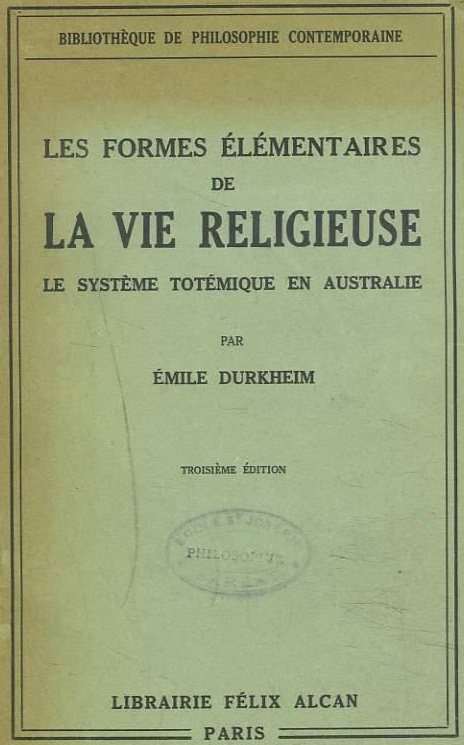 |
https://en.wikipedia.org/wiki/Collective_effervescence
|
| L'effervescence collective D'après Durkheim, la religion se crée dans des moments de ce qu'il nomme 'effervescence collective'. Ces moments arrivent quand tous les individus d'un groupe sont rassemblés pour communiquer "dans une même pensée et dans une même action."3 “Une fois les individus assemblés il se dégage de leur rapprochement une sorte d’électricité qui les transporte vite à un degré extraordinaire d’exaltation.”4 Durkheim appelle cette énergie 'mana'. On peut voir aujourd'hui cette force mana dans les stades de football ou lors des réunions nationales politiques. Ensuite, pour que la société puisse prendre conscience de cette force mana, il faut qu'elle soit projetée sur un objet externe, matériel. Comme il dit, "La force religieuse n’est que le sentiment que la collectivité inspire à ses membres, mais projeté hors des consciences qui l’éprouvent, et objectivé. Pour s’objectiver, il se fixe sur un objet qui devient ainsi sacré.”5 Ainsi, la société devient consciente de soi, de sa propre unité, et une religion est née. Il est important de comprendre que le symbole religieux ne fait qu'hypostasier [archive] la force de la société, et le pouvoir de la société coule à travers l'objet sacré. Cette force est réelle, souligne Durkheim, et donc, même si le dogme ou la doctrine de la religion sont faux, l'expérience religieuse est fondée sur une force physique, une sorte d'électricité que nous ne pouvons pas écarter comme une simple illusion. Ces moments d'effervescence collective doivent aussi être rejoués si la religion doit maintenir sa force parmi ses adhérents. C'est pour cette raison qu'il y a tellement de rites religieux ou d'autres cérémonies collectives, comme les rites mimétiques (induire les événements naturels tels que la pluie), les rites piaculaire (funéraire), célébratoire, sacrificiel etc. Si la société n'arrive pas à accomplir ces rites, elle risque de mourir. Comme dit Durkheim, “Que l’idée de la société s’éteigne dans les esprits individuels, que les croyances, les traditions, les aspirations de la collectivité cessent d’être senties et partagées par les particuliers, et la société mourra.”6 Ces rites sont, donc, d'ordre primaire pour la société. Tous les groupes humains ont une religion, ce qui mène Durkheim à dire que la religion, soit la société, est une caractéristique de la condition humaine. Autrement dit, aussi longtemps que l'homme se trouve rassemblé en groupe, il va se former une religion d'une certaine forme. |
集団的沸騰 デュルケームによれば、宗教は、彼が「集団的沸騰」と呼ぶ瞬間に生まれるものである。このような瞬間は、集団のすべての個人が集まって「同じ思考と同じ行 動で」コミュニケーショ ンをとるときに生じる3 。「いったん個人が集まると、その集まりから一種の電気が放出され、それが 彼らをすぐに異常な高揚へと運ぶ」4 、デュルケームはこのエネルギーを「マナ」と呼ぶ。このマナの力は、今日、サッカースタジアムや国政の場で見ることができる。そして、このマナの力を社会 が認識するためには、外部の物質的な対象物に投影する必要がある。彼が言うように、「宗教的な力は、共同体がそのメンバーの中に触発する感覚に過ぎない が、それを経験する良心から投影され、客観化される」。こうして、社会は自らの統一性を自己認識するようになり、宗教が誕生する。 宗教的な象徴は社会の力を仮現[アーカイブ]しているに過ぎず、社会の力は神聖な対象を通して流れていることを理解することが重要である。この力は実在す る。したがって、宗教のドグマや教義が偽りであったとしても、宗教的経験は物理的な力、一種の電気に基づいており、単なる幻想として片づけることはできな いとデュルケームは指摘する。 宗教が信者の間で強さを維持するためには、こうした集団的な発泡の瞬間も再現されなければならない。そのため、擬態儀式(雨などの自然現象を誘発する)、 ピアキュラー(葬儀)儀式、祝典、犠牲儀式など、宗教儀式やその他の集団儀式が非常に多く存在するのである。この儀式を怠れば、社会は滅びる。デュルケー ムが言うように、「社会という観念が個人の心の中から消え去り、共同体の信念、伝統、願望が個人によって感じられなくなり、共有されなくなれば、社会は死 んでしまう」6。したがって、これらの儀式は社会にとって第一のものなのだ。 人間の集団はすべて宗教を持っている。このことからデュルケームは、宗教、つまり社会は人間の条件の特徴であると言っている。つまり、人間は集団の中に自 分がいる限り、何らかの形で宗教を形成するのである。 |
| 3. Les Formes élémentaires, 5e édition, PUF, 2003, p. 553. 4. Les Formes élémentaires, 5e édition, PUF, 2003, p. 308. 5. Les Formes élémentaires, 5e édition, PUF, 2003, p. 327. 6. Les Formes élémentaires, 5e édition, PUF, 2003, p. 496. |
3. 『Les Formes élémentaires』第5版、PUF、2003年、553頁。 4. 『Les Formes élémentaires』第5版、PUF、2003年、308頁。 5. 『Les Formes élémentaires』第5版、PUF、2003年、327頁。 6. 『Les Formes élémentaires』第5版、PUF、2003年、496ページ。 |
| 「集 団的沸騰」《宗教的生活の基本形態》[Formes élémentaires] Wikipedia より | |
リ ンク
文 献
そ の他の情報
CC
Copyleft,
CC, Mitzub'ixi Quq Chi'j, 1996-2099
