ストレンジラブ博士あるいはどのようにして私は心配するのをやめて水爆を愛するようになったか
Dr. Strangelove or: How I Learned
to Stop Worrying and Love the Bomb
★ド クター・ストレンジラブあるいは Dr. Strangelove or: How I Learned to Stop Worrying and Love the Bomb』は、1964年のブラックコメディ映画で、冷戦時代のソビエト連邦とアメリカの核戦争の恐怖を風刺している。この映画は、スタンリー・ キューブ リックが監督、製作、共同脚本を手がけ、ピーター・セラーズ、ジョージ・C・スコット、スターリング・ヘイデン、スリム・ピケンズが出演している。この 映画は、ピーター・ジョージのスリラー小説『レッド・アラート』(1958年)の大筋を基にしている。 ストーリーは、ソビエト連邦への先制核攻撃を命令した動揺したアメリカ空軍の将軍に関係しています。アメリカ大統領とその顧問、統合参謀本部、イギリス空 軍の交換将校が、将軍の命令に従ったB-52の搭乗員がソ連を爆撃して核戦争が始まるのを阻止しようとする姿を描いている。 この映画は、史上最高のコメディのひとつであり、また史上最高の映画のひとつであるとしばしば考えられている。1998年、アメリカ映画協会が発表した 「最高のアメリカ映画」の26位(2007年版では39位)、2000年には「最も面白いアメリカ映画」の3位にランクインしている。1989年、アメリ カ議会図書館は『Dr. Strangelove』を「文化的、歴史的、または美学的に重要」であるとしてナショナル・フィルム・レジストリに保存するために選んだ最初の25作品 の1つに選んだ[7][8]。
☆ストレンジラブのストレンジは、当時の国務長官であったロバート・ストレンジ・マクナマラのミドルネームから由来する。
| Dr.
Strangelove or: How I Learned to Stop Worrying and Love the Bomb,
known
simply and more commonly as Dr. Strangelove, is a 1964 black comedy
film that satirizes the Cold War fears of a nuclear conflict between
the Soviet Union and the United States. The film was directed,
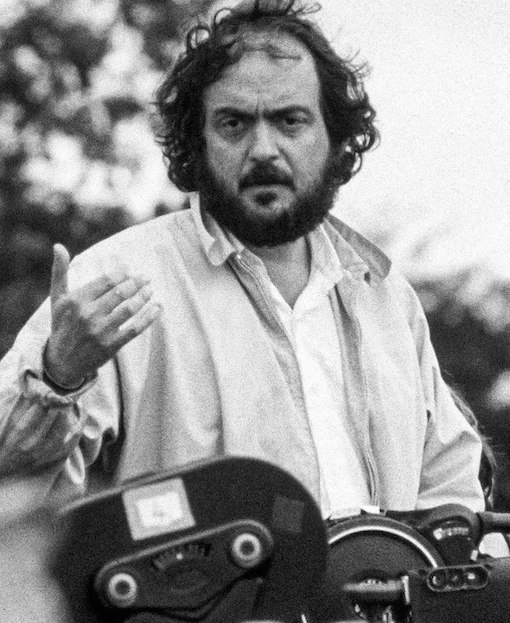
produced, and co-written by Stanley Kubrick
and stars Peter Sellers,
George C. Scott, Sterling Hayden, and Slim Pickens. The film is loosely
based on Peter George's thriller novel Red Alert (1958). The story concerns an unhinged United States Air Force general who orders a first strike nuclear attack on the Soviet Union. It separately follows the President of the United States, his advisors, the Joint Chiefs of Staff and a Royal Air Force (RAF) exchange officer as they attempt to prevent the crew of a B-52 plane (who were following orders from the general) from bombing the Soviets and starting a nuclear war. The film is often considered one of the best comedies ever made, as well as one of the greatest films of all time. In 1998, the American Film Institute ranked it twenty-sixth in its list of the best American movies (in the 2007 edition, the film ranked thirty-ninth), and in 2000, it was listed as number three on its list of the funniest American films. In 1989, the United States Library of Congress included Dr. Strangelove as one of the first 25 films selected for preservation in the National Film Registry for being "culturally, historically, or aesthetically significant".[7][8]  |
ド
クター・ストレンジラブあるいは Dr.
Strangelove or: How I Learned to Stop Worrying and
Love the
Bomb』は、1964年のブラックコメディ映画で、冷戦時代のソビエト連邦とアメリカの核戦争の恐怖を風刺している。この映画は、スタンリー・
キューブ
リックが監督、製作、共同脚本を手がけ、ピーター・セラーズ、ジョージ・C・スコット、スターリング・ヘイデン、スリム・ピケンズが出演している。この
映画は、ピーター・ジョージのスリラー小説『レッド・アラート』(1958年)の大筋を基にしている。 ストーリーは、ソビエト連邦への先制核攻撃を命令した動揺したアメリカ空軍の将軍に関係しています。アメリカ大統領とその顧問、統合参謀本部、イギリス空 軍の交換将校が、将軍の命令に従ったB-52の搭乗員がソ連を爆撃して核戦争が始まるのを阻止しようとする姿を描いている。 この映画は、史上最高のコメディのひとつであり、また史上最高の映画のひとつであるとしばしば考えられている。1998年、アメリカ映画協会が発表した 「最高のアメリカ映画」の26位(2007年版では39位)、2000年には「最も面白いアメリカ映画」の3位にランクインしている。1989年、アメリ カ議会図書館は『Dr. Strangelove』を「文化的、歴史的、または美学的に重要」であるとしてナショナル・フィルム・レジストリに保存するために選んだ最初の25作品 の1つに選んだ[7][8]。 |
| Plot United States Air Force Brigadier General Jack D. Ripper is commander of Burpelson Air Force Base, which houses the 843rd Bomb Wing, flying B-52 bombers armed with hydrogen bombs. The planes are on airborne alert two hours from their targets inside the USSR. General Ripper orders his executive officer, Group Captain Lionel Mandrake (an exchange officer from the Royal Air Force), to put the base on alert, confiscate all privately owned radios from base personnel and issue "Wing Attack Plan R" to the patrolling bombers. All the aircraft commence attack flights on the USSR and set their radios to allow communications only through their CRM 114 discriminators, which are designed to accept only communications preceded by a secret three-letter code known only to General Ripper. Happening upon a radio that had been missed earlier and hearing normal civilian broadcasting, Mandrake realizes that no attack order has been issued by The Pentagon and tries to stop Ripper, who locks them both in his office. Ripper tells Mandrake that he believes the Soviets have been fluoridating American water supplies to pollute the "precious bodily fluids" of Americans. Mandrake realizes Ripper has become insane. In the War Room at the Pentagon, General Buck Turgidson briefs President Merkin Muffley and other officers about how "Plan R" enables a senior officer to launch a retaliatory nuclear attack on the Soviets if all superiors have been killed in a first strike on the United States. It would take two days to try every CRM code combination to issue a recall order, so Muffley orders the U.S. Army to storm the base and arrest General Ripper. Turgidson, noting the slim odds of recalling the planes in time, then proposes that Muffley not only let the attack continue but send reinforcements. According to an unofficial study, this would result in "modest and acceptable civilian casualties" from the "badly damaged and uncoordinated" Soviet military that would remain after the initial attack. Muffley refuses this plan and instead brings Soviet ambassador Alexei de Sadeski into the War Room to telephone Soviet Premier Dimitri Kissov on the "hotline." Muffley warns the Premier of the impending attack and offers to reveal the targets, flight plans and defensive systems of the bombers so that the Soviets can protect themselves. After a heated discussion with the Premier, the ambassador informs President Muffley that the Soviet Union created a doomsday machine as a nuclear deterrent; it consists of many buried bombs jacketed with "cobalt-thorium G", which are set to detonate automatically should any nuclear attack strike the country. The resulting nuclear fallout would then engulf the planet for 93 years, rendering the Earth's surface uninhabitable. The device cannot be deactivated, as it is programmed to explode if any such attempt is made. The President's wheelchair-using scientific advisor, former German Nazi Dr. Strangelove, points out that such a doomsday machine would only be an effective deterrent if everyone knew about it; Alexei replies that the Soviet Premier had planned to reveal its existence to the world the following week at the Party Congress. U.S. Army troops arrive at Burpelson and battle with the garrison. After General Ripper commits suicide, Mandrake identifies Ripper's CRM code from his desk blotter and relays it to the Pentagon. Using the code, Strategic Air Command successfully recalls all of the bombers except for one, commanded by Major T. J. "King" Kong, due to the radio equipment being damaged in a missile attack. The Soviets attempt to find it, but Kong has the bomber attack a closer target due to dwindling fuel. As the plane approaches the new target, a Soviet ICBM site, the crew is unable to open the damaged bomb bay doors. Kong enters the bay and repairs the electrical wiring while straddling an H-bomb, whereupon the doors open and the bomb is dropped. Kong joyfully hoots as he rides the falling bomb until it detonates over the target. Back in the War Room, Dr. Strangelove recommends that the President gather several hundred thousand people to live in deep underground mines where the radiation will not penetrate. He suggests a 10:1 female-to-male ratio for a breeding program to repopulate the Earth once the radiation has subsided, a plan which gathers enthusiastic support from the all-male command staff. Worried that the Soviets will do the same, Turgidson warns about a "mineshaft gap" while Alexei secretly photographs the War Room. Dr. Strangelove declares he has a plan, then suddenly rises from his wheelchair and exclaims, "Mein Führer, I can walk!" The film cuts to a montage of nuclear explosions, accompanied by Vera Lynn's rendition of the song "We'll Meet Again." |
プロット アメリカ空軍のジャック・D・リッパー准将は、水爆を搭載したB-52爆撃機を飛ばす第843爆撃航空団を擁するバーペルソン空軍基地の司令官である。ソ 連国内の目標まで2時間の地点で空中待機している。 リッパー将軍は幹部であるライオネル・マンドレイク大尉(英国空軍からの交換将校)に、基地を警戒態勢に入れ、基地関係者から個人所有の無線機をすべて没 収し、パトロール中の爆撃機に「Wing Attack Plan R」を発令するよう命令する。全機はソ連への攻撃飛行を開始し、無線機はリッパー将軍だけが知っている秘密の3文字コードで始まる通信だけを受け付ける CRM114識別器を通してのみ通信できるように設定された。以前に見逃していたラジオに遭遇し、通常の民間放送を聞いたマンドレイクは、攻撃命令がペン タゴンから出されていないことに気づき、リッパーを止めようとするが、彼は二人を自分のオフィスに閉じ込める。リッパーはマンドレイクに、ソビエトがアメ リカの水道水にフッ素を入れ、アメリカ人の「貴重な体液」を汚染していると考えていることを話す。マンドレイクはリッパーが正気を失っていることに気づ く。 ペンタゴンのウォールームでは、バック・ターギッドソン将軍がマーキン・マフリー大統領らに、アメリカへの先制攻撃で上官が全員死亡した場合、上官がソビ エトへの報復核攻撃を行う「プランR」について説明する。呼び戻し命令を出すためにCRMコードの組み合わせをすべて試すと2日かかるため、マフリーは米 軍に基地を襲撃してリッパー将軍を逮捕するよう命令する。ターギッドソンは、飛行機を呼び戻すのが間に合わないことに着目し、マフリーに攻撃を継続させる だけでなく、援軍を送ることを提案する。非公式な調査によると、これによって最初の攻撃の後に残る「ひどく損傷し、まとまりのない」ソ連軍から「適度で許 容できる民間人の犠牲者」を出すことができるだろう、という。マフリーはこの計画を拒否し、代わりにソ連大使アレクセイ・デ・サデスキを作戦室に呼び寄 せ、ソ連首相ディミトリ・キソフに「ホットライン」で電話をかけさせた。マフリーは、首相に攻撃が迫っていることを警告し、ソ連が自衛できるように爆撃機 の目標、飛行計画、防御システムを明らかにすることを申し出る。 大使はマフリー大統領に、ソ連が核抑止力として作った「ドゥームズデイ・マシン」(核爆弾に「コバルト・トリウムG」をコーティングしたものを多数埋め、 核攻撃を受けても自動的に爆発するようにしたもの)を紹介し、「このマシンは、ソ連が核攻撃を受けると、核兵器が爆発し、その放射性物質がソ連に降り注 ぐ。この装置は、「コバルトトリウムG」のジャケットで覆われた多数の爆弾が埋められており、核攻撃されると自動的に爆発し、その放射性降下物で93年間 地球を覆い、地表が居住不能になる。この装置は解除することができず、解除しようとすると爆発するようにプログラムされている。大統領の車椅子の科学顧問 である元ドイツのナチス・ストレンジラブ博士は、このような終末装置は誰もが知っていなければ有効な抑止力にならないと指摘する。アレクセイは、ソ連首相 が翌週の党大会でその存在を世界に公表する予定だったと答える。 米軍がバーペルソンに到着し、守備隊と戦闘になる。リッパー将軍が自殺した後、マンドレイクはリッパーのCRMコードを彼の机のブロッターから特定し、ペ ンタゴンに伝える。そのコードを使い、戦略空軍司令部はT・J・"キング"・コング少佐の指揮する爆撃機1機を除き、すべての爆撃機を呼び戻すことに成功 する。ソ連はその1機を見つけようとするが、コングは燃料が少なくなったため、より近い目標を攻撃させる。新たな目標であるソ連のICBM施設に近づく と、乗組員は破損した爆弾倉の扉を開けることができない。コングは水爆にまたがったまま爆弾倉に入り、電気配線を修理すると、ドアが開き、爆弾が落とされ た。コングは、落ちてくる爆弾を目標上空で爆発させるまで、楽しげにほらを吹く。 戦争室に戻ったストレンジラブ博士は、大統領に数十万人を集め、放射能が浸透しない地下深くの鉱山に住まわせることを勧める。そして、放射能が去った後の 地球への再繁殖のために、男女比を10対1にすることを提案し、男性ばかりの司令部から熱烈な支持を受ける。ソ連が同じことをするのではないかと心配する ターギッドソンは、「地雷の穴」を警告し、アレクセイは密かに戦争の部屋を撮影していた。ストレンジラブ博士は計画があると宣言し、突然車椅子から立ち上 がり、"総統閣下、私は歩けます!"と叫ぶ。映画は核爆発のモンタージュに切り替わり、ヴェラ・リンによる "We'll Meet Again "の歌が流れる。 |
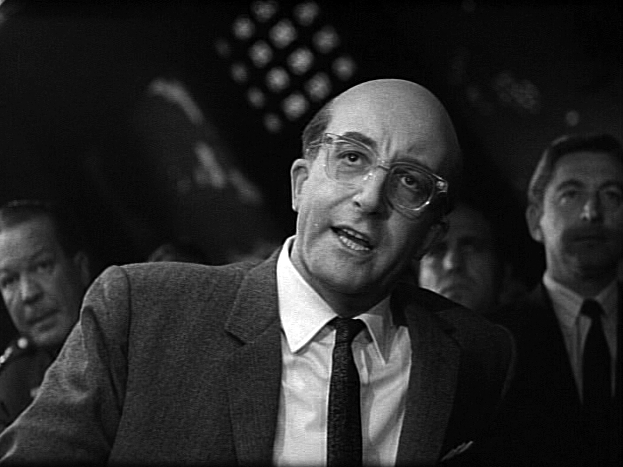
| Peter Sellers as: Group captain Lionel Mandrake, a British RAF exchange officer Merkin Muffley, the President of the United States Dr. Strangelove, the wheelchair-using nuclear war expert and former Nazi named Merkwürdigliebe, who has alien hand syndrome[9][10] George C. Scott as General Buck Turgidson, Chairman of the Joint Chiefs of Staff Sterling Hayden as Brigadier General Jack D. Ripper, paranoid commander of Burpelson Air Force Base, which is part of the Strategic Air Command. Keenan Wynn as Colonel "Bat" Guano, the Army officer who finds Mandrake and Ripper Jack Creley as Mr. Staines, National Security Advisor Slim Pickens as Major T. J. "King" Kong, the B-52 bomber's commander and pilot Peter Bull as Soviet Ambassador Alexei de Sadeski James Earl Jones as Lieutenant Lothar Zogg, the B-52's bombardier (film debut) Tracy Reed as Miss Scott, General Turgidson's secretary and mistress, the film's only female character. She also appears as "Miss Foreign Affairs", the Playboy Playmate in Playboy's June 1962 issue,[11] which Major Kong is shown perusing at one point.[12] Shane Rimmer as Capt. Ace Owens, the co-pilot of the B-52 |
 |
| Peter Sellers's multiple roles Columbia Pictures agreed to finance the film if Peter Sellers played at least four major roles. The condition stemmed from the studio's opinion that much of the success of Kubrick's previous film Lolita (1962) was based on Sellers's performance in which his single character assumes a number of identities. Sellers had also played three roles in The Mouse That Roared (1959). Kubrick accepted the demand, later saying that "such crass and grotesque stipulations are the sine qua non of the motion-picture business."[14][15] Sellers ended up playing three of the four roles written for him. He had been expected to play Air Force Major T. J. "King" Kong, the B-52 aircraft commander, but from the beginning Sellers was reluctant. He felt his workload was too heavy and he worried he would not properly portray the character's Texan English accent. Kubrick pleaded with him and he asked the screenwriter Terry Southern (who had been raised in Texas) to record a tape with Kong's lines spoken in the correct accent, which he practiced using Southern's tapes. But after the start of shooting in the aircraft Sellers sprained his ankle and could no longer work in the cramped aircraft mockup.[14][15][16] Sellers is said[by whom?] to have improvised much of his dialogue, with Kubrick incorporating the ad-libs into the written screenplay so that the improvised lines became part of the canonical screenplay, a practice known as retroscripting.[17] |
コロンビア映画社は、ピーター・セラーズが少なくとも4つの主要な役を演じるなら、この映画に資金を提供することに同意した。この条件は、キューブリック の前作『ロリータ』(1962)の成功の多くが、セラーズの一人二役の演技に基づくというスタジオ側の意見からきている。セラーズは『吼えるネズミ』 (1959年)でも一人三役を演じていた。キューブリックはこの要求を受け入れ、後に「このような粗野でグロテスクな規定は、映画ビジネスの基本中の基本 だ」と語っている[14][15]。 セラーズは結局、彼のために書かれた4つの役のうち3つを演じることになった。B-52の司令官である空軍少佐T・J・"キング"・コングを演じることが 期待されていたが、当初からセラーズは消極的であった。しかし、当初からセラーズはこの役柄を嫌がっていたのだ。キューブリックは彼に懇願し、彼は脚本家 のテリー・サザン(テキサス育ち)にコングのセリフを正しいアクセントで話したテープを録音してもらい、サザンのテープを使って練習した。しかし、航空機 での撮影開始後、セラーズは足首を捻挫し、狭い航空機のモックアップで作業することができなくなった[14][15][16]。 セラーズは台詞の多くを即興で書いたと言われており[by who?]、キューブリックはアドリブを脚本に組み込んで、即興の台詞が正規の脚本の一部となるようにしたが、これは後付けとして知られている慣習である [17]。 |
| Group Captain Lionel Mandrake According to film critic Alexander Walker, the author of biographies of both Sellers and Kubrick, the role of Group Captain Lionel Mandrake was the easiest of the three for Sellers to play, since he was aided by his experience of mimicking his superiors while serving in the RAF during World War II.[17] There is also a heavy resemblance to Sellers' friend and occasional co-star Terry-Thomas and the prosthetic-limbed RAF flying ace Sir Douglas Bader. President Merkin Muffley For his performance as President Merkin Muffley, Sellers assumed a Midwestern American English accent. Sellers drew inspiration for the role from Adlai Stevenson,[17] a former Illinois governor who was the Democratic candidate for the 1952 and 1956 presidential elections and the U.N. ambassador during the Cuban Missile Crisis. In early takes, Sellers faked cold symptoms to emphasize the character's apparent weakness. That caused frequent laughter among the film crew, ruining several takes. Kubrick ultimately found this comic portrayal inappropriate, feeling that Muffley should be a serious character.[17] In later takes Sellers played the role straight, though the President's cold is still evident in several scenes. Dr. Strangelove Dr. Strangelove is a former Nazi and scientist, suggesting Operation Paperclip, the US effort to recruit top German technical talent at the end of World War II.[18][19] He serves as President Muffley's scientific adviser in the War Room. When General Turgidson wonders aloud to Mr. Staines (Jack Creley), what kind of name "Strangelove" is, possibly a "Kraut name," Staines responds that Strangelove's original German surname was Merkwürdigliebe ("Strange love" in German) and that "he changed it when he became a citizen." Strangelove accidentally addresses the president as Mein Führer twice in the film. Dr. Strangelove did not appear in the book Red Alert.[20] The character is an amalgamation of RAND Corporation strategist Herman Kahn, rocket scientist Wernher von Braun (a central figure in Nazi Germany's rocket development program recruited to the US after the war), and Edward Teller, the "father of the hydrogen bomb."[21] It has been claimed that the character was based on Henry Kissinger, but Kubrick and Sellers denied this;[22] Sellers said, "Strangelove was never modeled after Kissinger—that's a popular misconception. It was always Wernher von Braun."[23] Furthermore, Henry Kissinger points out in his memoirs that at the time of the writing of Dr. Strangelove, he was a little-known academic.[24] The wheelchair-using Strangelove furthers a Kubrick trope of the menacing, seated antagonist, first depicted in Lolita through the character "Dr. Zaempf."[25] Strangelove's accent was influenced by that of Austrian-American photographer Weegee, who worked for Kubrick as a special photographic effects consultant.[17] Strangelove's appearance echoes the mad scientist archetype as seen in the character Rotwang in Fritz Lang's film Metropolis (1927). Sellers's Strangelove takes from Rotwang the single black gloved hand (which, in Rotwang's case is mechanical, because of a lab accident), the wild hair and, most important, his ability to avoid being controlled by political power.[26] According to Alexander Walker, Sellers improvised Dr. Strangelove's lapse into the Nazi salute, borrowing one of Kubrick's black leather gloves for the uncontrollable hand that makes the gesture. Dr. Strangelove apparently has alien hand syndrome. Kubrick wore the gloves on the set to avoid being burned when handling hot lights, and Sellers, recognizing the potential connection to Lang's work, found them to be menacing.[17] |
ライオネル・マンドレイク大尉 セラーズとキューブリックの伝記を書いた映画評論家のアレクサンダー・ウォーカーによると、ライオネル・マンドレイク大尉の役は、セラーズが第二次世界大 戦中に英国空軍に所属していたときに上官の真似をした経験が役に立ったため、3人の中で最も演じやすかったという[17]。セラーズの友人で時折共演した テリー=トマスと義足の英国空軍飛行エースのサー・ダグラス・ベイターにも酷似しているところがある。 マーキン・マフリー大統領 マーキン・マフリー大統領を演じるにあたり、セラーズはアメリカ中西部の英語訛りを使用した。1952年と1956年の大統領選挙の民主党候補であり、 キューバ・ミサイル危機の際には国連大使を務めた元イリノイ州知事のアドレー・スティーブンソン[17]からインスピレーションを得て、この役を演じたの である。 初期のテイクでは、セラーズは風邪の症状を偽って、この人物の弱さを強調した。そのため、撮影スタッフの間でたびたび笑いが起こり、何度かテイクが台無し になった。キューブリックは最終的に、マフリーは真面目なキャラクターであるべきだと考え、このコミカルな描写は不適切だと考えた[17]。後の撮影で は、セラーズはこの役をまっすぐに演じているが、大統領の風邪はいくつかのシーンでまだ明らかである。 ストレンジラブ博士 ストレンジラブ博士は元ナチスで科学者であり、第二次世界大戦末期にアメリカがドイツの優秀な技術者を採用するために行ったペーパークリップ作戦を提案し た[18][19]。戦争室でマフリー大統領の科学顧問を務めている。ターギッドソン将軍がステインズ氏(ジャック・クリーリー)に、「ストレンジラブ」 とはどういう名前なのか、もしかしたら「クラウトネーム」なのではないかと声に出して質問すると、ステインズ氏は、ストレンジラブのドイツ語の元の苗字は Merkwürdigliebe(ドイツ語で「奇妙な愛」)、「彼は市民になったときにそれを変えた」と答えている]。ストレンジラブは映画の中で誤って 大統領をMein Führer(総統)と2回呼んでいる。ドクター・ストレンジラブは『レッドアラート』には登場しない[20]。 このキャラクターはランド社の戦略家ハーマン・カーン、ロケット科学者のヴェルナー・フォン・ブラウン(ナチス・ドイツのロケット開発計画の中心人物で戦 後アメリカに採用)、「水爆の父」エドワード・テラーの合体である[21]。このキャラクターがヘンリー・キッシンジャーに基づいていると主張されてきた が、キューブリックとセラーズはこれを否定した[22] セラーズは「ストレンジラブがキッシーをモデルにしたことはなく、それはよくある誤解である」と述べている。さらに、ヘンリー・キッシンジャーは『Dr. Strangelove』の執筆当時、自分があまり知られていない学者であったことを回顧録で指摘している[24]。 車椅子を使うストレンジラブは、『ロリータ』で「ザーンプ博士」というキャラクターを通して初めて描かれた、威嚇的で座る敵役というキューブリックの典型 をさらに進めている[25]。ストレンジラブのアクセントは、特殊写真効果のコンサルタントとしてキューブリックに雇われたオーストリア系アメリカ人の写 真家ウィージーのものに影響を受けている[17] ストレンジラブの外見は、フリッツ・ラングの映画『メトロポリス』(1927)のロートヴァングに見られるマッドサイエンティストの典型と呼応するもので ある。セラーズのストレンジラブはロットワングから黒い手袋をはめた片手(ロットワングの場合、研究所の事故のため機械的である)、ワイルドな髪、そして 最も重要な政治権力に支配されることを避ける能力を持っている。 Alexander Walkerによると、セラーズはストレンジラブ博士がナチの敬礼をするときに、キューブリックの黒い革手袋を借りてきて、制御できない手でその仕草を即 興でやったと言う[26]。ストレンジラブ博士はエイリアンハンド症候群であるらしい。キューブリックは、熱い照明を扱うときに火傷をしないように、撮影 現場でその手袋をしており、セラーズは、ラングの作品との潜在的なつながりを認識し、それが脅威的であることに気づいた[17]。 |
| Slim Pickens as Major T. J.
"King" Kong Slim Pickens, an established character actor and veteran of many Western films, was eventually chosen to replace Sellers as Major Kong after Sellers' injury. Terry Southern's biographer, Lee Hill, said the part was originally written with John Wayne in mind, and that Wayne was offered the role after Sellers was injured, but he immediately turned it down.[27] Dan Blocker of the Bonanza western television series was approached to play the part, but according to Southern, Blocker's agent rejected the script as being "too pinko."[28] Kubrick then recruited Pickens, whom he knew from his brief involvement in a Marlon Brando western film project that was eventually filmed as One-Eyed Jacks.[27] His fellow actor James Earl Jones recalls, "He was Major Kong on and off the set—he didn't change a thing—his temperament, his language, his behavior." Pickens was not told that the movie was a black comedy, and he was only given the script for scenes he was in, to get him to play it "straight."[29] Kubrick's biographer John Baxter explained, in the documentary Inside the Making of Dr. Strangelove: As it turns out, Slim Pickens had never left the United States. He had to hurry and get his first passport. He arrived on the set, and somebody said, "Gosh, he's arrived in costume!", not realizing that that's how he always dressed ... with the cowboy hat and the fringed jacket and the cowboy boots—and that he wasn't putting on the character—that's the way he talked. Pickens, who had previously played only supporting and character roles, said that his appearance as Maj. Kong greatly improved his career. He later commented, "After Dr. Strangelove, my salary jumped five times, and assistant directors started saying 'Hey, Slim' instead of 'Hey, you.'"[30] |
スリム・ピケンズ(T・J・"キング "コング少佐役 スリム・ピケンズは性格俳優として定評があり、多くの西部劇に出演したベテランで、セラーズの怪我の後、最終的にセラーズの代役としてコング少佐に抜擢さ れた。テリー・サザンの伝記作家リー・ヒルは、この役はもともとジョン・ウェインを想定して書かれており、セラーズの負傷後にウェインがこの役をオファー されたが、すぐに断ったと述べている[27]。 [27] テレビの西部劇シリーズ『ボナンザ』のダン・ブロッカーにも出演依頼があったが、サザンによれば、ブロッカーのエージェントは「ピンコロ過ぎる」として脚 本を拒否した[28] キューブリックは次に、最終的に『片目のジャック』として撮影されたマーロンブランドの西部劇のプロジェクトに短期間関わったことで知っているピケンズを 採用した[27]。 仲間の俳優ジェームズ・アール・ジョーンズは、「彼はセットの中でも外でもメジャー・コングで、気質も言葉遣いも行動も何も変わらなかった」と回想してい る。ピケンズは映画がブラックコメディであることを知らされておらず、彼が出演するシーンのみ脚本を渡され、「まっすぐに」演じるよう仕向けられた [29]。 キューブリックの伝記作家ジョン・バクスターは、ドキュメンタリー映画『Inside the Making of Dr. Strangelove』の中でこう説明している。 結局のところ、スリム・ピケンズはアメリカから出たことがなかった。彼は急いで最初のパスポートを取得しなければならなかった。彼は撮影現場に到着する と、誰かが「おや、仮装してきたな!」と言った。彼はいつもそのような格好をしていたのだ。カウボーイハットにフリンジ付きのジャケット、カウボーイブー ツ、そして役を演じていたのではなく、そのように話していたのだ。 ピケンズは、それまで脇役や個性的な役柄ばかり演じていたが、コング司令官を演じたことで、自分のキャリアに大きな変化があったという。彼は後に 「『Dr. Strangelove』の後、給料は5倍に跳ね上がり、助監督は『おい、お前』ではなく『おい、スリム』と言うようになった」とコメントしている [30]。 |
| George C. Scott as General Buck
Turgidson George C. Scott played the role of General Buck Turgidson, the Chairman of the Joint Chiefs of Staff. In this capacity General Turgidson was the nation's highest-ranking military officer and the principal military advisor to the President and the National Security Council. He is seen during most of the movie advising President Muffley on the best steps to take in order to stop the fleet of B-52 Stratofortresses that was deployed by Brigadier General Jack D. Ripper to drop nuclear bombs on Soviet soil. According to James Earl Jones, Kubrick tricked Scott into playing the role of Gen. Turgidson far more ridiculously than Scott was comfortable doing. Kubrick talked Scott into doing over-the-top "practice" takes, which Kubrick told Scott would never be used, as a way to warm up for the "real" takes. Kubrick used these takes in the final film, causing Scott to swear never to work with Kubrick again.[31] During the filming, Kubrick and Scott had different opinions regarding certain scenes, but Kubrick got Scott to conform largely by repeatedly beating him at chess, which they played frequently on the set.[32] Scott, a skilled player himself, later said that while he and Kubrick may not have always seen eye to eye, he respected Kubrick immensely for his skill at chess.[33][failed verification] |
ジョージ・C・スコット(バック・ターギッドソン将軍役) ジョージ・C・スコットは、統合参謀本部議長のバック・ターギッドソン将軍を演じた。ターギッドソン将軍は国家最高位の軍人であり、大統領と国家安全保障 会議の主要な軍事顧問であった。映画の中で彼は、ジャック・D・リッパー准将がソ連本土に核爆弾を投下するために配備したB-52ストラトフォートレスの 艦隊を阻止するために、マフリー大統領に最善の手段をアドバイスするシーンがほとんどである。 ジェームズ・アール・ジョーンズによると、キューブリックはスコットを騙して、ターギッドソン将軍の役を、スコットがやりやすいよりもずっとバカバカしく 演じさせたという。キューブリックはスコットを説得して、"本番 "のテイクのウォーミングアップとして、決して使われないと告げた大げさな "練習 "のテイクを撮らせた。キューブリックはこれらのテイクを最終作で使われ、スコットは二度とキューブリックと仕事をしないことを誓うことになる[31]。 撮影中、キューブリックとスコットは特定のシーンに関して異なる意見を持っていたが、キューブリックは撮影現場で頻繁にプレイしていたチェスで繰り返しス コットを負かすことによって、スコットを大きく従わせた[32]。スコットは自身も熟練のプレイヤーで、後にキューブリックとは必ずしも意見が一致しな かったかもしれないが、チェスの腕を持つキューブリックを非常に尊敬していると語った[33][失敗検証]。 |
| Novel and screenplay Stanley Kubrick started with nothing but a vague idea to make a thriller about a nuclear accident that built on the widespread Cold War fear for survival.[34] While doing research, Kubrick gradually became aware of the subtle and paradoxical "balance of terror" between nuclear powers. At Kubrick's request, Alastair Buchan (the head of the Institute for Strategic Studies) recommended the thriller novel Red Alert by Peter George.[35] Kubrick was impressed with the book, which had also been praised by game theorist and future Nobel Prize in Economics winner Thomas Schelling in an article written for the Bulletin of the Atomic Scientists and reprinted in The Observer,[36] and immediately bought the film rights.[37] In 2006, Schelling wrote that conversations between Kubrick, Schelling, and George in late 1960 about a treatment of Red Alert updated with intercontinental missiles eventually led to the making of the film.[38] In collaboration with George, Kubrick started writing a screenplay based on the book. While writing the screenplay, they benefited from some brief consultations with Schelling and later, Herman Kahn.[39] In following the tone of the book, Kubrick originally intended to film the story as a serious drama. However, he began to see comedy inherent in the idea of mutual assured destruction as he wrote the first draft. He later said: My idea of doing it as a nightmare comedy came in the early weeks of working on the screenplay. I found that in trying to put meat on the bones and to imagine the scenes fully, one had to keep leaving out of it things which were either absurd or paradoxical, in order to keep it from being funny; and these things seemed to be close to the heart of the scenes in question.[40] Among the titles that Kubrick considered for the film were Dr. Doomsday or: How to Start World War III Without Even Trying, Dr. Strangelove's Secret Uses of Uranus, and Wonderful Bomb.[41] After deciding to make the film a black comedy, Kubrick brought in Terry Southern as a co-writer in late 1962. The choice was influenced by reading Southern's comic novel The Magic Christian, which Kubrick had received as a gift from Peter Sellers,[14] and which itself became a Sellers film in 1969. Southern made important contributions to the film, but his role led to a rift between Kubrick and Peter George; after Life magazine published a photo-essay on Southern in August 1964 which implied that Southern had been the script's principal author—a misperception neither Kubrick nor Southern did much to dispel— George wrote a letter to the magazine, published in its September 1964 issue, in which he pointed out that he had both written the film's source novel and collaborated on various incarnations of the script over a period of ten months, whereas "Southern was briefly employed ... to do some additional rewriting for Kubrick and myself and fittingly received a screenplay credit in third place behind Mr. Kubrick and myself."[42] |
小説と脚本 スタンリー・キューブリックは、冷戦時代に蔓延した生存への恐怖をベースにした原発事故のスリラーを作ろうという漠然としたアイデアから出発した [34]。調査を進めるうちに、キューブリックは次第に核保有国間の微妙な逆説的な「恐怖の均衡」に気づくようになる。キューブリックの依頼で、戦略研究 所の所長であったアラスター・ブカンがピーター・ジョージのスリラー小説『レッドアラート』を推薦した[35]。ゲーム理論家で後にノーベル経済学賞を受 賞するトーマス・シェリングが『原子力科学者会報』に寄稿し、『オブザーバー』に転載された記事でも絶賛していた本作に感銘を受け、すぐに映画の権利を購 入する[36]。 [2006年にシェリングは、1960年末にキューブリック、シェリング、ジョージの間で、大陸間ミサイルで更新した『レッドアラート』の扱いについて会 話し、最終的に映画製作につながった、と書いている[38]。 キューブリックはジョージと共同で、この本を基にした脚本を書き始めた。キューブリックはジョージと共同で、この本を基に脚本執筆を開始し、脚本執筆中に シェリングや後にハーマン・カーンに短い相談をしている[39]。しかし、彼は最初の原稿を書いているうちに、相互確証破壊のアイデアに内在する滑稽さを 見るようになった。彼は後にこう語っている。 悪夢のようなコメディにしようと思ったのは、脚本を書いていた初期の頃だ。骨に肉をつけ、シーンを完全に想像しようとすると、滑稽にならないようにするた めに、不条理なことや逆説的なことを省き続けなければならないことがわかった。そしてこれらのことは、問題のシーンの核心に近いものであるように思われた [40]。 キューブリックがこの映画のために考えたタイトルの中には、『ドゥームズデイ博士、あるいは』(Dr. Doomsday or: How to start World III War Without Even Trying』、『Dr. Strangelove's Secret Uses of Uranus』、『Wonderful Bomb』など。ブラックコメディにすることを決めたキューブリックは、1962年末に共同脚本家としてテリー・サザンを招いた。この選択は、キューブ リックがピーター・セラーズから贈り物として受け取ったサザンのコミック小説『魔法のキリスト教徒』を読んだことに影響された[14]。1964年8月に 『ライフ』誌がサザンのフォト・エッセイを掲載し、サザンが脚本の主筆であると示唆した後、キューブリックもサザンもこの誤解を解こうとはしなかった。 ジョージは同誌に手紙を書き、1964年9月号に掲載されたが、彼は自分が10ヶ月間にわたってこの映画の原作を書き、脚本のさまざまなバージョンで協力 したのに対し、「サザンは一時的に雇われたが...。 キューブリックと私のために追加の書き直しをするために......短期間雇われ、キューブリック氏と私に次ぐ第3位の脚本家としてふさわしいクレジット を受け取った」[42]と述べている。 |
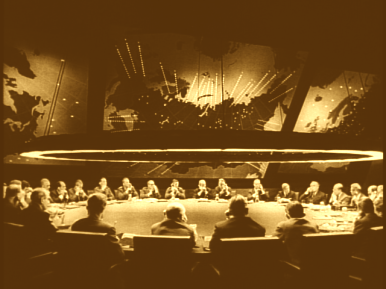
| Sets and filming Dr. Strangelove was filmed at Shepperton Studios, near London, as Sellers was in the middle of a divorce at the time and unable to leave England.[43] The sets occupied three main sound stages: the Pentagon War Room, the B-52 Stratofortress bomber and the last one containing both the motel room and General Ripper's office and outside corridor.[14] The studio's buildings were also used as the Air Force base exterior. The film's set design was done by Ken Adam, the production designer of several James Bond films (at the time he had already worked on Dr. No). The black and white cinematography was by Gilbert Taylor, and the film was edited by Anthony Harvey and an uncredited Kubrick. The original musical score for the film was composed by Laurie Johnson and the special effects were by Wally Veevers. The opening theme is an instrumental version of "Try a Little Tenderness." The theme of the chorus from the bomb run scene is a modification of "When Johnny Comes Marching Home." Sellers and Kubrick got along well during the film's production and shared a love of photography.[44] For the War Room, Ken Adam first designed a two-level set which Kubrick initially liked, only to decide later that it was not what he wanted. Adam next began work on the design that was used in the film, an expressionist set that was compared with The Cabinet of Dr. Caligari and Fritz Lang's Metropolis. It was an enormous concrete room (130 feet (40 m) long and 100 feet (30 m) wide, with a 35-foot (11 m)-high ceiling)[37] suggesting a bomb shelter, with a triangular shape (based on Kubrick's idea that this particular shape would prove the most resistant against an explosion). One side of the room was covered with gigantic strategic maps reflecting in a shiny black floor inspired by dance scenes in Fred Astaire films. In the middle of the room there was a large circular table lit from above by a circle of lamps, suggesting a poker table. Kubrick insisted that the table would be covered with green baize (although this could not be seen in the black and white film) to reinforce the actors' impression that they are playing 'a game of poker for the fate of the world.'[45] Kubrick asked Adam to build the set ceiling in concrete to force the director of photography to use only the on-set lights from the circle of lamps. Moreover, each lamp in the circle of lights was carefully placed and tested until Kubrick was happy with the result.[46] Lacking cooperation from the Pentagon in the making of the film, the set designers reconstructed the aircraft cockpit to the best of their ability by comparing the cockpit of a B-29 Superfortress and a single photograph of the cockpit of a B-52 and relating this to the geometry of the B-52's fuselage. The B-52 was state-of-the-art in the 1960s, and its cockpit was off-limits to the film crew. When some United States Air Force personnel were invited to view the reconstructed B-52 cockpit, they said that "it was absolutely correct, even to the little black box which was the CRM."[17] It was so accurate that Kubrick was concerned about whether Adam's team had carried out all its research legally.[17] In several shots of the B-52 flying over the polar ice en route to Russia, the shadow of the actual camera plane, a Boeing B-17 Flying Fortress, is visible on the icecap below. The B-52 was a scale model composited into the Arctic footage, which was sped up to create a sense of jet speed.[47] Home movie footage included in Inside the Making of Dr. Strangelove on the 2001 Special Edition DVD release of the film shows clips of the B-17 with a cursive "Dr. Strangelove" painted over the rear entry hatch on the right side of the fuselage. In 1967, some of the flying footage from Dr. Strangelove was re-used in The Beatles' television film Magical Mystery Tour. As told by editor Roy Benson in the BBC Radio Documentary Celluloid Beatles, the production team of Magical Mystery Tour lacked footage to cover the sequence for the song "Flying." Benson had access to the aerial footage filmed for the B-52 sequences of Dr. Strangelove, which was stored at Shepperton Studios. The use of the footage prompted Kubrick to call Benson to complain.[48] |
セットと撮影 ドクター・ストレンジラブ』はロンドン近郊のシェパートン・スタジオで撮影された。ペンタゴンの戦争部屋、B-52ストラトフォートレス爆撃機、モーテル の部屋とリッパー将軍のオフィスと外廊下を含む最後のステージの3つの主要なサウンドステージが使用された[14] スタジオの建物も空軍基地外観として使われた。映画のセットデザインは、ジェームズ・ボンド作品のプロダクションデザイナーであるケン・アダムが担当した (当時、彼はすでに『ドクター・ノオ』を手掛けていた)。撮影はギルバート・テイラー、編集はアンソニー・ハーヴェイとクレジットされていないキューブ リックである。映画のオリジナル音楽はローリー・ジョンソンが作曲し、特殊効果はウォーリー・ヴィーヴァースが担当した。オープニングテーマは、"Try a Little Tenderness "のインストゥルメンタルバージョン。爆走シーンのコーラスのテーマは、"When Johnny Comes Marching Home "を改造したものだ。セラーズとキューブリックは映画製作中に仲良くなり、写真への愛情を共有した[44]。 戦争部屋』では、ケン・アダムが最初に2階建てのセットをデザインし、キューブリックは当初それを気に入っていたが、後にそれは彼の望むものではないと判 断した。アダムは次に、『カリガリ博士の内閣』やフリッツ・ラングの『メトロポリス』と比較された表現主義のセットで、この映画で使われたデザインに取り 掛かった。それは巨大なコンクリートの部屋(長さ130フィート(40 m)、幅100フィート(30 m)、天井高35フィート(11 m))[37] で、三角形の形(この特定の形が爆発に対して最も抵抗力があるというキューブリックの考えに基づいている)の防空壕を示唆するものであった。部屋の片側は 巨大な戦略地図で覆われ,フレッド・アステアの映画のダンス・シーンをイメージした光沢のある黒い床に映し出されていた.部屋の中央には、円形のランプで 上から照らされた大きな円卓があり、ポーカー・テーブルを連想させる。キューブリックは、俳優たちが「世界の運命を賭けたポーカー・ゲーム」をしていると いう印象を強めるために、テーブルを緑のベーズで覆うことにこだわった(白黒映画では見ることはできないが)[45]。キューブリックはアダムにセットの 天井をコンクリートで作るように頼み、撮影監督にランプの輪の照明だけを使わせるようにさせた。さらに、照明の輪の中のそれぞれのランプは、キューブリッ クが満足する結果になるまで慎重に配置され、テストされた[46]。 映画製作において国防総省からの協力が得られなかったため、セットデザイナーはB-29スーパーフォートレスのコックピットとB-52のコックピットの1 枚の写真を比較し、これをB-52の胴体の形状と関連付けることによって、可能な限り航空機のコックピットを再現している。B-52は1960年代の最新 鋭機であり、そのコックピットは撮影隊の立ち入りが禁止されていた。復元されたB-52のコックピットを見るために招待されたアメリカ空軍の職員は 「CRMである小さなブラックボックスまで完全に正しい」と言った[17]。あまりにも正確なので、キューブリックはアダムのチームがすべての研究を合法 的に行ったかどうか心配になったという[17]。 ロシアに向かうB-52が極地の氷の上を飛行しているいくつかのショットでは、実際の撮影機であるボーイングB-17フライング・フォートレスの影が下の 氷床に見えている。このB-52は北極圏の映像に合成されたスケールモデルで、ジェット機の速度感を出すためにスピードアップされている[47]。 2001年発売のDVD特別版『Inside the Making of Dr. Strangelove』に収録されたホームムービー映像では、胴体右側の後部入口ハッチに筆記体で「Dr. Strangelove」と書かれたB-17の映像が映されている。 1967年、『Dr. Strangelove』の飛行映像の一部は、ビートルズのテレビ映画『Magical Mystery Tour』で再使用された。BBCラジオのドキュメンタリー番組『セルロイド・ビートルズ』で編集者のロイ・ベンソンが語っているように、『マジカル・ミ ステリー・ツアー』の制作チームは、曲「Flying」のシーケンスをカバーする映像が足りなかったのだ。ベンソンは、シェパートン・スタジオに保管され ていた『Dr. Strangelove』のB-52のシークエンスのために撮影された空撮映像にアクセスすることができた。この映像が使われたことで、キューブリックは ベンソンに苦情の電話を入れた[48]。 |
| Fail Safe Red Alert author Peter George collaborated on the screenplay with Kubrick and satirist Terry Southern. Red Alert was more solemn than its film version, and it did not include the character Dr. Strangelove, though the main plot and technical elements were quite similar. A novelization of the actual film, rather than a reprint of the original novel, was published by Peter George, based on an early draft in which the narrative is bookended by the account of aliens, who, having arrived at a desolated Earth, try to piece together what has happened. It was reissued in October 2015 by Candy Jar Books, featuring never-before-published material on Strangelove's early career.[49][50] During the filming of Dr. Strangelove, Stanley Kubrick learned that Fail Safe, a film with a similar theme, was being produced. Although Fail Safe was to be an ultrarealistic thriller, Kubrick feared that its plot resemblance would damage his film's box office potential, especially if it were released first. Indeed, the novel Fail-Safe (on which the film is based) is so similar to Red Alert that Peter George sued on charges of plagiarism and settled out of court.[51] What worried Kubrick the most was that Fail Safe boasted the acclaimed director Sidney Lumet and the first-rate dramatic actors Henry Fonda as the American president and Walter Matthau as the advisor to the Pentagon, Professor Groeteschele. Kubrick decided to throw a legal wrench into Fail Safe's production gears. Lumet recalled in the documentary Inside the Making of Dr. Strangelove: "We started casting. Fonda was already set ... which of course meant a big commitment in terms of money. I was set, Walter [Bernstein, the screenwriter] was set ... And suddenly, this lawsuit arrived, filed by Stanley Kubrick and Columbia Pictures." Kubrick argued that Fail Safe's own source novel Fail-Safe (1962) had been plagiarized from Peter George's Red Alert, to which Kubrick owned creative rights. He pointed out unmistakable similarities in intentions between the characters Groeteschele and Strangelove. The plan worked, and the suit was settled out of court, with the agreement that Columbia Pictures, which had financed and was distributing Strangelove, also buy Fail Safe, which had been an independently financed production.[52] Kubrick insisted that the studio release his movie first,[53] and Fail Safe opened eight months after Dr. Strangelove, to critical acclaim but mediocre ticket sales. |
フェイル・セーフ レッド・アラート』の原作者ピーター・ジョージが、キューブリックと風刺作家テリー・サザンと共同で脚本を担当した。レッド・アラート』は映画版よりも荘 厳な雰囲気で、登場人物のストレンジラブ博士も登場しないが、大筋や技術的な要素はよく似ている。原作小説の再版ではなく、実際の映画のノベライズがピー ター・ジョージによって出版された。初期の草稿に基づき、荒廃した地球にたどり着いた宇宙人が、何が起きたのかをまとめようとする記述で物語が締めくくら れる。2015年10月にキャンディ・ジャー・ブックスから再版され、ストレンジラブの初期のキャリアに関する未発表の資料が掲載されている[49] [50]。 Dr. Strangelove』の撮影中、スタンリー・キューブリックは、同様のテーマを持つ映画『Fail Safe』が製作されていることを知った。Fail Safe』は超現実的なスリラー映画であったが、キューブリックはそのプロットの類似性によって、特に先に公開された場合、自分の映画の興行的な可能性が 損なわれることを恐れたのである。実際、この映画の原作である小説『フェイル・セーフ』は『レッド・アラート』とあまりにも似ているため、ピーター・ ジョージは盗作容疑で訴え、示談で解決した[51]。キューブリックが最も心配したのは、『フェイル・セーフ』が高い評価を受ける監督シドニー・ルメット と一流のドラマ俳優ヘンリー・フォンダをアメリカ大統領に、ウォルター・マッソーを国防省顧問のグローテシェール教授に擁立しているということであった。 キューブリックは『フェイル・セーフ』製作の歯車を法的に狂わせることを決意した。ルメットはドキュメンタリー映画『Dr. Strangelove』の制作過程でこう語っている。「私たちはキャスティングを始めた。フォンダはすでに決まっていた......それはもちろん、お 金の面でも大きなコミットメントを意味した。私も、ウォルター(バーンスタイン、脚本家)も決まっていた。そして、突然、スタンリー・キューブリックとコ ロンビア・ピクチャーズからこの訴訟が提起されたのです」。 キューブリックは、『フェイル・セーフ』の原作小説『フェイル・セーフ』(1962年)が、キューブリックが創作権を持つピーター・ジョージの『レッド・ アラート』から盗作されたと主張した。彼は、登場人物のグローテシェールとストレンジラブの意図の紛れもない類似性を指摘した。キューブリックはスタジオ が自分の映画を先に公開することを主張し[53]、『Dr. Strangelove』の8ヶ月後に『Fail Safe』が公開され、批評家の称賛を得たがチケットの売り上げは平凡なものであった。 |
| Ending The end of the film shows Dr. Strangelove exclaiming, "Mein Führer, I can walk!" before cutting to footage of nuclear explosions, with Vera Lynn and her audience singing "We'll Meet Again". This footage comes from nuclear tests such as shot "Baker" of Operation Crossroads at Bikini Atoll, the Trinity test, a test from Operation Sandstone and the hydrogen bomb tests from Operation Redwing and Operation Ivy. In some shots, old warships (such as the German heavy cruiser Prinz Eugen), which were used as targets, are plainly visible. In others, the smoke trails of rockets used to create a calibration backdrop can be seen. Former Goon Show writer and friend of Sellers Spike Milligan was credited with suggesting Vera Lynn's song for the ending.[54] Original ending It was originally planned for the film to end with a scene that depicted everyone in the War Room involved in a pie fight. Accounts vary as to why the pie fight was cut. In a 1969 interview, Kubrick said, "I decided it was farce and not consistent with the satiric tone of the rest of the film."[43] Critic Alexander Walker observed that "the cream pies were flying around so thickly that people lost definition, and you couldn't really say whom you were looking at."[17] Nile Southern, son of screenwriter Terry Southern, suggested the fight was intended to be less jovial: "Since they were laughing, it was unusable, because instead of having that totally black, which would have been amazing, like, this blizzard, which in a sense is metaphorical for all of the missiles that are coming, as well, you just have these guys having a good old time. So, as Kubrick later said, 'it was a disaster of Homeric proportions.'"[17] Effects of the Kennedy assassination on the film A first test screening of the film was scheduled for November 22, 1963, the day of the assassination of John F. Kennedy. The film was just weeks from its scheduled premiere, but because of the assassination, the release was delayed until late January 1964, as it was felt that the public was in no mood for such a film any sooner.[55] During post-production, one line by Slim Pickens, "a fella could have a pretty good weekend in Dallas with all that stuff", was dubbed to change "Dallas" to "Vegas", since Dallas was where Kennedy was killed.[56] The original reference to Dallas survives in the English audio of the French-subtitled version of the film. The assassination also serves as another possible reason that the pie-fight scene was cut. In the scene, after Muffley takes a pie in the face, General Turgidson exclaims: "Gentlemen! Our gallant young president has been struck down in his prime!" Editor Anthony Harvey stated that the scene "would have stayed, except that Columbia Pictures were horrified, and thought it would offend the president's family."[57] Kubrick and others have said that the scene had already been cut before preview night because it was inconsistent with the rest of the film.[58] |
エンディング 映画の終わりは、ストレンジラブ博士が「総統閣下、私は歩けます!」と叫んだ後、核爆発の映像に切り替わり、ヴェラ・リンと観客が「We'll Meet Again」を歌い上げます。この映像は、ビキニ環礁でのクロスロード作戦のショット「ベーカー」、トリニティ実験、サンドストーン作戦の実験、レッド ウィング作戦とアイビー作戦の水爆実験などの核実験の映像である。ターゲットとして使われた古い軍艦(ドイツの重巡洋艦プリンツ・オイゲンなど)がはっき りと見えるショットもある。また、校正の背景として使われたロケットの煙の跡が見えるものもある。元グーンショーの脚本家でセラーズの友人でもあるスパイ ク・ミリガンは、エンディングにヴェラ・リンの歌を提案したとされている[54]。 オリジナルのエンディング 当初、映画の終わりは、戦争部屋にいる全員がパイの取り合いになるシーンで終わる予定だった。パイの取り合いがカットされた理由については様々な証言があ る。1969年のインタビューでキューブリックは「茶番劇で、映画の残りの部分の風刺的なトーンと一致しないと判断した」と語っている[43]。批評家の アレクサンダー・ウォーカーは「クリームパイがあまりにも厚く飛び回っているので、人々の定義がなくなり、誰を見ているのか本当に分からなくなった」と述 べている[17]。 「脚本家テリー・サザンの息子であるナイル・サザンは、この戦いがあまり陽気でないことを意図していたことを示唆した。「彼らが笑っていたので、それは使 用不可能だった。なぜなら、真っ暗であれば素晴らしかったのに、この吹雪のように、ある意味で来るすべてのミサイルの隠喩でもあるのだが、ただこの男たち が古き良き時を過ごしているのだ。だから、キューブリックが後で言ったように、『ホメロス的な大惨事だった』」[17]。 ケネディ暗殺が映画に与えた影響 この映画の最初のテスト上映は、ジョン・F・ケネディが暗殺された1963年11月22日に行われる予定であった。映画は予定されていた初公開まであと数 週間だったが、暗殺のため、大衆がこれ以上早くこのような映画を見る気分にはなれないと思われ、公開は1964年1月下旬まで延期された[55]。 ポストプロダクションの間、スリム・ピケンズのセリフの1つである「a fella could have a pretty good weekend in Dallas with all that stuff」は、ダラスがケネディの殺された場所なので、「ダラス」を「ベガス」に変えるために吹き替えられた[56]。ダラスの元の言及は、フランス語 字幕版の英語音声に残っている。 暗殺はまた、パイファイトシーンがカットされたもう一つの可能な理由となる。そのシーンでは、マフリーが顔にパイを食らった後、ターギッドソン将軍が叫 ぶ。「諸君! 我らが勇敢な若き大統領は、全盛期に倒れたのだ!"と叫ぶシーンがある。編集者のアンソニー・ハーヴェイは、このシーンは「コロンビア映画が恐ろしくて、 大統領の家族を怒らせると思ったことを除けば、残っていただろう」と述べている[57]。キューブリックや他の人々は、このシーンは映画の他の部分と矛盾 していたので、試写の夜の前にすでにカットされていたと述べている[58]。 |
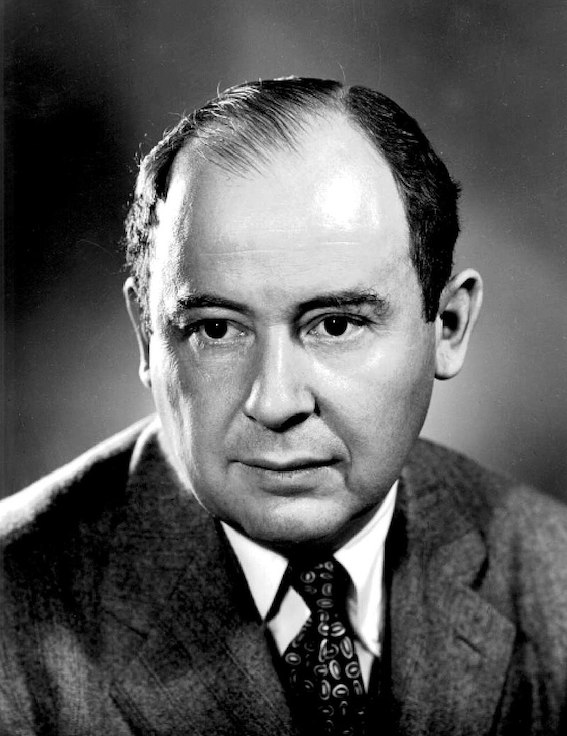
| Satirizing the Cold War Dr. Strangelove ridicules nuclear war planning.[60] It takes shots at numerous contemporary Cold War attitudes such as the "missile gap" but it primarily directs its satire on the theory of MAD, in which each side is supposed to be deterred from a nuclear war by the prospect of a universal cataclysm regardless of who "won".[61] Military strategist and former physicist Herman Kahn, in the book On Thermonuclear War (1960), used the theoretical example of a "doomsday machine" to illustrate the limitations of MAD, which was developed by John von Neumann. The concept of such a machine is consistent with MAD doctrine when it is logically pursued to its conclusion. It thus worried Kahn that the military might like the idea of a doomsday machine and build one.[62] Kahn, a leading critic of MAD and the Eisenhower administration's doctrine of massive retaliation upon the slightest provocation by the USSR, considered MAD to be foolish bravado, and urged America to instead plan for proportionality, and thus even a limited nuclear war. With this reasoning, Kahn became one of the architects of the flexible response doctrine which, while superficially resembling MAD, allowed for the possibility of responding to a limited nuclear strike with a proportional, or calibrated, return of fire (see Conflict escalation). Kahn educated Kubrick on the concept of the semi-realistic "cobalt-thorium G" doomsday machine, and then Kubrick used the concept for the film. Kahn in his writings and talks would often come across as cold and calculating, for example, with his use of the term "megadeaths" and in his willingness to estimate how many human lives the United States could lose and still rebuild economically.[63] Kahn's dispassionate attitude towards millions of deaths is reflected in Turgidson's remark to the president about the outcome of a preemptive nuclear war: "Mr. President, I'm not saying we wouldn't get our hair mussed. But I do say no more than ten to twenty million killed, tops, uh, depending on the breaks." Turgidson has a binder that is labelled "World Targets in Megadeaths," a term coined in 1953 by Kahn and popularized in his 1960 book On Thermonuclear War.[64] The fallout-shelter-network proposal mentioned in the film, with its inherently high radiation protection characteristics, has similarities and contrasts to that of the real Swiss civil defense network. Switzerland has an overcapacity of nuclear fallout shelters for the country's population size, and by law, new homes must still be built with a fallout shelter.[65][66] If the US did that, it would violate the spirit of MAD and, according to MAD adherents, allegedly destabilize the situation because the US could launch a first strike and its population would largely survive a retaliatory second strike (see MAD § Theory). To rebut early 1960s novels and Hollywood films like Fail-Safe and Dr. Strangelove, which raised questions about US control over nuclear weapons, the Air Force produced a documentary film, SAC Command Post, to demonstrate its responsiveness to presidential command and its tight control over nuclear weapons.[67] However, later academic research into declassified documents showed that U.S. military commanders had been given presidentially-authorized pre-delegation for the use of nuclear weapons during the early Cold War, showing that this aspect of the film's plot was plausible.[68] The characters of Buck Turgidson and Jack Ripper both deride the real-life Gen. Curtis LeMay of the Strategic Air Command.[69] Sexual themes In the months following the film's release, director Stanley Kubrick received a fan letter from Legrace G. Benson of the Department of History of Art at Cornell University interpreting the film as being sexually-layered. The director wrote back to Benson and confirmed the interpretation, "Seriously, you are the first one who seems to have noticed the sexual framework from intromission (the planes going in) to the last spasm (Kong's ride down and detonation at target)."[70] |
冷戦を風刺する ドクター・ストレンジラブ』は核戦争計画を嘲笑している[60]。それは「ミサイルギャップ」のような現代の冷戦の数々の姿勢を非難しているが、主に MADの理論に風刺を向けており、どちらが「勝った」かに関わらず、世界規模の大災害の見通しによってそれぞれの側が核戦争から抑止されると考えられてい る[61]。 [61] 軍事戦略家で元物理学者のハーマン・カーンは、『熱核戦争について』(1960)という本の中で、ジョン・フォン・ノイマンが開発したMADの限界を説明 するために「終末装置」の理論的な例を使った。 このような機械の概念は、論理的に結論まで追求すれば、MADのドクトリンと整合性がある。カーンは、MADとアイゼンハワー政権のソ連によるわずかな挑 発にも大規模な報復を行うドクトリンに対する主要な批判者であり、MADは愚かな虚勢であると考え、代わりに比例、ひいては限定核戦争を計画するようにア メリカに促した[62]。このような理由から、カーンは、表面的にはMADに似ているが、限定的な核攻撃に対して比例した、あるいは調整された応戦の可能 性を認める柔軟な対応ドクトリンの設計者の一人となった(「紛争のエスカレーション」の項を参照)。 カーンはキューブリックに半現実的な「コバルト・トリウムG」終末装置の概念を教え、そしてキューブリックはその概念を映画に使った。カーンは著作や講演 で、例えば「メガデス」という言葉を使ったり、アメリカがどれだけの人命を失っても経済的に再建できると見積もろうとするなど、しばしば冷徹で計算高いと 思われることがあった[63]。カーンの数百万の死に対する冷静な態度は、先制核戦争の結果について大統領に言ったターギッドソンの発言に反映されてい る。「大統領、私たちの髪が乱れないとは言いません。しかし、死者数は1000万から2000万人以上にはならないでしょう、あ、壊れ方にもよります が」。ターギッドソンは「メガデスの世界目標」と書かれたバインダーを持っている。この用語は1953年にカーンによって作られ、1960年の著書『熱核 戦争について』で一般化された[64]。 映画で言及された放射性降下物シェルター・ネットワーク案は、本質的に高い放射線防護特性を持ち、実際のスイスの民間防衛ネットワークと類似点と対照的な 点がある。スイスには国の人口規模に対して過剰な量の核シェルターがあり、法律により、新しい住宅は依然として放射性降下物シェルターとともに建設されな ければならない[65][66]。もしアメリカがそれを行えば、MADの精神に違反し、MAD支持者によれば、アメリカが第一撃を行い、その人口は報復の 第二撃をほぼ生き残れるので状況を不安定にするとも言われている(MAD §理論 を参照)。 しかし、機密解除された文書に関する後の学術的な研究によって、冷戦初期に米軍司令官が核兵器の使用に関して大統領から承認された事前委任を受けていたこ とが明らかになり、映画のプロットのこの側面がもっともらしいことが示された[68]。 バック・ターギッドソンとジャック・リッパーのキャラクターはともに、戦略空軍司令部の実在のカーティス・ルメイ元帥を揶揄している[69]。 性的なテーマ 公開後の数ヶ月、監督のスタンリー・キューブリックは、コーネル大学美 術史学科のレグラス・G・ベンソンから、この映画が性的なレイヤーで構成されているという解釈のファンレターを受け取った。監督はベンソンに返事を書き、 「真面目な話、挿入(飛行機が突入する)から最後の痙攣(コングが乗り降りして標的で爆発する)まで、性的な枠組みに気づいたのはあなたが初めてのよう だ」と解釈を確認した[70]。 |
| Critical response Dr. Strangelove is Kubrick's highest-rated film on Rotten Tomatoes,[72] holding a 98% approval rating based on 96 reviews, with an average rating of 9.10/10. The site's summary states that "Stanley Kubrick's brilliant Cold War satire remains as funny and razor-sharp today as it was in 1964."[73] The film also holds a score of 97 out of 100 on Metacritic, based on 32 reviews, indicating "universal acclaim." The film is ranked number 7 in the All-Time High Scores chart of Metacritic's Video/DVD section.[74] It was selected for preservation in the United States National Film Registry. Dr. Strangelove is on Roger Ebert's list of The Great Movies, and he described it as "arguably the best political satire of the century".[75] One of the most celebrated of all film comedies,[76] in 1998, Time Out conducted a reader's poll and Dr. Strangelove was voted the 47th greatest film of all time.[77] Entertainment Weekly voted it at No. 14 on their list of 100 Greatest Movies of All Time.[78] in 2002, it was ranked as the 5th best film in Sight & Sound poll of best films.[79] John Patterson of The Guardian wrote, "There had been nothing in comedy like Dr Strangelove ever before. All the gods before whom the America of the stolid, paranoid 50s had genuflected—the Bomb, the Pentagon, the National Security State, the President himself, Texan masculinity and the alleged Commie menace of water-fluoridation—went into the wood-chipper and never got the same respect ever again."[80] It is also listed as number 26 on Empire's 500 Greatest Movies of All Time, and in 2010 it was listed by Time magazine as one of the 100 best films since the publication's inception in 1923.[81] The Writers Guild of America ranked its screenplay the 12th best ever written.[82] In 2000, readers of Total Film magazine voted it the 24th greatest comedic film of all time. The film ranked 42nd in BBCs 2015 list of the 100 greatest American films.[83] The film was selected as the 2nd best comedy of all time in a poll of 253 film critics from 52 countries conducted by the BBC in 2017.[84] Studio response Columbia Studio's early reaction to Dr. Strangelove was anything but enthusiastic. In "Notes From The War Room", in the summer 1994 issue of Grand Street magazine, co-screenwriter Terry Southern recalled that, as production neared the end, "It was about this time that word began to reach us, reflecting concern as to the nature of the film in production. Was it anti-American? Or just anti-military? And the jackpot question: Was it, in fact, anti-American to whatever extent it was anti-military?"[85] Southern recalled how Kubrick grew concerned about seeming apathy and distancing by studio heads Abe Schneider and Mo Rothman, and by Columbia's characterization of the film as "just a zany, novelty flick which did not reflect the views of the corporation in any way."[85] Southern noted that Rothman was in "prominent attendance" at a ceremony in 1989 when the Library of Congress announced it as one of the first 25 films on the National Film Registry.[85] |
批評家の反応 博士のストレンジラブ』はロッテントマトでキューブリックの最も評価の高い映画であり[72]、96のレビューに基づいて98%の支持率を保持し、平均評 価は9.10/10である。同サイトの要約では、「スタンリー・キューブリックの見事な冷戦風刺は、1964年当時と変わらず今日も面白く、鋭い」と述べ られている[73]。また、32のレビューに基づきMetacriticでは100点満点中97点を保持しており、「普遍的賞賛」を示している。 MetacriticのVideo/DVD部門のオールタイム・ハイスコア・チャートでは7位にランクインしている[74]。 アメリカ国立フィルム登録簿に保存されることになった。 ロジャー・エバートのThe Great Moviesのリストに載っており、彼は「間違いなく今世紀最高の政治風刺」と評している[75]。 すべての映画コメディの中で最も有名なものの1つ[76]。1998年にタイムアウトが読者投票を行い、『Dr. Strangelove』は史上47番目に偉大な映画として選出された[77]。 [77] Entertainment Weeklyは史上最も偉大な映画100本のリストで14位に選んだ[78]。2002年、Sight & Soundのベスト映画投票で5位にランクされた[79] The Guardianのジョン・パターソンは「博士のようなコメディはかつてなかった」と書いている。堅苦しく偏執的な50年代のアメリカがお辞儀をしたすべ ての神々、すなわち、爆弾、ペンタゴン、国家安全保障国家、大統領自身、テキサス人の男らしさ、水のフッ素化の共産主義者の脅威は、木製の粉砕機に入り、 二度と同じ敬意を払われることはなかった」と書いている[80]。 また、『Empire』の「500 Greatest Movies of All Time」の26位に選ばれ、2010年には『Time』誌の「1923年の創刊以来最高の映画100本」の1つに挙げられた[81] 。 2000年、『トータル・フィルム』誌の読者は、この映画を史上24番目に偉大な喜劇映画に選出した。BBCが2015年に行った100の偉大なアメリカ 映画のリストで42位にランクインした[83]。 2017年にBBCが行った52カ国の253人の映画評論家の投票では、史上最高のコメディとして2位に選ばれている[84]。 スタジオの反応 Dr. Strangelove』に対するコロンビアスタジオの初期の反応は、熱狂的なものではありませんでした。グランドストリート誌1994年夏号の「戦場か らのノート」で、共同脚本家のテリー・サザンは、製作が終わりに近づいたとき、「製作中の映画の性質についての懸念を反映した言葉が私たちに届き始めたの はこの頃だった」と回想している。反米映画なのか?それとも単なる反軍事的なものなのか?そして、最大の疑問。実際、反軍であろうとなかろうと反米であっ たのか? サザンは、キューブリックがスタジオの責任者であるエイブ・シュナイダーとモー・ロスマンによる無関心と距離を置いたように見えること、そしてコロンビア がこの映画を「企業の見解を一切反映していない、単なるおどけた、目新しい映画」と特徴付けることに懸念を抱いていったことを思い出している[85]。 1989年に議会図書館が国立フィルム登録簿の最初の25作品の1つとして発表する際にロスマンが「目立つ出席」をしていると指摘している[85]。 |
| Potential sequel In 1995, Kubrick enlisted Terry Southern to script a sequel titled Son of Strangelove. Kubrick had Terry Gilliam in mind to direct. The script was never completed, but index cards laying out the story's basic structure were found among Southern's papers after he died in October 1995. It was set largely in underground bunkers, where Dr. Strangelove had taken refuge with a group of women.[92] In 2013, Gilliam commented, "I was told after Kubrick died—by someone who had been dealing with him—that he had been interested in trying to do another Strangelove with me directing. I never knew about that until after he died but I would have loved to."[93] |
続編の可能性 1995年、キューブリックはテリー・サザンに『Son of Strangelove』というタイトルの続編の脚本を依頼した。キューブリックはテリー・ギリアムを監督にと考えていた。脚本は完成しなかったが、 1995年10月に亡くなったサザンの書類の中から物語の基本構造を記したインデックスカードが発見された。ストレンジラブ博士が女性たちと避難していた 地下壕が主な舞台となっていた[92]。 2013年、ギリアムは「キューブリックが亡くなった後、彼と取引していた人物から、彼が私が監督して『ストレンジラブ』をもう一度作ろうと興味を持って いたことを聞かされた」とコメントしている。彼が死ぬまでそのことは知らなかったが、ぜひやりたかった」[93]。 |
 |
ライオネル・マンドレイク大佐(Group Captain
Lionel
Mandrake)イギリス空軍大佐で、バーブルソン空軍基地への派遣将校。たまたまつけたラジオで戦争状態ではないことを知り、何度もリッパー准将の
「越権行為」を正そうとする。過去に遭った事故により、片足が義足だという。もの静かな人物で機関銃の扱い方はわからない。第二次世界大戦中にビルマにお
いて日本軍に拷問され、口を割らずにラングーン鉄道で線路を敷かされた経験があるらしい。この経験からか日本人を「ブタ」と罵倒しつつも「良いカメラを作
る」と述べている(https://bit.ly/3GebECV)。 |
| https://en.wikipedia.org/wiki/Dr._Strangelove |
|
| References "Dr. Strangelove or: How I Learned to Stop Worrying and Love the Bomb". BFI Film & TV Database. Retrieved March 15, 2026. "Dr. Strangelove or: How I learned to Stop Worrying and Love the Bomb". American Film Institute. June 15, 2021. "Dr. Strangelove". British Board of Film Classification. Archived from the original on November 13, 2014. Retrieved July 6, 2013. Pfeiffer, Lee (March 8, 2017). "Dr. Strangelove or: How I Learned to Stop Worrying and Love the Bomb". Encyclopædia Britannica. Archived from the original on December 23, 2020. Retrieved December 3, 2020. Kaufman, Dave (January 21, 1964). "Dr. Strangelove or: How I Learned to Stop Worrying and Love the Bomb". Variety. Archived from the original on January 1, 2021. Retrieved December 3, 2020. "Dr. Strangelove or: How I Learned to Stop Worrying and Love the Bomb". British Film Institute. June 15, 2021. Archived from the original on March 10, 2016. "Dr. Strangelove or: How I Learned to Stop Worrying and Love the Bomb". Box Office Mojo. Retrieved March 15, 2026. "ENTERTAINMENT: Film Registry Picks First 25 Movies". Los Angeles Times. Washington, D.C. September 19, 1989. Archived from the original on May 5, 2020. Retrieved April 22, 2020. "Complete National Film Registry Listing". Library of Congress. Archived from the original on October 31, 2016. Retrieved June 8, 2020. "Who Was Dr. Strangelove?". Slate (magazine). March 9, 1999. Archived from the original on February 3, 2016. Retrieved February 13, 2016. "50 Years Later "Dr. Strangelove" Remains a Must-See Film and Humorous Reminder of Our Civilization's Fragility". Federation Of American Scientists. Archived from the original on March 8, 2021. Retrieved August 27, 2022. (...) Merkwurdichliebe. [ref]Dr. Strangelove's original native German moniker as revealed by a presidential aide to General Turgidson in the War Room.[/ref] The distinctive bikinied torso on the cover dates this as the real June 1962 issue, which features the pictorial "A Toast to Bikinis" (a reference to Bikini Atoll, an American nuclear test site), shown as the pinups on the inside of the B-52's safe's door. Grant B. Stillman, "Last Secrets of Strangelove Revealed" Archived August 15, 2009, at the Wayback Machine, 2008. For the pose, Reed lay flat on her chest and had the January 1963 (Vol. 41, No. 2) issue of Foreign Affairs covering her buttocks. Despite this modest pose, her mother was furious. In the novel and advertising posters, the Playboy model is identified as "Miss Foreign Affairs." Brian Siano, "A Commentary on Dr. Strangelove" Archived May 7, 2005, at the Wayback Machine, 1995 and "Inside the Making of Dr. Strangelove," a documentary included with the 40th Anniversary Special Edition DVD of the film. Terry Southern, "Notes from The War Room" Archived November 29, 2006, at the Wayback Machine, Grand Street, issue #49 Lee Hill, "Interview with a Grand Guy" Archived March 3, 2016, at the Wayback Machine: interview with Terry Southern In the fictionalized biopic The Life and Death of Peter Sellers, it is suggested that Sellers faked the injury as a way to force Kubrick to release him from the contractual obligation to play this fourth role. "Inside the Making of Dr. Strangelove", a documentary included with the 40th Anniversary Special Edition DVD of the film Dan Geddes, "Dr. Strangelove or: How I Learned to Stop Worrying and Love the Bomb (1964) Archived November 1, 2013, at the Wayback Machine"; The Satirist, December 2011. Beverly Merrill Kelley, Reelpolitik II: Political Ideologies in '50s and '60s Films; Oxford: Rowman & Littlefield, 2004; p. 263 Archived August 19, 2016, at the Wayback Machine. Jeffrey Townsend, et al., "Red Alert" in John Tibbetts & James Welsh (eds.), The Encyclopedia of Novels into Films, New York, 1999, pp. 183–186 Paul Boyer, "Dr. Strangelove" in Mark C. Carnes (ed.), Past Imperfect: History According to the Movies, New York, 1996. "Dr Strangelove". moviediva.com. Archived from the original on September 27, 2011. Retrieved June 24, 2011. Starr, Michael Seth (1991). Peter Sellers: A Film History. McFarland & Company. p. 100. ISBN 978-0-89950-512-1. "The real Dr Strangelove". New Scientist. Archived from the original on July 26, 2018. Retrieved July 26, 2018. "Lolita". The Criterion Collection. Archived from the original on May 25, 2011. Retrieved June 25, 2010. Frayling, Christopher. Mad, Bad, and Dangerous?: The Scientist and the Cinema. London: Reaktion, 2006. p.26 Jones, James Earl (November 16, 2004). "A Bombardier's Reflection". Wall Street Journal. Retrieved March 8, 2022. "Kubrick on The Shining" Archived July 3, 2007, at the Wayback Machine from Michel Ciment, 'Kubrick', Holt, Rinehart, and Winston; 1st American ed edition (1983), ISBN 0-03-061687-5 "Celebrating Kubrick's Dr Strangelove at 50". BFI. January 22, 2014. Archived from the original on July 14, 2018. Retrieved July 26, 2018. Lee Hill, A Grand Guy: The Life and Art of Terry Southern (Bloomsbury, 2001), pp. 118–119 Arbeiter, M. (January 29, 2019). "17 Facts About Dr. Strangelove or: How I Learned to Stop Worrying and Love the Bomb". Mental Floss. Retrieved January 4, 2024. "Dan Blocker". IMDb. Archived from the original on April 7, 2018. Retrieved November 17, 2018. "Movie Night!". Phenry.org. February 22, 1999. Archived from the original on November 5, 2009. Retrieved March 6, 2010. Thomas, Bob (December 17, 1975). "Since 'Strangelove' Pickens Aren't Slim". The Cincinnati Enquirer. The Associated Press. p. A-8. Archived from the original on December 3, 2025. Retrieved December 3, 2025. Brian Siano, "A Commentary on Dr. Strangelove" Archived May 7, 2005, at the Wayback Machine, 1995 Alexander Walker, "Stanley Kubrick Directs," Harcourt Brace Co, 1972, ISBN 0-15-684892-9, cited in Brian Siano, "A Commentary on Dr. Strangelove" Archived May 7, 2005, at the Wayback Machine, 1995 Phone interview with Thomas Schelling by Sharon Ghamari-Tabrizi, published in her book The Worlds of Herman Kahn; The Intuitive Science of Thermonuclear War (Harvard University Press, 2005) "Dr. Strangelove" Archived November 29, 2006, at the Wayback Machine Terry Southern,"Check-up with Dr. Strangelove" Archived February 1, 2010, at the Wayback Machine, article written in 1963 for Esquire but unpublished at the time Schelling, Thomas C. (2006). Strategies of Commitment and Other Essays. Harvard University Press. p. 212. ISBN 978-0-674-02567-7. Sharon Ghamari-Tabrizi, "The Worlds of Herman Kahn; The Intuitive Science of Thermonuclear War" Archived November 29, 2006, at the Wayback Machine, Harvard University Press, 2005. Macmillan International Dictionary of Films and Filmmakers, vol. 1, p. 126 Usher, Shaun (April 3, 2012). "Dr. Strangelove". Lists of Note. Archived from the original on June 8, 2012. Retrieved April 16, 2012. George Case (2014), Calling Dr Strangelove: The Anatomy and Influence of the Kubrick Masterpiece (McFarland & Co, Jefferson, Nth Carolina) p.118, ISBN 978-0-7864-9449-1 "An Interview with Stanley Kubrick (1969)" Archived July 10, 2018, at the Wayback Machine, published in Joseph Gelmis, The Film Director as Superstar, 1970, Doubleday and Company: Garden City, New York. Duncan, Paul (2011), Stanley Kubrick: The Complete Films, Taschen GmbH, p. 95, ISBN 978-3-8365-2775-0 "A Kubrick Masterclass," interview with Sir Ken Adam by Sir Christopher Frayling, 2005; excerpts from the interview were published online at Berlinale talent capus Archived January 25, 2007, at the Wayback Machine and the Script Factory website Archived September 29, 2006, at the Wayback Machine Interview with Ken Adam by Michel Ciment Archived November 29, 2006, at the Wayback Machine, published in Michel Ciment, "Kubrick," Holt, Rinehart, and Winston; 1st American ed edition (1983), ISBN 0-03-061687-5 The camera ship, a former USAAF B-17G-100-VE, serial 44-85643, registered F-BEEA, had been one of four Flying Fortresses purchased from salvage at Altus, Oklahoma, in December 1947 by the French Institut géographique national (IGN) and converted for surveying and photomapping work. It was the last active B-17 of a total of fourteen once flown by the IGN, but it was destroyed in a takeoff accident at RAF Binbrook in 1989 during making of the film Memphis Belle. "1944 USAAF Serial Numbers (44-83886 to 44-92098)". USAAS-USAAC-USAAF-USAF Aircraft Serial Numbers—1908 to Present. Joseph F. Baugher. Archived from the original on January 7, 2009. Retrieved May 4, 2007. Sugar, John (Producer) (September 14, 2013). "Celluloid Beatles". BBC Radio 4 Documentaries. BBC. Radio 4. Archived from the original on April 1, 2019. Retrieved August 22, 2018. "Candy Jar Publishes Classic". Archived from the original on October 21, 2014. Retrieved October 14, 2014. "DR STRANGELOVE—THE LOST STORY". candyjarlimited.blogspot.co.uk. Archived from the original on March 18, 2017. Retrieved March 24, 2016. "Red Alert—Peter Bryant—Microsoft Reader eBook". eBookMall, Inc. Archived from the original on September 27, 2007. Retrieved November 27, 2006. Schulman, Ari N. (October 7, 2014). "Doomsday Machines". Slate. Archived from the original on July 13, 2020. Retrieved July 21, 2020. Jacobson, Colin. "Review:Fail-Safe: Special Edition (1964)." Archived October 24, 2020, at the Wayback Machine dvdmg.com, 2000. Retrieved: November 21, 2010. Mick, Broderick (January 12, 2016). Reconstructing Strangelove : inside Stanley Kubrick's 'nightmare comedy'. New York: Columbia University Press. ISBN 9780231177092. OCLC 966969835. Sheward, David (2008). Rage and Glory: The Volatile Life and Career of George C. Scott. Hal Leonard Publishing. pp. 105–06. ISBN 9781557836700. Archived from the original on August 1, 2020. Retrieved October 19, 2015. "'Dr. Strangelove's' deleted Dallas reference and other Texas ties". Dallas News. January 19, 2014. Archived from the original on November 17, 2018. Retrieved November 17, 2018. "No Fighting in the War Room Or: Dr. Strangelove and the Nuclear Threat", a documentary included with the 40th Anniversary Special Edition DVD of the film Eric D. Snider, "What's the big deal?: Dr. Strangelove (1964) Archived April 2, 2015, at the Wayback Machine"; Seattle Post-Intelligencer, October 25, 2010. LoBrutto, Vincent. "Stanley Kubrick: A Biography." Da Capo Press, 1995, p. 250 Sean M. Maloney, Deconstructing Dr. Strangelove: The Secret History of Nuclear War Films (Potomac Books, 2020) pp 64–65. King, Mike (2009). The American cinema of excess: extremes of the national mind on film. McFarland. p. 46. ISBN 978-0-7864-3988-1. On Thermonuclear War pp. 144–155 Encyclopedia of American Foreign Policy, Volume 1. Simon and Schuster. 2001. p. 471. ISBN 978-0-684-80657-0. Craig, Nelson (2014). The age of radiance : the epic rise and dramatic fall of the atomic era. Simon and Schuster. pp. 290–291. ISBN 978-1451660432. OCLC 852226548. Lindley, Dan (September 8, 2009). "A Teaching Guide to Stanley Kubrick's Dr. Strangelove". www3.nd.edu. Archived from the original on February 21, 2019. Retrieved December 2, 2018. Ripper: 'He said war was too important to be left to the Generals. When he said that, fifty years ago, he might have been right. But today, war is too important to be left to politicians. They have neither the time, the training, nor the inclination for strategic thought'. Air Force Lieutenant General David Burchinal (U.S.A.F. Chief of Staff LeMay's deputy for operations), speaks about the Cuban Missile Crisis and the value of strategic superiority: 'They did not understand what had been created and handed to them'. LeMay confirmed: 'That was the mood prevalent with the top civilian leadership, you are quite correct'. Castle, Alison (2008). The Stanley Kubrick Archives. Taschen. p. 359. ISBN 978-3836508889. "Dr. Strangelove (1964) - Financial Information". The Numbers. "Dr. Strangelove or: How I Learned to Stop Worrying and Love the Bomb". Box Office Mojo. "Big Rental Pictures of 1964", Variety, January 6, 1965, p 39. "Dr. Strangelove". Rotten Tomatoes. Fandango Media. Retrieved December 24, 2025. Edit this at Wikidata "STANLEY KUBRICK". Rotten Tomatoes. Flixster. Archived from the original on December 1, 2016. Retrieved November 30, 2016. "Dr. Strangelove". Metacritic. Fandom, Inc. Retrieved May 17, 2025. "DVD/Video: All-Time High Scores". Metacritic. Archived from the original on August 19, 2012. Retrieved August 22, 2010. Roger Ebert, "Dr. Strangelove (1964)" Archived March 15, 2013, at the Wayback Machine, July 11, 1999 Potemra, Michael (May 20, 2014). "Gentlemen! You Can't Fight in the War Room!". National Review. Archived from the original on December 20, 2016. Retrieved December 15, 2016. "Top 100 Films (Readers)". AMC Filmsite.org. American Movie Classics Company. Archived from the original on July 18, 2014. Retrieved August 17, 2010. "Entertainment Weekly's 100 Greatest Movies of All Time". Filmsite.org. Archived from the original on 31 March 2014. Retrieved 19 January 2009. Sight & Sound's directors' poll Archived December 29, 2007, at the Wayback Machine (no longer available as of 1 February 2015) Patterson, John (October 18, 2010). "Dr Strangelove: No 6 best comedy film of all time". The Guardian. Archived from the original on August 7, 2015. Retrieved December 15, 2016. Schickel, Richard (January 13, 2010). "Dr. Strangelove: or How I Learned to Stop Worrying and Love the Bomb". Time. Archived from the original on December 16, 2016. Retrieved December 15, 2016. "101 Greatest Screenplays". Writers Guild of America, West. Retrieved December 15, 2016. "The 100 Greatest American Films". bbc. July 20, 2015. Archived from the original on January 14, 2021. Retrieved February 24, 2021. "The 100 greatest comedies of all time". BBC Culture. August 22, 2017. Retrieved September 8, 2017. "The Best Movies That Lost Best Picture at the Oscars". New York Magazine. Retrieved March 17, 2025. "Heat director joins Letterboxd and shares his 14 favorite movies – and, predictably, he has great taste". GamesRadar+. July 4, 2024. Retrieved March 23, 2025. Southern, Terry. "Notes from the War Room". The Criterion Collection. Archived from the original on December 6, 2020. Retrieved December 27, 2020. "The 37th Academy Awards (1965) Nominees and Winners". Academy of Motion Picture Arts and Sciences. Archived from the original on April 2, 2015. Retrieved August 24, 2011. "The 50 Greatest Movies on TV (and Video)". TV Guide. 1998. "AFI's 100 Years...100 Movies" (PDF). American Film Institute. 1998. Archived (PDF) from the original on April 12, 2019. Retrieved August 23, 2016. "AFI's 100 Years...100 Laughs" (PDF). American Film Institute. 2002. Archived (PDF) from the original on March 16, 2013. Retrieved August 23, 2016. "AFI's 100 Years...100 Movie Quotes" (PDF). American Film Institute. 2005. Archived (PDF) from the original on March 13, 2011. Retrieved August 23, 2016. "AFI's 100 Years...100 Movies (10th Anniversary Edition)" (PDF). American Film Institute. 2007. Archived (PDF) from the original on June 6, 2013. Retrieved August 23, 2016. "Trivia: Terry Gilliam Says Stanley Kubrick Wanted Him to Make a 'Dr. Strangelove' Sequel". /Film. October 16, 2013. Archived from the original on January 28, 2020. Retrieved January 28, 2020. Brown, Todd (October 12, 2013). "Stanley Kubrick Wanted Terry Gilliam To Direct SON OF STRANGELOVE". Twitch Film. Archived from the original on October 13, 2013. Retrieved October 13, 2013. Lukowski, Andrzej (September 26, 2023). "Steve Coogan will star in the West End's 'Dr Strangelove'". TimeOut. Retrieved January 4, 2024. Hussen, Dahaba Ali (July 15, 2023). "Armando Iannucci to adapt Stanley Kubrick's film Dr Strangelove for stage". The Guardian. ISSN 0261-3077. Retrieved July 16, 2023. |
参考文献 「博士の異常な愛情 あるいは、私はいかにして心配するのをやめて爆弾を愛するようになったか」。BFI映画・テレビデータベース。2026年3月15日閲覧。 「博士の異常な愛情 あるいは、私はいかにして心配するのをやめて爆弾を愛するようになったか」。アメリカン・フィルム・インスティテュート。2021年6月15日。 「博士の異常な愛情」。英国映画分類委員会。2014年11月13日にオリジナルからアーカイブされた。2013年7月6日閲覧。 ファイファー、リー(2017年3月8日)。「『博士の異常な愛情 あるいは、私はいかにして心配をやめ、核兵器を愛するようになったか』」。ブリタニカ百科事典。2020年12月23日にオリジナルからアーカイブされ た。2020年12月3日閲覧。 カウフマン、デイヴ(1964年1月21日)。「『博士の異常な愛情 あるいは、私はいかにして心配するのをやめて爆弾を愛するようになったか』」。『バラエティ』。2021年1月1日にオリジナルからアーカイブされた。 2020年12月3日に閲覧。 「『博士の異常な愛情 あるいは、私はいかにして心配するのをやめて爆弾を愛するようになったか』」。英国映画協会。2021年6月15日。2016年3月10日にオリジナルか らアーカイブされた。 「博士の異常な愛情 あるいは、私はいかにして心配するのをやめて爆弾を愛するようになったか」。Box Office Mojo。2026年3月15日に閲覧。 「エンターテインメント:フィルム・レジストリが最初の25作品を選出」。ロサンゼルス・タイムズ。ワシントンD.C. 1989年9月19日。2020年5月5日にオリジナルからアーカイブされた。2020年4月22日に閲覧。 「全米映画登録簿の完全リスト」。米国議会図書館。2016年10月31日にオリジナルからアーカイブされた。2020年6月8日に閲覧。 「『博士の異常な愛情』の正体とは?」。スレート(雑誌)。1999年3月9日。2016年2月3日にオリジナルからアーカイブ。2016年2月13日に 閲覧。 「50年経っても『博士の異常な愛情』は必見の映画であり、我々の文明の脆さをユーモアを交えて思い出させる作品だ」。米国科学者連盟。 2021年3月8日にオリジナルからアーカイブされた。2022年8月27日閲覧。(…)Merkwurdichliebe。[ref]『博士の異常な愛 情』のドイツ語原題。戦争室でターギドソン将軍の大統領補佐官によって明かされたもの。[ref] 表紙のビキニ姿の胴体が特徴的なことから、これは1962年6月号の本物であることが分かる。同号には「ビキニへの乾杯」(米国の核実験場で あるビキニ環礁への言及)というグラビアが掲載されており、B-52の金庫の扉の内側に貼られたピンナップとして描かれている。グラント・B・スティルマ ン、「『博士の異常な愛情』の最後の秘密が明らかに」 2009年8月15日ウェイバックマシンにアーカイブ、2008年。 このポーズでは、リードはうつ伏せになり、1963年1月号(第41巻第2号)の『フォーリン・アフェアーズ』誌でお尻を隠していた。この控 えめなポーズにもかかわらず、彼女の母親は激怒した。小説や宣伝ポスターでは、このプレイボーイのモデルは「ミス・フォーリン・アフェアーズ」と名付けら れている。ブライアン・シアーノ、「『博士の異常な愛情』に関する論評」2005年5月7日ウェイバックマシンにアーカイブ、1995年、および同作の 40周年記念特別版DVDに収録されたドキュメンタリー『Inside the Making of Dr. Strangelove』。 テリー・サザン、「『戦争室』からのメモ」2006年11月29日ウェイバックマシンにアーカイブ、『グランド・ストリート』第49号 リー・ヒル、「偉大な男へのインタビュー」2016年3月3日ウェイバックマシンにアーカイブ:テリー・サザンへのインタビュー フィクション化された伝記映画『ピーター・セラーズの生涯と死』では、セラーズが4作目の出演という契約上の義務から解放されるよう、クブリックを追い込 む手段として怪我を装ったことが示唆されている。 『博士の異常な愛情』40周年記念スペシャル・エディションDVDに収録されたドキュメンタリー『Inside the Making of Dr. Strangelove』 ダン・ゲデス、「『博士の異常な愛情、あるいは私はいかにして心配するのをやめて爆弾を愛するようになったか』(1964年) 2013年11月1日ウェイバックマシンにアーカイブ」;『ザ・サティリスト』、2011年12月。 ビバリー・メリル・ケリー、『リールポリティクII:50年代および60年代映画における政治的イデオロギー』; オックスフォード:ローマン&リトルフィールド、2004年;p. 263 2016年8月19日ウェイバックマシンにアーカイブ。 ジェフリー・タウンゼントほか、「レッド・アラート」ジョン・ティベッツ&ジェームズ・ウェルシュ(編)、『小説から映画への百科事典』、 ニューヨーク、1999年、pp. 183–186 ポール・ボイヤー、「『博士の異常な愛情』」マーク・C・カーンズ(編)、『過去不完全:映画が語る歴史』、ニューヨーク、1996年。 「『博士の異常な愛情』」。moviediva.com。2011年9月27日にオリジナルからアーカイブ。2011年6月24日閲覧。 スター、マイケル・セス(1991年)。『ピーター・セラーズ:映画史』。マクファーランド・アンド・カンパニー。p. 100。ISBN 978-0-89950-512-1。 「本物の『博士の異常な愛情』」。『ニュー・サイエンティスト』。2018年7月26日にオリジナルからアーカイブされた。2018年7月26日に閲覧。 「ロリータ」。ザ・クリテリオン・コレクション。2011年5月25日にオリジナルからアーカイブされた。2010年6月25日に閲覧。 フレイリング、クリストファー。『マッド、バッド、アンド・デンジャラス?:科学者と映画』。ロンドン:リアクション、2006年。p.26 ジョーンズ、ジェームズ・アール(2004年11月16日)。「爆撃手の回想」。ウォール・ストリート・ジャーナル。2022年3月8日閲覧。 「『シャイニング』に関するキューブリック」 2007年7月3日、ウェイバックマシンにアーカイブ。ミシェル・シメント著『Kubrick』、ホルト・ラインハート・アンド・ウィンストン社;第1版 (1983年)、ISBN 0-03-061687-5 「『博士の異常な愛情』公開50周年を祝う」。BFI。2014年1月22日。2018年7月14日にオリジナルからアーカイブ。2018年7月26日閲 覧。 リー・ヒル、『A Grand Guy: The Life and Art of Terry Southern』(ブルームズベリー、2001年)、 pp. 118–119 アーベイタ、M.(2019年1月29日)。「『博士の異常な愛情 あるいは、私はいかにして心配するのをやめて爆弾を愛するようになったか』に関する17の事実」。メンタル・フロス。2024年1月4日に閲覧。 「ダン・ブロッカー」。IMDb。2018年4月7日にオリジナルからアーカイブ。2018年11月17日閲覧。 「Movie Night!」。Phenry.org。1999年2月22日。2009年11月5日にオリジナルからアーカイブ。2010年3月6日閲覧。 トーマス、ボブ(1975年12月17日)。「『博士の異常な愛情』以来、ピケンズはスリムではない」。『シンシナティ・エンクワイア ラー』。AP通信。p. A-8。2025年12月3日にオリジナルからアーカイブされた。2025年12月3日に閲覧。 ブライアン・シアーノ、「『博士の異常な愛情』に関する解説」 2005年5月7日にウェイバックマシンでアーカイブ、1995年 アレクサンダー・ウォーカー、『スタンリー・キューブリック・ディレクツ』、ハーコート・ブレス社、1972年、ISBN 0-15-684892-9、ブライアン・シアーノ『「博士の異常な愛情」に関する論評』2005年5月7日ウェイバックマシンにアーカイブ、1995年 にて引用 シャロン・ガマリ=タブリジによるトーマス・シェリングへの電話インタビュー、彼女の著書『ハーマン・カーンの世界:熱核戦争の直観的科学』 (ハーバード大学出版局、2005年)に掲載された「『博士の異常な愛情』」 2006年11月29日、ウェイバックマシンにアーカイブ テリー・サザン、「ドクター・ストレンジラブとの診察」 2010年2月1日、ウェイバックマシンにアーカイブ、1963年に『エスクァイア』誌のために執筆されたが当時は未発表の記事 シェリング、トーマス・C. (2006). 『コミットメントの戦略およびその他のエッセイ』. ハーバード大学出版局. p. 212. ISBN 978-0-674-02567-7. シャロン・ガマリ=タブリジ、「ハーマン・カーンの世界:熱核戦争の直観的科学」2006年11月29日、ウェイバックマシンにアーカイブ、 ハーバード大学出版局、2005年。 『マクミラン国際映画・映画製作者辞典』第1巻、126頁 ショーン・アッシャー(2012年4月3日)。「『博士の異常な愛情』」 。Lists of Note。2012年6月8日にオリジナルからアーカイブされた。2012年4月16日に閲覧。 ジョージ・ケース(2014年)、『Calling Dr Strangelove: The Anatomy and Influence of the Kubrick Masterpiece』(マクファーランド社、ノースカロライナ州ジェファーソン)p.118、 ISBN 978-0-7864-9449-1 「スタンリー・キューブリックへのインタビュー(1969年)」 2018年7月10日、ウェイバックマシンにアーカイブ、ジョセフ・ゲルミス著『The Film Director as Superstar』(1970年、ダブルデイ・アンド・カンパニー:ニューヨーク州ガーデンシティ)に掲載。 ダンカン、ポール(2011年)、『スタンリー・キューブリック:全作品集』、タッシェン社、95頁、ISBN 978-3-8365-2775-0 「A Kubrick Masterclass」、サー・クリストファー・フレイリングによるサー・ケン・アダムへのインタビュー、2005年;インタビューの抜粋は、 Berlinale talent capus(2007年1月25日、Wayback Machineにてアーカイブ)およびScript Factoryのウェブサイト(2006年9月29日、Wayback Machineにてアーカイブ)でオンライン公開された ミシェル・シモンによるケン・アダムへのインタビュー(2006年11月29日ウェイバックマシンにアーカイブ)、ミシェル・シモン著 『Kubrick』(Holt, Rinehart, and Winston刊、第1版アメリカ版(1983年)、ISBN 0-03-061687)に掲載 -5 撮影機は、元米陸軍航空隊(USAAF)のB-17G-100-VE型機(機体番号44-85643、登録記号F-BEEA)であり、 1947年12月にオクラホマ州アルタスでフランス国立地理院(IGN)が廃機として購入した4機の「フライング・フォートレス」のうちの1機で、測量お よび写真測量作業用に改造されたものだった。これは、かつてIGNが運用した計14機のB-17のうち、最後に現役だった機体であったが、1989年に映 画『メンフィス・ベル』の撮影中にRAFビンブルックで離陸事故により破壊された。「1944年USAAF機体番号(44-83886~44- 92098)」。『USAAS-USAAC-USAAF-USAF 航空機シリアルナンバー—1908年から現在まで』。ジョセフ・F・ボーガー。2009年1月7日にオリジナルからアーカイブされた。2007年5月4日 に閲覧。 シュガー、ジョン(プロデューサー)(2013年9月14日)。「セルロイド・ビートルズ」。BBCラジオ4ドキュメンタリー。BBC。ラジ オ4。2019年4月1日にオリジナルからアーカイブされた。2018年8月22日に閲覧。 「キャンディ・ジャー、名作を出版」。2014年10月21日にオリジナルからアーカイブされた。2014年10月14日に閲覧。 「DR STRANGELOVE—THE LOST STORY」。candyjarlimited.blogspot.co.uk。2017年3月18日にオリジナルからアーカイブされた。2016年3月 24日に閲覧。 「レッド・アラート—ピーター・ブライアント—Microsoft Reader eBook」。eBookMall, Inc. 2007年9月27日にオリジナルからアーカイブされた。2006年11月27日に閲覧。 シュルマン、アリ・N.(2014年10月7日)。「Doomsday Machines」。Slate。2020年7月13日にオリジナルからアーカイブされた。2020年7月21日に閲覧。 ジェイコブソン、コリン。「レビュー:『フェイル・セーフ:スペシャル・エディション』(1964年)」。2020年10月24日にウェイ バックマシンでアーカイブされた。dvdmg.com、2000年。2010年11月21日に閲覧。 ミック、ブロデリック(2016年1月12日)。『ストレンジラブの再構築:スタンリー・キューブリックの「悪夢のコメディ」の内幕』。 ニューヨーク:コロンビア大学出版局。ISBN 9780231177092。OCLC 966969835。 シェワード、デビッド(2008年)。『レイジ・アンド・グローリー:ジョージ・C・スコットの波乱に満ちた生涯とキャリア』。ハル・レナード・パブリッ シング。105–06頁。ISBN 9781557836700。2020年8月1日にオリジナルからアーカイブされた。2015年10月19日閲覧。 「『博士の異常な愛情』から削除されたダラスへの言及とその他のテキサスとのつながり」。『ダラス・ニュース』。2014年1月19日。2018年11月 17日にオリジナルからアーカイブされた。2018年11月17日に閲覧。 「戦況室での喧嘩は禁止、あるいは:『博士の異常な愛情』と核の脅威」——同作の40周年記念特別版DVDに収録されたドキュメンタリー エリック・D・スナイダー、「何がそんなに大騒ぎなのか?:『博士の異常な愛情』(1964年) 2015年4月2日、ウェイバックマシンにアーカイブ」; 『シアトル・ポスト・インテリジェンサー』、2010年10月25日。 ヴィンセント・ロブルット。「スタンリー・キューブリック:伝記」。ダ・カーポ・プレス、1995年、250ページ ショーン・M・マロニー、『ドクター・ストレンジラヴの解体:核戦争映画の秘史』(ポトマック・ブックス、2020年)64–65ページ。 キング、マイク(2009年)。『過剰のアメリカ映画:映画に映し出された国民精神の極限』。マクファーランド。46頁。ISBN 978-0-7864-3988-1。 『熱核戦争について』144–155頁 『アメリカ外交政策百科事典』第1巻。サイモン・アンド・シュスター。2001年。471頁。ISBN 978-0-684-80657-0. クレイグ、ネルソン(2014年)。『輝きの時代:原子時代の壮大な台頭と劇的な没落』。サイモン・アンド・シュスター。pp. 290–291。ISBN 978-1451660432。OCLC 852226548。 リンドリー、ダン(2009年9月8日)。「スタンリー・キューブリック監督『博士の異常な愛情』の教育ガイド」。www3.nd.edu。2019年2 月21日にオリジナルからアーカイブされた。2018年12月2日取得。リッパー:「彼は、戦争は重要すぎるため将軍たちに任せておくべきではないと言っ た。50年前に彼がそう言った時、彼は正しかったかもしれない。しかし今日、戦争は重要すぎるため政治家たちに任せておくべきではない。彼らには、戦略的 思考を行うための時間も、訓練も、意欲もないのだ」。空軍中将デビッド・バーチナル(米空軍参謀総長レメイの作戦担当副官)は、キューバ危機と戦略的優位 性の価値について次のように語っている。「彼らは、何が作り出され、自分たちに手渡されたのかを理解していなかった」。レメイはこれを認めた。「それは民 間の上層部に蔓延していた雰囲気だ。君の言う通りだ」。 キャッスル、アリソン(2008)。『スタンリー・キューブリック・アーカイブス』。タッシェン。359頁。ISBN 978-3836508889。 「『博士の異常な愛情』(1964年) - 財務情報」。ザ・ナンバース。 「『博士の異常な愛情 あるいは、私はいかにして心配するのをやめて、爆弾を愛するようになったか』」。ボックス・オフィス・モジョ。 「1964年のレンタル興行収入上位作品」、バラエティ、1965年1月6日、p 39。 「博士の異常な愛情」。ロッテン・トマト。ファンダンゴ・メディア。2025年12月24日閲覧。ウィキデータで編集 「スタンリー・キューブリック」。ロッテン・トマト。フリックスター。2016年12月1日にオリジナルからアーカイブ。2016年11月 30日閲覧。 「ドクター・ストレンジラブ」。Metacritic。Fandom, Inc. 2025年5月17日閲覧。 「DVD/ビデオ:歴代最高スコア」。Metacritic。2012年8月19日にオリジナルからアーカイブ。2010年8月22日閲覧。 ロジャー・エバート、「『博士の異常な愛情』(1964年)」 2013年3月15日、ウェイバックマシンにアーカイブ、1999年7月11日 ポテムラ、マイケル(2014年5月20日)。「諸君! 作戦室で喧嘩はできないぞ!」。ナショナル・レビュー。2016年12月20日にオリジナルからアーカイブされた。2016年12月15日に閲覧。 「トップ100映画(読者投票)」。AMC Filmsite.org。アメリカン・ムービー・クラシックス社。2014年7月18日にオリジナルからアーカイブされた。2010年8月17日に閲 覧。 「エンターテインメント・ウィークリーが選ぶ史上最高の映画100選」。Filmsite.org。2014年3月31日にオリジナルからアーカイブされ た。2009年1月19日に閲覧。 『Sight & Sound』誌の監督投票 2007年12月29日にウェイバックマシンでアーカイブ(2015年2月1日現在、閲覧不可) パターソン、ジョン(2010年10月18日)。「『博士の異常な愛情』:史上最高のコメディ映画第6位」。ガーディアン。2015年8月7 日にオリジナルからアーカイブされた。2016年12月15日に閲覧。 シッケル、リチャード(2010年1月13日)。「『博士の異常な愛情:あるいは、いかにして私は心配するのをやめて、爆弾を愛するようになったか』」。 『タイム』。2016年12月16日にオリジナルからアーカイブされた。2016年12月15日に閲覧。 「史上最高の脚本101選」。全米脚本家組合(西地区)。2016年12月15日閲覧。 「アメリカ映画ベスト100」。BBC。2015年7月20日。2021年1月14日にオリジナルからアーカイブされた。2021年2月24 日閲覧。 「史上最高のコメディ100選」。BBCカルチャー。2017年8月22日。2017年9月8日閲覧。 「アカデミー賞作品賞を逃した最高の映画」。『ニューヨーク・マガジン』。2025年3月17日閲覧。 「『ヒート』の監督がLetterboxdに参加し、お気に入りの映画14本を公開――案の定、彼の趣味は素晴らしい」。 GamesRadar+。2024年7月4日。2025年3月23日閲覧。 サザン、テリー。「ウォールームからのメモ」。ザ・クリテリオン・コレクション。2020年12月6日にオリジナルからアーカイブされた。2020年12 月27日閲覧。 「第37回アカデミー賞(1965年)ノミネート作品と受賞作品」。映画芸術科学アカデミー。2015年4月2日にオリジナルからアーカイブ された。2011年8月24日閲覧。 「テレビ(およびビデオ)で観るべき最高の映画50選」。TVガイド。1998年。 「AFIの100年…100本の映画」(PDF)。アメリカン・フィルム・インスティテュート。1998年。2019年4月12日にオリジナルからアーカ イブ(PDF)された。2016年8月23日に閲覧。 「AFIの100年…100の笑い」(PDF)。アメリカン・フィルム・インスティテュート。2002年。2013年3月16日にオリジナル からアーカイブ(PDF)された。2016年8月23日閲覧。 「AFIの100年…100の名言」(PDF)。アメリカン・フィルム・インスティテュート。2005年。2011年3月13日にオリジナル からアーカイブ(PDF)。2016年8月23日閲覧。 「AFIの100年…100本の映画(10周年記念版)」 (PDF)。アメリカン・フィルム・インスティテュート。2007年。2013年6月6日にオリジナルからアーカイブ(PDF)された。2016年8月 23日に閲覧。 「トリビア:テリー・ギリアム、スタンリー・キューブリックが『博士の異常な愛情』の続編を撮ってほしいと望んでいたと語る」。/Film。2013年 10月16日。2020年1月28日にオリジナルからアーカイブされた。2020年1月28日に閲覧。 ブラウン、トッド(2013年10月12日)。「スタンリー・キューブリックはテリー・ギリアムに『ストレンジラブの息子』の監督を望んでい た」。Twitch Film。2013年10月13日にオリジナルからアーカイブされた。2013年10月13日閲覧。 ルコウスキー、アンジェイ(2023年9月26日)。「スティーブ・クーガンがウエストエンドの『博士の異常な愛情』に出演する」。 TimeOut。2024年1月4日に閲覧。 フッセン、ダハバ・アリ(2023年7月15日)。「アルマンド・イアヌッチ、スタンリー・キューブリック監督の映画『博士の異常な愛情』を舞台化へ」。 The Guardian。ISSN 0261-3077。2023年7月16日に閲覧。 |
| Sources King, Mike (2008). "Dr. Strangelove". The American Cinema of Excess: Extremes of the National Mind on Film. McFarland. pp. 46–49. ISBN 978-0786439881. Ellsberg, Daniel "The Doomsday Machine" New York: Bloomsbury Publishing, 2017 ISBN 978-1-60819-670-8. Dolan, Edward F. Jr. Hollywood Goes to War. London: Bison Books, 1985. ISBN 0-86124-229-7. Hardwick, Jack and Schnepf, Ed. "A Viewer's Guide to Aviation Movies." The Making of the Great Aviation Films, General Aviation Series, Volume 2, 1989. Henriksen, Margot A. (1987). Dr. Strangelove's America: Society and Culture in the Atomic Age. University of California Press. ISBN 978-0-520-08310-3. Retrieved December 7, 2009. Oriss, Bruce. When Hollywood Ruled the Skies: The Aviation Film Classics of World War II. Hawthorne, California: Aero Associates Inc., 1984. ISBN 0-9613088-0-X. Rice, Julian (2008). Kubrick's Hope: Discovering Optimism from 2001 to Eyes Wide Shut. Rowman & Littlefield. ISBN 978-0-8108-6206-7. Wheeler Winston Dixon Dr. Strangelove essay at National Film Registry Daniel Eagan Dr. Strangelove essay in America's Film Legacy: The Authoritative Guide to the Landmark Movies in the National Film Registry, A&C Black, 2010 ISBN 0826429777, pages 598–600 Golden, Mike (June 7, 2010). La Force, Thessaly (ed.). "Terry Southern In Full". The Paris Review. We ran an excerpt from an interview Mike Golden conducted with Southern that appeared in the spring of 1996 (issue 138). After the jump is, as promised, the exchange in full, where Southern discusses making Easy Rider with Dennis Hopper, and the missing pie-fight scene from Dr. Strangelove: Southern, Terry (1962). "Notes from The War Room". Grand Street. No. 49. Archived from the original on June 18, 2003. Southern, Terry (1962). "An Interview with Stanley Kubrick, Director of Lolita". Esquire. Archived from the original on April 12, 2008. unpublished Southern, Terry; Southern, Nile (Fall 2004). "Check-Up With Dr. Strangelove". Filmmaker Magazine. Don't Panic covers Dr. Strangelove (archived) Brian Siano "Commentary on Dr. Strangelove" at visual-memory.co.uk Grant B. Stillman "Last Secrets of Strangelove Revealed" at visual-memory.co.uk Dr. Strangelove Study Guide by Dan Lindley. See also: Dr. Strangelove notes longer version by Dan Lindley "Dr. Strangelove: The Darkest Room", an essay by David Bromwich at the Criterion Collection Ann Hornaday, "The 34 best political movies ever made", ranked No. 6, The Washington Post (January 23, 2020) |
出典 キング、マイク(2008)。「ドクター・ストレンジラブ」。『The American Cinema of Excess: Extremes of the National Mind on Film』。マクファーランド。46–49頁。ISBN 978-0786439881。 エルズバーグ、ダニエル『終末の機械』ニューヨーク:ブルームズベリー・パブリッシング、2017年 ISBN 978-1-60819-670-8。 ドーラン、エドワード・F・ジュニア『ハリウッド・ゴーズ・トゥ・ウォー』ロンドン:バイソン・ブックス、1985年。ISBN 0-86124-229-7。 ハードウィック、ジャック、シュネプフ、エド編。「航空映画鑑賞ガイド」。『偉大なる航空映画の制作』、ジェネラル・アビエーション・シリーズ、第2巻、 1989年。 ヘンリクセン、マーゴット・A. (1987). 『ドクター・ストレンジラヴのアメリカ:原子時代の社会と文化』。カリフォルニア大学出版局。ISBN 978-0-520-08310-3。2009年12月7日閲覧。 オリス、ブルース。『ハリウッドが空を支配した時代:第二次世界大戦の航空映画の名作』。カリフォルニア州ホーソーン:エアロ・アソシエイツ社、1984 年。ISBN 0-9613088-0-X。 ライス、ジュリアン(2008年)。『キューブリックの希望:2001年からアイズ・ワイド・シャットまでに見出す楽観主義』。ローマン&リトルフィール ド。ISBN 978-0-8108-6206-7。 ナショナル・フィルム・レジストリにおけるウィーラー・ウィンストン・ディクソンによる『博士の異常な愛情』に関するエッセイ ダニエル・イーガン『アメリカ映画遺産:ナショナル・フィルム・レジストリのランドマーク映画に関する権威あるガイド』所収の『博士の異常な愛情』に関す るエッセイ、A&Cブラック、2010年 ISBN 0826429777、598–600ページ ゴールデン、マイク(2010年6月7日)。ラ・フォース、セサリー(編)。「テリー・サザン全編」。『パリ・レビュー』。1996年春号(第138号) に掲載された、マイク・ゴールデンによるサザンへのインタビューの抜粋を掲載した。続きには、約束通り、その対談の全文を掲載する。そこでは、サザンがデ ニス・ホッパーとの『イージー・ライダー』制作について、また『博士の異常な愛情』から削除されたパイ投げシーンについて語っている: サザン、テリー(1962年)。「 『ザ・ウォー・ルーム』からのメモ」。『グランド・ストリート』。第49号。2003年6月18日にオリジナルからアーカイブされた。 サザン、テリー(1962年)。「『ロリータ』の監督、スタンリー・キューブリックへのインタビュー」。『エスクァイア』。2008年4月12日にオリジ ナルからアーカイブされた。未発表 サザン、テリー;サザン、ナイル(2004年秋)。「ドクター・ストレンジラヴとのチェックアップ」。『フィルムメーカー・マガジン』。 『ドント・パニック』が『ドクター・ストレンジラヴ』を取り上げる(アーカイブ) ブライアン・シアーノ「『ドクター・ストレンジラヴ』に関する解説」visual-memory.co.ukにて グラント・B・スティルマン「『ドクター・ストレンジラヴ』の最後の秘密が明らかに」visual-memory.co.ukにて ダン・リンドリー著『ドクター・ストレンジラブ学習ガイド』。参照: ダン・リンドリー著『ドクター・ストレンジラブ・ノート(長編版)』 クリテリオン・コレクション掲載、デヴィッド・ブロムウィッチのエッセイ「ドクター・ストレンジラブ:最も暗い部屋」 アン・ホーナデイ、「史上最高の政治映画34選」、第6位、『ワシントン・ポスト』(2020年1月23日) |
+++
Links
リンク
文献
その他の情報




++

Copyleft,
CC, Mitzub'ixi Quq Chi'j, 1996-2099
