The End of Ideology: On the Exhaustion of Political Ideas in the Fifties
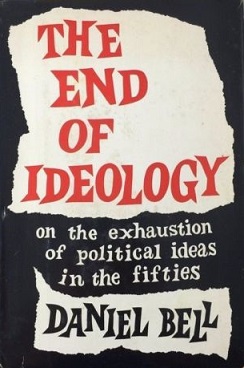
ベル「イデオロギーの終焉」
The End of Ideology: On the Exhaustion of Political Ideas in the Fifties
解説:池田光穂
★ダニエル・ベル『イデオロギーの終焉』[The End of Ideology: On the Exhaustion of Political Ideas in the Fifties]
『イデオロギーの終焉:1950年代にお ける政治思想の枯渇について』[The End of Ideology: On the Exhaustion of Political Ideas in the Fifties] は、ダニエル・ベルが1960年に発表した論文集である(ニューヨーク、第2版1962年)。ベルは自らを「経済面では社会主義者、政治面では自由主義 者、文化面では保守主義者」と称した。彼は、19世紀から20世紀初頭にかけて生まれた古い壮大な人間主義的イデオロギーは枯渇し、より狭隘な新しいイデ オロギーが間もなく台頭すると示唆する。政治的イデオロギーは「良識ある」人々の間では無関係になり、将来の政治体制は既存システムの断片的な技術的調整 によって推進されると論じる。[1] 豊かな福祉国家の台頭と異なる集団間の制度化された交渉により、自由民主主義を打倒しようとする革命運動はもはや労働者階級を惹きつけられなくなる、とベ ルは主張する。[2]
| The End of
Ideology:
On the Exhaustion of Political Ideas in the Fifties is a collection
of
essays published in 1960 (New York, 2nd ed. 1962) by Daniel Bell, who
described himself as a "socialist in economics, a liberal in politics,
and a conservative in culture." He suggests that the older,
grand-humanistic ideologies derived from the nineteenth and early
twentieth centuries had been exhausted and that new, more parochial
ideologies would soon arise. He argues that political ideology has
become irrelevant among "sensible" people and that the polity of the
future would be driven by piecemeal technological adjustments of the
extant system.[1] With the rise of affluent welfare states and
institutionalized bargaining between different groups, Bell maintains,
revolutionary movements which aim to overthrow liberal democracy will
no longer be able to attract the working classes.[2] |
『イデオロギーの終焉:1950年代における政治思想の枯渇について』
[The End of
Ideology:
On the Exhaustion of Political Ideas in the Fifties]
は、ダニエル・ベルが1960年に発表した論文集である(ニューヨーク、第2版1962年)。ベルは自らを「経済面では社会主義者、政治面では自由主義
者、文化面では保守主義者」と称した。彼は、19世紀から20世紀初頭にかけて生まれた古い壮大な人間主義的イデオロギーは枯渇し、より狭隘な新しいイデ
オロギーが間もなく台頭すると示唆する。政治的イデオロギーは「良識ある」人々の間では無関係になり、将来の政治体制は既存システムの断片的な技術的調整
によって推進されると論じる。[1]
豊かな福祉国家の台頭と異なる集団間の制度化された交渉により、自由民主主義を打倒しようとする革命運動はもはや労働者階級を惹きつけられなくなる、とベ
ルは主張する。[2] |
| In the 1930s, scholars debated
the continued relevance of Marxist theories of class-based ideologies.
These discussions influenced the literature of the period, even in the
less reductionist version set forth in most of Karl Mannheim's
"Ideology and Utopia." However, his essay on "Utopia" does envision a
loss of both utopian and ideological vision. Fascism rather than
communism initially posed the question, insofar as the simplification
of Fascism as "ideology" of the capitalist class lost credibility. |
1930年代、学者たちは階級に基づくイデオロギーに関するマルクス主
義理論の継続的な妥当性について議論した。これらの議論は当時の文献に影響を与えた。カール・マンハイムの『イデオロギーとユートピア』の大半で提示され
た、より還元主義的でない解釈においても同様であった。しかし彼の「ユートピア」論考は、ユートピア的ビジョンとイデオロギー的ビジョンの双方の喪失を予
見している。当初この問題を提起したのは共産主義ではなくファシズムであった。というのも、ファシズムを資本家階級の「イデオロギー」と単純化するという
見方は、その説得力を失っていたからだ。 |
| A group of thinkers focused on
the concept of "mass society," arguing that control and resistance were
not primarily driven by ideology (Emil Lederer, "The State of Mass
Society"). Although much of this was conjoined with conservative
arguments about the "revolt of the masses," there was also a current
that looked to pragmatic problem solving where Fascism (and
increasingly Communism) could be resisted or contained. Mannheim's
writings on "planning" may have encouraged this trend, though not
always clearly. Daniel Bell represented a later generation, which
developed more sophisticated ideas about integrating expertise into
democratic political processes, as in the work of "pluralist" political
theorists like David Truman, Robert Dahl and Daniel Bell. Technocratic
notions at home on the Right played little part. |
「大衆社会」という概念に焦点を当てた思想家グループは、支配と抵抗は
主にイデオロギーによって駆動されるものではないと主張した(エミール・レデラー『大衆社会の状態』)。この主張の多くは「大衆の反乱」に関する保守的な
議論と結びついていたが、ファシズム(そして次第に共産主義)に抵抗したり封じ込めたりできる現実的な問題解決を模索する潮流も存在した。マンハイムの
「計画」に関する著作は、必ずしも明確ではないが、この傾向を後押しした可能性がある。ダニエル・ベルは後世の世代を代表し、デイヴィッド・トルーマン、
ロバート・ダール、ダニエル・ベルといった「多元主義」政治理論家たちの研究に見られるように、専門知識を民主的政治プロセスに統合するより洗練された思
想を発展させた。右派に居場所のあるテクノクラティックな概念はほとんど役割を果たさなかった。 |
| The End of History and the Last
Man Francis Fukuyama Jürgen Habermas |
歴史の終わりと最後の人間 フランシス・フクヤマ ユルゲン・ハーバーマス |
| Further reading Strand, Daniel (2016). No Alternatives: The End of Ideology in the 1950s and the Post-political World of the 1990s. Stockholm: Stockholm University. ISBN 978-91-7649-483-7. Brick, Howard (1986). Daniel Bell and the Decline of Intellectual Radicalism: Social Theory and Political Reconciliation in the 1940s. Madison, Wis: University of Wisconsin Press. ISBN 978-0-299-10550-1. |
追加文献(さらに読む) ストランド、ダニエル(2016)。『代替案なし:1950年代におけるイデオロギーの終焉と1990年代のポスト政治的世界』。ストックホルム:ストッ クホルム大学。ISBN 978-91-7649-483-7。 ブリック、ハワード(1986)。『ダニエル・ベルと知的急進主義の衰退:1940年代の社会理論と政治的和解』。ウィスコンシン州マディソン:ウィスコ ンシン大学出版局。ISBN 978-0-299-10550-1。 |
| References 1. Summers, John (2011). "Daniel Bell and The End of Ideology". Dissent Magazine. Retrieved 9 June 2018. 2. Strand, Daniel. No Alternatives: The End of Ideology in the 1950s and the Post-political World of the 1990s, pp. 140–145 (Stockholm University 2016) (ISBN 978-91-7649-483-7) |
参考文献 1. サマーズ、ジョン(2011年).「ダニエル・ベルとイデオロギーの終焉」.『ディセント・マガジン』.2018年6月9日取得. 2. ストランド、ダニエル。『代替案なし:1950年代におけるイデオロギーの終焉と1990年代のポスト政治的世界』140–145頁(ストックホルム大学 出版局、2016年)(ISBN 978-91-7649-483-7) |
| https://en.wikipedia.org/wiki/The_End_of_Ideology |
No
alternatives The end of ideology in the 1950s and the post-political
world of the 1990s. Daniel Strand Academic dissertation for the
Degree of Doctor of Philosophy in History of Ideas at Stockholm
University to be publicly defended on Saturday 10 December 2016 at
13.00 in Auditorium 215, Humanistvillan, Frescativägen 24.
Abstract
In the 1950s,
scholars in Europe and the United States announced the end of political
ideology in the West. With the rise of affluent welfare states, they
argued, ideological movements which sought to overthrow prevailing
liberal democracy would disappear. While these arguments were
questioned in the 1960s, similar ideas were presented after the fall of
the Berlin Wall and the collapse of the Soviet Union. Scholars now
claimed that the end of the Cold War meant the end of mankind’s
“ideological development,” that globalization would undermine the
left/right distinction and that politics would be shaped by cultural
affiliations rather than ideological alignments. The purpose of No
alternatives is to compare the end of ideology discussion of the 1950s
with some of the post-Cold War theories launched at the time of, or in
the years following, the fall of the Berlin Wall. Juxtaposing
monographs, essays and papers between 1950 and 2000, the dissertation
focuses on three aspects of these theories. First, it analyzes their
concepts of history, demonstrating that they tended to portray the
existing society as an order which had resolved the conflicts and
antagonisms of earlier history. Second, the investigation scrutinizes
the processes of post-politicization at work in these theories, showing
how they sought to transcend, contain or externalize social conflict,
and at times dismiss politics altogether. Third, it demonstrates how
the theories can be understood as legitimizing or mobilizing narratives
which aimed to defend Western liberal democracy and to rally its
citizens against internal threats and external enemies. As the title of
the dissertation implies, the end of ideology discussion of the 1950s
and the post-Cold War theories of the 1990s sought to highlight the
historical or political impossibility of any alternatives to the
present society.
Keywords: intellectual history, political theory, philosophy of history, ideology, end of ideology, post-politics, modernization theory, Cold War, anticommunism, 1950s, 1990s.
『代替案はない1950年代のイデオロ ギー終焉と1990年代のポスト政治的世界』ダニエル・ストランド、ストックホルム大学思想史博士課程、学位論文2016年12月10日(土)13時よ り、フレスカティヴェーゲン24番地のヒューマニストヴィラン内講堂215にて公開審査を実施する。
要旨
1950年代、欧米の学者たちは西洋にお ける政治イデオロギーの終焉を宣言した。豊かな福祉国家の台頭により、既存の自由民主主義を転覆しようとするイデオロギー運動は消滅すると彼らは主張し た。こうした議論は1960年代に疑問視されたものの、ベルリンの壁崩壊とソビエト連邦解体後にも同様の思想が提示された。冷戦の終結は人類の「イデオロ ギー的発展」の終焉を意味し、グローバリゼーションが左右の区別を弱体化させ、政治はイデオロギー的結束ではなく文化的帰属によって形作られると、学者た ちは主張したのである。『代替案なし』の目的は、1950年代のイデオロギー終焉論と、ベルリンの壁崩壊時あるいはその後数年間に提唱された冷戦後理論の 一部を比較することである。1950年から2000年までの単行本、論文、論考を対比させながら、本論文はこれらの理論の三つの側面に焦点を当てる。第一 に、それらの歴史観を分析し、既存社会を過去の歴史的対立や葛藤を解決した秩序として描く傾向があったことを示す。第二に、これらの理論に内在する脱政治 化の過程を検証し、社会対立を超越・封じ込め・外部化しようとし、時に政治そのものを否定する手法を明らかにする。第三に、これらの理論が西洋的自由民主 主義を擁護し、市民を内部の脅威や外部の敵に対して結束させるための正当化・動員ナラティブとして機能し得たことを示す。論文タイトルが示す通り、 1950年代の「イデオロギーの終焉」論と1990年代の冷戦後理論は、現存社会に代わるあらゆる選択肢が歴史的・政治的に不可能であることを強調しよう としたのである。
キーワード:知識史、政治理論、歴史哲
学、イデオロギー、イデオロギーの終焉、ポスト政治、近代化理論、冷戦、反共産主義、1950年代、1990年代。
☆
★イデオロギーの終焉(いでおろぎーの
しゅうえん、英:The End of
Ideology)とは、先進資本主義諸国における「豊かな社会」の到来とともに、階級闘争を通じた社会の全面的変革なる理念はその効力を失ったとする
論。また、ダニエル・ベルによる1960年刊行の著作。ダニエル・ベル以前からイデオロギーの終焉はさまざまに論じられてきたが、1960年にダニエル・
ベルがはじめて『イデオロギーの終焉』のなかで理論的に整除されたかたちで唱えることになり、「イデオロギーの終焉」は世界的な流行語となった。しかしベ
ルは、ユートピアは終焉せず、第三世界から新たなイデオロギーの出現しうることを展望したが、古典的マルクス主義には破産宣告を行った。ベルやシーモア・
M・リプセットら、イデオロギーの終焉論者によれば、今や必要なのは不確定な観念的要素に満ちたイデオロギー的構想に基づく社会の全面的変革ではなく、信
頼のおける科学的知識と技術とを用いた社会の部分的改造のつみ重ねである。そして、そのなかでイデオロギーという概念は死語になりつつあり、資本主義国家
と社会主義国家は今後、イデオロギー対立をこえた共通の方向に向かうとした。
リンク
文献
その他の情報

Copyleft, CC, Mitzub'ixi Quq Chi'j, 1996-2099

☆
 ☆
☆
