Faith healing
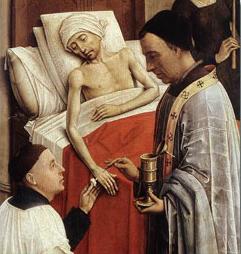
ロヒール・ファン・デル・ウェイデン作『七つの秘跡』(1445年)の細部。臨終の塗油、すなわち病者の塗油の秘跡を描いた場面
Faith healing
ロヒール・ファン・デル・ウェイデン作『七つの秘跡』(1445年)の細部。臨終の塗油、すなわち病者の塗油の秘跡を描いた場面
★信仰治療/ 信仰による治癒(Faith healing)
信仰による癒し[Faith healing]と は、祈りや(手当てなどの)身振り手振りを用いて、精神的・肉体的な癒しにおいて神の介入を引き出すと一部の人々が信じている実践であ り、特にキリスト教における慣行である。 信者たちは、祈りやその他の儀礼を通じて宗教的信仰によって病気や障害の癒しがもたらされると主張しており、信奉者によれば、それらは神の存在と力を呼び 起こすことができるという。神の介入に対する宗教的信念は、信仰治療によって達成されたエビデンスに基づく結果の実証的証拠に依存するものではない。 事実上すべての[a]科学者や哲学者は、信仰治療を疑似科学として退けている。
"Despite the lack
of generally accepted demarcation criteria, we find remarkable
agreement among virtually all philosophers and scientists that fields
like astrology, creationism, homeopathy, dowsing, psychokinesis, faith
healing, clairvoyance, or ufology are either pseudosciences or at least
lack the epistemic warrant to be taken seriously." Martin Mahner,
2013.[3]: 30–31 /
「一般的に受け入れられている区別基準は存在しないものの、占星術、創造論、ホメオパシー、ダウジング、念力、信仰による癒し、透視、UFO研究といった
分野は、疑似科学であるか、少なくとも真剣に受け止めるに足る認識論的根拠を欠いているという点で、事実上すべての哲学者や科学者の間で驚くほど意見が一
致している。」マーティン・マーナー、2013年。[3]: 30–31
| Faith healing
is the practice of prayer and gestures (such as laying on of hands)
that are believed by some to elicit divine intervention in spiritual
and physical healing, especially the Christian practice.[1] Believers
assert that the healing of disease and disability can be brought about
by religious faith through prayer or other rituals that, according to
adherents, can stimulate a divine presence and power. Religious belief
in divine intervention does not depend on empirical evidence of an
evidence-based outcome achieved via faith healing.[2] Virtually all[a]
scientists and philosophers dismiss faith healing as
pseudoscience.[3][4][5][6] Claims that "a myriad of techniques" such as prayer, divine intervention, or the ministrations of an individual healer can cure illness have been popular throughout history.[7] There have been claims that faith can cure blindness, deafness, cancer, HIV/AIDS, developmental disorders, anemia, arthritis, corns, defective speech, multiple sclerosis, skin rashes, total body paralysis, and various injuries.[8] Recoveries have been attributed to many techniques commonly classified as faith healing. It can involve prayer, a visit to a religious shrine, or simply a strong belief in a supreme being.[8] Many Christians interpret the Christian Bible, especially the New Testament, as teaching belief in, and the practice of, faith healing. According to a 2004 Newsweek poll, 72 percent of Americans said they believe that praying to God can cure someone, even if science says the person has an incurable disease.[9] Unlike faith healing, advocates of spiritual healing make no attempt to seek divine intervention, instead believing in divine energy. The increased interest in alternative medicine at the end of the 20th century has given rise to a parallel interest among sociologists in the relationship of religion to health.[2] Faith healing can be classified as a spiritual, supernatural,[10] or paranormal topic,[11] and, in some cases, belief in faith healing can be classified as magical thinking.[12] The American Cancer Society states "available scientific evidence does not support claims that faith healing can actually cure physical ailments".[8] "Death, disability, and other unwanted outcomes have occurred when faith healing was elected instead of medical care for serious injuries or illnesses."[8] When parents have practiced faith healing but not medical care, many children have died that otherwise would have been expected to live.[13] Similar results are found in adults.[14] |
信仰による癒し[Faith healing]と
は、祈りや(手当てなどの)身振り手振りを用いて、精神的・肉体的な癒しにおいて神の介入を引き出すと一部の人々が信じている実践であり、特にキリスト教
における慣行である。[1]
信者たちは、祈りやその他の儀礼を通じて宗教的信仰によって病気や障害の癒しがもたらされると主張しており、信奉者によれば、それらは神の存在と力を呼び
起こすことができるという。神の介入に対する宗教的信念は、信仰治療によって達成されたエビデンスに基づく結果の実証的証拠に依存するものではない。
[2] 事実上すべての[a]科学者や哲学者は、信仰治療を疑似科学として退けている。[3][4][5][6] 祈り、神の介入、あるいは個々の治療者による施しといった「無数の技法」が病気を治すことができるという主張は、歴史を通じて広く見られてきた。[7] 信仰によって、失明、難聴、がん、HIV/エイズ、発達障害、貧血、関節炎、たこ、言語障害、多発性硬化症、皮膚の発疹、全身麻痺、および様々な怪我を治 すことができるという主張がなされてきた。[8] 回復は、一般に信仰治療に分類される多くの技法に起因するとされてきた。これには、祈り、宗教的な聖堂への参拝、あるいは単に最高存在への強い信仰が含ま れることがある。[8] 多くのキリスト教徒は、キリスト教の聖書、特に新約聖書を、信仰治療への信仰とその実践を説くものとして解釈している。2004年のニューズウィーク誌の 世論調査によると、アメリカ人の72パーセントが、たとえ科学的に不治の病と診断されたとしても、神への祈りによって人を癒すことができると信じていると 答えた。[9] 信仰治療とは異なり、スピリチュアル・ヒーリングの支持者は神の介入を求めることはせず、代わりに神聖なエネルギーを信じている。20世紀末における代替 医療への関心の高まりは、社会学者たちの間でも、宗教と健康の関係に対する並行した関心を生み出した。[2] 信仰による癒しは、スピリチュアル、超自然的[10]、あるいは超常現象[11]のテーマとして分類され得る。また、場合によっては、信仰による癒しへの 信仰は、呪術的思考[12]として分類されることもある。米国癌協会は、「入手可能な科学的証拠は、信仰治療が実際に身体的疾患を治癒できるという主張を 裏付けていない」と述べている。[8] 「重篤な怪我や病気に対して、医療の代わりに信仰治療が選択された結果、死亡、障害、その他の望ましくない結果が生じている。」[8] 親が医療を受けさせず信仰治療のみを行った場合、本来なら生存が期待された多くの子供が死亡している。[13] 同様の結果は成人においても確認されている。[14] |
| In various belief systems Christianity Overview  Faith healing by Fernando Suarez, Philippines Regarded as a Christian belief that God heals people through the power of the Holy Spirit, faith healing often involves the laying on of hands. It is also called supernatural healing, divine healing, and miracle healing, among other things. Healing in the Christian Bible is often associated with the ministry of specific individuals, including Elijah, Jesus, and Paul of Tarsus.[2] Christian physician Reginald B. Cherry views faith healing as a pathway of healing in which God uses both the natural and the supernatural to heal.[15] Being healed has been described as a privilege of accepting Jesus's redemption on the cross.[further explanation needed][16] Pentecostal writer Wilfred Graves Jr. views the healing of the body as a physical expression of salvation.[17] After relating a story of Jesus's exorcising an individual and healing ill individuals who approached him,[18] the author of the book of Matthew states that the miracles were a fulfillment of a prophecy from Isaiah 53:5.[19] Christian writers who believe in faith healing do not necessarily believe that an individual's faith presently brings about the desired healing. "[Y]our faith does not effect your healing now. When you are healed rests entirely on what the sovereign purposes of the Healer are," argues Larry Keefauver.[20] Keefauver cautions against allowing enthusiasm for faith healing to stir up false hopes: "Just believing hard enough, long enough or strong enough will not strengthen you or prompt your healing. Doing mental gymnastics to 'hold on to your miracle' will not cause your healing to manifest now."[20] Those who actively lay hands on others and pray with them to be healed are usually aware that healing may not always follow immediately. Proponents of faith healing argue that it may come later, if at all, in this life. Keefauver argues that "the truth is that your healing may manifest in eternity, not in time".[20] New Testament The New Testament relates that it was only after Jesus healed a blind man that his status was recognized, argues Bart D. Ehrman.[21] Four of the seven miracles performed in the book of John that the author uses to indicate that Jesus was sent from God were acts of healing or resurrection. Jesus heals a Capernaumite official's son,[22] heals a paralyzed man by a pool in Bethsaida,[23] heals a man born blind,[24] and resurrects Lazarus of Bethany.[25][26] Jesus told his followers to heal the sick and stated that signs such as healing are evidence of faith.[27] The apostle Paul believed healing is one of the special gifts of the Holy Spirit,[28][29] and that the possibility exists that certain persons may possess this gift to an extraordinarily high degree.[30] The New Testament says that during Jesus's ministry and after his Resurrection, the apostles healed the sick and cast out demons, made lame men walk, raised the dead and performed other miracles. The apostles are described as men given supernatural powers by God, including the ability to heal.[31] For example, in the book of Acts 3:1–10, Saint Peter is recounted healing a disabled man.[32][33] Early Christian church Accounts or references to healing appear in the writings of many Ante-Nicene Fathers, although many of these mentions are very general and do not include specifics.[34] Catholicism See also: Intercession of saints The Roman Catholic Church recognizes two "not mutually exclusive" kinds of healing,[35]: I,3 [36]: nn2–3 one justified by science and one justified by faith: healing by human "natural means [...] through the practice of medicine" which emphasizes that the theological virtue of "charity demands that we not neglect natural means of healing people who are ill" and the cardinal virtue of prudence forewarns not "to employ a technique that has no scientific support (or even plausibility)".[36]: nn2–3, 6, 10 healing by divine grace "interceded on behalf of the sick through the invocation of the name of the Lord Jesus, asking for healing through the power of the Holy Spirit, whether in the form of the sacramental laying on of hands and anointing with oil or of simple prayers for healing, which often include an appeal to the saints for their aid".[36]: n2 The Catechism of the Catholic Church states that "the Holy Spirit gives to some a special charism of healing" but also that "the most intense prayers do not always obtain the healing of all illnesses" by which it cites Paul the Apostle as a biblical example of someone who found meaning in their own suffering.[37] In 2000, the Congregation for the Doctrine of the Faith issued "Instruction on prayers for healing," with specific norms regarding prayer meetings for healing,[35] which presents the Catholic Church's doctrines on sickness and healing.[38]: 230 [further explanation needed] It accepts "that there may be means of natural healing that have not yet been understood or recognized by science",[36]: n6 [b] but it rejects superstitious practices which are neither compatible with Christian teaching nor compatible with scientific evidence.[36]: nn11–12 Faith healing is reported by Catholics as the result of intercessory prayer to a saint or to a person with the gift of healing. According to U.S. Catholic magazine, "Even in this skeptical, postmodern, scientific age – miracles really are possible." According to a Newsweek poll, three-fourths of American Catholics say they pray for "miracles" of some sort.[40] According to John Cavadini, when healing is granted, "The miracle is not primarily for the person healed, but for all people, as a sign of God's work in the ultimate healing called 'salvation', or a sign of the kingdom that is coming." Some might view their own healing as a sign they are particularly worthy or holy, while others do not deserve it.[40] The Catholic Church has a special Congregation dedicated to the careful investigation of the validity of alleged miracles attributed to prospective saints. Pope Francis tightened the rules on money and miracles in the canonization process.[41] Since Catholic Christians believe the lives of canonized saints in the Church will reflect Christ's, many have come to expect healing miracles. While the popular conception of a miracle can be wide-ranging, the Catholic Church has a specific definition for the kind of miracle formally recognized in a canonization process.[42] According to Catholic Encyclopedia, it is often said that cures at shrines and during Christian pilgrimages are mainly due to psychotherapy – partly to confident trust in Divine providence, and partly to the strong expectancy of cure that comes over suggestible persons at these times and places.[39][c] Among the best-known accounts by Catholics of faith healings are those attributed to the miraculous intercession of the apparition of the Blessed Virgin Mary known as Our Lady of Lourdes at the Sanctuary of Our Lady of Lourdes in France and the remissions of life-threatening disease claimed by those who have applied for aid to Saint Jude, who is known as the "patron saint of lost causes".[failed verification – see discussion][43] As of 2004, Catholic medics have asserted that there have been 67 miracles and 7,000 unexplainable medical cures at Lourdes since 1858.[44] In a 1908 book, it says these cures were subjected to intense medical scrutiny and were only recognized as authentic spiritual cures after a commission of doctors and scientists, called the Lourdes Medical Bureau, had ruled out any physical mechanism for the patient's recovery.[45] Evangelicalism  Laying on of hands for healing in Living Streams International Church, Accra, Ghana, 2018 In some Pentecostal and Charismatic Evangelical churches, a special place is thus reserved for faith healings with laying on of hands during worship services or for campaigns of evangelization.[46][47] Faith healing or divine healing is considered to be an inheritance of Jesus acquired by his death and resurrection.[48] Biblical inerrancy ensures that the miracles and healings described in the Bible are still relevant and may be present in the life of the believer.[49] At the beginning of the 20th century, the new Pentecostal movement drew participants from the Holiness movement and other movements in America that already believed in divine healing. By the 1930s, several faith healers drew large crowds and established worldwide followings. The first Pentecostals in the modern sense appeared in Topeka, Kansas, in a Bible school conducted by Charles Fox Parham, a holiness teacher and former Methodist pastor. Pentecostalism achieved worldwide attention in 1906 through the Azusa Street Revival in Los Angeles led by William Joseph Seymour.[50] Smith Wigglesworth was also a well-known figure in the early 20th century. A former English plumber turned evangelist, Wigglesworth lived simply and read nothing but the Bible from the time his wife taught him to read. He traveled around the world preaching about Jesus and performing faith healings. Wigglesworth claimed to raise several people from the dead in Jesus' name in his meetings.[51] During the 1920s and 1930s, Aimee Semple McPherson was a controversial faith healer of growing popularity during the Great Depression. Subsequently, William M. Branham has been credited with initiating the post-World War II healing revivals.[52]: 58 [53]: 25 The healing revival he began led many to emulate his style and spawned a generation of faith healers. Because of this, Branham has been recognized as the "father of modern faith healers".[54] According to writer and researcher Patsy Sims, "the power of a Branham service and his stage presence remains a legend unparalleled in the history of the Charismatic movement".[55] By the late 1940s, Oral Roberts, who was associated with and promoted by Branham's Voice of Healing magazine also became well known, and he continued with faith healing until the 1980s.[56] Roberts discounted faith healing in the late 1950s, stating, "I never was a faith healer and I was never raised that way. My parents believed very strongly in medical science and we have a doctor who takes care of our children when they get sick. I cannot heal anyone – God does that."[57] A friend of Roberts was Kathryn Kuhlman, another popular faith healer, who gained fame in the 1950s and had a television program on CBS. Also in this era, Jack Coe[58][59] and A. A. Allen[60] were faith healers who traveled with large tents for large open-air crusades. Oral Roberts's successful use of television as a medium to gain a wider audience led others to follow suit. His former pilot, Kenneth Copeland, started a healing ministry. Pat Robertson, Benny Hinn, and Peter Popoff became well-known televangelists who claimed to heal the sick.[61] Richard Rossi is known for advertising his healing clinics through secular television and radio. Kuhlman influenced Benny Hinn, who adopted some of her techniques and wrote a book about her.[62] Christian Science Christian Science claims that healing is possible through prayer based on an understanding of God and the underlying spiritual perfection of God's creation.[7][63] The material world as humanly perceived is believed not to be the spiritual reality. Christian Scientists believe that healing through prayer is possible insofar as it brings the spiritual reality of health into human experience.[64] Prayer does not change the spiritual creation but gives a clearer view of it, and the result appears in the human scene as healing: the human picture adjusts to coincide more nearly with the divine reality.[65] Therefore, Christian Scientists do not consider themselves to be faith healers since faith or belief in Christian Science is not required on the part of the patient, and because they consider healings reliable and provable rather than random.[66][67] Although there is no hierarchy in Christian Science, practitioners devote themselves full-time to prayer for others on a professional basis and advertise in an online directory published by the church.[68][69] Christian Scientists sometimes tell their stories of healing at weekly testimony meetings at local Christian Science churches, or publish them in the church's magazines including The Christian Science Journal printed monthly since 1883, the Christian Science Sentinel printed weekly since 1898, and The Herald of Christian Science a foreign language magazine beginning with a German edition in 1903 and later expanding to Spanish, French, and Portuguese editions. Christian Science Reading Rooms often have archives of such healing accounts.[70][69] The Church of Jesus Christ of Latter-day Saints The Church of Jesus Christ of Latter-day Saints (LDS) has had a long history of faith healings. Many members of the LDS Church have told their stories of healing within the LDS publication, the Ensign.[71][72][73][74] The church believes healings come most often as a result of priesthood blessings given by the laying on of hands; however, prayer often accompanied with fasting is also thought to cause healings. Healing is always attributed to God's power. Latter-day Saints believe that the Priesthood of God, held by prophets (such as Moses) and worthy disciples of the Savior, was restored via heavenly messengers to the first prophet of this dispensation, Joseph Smith.[75][76] According to LDS doctrine, even though members may have the restored priesthood authority to heal in the name of Jesus Christ, all efforts should be made to seek the appropriate medical help. Brigham Young stated this effectively, while also noting that the ultimate outcome is still dependent on the will of God.[77] If we are sick, and ask the Lord to heal us, and to do all for us that is necessary to be done, according to my understanding of the Gospel of salvation, I might as well ask the Lord to cause my wheat and corn to grow, without my plowing the ground and casting in the seed. It appears consistent to me to apply every remedy that comes within the range of my knowledge, and to ask my Father in Heaven, in the name of Jesus Christ, to sanctify that application to the healing of my body.[78] But suppose we were traveling in the mountains, ... and one or two were taken sick, without anything in the world in the shape of healing medicine within our reach, what should we do? According to my faith, ask the Lord Almighty to ... heal the sick. This is our privilege, when so situated that we cannot get anything to help ourselves. Then the Lord and his servants can do all. But it is my duty to do, when I have it in my power.[78] We lay hands on the sick and wish them to be healed, and pray the Lord to heal them, but we cannot always say that he will.[79] |
様々な信仰体系において キリスト教 概要 フェルナンド・スアレスによる信仰による癒し(フィリピン) 神が聖霊の力を通じて人々を癒すというキリスト教の信仰と見なされる信仰による癒しは、しばしば「按手」を伴う。また、超自然的癒し、神の癒し、奇跡的癒 しなどとも呼ばれる。キリスト教聖書における癒しは、エリヤ、イエス、タルソスのパウロといった特定の個人の働きと結びつけられることが多い。[2] キリスト教医のレジナルド・B・チェリーは、信仰による癒しを、神が自然の力と超自然の力の両方を使って癒す道であると見なしている。[15] 癒されることは、十字架上のイエスの贖いを受け入れる特権であると説明されてきた。[さらなる説明が必要][16] ペンテコステ派の作家ウィルフレッド・グレイブス・ジュニアは、身体の癒しを救いの物理的な表現と見なしている。[17] イエスが一人の悪霊を追い出し、近づいてきた病人を癒した物語を語った後[18]、マタイによる福音書の著者は、これらの奇跡がイザヤ書53章5節の預言 の成就であったと述べている。[19] 信仰による癒しを信じるキリスト教の著者が、必ずしも個人の信仰が直ちに望ましい癒しをもたらすとは考えていない。「『あなたの信仰は、今この瞬間に癒し をもたらすものではない。いつ癒されるかは、癒し主の主権的な御心にかかっている」とラリー・キーフォーバーは論じている。[20] キーフォーバーは、信仰による癒しへの熱意が誤った期待をかき立てることのないよう警告している。「ただ十分に強く、十分に長く、あるいは十分に熱心に信 じることだけでは、あなたを強めたり、癒しを促したりはしない。『奇跡を掴み続ける』ために精神的な努力を重ねても、今すぐ癒しが現れることはない。」 [20] 他者に積極的に手を置き、癒やされるよう共に祈る人々は、通常、癒やしが必ずしも直ちに起こるわけではないことを認識している。信仰による癒やしの支持者 たちは、もし癒やしが訪れるとしても、この世では後になってからかもしれないと主張する。キーフォーバーは、「真実は、あなたの癒やしは時間の中ではな く、永遠の中で現れるかもしれないということだ」と論じている。[20] 新約聖書 新約聖書によれば、イエスが盲人を癒してから初めて、その地位が認められたと、バート・D・エアマンは論じている。[21] ヨハネの福音書において、著者がイエスが神から遣わされたことを示すために用いた七つの奇跡のうち、四つは癒しや復活の行為であった。イエスはカペナウム の役人の息子を癒やし[22]、ベツサイダの池のほとりで麻痺した男を癒やし[23]、生まれつき目の見えない男を癒やし[24]、ベタニヤのラザロを復 活させた[25][26]。 イエスは弟子たちに病人を癒やすよう命じ、癒やしのようなしるしは信仰の証拠であると述べた。[27] 使徒パウロは、癒しは聖霊の特別な賜物の一つであると信じていた[28][29]。また、特定の人々がこの賜物を並外れて高いレベルで持つ可能性があると も考えていた[30]。新約聖書によれば、イエスの宣教期間中および復活後、使徒たちは病人を癒し、悪霊を追い出し、足の不自由な者を歩かせ、死者をよみ がえらせ、その他の奇跡を行った。使徒たちは、癒しの能力を含む超自然的な力を神から与えられた人々として描かれている。[31] 例えば、使徒行伝3章1節から10節では、聖ペテロが足の不自由な男を癒したことが記されている。[32][33] 初期キリスト教会 癒しに関する記述や言及は、多くのニカイア公会議以前の教父たちの著作に見られるが、その多くは極めて一般的であり、具体的な内容は含まれていない。 [34] カトリック教 関連項目:聖人の執り成し ローマ・カトリック教会は、2つの「互いに排他的なものではない」癒しの種類を認めている。[35]: I,3 [36]: nn2–3 1つは科学によって正当化されるものであり、もう1つは信仰によって正当化されるものである: 人間の「自然的な手段……医学の実践を通じて」行われる癒し。これは、「慈善という神学的徳が、病める人々を癒すための自然的な手段を怠ってはならないと 求める」ことを強調しており、また、賢明さという基本徳は、「科学的裏付け(あるいは妥当性さえも)のない手法を用いること」を戒めている。[36]: nn2–3, 6, 10 神の恵みによる癒し。「主イエスの御名を呼び求め、聖霊の力による癒しを願い、病人のために執り成すもの。それは、秘跡としての按手や油の塗布という形を とる場合もあれば、しばしば聖人への援助を求める呼びかけを含む単純な癒しの祈りという形をとる場合もある」。[36]: n2 『カトリック教会のカテキズム』は、「聖霊は一部の人々に癒しの特別なカリスマを与える」と述べているが、同時に「最も熱心な祈りでも、すべての病気が癒 されるとは限らない」とも記しており、これに関して、自身の苦悩の中に意味を見出した聖書の例として使徒パウロを挙げている。[37] 2000年、教理省は「癒やしの祈りに関する指針」を発表し、癒やしのための祈りの集いに関する具体的な規範を示した[35]。これは、病気と癒やしに関 するカトリック教会の教義を提示するものである[38]: 230 [さらなる説明が必要] 同教令は、「科学によってまだ理解または認識されていない自然治癒の手段が存在し得る」ことを認めているが[36]: n6 [b]、キリスト教の教えと も科学的証拠とも相容れない迷信的な慣行は拒否している。[36]: nn11–12 カトリック教徒の間では、信仰による癒しは、聖人や癒しの賜物を持つ人への執り成しの祈りの結果として報告されている。『U.S. Catholic』誌によれば、「この懐疑的でポストモダンな科学の時代にあっても、奇跡は確かに起こり得る」という。ニューズウィーク誌の世論調査によ ると、アメリカのカトリック教徒の4分の3が、何らかの「奇跡」を祈っていると答えている。[40] ジョン・カヴァディーニによれば、癒しが与えられるとき、「その奇跡は、主に癒された本人のためではなく、すべての人々のためのものであり、『救い』と呼 ばれる究極の癒しにおける神の働きのしるし、あるいは到来する神の国のしるしである」。自らの癒しを、自分が特に価値ある者あるいは聖なる者であることの しるしと見なす者もいれば、自分はそれに値しないとする者もいる。[40] カトリック教会には、聖人候補者に帰せられるとされる奇跡の正当性を慎重に調査する専門の省庁がある。教皇フランシスコは、列聖手続きにおける金銭と奇跡 に関する規則を厳格化した。[41] カトリック教徒は、教会において列聖された聖人の生涯がキリストの生涯を反映すると信じているため、多くの人が癒しの奇跡を期待するようになった。奇跡に 対する一般的な認識は多岐にわたるが、カトリック教会は列聖手続きにおいて正式に認められる奇跡の種類について、明確な定義を設けている。[42] 『カトリック百科事典』によれば、聖堂やキリスト教の巡礼地での治癒は、主に心理療法によるものだとよく言われる。その一因は神の摂理への確信に満ちた信 頼にあり、もう一因は、そのような時や場所で暗示にかかりやすい人々に生じる強い治癒への期待にある。[39][c] カトリック教徒による信仰による癒しの最もよく知られた事例としては、フランスのルルドの聖母聖堂における「ルルドの聖母」として知られる聖母マリアの御 出現による奇跡的な取り次ぎに帰せられるものや、「絶望的な状況の守護聖人」として知られる聖ユダに助けを求めた人々が主張する、生命を脅かす病気の治癒 などが挙げられる。[検証不能 – 議論を参照][43] 2004年時点で、カトリックの医療関係者は、1858年以来ルルドで67件の奇跡と7,000件の医学的に説明のつかない治癒があったと主張している。 [44] 1908年の著書によれば、これらの治癒は厳格な医学的検証を受け、「ルルド医療局」と呼ばれる医師や科学者からなる委員会が、患者の回復に物理的なメカ ニズムが関与していないと判断した後にのみ、真の霊的治癒として認められたという。[45] 福音主義 2018年、ガーナ・アクラのリビング・ストリームズ・インターナショナル・チャーチにおける癒しのための按手 一部のペンテコステ派やカリスマ的福音派教会では、礼拝中や伝道キャンペーンにおいて、手置きによる信仰による癒しに特別な位置づけがなされている。 [46][47] 信仰による癒し、あるいは神による癒しは、イエスの死と復活によって獲得された遺産であると見なされている。[48] 聖書の無誤性により、聖書に記述された奇跡や癒しは今もなお関連性があり、信者の生活の中に現れる可能性がある。[49] 20世紀初頭、新たなペンテコステ運動は、すでに神の癒しを信じていたアメリカのホーリネス運動やその他の運動から参加者を集めた。1930年代までに、 数人の信仰による癒し手が大勢の群衆を惹きつけ、世界的な信奉者を確立した。 現代的な意味での最初のペンテコステ派は、カンザス州トピーカで、ホーリネス派の教師であり元メソジスト派牧師であったチャールズ・フォックス・パーハム が運営する聖書学校に現れた。ペンテコステ派は、1906年にウィリアム・ジョセフ・シーモアが主導したロサンゼルスのアズサ・ストリート・リバイバルを 通じて、世界的な注目を集めた。[50] スミス・ウィグルスワースも20世紀初頭における著名な人物であった。元英国の配管工から伝道者へと転身したウィグルスワースは質素な生活を送り、妻に読 み方を教わって以来、聖書以外は何も読まなかった。彼は世界中を巡り、イエスについて説教し、信仰による癒しを行っていた。ウィグルスワースは、自身の集 会でイエスの名によって数人の死者を蘇らせたと主張していた。[51] 1920年代から1930年代にかけて、エイミー・センプル・マクファーソンは、大恐慌期に人気を博した物議を醸す信仰治療家であった。その後、ウィリア ム・M・ブランハムは、第二次世界大戦後の癒しのリバイバルを主導した人物として評価されている。[52]: 58 [53]: 25 彼が始めた癒しの リバイバルは、多くの人々に彼のスタイルを模倣させ、一世代の信仰治療者を生み出した。このため、ブランハムは「現代の信仰治療者の父」と認められてい る。[54] 作家兼研究者のパッツィ・シムズによれば、「ブランハムの礼拝の力と彼のステージ上の存在感は、カリスマ運動の歴史において比類なき伝説として今なお語り 継がれている」。[55] 1940年代後半には、ブランハムの『Voice of Healing』誌と関わり、同誌によって推されたオーラル・ロバーツも広く知られるようになり、彼は1980年代まで信仰治療を続けた。[56] ロバーツは1950年代後半に信仰治療を否定し、「私は信仰治療者だったことはなく、そのような育て方をされたこともない」と述べた。私の両親は医学を強 く信じており、子供たちが病気になった時は医師に診てもらっている。私は誰をも癒すことはできない。癒すのは神だ」と述べた。[57] ロバーツの友人には、1950年代に名声を博し、CBSでテレビ番組を持っていた、もう一人の人気信仰治療家キャサリン・クールマンがいた。またこの時 代、ジャック・コー[58][59]やA・A・アレン[60]といった信仰治療家たちが、大規模な野外伝道集会のために巨大なテントを携えて各地を巡回し ていた。 オーラル・ロバーツがテレビを媒体として活用し、より広い視聴者を獲得した成功は、他の人々にも同様の動きをもたらした。彼の元パイロットであるケネス・ コープランドは、癒しのミニストリーを始めた。パット・ロバートソン、ベニー・ヒン、ピーター・ポポフは、病人を癒すと主張する有名なテレビ伝道者となっ た。[61] リチャード・ロッシは、世俗的なテレビやラジオを通じて自身の癒しのクリニックを宣伝することで知られている。クールマンはベニー・ヒンに影響を与え、ヒ ンは彼女の手法の一部を取り入れ、彼女に関する本を執筆した。[62] クリスチャン・サイエンス クリスチャン・サイエンスは、神に対する理解と、神の創造物に内在する霊的な完全性に基づいた祈りを通じて、癒しが可能であると主張している。[7] [63] 人間が知覚する物質世界は、霊的な現実ではないと信じられている。クリスチャン・サイエンスの信徒は、祈りによる癒しは、健康という霊的現実を人間の経験 の中に引き入れる限りにおいて可能であると信じている。[64] 祈りは霊的な創造物を変えるのではなく、それに対するより明確な視座を与えるものであり、その結果は人間の場面において癒しとして現れる。すなわち、人間 の状況が調整され、神の現実により近くなるのである。[65] したがって、クリスチャン・サイエンティストは、患者側にクリスチャン・サイエンスへの信仰や信念が求められないこと、また、癒やしを偶然の産物ではな く、信頼でき証明可能なものと見なしていることから、自らを信仰治療者とは考えていない。[66][67] クリスチャン・サイエンスには階層制度はないが、実践者たちは専門職として他者のために祈ることに専念し、教会が発行するオンライン名簿に広告を掲載して いる。[68][69] クリスチャン・サイエンティストは、地元のクリスチャン・サイエンス教会で行われる毎週の証言集会で癒やしの体験談を語ったり、1883年から月刊で発行 されている『ザ・クリスチャン・サイエンス・ジャーナル』、1898年から週刊で発行されている『クリスチャン・サイエンス・センチネル』、そして 1903年にドイツ語版から始まり、後にスペイン語、フランス語、ポルトガル語版へと拡大した外国語雑誌『ザ・ヘラルド・オブ・クリスチャン・サイエン ス』などの教会誌にそれらを掲載したりする。クリスチャン・サイエンスの読書室には、こうした癒しの体験談のアーカイブがしばしば保管されている。 [70][69] 末日聖徒イエス・キリスト教会 末日聖徒イエス・キリスト教会(LDS)には、信仰による癒しの長い歴史がある。LDS教会の多くの会員が、LDSの刊行物『エンサイン』の中で、自身の 癒しの体験談を語っている。[71][72][73][74] 同教会は、癒やしは主に、按手による神権の祝福の結果として与えられると信じている。しかし、断食を伴う祈りもまた、癒やしをもたらすと考えられている。 癒やしは常に神の力によるものとされる。末日聖徒は、預言者(モーセなど)や救い主のふさわしい弟子たちが持っていた神の神権が、天の使者を通じて、この 時代における最初の預言者ジョセフ・スミスに回復されたと信じている。[75] [76] 末日聖徒の教義によれば、会員はイエス・キリストの名において癒すための回復された神権の権能を持っているとしても、適切な医療的援助を求めるようあらゆ る努力を払うべきである。ブリガム・ヤングはこれを効果的に述べると同時に、最終的な結果は依然として神の御心次第であるとも指摘した。[77] もし私たちが病気で、主に癒やしを求め、必要なことをすべて行ってくださるよう願うなら、救いの福音に対する私の理解によれば、それはまるで、土を耕した り種を蒔いたりすることなく、主に小麦やトウモロコシを育ててくれるよう願うのと同じことである。私の知識の範囲内にあるあらゆる治療法を適用し、イエ ス・キリストの御名によって天の父に、その処置が私の体の癒やしとなるよう聖別してくださるよう祈ることは、私にとって一貫した態度であるように思われ る。[78] しかし、もし私たちが山中で旅をしていて……、一人か二人が病気になったとしよう。手元に治療薬と呼べるものが何一つない状況で、私たちはどうすべきだろ うか。私の信仰によれば、全能の主に……病人を癒してくださるよう願うのだ。自らを助ける手段が何もない状況に置かれた時、これこそが私たちの特権であ る。そうすれば、主とそのしもべたちはすべてを成し遂げることができる。しかし、私にその力があるときは、それを実行するのが私の義務だ。[78] 私たちは病人に手を置き、彼らが癒されることを願い、主が彼らを癒してくださるよう祈るが、主が必ずそうしてくださるとは常に言えない。[79] |
| Islam A number of healing traditions exist among Muslims. Some healers are particularly focused on diagnosing cases of possession by jinn or demons.[80] Buddhism Chinese-born Australian businessman Jun Hong Lu was a prominent proponent of the "Guan Yin Citta Dharma Door", claiming that practicing the three "golden practices" of reciting texts and mantras, liberation of beings, and making vows, laid a solid foundation for improved physical, mental, and psychological well-being, with many followers publicly attesting to have been healed through practice.[81] Ancient Greek paganism The Ancient Greeks believed in several forms of divine healing. Religious healing of bodily illnesses was usually sought at temples of Asclepius, god of medicine, where patients would, after purifying ritual and prayer, sleep in the temple; of the people supposedly cured thereby, some were healed immediately, but often they would have a dream in which the god came to them and prescribed a treatment, which might be mundanely medical (e.g., a change of diet) or ritual.[82] In the archaic period there were also priests of Apollo who supposedly cured plagues.[83] However, religious healing was applied especially to mental illness, which was thought of as sent by a god and therefore curable by appeasing that god; the gods appealed to were most commonly Dionysus, or Cybele and the Korybantes, but might also include Hecate, Poseidon, Apollo, Ares, Pan, or the heroes. Such religious cures, especially those invoking the Korybantes, often involved special hymns, music, and dancing.[83][84] Scientology Some critics of Scientology have referred to some of its practices as being similar to faith healing, based on claims made by L. Ron Hubbard in Dianetics: The Modern Science of Mental Health and other writings.[85] |
イスラム教 イスラム教徒の間には、数多くの治療の伝統が存在する。一部の治療者は、ジンや悪魔による憑依の診断に特に力を入れている。[80] 仏教 中国生まれのオーストラリア人実業家、ジュン・ホン・ルーは、「観音心法門」の著名な提唱者であり、経文やマントラの唱和、衆生の解脱、発願という三つの 「黄金の実践」を行うことが、身体的、精神的、心理的な健康の向上に向けた強固な基盤を築くと主張した。多くの信者は、実践を通じて癒やされたと公に証言 している。[81] 古代ギリシャの異教 古代ギリシャ人は、いくつかの形態の神による癒やしを信じていた。身体の病に対する宗教的治癒は、通常、医神アスクレピオスの神殿で求められた。そこで は、患者は浄化の儀礼と祈りを終えた後、神殿で眠った。それによって治癒したとされる人々の中には、即座に治った者もいたが、多くの場合、神が夢に現れて 治療法を指示する夢を見た。その治療法は、世俗的な医学的処置(例えば食事の変更)であったり、儀礼であったりした。[82] 古風時代には、疫病を治すとされたアポロンの祭司も存在した。[83] しかし、宗教的治癒は特に精神疾患に適用された。精神疾患は神によって送られたものと見なされ、したがってその神をなだめることで治癒可能と考えられてい た。祈願の対象となった神々は、最も一般的にはディオニュソス、あるいはキュベレーとコリバンテスであったが、ヘカテ、ポセイドン、アポロン、アレス、パ ン、あるいは英雄たちも含まれることがあった。こうした宗教的治療、特にコリバンテスを呼び求めるものは、しばしば特別な賛歌、音楽、そして踊りを伴っ た。[83][84] サイエントロジー サイエントロジーの批判者の中には、L・ロン・ハバードが『ダイアネティックス:心の健康の現代科学』やその他の著作で述べた主張に基づき、その実践の一 部を信仰治療に類似していると指摘する者もいる。[85] |
| Scientific investigation See also: Studies on intercessory prayer Nearly all[a] scientists dismiss faith healing as pseudoscience.[3][4][5][6] Believers assert that faith healing makes no scientific claims and thus should be treated as a matter of faith that is not testable by science.[86] Critics reply that claims of medical cures should be tested scientifically because, although faith in the supernatural is not in itself usually considered to be the purview of science,[87][88][d] claims of reproducible effects are nevertheless subject to scientific investigation.[4][86] Scientists and doctors generally find that faith healing lacks biological plausibility or epistemic warrant,[3]: 30–31 which is one of the criteria used to judge whether clinical research is ethical and financially justified.[90] A Cochrane review of intercessory prayer found "although some of the results of individual studies suggest a positive effect of intercessory prayer, the majority do not".[91] The authors concluded: "We are not convinced that further trials of this intervention should be undertaken and would prefer to see any resources available for such a trial used to investigate other questions in health care".[91] A review in 1954 investigated spiritual healing, therapeutic touch and faith healing. Of the hundred cases reviewed, none revealed that the healer's intervention alone resulted in any improvement or cure of a measurable organic disability.[92] In addition, at least one study has suggested that adult Christian Scientists, who generally use prayer rather than medical care, have a higher death rate than other people of the same age.[8] |
科学的調査 関連項目:執り成しの祈りに関する研究 ほぼすべての[a]科学者は、信仰による癒しを疑似科学として退けている。[3][4][5][6] 信者たちは、信仰による癒しは科学的な主張をしていないため、科学によって検証できない信仰の問題として扱われるべきだと主張する。[86] 批判派は、超自然的なものへの信仰自体は通常、科学の領域とは見なされないものの[87][88][d]、再現可能な効果の主張は科学的な調査の対象とな るため、医療的治癒の主張は科学的に検証されるべきだと反論する。[4] [86] 科学者や医師は一般的に、信仰による癒しには生物学的妥当性や認識論的根拠が欠けていると見なしている[3]: 30–31 。これは、臨床研究が倫理的 かつ財政的に正当化されるかどうかを判断する際に用いられる基準の一つである[90]。執り成しの祈りに関するコクラン・レビューは、「個々の研究結果の 一部は執り成しの祈りの肯定的な効果を示唆しているものの、その大部分は示していない」と結論付けた。[91] 著者らは次のように結論付けた。「我々は、この介入法に関するさらなる試験を実施すべきであるとは確信しておらず、そのような試験に充てられるべき資源 は、健康における他の課題の調査に充てられることを望む。」[91] 1954年のレビューでは、スピリチュアル・ヒーリング、セラピューティック・タッチ、信仰による癒やしについて調査が行われた。検討された100例のい ずれにおいても、ヒーラーの介入のみによって、測定可能な器質的障害の改善や治癒がもたらされたという結果は得られなかった。[92] さらに、少なくとも1つの研究では、一般的に医療ではなく祈りを用いる成人クリスチャン・サイエンティストは、同年齢層の他の人々よりも死亡率が高いこと が示唆されている。[8] |
| Criticism I have visited Lourdes in France and Fatima in Portugal, healing shrines of the Christian Virgin Mary. I have also visited Epidaurus in Greece and Pergamum in Turkey, healing shrines of the pagan god Asklepios. The miraculous healings recorded in both places were remarkably the same. There are, for example, many crutches hanging in the grotto of Lourdes, mute witness to those who arrived lame and left whole. There are, however, no prosthetic limbs among them, no witnesses to paraplegics whose lost limbs were restored. — John Dominic Crossan[93] Skeptics of faith healing offer primarily two explanations for anecdotes of cures or improvements, relieving any need to appeal to the supernatural.[e][95] The first is post hoc ergo propter hoc, meaning that a genuine improvement or spontaneous remission may have been experienced coincidental with but independent from anything the faith healer or patient did or said. These patients would have improved just as well even had they done nothing. The second is the placebo effect, through which a person may experience genuine pain relief and other symptomatic alleviation. In this case, the patient genuinely has been helped by the faith healer or faith-based remedy, not through any mysterious or numinous function, but by the power of their own belief that they would be healed.[96][f][97] In both cases the patient may experience a real reduction in symptoms, though in neither case has anything miraculous or inexplicable occurred. Both cases, however, are strictly limited to the body's natural abilities. According to the American Cancer Society:[8] ... available scientific evidence does not support claims that faith healing can actually cure physical ailments... One review published in 1998 looked at 172 cases of deaths among children treated by faith healing instead of conventional methods. These researchers estimated that if conventional treatment had been given, the survival rate for most of these children would have been more than 90 percent, with the remainder of the children also having a good chance of survival. A more recent study found that more than 200 children had died of treatable illnesses in the United States over the past thirty years because their parents relied on spiritual healing rather than conventional medical treatment. The American Medical Association considers that prayer as therapy should not be a medically reimbursable or deductible expense.[98] Belgian philosopher and skeptic Etienne Vermeersch coined the term Lourdes effect as a criticism of the magical thinking and placebo effect possibilities for the claimed miraculous cures as there are no documented events where a severed arm has been reattached through faith healing at Lourdes. Vermeersch identifies ambiguity and equivocal nature of the miraculous cures as a key feature of miraculous events.[99][100][101] Negative impact on public health Reliance on faith healing to the exclusion of other forms of treatment can have a public health impact when it reduces or eliminates access to modern medical techniques.[g][h][i] This is evident in both higher mortality rates for children[13] and in reduced life expectancy for adults.[14] Critics have also made note of serious injury that has resulted from falsely labelled "healings", where patients erroneously consider themselves cured and cease or withdraw from treatment.[7][j] For example, at least six people have died after faith healing by their church and being told they had been healed of HIV and could stop taking their medications.[104] It is the stated position of the AMA that "prayer as therapy should not delay access to traditional medical care".[98] Choosing faith healing while rejecting modern medicine can and does cause people to die needlessly.[105] Christian theological criticism of faith healing Christian theological criticism of faith healing broadly falls into two distinct levels of disagreement. The first is widely termed the "open-but-cautious" view of the miraculous in the church today. This term is deliberately used by Robert L. Saucy in the book Are Miraculous Gifts for Today?.[106] Don Carson is another example of a Christian teacher who has put forward what has been described as an "open-but-cautious" view.[107] In dealing with the claims of Warfield, particularly "Warfield's insistence that miracles ceased",[108] Carson asserts, "But this argument stands up only if such miraculous gifts are theologically tied exclusively to a role of attestation; and that is demonstrably not so."[108] However, while affirming that he does not expect healing to happen today, Carson is critical of aspects of the faith healing movement, "Another issue is that of immense abuses in healing practises.... The most common form of abuse is the view that since all illness is directly or indirectly attributable to the devil and his works, and since Christ by his cross has defeated the devil, and by his Spirit has given us the power to overcome him, healing is the inheritance right of all true Christians who call upon the Lord with genuine faith."[109] The second level of theological disagreement with Christian faith healing goes further. Commonly referred to as cessationism, its adherents either claim that faith healing will not happen today at all, or may happen today, but it would be unusual. Richard Gaffin argues for a form of cessationism in an essay alongside Saucy's in the book Are Miraculous Gifts for Today? In his book Perspectives on Pentecost[110] Gaffin states of healing and related gifts that "the conclusion to be drawn is that as listed in 1 Corinthians 12(vv. 9f., 29f.) and encountered throughout the narrative in Acts, these gifts, particularly when exercised regularly by a given individual, are part of the foundational structure of the church... and so have passed out of the life of the church."[111] Gaffin qualifies this, however, by saying "At the same time, however, the sovereign will and power of God today to heal the sick, particularly in response to prayer (see e.g. James 5:14, 15), ought to be acknowledged and insisted on."[112] According to the Catholic apologist Trent Horn, while the Bible teaches believers to pray when they are sick, this is not to be viewed as an exclusion of medical care, citing Sirach 38:9,12-14: "when you are sick do not be negligent, but pray to the Lord, and he will heal you...And give the physician his place, for the Lord created him; let him not leave you, for there is need of him. There is a time when success lies in the hands of physicians, for they too will pray to the Lord, that he should grant them success in diagnosis and in healing, for the sake of preserving life."[113] Fraud Skeptics of faith healers point to fraudulent practices either in the healings themselves (such as plants in the audience with fake illnesses), or concurrent with the healing work supposedly taking place and claim that faith healing is a quack practice in which the "healers" use well known non-supernatural illusions to exploit credulous people in order to obtain their gratitude, confidence and money.[61] James Randi's The Faith Healers investigates Christian evangelists such as Peter Popoff, who claimed to heal sick people on stage in front of an audience. Popoff pretended to know private details about participants' lives by receiving radio transmissions from his wife who was off-stage and had gathered information from audience members prior to the show.[61] According to this book, many of the leading modern evangelistic healers have engaged in deception and fraud.[114] The book also questioned how faith healers use funds that were sent to them for specific purposes.[k] Physicist Robert L. Park[96] and doctor and consumer advocate Stephen Barrett[7] have called into question the ethics of some exorbitant fees. There have also been legal controversies. For example, in 1955 at a Jack Coe revival service in Miami, Florida, Coe told the parents of a three-year-old boy that he healed their son who had polio.[115][116] Coe then told the parents to remove the boy's leg braces.[115][116] However, their son was not cured of polio and removing the braces left the boy in constant pain.[115][116][117] As a result, through the efforts of Joseph L. Lewis, Coe was arrested and charged on February 6, 1956, with practicing medicine without a license, a felony in the state of Florida.[118] A Florida Justice of the Peace dismissed the case on grounds that Florida exempts divine healing from the law.[59][119][120] Later that year Coe was diagnosed with bulbar polio, and died a few weeks later at Dallas' Parkland Hospital on December 17, 1956.[115][121][122][123] Miracles for sale TV personality Derren Brown produced a show on faith healing entitled Miracles for Sale which arguably exposed the art of faith healing as a scam. In this show, Derren trained a scuba diver trainer picked from the general public to be a faith healer and took him to Texas to successfully deliver a faith healing session to a congregation.[124] |
批判 私はフランスのルルドとポルトガルのファティマ、キリスト教の聖母マリアの癒しの聖堂を訪れたことがある。また、ギリシャのエピダウロスとトルコのペルガ モン、異教の神アスクレピオスの癒しの聖堂にも足を運んだ。両場所で記録されている奇跡的な治癒は、驚くほど同じものだった。例えば、ルルドの洞窟には多 くの松葉杖が吊るされており、足の不自由な状態で訪れ、完治して去った人々の無言の証となっている。しかし、その中には義肢は一つもなく、失った手足を回 復した下半身不随者の証言も存在しない。 — ジョン・ドミニク・クロスアン[93] 信仰による癒やしを懐疑的に見る人々は、治癒や症状の改善に関する逸話について、主に二つの説明を提示し、超自然的な力に訴える必要性を排除している。 [e][95] 第一は「post hoc ergo propter hoc(後から来たからといって、それが原因であるとは限らない)」であり、真の改善や自然治癒が、信仰による癒やしを行う者や患者の言動とは無関係に、 単に偶然に重なっただけかもしれないという意味だ。こうした患者たちは、何もしていなくても同様に回復していただろう。二つ目はプラセボ効果であり、これ により人は真の痛みの軽減やその他の症状の緩和を経験し得る。この場合、患者は信仰治療者や信仰に基づく治療法によって真に助けられているが、それは神秘 的な機能や神聖な力によるものではなく、自分が癒されると信じる自身の信念の力によるものである。[96][f][97] どちらの場合も、患者は症状の実際の軽減を経験する可能性があるが、いずれの場合も奇跡的あるいは不可解なことは何も起きていない。しかし、どちらの場合 も、身体の自然な能力の範囲内に厳密に限定されている。 米国がん協会によると: [8] ... 現時点で入手可能な科学的証拠は、信仰治療が実際に身体的疾患を治癒できるという主張を裏付けていない... 1998年に発表されたある総説では、従来の治療法ではなく信仰治療を受けた子供たちの死亡事例172件が検討された。これらの研究者らは、もし従来の治 療が行われていたならば、これらの子供たちの大半の生存率は90パーセントを超え、残りの子供たちにも生存の可能性が高かったと推定している。より最近の 研究では、過去30年間に米国で200人以上の子供が、両親が従来の医療ではなく霊的治療に頼ったために、治療可能な病気で死亡していたことが判明した。 米国医師会は、治療としての祈りは、医療費の償還対象や控除対象となるべきではないと考えている。[98] ベルギーの哲学者であり懐疑論者であるエティエンヌ・ヴェルメールシュは、「ルルド効果」という用語を造語した。これは、ルルドにおける信仰治療によって 切断された腕が再接合されたという記録された事例が存在しないことから、主張される奇跡的治癒に対する呪術的思考やプラセボ効果の可能性を批判するもので ある。ヴェルメールシュは、奇跡的治癒の曖昧さと二義的な性質を、奇跡的出来事の主要な特徴として指摘している。[99][100] [101] 公衆衛生への悪影響 他の治療法を排除して信仰治療に依存することは、現代医療技術へのアクセスを減少または遮断させる場合、公衆衛生に影響を及ぼし得る。[g][h][i] これは、小児の死亡率の上昇[13]と成人の平均寿命の短縮の両方において明らかである。[14] 批判派はまた、誤って「治癒」と称された結果生じた重篤な傷害についても指摘している。これらは、患者が誤って自身を治癒したと信じ込み、治療を中止また は中断したケースである。[7][j] 例えば、教会による信仰治療を受け、HIVが治癒したとして服薬を中止するよう告げられた後、少なくとも6人が死亡している。[104] 米国医師会(AMA)の公式見解では、「治療としての祈りは、従来の医療へのアクセスを遅らせてはならない」とされている。[98] 現代医学を拒絶して信仰治療を選ぶことは、人々を不必要に死に至らしめる可能性があり、実際にそうなっている。[105] 信仰治療に対するキリスト教神学的な批判 信仰治療に対するキリスト教神学的な批判は、大きく分けて2つの異なるレベルの異論に分類される。 第一のものは、今日の教会における奇跡について「開放的だが慎重」な見解として広く知られている。この用語は、ロバート・L・ソーシーが著書『Are Miraculous Gifts for Today?』で意図的に用いたものである。[106] ドン・カーソンもまた、「開放的だが慎重」な見解を提唱したキリスト教教師の一例である。[107] ウォーフィールドの主張、特に「奇跡は終わったというウォーフィールドの主張」[108] に対処するにあたり、カーソンは次のように断言する。「しかし、この議論が成立するのは、そのような奇跡的な賜物が神学的に『証し』の役割にのみ結びつい ている場合に限られる。そして、それは明らかに事実ではない。」 [108] しかし、カーソンは今日、癒しが起こることを期待していないと認めつつも、信仰による癒しの運動のいくつかの側面を批判している。「もう一つの問題は、癒 しの実践における甚大な乱用である……。最も一般的な濫用の形態は、あらゆる病は直接的あるいは間接的に悪魔とその働きに起因するものであり、キリストは 十字架によって悪魔を打ち負かし、御霊によって私たちに悪魔に打ち勝つ力を与えてくださったのだから、癒しは真の信仰をもって主に呼び求めるすべての真の クリスチャンが当然に受け継ぐ権利であるという見解だ。」[109] キリスト教の信仰による癒しに対する神学的な異論の第二のレベルは、さらに踏み込んだものである。一般に「セシショニズム」と呼ばれるこの立場の支持者た ちは、信仰による癒しは今日では全く起こらないと主張するか、あるいは今日でも起こり得るが、それは稀なケースであると主張する。リチャード・ガフィン は、書籍『Are Miraculous Gifts for Today?』に収録されたソーシーのエッセイと並んで掲載された自身のエッセイの中で、ある種のセシショニズムを主張している。ガフィンは著書『ペンテ コステの諸視点』[110]において、癒しおよび関連する賜物について次のように述べている。「導き出される結論は、コリント人への手紙第一12章(9節 以下、29節以下)に列挙され、使徒言行録の叙述全体に見られるように、これらの賜物は、特に特定の個人によって定期的に行使される場合、教会の基礎的な 構造の一部であるということだ…… したがって、教会の生活からは消え去ったのである」[111]と述べている。しかしガフィンは、次のように述べてこの見解に留保を付けている。「同時に、 今日においても、特に祈りへの応答として(例えばヤコブ5:14, 15を参照)、病人を癒すという神の主権的な御心と力は、認められ、主張されるべきである」[112] カトリックの弁証家トレント・ホーンによれば、聖書は信者に病の際には祈るよう教えているが、これは医療ケアを排除するものとして捉えるべきではないと し、シラ書38:9,12-14を引用している: 「病に伏したときは、怠ってはならない。主に祈れ。そうすれば、主はあなたを癒してくださる……そして、医師にその役割を果たさせよ。主が彼を創造された のだから。彼をあなたのそばから離してはならない。彼が必要だからだ。成功が医師の手にかかっている時がある。彼らもまた、命を保つために、診断と治療に おいて成功を授けてくださるよう、主に祈るからだ。」[113] 詐欺 信仰治療者に対する懐疑論者たちは、治療そのもの(例えば、偽の病気のふりをした観客を仕込むことなど)における、あるいは治療が行われているとされる状 況下での詐欺的な行為を指摘し、信仰治療は「治療者」たちが、感謝や信頼、そして金銭を得るために、信じやすい人々を搾取するために、よく知られた超自然 的なものではない錯覚を利用している、いわゆる「怪しげな治療」であると主張している。[61] ジェームズ・ランディの著書『The Faith Healers』は、ピーター・ポポフのようなキリスト教の伝道者たちを調査している。ポポフは、観客の前でステージ上で病人を癒やすと主張していた。彼 は、ステージ裏にいる妻から無線で情報を受け取り、ショー前に観客から集めた情報をもとに、参加者の私生活の詳細を知っているふりをしていた。[61] この本によると、現代を代表する伝道癒し手の多くは、欺瞞や詐欺に関与してきたという。[114] また同書は、信仰による癒し手が特定の目的のために送られた資金をどのように使用しているかについても疑問を呈している。[k] 物理学者のロバート・L・パーク[96]や、医師であり消費者擁護活動家のスティーブン・バレット[7]は、法外な報酬の倫理的妥当性に疑問を投げかけて いる。 法的論争も生じている。例えば、1955年にフロリダ州マイアミで行われたジャック・コーのリバイバル集会で、コーは3歳の少年の両親に対し、ポリオを 患っていた息子を癒したと告げた。[115][116] その後、コーは両親に少年の脚の装具を外すよう指示した。[115][116] しかし、その息子はポリオが治癒しておらず、装具を外したことで少年は絶え間ない痛みに苦しむことになった。[115][116][117] その結果、ジョセフ・L・ルイスの尽力により、コーは1956年2月6日、フロリダ州において重罪にあたる無免許医療行為の容疑で逮捕・起訴された。 [118] フロリダ州の治安判事は、同州では神による癒しは法律の適用除外となることを理由に、この事件を却下した。[59][119][120] その年の後半、コーは球麻痺型ポリオと診断され、数週間後の1956年12月17日、ダラスのパークランド病院で死去した。[115][121] [122] [123] 『Miracles for Sale』 テレビパーソナリティのデレン・ブラウンは、信仰治療をテーマにした番組『Miracles for Sale』を制作した。この番組は、信仰治療の手法を詐欺として暴いたと評される。番組内でデレンは、一般から選抜したスキューバダイビングのインストラ クターを信仰治療師として訓練し、テキサス州へ連れて行き、信者たちに対して信仰治療のセッションを成功させた。[124] |
| United States law The 1974 Child Abuse Prevention and Treatment Act (CAPTA) required states to grant religious exemptions to child neglect and child abuse laws in order to receive federal money.[125] The CAPTA amendments of 1996 42 U.S.C. § 5106i state: (a) In General. – Nothing in this Act shall be construed – "(1) as establishing a Federal requirement that a parent or legal guardian provide a child any medical service or treatment against the religious beliefs of the parent or legal guardian; and "(2) to require that a State find, or to prohibit a State from finding, abuse or neglect in cases in which a parent or legal guardian relies solely or partially upon spiritual means rather than medical treatment, in accordance with the religious beliefs of the parent or legal guardian. "(b) State Requirement. – Notwithstanding subsection (a), a State shall, at a minimum, have in place authority under State law to permit the child protective services system of the State to pursue any legal remedies, including the authority to initiate legal proceedings in a court of competent jurisdiction, to provide medical care or treatment for a child when such care or treatment is necessary to prevent or remedy serious harm to the child, or to prevent the withholding of medically indicated treatment from children with life threatening conditions. Except with respect to the withholding of medically indicated treatments from disabled infants with life threatening conditions, case by case determinations concerning the exercise of the authority of this subsection shall be within the sole discretion of the State. Thirty-one states have child-abuse religious exemptions. These are Alabama, Alaska, California, Colorado, Delaware, Florida, Georgia, Idaho, Illinois, Indiana, Iowa, Kansas, Kentucky, Louisiana, Maine, Michigan, Minnesota, Mississippi, Missouri, Montana, Nevada, New Hampshire, New Jersey, New Mexico, Ohio, Oklahoma, Oregon, Pennsylvania, Vermont, Virginia, and Wyoming.[126] In six of these states, Arkansas, Idaho, Iowa, Louisiana, Ohio and Virginia, the exemptions extend to murder and manslaughter. Of these, Idaho is the only state accused of having a large number of deaths due to the legislation in recent times.[127][128] In February 2015, controversy was sparked in Idaho over a bill believed to further reinforce parental rights to deny their children medical care.[129] Manslaughter and homicide convictions Parents of an 11-year-old girl were convicted of child abuse and felony reckless negligent homicide and found responsible for killing their children when they withheld lifesaving medical care and chose only prayers.[130] Parents of an 8-year-old girl in Australia and 12 members of their religious sect were found guilty of manslaughter for withholding lifesaving medication. Members of the sect sang and prayed rather than seeking medical help.[131] |
米国の法律 1974年の児童虐待防止・治療法(CAPTA)は、連邦資金を受け取るために、各州に対し、児童ネグレクトおよび児童虐待に関する法律について宗教上の 免除を認めることを義務付けた。[125] 1996年のCAPTA改正法(42 U.S.C. § 5106i)は、次のように定めている。 (a) 総則。――本法のいかなる規定も、以下のように解釈してはならない―― 「(1) 親または法定後見人が、その宗教的信念に反する医療サービスや治療を児童に提供することを連邦政府が義務付けるものと解釈してはならない;および「(2) 親または法定後見人が、その宗教的信念に従い、医療的処置ではなく霊的な手段にのみ、または部分的に依拠している場合において、州が虐待またはネグレクト を認定することを義務付け、または認定することを禁止するものと解釈してはならない。 」(b) 州の要件。– (a)項にかかわらず、州は、少なくとも、州法に基づき、当該州の児童保護サービスシステムが、児童に対する重大な危害を防止または是正するために必要な 医療ケアまたは治療を提供するため、あるいは生命を脅かす状態にある児童に対する医学的に必要な治療の差し控えを防止するために、管轄権を有する裁判所に おいて法的手続きを開始する権限を含むあらゆる法的救済措置を講じることができる権限を有していなければならない。生命を脅かす状態にある障害のある乳児 に対する医学的に必要な治療の差し控えに関する場合を除き、本項の権限の行使に関する個別の判断は、州の単独の裁量に委ねられる。 31の州が児童虐待に関する宗教的免除規定を設けている。これらはアラバマ州、アラスカ州、カリフォルニア州、コロラド州、デラウェア州、フロリダ州、 ジョージア州、アイダホ州、イリノイ州、インディアナ州、アイオワ州、カンザス州、ケンタッキー州、ルイジアナ州、メイン州、ミシガン州、ミネソタ州、ミ シシッピ州、ミズーリ州、モンタナ州、ネバダ州、ニューハンプシャー州、ニュージャージー州、ニューメキシコ州、オハイオ州、オクラホマ州、オレゴン州、 ペンシルベニア州、バーモント州、バージニア州、およびワイオミング州である。[126] これらの州のうち、アーカンソー、アイダホ、アイオワ、ルイジアナ、オハイオ、バージニアの6州では、この免除は殺人および過失致死にまで及ぶ。このう ち、近年、同法により多数の死亡事例が生じていると非難されているのはアイダホ州のみである。[127][128] 2015年2月、アイダホ州では、親が子供への医療ケアを拒否する権利をさらに強化すると見なされた法案をめぐり、論争が巻き起こった。[129] 過失致死および殺人罪の有罪判決 11歳の少女の両親は、救命医療を拒否し祈りのみを選んだとして、児童虐待および重過失致死罪で有罪判決を受け、子供を死に至らしめた責任を問われた。 [130] オーストラリアの8歳の少女の両親と、その宗教団体のメンバー12名は、救命薬を投与しなかったとして過失致死罪で有罪判決を受けた。同教団のメンバー は、医療の助けを求める代わりに歌を歌い、祈りを捧げていた。[131] |
| Anointing
of the sick Efficacy of prayer Egregore Energy medicine Folk medicine Self-efficacy Thaumaturgy Witch doctor List of ineffective cancer treatments List of topics characterized as pseudoscience |
病者の塗油 祈りの効力 エグレゴール エネルギー医学 民間療法 自己効力感 奇跡療法 妖術師 効果のないがん治療の一覧 疑似科学とみなされるトピックの一覧 |
| Notes a. "Despite the lack of generally accepted demarcation criteria, we find remarkable agreement among virtually all philosophers and scientists that fields like astrology, creationism, homeopathy, dowsing, psychokinesis, faith healing, clairvoyance, or ufology are either pseudosciences or at least lack the epistemic warrant to be taken seriously." Martin Mahner, 2013.[3]: 30–31 b. According to a Catholic Encyclopedia article about psychotherapy from 1911, the application of scientific principles has probably been the responsible cause of more faith cures than anything else. Faith in a scientific discovery acts through the mind of a patient to bring about an improvement of symptoms, if not a cure of the disease. The patients who are cured usually suffer from chronic conditions, they either have only a persuasion that they are ill or have some physical ailment, but the patients inhibit through solicitude and worry the natural forces that would bring about a cure. This inhibition cannot be lifted until the mind is relieved by confidence in a remedy or scientific discovery that gives them a conviction of cure.[39] c. A pre-1911 analysis of the records of cures shows that the majority of accepted cures have been in patients suffering from demonstrable physical conditions.[39] d. "The "faith" in faith healing refers to an irrational belief, unsupported by evidence, that mysterious supernatural powers can eradicate disease. Science deals with evidence, not faith." Bruce Flamm, 2004.[89] e. "Benefits may result because of the natural progression of the illness, rarely but regularly occurring spontaneous remission or through the placebo effect." UC San Diego Moores Cancer Center[94] f. "Patients who seek the assistance of a faith healer must believe strongly in the healer's divine gifts and ability to focus them on the ill." UC San Diego Moores Cancer Center[94] g. "Faith healing can cause patients to shun effective medical care". Bruce Flamm[102] h. "It is often claimed that faith healing may not work but at least does no harm. In fact, reliance on faith healing can cause serious harm and even death." Bruce Flamm[89] i. "Faith-healers take from their subjects any hope of managing on their own. And they may very well take them away from legitimate treatments that could really help them." James Randi[103] j. "These [discarded medications] are substances without which those people might well die."James Randi[103] k. "[Some] faith-healers have been less than careful in their use of funds sent to them for specific purposes."James Randi[103] |
注 a. 「一般的に受け入れられている区別基準は存在しないものの、占星術、創造論、ホメオパシー、ダウジング、念力、信仰による癒やし、透視、UFO研究といっ た分野は、疑似科学であるか、少なくとも真剣に受け止めるに足る認識論的根拠を欠いているという点で、事実上すべての哲学者や科学者の間で驚くほど意見が 一致している。」マーティン・マーナー、2013年。[3]: 30–31 b. 1911年の『カトリック百科事典』の心理療法に関する記事によれば、科学的原理の適用こそが、おそらく他の何よりも多くの信仰による治癒をもたらした原 因である。科学的発見への信仰は、患者の心を通じて作用し、病気の治癒に至らなくとも、症状の改善をもたらすのである。治癒する患者は通常、慢性疾患を 患っており、単に自分が病気であると信じ込んでいるか、あるいは何らかの身体的不調を抱えているが、過度な心配や不安によって、本来なら治癒をもたらすは ずの自然治癒力を阻害している。この阻害は、治療法や科学的発見に対する確信によって心が安らぎ、治癒への確信が得られるまで解消されない。[39] c. 1911年以前の治癒記録の分析によると、認められた治癒の大部分は、明らかな身体的症状に苦悩していた患者に見られた。[39] d. 「信仰治療における『信仰』とは、証拠に裏付けられない非合理的な信念、すなわち神秘的な超自然的な力が病気を根絶できるという信念を指す。科学は証拠を 扱うものであり、信仰を扱うものではない。」ブルース・フラム、2004年。[89] e. 「改善が見られるのは、病気の自然な経過によるもの、まれではあるが定期的に起こる自然寛解、あるいはプラセボ効果によるものである可能性がある。」UC サンディエゴ・ムーアズがんセンター[94] f. 「信仰治療師の助けを求める患者は、治療師の神から授かった能力と、それを病人に集中させる能力を強く信じなければならない。」UCサンディエゴ・ムーア ズがんセンター[94] g. 「信仰治療は、患者が効果的な医療を避ける原因となり得る」。ブルース・フラム[102] h. 「信仰治療は効果がないかもしれないが、少なくとも害はないと主張されることが多い。実際、信仰治療への依存は深刻な害をもたらし、死に至ることもあ る」。ブルース・フラム[89] i. 「信仰治療師は、患者から自力で対処するという希望を奪う。そして、彼らを本当に助け得る正当な治療から遠ざけてしまう可能性も十分にある。」ジェーム ズ・ランディ[103] j. 「これら[廃棄された医薬品]は、それらがなければその人々が死に至る可能性のある物質である。」ジェームズ・ランディ[103] k. 「[一部の]信仰治療師は、特定の目的のために送られた資金の使用において、十分な注意を払っていない。」ジェームズ・ランディ[103] |
| References 01. "Faith healing". thearda.com. University Park, PA: Association of Religion Data Archives. Archived from the original on 2016-01-01. Retrieved 2015-10-24. Citing Smith, Jonathan; Green, William Scott, eds. (1995). The HarperCollins Dictionary of Religion. San Francisco, CA: HarperCollins. p. 355. Village, Andrew (2005). "Dimensions of belief about miraculous healing". Mental Health, Religion & Culture. 8 (2): 97–107. doi:10.1080/1367467042000240374. S2CID 15727398. Mahner, Martin (2013). Pigliucci, Massimo; Boudry, Maarten (eds.). Philosophy of pseudoscience reconsidering the demarcation problem (Online-Ausg. ed.). Chicago: University of Chicago Press. p. 30. ISBN 978-0-226-05182-6. Retrieved 18 April 2018. Hassani, Sadri (2010). From Atoms to Galaxies: A Conceptual Physics Approach to Scientific Awareness. CRC Press. p. 641. ISBN 978-1-4398-8284-9. Retrieved 18 April 2018. There are also activities that, although not classified (or claimed) as science, have implications that trespass into the scientific territories. Examples of this category of activities are the claim that we have been visited by aliens riding unidentified flying objects, all psychic phenomena, and faith healing. We study the nature of all these activities under the general heading of pseudoscience. ... Erzinclioglu, Zakaria (2000). Every Contact Leaves a Trace: Scientific Detection in the Twentieth Century. Carlton Books. p. 60. ISBN 978-1-84222-161-7. For example, most scientists dismiss the notion of faith-healing, a phenomenon for which there is a certain amount of evidence. See also: Pitt, Joseph C.; Pera, Marcello (2012). Rational Changes in Science: Essays on Scientific Reasoning. Springer Science & Business Media. ISBN 978-94-009-3779-6. Retrieved 18 April 2018. Such examples of pseudoscience as the theory of biorhythms, astrology, dianetics, creationism, faith healing may seem too obvious examples of pseudoscience for academic readers. Zerbe, Michael J. (2007). Composition and the Rhetoric of Science: Engaging the Dominant Discourse. SIU Press. p. 86. ISBN 978-0-8093-2740-9. [T]he authors of the 2002 National Science Foundation Science and Engineering Indicators devoted and entire section of their report to the concern that the public is increasingly trusting in pseudoscience such as astrology, UFOs and alien abduction, extrasensory perception, channeling the dead, faith healing, and psychic hotlines. Robert Cogan (1998). Critical Thinking: Step by Step. University Press of America. p. 217. ISBN 978-0-7618-1067-4. Faith healing is probably the most dangerous pseudoscience. Leonard, Bill J.; Crainshaw, Jill Y. (2013). Encyclopedia of Religious Controversies in the United States: A–L. ABC-CLIO. ISBN 978-1-59884-867-0. Retrieved 18 April 2018. Certain approaches to faith healing are also widely considered to be pseudoscientific, including those of Christian Science, voodoo, and Spiritualism. Barrett, Stephen (December 27, 2009). "Some Thoughts about Faith Healing". Quackwatch. Archived from the original on 2014-02-09. Retrieved 2014-01-23. "Faith Healing". American Cancer Society. 2013-01-17. Archived from the original on 2013-04-27. Kalb, Claudia (2003-11-09). "Faith & Healing". Newsweek. 142 (19): 44–50, 53–54, 56. PMID 16124185. 10. Walker, Barbara; McClenon, James (1995). "6". Out of the Ordinary: Folklore and the supernatural. Utah State University Press. pp. 107–121. ISBN 978-0-87421-196-2. Retrieved May 19, 2015. Supernatural experiences provide a foundation for spiritual healing. The concept supernatural is culturally specific, since some societies regard all perceptions as natural; yet certain events-such as apparitions, out-of-body and near-death experiences, extrasensory perceptions, precognitive dreams, and contact with the dead-promote faith in extraordinary forces. Supernatural experiences can be defined as those sensations directly supporting occult beliefs. Supernatural experiences are important because they provide an impetus for ideologies supporting occult healing practices, the primary means of medical treatment throughout antiquity. Martin, M (1994). "Pseudoscience, the paranormal, and science education" (PDF). Science and Education. 3 (4): 357–371. Bibcode:1994Sc&Ed...3..357M. doi:10.1007/BF00488452. S2CID 22730647. Archived from the original (PDF) on 2019-07-13. Retrieved 2014-09-24. Cures allegedly brought about by religious faith are, in turn, considered to be paranormal phenomena but the related religious practices and beliefs are not pseudoscientific since they usually have no scientific pretensions. Lesser, R; Paisner, M (March–April 1985). "Magical thinking in Formal Operational adults". Human Development. 28 (2): 57–70. doi:10.1159/000272942. Asser, Seth M.; Swan, Rita (April 1998). "Child fatalities from religion-motivated medical neglect" (PDF). Pediatrics. 101 (4): 625–629. doi:10.1542/peds.101.4.625. PMID 9521945. S2CID 169037. Archived (PDF) from the original on 2012-04-17. Retrieved 2007-11-19. Simpson, William F. (1989). "Comparative longevity in a college cohort of Christian Scientists". JAMA. 262 (12): 1657–1658. doi:10.1001/jama.1989.03430120111031. PMID 2769921. Cherry, Reginald B. (1999) [1998]. The Bible Cure (reprint ed.). HarperOne. ISBN 978-0-06-251615-2.[page needed] Citing: John 9:1–7 and Mark 10:46–52. Bosworth 2001, p. 32. Graves, Wilfred Jr. (2011). In Pursuit of Wholeness: Experiencing God's Salvation for the Total Person. Shippensburg, PA: Destiny Image. p. 52. ISBN 978-0-7684-3794-2. Matthew 8:17 Isaiah 53:5 20. Keefauver, Larry (June 17, 2009). "The myths of faith healing". Charisma. Archived from the original on 2009-05-11. Ehrman, Bart D. (2006). The New Testament: A Historical Introduction to the Early Christian Writings. Oxford University Press. ISBN 978-0-19-515462-7 – via Google Books. John 4:46–53 John 5:5–9 John 9:1–11 John 11:38–44 Ehrman, B. D. (2016). The New Testament: a historical introduction to the early Christian writings (6th ed.) New York: Oxford University Press. 171–172. ISBN 978-0199757534 Crossan, J. D. (1994). Jesus: a revolutionary biography. New York: HarperOne. 119–123. ISBN 978-0061800351 1 Corinthians 12:9 Harris, S. L. (2015). The New Testament: a student's introduction (8th ed.). New York: McGraw-Hill Education. 345. [ISBN missing] 30. Price, Charles P. (2009). "Faith Healing". Microsoft Encarta Online Encyclopedia. Pilch, J. J. (2004). Visions and healing in the Acts of the Apostles: how the early believers experienced God. Collegeville, MN: Liturgical Press. 40. ISBN 978-0814627976 Harris, S. L. (2015). The New Testament: a student's introduction (8th ed.). New York: McGraw-Hill Education. 292–293. ISBN 978-0078119132 Acts 3:1–10 Darling, Frank C (1989). Biblical Healing: Hebrew and Christian roots. Boulder, Colorado: Vista Publications. pp. 95–182. ISBN 978-0-9622504-0-8. Catholic Church. Congregation for the Doctrine of the Faith (2000-09-14). "Instruction on prayers for healing". vatican.va. Vatican City. Archived from the original on 2001-01-24. Catholic Church. United States Conference of Catholic Bishops. Committee on Doctrine (2009-03-25). "Guidelines for evaluating Reiki as an alternative therapy" (PDF). usccb.org. Washington, DC: United States Conference of Catholic Bishops. Archived from the original (PDF) on 2014-05-08. Retrieved 2015-11-04. Catholic Church (1992). "Catechism of the Catholic Church 1508". Ascoli, Micol (2009). "Psychotherapy or religious healing? : the 'therapeutic' cult of charismatic Catholics in Italy". In Incayawar, Mario; Wintrob, Ronald; Bouchard, Lise (eds.). Psychiatrist and traditional healers: unwitting partners in global mental health. WPA series, evidence and experience in psychiatry. Hoboken, NJ: J. Wiley & Sons. pp. 229–236. doi:10.1002/9780470741054.ch18. ISBN 978-0-470-74105-4. One or more of the preceding sentences incorporates text from a publication now in the public domain: Walsh, James J. (1911). "Psychotherapy". In Herbermann, Charles (ed.). Catholic Encyclopedia. Vol. 12. New York: Robert Appleton Company. 40. Scanlon, Leslie (June 2009). "It's a miracle!". U.S. Catholic. Vol. 74, no. 6. p. 12. "Vatican tightens rules on miracles and money in sainthood cases". Crux. 2016-09-23. Archived from the original on 2017-04-27. Retrieved 2017-04-26. Pinches, Charles (2007). "Miracles: A Christian theological overview". Southern Medical Journal. 100 (12): 1236–1242. doi:10.1097/SMJ.0b013e31815843cd. PMID 18090969. S2CID 33420931. One or more of the preceding sentences incorporates text from a publication now in the public domain: Bertrin, Georges (1910). "Notre-Dame de Lourdes". In Herbermann, Charles (ed.). Catholic Encyclopedia. Vol. 9. New York: Robert Appleton Company. "How Lourdes cures are recognized as miraculous". ZENIT Daily Dispatch. Zenit News Agency. February 11, 2004. Archived from the original on 2007-11-21. Retrieved 2007-12-14 – via ewtn.com. Citing Associazione Medici Cattolici Italiani. Sezione di Milano, ed. (2004). "Il medico di fronte al miracolo". Il medico di fronte al miracolo. Convegno promosso dall'A.M.C.I. tenuto a Milano il 23 novembre 2002 (in Italian). Cinisello Balsamo, IT: Edizioni Paoline. ISBN 978-88-215-5060-7. Bertrin, Georges (1908). Lourdes: a history of its apparitions and cures. Translated by Agnes Mary Rowland Gibbs. New York [u.a.]: Benziger Brothers. hdl:2027/nnc1.0020343540. OCLC 679304003. Cecil M. Robeck, Jr, Amos Yong, The Cambridge Companion to Pentecostalism, Cambridge University Press, UK, 2014, p. 138 Béatrice Mohr et Isabelle Nussbaum, Rock, miracles & Saint-Esprit Archived 2020-11-03 at the Wayback Machine, rts.ch, Switzerland, April 21, 2011 Randall Herbert Balmer, Encyclopedia of Evangelicalism: Revised and expanded edition, Baylor University Press, US, 2004, p. 212 Sébastien Fath, Du ghetto au réseau: Le protestantisme évangélique en France, 1800–2005, Édition Labor et Fides, Genève, 2005, p. 28 50. Synan, Vinson (14 June 2009). "The Origins of the Pentecostal Movement". Holy Spirit Research Center, Oral Roberts University. Posner, Sarah; Conason, Joe (2008). God's Profits: Faith, Fraud, and the Republican Crusade for Values Voters. Polipoint Press. p. 67. ISBN 978-0-9794822-1-2. Anderson, Allan (2004). An introduction to Pentecostalism: global charismatic Christianity. Cambridge [u.a.]: Cambridge University Press. ISBN 978-0-521-53280-8. Harrell, David E. (1975). All things are possible: the healing and charismatic revivals in modern America. Bloomington, IN: Indiana University Press. ISBN 978-0-253-10090-0. Sheryl, J. Greg (2013). "The Legend of William Branham" (PDF). The Quarterly Journal. 33 (3). ISSN 1083-6853. Sims 1996, p. 195. Schneider, Keith (December 15, 2009). "Oral Roberts, Fiery Preacher, Dies at 91". The New York Times – via NYTimes.com. Jones, Charles (January 21, 1958). " 'I've no secrets to hide', says evangelist Roberts". The Miami News. p. 5A. Retrieved 2014-01-23.[permanent dead link] "7,000 in evangelistic tent sing when lights go out". Pittsburgh Post-Gazette. August 24, 1953. p. 7. Retrieved 2014-01-23. "'Faith healer' cleared of illegal practice". The Washington Post. Associated Press. February 21, 1956. p. 3. ProQuest 148828440. Archived from the original on 2014-02-02. Retrieved 2007-11-12. 60. "Evangelist death laid to alcohol". Chronicle-Telegram. Elyria, OH. June 25, 1970. Archived from the original on August 15, 2016. Retrieved 2007-05-17. Randi 1989, p. 10. Nickell, Joe (May–June 2002). "Benny Hinn: Healer or hypnotist?". Skeptical Inquirer. Vol. 26, no. 3. Committee for Skeptical Inquiry. Archived from the original on 2013-10-30. Retrieved 2014-01-23. Eddy, Mary Baker (1910) [1875]. Science and Health with Key to the Scriptures. pp. 1–17. ISBN 978-0-87952-437-1. Carroll, Robert Todd (2014). "Faith Healing". The Skeptic's Dictionary (online ed.). Bergman, Gerald (October 2001). "The Christian Science holocaust". The New England Journal of Skepticism. Vol. 4, no. 4. New England Skeptical Society. Eddy, Mary Baker (1925). Prose Works other than Science and Health. 1st Church of Christ Scientist. p. 33. Peel, Robert (1988). Health and medicine in the Christian Science tradition. NY: Crossroad. p. 2. ISBN 978-0-8245-0895-1. "Directory of practitioners". The First Church of Christ, Scientist. Matlins, Stuart (2003). How to Be a Perfect Stranger: The Essential Religious Etiquette Handbook. Skylight Paths Publishing. pp. 70–76. ISBN 978-1-59473-140-2. 70. "JSH-Online". The First Church of Christ, Scientist. Miller, Brandon J. (September 2001). "I needed a blessing". Latter-day Saint Voices. The Ensign of The Church of Jesus Christ of Latter-day Saints (Ensign). pp. 64–68. Ribeiro, Sérgio (January 2004). "He restoreth my soul". Latter-day Saint Voices. Ensign. pp. 70–73. Heal, Simon (April 2010). "Call an ambulance!". Latter-day Saint Voices. Ensign. pp. 60–63. Peñate de Guerra, Magdalena (September 2005). "We rejoiced in her healing". Latter-day Saint Voices. Ensign. pp. 66–69. "Joseph Smith/Healings and miracles". fairmormon.org. FairMormon. May 23, 2010. Archived from the original on 2010-02-01. Retrieved 2010-09-20. "Joseph Smith: Prophet of God". Josephsmith.net. The Church of Jesus Christ of Latter-day Saints (LDS).[full citation needed] Young, Brigham 1997, Chapter 34: "Strengthening the Saints Through the Gifts of the Spirit". pp. 251–259 Young, Brigham 1997, Ch, 34. pp. 251–259 Citing: Young, Brigham 1941, p. 163 Young, Brigham 1997, Ch, 34. pp. 251–259 Citing: Young, Brigham 1941, p. 162 80. Encyclopedia of Love in World Religions, Volume 1. ABC-CLIO. p. 42. "Visit of Aussie-based 'Buddhist Master' draws controversy". The Star. Retrieved 1 August 2020. Dodds, E. R. (1951). The Greeks and the Irrational. University of California Press. Chapter 4. Burkert, Walter (1985). "2.4.3: Death, Illness, and Madness". Greek Religion: Archaic and Classical. Translated by Raffan, John. Blackwell. Dodds, E. R. (1951). The Greeks and the Irrational. University of California Press. Chapter 3. Cooper, Paulette. The Scandal of Scientology. "Popular Delusions III: Faith Healing". 26 September 2006. Retrieved 30 April 2018. Naturally, this result has provoked bitter complaints from many believers who assert that God should not be put to the test. In response to the MANTRA study, an English bishop said, "Prayer is not a penny in the slot machine. You can't just put in a coin and get out a chocolate bar." Similarly, in a New York Times article on prayer studies from October 10, 2004, Rev. Raymond J. Lawrence Jr. of New York-Presbyterian Hospital is quoted as saying, "There's no way to put God to the test, and that's exactly what you're doing when you design a study to see if God answers your prayers. This whole exercise cheapens religion, and promotes an infantile theology that God is out there ready to miraculously defy the laws of nature in answer to a prayer." Martin, Michael (1994). "Pseudoscience, the Paranormal, and Science Education" (PDF). Science & Education. 3 (4): 364. Bibcode:1994Sc&Ed...3..357M. doi:10.1007/BF00488452. S2CID 22730647. Archived from the original (PDF) on 13 July 2019. Retrieved 30 March 2018. Cures allegedly brought about by religious faith are, in turn, considered to be paranormal phenomena but the related religious practices and beliefs are not pseudoscientific since they usually have no scientific pretensions. Gould, Stephen Jay (March 1997). "Non-overlapping magisteria". Natural History. Vol. 106. pp. 16–22. Re-published in Gould, Stephen Jay (1998). "Non-overlapping magisteria". Leonardo's Mountain of Clams and the Diet of Worms. New York: New Harmony. pp. 269–283. Archived from the original on 2017-01-04. Retrieved 2008-01-30. Flamm, Bruce (September–October 2004). "The Columbia University 'miracle' study: Flawed and fraud". Skeptical Inquirer. Committee for Skeptical Inquiry. Archived from the original on 2009-11-06. 90. Wendler, David (2017). "The Ethics of Clinical Research". The Stanford Encyclopedia of Philosophy (Winter 2017 ed.). Metaphysics Research Lab, Stanford University. Roberts, Leanne; Ahmed, Irshad; Davison, Andrew (15 April 2009). "Intercessory prayer for the alleviation of ill health". Cochrane Database of Systematic Reviews. 2009 (2) CD000368. doi:10.1002/14651858.CD000368.pub3. PMC 7034220. PMID 19370557. Rose, Louis (1954). "Some aspects of paranormal healing". The British Medical Journal. 2 (4900): 1329–1332. doi:10.1136/bmj.2.4900.1329. PMC 2080217. PMID 13209112. Crossan, John Dominic; Watts, Richard G., eds. (1999) [c. 1996]. Who is Jesus?: Answers to Your Questions About the Historical Jesus (reprint ed.). Louisville, KY: Westminster John Knox. p. 64]. ISBN 978-0-664-25842-9. "Complementary and Alternative Therapies for Cancer Patients: Faith Healing". UC San Diego Moores Cancer Center, UC San Diego Health System, University of California, San Diego. Archived from the original on 2008-10-06. Retrieved 2008-01-17. Carroll, Robert Todd (January 8, 2014). "Faith Healing". The Skeptic's Dictionary. Park, Robert L. (2000). Voodoo Science: The Road from Foolishness to Fraud. New York: Oxford University Press. pp. 50–51. ISBN 978-0-19-513515-2. Humphrey, Nicholas (2002). "Chapter 19: Great Expectations: The Evolutionary Psychology of Faith-Healing and the Placebo Effect" (PDF). The Mind Made Flesh: Essays from the Frontiers of Psychology and Evolution. Oxford University Press. pp. 255–285. ISBN 978-0-19-280227-9. Archived (PDF) from the original on 2005-05-29. "H-185.987 Prayer Fees Reimbursed As Medical Expenses". American Medical Association. Retrieved 2008-01-17. [dead link] Scientific apriori's against the paranormal Archived 2009-06-19 at the Wayback Machine by Prof. Etienne Vermeersch. 100. Vermeersch, E., Het paranormale ter discussie, Studiumgenerale, nr 9107, Utrecht University, 1992, pp. 81–93 (English title: The paranormal questioned). Vermeersch, E., Epistemologische Inleiding tot een Wetenschap van de Mens, Brugge, De Tempel, 1966. Flamm, Bruce L. (2004). "Inherent Dangers of Faith Healing Studies". Scientific Review of Alternative Medicine. 8 (2). Archived from the original on 2007-08-16. Retrieved 2008-01-17. Randi 1989, p. 141. Lane, Liz (November 25, 2011). "Church tells HIV patients to stop treatment". Sky News. Archived from the original on November 26, 2011. Robert Cogan (1998). Critical Thinking: Step by Step. University Press of America. p. 217. ISBN 978-0-7618-1067-4. Saucy, Robert L. (1996). Grudem, Wayne (ed.). Are Miraculous Gifts for Today?. Harper Collins. ISBN 978-0-310-20155-7.[full citation needed] "D.A. Carson: Biographical Sketch". Monergism.com. Portland, OR: Christian Publication Resource Foundation. Retrieved 2014-01-23. Carson 1987, p. 156. Carson 1987, pp. 174–175. 110. Gaffin 1979, [page needed]. Gaffin 1979, pp. 113–114. Gaffin 1979, p. 114. Catholic Answers (4/2/2015) Does the Bible Promote Faith-Healing? "Some Thoughts about Faith Healing". www.quackwatch.com. 27 December 2009. Retrieved 2016-04-07. "Faith healer dies – Victim of bulbar polio". Daily Courier. Yavapai County, AZ. December 18, 1956. Retrieved 2007-11-12. "'Faith-healer' dies of polio". The Salina Journal. Salina, KS. December 17, 1956. p. 5. Davis, Mike (February 8, 1956). "Lost faith: Mother's story of healer". The Miami Daily News. Miami, FL. p. 7A. Retrieved 2014-01-23.[permanent dead link] Roberts, Jack (January 19, 1958). "$10,000 dares Oral Roberts to prove faith healing". The Miami News. Miami, FL. Archived from the original on 2022-12-31. Retrieved 2014-01-23. "The Week In Religion". Walla Walla Union-Bulletin. July 1, 1956.[full citation needed] 120. "Charges against Texas faith healer dismissed". St. Petersburg Times. St. Petersburg, FL. February 21, 1956. p. 9. Retrieved 2014-01-23.[permanent dead link] "Faith healer Jack Coe dies". Corpus Christi Times. Corpus Christi, TX. December 17, 1956. Retrieved 2007-11-12. "Jack Coe, evangelist, dies of polio". The Washington Post. December 17, 1956. Archived from the original on 2009-08-26. Retrieved 2007-11-12. "Jack Coe is dead at 38; Texas evangelist succumbs to bulbar polio". The New York Times. December 17, 1956. Retrieved 2007-11-12. "Derren Brown: Miracles For Sale was deceptively entertaining polio". Metro. April 25, 2011. Archived from the original on February 15, 2013. Merrick, Janna C. (2003). "Spiritual healing, sick kids and the law: Inequities in the American healthcare system". American Journal of Law & Medicine. 29 (2–3): 269–299. doi:10.1017/S0098858800002847. PMID 12961808. S2CID 27122896. "Definitions of Child Abuse and Neglect" (PDF). Child Welfare Information Gateway, Children's Bureau, Administration for Children and Families, U.S. Dept. of Health and Human Services. April 2007. Archived from the original (PDF) on 2007-10-11. Retrieved 2009-02-27. "Homepage". Child Abuse in Idaho: Deadly & Legal. "Living on a Prayer: Why Does God Kill So Many Children in Idaho?". Vocativ. 17 November 2014. Parental rights bill sparks lengthy testimony 130. "US 'prayer cure' couple lose appeal over child's death". BBC News. July 3, 2013. Kim, Victoria (29 January 2025). "14 Convicted in Death of Girl for Depriving Her of Insulin". New York Times. Retrieved 31 January 2025. |
参考文献 01. 「信仰による癒やし」。thearda.com。ペンシルベニア州ユニバーシティパーク:宗教データアーカイブ協会。2016年1月1日にオリジナルから アーカイブされた。2015年10月24日に閲覧。Smith, Jonathan; Green, William Scott(編)(1995)『The HarperCollins Dictionary of Religion』を引用。カリフォルニア州サンフランシスコ:HarperCollins。p. 355. ヴィレッジ、アンドルー(2005年)。「奇跡的治癒に関する信念の次元」。『メンタル・ヘルス、宗教、文化』。8 (2): 97–107. doi:10.1080/1367467042000240374. S2CID 15727398. マーナー、マーティン(2013)。ピグリウッチ、マッシモ;ブードリー、マーテン(編)。『疑似科学の哲学:境界問題の再考』(オンライン版)。シカ ゴ:シカゴ大学出版局。p. 30。ISBN 978-0-226-05182-6。2018年4月18日閲覧。 ハッサーニ、 サドリ(2010)。『原子から銀河へ:科学的認識への概念物理学的アプローチ』。CRCプレス。641頁。ISBN 978-1-4398-8284-9。2018年4月18日閲覧。また、科学として分類(または主張)されていないものの、その影響が科学の領域に踏み込 むような活動も存在する。この種の活動の例としては、未確認飛行物体に乗った宇宙人が地球を訪れたという主張、あらゆる超常現象、そして信仰による癒しな どが挙げられる。我々は、これらすべての活動の性質を、疑似科学という総称の下で研究する。... エルジンクリオグル、ザカリア(2000)。『あらゆる接触は痕跡を残す:20世紀の科学的検出』。カールトン・ブックス。p. 60。ISBN 978-1-84222-161-7。例えば、多くの科学者は、ある程度の証拠が存在する現象である信仰治療の概念を退けている。 参照: ピット、ジョセフ・C.;ペラ、マルチェロ(2012)。『科学における合理的な変化:科学的推論に関するエッセイ』。スプリンガー・サイエンス&ビジネ ス・メディア。ISBN 978-94-009-3779-6。2018年4月18日閲覧。バイオリズム説、占星術、ダイアネティックス、創造論、信仰による癒しといった疑似科学 の例は、学術的な読者にとってはあまりにも明白な疑似科学の例に見えるかもしれない。 ザーベ、マイケル・J. (2007). 『構成と科学のレトリック:支配的な言説との関わり』. SIUプレス. p. 86. ISBN 978-0-8093-2740-9. 2002年の国立科学財団(NSF)『科学・工学指標』の著者らは、一般市民が占星術、UFOや宇宙人による拉致、超感覚的知覚、霊媒、信仰治療、霊能者 ホットラインといった疑似科学をますます信頼しているという懸念に、報告書の全セクションを割いて論じている。 ロバート・コーガン(1998)。『クリティカル・シンキング:ステップ・バイ・ステップ』。ユニバーシティ・プレス・オブ・アメリカ。p. 217。ISBN 978-0-7618-1067-4。信仰治療はおそらく最も危険な疑似科学である。 レナード、ビル・J.;クレインショー、ジル・Y.(2013)。『米国における宗教論争事典:A–L』。ABC-CLIO。ISBN 978-1-59884-867-0。2018年4月18日閲覧。キリスト教科学、ヴードゥー教、スピリチュアリズムなど、信仰治療に対する特定のアプ ローチも、広く疑似科学的であると見なされている。 バレット、スティーブン(2009年12月27日)。「信仰治療に関するいくつかの考察」。クワックウォッチ。2014年2月9日にオリジナ ルからアーカイブされた。2014年1月23日閲覧。 「信仰による癒し」。米国がん協会。2013年1月17日。2013年4月27日にオリジナルからアーカイブされた。 カルブ、クローディア(2003年11月9日)。「信仰と癒やし」。ニューズウィーク。142 (19): 44–50, 53–54, 56. PMID 16124185. 10. ウォーカー、バーバラ;マクレノン、ジェームズ(1995年)。「6」. 『Out of the Ordinary: Folklore and the supernatural』. ユタ州立大学出版局. pp. 107–121. ISBN 978-0-87421-196-2. 2015年5月19日閲覧. 超自然的な体験は、霊的癒しの基盤となる。超自然という概念は文化によって異なる。なぜなら、ある社会ではあらゆる知覚を自然なものとして捉える一方で、 しかし、幽霊の出現、体外離脱や臨死体験、超感覚的知覚、予知夢、死者との接触といった特定の出来事は、非凡な力への信仰を促進する。超自然的体験とは、 オカルト的信念を直接裏付ける感覚として定義できる。超自然的体験は、古代を通じて主要な医療手段であったオカルト的治癒実践を支えるイデオロギーへの原 動力となるため、重要である。 マーティン, M (1994). 「疑似科学、超常現象、および科学教育」 (PDF). Science and Education. 3 (4): 357–371. Bibcode:1994Sc&Ed...3..357M. doi:10.1007/BF00488452. S2CID 22730647. 2019年7月13日にオリジナル (PDF) からアーカイブされた。2014年9月24日に取得。宗教的信仰によってもたらされたとされる治癒は、逆に超常現象と見なされるが、関連する宗教的実践や 信念は、通常、科学的な主張を伴わないため、疑似科学的ではない。 レッサー、R; ペイスナー、M (1985年3月–4月)。「形式的操作期にある成人の呪術的思考」。『Human Development』。28 (2): 57–70. doi:10.1159/000272942. Asser, Seth M.; Swan, Rita (1998年4月)。「宗教的動機による医療的ネグレクトに起因する児童の死亡」 (PDF)。『Pediatrics』。101 (4): 625–629. doi:10.1542/peds.101.4.625. PMID 9521945. S2CID 169037. 2012年4月17日にオリジナルからアーカイブ(PDF)された。2007年11月19日に閲覧。 シンプソン、ウィリアム・F. (1989) . 「クリスチャン・サイエンティストの大学コホートにおける寿命の比較」. JAMA. 262 (12): 1657–1658. doi:10.1001/jama.1989.03430120111031. PMID 2769921. チェリー、レジナルド・B. (1999) [1998]。『バイブル・キュア』(再版)。HarperOne。ISBN 978-0-06-251615-2。[ページ番号不明] 引用箇所:ヨハネ9:1–7およびマルコ10:46–52。 Bosworth 2001, p. 32. Graves, Wilfred Jr. (2011). 『完全さを求めて:人格的な救いを体験する』。ペンシルベニア州シッペンズバーグ:デスティニー・イメージ。p. 52。ISBN 978-0-7684-3794-2。 マタイによる福音書 8:17 イザヤ書 53:5 20. キーフォーバー、ラリー(2009年6月17日)。「 信仰による癒しの神話」。『カリスマ』。2009年5月11日にオリジナルからアーカイブ。 エアマン、バート・D.(2006年)。『新約聖書:初期キリスト教文書への歴史的入門』。オックスフォード大学出版局。ISBN 978-0-19-515462-7 – Googleブックス経由。 ヨハネ4:46–53 ヨハネ5:5–9 ヨハネ9:1–11 ヨハネ11:38–44 エアマン, B. D. (2016). 『新約聖書:初期キリスト教文献への歴史的入門』(第6版)ニューヨーク:オックスフォード大学出版局。171–172。ISBN 978-0199757534 クロスアン, J. D. (1994). 『イエス:革命的な伝記』。ニューヨーク:ハーパーワン。119–123。ISBN 978-0061800351 コリントの信徒への手紙一 12:9 ハリス、S. L. (2015). 『新約聖書:学生のための入門』(第8版)。ニューヨーク:マグロウヒル・エデュケーション。345。[ISBN欠落] 30. プライス, チャールズ・P. (2009). 「信仰による癒し」. マイクロソフト・エンカルタ・オンライン百科事典. ピルチ, J. J. (2004). 『使徒言行録における幻視と癒し:初期の信者たちが神をどう体験したか』. ミネソタ州カレッジビル: リチュアル・プレス. 40. ISBN 978-0814627976 ハリス、S. L. (2015). 『新約聖書:学生のための入門書』(第8版)。ニューヨーク:マグロウヒル・エデュケーション。292–293。ISBN 978-0078119132 使徒言行録 3:1–10 ダーリング, フランク・C (1989). 『聖書的癒やし:ヘブライとキリスト教のルーツ』. コロラド州ボルダー: ヴィスタ・パブリケーションズ. pp. 95–182. ISBN 978-0-9622504-0-8. カトリック教会。信仰教理省(2000年9月14日)。「癒しの祈りに関する指針」。vatican.va。バチカン市国。2001年1月 24日にオリジナルからアーカイブされた。 カトリック教会。米国カトリック司教協議会。教義委員会(2009年3月25日)。「代替療法としてのレイキの評価に関する指針」(PDF)。 usccb.org。ワシントンD.C.:米国カトリック司教協議会。2014年5月8日にオリジナル(PDF)からアーカイブされた。2015年11月 4日に閲覧。 カトリック教会 (1992). 「カトリック教会のカテキズム 1508」. アスコリ, ミコル (2009). 「心理療法か、それとも宗教的癒やしか?:イタリアにおけるカリスマ的カトリック信者の『治療的』カルト」. インカヤワール, マリオ; ウィントロブ, ロナルド; ブシャール, リーズ (編)。『精神科医と伝統的治療者:世界的な精神健康における知らぬ間のパートナー』。WPAシリーズ、精神医学における証拠と経験。ニュージャージー州 ホボーケン:J. ワイリー・アンド・サンズ。pp. 229–236。doi:10.1002/9780470741054.ch18。ISBN 978-0-470-74105-4。 前述の文の1つ以上には、現在パブリックドメインとなっている出版物のテキストが含まれている:ウォルシュ、ジェームズ・J.(1911年)。「精神療 法」。ハーバーマン、チャールズ(編)。『カトリック百科事典』。第12巻。ニューヨーク:ロバート・アップルトン社。 40。スキャンロン、レスリー(2009年6月)。「それは奇跡だ!」 . 『U.S. Catholic』第74巻第6号、12頁。 「バチカン、聖人認定における奇跡と金銭に関する規則を厳格化」。Crux。2016年9月23日。2017年4月27日にオリジナルからアーカイブ。 2017年4月26日閲覧。 ピンチェス、チャールズ(2007年)。「奇跡:キリスト教神学的概観」。『サザン・メディカル・ジャーナル』。100巻12号: 1236–1242頁。doi:10.1097/SMJ.0b013e31815843cd。PMID 18090969。S2CID 33420931。 前述の文の1つ以上には、現在パブリックドメインとなっている出版物のテキストが組み込まれている:ベルトラン、ジョルジュ(1910年)。 「ノートルダム・ド・ルルド」。ハーバーマン、チャールズ(編)『カトリック百科事典』第9巻。ニューヨーク:ロバート・アップルトン社。 「ルルドの治癒がどのように奇跡として認められるか」。ZENIT Daily Dispatch。Zenit News Agency。2004年2月11日。2007年11月21日にオリジナルからアーカイブ。2007年12月14日閲覧 – ewtn.com経由。Associazione Medici Cattolici Italiani. Sezione di Milano編(2004)『 『奇跡に直面する医師』。「Il medico di fronte al miracolo」。A.M.C.I.主催、2002年11月23日にミラノで開催された会議(イタリア語)。チニゼッロ・バルサモ、イタリア:エディ ツィオーニ・パオリーネ。ISBN 978-88-215-5060-7。 ベルトラン、ジョルジュ(1908)。『ルルド:その御出現と治癒の歴史』。アグネス・メアリー・ローランド・ギブス訳。ニューヨーク [他]:ベンジガー・ブラザーズ。hdl:2027/nnc1.0020343540。OCLC 679304003。 セシル・M・ロベック・ジュニア、アモス・ヨン、『ケンブリッジ・ペンテコステ派事典』、ケンブリッジ大学出版局、英国、2014年、p. 138 ベアトリス・モール、イザベル・ヌスバウム、「ロック、奇跡、そして聖霊」Archived 2020-11-03 at the Wayback Machine、rts.ch、スイス、2011年4月21日 ランドール・ハーバート・バルマー、『福音主義事典:改訂・増補版』、ベイラー大学出版局、米国、2004年、212ページ セバスチャン・ファス、『ゲットーからネットワークへ:フランスにおける福音派プロテスタント、1800–2005』、エディション・ラボール・エ・フィ デス、ジュネーブ、2005年、28ページ 50. シンアン、ヴィンソン(2009年6月14日)。「ペンテコステ運動の起源」。オーラル・ロバーツ大学聖霊研究センター。 ポズナー、サラ;コナソン、ジョー(2008)。『神の利益:信仰、詐欺、そして価値観重視の有権者をめぐる共和党の十字軍』。ポリポイン ト・プレス。67頁。ISBN 978-0-9794822-1-2。 アンダーソン、アラン(2004年)。『ペンテコステ派入門:グローバル・カリスマ的キリスト教』。ケンブリッジ[他]:ケンブリッジ大学出版局。 ISBN 978-0-521-53280-8。 ハレル、デビッド・E.(1975年)。『すべては可能である:現代アメリカにおける癒しとカリスマ的リバイバル』。インディアナ州ブルーミントン:イン ディアナ大学出版局。ISBN 978-0-253-10090-0。 シェリル、J. グレッグ(2013年)。「ウィリアム・ブランハムの伝説」(PDF)。『クォータリー・ジャーナル』。33巻(3号)。ISSN 1083-6853. シムズ 1996, p. 195. シュナイダー、キース(2009年12月15日)。「熱烈な説教者オーラル・ロバーツ、91歳で死去」。『ニューヨーク・タイムズ』 – NYTimes.com経由。 ジョーンズ、チャールズ(1958年1月21日)。「『隠す秘密などない』と伝道者ロバーツは語る」。『マイアミ・ニュース』。p. 5A。2014年1月23日閲覧。[リンク切れ] 「伝道テントで7,000人が、照明が消えると歌い出した」。『ピッツバーグ・ポスト・ガゼット』。1953年8月24日。p. 7。2014年1月23日閲覧。 「『信仰治療師』、違法行為の嫌疑を晴らす」。『ワシントン・ポスト』。AP通信。1956年2月21日。p. 3。ProQuest 148828440。2014年2月2日にオリジナルからアーカイブ。2007年11月12日閲覧。 60. 「伝道者の死因はアルコールと判明」。『クロニクル・テレグラム』。オハイオ州エリリア。1970年6月25日。2016年8月15日にオリジナルから アーカイブされた。2007年5月17日閲覧。 ランディ 1989, p. 10. ニッケル、ジョー(2002年5月–6月)。「ベニー・ヒン:癒し手か、催眠術師か?」。『Skeptical Inquirer』。第26巻第3号。懐疑的探究委員会。2013年10月30日にオリジナルからアーカイブされた。2014年1月23日に閲覧。 エディ、メアリー・ベイカー(1910年)[1875年]。『聖書の鍵を伴う科学と健康』。pp. 1–17。ISBN 978-0-87952-437-1。 キャロル、ロバート・トッド(2014年)。「信仰治療」。『懐疑主義者の辞典』(オンライン版)。 バーグマン、ジェラルド(2001年10月)。「クリスチャン・サイエンスのホロコースト」。『ニューイングランド・ジャーナル・オブ・スケプティシズ ム』。第4巻第4号。ニューイングランド懐疑論協会。 エディ、メアリー・ベイカー(1925年)。『科学と健康』以外の散文作品。第一キリスト科学教会。33頁。 ピール、ロバート(1988年)。『キリスト科学の伝統における健康と医学』。ニューヨーク:クロスロード。2頁。ISBN 978-0-8245-0895-1。 「施術者名簿」。キリスト・サイエンティスト第一教会。 マトリンズ、スチュアート(2003)。『完璧な見知らぬ人になる方法:宗教的エチケットの必須ハンドブック』。スカイライト・パス・パブ リッシング。70–76頁。ISBN 978-1-59473-140-2。 70. 「JSH-Online」。キリスト・サイエンティスト第一教会。 ミラー、ブランドン・J.(2001年9月)。「私は祝福を必要としていた」。『末日聖徒の声』。末日聖徒イエス・キリスト教会『エンサイン』 (Ensign)。pp. 64–68. リベイロ、セルジオ(2004年1月)。「主は私の魂を回復してくださる」。『末日聖徒の声』。エンサイン。pp. 70–73. ヒール、サイモン(2010年4月)。「救急車を呼べ!」。『末日聖徒の声』。エンサイン。pp. 60–63. ペニャテ・デ・ゲラ、マグダレナ(2005年9月)。「私たちは彼女の癒やしを喜んだ」。『末日聖徒の声』。エンサイン。pp. 66–69. 「ジョセフ・スミス/癒しと奇跡」。fairmormon.org。FairMormon。2010年5月23日。2010年2月1日にオリジナルから アーカイブ。2010年9月20日に閲覧。 「ジョセフ・スミス:神の預言者」。Josephsmith.net。末日聖徒イエス・キリスト教会(LDS)。[完全な出典が必要] ヤング、ブリガム 1997年、第34章:「御霊の賜物による聖徒の強化」。pp. 251–259 ヤング、ブリガム 1997年、第34章。pp. 251–259 引用元:ヤング、ブリガム 1941年、p. 163 ヤング、ブリガム 1997年、第34章。pp. 251–259 引用元:ヤング、ブリガム 1941年、p. 162 80. 『世界宗教における愛の百科事典』第1巻。ABC-CLIO。p. 42。 「オーストラリア在住の『仏教の師』の来訪が物議を醸す」。『ザ・スター』。2020年8月1日取得。 ドッズ、E. R. (1951). 『ギリシャ人と非合理』。カリフォルニア大学出版局。第4章。 ブルカート、ウォルター (1985). 「2.4.3:死、病気、そして狂気」。『ギリシャ宗教:古風期と古典期』。ラファン、ジョン訳。ブラックウェル。 ドッズ、E. R. (1951). 『ギリシャ人と非合理』. カリフォルニア大学出版局. 第3章. クーパー、ポーレット. 『サイエントロジーのスキャンダル』. 「大衆の迷信 III:信仰による癒し」. 2006年9月26日. 2018年4月30日閲覧. 当然のことながら、この結果は、神を試すべきではないと主張する多くの信者から激しい不満を招いた。MANTRA研究に対し、ある英国の司教 は次のように述べた。「祈りはスロットマシンのコインではない。コインを入れてチョコレートバーを引き出すようなものではないのだ」。同様に、2004年 10月10日付のニューヨーク・タイムズ紙の祈りに関する研究記事では、 ニューヨーク・プレスビテリアン病院のレイモンド・J・ローレンス・ジュニア牧師は、「神を試すことなどあり得ない。それこそが、神が祈りに応えるかどう かを調べる研究を設計する際に、あなたがたが行っていることだ。この一連の行為は宗教を安っぽくし、神がどこかにいて、祈りに応えて奇跡的に自然の法則に 逆らう準備ができているという幼稚な神学を助長する」と述べている。 マーティン、マイケル(1994)。「疑似科学、超常現象、そして科学教育」(PDF)。『Science & Education』3巻4号:364頁。Bibcode:1994Sc&Ed...3..357M。doi: 10.1007/BF00488452。S2CID 22730647。2019年7月13日にオリジナル(PDF)からアーカイブされた。2018年3月30日に取得。宗教的信仰によってもたらされたとさ れる治癒は、逆に超常現象と見なされるが、関連する宗教的実践や信念は、通常、科学的な主張を伴わないため、疑似科学的ではない。 グールド、スティーブン・ジェイ(1997年3月)。「非重複する権威領域」。『Natural History』。第106巻。16–22頁。再刊:グールド、スティーブン・ジェイ(1998年)。「Non-overlapping magisteria」。『レオナルドの貝の山とワームの食事』。ニューヨーク:ニュー・ハーモニー。269–283頁。2017年1月4日にオリジナル からアーカイブされた。2008年1月30日に閲覧。 フラム、ブルース(2004年9月–10月)。「コロンビア大学の『奇跡』研究:欠陥と詐欺」。『Skeptical Inquirer』。懐疑的探究委員会。2009年11月6日にオリジナルからアーカイブされた。 90. ウェンドラー、デビッド(2017年)。「臨床研究の倫理」。『スタンフォード哲学百科事典』(2017年冬版)。スタンフォード大学形而上学研究所。 ロバーツ、リアン;アーメド、イルシャド;デイヴィソン、アンドリュー(2009年4月15日)。「健康状態の改善を目的とした執り成しの祈 り」。『コクラン・データベース・オブ・システマティック・レビュー』。2009 (2) CD000368. doi:10.1002/14651858.CD000368.pub3. PMC 7034220. PMID 19370557. ローズ、ルイス(1954年)。「超常的な治癒のいくつかの側面」。『ブリティッシュ・メディカル・ジャーナル』。2 (4900): 1329–1332. doi:10.1136/bmj.2.4900.1329. PMC 2080217. PMID 13209112. クロスアン、ジョン・ドミニク;ワッツ、リチャード・G. 編 (1999) [c. 1996]。『イエスとは誰か?:歴史的イエスに関する疑問への答え』(再版)。ケンタッキー州ルイビル:ウェストミンスター・ジョン・ノックス。p. 64。ISBN 978-0-664-25842-9。 「がん患者のための補完・代替療法:信仰による癒し」。カリフォルニア大学サンディエゴ校ムーアズがんセンター、カリフォルニア大学サンディエゴ校ヘルス システム、カリフォルニア大学サンディエゴ校。2008年10月6日にオリジナルからアーカイブされた。2008年1月17日に閲覧。 キャロル、ロバート・トッド(2014年1月8日)。「信仰による癒し」。『懐疑主義者の辞典』。 パーク、ロバート・L. (2000年)。『ヴードゥー・サイエンス:愚かさから詐欺への道』。ニューヨーク:オックスフォード大学出版局。50–51頁。ISBN 978-0-19-513515-2。 ハンフリー、ニコラス(2002年)。「第19章:偉大なる期待:信仰治療とプラセボ効果の進化心理学」(PDF) . 『肉となった心:心理学と進化の最前線からのエッセイ』. オックスフォード大学出版局. pp. 255–285. ISBN 978-0-19-280227-9. 2005年5月29日にオリジナルからアーカイブ(PDF)された。 「H-185.987 医療費として償還された祈祷料」。米国医師会。2008年1月17日閲覧。[リンク切れ] 超常現象に対する科学的先入観(2009年6月19日ウェイバックマシンにアーカイブ)エティエンヌ・ヴェルメールシュ教授著。 100. ヴェルメールシュ, E., 『超常現象の検証』, Studiumgenerale, 第9107号, ユトレヒト大学, 1992年, pp. 81–93 (英題: The paranormal questioned). ヴェルメールシュ, E., 『人間科学への認識論的序説』, ブルッヘ, De Tempel, 1966年. フラム、ブルース・L. (2004). 「信仰治療研究に内在する危険性」. 『Scientific Review of Alternative Medicine』. 8 (2). 2007年8月16日にオリジナルからアーカイブされた。2008年1月17日に閲覧。 ランディ 1989, p. 141. レーン、リズ(2011年11月25日)。「教会がHIV患者に治療中止を指示」。スカイ・ニュース。2011年11月26日にオリジナルからアーカイブ された。 ロバート・コーガン(1998)。『クリティカル・シンキング:ステップ・バイ・ステップ』。ユニバーシティ・プレス・オブ・アメリカ。p. 217。ISBN 978-0-7618-1067-4。 ソーシー、ロバート・L.(1996年)。グルーデム、ウェイン(編)。『奇跡の賜物は今日にもあるのか?』。ハーパー・コリンズ。ISBN 978-0-310-20155-7。[完全な引用情報が必要] 「D.A.カーソン:略歴」。Monergism.com。オレゴン州ポートランド:クリスチャン・パブリケーション・リソース財団。 2014年1月23日閲覧。 カーソン 1987, p. 156. カーソン 1987, pp. 174–175. 110. ガフィン 1979, [ページ番号不明]。 ガフィン 1979, pp. 113–114. ガフィン 1979, p. 114. カトリック・アンサーズ (2015年4月2日) 聖書は信仰による癒やしを推奨しているか? 「信仰による癒やしについての考察」。www.quackwatch.com。2009年12月27日。2016年4月7日閲覧。 「信仰治療師が死去――球麻痺型ポリオの犠牲者」。『デイリー・クーリエ』。アリゾナ州ヤヴァパイ郡。1956年12月18日。2007年11月12日閲 覧。 「『信仰治療師』がポリオで死去」。『ザ・サリナ・ジャーナル』。カンザス州サリナ。1956年12月17日。5頁。 デイビス、マイク(1956年2月8日)。「失われた信仰:ヒーラーをめぐる母親の物語」。『マイアミ・デイリー・ニュース』。フロリダ州マイアミ。7A 面。2014年1月23日閲覧。[リンク切れ] ロバーツ、ジャック(1958年1月19日)。「1万ドルの賞金:オーラル・ロバーツに信仰治療の実証を挑む」。『マイアミ・ニュース』。フ ロリダ州マイアミ。2022年12月31日にオリジナルからアーカイブ。2014年1月23日閲覧。 「今週の宗教」。『ワラワラ・ユニオン・ブレティン』。1956年7月1日。[完全な引用情報が必要] 120. 「テキサスの信仰治療師に対する告発が却下される」。『セントピーターズバーグ・タイムズ』。フロリダ州セントピーターズバーグ。1956年2月21日。 9面。2014年1月23日に閲覧。[リンク切れ] 「信仰治療家ジャック・コーが死去」。コーパス・クリスティ・タイムズ。テキサス州コーパス・クリスティ。1956年12月17日。2007年11月12 日に閲覧。 「伝道者ジャック・コー、ポリオで死去」。『ワシントン・ポスト』。1956年12月17日。2009年8月26日にオリジナルからアーカイブ。2007 年11月12日閲覧。 「ジャック・コー、38歳で死去; テキサスの伝道師、球麻痺型ポリオにより死去」。『ニューヨーク・タイムズ』。1956年12月17日。2007年11月12日閲覧。 「デレン・ブラウン:『Miracles For Sale』は一見面白そうに見えたが、実はポリオだった」。『メトロ』。2011年4月25日。2013年2月15日にオリジナルからアーカイブ。 メリック、ジャンナ・C. (2003). 「霊的治癒、病気の子供たち、そして法律:アメリカの医療制度における不平等」. 『アメリカン・ジャーナル・オブ・ロー・アンド・メディシン』. 29 (2–3): 269–299. doi:10.1017/S0098858800002847. PMID 12961808. S2CID 27122896. 「児童虐待およびネグレクトの定義」 (PDF). 児童福祉情報ゲートウェイ、児童局、児童・家族局、米国保健社会福祉省。2007年4月。2007年10月11日にオリジナルからアーカイブされた (PDF) 2007年10月11日。2009年2月27日閲覧。 「ホームページ」。『アイダホ州における児童虐待:死と法』。 「祈りに生きる:なぜ神はアイダホ州でこれほど多くの子供たちを殺すのか?」。Vocativ。2014年11月17日。 親権法案が長時間の証言を招く 130. 「米国の『祈りの治療』夫婦、子供の死をめぐる控訴で敗訴」。BBCニュース。2013年7月3日。 キム、ビクトリア(2025年1月29日)。「インスリン投与を拒否した少女の死で14人が有罪判決」。ニューヨーク・タイムズ。2025年 1月31日閲覧。 |
| Bibliography Beyer, Jürgen (2013) "Wunderheilung". In Enzyklopädie des Märchens. Handwörterbuch zur historischen und vergleichenden Erzählforschung, vol. 14, Berlin & Boston: Walter de Gruyter, coll. 1043–1050 Bosworth, Fred F. (2001) [First published 1924]. Christ, the healer: sermons on divine healing. Grand Rapids, MI: Revell. ISBN 978-0-8007-5739-7. Carson, Don (1987). Showing the Spirit: A Theological Exposition of 1 Corinthians 12–14. Grand Rapids, MI: Baker Book House. ISBN 978-0-8010-2521-1. Eddy, Mary Baker (1910) [1875]. Science and Health with Key to the Scriptures (Concord Express online ed.). sentinel.christianscience.com. Gaffin, Richard (1979). Perspectives on Pentecost: New Testament Teaching on the Gifts of the Holy Spirit. Phillipsburg, NJ: Presbyterian and Reformed Publishing. ISBN 978-0-87552-269-2. Hall, Harriet (19 November 2013). "Faith Healing: Religious Freedom vs. Child Protection". Science-Based Medicine. Retrieved 24 October 2016. Nolen, William (1975). Healing: A Doctor in Search of a Miracle. Random House. ISBN 978-0-394-49095-3. Randi, James (1989). The Faith Healers. Prometheus Books. ISBN 978-0-87975-535-5. Thomas, Northcote Whitbridge (1911). "Faith healing" . In Chisholm, Hugh (ed.). Encyclopædia Britannica (11th ed.). Cambridge University Press. Sims, Patsy (1996). Can Somebody Shout Amen!: Inside the Tents and Tabernacles of American Revivalists. University Press of Kentucky. ISBN 978-0-8131-0886-5. Young, Brigham (1941). Discourses of Brigham Young. Selected by Widtsoe, John A. Young, Brigham (1997). Teachings of Presidents of the Church: Brigham Young (churchofjesuschrist.org online ed.). The Church of Jesus Christ of Latter-day Saints (LDS). pp. 251–9. |
参考文献 ベイヤー、ユルゲン(2013)『奇跡的治癒』。「おとぎ話百科事典:歴史的・比較物語研究ハンドブック」第14巻、ベルリン・ボストン:ヴァルター・ デ・グルイター、1043–1050頁 ボスワース、フレッド・F.(2001年)[初版1924年]。『キリスト、癒し主:神の癒しに関する説教』。ミシガン州グランドラピッズ:レヴェル。 ISBN 978-0-8007-5739-7。 カーソン、ドン(1987)。『御霊を示す:コリントの信徒への手紙一12–14章の神学的解説』。ミシガン州グランドラピッズ:ベイカー・ブック・ハウ ス。ISBN 978-0-8010-2521-1。 エディ、メアリー・ベイカー(1910)[1875]。『科学と健康、聖書の鍵とともに』(コンコード・エクスプレス・オンライン版)。 sentinel.christianscience.com。 ガフィン、リチャード(1979)。『ペンテコステに関する視点:聖霊の賜物に関する新約聖書の教え』。ニュージャージー州フィリップスバーグ:プレスビ テリアン・アンド・リフォーメッド・パブリッシング。ISBN 978-0-87552-269-2。 ホール、ハリエット(2013年11月19日)。「信仰による癒し:信教の自由対児童保護」。『Science-Based Medicine』。2016年10月24日閲覧。 ノーレン、ウィリアム(1975)。『ヒーリング:奇跡を求める医師』。ランダムハウス。ISBN 978-0-394-49095-3。 ランディ、ジェームズ(1989年)。『信仰治療者たち』。プロメテウス・ブックス。ISBN 978-0-87975-535-5。 トーマス、ノースコート・ウィットブリッジ(1911年)。「信仰治療」。チザム、ヒュー(編)『ブリタニカ百科事典』(第11版)。ケンブリッジ大学出 版局。 シムズ、パッツィー(1996)。『誰か「アーメン」と叫んでくれ!:アメリカのリバイバル主義者たちのテントと会堂の内側』。ケンタッキー大学出版局。 ISBN 978-0-8131-0886-5。 ヤング、ブリガム(1941年)。『ブリガム・ヤングの言説集』。ウィットソー、ジョン・A. 選。 ヤング、ブリガム(1997年)。『教会会長の教え:ブリガム・ヤング』(churchofjesuschrist.org オンライン版)。末日聖徒イエス・キリスト教会(LDS)。pp. 251–9。 |
| https://en.wikipedia.org/wiki/Faith_healing |
★ ひ とは病む存在である、そして、治る存在でもある。(→「宗教と醫學が 出会うとき」)
 ひ
とは〈病む存在〉である ひ
とは〈病む存在〉である〈病む〉ことは、人生において不可欠の経験である。 〈病む〉ことは、まず1人の人間存在の根源に関わる 個人的出来事である。しかしながら、人間が一時的に病んだり本復したりすることは、周りの人々のケアや配慮を派生させ、病んだ原因を追及し、さらに治療を 発動させるために、〈病む〉ことはまた他方で人間の社会性に深く関わる出来事でもある。 自殺や突然死でもない限り、人間は死ぬ前には必ず病む。いやそれど ころか自殺や突然死においてすら、病んでいる状態であるとみなされており、それを予知し〈治療〉する研究が進んでいる。 人間が不完全な存在であることを説明するのに、宗教 は〈病む〉ことに関するメタファーを多用する。あるいは、神には死や病いが不在であるという類推から、神や超自然的存在とは対照的に人間のユニークさは 〈病む存在〉——ラテン語の学名風に Homo patiens という——にあると規定し、そこから人間の自由と責任の問題を論じる者もいる[フランクル 1986]。 宗教聖典、説教、信徒の日々の会話は、病む存在の 苦しみと病いからの解放についての挿話に満ち満ちている。宗教において〈病む〉ことは枢要な概念である。そして、そのどれもが具体的諸相を帯びており、人 々は深遠な苦悩の神学よりも、どのように病んだか、そしてどのように癒されたかという細部に関心を向ける。 ところが他方で近代生活、つまり世俗的な生活体験に おいては、必ずしも〈病む〉ことが宗教と関連づけられるわけではない。 近代化は〈病む〉ことへの対処を、宗教ではなく近代医療にゆだねる。近代生活におい て宗教は、〈病む〉ことの具体的諸相に着目しなくなり、病むことを何か高度な精神の活動と関連づけて論じるようになった。病人は、病室で宗教的奇蹟を期待 することはなくなり〈治療〉を医療にゆだねて、身体と精神の全体論的本復や魂の平安を祈る。後者の働きは〈癒し〉と呼んでもよいだろう。 だがしかし、社会は〈癒し〉と〈治療〉の統合の夢を みることを忘れない。それどころか、近代医療において〈癒し〉が今日では最重要視され〈治療〉の概念に包摂されようとしている。〈病む〉ことの具体的な諸 相を扱わなくなった宗教は、自ずから〈癒し〉の実権を医療に譲り渡すのである[池田 2000a]。 宗教と医療の関係が将来どのように展開するのか、明 確に論じた人はいない。医療と宗教は現在までのところまったく異なった範疇の社会制度であると思われているからだ。しかし、〈病む存在〉としての人間の具 体的な諸相——宗教人類学が扱う大きなテーマのひとつであろう——から我々が眼を離さないかぎり、このことは軽んじられてはならない事柄である。 宗教と医 療の関係について吟味するには、まず〈病むこと〉や〈治ること〉が、具体的にどのようなことなのか、そして病む存在としての病人が社会のなかでどのように 振る舞うのかについての豊富な知識が不可欠である。 |
| 〈病
む〉ことと〈治る〉ことの生物的決定 人間の生物種としての同一性は、生殖的事実から証明 される。また人間の社会的なクラスの違い――例えば人種や階級――は先天的なものでは断じてない[Montagu 1997]。したがって、もし宗教が人間を癒す具体的事象に、なにがしかの生物学的根拠があるとすると、それは社会的・心理的条件が揃えば、人間社会に属 する誰にでも起こりうることになる。 〈病む〉ことが、宗教的にみて人間存在の調和的なあ り方からの逸脱だとすれば、生物学的にはそれは身体の生理現象の逸脱である。 心理的側面を含めた人間身体は、しばしば〈内部環境〉という用語で説明され、 人間を取り囲む全体は〈外部環境〉と呼ばれる[ベルナール 1970]。 この概念で説明できることは、外部環境の変化が内部環境に対して不調をもたらすこ とがあるという病気の生理学的根拠を説明する。 他方で、内部環境の崩壊が外部環境に影響を与えることもあり、これは個人の病気や不調が、個人を取り囲む家 族や社会全体に悪い影響をもたらすという社会学的現象を説明する。したがって病気が〈治る〉ということは、単に人間の内部環境が調和を取り戻すだけでな く、外部環境そのものの安寧を実現することにつながる。 世界保健機関の健康の定義にあるように、健康は単なる個人の身体的な壮健さのみならず、心理的にも 社会的にも良好な状態にあるということも、これらの理念の反映である。 このような内部環境と外部環境の調和という見方は、 ヨーロッパ18世紀中頃のロマン主義に起源をもつ。つまり人間が内部と外部の二面性をもつことで人間性が維持されてゆくことの重要性は、啓蒙精神が明らか にしたような理性の作用だけでなく、非理性の社会的意義が再発見される過程の中で登場した。これらの見解は、社会学理論としての社会有機体説を生み、社会 そのものも個々の要素が集合した以上の働きがあることを示した。 〈病む〉ことと〈治る〉ことに関する生物学的な有機 体説は、19世紀末から20世紀初頭にかけて、クロード・ベルナール(1813-78)の内分泌説、ウォルター・キャノン(1871-1945)のホメオ スタシス説、ハンス・セリエ(1907-82)のストレス説、によって医学生理学的根拠が明らかになった。 つまり、信仰による治療というのは、単に心理学 的な暗示によって自覚症状だけが改善されるのではなく、内分泌物質すなわちホルモンによって身体の全身に作用がもたらされ、病巣への生理学的かつ免疫学的 な治療効果を生むという説明がなされた。さらに心理学的な暗示も、生理学的効果が生じることがあり、これらはプラシーボ(偽薬)効果と呼ばれている。 勿論 すべての信仰に生理学的効果があるとは言えないが、信仰治療において自覚症状が改善されたときに、単に心理的暗示のみらなず、生理学的作用を持ちうること も一部ではあるが証明された。 |
| 〈病
む〉ことと〈治る〉ことの社会的決定 〈病む〉ことや〈治る〉ことを学問的に厳密に定義す ることは容易ではない。まず病むことや治ることの具体的な諸相は、人間の個別な出来事であり、それを一般的な用語でとりまとめることは困難だからである。 この〈病む〉ことの個別性や多様性は経験的事実から傍証することができる。1980年代中頃の中央アメリカ・ホンジュラス西部のメスティソ農 民における病 気の語彙について調査していた時に、私は単純な事実を発見した。つまり、病気に関する語彙は、治療や治癒に関する語彙よりも多様で豊かであるということだ [池田 2001:255-260]。  これは、一方では病気の具体的な成り立ちが予期も原因も不明瞭であり当てずっぽうも含めて多様で曖昧なところから出 発することに起因するからであろう。そして、治療においては、病気の成り立ちについて文化的説明が行われる際にはいくつかのパターンに収斂されるようであ り、その中から限定的な選択を通して、最終的に病気が治るときには、その結果は〈治る〉と〈治らない〉の判別レベルまで縮減されることにも起因する(図の 上半分を参照せよ)。 人間 は多様に病み、そして一様に治癒する。このことは、全世界の開発途上地域における保健政策において、しばしば中央政府が健康的な 生活のために声高に主張する具体的な対策――消毒や衛生――がなかなか普及成功しない歴史的事実とも関連している[池田 2001:43]。なぜなら、人 間が多様に病むことを無視し、選択肢を与えない近代医療で施術しようとしたからである。 病気の脅威に直面する人間集団が、さまざま治療手段 を発達させてきたことは論を待たない。伝統医療や民族医療と呼ばれることもあるこれらの治療手段は、単純な経験的知識の積み重ねだけではなく、しばしば、 現地の社会関係や象徴的な宇宙観や身体観の反映でもある。 従って〈病む〉ことも〈治る〉ことも社会構造やそれに関連した文化と深く関係する。 また、治療に は流行り廃りがあることから、〈病む〉ことも〈治る〉ことも、同じ社会においても長期に変化することも明らかである[ブロック 1998]。 〈病む〉ことと〈治る〉ことについて近代医療の用語 で説明すれば、前者は疾病の罹患あるいは症状の発生であり、後者は治癒あるいは緩解――症状が改善されたり一時的に治っている状態――のことをさす。 伝統 的な治療師と同様、近代医療の医師も、患者やその家族が〈病んでいる〉とか〈治った〉と主張することと、医学的に発病したり治癒したと判断することは区別 して考える。つまり自覚症状と他覚症状は区別して考えられている。従って患者の側の主観的判断と(伝統的および近代的を問わず)治療者の判断が相反するこ とがある。近代医療においては、原則的に医師の治癒の判断は客観的で正しいものとされ、患者や家族の判断はそれほど尊重されない。しかし、近代医療に比べ て非西洋医療では後者はより重視される傾向がある。 前節で述べたように、人が多様に〈病むこと〉から始 まり、〈治る/治らない〉という判別に終わる病気の挿話(illness episode)は、経験的事実に即して具体的に追跡することができる。 多くの社会において、病気と治療の挿話には、その文化が規定する因果的連関にもと づいた時系列的変化に応じて、共通する特徴が見られる。 それは(1)病気の原因、(2)発病の時期と様式、(3)病気の具体的な諸相の変化、(4)病気の 一般的な経緯と重さの度合い、(5)病気や症状に応じた治療法である。これらの5つの要素からなる病気と治療についての理論と行動のセットをアーサー・ク ラインマン[1992]は「説明モデル」(explanatory model)と名付けている。 病気の発生を、不幸をも含めた災い一般とそれを説明 する際の文化的に決定された論理とみると、それは「災因論」[長島 1987]として捉えることができる。 災いの原因の結果を結ぶ説明は、治療者と患者が もつそれぞれの固有の経験や歴史的経緯により多様性をもつが、他方で文化的にいくつかの類型化された説明体系と治療のシステムというものがみられる。 従っ て災因論は、当該社会における不幸の原因と結果を秩序づけて説明する際の文化的図式の描き方の技法でもある。この社会的な分析格子を通して、それぞれの社 会で不幸が偶発的な条件に左右され一定の多様性を確保しながらも、部外者に対して説明可能な論理として抽出することができるからである[池田 1992: 165]。 |
| 〈病
む存在〉と〈癒す存在〉の社会的役割 〈病むこと〉や〈治ること〉が社会的に決定されよう とも、その具体的な諸相は人々の行動の中に観察されなければならない。またそれらの行動に対して当事者がどのように語るのかについて耳を傾けないと、その 現象の内実に迫ることができない。このような研究領域は「病気の意味論」 (illness semantics)と呼ばれる[グッド 2001]。 一般に〈病む存在〉をどのように処遇するのかは、病 人の属する社会構造、文化的パターン、歴史的状況、社会経済的状況、という外部環境要因と、病人の属する社会階層、家族構成、年齢、ジェンダー、罹った病 気の種類といった病人の属性などの要因により様々に異なる。 これまでの学問的説明は機能論を使うことが多かった。一例として、生存環境が過酷な採集狩猟民 社会は、社会を維持してゆくためにはリスクが増えるために病人に対しては冷遇し、経済的に余裕ができた裕福な社会では病人を手厚く扱うと説明がある。 しか しながら、社会生活が豊かか否かは実際には余暇時間や日常生活におけるエネルギー取得効率などの様々な指標によって多元的に評価することが可能であり、ま た例外も多く機能論的説明は現在ではそれほど多くの支持者はいない[サーリンズ 1984;池田 2000b]。 むしろ、しばしば観察されることは、それぞれの社会 には、文化的に定型化した病人の役割行動の典型的なパターン[パーソンズ 1974]があ ること、そして、それらのパターンにおいて病人役割の遂行を上手 におこなっている病人や家族と、そこからさらに逸脱する病人や家族が存在するということである。勿論、逸脱を説明する論理も文化的拘束性から逃れられない [上野 1996]。 当該社会において生きる人が、病人役割をどのように 獲得してゆくであろうか。この問題はG・H・ミード[1995]が指摘したように、人間の社会化における他者との相互行為を通しての役割取得、特にその過 程における〈重要な他者〉(significant others)の存在が重要になる。 重要な他者は個人を取り巻く中でも最も影響を与える人間を概念化するものである。病人の社会化にとって重要な他者は、 家庭内治療の現場においては両親や親族である。病気に罹った子供は看病する親族の身体所作と質問という相互行為の中で、自分が病者としてどのように質問に 答え、また身体の振る舞いのやり方を学ぶのである。 他方、様々な病気を経験するうちに——つまり病気経験がより社会化されてゆく過程で、重要な他者は、医 師やシャーマンなどの治療者になってゆく。とくに伝統社会における呪術的治療者のイニシエーション過程を調べてみると、治療者自身がかつての重篤な病人で あったことがしばしば観察される。 また呪術的治療者の修行者においては、その技術の習得が比較的長期にわたるために、より洗練され強力な治療者の存在が役 割アイデンティティ構築において重要な意味をなす。ボアズの民族誌からレヴィ=ストロースが紹介し分析したクワキウトルのシャーマンのケサリード(= ジョージ・ハント)の話は、そのもっともよく知られたものの一つであろう[レヴィ=ストロース 1972]。 |
| 〈病
む〉ことの宗教人類学の可能性 医療という用語を経験に基づいて定義しようとする と、それは宗教の定義と同様、さまざまな働きをする下位の諸要素が相互に関連して全体を構成することがわかる。つまり、医療は宗教と同様、多かれ少なかれ 体系をなすものである。 フレデリック・ダンによると、医療システムとは「行動の特定の項目が引き出した結果 が不健康かあるいはそうではないかに関わらず、 健康を増進するための意図的な行動から発達した社会制度と文化的伝統パターン」である[Dunn 1976:135]。 地球上のほとんどの社会においては、(1)近代医療 と、(2)公的あるは準公的な伝統医療、ならびに(3)非公的ないしはカルト化した伝統医療――後二者は歴史的にそれほど古くないものも含まれるので非西 洋医療と言い換えることもある――の少なくとも3種類ないしはそれ以上に分類しうる医療下位システムからなりたっている[池田 1995]。 このように治 療の資源が複数化している状況を多元的医療体系(pluralistic medical systems)と呼ぶ。 他方、患者と患者家族が、それらの医療資源を横断的に利用している際にみられる、人々の医療行動は多元的医療行動 (pluralistic medical behaviour)と名付けることができる。 このような制度と行動における医療現象を論じる視点を医療的多元論(medical pluralism)と呼ぶことができる[先に示した図の下半分を参照のこと]。医療多元論は宗教現象と類比してみると、いわゆるシンクレティズム――教 義と行動において異質な要素が習合しそれらの間に区分がみられない状況――を分析する読解格子となる。 シンクレティズムは、教義と行動を合致させる近代主 義な行動理念から見ると矛盾に満ちた奇妙な逸脱現象である。 しかし、そこにみられる仮定法的な行動原則――あれがだめならこれと効果を引き出すために試行 錯誤を繰り返すこと――には、最終的に有効な治療を得るための手段として合理化される点では、なんら奇妙なことではない。医療的多元論が生まれる根底に は、医療が〈治る/治らない〉という判別目標をもっているからである。言い換えると、医療とは〈治る/治らない〉という二分法に最終的に縮減される体系で ある。 宗教現象の経験的研究においては、その理念や実践か ら何か共通で本質的なものを抽出することに情熱が注がれる。しかしながら医療現象の文化研究では、医療のドグマ(中心的教説)を治療者や病者とのインタ ビューを通して手に入れること以上に、研究者の関心は医療行動の事象の細部に分け入ることが重要である。文化に修飾された人間の病理現象の驚くべき多様性 に関心と情熱が注がれるのだ。 宗教の古典的研究のスタイルと、ここで紹介した医療 の文化的研究のスタイルの間の方向性の相違に気づき、それらの研究アプローチを相互に刺激しあえば、〈病む存在〉としての人間の宗教人類学的探求に対する より実り豊かな成果を生むことは確実であろう。宗教人類学における様々研究の展開の中に〈医療〉の視座は欠かせないものとなっているからだ[Lambek 2002;黒岩 1991]。 |
★
リンク
文献
その他の情報
Copyleft, CC, Mitzub'ixi Quq Chi'j, 1997-2099

+
+
Copyleft,
CC, Mitzub'ixi Quq Chi'j, 1996-2099
