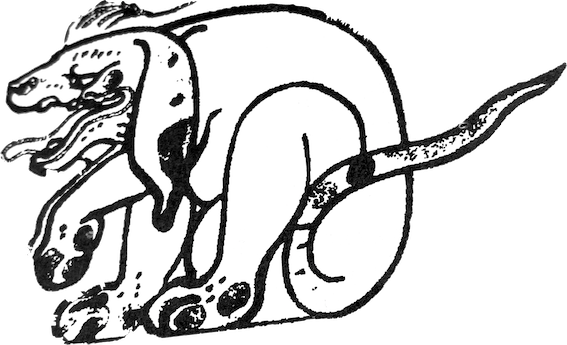
愛犬に遺体を食べさせて自ら弔う方法
Cómo hacer que tu perro se coma el cadáver para que él mismo se encargue del duelo
☆『トゥスクルナの論争』[Tusculanae Disputationes]
(『トゥスクルナの問答』とも呼ばれる;英語:Tusculan
Disputations)は、紀元前45年頃[1]にキケロによって著された5巻からなる著作集であり、ストア派を含むギリシャ哲学を古代ローマで普及
させようとしたものである[2]。この名称は、トゥスクルムにある彼の別荘で執筆されたと伝えられていることに由来する。当時、キケロは娘を亡くしたばか
りで、喪に服しながら哲学の研究に没頭していた。『トゥスクルナの論争』は5巻から成り、各巻が特定のテーマを扱っている。すなわち、「死の軽蔑につい
て」、「苦痛について」、「悲嘆について」、「感情の動揺について」、そして「幸福な人生には徳だけで十分か」である。
| in Hyrcania plebs
publicos alit canes, optimates domesticos: nobile autem genus canum
illud scimus esse, sed pro sua quisque facultate parat a quibus
lanietur, eamque optimam illi esse censent sepulturam. |
ヒュルカニアでは、庶民は公用の犬を飼っているが、貴族は専用の犬を
飼っている。これは高貴な犬種であることがわかっている。各人は、その富に応じて、死後に自分の遺体を引き裂く犬を手に入れ、これを最も立派な埋葬の形式
と見なしている。 |
| The Tusculanae Disputationes
(also Tusculanae Quaestiones; English: Tusculan Disputations) is a
series of five books written by Cicero, around 45 BC,[1] attempting to
popularise Greek philosophy in ancient Rome, including Stoicism.[2] It
is so called as it was reportedly written at his villa in Tusculum. His
daughter had recently died and in mourning Cicero devoted himself to
philosophical studies. The Tusculan Disputations consist of five books,
each on a particular theme: On the contempt of death; On pain; On
grief; On emotional disturbances; and whether Virtue alone is
sufficient for a happy life. |
『トゥスクルナの論争』[Tusculanae Disputationes](『トゥ
スクルナの問答』とも呼ばれる;英語:Tusculan
Disputations)は、紀元前45年頃[1]にキケロによって著された5巻からなる著作集であり、ストア派を含むギリシャ哲学を古代ローマで普及
させようとしたものである[2]。この名称は、トゥスクルムにある彼の別荘で執筆されたと伝えられていることに由来する。当時、キケロは娘を亡くしたばか
りで、喪に服しながら哲学の研究に没頭していた。『トゥスクルナの論争』は5巻から成り、各巻が特定のテーマを扱っている。すなわち、「死の軽蔑につい
て」、「苦痛について」、「悲嘆について」、「感情の動揺について」、そして「幸福な人生には徳だけで十分か」である。 |
Cicero, Tusculanae disputationes. Latin, illuminated manuscript on vellum. Naples, late 1450s or early 1460s. |
キケロ、『トゥスクルナ論集』。ラテン語、ベラム紙に描かれた装飾写本。ナポリ、1450年代後半または1460年代初頭。 |
| Context In the year 45 BC, when Cicero was around 61 years old, his daughter, Tullia, died following childbirth.[3] Her loss afflicted Cicero to such a degree that he abandoned all public business and left the city retiring to Asterra, which was a country house that he had near Antium.[3] There he devoted himself to philosophical studies, writing several works, including De finibus.[3] It was his custom to take some friends with him into the country for intellectual discussion.[3] His Tusculan villa had a gallery called the Academy, which Cicero had built for the purpose of philosophical conversation.[4] It is largely agreed that Cicero wrote the Tusculan Disputations in the summer and/or autumn of 45 BC.[5] Cicero addresses the Disputationes to his friend Brutus, a fellow politician of note, and later assassin of Julius Caesar. In the first book Cicero sets up the fiction that they are the record of five days of discussions with his friends written after the recent departure of Brutus.[3] The second book includes the detail that Cicero and his friends spent their mornings in rhetorical exercises and their afternoons in philosophical discussions.[4] The conversations are however very one-sided—the anonymous friend of each dialogue acts merely to supply the topic for the day and to provide smooth transitions within the topic.[6] Cicero heavily relied on Crantor's "On Grief" (Latin: De Luctu, Greek: Περὶ Πένθους) in his Tusculan Disputations.[7] Cicero also made great use of it while writing his celebrated Consolatio on the death of his daughter, Tullia. Several extracts from "On Grief" are preserved in Pseudo-Plutarch's treatise on Consolation addressed to Apollonius, which has many parallels with Tusculan Disputations |
背景 紀元前45年、キケロが61歳前後だった頃、娘のトゥッリアが出産後に亡くなった。[3] 娘を失った悲しみはキケロを深く打ちのめし、彼はすべての公的業務を放棄して都市を離れ、アンティウム近郊に所有していた別荘「アステラ」へと隠遁した。 [3] そこで彼は哲学の研究に没頭し、『デ・フィニブス』を含むいくつかの著作を執筆した。[3] 彼は、知的な議論を行うために、数人の友人を連れて田舎へ出かけるのが常だった。[3] 彼のトゥスクルムの別荘には、「アカデミー」と呼ばれる回廊があり、キケロは哲学的な対話を目的としてこれを建設していた。[4] キケロが『トゥスクルムの論争』を紀元前45年の夏および/または秋に執筆したことは、広く認められている。[5] キケロは『トゥスクルムの論争』を、著名な政治家であり、後にユリウス・カエサルを暗殺することになる友人ブルトゥスに宛てている。第1巻でキケロは、ブ ルトゥスが最近去った後に、友人たちとの5日間にわたる議論を記録したものであるという架空の設定を提示している。[3] 第2巻には、キケロと友人たちが午前中は修辞学の演習に、午後は哲学的議論に費やしたという詳細が記されている。[4] しかし、これらの会話は非常に一方的なものである。各対話に登場する名もなき友人は、その日の話題を提供し、話題内のスムーズな展開を助ける役割に留まっ ている。[6] キケロは『トゥスクルムの論争』において、クラントールの『悲嘆について』(ラテン語: De Luctu、ギリシャ語: Περὶ Πένθους)に大きく依拠した。[7] キケロは、娘トゥッリアの死について書いた有名な『慰めの言葉』を執筆する際にも、この著作を大いに活用した。『悲嘆について』からのいくつかの抜粋は、 アポロニウス宛ての偽プルタルコスの『慰めの言葉』という論考に保存されており、この論考は『トゥスクルムの論争』と多くの共通点を持っている。 |
| Books The Tusculanae Disputationes consist of five books: 1. "On the contempt of death" 2. "On bearing pain" 3. "On grief of mind" 4. "On other perturbations of the mind" 5. "Whether virtue alone be sufficient for a happy life" The purpose of Cicero's lectures is to fortify the mind with practical and philosophical lessons adapted to the circumstances of life, to elevate us above the influence of all its passions and pains.[8] In each of the dialogues, one of the guests, who is called the Auditor, sets up a topic for discussion.[9] Each dialogue begins with an introduction on the excellence of philosophy, and the advantage of adopting the wisdom of the Greeks into the Latin language.[9] |
巻 『トゥスクルナ論集』は、以下の5巻から成る: 1. 「死の軽蔑について」 2. 「苦痛の耐え方について」 3. 「心の悲しみについて」 4. 「その他の心の動揺について」 5. 「幸福な人生には徳だけで十分か」 キケロの講義の目的は、人生の諸状況に適した実践的かつ哲学的な教訓によって精神を強め、あらゆる情動や苦痛の影響から私たちを解き放つことにある。 [8] 各対話において、「聴講者」と呼ばれる客の一人が、議論のテーマを提示する。[9] 各対話は、哲学の卓越性、およびギリシャの知恵をラテン語に取り入れることの利点に関する序論から始まる。[9] |
| Book 1 In the first dialogue the auditor asserts that death is an evil, which Cicero proceeds to refute:[10] Efficiet enim ratio ut, quaecumque vera sit earum sententiarum quas exposui, mors aut malum non sit aut sit bonum potius. Nam si cor aut sanguis aut cerebrum est animus, certe, quoniam est corpus, interibit cum reliquo corpore; si anima est, fortasse dissipabitur; si ignis, extinguetur; si est Aristoxeni harmonia, dissolvetur. [...] His sententiis omnibus nihil post mortem pertinere ad quemquam potest; pariter enim cum vita sensus amittitur; non sentientis autem nihil est ullam in partem quod intersit. Reliquorum sententiae spem adferunt, si te hoc forte delectat, posse animos, cum e corporibus excesserint, in caelum quasi in domicilium suum pervenire. For reason will demonstrate that, whichever of the opinions which I have stated is true, it must follow, then, that death cannot be an evil; or that it must rather be something desirable; for if either the heart, or the blood, or the brain, is the soul, then certainly the soul, being corporeal, must perish with the rest of the body; if it is air, it will perhaps be dissolved; if it is fire, it will be extinguished; if it is Aristoxenus's harmony, it will be put out of tune. [...] In all these opinions, there is nothing to affect any one after death; for all feeling is lost with life, and where there is no sensation, nothing can interfere to affect us. The opinions of others do indeed bring us hope; if it is any pleasure to you to think that souls, after they leave the body, may go to heaven as to a permanent home. Cicero offers largely Platonist arguments for the soul's immortality, and its ascent to the celestial regions where it will traverse all space—receiving, in its boundless flight, infinite enjoyment.[11] He dismisses the gloomy myths concerning the Greek underworld.[11] But even if death is to be considered as the total extinction of sense and feeling, Cicero still denies that it should be accounted an evil.[12] This view he supports from a consideration of the insignificance of the pleasures of which we are deprived.[12] He illustrates this with the fate of many historical characters, who, by an earlier death, would have avoided the greatest ills of life.[12] |
第1巻 最初の対話において、聴衆は「死は悪である」と主張するが、キケロはこれに反論する:[10] なぜなら、私が述べた見解がどうであれ、死は悪ではないか、あるいはむしろ善であるということを、理性は示してくれるからだ。もし心、あるいは血液、ある いは脳が精神であるならば、それは身体の一部である以上、身体の他の部分とともに滅びるだろう。もしそれが魂であるならば、おそらくは散逸するだろう。も しそれが火であるならば、消え去るだろう。もしそれがアリストクセノスの言う調和であるならば、解体されるだろう。[...] これらすべての見解によれば、死後は誰にとっても何の意味も持たない。なぜなら、生命が失われれば感覚も失われるからであり、感覚を持たない者にとって、 何事も全く意味をなさないからだ。他の人々の見解は、もしそれがあなたを喜ばせるのであれば、魂が身体から離れて天国にたどり着き、あたかもそこが故郷で あるかのように安らぐことができるという希望を与えてくれる。 なぜなら、理性が証明するところによれば、私が述べた見解のうちどれが真実であるにせよ、死は悪であるはずがなく、むしろ望ましいものであるに違いないか らである。なぜなら、もし魂が心臓、血液、あるいは脳のいずれかであるならば、魂は物質的なものである以上、身体の他の部分とともに滅びるに違いない。も しそれが空気であるならば、おそらくは分解されるだろう。もしそれが火であるならば、消え去るだろう。もしそれがアリストクセノスの言う調和であるなら ば、その調和は乱れてしまうだろう。[...] これらすべての説において、死後に誰かに影響を与えるようなものは何もない。なぜなら、すべての感覚は生命とともに失われ、感覚がないところでは、私たち に影響を及ぼすものは何もないからである。確かに、他者の説は私たちに希望をもたらす。もし、魂が身体を離れた後、天国という永続的な住まいへと向かうと 考えることが、あなたにとって何らかの喜びであるならば。 キケロは、魂の不死性、そして魂が全宇宙を横断して天界へと昇り、その果てしない飛行の中で無限の喜びを受けるとする説について、主にプラトン主義的な論 拠を提示している。[11] 彼は、ギリシャの冥界に関する陰鬱な神話を退けている。[11] しかし、たとえ死が感覚や感情の完全な消滅と見なされるとしても、キケロは依然として、それを悪と見なすべきではないと主張する。[12] 彼は、私たちが奪われる快楽の取るに足らない性質を考慮することで、この見解を支持している。[12] 彼は、早死によって人生における最大の苦難を免れたであろう多くの歴史上の人物の運命を例に挙げて、これを説明している。[12] |
| Book 2 In the second dialogue the same guest announces that pain is an evil. Cicero argues that its sufferings may be overcome, not by the use of Epicurean maxims,—"Short if severe, and light if long," but by fortitude and patience; and he censures those philosophers who have represented pain in too formidable colours, and reproaches those poets who have described their heroes as yielding to its influence.[12] Pain can be neutralized only when moral evil is regarded as the sole evil, or as the greatest of evils that the ills of body and of fortune are held to be infinitesimally small in comparison with it.[13] |
第2巻 第2の対話において、同じ客人が「苦痛は悪である」と宣言する。キケロは、その苦しみを克服するには、エピクロス派の格言――「短ければ激しく、長ければ 軽い」――を用いるのではなく、不屈の精神と忍耐によってこそ可能であると論じる。そして、苦痛を過度に恐ろしいものとして描いた哲学者たちを非難し、そ の英雄たちが苦痛の影響に屈服する姿を描いた詩人たちを責める。[12] 苦痛を中和できるのは、道徳的な悪のみを唯一の悪、あるいは最大の悪と見なし、身体や運命の苦難をそれに比べれば極めて微々たるものとみなす場合に限られ る。[13] |
| Book 3 In the third book, Cicero treats of the best alleviations of sorrow. Cicero's treatment of this is closely parallel to that of pain.[13] He observes that grief is postponed or omitted in times of stress or peril,[13] and he notes that grief is often put on or continued solely because the world expects it.[14] People have a false estimate of the causes of grief: deficiencies in wisdom and virtue, which ought to be the objects of the profoundest sorrow, occasioning less regret than is produced by comparatively slight disappointments or losses.[14] To foresee calamities, and be prepared for them, is either to repel their assaults, or to mitigate their severity.[12] After they have occurred, we ought to remember that grieving cannot help us, and that misfortunes are not peculiar to ourselves, but are the common lot of humanity.[12] Pain and grief may be met, borne and overcome so as not to interfere with our happiness and our permanent well-being.[14] |
第3巻 第3巻において、キケロは悲しみを和らげる最善の方法を論じている。キケロのこの問題への取り組みは、苦痛に対するものとは密接に並行している。[13] 彼は、ストレスや危険にさらされている時には悲しみが先送りされたり、あるいは生じなかったりすることを指摘し[13]、また、世間の期待に応えるためだ けに、悲しみが装われたり、引き延ばされたりすることが多いと述べている。[14] 人々は悲しみの原因について誤った評価をしている。知恵や徳の欠如――これらは最も深い悲しみの対象となるべきものであるにもかかわらず――は、比較的些 細な失望や損失によって生じる後悔よりも、はるかに少ない後悔しか引き起こさないのだ。[14] 災難を予見し、それに備えることは、その襲来を退けるか、あるいはその深刻さを和らげることにつながる。[12] 災難が発生した後は、悲しんでも何の役にも立たないこと、そして不幸は自分だけに特有のものではなく、人類共通の宿命であることを心に留めるべきである。 [12] 痛みや悲しみは、私たちの幸福や永続的な幸福を妨げないよう、向き合い、耐え、克服することができる。[14] |
| Book 4 The fourth book treats those passions and vexations which Cicero considers as diseases of the soul. These Cicero classes under the four Stoic divisions: grief (including forms such as envy), fear, excessive gladness, and immoderate desire.[14] They all result from false opinions as to evil and good.[14] Grief and fear arise from the belief that their objects are real and great evils; undue gladness and desire, from the belief that their objects are real and great goods.[14] The only preventive or remedy is the regarding, with the Stoics, of virtue as the sole good, and vice as the sole evil, or, at the least, with the Peripatetics, considering moral good and evil as the extremes of good and evil that no good or evil of body or of fortune can be of any comparative significance.[14] |
第4巻 第4巻では、キケロが「魂の病」と見なす情熱や煩わしさについて論じられている。キケロはこれらを、ストア派の4つの分類、すなわち悲しみ(嫉妬などを含 む)、恐怖、過度の喜び、そして節度のない欲望に分類している。[14] これらはすべて、善悪に関する誤った見解に起因するものである。[14] 悲しみと恐怖は、その対象が現実の、かつ大きな悪であると信じることに起因し、過度な喜びと欲望は、その対象が現実の、かつ大きな善であると信じることに 起因する。[14] これを予防し、あるいは治療する唯一の方法は、ストア派のように徳を唯一の善、悪徳を唯一の悪と見なすこと、あるいは少なくともペリパトス学派のように、 道徳的な善と悪を善と悪の極限と見なし、身体や運命に関するいかなる善や悪も、それに比べれば比較にならないほど取るに足らないものと見なすことである。 [14] |
| Book 5 In the fifth book Cicero attempts to prove that virtue alone is sufficient for happiness. Here his opinion coincides largely with the Stoic view, more so than in some of his other works such as De Finibus written shortly before.[8] Virtue is entirely sufficient for a happy life under all possible circumstances: in poverty, in exile, in blindness, in deafness, even under torture.[15] Happiness and misery depend on character and are independent of circumstances, and Virtue is the source of all in this earthly life that is worth living for.[15] |
第5巻 第5巻において、キケロは、幸福を得るには徳だけで十分であることを証明しようとしている。この点において、彼の見解はストア学派の考えと大きく一致して おり、その直前に書かれた『デ・フィニibus』などの他の著作よりも、さらにその傾向が強い。[8] 美徳は、あらゆる状況下――貧困、流刑、失明、難聴、さらには拷問の下にあっても――幸福な人生を送るために完全に十分である。[15] 幸福と不幸は性格に依存し、状況とは無関係であり、美徳こそが、この現世において生きる価値のあるすべてのものの源である。[15] |
| Other themes The work contains frequent allusion to ancient fable, the events of Greek and Roman history, and the memorable sayings of heroes and sages.[8] Cicero references also the ancient Latin poets and quotes from their works.[8] The Tusculan Disputations is the locus classicus of the legend of the Sword of Damocles,[16] as well as of the sole mention of cultura animi as an agricultural metaphor for human culture.[17][18] Cicero also mentions disapprovingly Amafinius, one of the first Latin writers on philosophy in Rome. |
その他のテーマ この著作には、古代の寓話、ギリシャ・ローマの歴史上の出来事、そして英雄や賢人たちの名言への言及が頻繁に見られる。[8] キケロはまた、古代ラテン語の詩人たちにも言及し、彼らの作品から引用を行っている。[8] 『トゥスクルムの論争』は、「ダモクレスの剣」の伝説に関する古典的な出典[16]であると同時に、人間の文化を農業に例えた「cultura animi」という表現が唯一言及されている箇所でもある。[17][18] キケロはまた、ローマにおける初期のラテン語哲学作家の一人であるアマフィニウスについて、批判的な態度で言及している。 |
| Influence The rhetor's theme De contemptu mundi, on the contempt of the world, was taken up by Boethius in the troubled closing phase of Late Antiquity and by Bernard of Cluny in the first half of the 12th century.[citation needed] The book was an influence on Saint Augustine. For instance he references it in his Confessions,[19] and also in The City of God.[20] Thomas Jefferson included the "Tusculan questions", along with Cicero's De Officiis, in his list of recommendations to Robert Skipwith of books for a general personal library.[21] |
影響 この修辞家の著作『De contemptu mundi』(「世の軽蔑について」)というテーマは、後期古代の激動の終焉期にボエティウスによって、また12世紀前半にはクリュニーのベルナールによって取り上げられた。[出典必要] この書物は聖アウグスティヌスにも影響を与えた。例えば、彼は『告白録』[19]や『神の国』の中でこの書物に言及している。[20] トーマス・ジェファーソンは、一般の個人図書館に備えるべき書籍としてロバート・スキップウィスに推奨した書目リストに、キケロの『義務論』とともに「トゥスクルムの問答」を含めた。[21] |
| Notes 01. King, J., Tusculan Disputations: Introduction. Loeb Classical Library. (1927). Marcía L. Colish (1990). The Stoic Tradition from Antiquity to the Early Middle Ages: Stoicism in classical latin literature. I. BRILL. pp. 458–. ISBN 90-04-09327-3. Yonge 1877, p. 7 Yonge 1877, p. 8 05. Gildenhard 2007, p. 279 Gildenhard 2007, p. 23 Marcus Tullius Cicero and Margaret Graver Cicero on the Emotions: Tusculan Disputations 3 and 4 2009 ISBN 0226305783 p188 Dunlop 1827, p. 242 Dunlop 1827, p. 239 10. Yonge 1877, quoting §§ 23–24 Dunlop 1827, p. 240 Dunlop 1827, p. 241 Peabody 1886, p. xviii Peabody 1886, p. xix 15. Peabody 1886, p. xx Book 5, 62 "Culture". Vocabulary.com. Retrieved 5 January 2014. Cicero, Marcus Tullius (1812). Tusculanes (Tusculan Disputations). pp. II, 15. Augustine, Saint (1961). Confessions. Penguin Classics. p. 36. 20. Dodaro, Robert (2004). Christ and the Just Society in the Thought of Augustine. Cambridge University Press. p. 61. 21. Jefferson, Thomas (1952) [letter written August 3, 1771]. A Virginia Gentleman's Library. Williamsburg, Virginia: Colonial Williamsburg. p. 14. |
注 01. キング, J., 『トゥスクラーヌ論争』:序論。ローブ古典叢書。(1927年)。 マルシア・L・コリッシュ(1990年)。『古代から中世初期までのストア派の伝統:古典ラテン文学におけるストア主義』。I. BRILL。pp. 458–。ISBN 90-04-09327-3。 Yonge 1877, p. 7 Yonge 1877, p. 8 05. Gildenhard 2007, p. 279 ギルデンハード 2007, p. 23 マルクス・トゥッリウス・キケロおよびマーガレット・グレイバー『キケロの感情論:『トゥスクルムの論争』第3巻および第4巻』2009年 ISBN 0226305783 p188 ダンロップ 1827, p. 242 ダンロップ 1827, p. 239 10. ヨンゲ 1877、§§ 23–24 を引用 ダンロップ 1827、p. 240 ダンロップ 1827、p. 241 ピーボディ 1886、p. xviii ピーボディ 1886、p. xix 15. ピーボディ 1886、p. xx 第5巻、62 「Culture」。Vocabulary.com。2014年1月5日閲覧。 キケロ、マルクス・トゥッリウス(1812年)。『トゥスクラーヌス論集』(Tusculan Disputations)。pp. II, 15。 聖アウグスティヌス(1961年)。『告白』。ペンギン・クラシックス。p. 36。 20. ロバート・ドダロ(2004年)。『アウグスティヌスの思想におけるキリストと正義の社会』。ケンブリッジ大学出版局。p. 61。 21. トーマス・ジェファーソン(1952年)[1771年8月3日付けの手紙]。『バージニアの紳士の図書館』。バージニア州ウィリアムズバーグ:コロニアル・ウィリアムズバーグ。p. 14。 |
| References Dunlop, John (1827), History of Roman literature from its earliest period to the Augustan age, vol. 1, E. Littell Gildenhard, Ingo (2007), Paideia Romana: Cicero's Tusculan Disputations, Cambridge Philological Society Peabody, Andrew (1886), Cicero's Tusculan Disputations, Little, Brown and Company Yonge, Charles Duke (1877), Tusculan Disputations, Harper and Brothers |
参考文献 ダンロップ、ジョン(1827)、『ローマ文学史:最古の時代からアウグストゥス時代まで』第1巻、E. リッテル ギルデンハード、インゴ(2007)、『パイデイア・ロマーナ:キケロの『トゥスクルムの論争』』、ケンブリッジ文献学会 ピーボディ、アンドルー(1886)、『キケロの「トゥスクルムの論争」』、リトル・ブラウン・アンド・カンパニー ヨンゲ、チャールズ・デューク(1877)、『トゥスクルムの論争』、ハーパー・アンド・ブラザーズ |
| Further reading J. E. King (1927), Cicero. Tusculan Disputations. Loeb Classical Library. Harvard University Press. ISBN 0-674-99156-7 M. Pohlenz (1918), M. Tulli Ciceronis scripta quae manserunt omnia: fasc. 44: Tusculanae disputationes. Aedes B. G. Teubneri. H. Drexler (1964), M. Tulli Ciceronis Tusculanarum disputationum libri quinque. Sumptibus Arnoldi Mondadori. M. Giusta (1984), M. Tulli Ciceronis Tusculanae disputationes. Aedes Io. Bapt. Paraviae et Sociorum. A. E. Douglas (1990), Cicero: Tusculan Disputations II & V. Aris & Phillips. A. E. Douglas (1994), Cicero: Tusculan Disputations I. reprinted with corrections. Aris & Phillips. M. Graver (2002), Cicero on the Emotions: Tusculan Disputations 3 and 4. Translation and commentary. University of Chicago Press. ISBN 0-226-30578-3 J. Davie (2017), Cicero, On Life and Death. (Translation of Books 1, 2 and 5). Oxford University Press. ISBN 978-0-19-964414-8 |
参考文献 J. E. キング (1927)、『キケロ:トゥスクラーヌス論争集』。ローブ古典叢書。ハーバード大学出版局。ISBN 0-674-99156-7 M. ポーレンツ (1918)、『M. トゥッリウス・キケロの現存する全著作:第44巻:トゥスクラーヌス論争集』。Aedes B. G. Teubneri. H. Drexler (1964), 『M. Tulli Ciceronis Tusculanarum disputationum libri quinque』. Sumptibus Arnoldi Mondadori. M. Giusta (1984), 『M. Tulli Ciceronis Tusculanae disputationes』. Aedes Io. Bapt. Paraviae et Sociorum. A. E. ダグラス (1990)、『キケロ:『トゥスクルナの論争』第2巻および第5巻』。Aris & Phillips。 A. E. ダグラス (1994)、『キケロ:『トゥスクルナの論争』第1巻』。訂正版として再版。Aris & Phillips。 M. グレーバー (2002)、『感情に関するキケロ:『トゥスクルナの論争』第3巻および第4巻』。翻訳・注釈。シカゴ大学出版局。ISBN 0-226-30578-3 J. デイヴィー(2017)、『キケロ:生と死について』(第1、第2、第5巻の翻訳)。オックスフォード大学出版局。ISBN 978-0-19-964414-8 |
| Latin Wikisource has original text related to this article: Tusculanæ Disputationes. (英訳)Cicero's Tusculan Disputations/Tusculan Disputations |
|
| https://en.wikipedia.org/wiki/Tusculanae_Disputationes |
リ ンク
文 献
そ の他の情報
CC
Copyleft,
CC, Mitzub'ixi Quq Chi'j, 1996-2099
