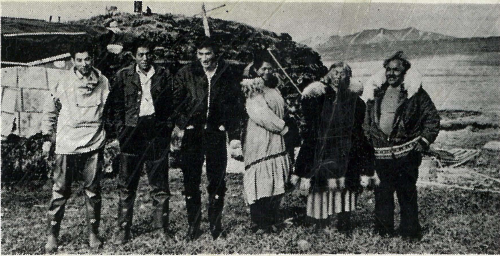
インディアナ・ジョーンズ・タカオ
Takao
as Indiana Jones
Sofue
TAKAO at far left, ca. 1960
☆ インディアナ・ジョーンズとしての祖父江孝男(1926-2012)氏の業績を研究する:「 そのうえ、彼は北海道から九州まで日本中を歩いて、村びとと膝をつきあわせ、時にはドブロクをくみかわしながら、村落調査をつづけ、さらに北米インディア ンやエスキモーの実態調査までしている。英、独、仏の三ヶ国語を自由につかい、アラビア語、さらにエスキモー語も学び、若い学者をあつめて青年人類学会を つくり、学会機関誌の編集にも腕をふるう。こうしたほとんど超人的な活躍をつづける祖父江君は、同時に西部劇の熱心なファンである。酒興そこに至れば、二 丁拳銃の鮮やかな手さばきもみせる。彼は日本の文化にとっても、われわれ友人にとっても、かけがえのない貴重な存在である。——心理学者 我妻洋 (Hiroshi Wagatsuma, 1927-1958)」
☆ヨーロッパとは一つの岬、キャップである——ポール・ヴァレリー
| Indiana Jones is an
American media franchise consisting of five films and a prequel
television series, along with games, comics, and tie-in novels, that
depicts the adventures of Dr. Henry Walton "Indiana" Jones, Jr.
(portrayed in all films by Harrison Ford), a fictional professor of
archaeology. The series began in 1981 with the film Raiders of the Lost Ark. In 1984, a prequel, Indiana Jones and the Temple of Doom, was released, and in 1989, a sequel, Indiana Jones and the Last Crusade. A fourth film followed in 2008, titled Indiana Jones and the Kingdom of the Crystal Skull. A fifth and final film, titled Indiana Jones and the Dial of Destiny, was theatrically released on June 30, 2023.[1][2] The series was created by George Lucas. The first four films were directed by Steven Spielberg, who worked closely with Lucas during their production, while the fifth film was directed by James Mangold. In 1992, the franchise expanded to a television series with The Young Indiana Jones Chronicles, exploring the character in his childhood and youth, and including adventures with his parents. Marvel Comics began publishing The Further Adventures of Indiana Jones in 1983, and Dark Horse Comics gained the comic book rights to the character in 1991. Novelizations of the films have been published, as well as many novels with original adventures, including a series of German novels by Wolfgang Hohlbein, twelve novels set before the films published by Bantam Books, and a series set during the character's childhood inspired by the television show. Numerous Indiana Jones video games have been released since 1982. https://en.wikipedia.org/wiki/Indiana_Jones |
『インディ・ジョーンズ(インディアナ・ジョーンズ)』は、架空の考古
学教授ヘンリー・ウォルトン・"
インディ"・ジョーンズ・ジュニア博士(全作品でハリソン・フォードが演じている)の冒険を描いた、5本の映画と前日譚のテレビシリーズ、ゲーム、コミッ
ク、タイアップ小説からなるアメリカのメディア・フランチャイズである。 シリーズは1981年の映画『レイダース 失われたアーク』で始まった。1984年には前日譚『インディ・ジョーンズと破滅の神殿』が、1989年には続編『インディ・ジョーンズと最後の聖戦』が 公開された。2008年には4作目『インディ・ジョーンズとクリスタル・スカルの王国』が公開された。5作目にして最終作となる『インディ・ジョーンズと 運命のダイヤル』は、2023年6月30日に劇場公開された[1][2]。最初の4作はスティーブン・スピルバーグが監督を務め、ルーカスと緊密に協力し ながら制作を進めた。1992年、『ヤング・インディ・ジョーンズ・クロニクル』(The Young Indiana Jones Chronicles)で、このフランチャイズはテレビシリーズに拡大され、幼少期と青年期のインディ・ジョーンズを描き、彼の両親との冒険も描かれた。 マーベル・コミックは1983年に『インディ・ジョーンズのさらなる冒険』の出版を開始し、ダークホース・コミックは1991年にこのキャラクターのコ ミック出版権を獲得した。映画のノベライズも出版されており、ヴォルフガング・ホールバインによるドイツの小説シリーズ、バンタム・ブックスから出版され た映画以前を舞台にした12冊の小説、テレビ番組にインスパイアされたキャラクターの子供時代を舞台にしたシリーズなど、オリジナルの冒険を描いた小説も 数多く出版されている。1982年以降、数多くのインディ・ジョーンズのビデオゲームが発売されている。 |
| 祖父江君のスマートな長身には、強烈な情熱(ファイト)がひそんでい
る。日本の若い人類学者には優秀な人が少なくない。だが祖父江君ぐらい広い知識人と人間探究のはげしい意欲と、アルコールへの抵抗力を合わせそなえた存在
はまずほかにない。なによりも彼の本領は「文化のにない手としてのの人間の研究」という、文化人類学では一番新しく、むずかしい分野の開拓者だという点に
ある。だから、文化人類学では一番新しく、むずかしい分野の開拓者だという点にある。だから、文化人類学だけでなく、社会学、言語学、心理学と、勉強して
いる領域はじつに広く、ユニークな論文を数多く書いている。 そのうえ、彼は北海道から九州まで日本中を歩いて、村びとと膝をつきあわせ、時にはドブロクをくみかわしながら、村落調査をつづけ、さらに北米インディア ンやエスキモーの実態調査までしている。英、独、仏の三ヶ国語を自由につかい、アラビア語、さらにエスキモー語も学び、若い学者をあつめて青年人類学会を つくり、学会機関誌の編集にも腕をふるう。こうしたほとんど超人的な活躍をつづける祖父江君は、同時に西部劇の熱心なファンである。酒興そこに至れば、二 丁拳銃の鮮やかな手さばきもみせる。彼は日本の文化にとっても、われわれ友人にとっても、かけがえのない貴重な存在である。——心理学者 我妻洋 (Hiroshi Wagatsuma, ) 祖父江孝男『エスキモー:日本人の郷愁をさそう北方民族』光文社、1961年。カッパブックス裏表紙カバー推薦文 ++++++++++ 岡正雄(1898-1982) 1960 東京都立大学教授を辞任し、明治大学教授。明治大学第一次アラスカ学術調査団に参加。北西インディアン、極北エスキモーの調査。アメリカニスト 会議、国際人類学民族学会議、東洋学者会議等に出席. 1962 明治大学第2次アラスカ学術調査団団長として5か月調査。9月日本学術 会議アジア・アフリカ研究特別委員会委員。 1963 ウィーン民族学会名誉会員。還暦記念『民 族学ノート』 1964 東京外国語大学アジア・アフリカ言語文化研究所所長。国際人類学民族学会議会長。 |
祖父江 孝男(そふえ たかお、1926年11月5日 -
2012年12月15日)は、日本の文化人類学者、国立民族学博物館名誉教授。祖父江は、府立高等学校を経て、 1926年 東京に生まれる 1949年東京大学理学部人類学科卒文化人類学専攻 ハーバード大学大学院 ノースウェスタン大学 ハワイ大学 ウィスコンシン大学客員教授 1961 『エスキモー人 : 日本人の郷愁をさそう北方民族』 明治大学政経学部教授 1967 『県民性 文化人類学的考察』 1971 『アラスカ・エスキモー』 1972 『文化とパーソナリティ』 1976 『文化人類学入門』 1977年国立民族学博物館教授 1984年放送大学客員教授、 国立民族学博物館名誉教授 1993年紫綬褒章受章。 2012年 没 アラスカ・エスキモーを専門とする文化人類学者で国立民族学博物館の創設に参画。 新書で刊行した『県民性』がベスト・ロングセラーとなり、一般的には日本人論者として知られる。選択的夫婦別姓制度に賛同する。 2012年12月15日、虚血性心不全のため自宅にて没した。86歳没。【単著】著書 『行動する人間』 日本評論新社 1959 (科学ノート人間の解明) 『文化人類学のすすめ 行動する人間』 講談社学術文庫 1978 『エスキモー人 日本人の郷愁をさそう北方民族』 光文社カッパブックス 1961 『ハワイ』 講談社・原色写真文庫 1967 『県民性 文化人類学的考察』 中公新書 1971 『アラスカ・エスキモー』 社会思想社・現代教養文庫 1972 『文化とパーソナリティ』 弘文堂 1976 『文化人類学入門』 中公新書 1979、増補改訂版1990 『文化人類学 世界の民族と日本人』 放送大学教育振興会 1986、新版1991(放送大学教材) 『日本人の国際性 その構造分析』 くもん出版 1989(くもん選書) 『出身県でわかる人柄の本 日本人の常識』 同文書院「快楽脳叢書」 1993 改訂版 『県民性の人間学』 新潮社「新潮OH!文庫」 2000/ちくま文庫 2012(Wiki 日本語より) |
| 夜陰(?)に乗じて、人骨を採集 (pp.192-)——エスキモー人 : 日本人の郷愁をさそう北方民族 / 祖父江孝男著, 光文社 , 1961. - (カッパ・ブックス)
こうして、われわれは夕方まで烈風の中に、かじかんだ手を無理に伸ばし伸ばし、このあたり を捜しまわった。ところが幸いなことに、ついに人骨をも見つけることができた。これはたま たま土に埋もれかかっていたのを松田さんが見つけたしたのだが、頭蓋骨が2つ、2メートルほ ど間をおいてころがっており、そのそばには大腿骨もあった。頭蓋骨のうち1つはあきらかに人のもの。もう1つは、 ひどく小さくて、きゃしゃな点から考えると、どうも赤ん坊のものらしい。見たところ顔の表面は扁平で、いかにも日本人の骨によく似ている。しかし日本人と 非常に違うのは頭の前後が細長いこと。日本人の頭蓋骨は上からみるとこぢんまりして丸い。  |
And
so, until evening, we searched the area, straining our numb hands
against the fierce wind. Fortunately, however, we were finally able to
find human bones. Mr. Matsuda happened to spot them as they were
partially buried in the soil; two skulls were lying about two meters
apart, and a femur was nearby. One of the skulls was clearly human. The
other was extremely small; judging by its delicate appearance, it
seemed to belong to an infant. At first glance, the surface of the face
was flat and bore a strong resemblance to Japanese skulls. However,
what differed greatly from Japanese skulls was that this one was
elongated from front to back. Japanese skulls, when viewed from above,
are compact and round. |
| さて、考えてみると、エスキモーの頭蓋骨標本というのは、日本には二つ
ぐらいしかないはず
だ。それも、たしかデンマークの博物館と交換して手に入れたというグリーンランドのもの。ア
ラスカ・エスキモーの骨はまだ―つもないはずだ。だからさっそく持って帰りたいところだが、
こうしたエスキモーの骨をかかえているところを村人にみられて厄介なことになっても困る。そ
れでひとまず何くわぬ顔で宿舎にもどり、真夜中の十二時すぎ、村中が寝しずまるのを待って、
ふたたび松田(忠彦_ 東映, p.6)さんと二人で、こっそり宿舎を抜けだしてここへやってきた。真夜中といってもい
っこうに暗くなってはくれないので、こんな時にはなにより恨めしいのだが、それでも夜遅くな
ると霧が濃く流れはじめるので、そこがつけ目だ。大急ぎで骨の類を包んでから用意したボール
箱に詰め、霧にまぎれて無事に宿舎へもどることができた。 |
Come
to think of it, there are probably only about two Eskimo skull
specimens in Japan. And even those are from Greenland—I believe they
were obtained in an exchange with a museum in Denmark. There probably
isn’t a single bone from an Alaskan Eskimo. So, while I’d like to take
one home right away, I’d be in trouble if the villagers saw me carrying
around Eskimo bones. So, for the time being, I returned to the lodge
acting as if nothing were amiss. Just past midnight, after waiting for
the whole village to fall silent, Mr. Matsuda (Tadahiko—Toei, p. 6) and
I slipped out of the lodge together and made our way here. Even though
it was midnight, it hadn’t gotten any darker at all—which is the most
frustrating thing at times like this—but as the night grew late, a
thick fog began to roll in, and that was our opportunity. We hurriedly
wrapped up the bones and stuffed them into the cardboard box we’d
prepared, then managed to return safely to the dormitory, hidden by the
fog. |
| イピュタック遺跡の謎 翌三日が明けても、あいかわらずひどい風だ。私はひき続いてキネービアックに会って、いろ いろと調査を進め、岡教授はおもだった家の訪問に出かけたが、やがて昼近くになって意気揚々 として帰ってきた。小脇に大きな包みをかかえて、ひどくうれしそうだ。話を聞いてみると、き ょう、一人の老人の家を訪ねたら、その老人がだいぶん前 に見つけたという古い遣物をたくさんゆずってくれたとい うのだ。 |
The Mystery of the Iputac Ruins Even as the third day dawned, the wind was still blowing fiercely. I continued meeting with Kinebiak to make progress on various aspects of our investigation, while Professor Oka set out to visit some prominent households. As noon approached, he returned in high spirits, clutching a large package under his arm and looking extremely pleased. When I asked him about it, he explained that he had visited an elderly man’s home that day, and the man had generously given him a large number of old artifacts that he had discovered quite some time ago. |
| うれしそうにあけてみせる包みをのぞいてみたら、そこ
には、さっき私たちがみつけたようなヤジリやモリの頭が
ざくざくはいっていた。しかし、さっきのとは少しく形の
違うものも混ざっている。どうやら時代が違うらしい。こ
ことに岡教授が自慢げにつまみあげたのは、骨で作ったい
くつかの大きなモリの頭。これも全体の形はほかで見かけた
骨のと同じで、べつにふしぎはないのだが、その表面には平
行な紋か何本か彫りつけてあった。平行線のもよう!
これはちょっと普通にあるものではない。少なくともエスキ
モーの間では、ほかのどこにも見られないものだ。これこ
そ、このボイント・ホープの最も古い文化層のものの特徴
だ、ということを読んだことがあるのを思いだした。 |
I
peeked inside the package he happily held out to show me, and found it
packed full of arrowheads and spearheads just like the ones we’d found
earlier. However, there were also some mixed in that were slightly
different in shape from the others. It seemed they were from a
different era. What Professor Oka proudly picked out from the pile were
several large spearheads made of bone. While their overall shape was
the same as the bone artifacts we’d seen elsewhere—nothing particularly
unusual—their surfaces were carved with several parallel lines or
patterns. A pattern of parallel lines! This was not something you came
across every day. At least among the Eskimos, it was something never
seen anywhere else. I recalled reading that this was precisely the
characteristic feature of the oldest cultural layer at Point Hope. |
| さっきもいったように、この地域はラルセンとレイニー
によって発掘された。1939年から3年にもわたって掘ったのだ。もっとも、この二人は、こ
の発掘がこんなに長くかかるとは予想していなかったらしい。つまり、彼らは今からせいぜい100
年ほど前の遺物(私たちがきのう堀りだしたのはこれだ)を目標として、やってきたのだった。ところ
が掘り始めてから少したったころ、一人の老人がこの部落からもっと北の方へ行ったところ(つま
り岬の根もとの方の地峡地帯)で見つけたという骨製のモリの頭をもってぎたのだ。ところが、これ
を見ると、縦に平行線のもようがはいっていて、いままで、ほかのエスキモーの遺跡ではまった
く類のないものであった。 |
As
I mentioned earlier, this area was excavated by Larsen and Rainy. They
dug here for three years, starting in 1939. However, it seems these two
hadn’t anticipated that the excavation would take this long. In other
words, they had come here with the goal of finding artifacts from no
more than about 100 years ago (which is what we unearthed yesterday).
However, shortly after they began digging, an elderly man brought them
a bone spearhead that he claimed to have found further north from this
village—specifically, in the isthmus area at the base of the cape. Upon
examining it, they noticed parallel lines running vertically along its
surface; it was unlike anything they had ever seen at other Eskimo
archaeological sites. |
| それで、ラルセンたちは、さっそく部落の北の方に重点をおいて掘り始め
ることになった。と
ころが、ここからはひじょうに古いものらしい人骨がたくさん出てぎた。そこで翌年の夏も発掘
が続いた。しかし調査隊だけではどうにも人手が足りない。そこで、人骨をみつけた者には賞金
をやるというけんしょうつきで村人の協力を募ったところ、村中のありとあらゆる人が目の色変
えて掘り始め、よぼよぼのじいさんまでもが発掘競争に参加することになった。なかにはスープ
用の小さなスプーンまで持ち出して掘ったものもいるそうだ。こうしてその年と翌年の夏とで、
じつに人骨が五百体と、1万個に近い遺物が発見されたのだった。 |
So,
Larsen and his team immediately began digging, focusing their efforts
on the northern part of the village. However, they began uncovering a
large number of human bones that appeared to be extremely old. As a
result, the excavation continued into the following summer. But the
expedition team alone simply didn’t have enough manpower. So, they
solicited the villagers’ cooperation by offering a reward to anyone who
found human bones. As a result, everyone in the village, without
exception, began digging with renewed vigor, and even frail old men
joined the excavation race. It is said that some even brought out small
soup spoons to use as digging tools. In this way, over the summers of
that year and the next, a total of 500 human skeletons and nearly
10,000 artifacts were discovered. |
| そこの住民たちまでがこぞって発掘に参加したという例は考古学でもあま
り聞かない。まして
―つ場所から500体もの人骨が出たというのはたいへんなことだ。ラルセンたちは、これらの人
骨と遺物をいろいろ詳しく凋べてみた。その結果、これらは紀元100年ないし200年ごろのもの、
つまり今から一千八百年も前のものだということが分かってきたのだ。この結果はエスキモーの
起源の上にたいへん重要な手がかりとなった。 |
It
is rare even in archaeology to hear of cases where the local residents
themselves turned out en masse to participate in an excavation.
Moreover, the discovery of as many as 500 human skeletons from a single
site is truly remarkable. Larsen and his team conducted a detailed
examination of these human remains and artifacts. As a result, they
determined that they dated from around 100 to 200 AD—that is, 1,800
years ago. This finding provided a crucial clue regarding the origins
of the Inuit. |
| そこでラルセンらはこの遺跡のことをイピュタック遺跡と名づけることに
した。イビュタックとはエスキモー語で「水にはさまれた狭い地峡」のことをいう。つまり、この遺跡が発見された場所のことを、ここのエスキモーはこう呼ん
でいるので、そのまま遺跡の名前としたのである。 |
Larsen
and his team therefore decided to name the site the Iputak Site.
“Iputak” is an Eskimo word meaning “a narrow isthmus flanked by water.”
In other words, since the local Eskimos use this term to refer to the
location where the site was discovered, they adopted it as the site’s
name. |
| 牙の目を持つ頭蓋骨 われわれはこのイピュタックに関する報告も日本にいたとき読んでいた。だが、さっき掘った ような新しい時代の遺跡なら地表面に出ているから掘りやすいのだが、こんな古い時代のものは よほど掘らねばなるまい。大がかりな発掘用具を用意していない私たちとしては、最初からいく ぶんあぎらめかけていた。ところが、そこへ突然にこの老人の収集品が出てきたのだ。 |
A Skull with Fangs for Eyes We had read reports about this Iputak while we were still in Japan. However, while sites from more recent periods—like the one we just excavated—are exposed at the surface and easy to dig up, something from such an ancient era would require a great deal of digging. Since we didn’t have any large-scale excavation equipment, we were somewhat skeptical from the start. But then, out of the blue, this old man’s collection turned up. |
| こいつは幸先がよいぞ。われわれは、さっそく村から北ヘ一キロあまり離
れた所までふたたび
寒風をついて歩ぎ、かつて発掘の行なわれたあたりをいろいろ苦心して捜してみた。
しかし、この方はどうもあまり成功しなかった。なにしろ3年もかけて掘った所だから、ほと
んどもう遺物は残っていないらしい。だから、イピュタックの遺物については、残念ながら、さ
っきの老人の収集品ぐらいのところでひとまずあき
らめ、この遺跡がどうしてこう有名になったかを検
討してみることにした。さいわいなことに、われわ
れは、ラルセンたちの発掘報告書『イビュタックと
捕鯨文化」(1948年)をたずさえて、持ってきて
いたので、これを開いて、どんな遺物が発掘された
のかを調べてみた。 |
This
was a promising start. We immediately set out again, braving the cold
wind as we walked a little over a kilometer north of the village, and
searched diligently around the area where excavations had once taken
place. However, this effort wasn’t very successful. After all, since
they had spent three years digging there, it seemed there were hardly
any artifacts left. So, unfortunately, as far as Iputak’s artifacts
were concerned, we decided to settle for the old man’s collection for
the time being and instead examine why this site had become so famous.
Fortunately, we had brought along Larsen and his team’s excavation
report, *Iputak and Whaling Culture* (1948), so we opened it to see
what kinds of artifacts had been unearthed. |
| まず第一は、さっきも言ったところたが、おびた
だしい量の人骨だ。たいていはぼろぼろになってい
たが、木で作った棺のなかにはいっていた。もちろ
ん、この棺もぼろぼろに朽ちていた。これだけなら
別に驚くほどのこともないのだが、もっともぎょっ
とさせたのはセイウチの牙を彫って作った義眼のよ
うなものが、頭蓋骨の目のくぼみにはめこんであっ
たのだ。ぎろりとにらんでいて、なんとも薄気味の
わるいものであったらしい。 |
First
of all, as I mentioned earlier, there was a vast quantity of human
bones. Most of them were in tatters, but they were contained within
wooden coffins. Of course, these coffins, too, had rotted away. This
alone wouldn’t have been particularly surprising, but what startled me
most was that something resembling an artificial eye—carved from a
walrus tusk—had been set into the eye sockets of the skulls. They
seemed to glare menacingly, creating an utterly eerie sight. |
| ところが、さらによくみると、鼻のへこみ(鼻腔)には同じく牙で作った
栓(つまり鼻栓とでもいうところか?)がいっばいに詰まっていた。しかも奇妙なことに、この栓は鳥の頭の形をしていて黒い目までついているのだ。それから
口の上には、骨で作ったカゼ除けマスクのようなものがかぶせてあった。 |
However,
upon closer inspection, the hollow of its nose (the nasal cavity) was
completely filled with plugs—also made of tusks (or perhaps what you
might call “nose plugs”)—packed tightly inside. Strangely enough, these
plugs were shaped like a bird’s head and even had black eyes.
Furthermore, something resembling a bone-made cold-protection mask was
placed over its mouth. |
| いったい、これはどうしたわけなのだろう?何の目的でこんなことをした
のだろう?これを掘り出したときには、村の老人たちもびっくり仰天した。こんな埋葬が昔、行なわれていたことは見たことも聞いたこともなかったというの
だ。 |
What
on earth was the reason for this? What was the purpose of doing
something like this? When this was unearthed, even the village elders
were utterly astonished. They said they had never seen or heard of such
a burial practice being carried out in the past. |
| ところが一人の老人がこれを見て、ふと子供の時の記憶を思いだしてい
た。幼いころ、よく親からこんなことをいわれたという。 |
However,
an elderly man saw this and was suddenly reminded of a memory from his
childhood. He recalled that when he was young, his parents often used
to say something like this to him. |
| 「暗い所に一人でいると、牙の目を持ったこわい人に連れていかれてしま
うぞ。」 |
“If you're alone in a dark place, a scary person with fangs for eyes will come and take you away.” |
| つまり、ひと昔前には、牙の目を持った人間が昔話の中の恐ろしい存在で
あったらしい。こう
してみると、この昔話も根拠かあるものだったのだ。つまり「牙の目を持った人間」というのは
死人を意味していたことになる。それにしても、なぜこんなことをしたのだろうか?そこでラ
ルセンらは世界中の民族をよく見回してみた。ところが、これにたいへん似た風習がシベリアの
エニセイ川・オビ川流域に住んでトナカイの遊牧をしたり、狩りや漁で暮らしているサモエード
族やオスチャック族などの間にあることを見つけたのだ。彼らの間では、いまでも服のボタンな
どで目、鼻、口などのあいた部分をふさぎ、悪霊が死者の体内にはいるのを防どうとするのであ
る。つまり彼らの信ずるところによれば、人間は霊魂を持ち、人間が死ぬと、霊魂はただちに肉
体を離れるが、いつまでも生きている。それが新しい肉体にはいると、新しい人間が生まれ出る
のである。それで死体のなかへ悪い霊魂がはいりでもしたらたいへんだと考えるのだ。 |
In
other words, it seems that, not so long ago, humans with fangs for eyes
were considered terrifying creatures in folktales. Viewed this way, it
appears this folktale was based on some reality after all. In other
words, the phrase “humans with fangs for eyes” came to signify the
dead. But why would they do such a thing? To find out, Larsen and his
team took a close look at ethnic groups around the world. They
discovered a very similar custom among the Samoyed and Ostyak peoples,
who live in the basins of the Yenisei and Ob Rivers in Siberia and make
their living by reindeer herding, hunting, and fishing. Even today,
these peoples cover the openings for the eyes, nose, and mouth—such as
with buttons on their clothing—to prevent evil spirits from entering
the bodies of the dead. In other words, according to their beliefs,
humans possess souls; when a person dies, the soul immediately leaves
the body but continues to live on indefinitely. When that soul enters a
new body, a new human being is born. Therefore, they believe it would
be disastrous if an evil spirit were to enter a corpse. |
| ところが、現在のエスキモーをよく調べてみると、こうした死者の埋葬法
こそないのだが、霊魂については、まったく同じような信仰を持っていることが分かった。つまり霊魂は人間の形をしているが、しかも小さくて、だいたいスズ
メぐらいの大きさだというのが、エスキモーの考えだ。 |
However,
upon closer examination of modern-day Eskimos, it became clear that
while they do not practice such burial rites for the dead, they hold
exactly the same beliefs regarding the soul. Specifically, the Eskimos
believe that the soul takes the form of a human, but is small—roughly
the size of a sparrow. |
| こうしてみると、この遺跡から出た死体の義眼、その他は霊魂信仰がイ
ビュタック時代にはもっと強い形で存在し、しかも、それかシベリアとひじょうに強い関連性をもつことを物語っていると結論してよさそうだ。 |
In
light of this, it seems reasonable to conclude that the artificial eyes
and other items found on the bodies at this archaeological site
indicate that the belief in spirits existed in a much stronger form
during the Ibutak period, and that it was closely linked to Siberia. |
| エスキモー人 : 日本人の郷愁をさそう北方民族 / 祖父江孝男著, 光文社 , 1961. - (カッパ・ブックス) | The Eskimos: A Northern People Who Evoke Nostalgia in the Japanese / By Takao Sobue, Kobunsha, 1961. - (Kappa Books) |
リ ンク
文 献
そ の他の情報
Copyleft, CC, Mitzub'ixi Quq Chi'j, 1996-2099

