教養・教養教育とはなにか?
What
is the liberal arts ?
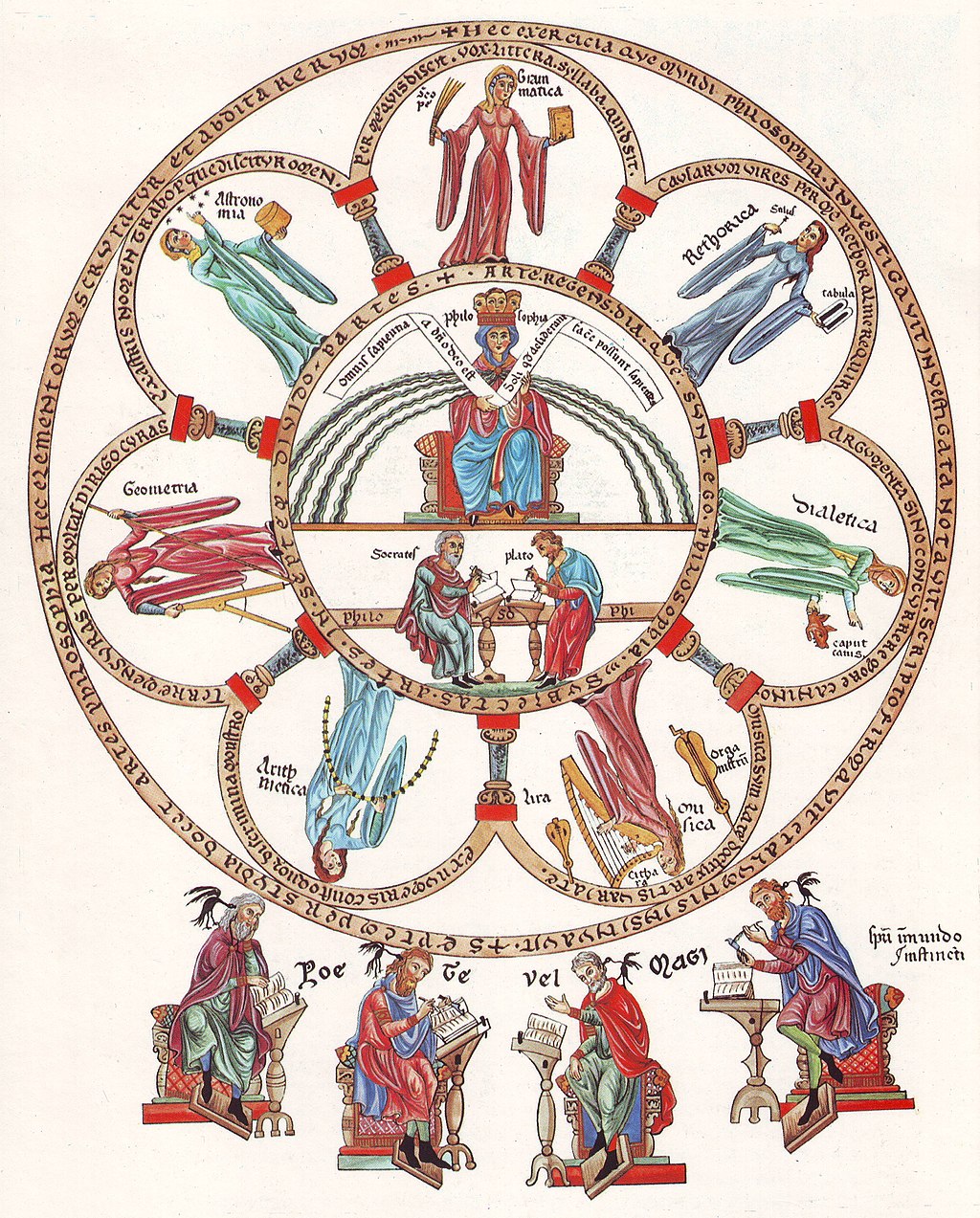
Philosophia et septem artes liberales, "philosophy and the seven liberal arts." From the Hortus deliciarum of Herrad of Landsberg (12th century)
■ 定義
教養教育(liberal arts education)の由緒正しい語義とは、自由人(市民)に対して、その市民生活を陶冶するために、必要不可欠な古典教育を授けることであった (→ウィ キペディア[liberal arts education])。
時 代は過ぎ、また、その教養(リベラル アーツ)教育 の中心地である西欧の伝統ある大学から、遠く離れた、極東の日本の大学で教養教育、とりわけ「大学院生に対する教養教育」いわゆる「高度教養教育」——現 時点では直訳風になるが super-liberal arts としか言いようがない——を実施する部局で働く私は、職場で言われている情報をもとに、自らその概念と中身の構築をしていかざるを得ない。
■現 代の用法
リベラルアーツという用語の現代的な用法は、自然科学、社会科学、芸術、人文科学の4分野からなる。
リ ベラルアーツという言葉から連想される学問分野には、以下のようなものがある
例
えば、ジョージタウン大学のリベラル・スタディーズ博士課程のコア・コースは、哲学、神学、歴史、芸術、文学、社会科学をカバーするという。ウェズリアン
大学のリベラル・スタディーズ修士課程では、ビジュアル・アート、美術史、クリエイティブ・ライティング、プロフェッショナル・ライティング、文学、歴
史、数学、映画、政府、教育、生物学、心理学、天文学のコースがある。
■教 養教育の ジレンマ
こ のように、高邁な教養教育を吹聴し ても、その理念は、学生や大学院生に伝わっても、先生方には伝わらない。先生方の多くが、このような自由なリベラルアーツの教育を受けたことがない専門馬 鹿の予備軍団であり、こちらが高度教養教育の必要性を説き、また、学生や大学院生が満足しています と報告し ても、「専門教育」が疎かになるといって、まじめにこちらの言うことに耳を傾けてくれない。野依良治さんが、「問題解決型プログラム創設の必要性」について主張する気持ちはよくわかる。
そ のために、元の同僚の教員と共同で、 『大阪大学学際融合教育:教員向けFAQ』を造ってみた(2016年3月4日)。FAQ-Osaka-Univ-Liberal-Arts-2016.pdf
+++
さまざまな〈学際〉のタイプがある
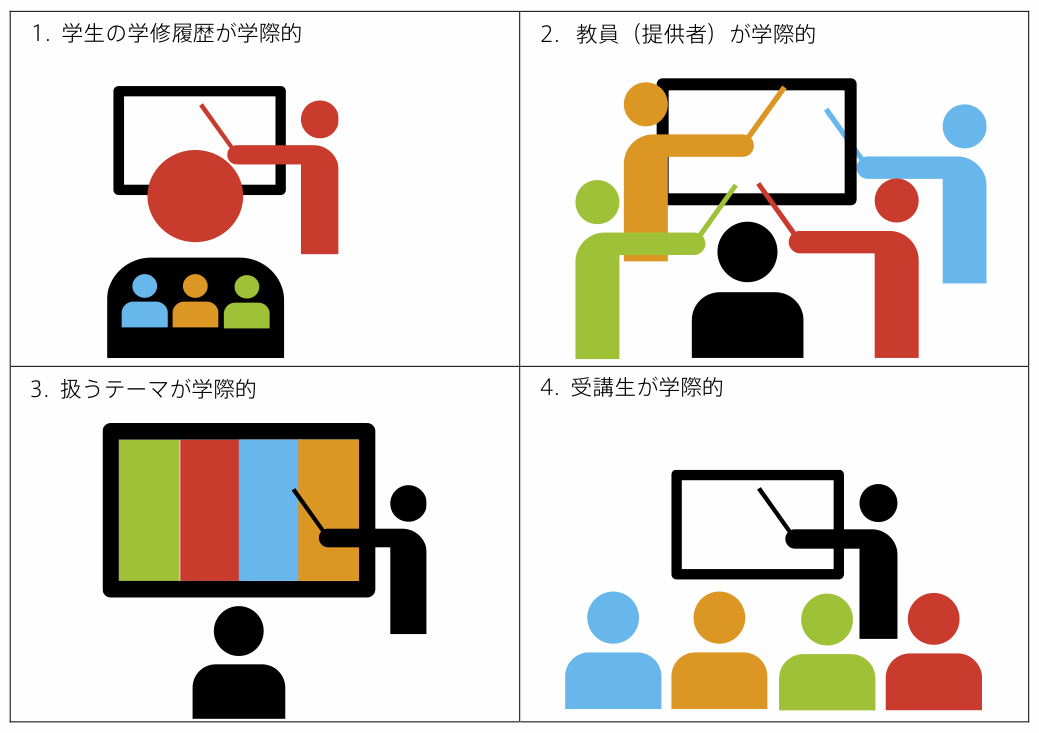
タイプ1:学生の学修履歴が学際的
タイプ2:教員が学際的
タイプ3:扱うテーマや内容が学際的
タイプ4:受講生が学際的
| Liberal
arts education (from Latin liberalis 'free' and ars 'art or principled
practice')[1] is the traditional academic course in Western higher
education.[2] Liberal arts takes the term art in the sense of a learned
skill rather than specifically the fine arts. Liberal arts education
can refer to studies in a liberal arts degree course or to a university
education more generally. Such a course of study contrasts with those
that are principally vocational, professional, or technical, as well as
religiously based courses. The term liberal arts for an educational curriculum dates back to classical antiquity in the West, but has changed its meaning considerably, mostly expanding it. The seven subjects in the ancient and medieval meaning came to be divided into the trivium of rhetoric, grammar, and logic, and the quadrivium of astronomy, arithmetic, geometry, and music. The modern sense of the term usually covers all the natural sciences, formal sciences, social sciences, arts, and humanities. |
リベラル
アーツ教育(ラテン語のliberalis「自由」とars「芸術または原則的実践」から)[1]は、西洋の高等教育における伝統的なアカデミック・コー
スである[2]。リベラルアーツ教育とは、リベラルアーツの学位取得コースで学ぶことを指す場合もあれば、より一般的な大学教育を指す場合もある。このよ
うな教育課程は、主として職業的、専門的、技術的な教育課程や宗教的な教育課程とは対照的である。 教育カリキュラムを指すリベラルアーツという言葉は、西洋の古典古代にまでさかのぼるが、その意味は大きく変化し、ほとんどが拡大解釈されている。古代や 中世の意味での7科目は、修辞学、文法、論理学のトリビウムと、天文学、算術、幾何学、音楽のクワドリビウムに分けられるようになった。現代的な意味で は、自然科学、形式科学、社会科学、芸術、人文科学のすべてをカバーするのが普通である。 |
| History Before they became known by their Latin variations (artes liberales, septem artes liberales, studia liberalia),[3] the liberal arts were the continuation of Ancient Greek methods of enquiry that began with a "desire for a universal understanding."[4] Pythagoras argued that there was a mathematical (and geometric) harmony to the cosmos or the universe; his followers linked the four arts of astronomy, arithmetic, geometry, and music into one area of study to form the "disciplines of the mediaeval quadrivium".[5] In 4th-century-BC Athens, the government of the polis, or city-state, respected the ability of rhetoric or public speaking above almost everything else.[6] Eventually rhetoric, grammar, and dialectic (logic) became the educational programme of the trivium. Together they came to be known as the seven liberal arts.[7] Originally these subjects or skills were held by classical antiquity to be essential for a free person (liberalis, "worthy of a free person")[8] to acquire in order to take an active part in civic life, something that included among other things participating in public debate, defending oneself in court, serving on juries, and participating in military service. While the arts of the quadrivium might have appeared prior to the arts of the trivium, by the Middle Ages educational programmes taught the trivium (grammar, logic, and rhetoric) first while the quadrivium (arithmetic, geometry, music, astronomy) were the following stage of education.[9]  Allegory of the seven liberal arts, The Phoebus Foundation Rooted in the basic curriculum – the enkuklios paideia or "well-rounded education" – of late Classical and Hellenistic Greece, the "liberal arts" or "liberal pursuits" (Latin liberalia studia) were already called so in formal education during the Roman Empire. The first recorded use of the term "liberal arts" (artes liberales) occurs in De Inventione by Marcus Tullius Cicero, but it is unclear if he created the term.[10][11] Seneca the Younger discusses liberal arts in education from a critical Stoic point of view in Moral Epistles.[12] The exact classification of the liberal arts varied however in Roman times,[13] and it was only after Martianus Capella in the 5th century influentially brought the seven liberal arts as bridesmaids to the Marriage of Mercury and Philology,[14] that they took on canonical form.[citation needed] The four "scientific" artes – music, arithmetic, geometry, and astronomy – were known from the time of Boethius onwards as the quadrivium. After the 9th century, the remaining three arts of the "humanities" – grammar, logic, and rhetoric – were grouped as the trivium.[13] It was in that two-fold form that the seven liberal arts were studied in the medieval Western university.[15][16] During the Middle Ages, logic gradually came to take predominance over the other parts of the trivium.[17] In the 12th century the iconic image – Philosophia et septem artes liberales (Philosophy and seven liberal arts) – was produced by an Alsatian nun and abbess Herrad of Landsberg with her community of women as part of the Hortus deliciarum.[18] Their encyclopedia compiled ideas drawn from philosophy, theology, literature, music, arts, and sciences and was intended as a teaching tool for women of the abbey.[19] The image Philosophy and seven liberal arts represents the circle of philosophy, and is presented as a rosette of a cathedral: a central circle and a series of semicircles arranged all around. It shows learning and knowledge organised into seven relations, the Septem Artes Liberales or Seven Liberal Arts. Each of these arts find their source in the Greek φιλοσοφία, philosophia, literally "love of wisdom".[18] St. Albert the Great, a doctor of the Catholic Church, asserted that the seven liberal arts were referred to in Sacred Scripture, saying: "It is written, 'Wisdom hath built herself a house, she hath hewn her out seven pillars' (Proverbs 9:1). This house is the Blessed Virgin; the seven pillars are the seven liberal arts."[20]  Page, with illustration of Music, from Marriage of Mercury and Philology In the Renaissance, the Italian humanists and their Northern counterparts, despite in many respects continuing the traditions of the Middle Ages, reversed that process.[21] Re-christening the old trivium with a new and more ambitious name: Studia humanitatis, and also increasing its scope, they downplayed logic as opposed to the traditional Latin grammar and rhetoric, and added to them history, Greek, and moral philosophy (ethics), with a new emphasis on poetry as well.[22] The educational curriculum of humanism spread throughout Europe during the sixteenth century and became the educational foundation for the schooling of European elites, the functionaries of political administration, the clergy of the various legally recognized churches, and the learned professions of law and medicine.[23] The ideal of a liberal arts, or humanistic education grounded in classical languages and literature, persisted in Europe until the middle of the twentieth century; in the United States, it had come under increasingly successful attack in the late 19th century by academics interested in reshaping American higher education around the natural and social sciences.[24][25] Similarly, Wilhelm von Humboldt's educational model in Prussia (now Germany), which later became the role model for higher education also in North America, went beyond vocational training. In a letter to the Prussian king, he wrote: There are undeniably certain kinds of knowledge that must be of a general nature and, more importantly, a certain cultivation of the mind and character that nobody can afford to be without. People obviously cannot be good craftworkers, merchants, soldiers or businessmen unless, regardless of their occupation, they are good, upstanding and – according to their condition – well-informed human beings and citizens. If this basis is laid through schooling, vocational skills are easily acquired later on, and a person is always free to move from one occupation to another, as so often happens in life.[26] The philosopher Julian Nida-Rümelin has criticized discrepancies between Humboldt's ideals and the contemporary European education policy, which narrowly understands education as a preparation for the labor market, arguing that we need to decide between "McKinsey and Humboldt".[27] |
歴史 リベラルアーツがラテン語のバリエーション(artes liberales、septem artes liberales、studia liberalia)で知られるようになる以前[3]、リベラルアーツは、「普遍的な理解への欲求」から始まった古代ギリシャの探究方法を継承するもので あった。 「ピタゴラスは、コスモスや宇宙には数学的(および幾何学的)な調和があると主張し、彼の信奉者たちは天文学、算術、幾何学、音楽の4つの芸術を1つの学 問領域に結びつけ、「中世のクアドリヴィウムの学問分野」を形成した。 [紀元前4世紀のアテネでは、ポリス(都市国家)の政府は、修辞学や人前で話す能力を他の何よりも尊重していた。もともと古典古代では、これらの科目や技 能は、自由人(liberalis、「自由人にふさわしい」)[8]が市民生活に積極的に参加するために身につけることが不可欠であると考えられており、 そのようなものとして、特に公開討論への参加、法廷での自己弁護、陪審員への参加、兵役への参加などが挙げられていた。クワドリヴィウムの芸術はトリヴィ ウムの芸術よりも先に登場したかもしれないが、中世の教育課程ではトリヴィウム(文法、論理学、修辞学)を最初に教え、クワドリヴィウム(算術、幾何学、 音楽、天文学)はその次の段階であった[9]。 7つの教養の寓意、フィーバス財団 古典後期およびヘレニズム期のギリシャの基本的なカリキュラムであるエンククリオス・パイデイア、すなわち「均整のとれた教育」に根ざした「リベラルアー ツ」または「リベラルな追求」(ラテン語でliberalia studia)は、ローマ帝国時代の正式な教育においてすでにそう呼ばれていた。リベラルアーツ(artes liberales)という用語の最初の使用はマルクス・トゥリウス・キケロ(Marcus Tullius Cicero)の『発明論』(De Inventione)に記録されているが、彼がこの用語を生み出したかどうかは不明である[10][11]。 [しかしリベラルアーツの正確な分類はローマ時代には様々であり[13]、5世紀にマルティアヌス・カペラが7つのリベラルアーツを水星学とフィロロジー の結婚の付添人として持ち込んだ[14]後に初めて正典的な形式をとるようになった[要出典]。 音楽、算術、幾何学、天文学の4つの「科学的」芸術は、ボエティウスの時代からクアドリヴィウムとして知られていた。9世紀以降、「人文科学」の残りの3 つの芸術である文法、論理学、修辞学はトリヴィウムとしてグループ化された[13]。中世の西洋の大学では、この2つの形態で7つのリベラルアーツが学ば れていた。 12世紀、アルザスの修道女でありランツベルクの修道院長であったヘラッドによって、Hortus deliciarumの一環として女性たちの共同体とともに、象徴的なイメージである「Philosophia et septem artes liberales(哲学と7つの教養)」が作成された。 [18]彼女たちの百科事典は、哲学、神学、文学、音楽、芸術、科学から引き出された思想を編集したもので、修道院の女性たちのための教材として意図され ていた[19]。「哲学と7つの教養」というイメージは、哲学の輪を表しており、大聖堂のロゼットのように表現されている。これは、学問と知識が7つの関 係、すなわち「7つの教養」(Septem Artes Liberales)に組織化されていることを示している。これらの芸術はそれぞれ、ギリシャ語のφιλοσοφία、philosophia、文字通り 「知恵を愛すること」に源を発している[18]。カトリック教会の博士であった聖アルベルト大王は、7つの教養が聖典に言及されていると主張し、次のよう に述べている: 知恵は自ら家を建て、七本の柱を切り出した』(箴言9:1)と書かれている。この家は聖母であり、七本の柱は七つの教養である」[20]。 『マーキュリーとフィロロギーの結婚』より「音楽」の挿絵のあるページ ルネサンス期、イタリアの人文主義者とその北方の人文主義者たちは、多くの点で中世の伝統を受け継いでいたにもかかわらず、その過程を逆転させた [21]。旧来の三学問をより野心的な新しい名前「Studia humanitatis」で呼び直し、その範囲も広げ、伝統的なラテン語の文法と修辞学とは対照的に論理学を軽視し、歴史学、ギリシア哲学、道徳哲学(倫 理学)を加え、詩も新たに重視した。 [人文主義の教育カリキュラムは16世紀にヨーロッパ全土に広まり、ヨーロッパのエリート、政治行政の機能者、法的に認められた諸教会の聖職者、法律や医 学の専門職の教育の基礎となった。 [リベラルアーツ、すなわち古典的な言語や文学に基礎を置いた人文主義的な教育の理想は、ヨーロッパでは20世紀半ばまで存続していた。アメリカでは、 19世紀後半に自然科学や社会科学を中心にアメリカの高等教育を再構築しようとする学者たちによって、その理想はますます成功裏に攻撃されるようになって いた[24][25]。 同様に、プロイセン(現ドイツ)におけるヴィルヘルム・フォン・フンボルトの教育モデルは、後に北米における高等教育の模範となったが、それは職業訓練を 超えたものであった。プロイセン国王に宛てた手紙の中で、彼はこう書いている: プロイセン国王に宛てた手紙の中で、彼は次のように書いている。「一般的な知識と、さらに重要なこととして、誰にも欠けてはならない精神と人格の涵養があ ることは否定できない。職業に関係なく、善良で、立派で、その人の状態に応じて、十分な知識を持った人間であり、市民でなければ、優れた職人、商人、軍 人、ビジネスマンにはなれないのは明らかである。学校教育を通じてこのような基礎が築かれれば、職業技能は後々容易に身につくし、人は常に自由に職業を転 々とすることができる。 哲学者のジュリアン・ニダ=リューメリンは、フンボルトの理想と、教育を労働市場への準備として狭く理解する現代のヨーロッパの教育政策との間の矛盾を批 判し、「マッキンゼーとフンボルト」のどちらかを決める必要があると主張している[27]。 |
 Philosophia et septem artes liberales, "philosophy
and the seven
liberal arts." From the Hortus deliciarum of Herrad of Landsberg (12th
century) Philosophia et septem artes liberales, "philosophy
and the seven
liberal arts." From the Hortus deliciarum of Herrad of Landsberg (12th
century) |
Philosophia et septem artes
liberales「哲学と7つの教養」。ランツベルクのヘラッドのHortus deliciarum(12世紀)より |
| Modern usage The modern use of the term liberal arts consists of four areas: the natural sciences, social sciences, arts, and humanities. Academic areas that are associated with the term liberal arts include: Life science (biology, neuroscience) Physical science (physics, astronomy, chemistry, earth science, physical geography) Formal science (logic, mathematics, statistics) Humanities (philosophy, history, english literature, the arts, linguistics, anthropology, theology, archaeology) Social science (economics, human geography, political science, jurisprudence, psychology, sociology) For example, the core courses for Georgetown University's Doctor of Liberal Studies program[28] cover philosophy, theology, history, art, literature, and the social sciences. Wesleyan University's Master of Arts in Liberal Studies program includes courses in visual arts, art history, creative and professional writing, literature, history, mathematics, film, government, education, biology, psychology, and astronomy.[29] |
現代の用法 リベラルアーツという用語の現代的な用法は、自然科学、社会科学、芸術、人文科学の4分野からなる。リベラルアーツという言葉から連想される学問分野に は、以下のようなものがある: 生命科学(生物学、神経科学) 物理科学(物理学、天文学、化学、地球科学、物理地理学) 形式科学(論理学、数学、統計学) 人文科学(哲学、歴史学、英文学、芸術、言語学、人類学、神学、考古学) 社会科学(経済学、人文地理学、政治学、法学、心理学、社会学) 例えば、ジョージタウン大学のリベラル・スタディーズ博士課程[28] のコア・コースは、哲学、神学、歴史、芸術、文学、社会科学をカバーしています。ウェズリアン大学のリベラル・スタディーズ修士課程では、ビジュアル・ アート、美術史、クリエイティブ・ライティング、プロフェッショナル・ライティング、文学、歴史、数学、映画、政府、教育、生物学、心理学、天文学のコー スがある[29]。 |
| Secondary school Liberal arts education at the secondary school level prepares students for higher education at a university.[citation needed][30] Curricula differ from school to school, but generally include language, chemistry, biology, geography, art, mathematics, music, history, philosophy, civics, social sciences, and foreign languages.[31] |
中等教育 中等学校レベルの教養教育は、大学での高等教育に備えるものである[要出典][30]。 カリキュラムは学校によって異なるが、一般的には言語、化学、生物学、地理、美術、数学、音楽、歴史、哲学、公民、社会科学、外国語が含まれる[31]。 |
| In the United States Main article: Liberal arts college Further information: Liberal arts colleges in the United States and Great books  Thompson Library at Vassar College in New York In the United States, liberal arts colleges are schools emphasizing undergraduate study in the liberal arts.[32] The teaching at liberal arts colleges is often Socratic, typically with small classes; professors are often allowed to concentrate more on their teaching responsibilities than are professors at research universities.[citation needed] In addition, most four-year colleges are not devoted exclusively or primarily to liberal arts degrees, but offer a liberal arts degree, and allow students not majoring in liberal arts to take courses to satisfy distribution requirements in liberal arts.[citation needed] Traditionally, a bachelor's degree in one particular area within liberal arts, with substantial study outside that main area, is earned over four years of full-time study. However, some universities such as Saint Leo University,[33] Pennsylvania State University,[34] Florida Institute of Technology,[35] and New England College[36] have begun to offer an associate degree in liberal arts. Colleges like the Thomas More College of Liberal Arts offer a unique program with only one degree offering, a Bachelor of Arts in Liberal Studies, while the Harvard Extension School offers both a Bachelor of Liberal Arts and a Master of Liberal Arts.[37] Additionally, colleges like the University of Oklahoma College of Liberal Studies and the Harvard Extension School[37] offer an online, part-time option for adult and nontraditional students.[citation needed] Most students earn either a Bachelor of Arts degree or a Bachelor of Science[38] degree; on completing undergraduate study, students might progress to either a liberal arts graduate school or a professional school (public administration, engineering, business, law, medicine, theology).[citation needed] Great Books movement [icon] This section needs expansion. You can help by adding to it. (July 2021) In 1937 St. John's College changed its curriculum to focus on the Great Books of the Western World to provide a new sort of education that separated itself from the increasingly specialized nature of higher schooling.[39] |
アメリカ 主な記事 リベラルアーツ・カレッジ さらに詳しい情報 米国のリベラルアーツ・カレッジと名著 ニューヨークのヴァッサー・カレッジのトンプソン図書館 アメリカでは、リベラルアーツ・カレッジはリベラルアーツの学部課程を重視する学校である[32]。リベラルアーツ・カレッジの授業はソクラテス的である ことが多く、一般的に少人数制のクラスである。 また、ほとんどの4年制カレッジは、リベラル・アーツの学位にのみ、または主に専念しているわけではないが、リベラル・アーツの学位を提供しており、リベ ラル・アーツを専攻していない学生がリベラル・アーツのディストリビューション要件を満たすための科目を履修することを認めている[要出典]。 伝統的に、リベラルアーツの中でも特定の分野の学士号は、その主な分野以外の実質的な学習も含めて、全日制の4年間で取得するのが一般的である。しかし、 セント・レオ大学[33]、ペンシルバニア州立大学[34]、フロリダ工科大学[35]、ニューイングランド・カレッジ[36]などの一部の大学では、リ ベラル・アーツの準学士号を提供し始めている。さらに、オクラホマ大学リベラル・スタディーズ・カレッジやハーバード大学エクステンション・スクール [37]などのカレッジは、成人や非正規雇用の学生のために、オンラインでパートタイムのオプションを提供している[要出典]。 ほとんどの学生は、文学士号または理学士号[38]を取得する。学部課程を修了すると、学生はリベラルアーツ系の大学院または専門職大学院(行政学、工 学、ビジネス、法律、医学、神学)のいずれかに進む可能性がある[要出典]。 名著運動 [アイコン] このセクションは拡張が必要です。ぜひ追加してください。(2021年7月) 1937年、セント・ジョンズ・カレッジは、専門化が進む高等学校教育とは一線を画した新しい教育を提供するため、西洋世界の名著に焦点を当てたカリキュ ラムに変更した[39]。 |
In Europe Triumph of St.Thomas & Allegory of the Sciences by Andrea di Bonaluto. Fresco, 1365–68, Basilica di S. Maria Novella. In most parts of Europe, liberal arts education is deeply rooted. In Germany, Austria and countries influenced by their education system it is called 'humanistische Bildung' (humanistic education). The term is not to be confused with some modern educational concepts that use a similar wording. Educational institutions that see themselves in that tradition are often a Gymnasium (high school, grammar school). They aim at providing their pupils with comprehensive education (Bildung) to form personality with regard to a pupil's own humanity as well as their innate intellectual skills.[citation needed] Going back to the long tradition of the liberal arts in Europe, education in the above sense was freed from scholastic thinking and re-shaped by the theorists of the Enlightenment; in particular, Wilhelm von Humboldt. Since students are considered to have received a comprehensive liberal arts education at gymnasia, very often the role of liberal arts education in undergraduate programs at universities is reduced compared to the US educational system.[citation needed] Students are expected to use their skills received at the gymnasium to further develop their personality in their own responsibility, e.g. in universities' music clubs, theatre groups, language clubs, etc. Universities encourage students to do so and offer respective opportunities but do not make such activities part of the university's curriculum.[citation needed] Thus, on the level of higher education, despite the European origin of the liberal arts college,[40] the term liberal arts college usually denotes liberal arts colleges in the United States.[citation needed] With the exception of pioneering institutions such as Franklin University Switzerland (formerly known as Franklin College), established as a Europe-based, US-style liberal arts college in 1969,[41] only recently some efforts have been undertaken to systematically "re-import" liberal arts education to continental Europe, as with Leiden University College The Hague, University College Utrecht, University College Maastricht, Amsterdam University College, Roosevelt Academy (now University College Roosevelt), University College Twente (ATLAS), Erasmus University College, the University of Groningen, Bratislava International School of Liberal Arts, Leuphana University of Lüneburg, Central European University, and Bard College Berlin, formerly known as the European College of Liberal Arts. Central European University launched a liberal arts undergraduate degree in Culture, Politics, and Society [42] in 2020 as part of its move to Vienna and accreditation in Austria. As well as the colleges listed above, some universities in the Netherlands offer bachelors programs in Liberal Arts and Sciences (Tilburg University). Liberal arts (as a degree program) is just beginning to establish itself in Europe. For example, University College Dublin offers the degree, as does St. Marys University College Belfast, both institutions coincidentally on the island of Ireland. In the Netherlands, universities have opened constituent liberal arts colleges under the terminology university college since the late 1990s. The four-year bachelor's degree in Liberal Arts and Sciences at University College Freiburg is the first of its kind in Germany. It started in October 2012 with 78 students.[43] The first Liberal Arts degree program in Sweden was established at Gothenburg University in 2011,[44] followed by a Liberal Arts Bachelor Programme at Uppsala University's Campus Gotland in the autumn of 2013.[45] The first Liberal Arts program in Georgia was introduced in 2005 by American-Georgian Initiative for Liberal Education (AGILE),[46] an NGO. Thanks to their collaboration, Ilia State University[47] became the first higher education institution in Georgia to establish a liberal arts program.[48] In France, Chavagnes Studium, a Liberal Arts Study Centre in partnership with the Institut Catholique d'études supérieures, and based in a former Catholic seminary, is launching a two-year intensive BA in the Liberal Arts, with a distinctively Catholic outlook.[49] It has been suggested that the liberal arts degree may become part of mainstream education provision in the United Kingdom, Ireland and other European countries. In 1999, the European College of Liberal Arts (now Bard College Berlin) was founded in Berlin[50] and in 2009 it introduced a four-year Bachelor of Arts program in Value Studies taught in English,[51] leading to an interdisciplinary degree in the humanities.[citation needed] In England, the first institution[52] to retrieve and update a liberal arts education at the undergraduate level was the University of Winchester with their BA (Hons) Modern Liberal Arts programme which launched in 2010.[52] In 2012, University College London began its interdisciplinary Arts and Sciences BASc degree (which has kinship with the liberal arts model) with 80 students.[53] In 2013, the University of Birmingham created the School of Liberal Arts and Natural Sciences, home of a suite of flexible 4-year programmes in which students study a broad range of subjects drawn from across the university, and gain qualifications including both traditional Liberal Arts and Natural Sciences, but also novel thematic combinations linking both areas.[54] King's College London launched the BA Liberal Arts, which has a slant towards arts, humanities and social sciences subjects.[55] The New College of the Humanities also launched a new liberal education programme. Richmond American University London is a private liberal arts university where all undergraduate degrees are taught with a US liberal arts approach over a four-year programme. Durham University has both a popular BA Liberal Arts and a BA Combined Honours in Social Sciences programme, both of which allow for interdisciplinary approaches to education. The University of Nottingham also has a Liberal Arts BA with study abroad options and links with its Natural Sciences degrees.[56] In 2016, the University of Warwick launched a three/four-year liberal arts BA degree, which focuses on transdisciplinary approaches and problem-based learning techniques in addition to providing structured disciplinary routes and bespoke pathways.[57] And for 2017 entry UCAS lists 20 providers of liberal arts programmes.[58] In Scotland, the four-year undergraduate Honours degree, specifically the Master of Arts, has historically demonstrated considerable breadth in focus. In the first two years of Scottish MA and BA degrees students typically study a number of different subjects before specialising in their Honours years (third and fourth year). The University of Dundee and the University of Glasgow (at its Crichton Campus) are the only Scottish universities that currently offer a specifically named 'Liberal Arts' degree.[citation needed] In Slovakia, the Bratislava International School of Liberal Arts (BISLA) is located in the Old Town of Bratislava. It is the first liberal arts college in Central Europe. A private, accredited three-year degree-granting undergraduate institution, it opened in September 2006.[59] |
ヨーロッパにて アンドレア・ディ・ボナルート作 聖トマスの勝利と諸科学の寓意。フレスコ画、1365-68年、サン・マリア・ノヴェッラ大聖堂。 ヨーロッパのほとんどの地域では、リベラルアーツ教育が深く根付いている。ドイツ、オーストリアやその教育制度の影響を受けた国々では、「人文主義教育 (humanistische Bildung)」と呼ばれている。この言葉は、似たような言葉遣いをする現代の教育概念と混同してはならない。人文主義教育の伝統を受け継ぐ教育機関 は、ギムナジウム(高校、文法学校)であることが多い。ヨーロッパにおけるリベラルアーツの長い伝統にさかのぼると、上記の意味での教育は、啓蒙主義の理 論家たち、特にヴィルヘルム・フォン・フンボルトによって、スコラ哲学的思考から解き放たれ、再形成された。学生は体育館で総合的なリベラルアーツ教育を 受けたとみなされるため、大学の学士課程におけるリベラルアーツ教育の役割は、アメリカの教育制度と比較すると軽減されていることが非常に多い [citation needed]。学生は、体育館で学んだスキルを活かして、大学の音楽サークル、演劇サークル、語学サークルなどで、自らの責任においてさらに個性を伸ば すことが期待されている。大学は、学生にそのような活動を奨励し、それぞれの機会を提供しているが、そのような活動を大学のカリキュラムの一部としている わけではない[要出典]。 したがって、高等教育のレベルでは、リベラル・アーツ・カレッジの起源がヨーロッパにあるにもかかわらず[40]、リベラル・アーツ・カレッジという用語 は通常、米国のリベラル・アーツ・カレッジを指す。 ユニバーシティ・カレッジ・マーストリヒト、アムステルダム・ユニバーシティ・カレッジ、ルーズベルト・アカデミー(現ユニバーシティ・カレッジ・ルーズ ベルト)、ユニバーシティ・カレッジ・トウェンテ(ATLAS)、エラスムス・ユニバーシティ・カレッジ、フローニンゲン大学、ブラティスラヴァ国際教養 学校、リューネブルク・ロイファナ大学、中央ヨーロッパ大学、バード・カレッジ・ベルリン(以前はヨーロッパ教養大学として知られていた)などである。中 央ヨーロッパ大学は、ウィーンへの移転とオーストリアの認証取得の一環として、2020年に文化・政治・社会[42]のリベラルアーツ学部を開設した。上 記の大学だけでなく、オランダではリベラルアーツとサイエンスの学士課程を提供している大学もある(ティルブルク大学)。学位プログラムとしての)リベラ ルアーツは、ヨーロッパではまだ確立され始めたばかりである。たとえば、ユニバーシティ・カレッジ・ダブリンは、セント・メアリーズ・ユニバーシティ・カ レッジ・ベルファストと同様に、この学位を提供している。オランダでは、1990年代後半から大学がユニバーシティ・カレッジという名称の下に、リベラ ル・アーツ・カレッジを開設している。フライブルク・ユニバーシティ・カレッジのリベラルアーツ&サイエンスの4年制学士号は、この種のものとしてはドイ ツ初である。スウェーデンでは、2011年にヨーテボリ大学に初のリベラルアーツ学位プログラムが設置され[44]、2013年秋にはウプサラ大学のキャ ンパス・ゴットランドにリベラルアーツ学士プログラムが設置された[45]。 グルジアでは、2005年にNGOのAmerican-Georgian Initiative for Liberal Education(AGILE)[46]によって初のリベラルアーツプログラムが導入された。彼らの協力のおかげで、イリア州立大学[47]は、グルジ アで初めてリベラル・アーツ・プログラムを設置した高等教育機関となった[48]。 フランスでは、カトリック高等研究院と提携し、かつてのカトリック神学校を拠点とするリベラルアーツ・スタディセンターであるシャヴァーニュ・スタディウ ムが、カトリック的な明確な展望を持ったリベラルアーツの2年間の集中的な学士課程を開始している。1999年、ベルリンにヨーロピアン・カレッジ・オ ブ・リベラルアーツ(現在のバード・カレッジ・ベルリン)が設立され[50]、2009年には人文学の学際的な学位につながる価値学の4年制学士課程を英 語で教えるプログラムを導入した[51]。 イギリスでは、学部レベルのリベラルアーツ教育を回収し、更新した最初の教育機関[52]は、2010年に開始されたウィンチェスター大学のBA (Hons)現代リベラルアーツプログラムであった[52]。 2012年には、ユニバーシティ・カレッジ・ロンドンが80人の学生とともに学際的な芸術と科学のBASc学位(リベラルアーツモデルと親和性がある)を 開始した。 [2013年、バーミンガム大学はリベラルアーツ&ナチュラルサイエンス学部を設立し、学生は大学全体から集められた幅広い科目を学び、伝統的なリベラル アーツとナチュラルサイエンスの両方を含む資格だけでなく、両分野を結びつける斬新なテーマ別の組み合わせも取得できる柔軟な4年制プログラム群を有する [54]。 キングズ・カレッジ・ロンドンは、芸術、人文科学、社会科学の科目を重視したBAリベラルアーツを開始した[55]。リッチモンド・アメリカン大学ロンド ンは、私立のリベラル・アーツ大学で、すべての学士号が4年間のプログラムで米国のリベラル・アーツ・アプローチで教えられている。ダラム大学には、人気 の高いBAリベラルアーツとBA社会科学複合優等課程の両方があり、どちらも学際的なアプローチで教育を行うことができる。また、ノッティンガム大学に は、留学オプションと自然科学学位とのリンクを備えたリベラルアーツBAがある[56]。2016年、ウォーリック大学は、3年/4年のリベラルアーツ BA学位を開始し、構造化された分野別ルートとオーダーメイドの進路を提供することに加え、学際的アプローチと問題ベースの学習手法に焦点を当てている [57]。 また、2017年入学のUCASには、リベラルアーツプログラムを提供する20のプロバイダーがリストアップされている[58]。 スコットランドでは、4年制の学部優等学位、特に芸術学修士号は、歴史的にかなりの焦点の広さを示してきた。スコットランドの修士号および学士号の最初の 2年間で、学生は一般的に数多くの異なる科目を学んだ後、優等学位課程(3年次および4年次)で専門分野を学ぶ。ダンディー大学とグラスゴー大学(そのク ライトン・キャンパス)は、現在「リベラル・アーツ」という特別な名称の学位を提供している唯一のスコットランドの大学である[要出典]。 スロバキアでは、ブラティスラヴァ旧市街にブラティスラヴァ国際教養大学(BISLA)がある。中央ヨーロッパ初のリベラルアーツ・カレッジである。 2006年9月に開校した私立の3年制学士課程認定校である[59]。 |
| In Asia The Commission on Higher Education of the Philippines mandates a General Education curriculum required of all higher education institutions; it includes a number of liberal arts subjects, including history, art appreciation, and ethics, plus interdisciplinary electives. Many universities have much more robust liberal arts core curricula; most notably, the Jesuit universities such as Ateneo de Manila University have a strong liberal arts core curriculum that includes philosophy, theology, literature, history, and the social sciences. Forman Christian College is a liberal arts university in Lahore, Pakistan. It is one of the oldest institutions in the Indian subcontinent. It is a chartered university recognized by the Higher Education Commission of Pakistan. Aga Khan University offers a worldclass liberal arts education in the arts and sciences in Karachi, Pakistan, and Habib University in Karachi, Pakistan offers a holistic liberal arts and sciences experience to its students through its uniquely tailored liberal core program which is compulsory for all undergraduate degree students.[60][61] In India, there are many institutions that offer undergraduate UG or bachelor's degree/diploma and postgraduate PG or master's degree/diploma as well as doctoral PhD and postdoctoral studies and research, in this academic discipline. The highly ranked IIT Guwahati offers a "Master's Degree in Liberal Arts". Manipal Academy of Higher Education – MAHE, an Institution of Eminence as recognised by MHRD of Govt of India in 2018, houses a Faculty of Liberal Arts, Humanities and Social Sciences, and also others like Symbiosis & FLAME University in Pune, Ahmedabad University, and Pandit Deendayal Energy University (PDEU) [62] in Ahmedabad, Ashoka University, and Azim Premji University in Bangalore. Lingnan University, Asian University for Women and University of Liberal Arts- Bangladesh (ULAB) are also a few such liberal arts colleges in Asia. International Christian University in Tokyo is the first and one of the very few liberal arts universities in Japan. Fulbright University Vietnam is the first liberal arts institution in Vietnam.[citation needed] |
アジア フィリピンの高等教育委員会(Commission on Higher Education of the Philippines)は、すべての高等教育機関に一般教養カリキュラムの履修を義務付けている。このカリキュラムには、歴史、芸術鑑賞、倫理などの教 養科目と、学際的な選択科目が含まれる。アテネオ・デ・マニラ大学のようなイエズス会系の大学では、哲学、神学、文学、歴史、社会科学を含む強力なリベラ ルアーツ・コア・カリキュラムがある。フォーマン・クリスチャン・カレッジは、パキスタンのラホールにあるリベラル・アーツ系の大学である。インド亜大陸 で最も古い教育機関のひとつである。パキスタン高等教育委員会(Higher Education Commission of Pakistan)に認可された公認大学です。パキスタンのカラチにあるアガ・カーン大学は、芸術と科学における世界クラスのリベラルアーツ教育を提供し ており、パキスタンのカラチにあるハビブ大学は、すべての学部生に必修の独自のリベラルコア・プログラムを通じて、学生に総合的なリベラルアーツと科学の 経験を提供している[60][61]。 インドでは、この学問分野において、学士号(UG)、修士号(PG)、修士号(PG)、博士号(PhD)、博士研究員(ポスドク)を取得できる教育機関が 数多くある。高い評価を得ているIITグワハティでは、「リベラルアーツ修士号」を取得することができます。マニパル高等教育アカデミー(Manipal Academy of Higher Education - MAHE)は、2018年にインド政府MHRDによって認定された著名な教育機関であり、教養学部、人文科学部、プネーのシンビオシス&FLAME大学、 アーメダバードのアーメダバード大学、パンディット・ディーンダヤル・エネルギー大学(PDEU)[62]、アショカ大学、バンガロールのアジム・プレム ジ大学などがある。嶺南大学、アジア女子大学、バングラデシュ・リベラルアーツ大学(ULAB)なども、アジアでは数少ないリベラルアーツ・カレッジであ る。東京にある国際基督教大学は、日本で最初の、そして数少ないリベラルアーツ大学です。フルブライト大学ベトナム校は、ベトナム初のリベラルアーツ教育 機関である[要出典]。 |
| In Australia Campion College is a Roman Catholic dedicated liberal arts college, located in the western suburbs of Sydney. Founded in 2006, it is the first tertiary educational liberal arts college of its type in Australia. Campion offers a Bachelor of Arts in the Liberal Arts as its sole undergraduate degree. The key disciplines studied are history, literature, philosophy, and theology.[63] The Millis Institute is the School of Liberal Arts at Christian Heritage College located in Brisbane. Founded by Dr. Ryan Messmore, former President of Campion College, the Millis Institute offers a Bachelor of Arts in the Liberal Arts in which students can choose to major in philosophy, theology, history or literature. It also endorses a 'Study Abroad' program whereby students can earn credit towards their degree by undertaking two units over a five-week program at the University of Oxford. As of 2022, Elizabeth Hillman is currently the President of the Millis Institute.[64] A new school of Liberal Arts has been formed in the University of Wollongong; the new Arts course entitled 'Western Civilisation' was first offered in 2020. The interdisciplinary curriculum focuses on the classic intellectual and artistic literature of the Western tradition. Courses in the liberal arts have recently been developed at the University of Sydney[65] and the University of Notre Dame.[66] |
オーストラリア キャンピオン・カレッジは、シドニー西郊にあるローマ・カトリック系のリベラル・アーツ・カレッジである。2006年に設立され、オーストラリア初のリベ ラル・アーツ・カレッジである。リベラルアーツの学士号は、キャンピオンの唯一の学士号である。主な学問分野は、歴史、文学、哲学、神学である[63]。 ミリス・インスティテュートは、ブリスベンにあるクリスチャン・ヘリテージ・カレッジの教養学部である。キャンピオン・カレッジの前学長であるライアン・ メスモア博士によって設立されたミリス・インスティテュートは、哲学、神学、歴史学、文学を専攻できるリベラルアーツの学士号を提供している。また、オッ クスフォード大学で5週間のプログラムを2単位履修することにより、学位取得に必要な単位を取得できる「スタディー・アブロード」プログラムも推奨してい る。2022年現在、エリザベス・ヒルマンがミリス・インスティテュートの学長を務めている[64]。 ウーロンゴン大学にリベラルアーツ学部が新設され、「西洋文明」と題された新しいアーツコースが2020年に初めて開講された。学際的なカリキュラムは、 西洋の伝統の古典的な知的・芸術的文学に焦点を当てている。リベラルアーツのコースは、最近シドニー大学[65]やノートルダム大学でも開発されている [66]。 |
| Artes Mechanicae – Latin
for "the mechanical arts" Bachelor of General Studies Bachelor of Liberal Arts Bachelor of Liberal Studies Classical education Classical education movement College of Arts and Sciences Doctor of Liberal Studies Education in ancient Greece Education in ancient Rome Education reform § Reforms of classical education Four arts General studies Great books Great Books programs in Canada Humanitas Humanities Interdisciplinarity Jesuit education (Eloquentia perfecta) Liberal arts college Liberal education List of liberal arts colleges STEAM fields Transcendentalism |
Artes Mechanicae - ラテン語で "機械芸術" 一般教養学士 教養学士 教養学士 古典教育 古典教育運動 教養学部 教養学博士 古代ギリシャの教育 古代ローマの教育 教育改革 § 古典教育の改革 四大芸術 一般教養 名著 カナダの名著プログラム ユマニタス 人文科学 学際性 イエズス会教育(Eloquentia perfecta) リベラルアーツ・カレッジ 教養教育 リベラルアーツ・カレッジ一覧 STEAM分野 超越主義 |
| https://en.wikipedia.org/wiki/Liberal_arts_education |
|
| References "MA Liberal Arts | Course Overview". University of Winchester. Retrieved 6 February 2022. "What is Liberal Arts? – Ancient, Medieval, Modern". Liberal Arts UK. Retrieved 4 June 2018. "What Does Liberal Arts Mean? | Princeton Admission". admission.princeton.edu. "University works to revive liberal arts as a key part of the college experience". pbs.org. public broadcasting system. Retrieved 1 November 2024. "Field of degree: Liberal arts". bls.gov/. Bureau of Labor and Statistics. Retrieved 1 November 2024. "What is Liberal Arts Education?". Top Universities. 22 August 2025. Kimball, Bruce A. (1995). Orators & philosophers: a history of the idea of liberal education (Expanded ed.). New York: College Entrance Examination Board. ISBN 0-87447-514-7. OCLC 32776486. Tubbs, Nigel (2014). Philosophy and Modern Liberal Arts Education: Freedom is to Learn. Houndmills, Basingstoke, Hampshire: Palgrave Macmillan. p. 17. ISBN 978-1-137-35891-2. OCLC 882530818. "Trivium and Quadrivium | The Seven Liberal Arts | Study Liberal Arts". Liberal Arts. Retrieved 25 April 2020. "Philosophy and the Liberal Arts | Essays". Liberal Arts. 25 January 2020. Retrieved 25 April 2020. Curtius, Ernst Robert (1973) [1948]. European Literature and the Latin Middle Ages. Translated by Trask, Willard R. Princeton: Princeton University Press. p. 37. ISBN 9780691097398. The classical sources include Cicero, De Oratore, I.72–73, III.127, and De re publica, I.30. Castle, E.B. (1969). Ancient Education and Today. p. 59. Kimball, Bruce (1995). Orators and Philosophers. New York: College Entrance Examination Board. p. 13 Cicero. De Inventione. Book 1, Section 25 Seneca. Schneider, Ben (ed.). "Epistle". Stoics.com. 88. Retrieved 26 August 2013. Lausberg, H. (1998). Handbook of Literary Rhetoric. p. 10. Waddell, Helen (1968). The Wandering Scholars. p. 25. "James Burke: The Day the Universe Changed In the Light Of the Above". YouTube. Archived from the original on 23 May 2012. Wagner, David Leslie (1983). The Seven liberal arts in the Middle Ages. Indiana University Press. ISBN 978-0-253-35185-2. Retrieved 5 January 2013. Waddell, Helen (1968). The Wandering Scholars. pp. 141–143. Tidbury, Iain (5 August 2019). "Liberal Arts Education by and for Women". Liberal Arts. Retrieved 5 August 2019. Griffiths, Fiona J. (3 June 2011). The Garden of Delights: Reform and Renaissance for Women in the Twelfth Century. University of Pennsylvania Press. ISBN 9780812202113. Michael, William (2025). "Did the Virgin Mary Know the Classical Liberal Arts?". Classical Liberal Arts Academy. Archived from the original on 12 June 2025. Retrieved 12 June 2025. G. Norton ed., The Cambridge History of Literary Criticism Vol 3 (1999)p. 46 and pp. 601–4 Paul Oskar Kristeller, Renaissance Thought II: Papers on Humanism and the Arts (New York: Harper Torchbooks, 1965), p. 178. Charles G. Nauert, Humanism and the Culture of Renaissance Europe (New Approaches to European History) (Cambridge University Press, 2006), pp. 172–173. W. Robert Connor (3 January 2013). "The Shrinking Humanities". Inside Higher Ed. L. W. B. Brockliss (1997). "True European Universities in the Age of Revolution, 1789–1850". In Mark C. Curthoys; Michael G. Brock (eds.). History of the University of Oxford. Vol. 6 Nineteenth-century Oxford, part 1. Clarendon Press. pp. 82–83. ISBN 978-0-19-951016-0. Richard Olson (20 March 2020). "What is a liberal arts education, anyway?". Department of Humanities, Social Sciences, and the Arts. Harvey Mudd College. Retrieved 3 July 2026. Robin Darwall-Smith (2012). "Oxford Classics Examined". In Mordechai Feingold (ed.). History of Universities. Vol. XXVI/2. Oxford University Press. p. 220. ISBN 978-0-19-966838-0. Sheldon Rothblatt (1993). "The limbs of Osiris: liberal education in the English-speaking world". In Bjorn Wittrock; Sheldon Rothblatt (eds.). The European and American University Since 1800. Cambridge University Press. p. 44. ISBN 978-0-521-43165-1. W. R. Niblett (September 1958). "The Liberal Arts: A British View". Current History. 35 (205): 147–151. doi:10.1525/curh.1958.35.205.147. JSTOR 45310099. "The Pass School". Archives and Manuscripts at the Bodleian Library. 3 October 2022. Retrieved 4 July 2026. "Subjects for Examination, 1855". Durham University Calendar. 1855. pp. xix–xxi. "Subjects for Examination, 1857". Durham University Calendar. 1857. pp. xix–xxii. "Title VIII". Durham University Calendar. 1858. pp. xxiii–xxv. "Ordinary degree". Cambridge Glossary. University of Cambridge. Retrieved 11 July 2026. "General Examination". Cambridge Glossary. University of Cambridge. Retrieved 11 July 2026. John Kerr (1913). Scottish education, school and university: From early times to 1908. With an addendum 1908-1913. Cambridge University Press. pp. 341–343. Bod, Rens; A New History of the Humanities, Oxford University Press, Oxford, 2014. Adler, Eric; The Battle of the Classics: How a Nineteenth-Century Debate Can Save the Humanities Today, Oxford University Press, Oxford, 2020, p. 59. Marlena Corcoran (30 January 2024). "Philosophy, Politics And Economics: A Booming College Major". Forbes. John Van Doren (Winter 2001). "The Beginnings of the Great Books Movement at Columbia". Columbia Magazine. Mortimer Jerome Adler (1977). Philosopher at large. Macmillan. pp. 87–88. Thomas Willard (2020). "Let's Celebrate the Humane in the Humanities". Humanities. 9 (3): 109. doi:10.3390/h9030109. "The Higher Education Classification of Subjects (HECoS)". Higher Education Statistics Agency. HECoS Subject Code 100065. Retrieved 30 June 2026. Term: liberal arts Definition: The interdisciplinary study of topics within the humanities, as well as social, natural and formal sciences. Scope note: The liberal arts is generally accepted as covering the following: humanities, including archaeology, art, history, literature, linguistics, philosophy, religion, modern and classical languages, music, theatre, and so on; social sciences, including psychology, law, sociology, politics, gender studies, anthropology, economics, geography, business, and so on; natural sciences, including biology, chemistry, physics, Earth sciences, and so on; and including mathematics and statistics. "curriculum". Georgetown University Doctor of Liberal Studies. "Graduate Liberal Studies". Wesleyan University (www.wesleyan.edu). Finn, C.E Jr.; Ravitch, D (2007). Beyond the Basics: Achieving a Liberal Education for All Children. Thomas B. Fordham Institute. "What is Liberal Arts Education?". Top Universities. Retrieved 12 February 2024. "Defining Liberal Arts Education" (PDF). Wabash College. Archived from the original (PDF) on 21 October 2012. Retrieved 9 December 2012. Cech, Thomas R. (1999). "Science at Liberal Arts Colleges: A Better Education?". Daedalus. 128 (1): 195–216. ISSN 0011-5266. JSTOR 20027545. Banschbach, Valerie S. (1 June 2016). "Small Liberal Arts Colleges Foster Success in STEM and Entomology". American Entomologist. 62 (2): 125–126. doi:10.1093/ae/tmw032. ISSN 2155-9902. Yule, George (2010). The Study of Language (4 ed.). Cambridge: Cambridge University Press. doi:10.1017/CBO9780511757754. ISBN 978-0-521-76527-5. "Online Liberal Arts Associate Degree". Saint Leo University. Archived from the original on 16 August 2013. Retrieved 26 August 2013. "Online Associate in Arts in Letters, Arts, and Sciences | Overview". Penn State University. Retrieved 26 August 2013. "Associate's Degree in Liberal Arts – Liberal Arts Degree Online". Florida Institute of Technology. Archived from the original on 20 August 2013. Retrieved 26 August 2013. "Associates in Liberal Studies". New England College. Archived from the original on 25 March 2014. Retrieved 14 May 2013. "Harvard Extension School | Online Courses, Degrees, Certificates". Harvard Extension School. For example, Georgia Institute of Technology's Bachelor of Science degree in Applied Languages and Intercultural Studies http://www.modlangs.gatech.edu Archived 13 January 2015 at the Wayback Machine Lacy, Tim (2013). "The Great Books Movement, 1920–1948". The Dream of a Democratic Culture: Mortimer J. Adler and the Great Books Idea. Palgrave Macmillan. pp. 19–36. doi:10.1057/9781137042620_2. ISBN 9781137042620. Retrieved 30 July 2025. "Education: Fusilier". Time. 17 March 1952. Retrieved 31 July 2025.[dead link] "History - Liberal Arts College - Great Books". St. John's College. Retrieved 20 March 2021. Golus, Carrie (July–August 2014). "Elevated discourse". The University of Chicago Magazine. Retrieved 1 August 2025. Menand, Louis (13 December 2021). "What's So Great About Great-Books Courses?". The New Yorker. Retrieved 31 July 2025. Ringle, Ken (17 May 1992). "The College of Political Incorrectness". The Washington Post. Retrieved 31 July 2025. Carlson, Scott (19 November 1999). "A Campus Revival for the Great Books". The Chronicle of Higher Education. Vol. 46, no. 13. pp. A18–A20. Retrieved 1 August 2025. Harriman, Philip L. (1935). "Antecedents of the Liberal-Arts College". The Journal of Higher Education. 6 (2). Ohio State University Press: 63–71. doi:10.2307/1975506. ISSN 1538-4640. JSTOR 1975506. "About Franklin". Franklin University Switzerland Official Web Site. Franklin University Switzerland. Archived from the original on 8 April 2014. Retrieved 3 July 2014. "Bachelor of Arts in Culture, Politics and Society | CEU Undergraduate Studies". CEU Undergraduate. 18 November 2020. Retrieved 26 March 2025. "Liberal Arts and Sciences Program (LAS)". University College Freiburg. Archived from the original on 20 August 2013. Retrieved 26 August 2013. "Liberal Arts, Gothenburg University". Flov.gu.se. 22 May 2013. Archived from the original on 2 November 2013. Retrieved 26 August 2013. "Liberal Arts Programme at Uppsala University". Archived from the original on 30 June 2017. Retrieved 29 April 2018. "Agile". Agile.ge. Archived from the original on 6 October 2013. Retrieved 26 August 2013. "ილიაუნი -მთავარი". Iliauni.edu.ge. Retrieved 26 August 2013. "Bachelor Degree". Iliauni. Retrieved 26 August 2013. "The Chavagnes Studium – Catholic Liberal Arts Centre". Chavagnes.org. 10 March 2018. Archived from the original on 3 October 2015. Retrieved 20 September 2018. "Berlin's sturdiest ivory tower". Expatica.com. Archived from the original on 17 December 2013. Retrieved 26 August 2013. "GERMANY: New approach to liberal studies". Universityworldnews.com. 15 March 2009. Retrieved 26 August 2013. Waqas Ahmed (2 July 2021). "The Rise and Evolution of the UK Liberal Arts Movement". FE News. "It's the breadth that matters". 23 December 2010. Retrieved 13 September 2016. "Combined Honours". Palatinate. 22 November 1984. p. 6. Greg Hurst (25 September 2013). "Durham University is a leader in humanities". The Times. Durham also offers combined honours degrees in arts or social sciences, with some similarities to an American liberal arts degree, in which students focus on more than one subject. Some of the university's brightest applicants are attracted to these courses. Roy Peachey (12 July 2016). "Forget single honours, forget joint honours, the liberal arts are back". Daily Telegraph. Archived from the original on 12 July 2016. "Liberal Arts". Durham University. Retrieved 1 July 2026. Liberal Arts – formerly 'Combined Honours in Arts' – is a flexible multidisciplinary programme David Kernohan (5 June 2023). "Studying whatever you'd like". Wonkhe. "About Us". BISLA. Retrieved 31 March 2025. "Liberal Classes | Education | Newsline". www.newslinemagazine.com. Retrieved 2 February 2022. Andrew, Marylou (2015). "Liberal to the core". Aurora. Archived from the original on 2 April 2015. Retrieved 24 March 2015. "Fulbright University Vietnam Growth and Sustainability". USAID. Archived from the original on 16 March 2023. Retrieved 5 September 2024. "Liberal Arts Education". Campion College. Retrieved 12 February 2021. "Office of the President | Mills College". "Bachelor of Liberal Arts and Science". The University of Sydney. Retrieved 29 June 2022. "Bachelor of Arts (Major: Liberal Arts)". Notre Dame. 17 April 2018. Retrieved 29 June 2022. |
参考文献 「MAリベラルアーツ | コース概要」。ウィンチェスター大学。2022年2月6日閲覧。 「リベラルアーツとは?――古代、中世、近代」。リベラルアーツUK。2018年6月4日閲覧。 「リベラルアーツとは? | プリンストン大学入学案内」。admission.princeton.edu。 「大学は、大学生活の重要な要素としてリベラルアーツの復活に取り組んでいる」。pbs.org。公共放送システム。2024年11月1日閲覧。 「学位分野:リベラルアーツ」。bls.gov/。労働統計局。2024年11月1日閲覧。 「リベラルアーツ教育とは何か?」。Top Universities。2025年8月22日。 キムボール、ブルース・A. (1995). 『演説家と哲学者:リベラル・エデュケーションの思想史』(増補版)。ニューヨーク:大学入学試験委員会。ISBN 0-87447-514-7。OCLC 32776486。 タブス、ナイジェル(2014)。『哲学と現代のリベラルアーツ教育:自由とは学ぶことである』。ハンプシャー州ベイジングストーク、ハウンドミルズ:パルグレイブ・マクミラン。17頁。ISBN 978-1-137-35891-2。OCLC 882530818。 「トリヴィウムとクアドリヴィウム | 七つの自由七科 | 自由七科を学ぶ」。Liberal Arts。2020年4月25日閲覧。 「哲学と自由七科 | エッセイ」。Liberal Arts。2020年1月25日。2020年4月25日閲覧。 クルティウス、エルンスト・ロバート(1973年)[1948年]。『ヨーロッパ文学とラテン中世』。翻訳:トラスク、ウィラード・R. プリンストン:プリンストン大学出版局。p. 37. ISBN 9780691097398. 古典的な出典には、キケロの『弁論家論』I.72–73、III.127、および『共和政論』I.30が含まれる。 キャッスル、E.B. (1969). 『古代の教育と現代』。p. 59. キンボール、ブルース(1995)。『演説家と哲学者』。ニューヨーク:カレッジ・エントランス・エグザミネーション・ボード。p. 13 キケロ。『論証法』。第1巻、第25節 セネカ。シュナイダー、ベン(編)。「書簡」。Stoics.com。88。2013年8月26日閲覧。 ラウスバーグ, H. (1998). 『文学修辞学ハンドブック』. p. 10. ワデル, ヘレン (1968). 『放浪の学者たち』. p. 25. 「ジェームズ・バーク:宇宙が変わった日――上記を踏まえて」. YouTube. 2012年5月23日にオリジナルからアーカイブされた。 ワグナー、デビッド・レスリー(1983)。『中世の七つの自由七科』。インディアナ大学出版局。ISBN 978-0-253-35185-2。2013年1月5日閲覧。 ワデル、ヘレン(1968)。『放浪の学者たち』。141–143頁。 ティドベリー、イアン(2019年8月5日)。「女性による、そして女性のためのリベラルアーツ教育」。『リベラルアーツ』。2019年8月5日閲覧。 グリフィス、フィオナ・J.(2011年6月3日)。『歓喜の園:12世紀における女性のための改革とルネサンス』。ペンシルベニア大学出版局。ISBN 9780812202113。 マイケル、ウィリアム(2025年)。「聖母マリアは古典教養を知っていたのか?」。『Classical Liberal Arts Academy』。2025年6月12日にオリジナルからアーカイブされた。2025年6月12日閲覧。 G. ノートン編、『ケンブリッジ文学批評史』第3巻(1999年)p. 46 および pp. 601–4 ポール・オスカー・クリステラー、『ルネサンス思想 II:ヒューマニズムと芸術に関する論文集』(ニューヨーク:ハーパー・トーチブックス、1965年)、p. 178。 チャールズ・G・ナウアート、『ヒューマニズムとルネサンス・ヨーロッパの文化』(『ヨーロッパ史への新たなアプローチ』シリーズ)(ケンブリッジ大学出版局、2006年)、172–173頁。 W. ロバート・コナー(2013年1月3日)。「縮小する人文学」。『Inside Higher Ed』。 L. W. B. ブロックリス(1997年)。「革命の時代における真のヨーロッパの大学、1789–1850年」。マーク・C・カーソイス、マイケル・G・ブロック (編)『オックスフォード大学の歴史』第6巻『19世紀のオックスフォード、第1部』。クラレンドン・プレス。82–83頁。ISBN 978-0-19-951016-0。 リチャード・オルソン(2020年3月20日)。「そもそもリベラルアーツ教育とは何か?」。人文・社会科学・芸術学部。ハーヴェイ・マッド・カレッジ。2026年7月3日閲覧。 ロビン・ダーウォール=スミス(2012年)。「オックスフォードの古典学の検証」。モルデカイ・ファインゴールド(編)『大学の歴史』第XXVI巻第2号。オックスフォード大学出版局。p. 220。ISBN 978-0-19-966838-0。 シェルドン・ロスブラット(1993)。「オシリスの四肢:英語圏におけるリベラル・アーツ教育」。ビョルン・ウィットロック、シェルドン・ロスブラット (編)『1800年以降の欧米大学』所収。ケンブリッジ大学出版局。44頁。ISBN 978-0-521-43165-1。 W. R. ニブレット(1958年9月)。「リベラル・アーツ:英国の視点」。『カレント・ヒストリー』。35 (205): 147–151。doi:10.1525/curh.1958.35.205.147。JSTOR 45310099。 「パス・スクール」。ボドリアン図書館のアーカイブおよび手稿。2022年10月3日。2026年7月4日閲覧。 「試験科目、1855年」。『ダラム大学カレンダー』。1855年。xix–xxi頁。 「試験科目、1857年」。『ダラム大学カレンダー』。1857年。xix–xxii頁。 「第VIII章」。『ダラム大学カレンダー』。1858年。xxiii–xxv頁。 「普通学位」。『ケンブリッジ用語集』。ケンブリッジ大学。2026年7月11日閲覧。 「一般試験」。『ケンブリッジ用語集』。ケンブリッジ大学。2026年7月11日閲覧。 ジョン・カー(1913)。『スコットランドの教育、学校、大学:初期から1908年まで』。1908年~1913年の補遺付き。ケンブリッジ大学出版局。pp. 341–343。 ボッド、レンス;『人文学の新たな歴史』、オックスフォード大学出版局、オックスフォード、2014年。 アドラー、エリック;『古典の戦い:19世紀の論争がいかにして今日の人文科学を救うか』、オックスフォード大学出版局、オックスフォード、2020年、p. 59。 マーレナ・コーコラン(2024年1月30日)。「哲学、政治学、経済学:急成長中の大学専攻」。『フォーブス』。 ジョン・ヴァン・ドーレン(2001年冬)。「コロンビア大学における『グレート・ブックス運動』の始まり」。『コロンビア・マガジン』。 モーティマー・ジェローム・アドラー(1977年)。『Philosopher at large』。マクミラン。87–88頁。 トーマス・ウィラード(2020年)。「人文学における『ヒューマン』を称えよう」。『Humanities』。9 (3): 109。doi:10.3390/h9030109. 「高等教育科目分類(HECoS)」。高等教育統計局。HECoS科目コード 100065。2026年6月30日閲覧。用語:リベラルアーツ 定義:人文学、ならびに社会科学、自然科学、形式科学におけるトピックを対象とした学際的研究。 範囲注記:リベラルアーツは、一般的に以下の分野を網羅すると認められている。人文科学(考古学、美術、歴史、文学、言語学、哲学、宗教学、現代語および 古典語、音楽、演劇などを含む);社会科学(心理学、法学、社会学、政治学、ジェンダー研究、人類学、経済学、地理学、経営学などを含む);自然科学(生 物学、化学、物理学、地球科学などを含む);および数学と統計学を含む。 「カリキュラム」。ジョージタウン大学 リベラル・スタディーズ博士課程。 「大学院リベラル・スタディーズ」。ウェズリーアン大学 (www.wesleyan.edu)。 フィン、C.E. Jr.;ラヴィッチ、D (2007). 『Beyond the Basics: Achieving a Liberal Education for All Children』。トーマス・B・フォードハム研究所。 「リベラルアーツ教育とは何か?」。Top Universities。2024年2月12日閲覧。 「リベラルアーツ教育の定義」(PDF)。ワバッシュ・カレッジ。2012年10月21日にオリジナル(PDF)からアーカイブされた。2012年12月9日閲覧。 チェフ、トーマス・R.(1999)。「リベラルアーツ・カレッジにおける科学:より良い教育か?」。『ダイダロス』。128 (1): 195–216。ISSN 0011-5266. JSTOR 20027545. バンシュバッハ、ヴァレリー・S. (2016年6月1日). 「小規模リベラルアーツカレッジはSTEMおよび昆虫学における成功を育む」. 『American Entomologist』. 62 (2): 125–126. doi:10.1093/ae/tmw032. ISSN 2155-9902. ユール、ジョージ(2010年)。『言語の研究』(第4版)。ケンブリッジ:ケンブリッジ大学出版局。doi:10.1017/CBO9780511757754。ISBN 978-0-521-76527-5。 「オンライン教養学準学士号」。セント・レオ大学。2013年8月16日にオリジナルからアーカイブされた。2013年8月26日閲覧。 「文学・芸術・科学分野のオンライン教養学準学士号 | 概要」。ペンシルベニア州立大学。2013年8月26日閲覧。 「教養学準学士号 – オンライン教養学学位」。フロリダ工科大学。2013年8月20日にオリジナルからアーカイブされた。2013年8月26日に閲覧。 「リベラル・スタディーズ準学士号」。ニューイングランド・カレッジ。2014年3月25日にオリジナルからアーカイブされた。2013年5月14日に閲覧。 「ハーバード・エクステンション・スクール | オンライン講座、学位、修了証」。ハーバード・エクステンション・スクール。 例えば、ジョージア工科大学の応用言語学・異文化研究の理学士号 http://www.modlangs.gatech.edu 2015年1月13日にウェイバックマシンにアーカイブ済み レイシー、ティム(2013年)。「グレート・ブックス運動、1920–1948年」 。『民主的文化の夢:モーティマー・J・アドラーと「グレート・ブックス」の思想』。パルグレイブ・マクミラン。19–36頁。doi: 10.1057/9781137042620_2。ISBN 9781137042620。2025年7月30日閲覧。 「教育:フュージリア」。『タイム』。1952年3月17日。2025年7月31日閲覧。[リンク切れ] 「歴史 - リベラルアーツ・カレッジ - グレート・ブックス」。セント・ジョンズ・カレッジ。2021年3月20日閲覧。 ゴラス、キャリー(2014年7月–8月)。「高次元の議論」。『シカゴ大学マガジン』。2025年8月1日閲覧。 メナンド、ルイス(2021年12月13日)。「『グレート・ブックス』講座の何がそんなに素晴らしいのか?」。『ニューヨーカー』。2025年7月31日閲覧。 リングル、ケン(1992年5月17日)。「政治的正しさを排した大学」。『ワシントン・ポスト』。2025年7月31日閲覧。 カールソン、スコット(1999年11月19日)。「キャンパスにおける『グレート・ブックス』の復活」。『クロニクル・オブ・ハイアー・エデュケーション』。第46巻、第13号。pp. A18–A20。2025年8月1日取得。 ハリマン、フィリップ・L.(1935年)。「リベラルアーツ・カレッジの先駆」。『高等教育ジャーナル』第6巻第2号。オハイオ州立大学出 版局:63–71頁。doi:10.2307/1975506。ISSN 1538-4640。JSTOR 1975506。 「フランクリン大学について」。フランクリン大学スイス公式ウェブサイト。フランクリン大学スイス。2014年4月8日にオリジナルからアーカイブされた。2014年7月3日閲覧。 「文化・政治・社会学の文学士号 | CEU学部課程」。CEU学部課程。2020年11月18日。2025年3月26日閲覧。 「リベラルアーツ・サイエンス・プログラム(LAS)」。フライブルク大学カレッジ。2013年8月20日にオリジナルからアーカイブされた。2013年8月26日閲覧。 「リベラルアーツ、ヨーテボリ大学」。Flov.gu.se。2013年5月22日。2013年11月2日にオリジナルからアーカイブされた。2013年8月26日閲覧。 「ウプサラ大学のリベラルアーツ・プログラム」。2017年6月30日にオリジナルからアーカイブされた。2018年4月29日閲覧。 「アジャイル」。Agile.ge。2013年10月6日にオリジナルからアーカイブされた。2013年8月26日閲覧。 「イリアウニ - マタヴァリ」。Iliauni.edu.ge。2013年8月26日閲覧。 「学士号」。Iliauni。2013年8月26日閲覧。 「シャヴァーニュ・スタディウム – カトリック教養センター」。Chavagnes.org。2018年3月10日。2015年10月3日にオリジナルからアーカイブされた。2018年9月20日閲覧。 「ベルリンで最も堅固な象牙の塔」。Expatica.com。2013年12月17日にオリジナルからアーカイブされた。2013年8月26日閲覧。 「ドイツ:リベラル・スタディーズへの新たなアプローチ」。Universityworldnews.com。2009年3月15日。2013年8月26日閲覧。 ワカス・アーメド(2021年7月2日)。「英国のリベラルアーツ運動の台頭と変遷」。FE News。 「重要なのは幅広さだ」。2010年12月23日。2016年9月13日閲覧。 「複合専攻」。Palatinate。1984年11月22日。6ページ。 グレッグ・ハースト(2013年9月25日)。「ダラム大学は人文学のリーダーだ」。『ザ・タイムズ』。ダラム大学では、芸術や社会科学の複合専攻学位も 提供しており、学生が複数の科目に焦点を当てる米国のリベラルアーツ学位と一部類似点がある。同大学で最も優秀な志願者の一部は、これらのコースに惹かれ ている。 ロイ・ピーチー(2016年7月12日)。「単一専攻も複合専攻も忘れろ、リベラルアーツが復活した」。『デイリー・テレグラフ』。2016年7月12日にオリジナルからアーカイブされた。 「リベラルアーツ」。ダラム大学。2026年7月1日取得。リベラルアーツ――旧称「文系複合専攻」――は、柔軟な学際的プログラムである デビッド・カーノハン(2023年6月5日)。「好きなことを学ぶ」。ウォンケ。 「当団体について」。BISLA。2025年3月31日に閲覧。 「リベラル・クラス | 教育 | ニュースライン」。www.newslinemagazine.com。2022年2月2日に閲覧。 アンドルー、メアリールー(2015年)。「リベラル・アーツの真髄」。『オーロラ』。2015年4月2日にオリジナルからアーカイブされた。2015年3月24日閲覧。 「フルブライト・ベトナム大学:成長と持続可能性」。USAID。2023年3月16日にオリジナルからアーカイブされた。2024年9月5日閲覧。 「リベラルアーツ教育」。キャンピオン・カレッジ。2021年2月12日閲覧。 「学長室 | ミルズ・カレッジ」。 「リベラルアーツ・サイエンス学士」。シドニー大学。2022年6月29日閲覧。 「文学士(専攻:リベラルアーツ)」。ノートルダム大学。2018年4月17日。2022年6月29日閲覧。 |
| References Castle, E.B. (1969). Ancient Education and Today. Kimball, Bruce A. Orators and Philosophers: A History of the Idea of Liberal Education. College Board, 1995. Lausberg, H. (1998). Handbook of Literary Rhetoric. Tubbs, Nigel (2014). Philosophy and Modern Liberal Arts Education: Freedom is to Learn. Houndmills, Basingstoke, Hampshire: Palgrave Macmillan. ISBN 978-1-137-35891-2. OCLC 882530818. Waddell, Helen (1968). The Wandering Scholars. Further reading Barzun, Jacques. The House of Intellect, Reprint Harper Perennial, 2002. Blanshard, Brand. The Uses of a Liberal Education: And Other Talks to Students. (Open Court, 1973. ISBN 0-8126-9429-5) Grafton, Anthony and Jardine, Lisa. From Humanism to the Humanities: The Institutionalizing of the Liberal Arts in Fifteenth- and Sixteenth-century Europe, Harvard University Press, 1987. Guitton, Jean. A Student's Guide to Intellectual Work, The University of Notre Dame Press, 1964. Highet, Gilbert. The Art of Teaching, Vintage Books, 1950. Joseph, Sister Miriam. The Trivium: The Liberal Arts of Logic, Grammar, and Rhetoric. Paul Dry Books Inc, 2002. Schall, James V. Another Sort of Learning, Ignatius Press, 1988. Sertillanges, A. G. The Intellectual Life, The Catholic University of America Press, 1998. Wriston, Henry M. The Nature of a Liberal College. Lawrence University Press, 1937. Zakaria, Fareed. In Defense of a Liberal Education. New York: W.W. Norton & Company, 2015. |
参考文献 キャッスル、E.B. (1969). 『古代の教育と現代』. キンボール、ブルース・A. 『雄弁家と哲学者:リベラル・アーツ教育の思想史』. カレッジ・ボード、1995年. ラウスバーグ、H. (1998). 『文学修辞学ハンドブック』。 タブス、ナイジェル (2014). 『哲学と現代のリベラルアーツ教育:自由とは学ぶことである』。ハンプシャー州ベージングストーク、ハウンドミルズ:パルグレイブ・マクミラン。ISBN 978-1-137-35891-2。OCLC 882530818。 ワデル、ヘレン(1968)。『放浪の学者たち』。 参考文献 バルズン、ジャック。『知性の家』、ハーパー・ペレニアル社による再版、2002年。 ブランシャード、ブランド。『リベラル・アーツ教育の意義:学生へのその他の講演』。(オープン・コート社、1973年。ISBN 0-8126-9429-5) グラフトン、アンソニーおよびジャーディン、リサ。『ヒューマニズムから人文学へ:15世紀および16世紀ヨーロッパにおけるリベラルアーツの制度化』、ハーバード大学出版局、1987年。 ギトン、ジャン。『知的活動のための学生ガイド』、ノートルダム大学出版局、1964年。 ハイゲット、ギルバート。『教える技術』、ヴィンテージ・ブックス、1950年。 ジョセフ、シスター・ミリアム。『トリヴィウム:論理学、文法、修辞学の自由七科』。ポール・ドライ・ブックス社、2002年。 シャル、ジェームズ・V. 『もう一つの学び』。イグナティウス・プレス、1988年。 セルティランジュ、A. G. 『知的生活』、カトリック・アメリカ大学出版局、1998年。 リストン、ヘンリー・M. 『リベラル・カレッジの本質』、ローレンス大学出版局、1937年。 ザカリア、ファリード。『リベラル・アーツ教育の擁護』。ニューヨーク:W.W.ノートン・アンド・カンパニー、2015年。 |
リ ンク
文 献
そ の他の情報
Copyleft, CC, Mitzub'ixi Quq Chi'j, 1996-2099

☆
 ☆
☆
