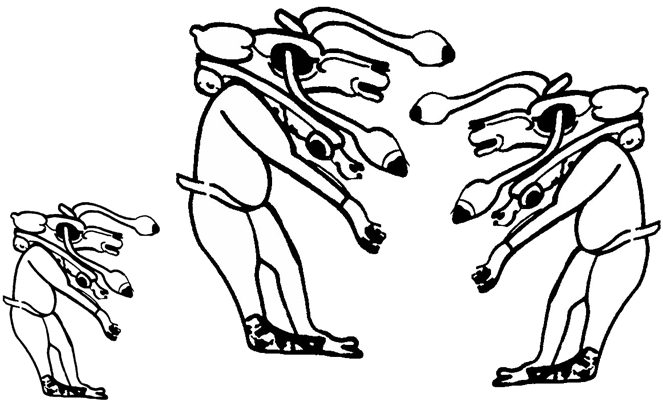
ナシレマ人
Nacirema
☆ナシレマ[Nacirema](「ア メリカン」を逆から読んだ言葉)は、人類学や社会学において、米国市民の行動や社会の諸側面を指す用語として用いられる。この新造語は、米国の人類学者が 自国の文化をより客観的に捉え、それに対するエミック(内面的)な視点とエティック(外面的)な視点を比較できるようにするため、意図的に距離を置く感覚 を生み出すことを目的としている。
| Nacirema
("American" spelled backwards) is a term used in anthropology and
sociology in relation to aspects of the behavior and society of
citizens of the United States. The neologism attempts to create a
deliberate sense of self-distancing in order that American
anthropologists might look at their own culture more objectively, thus
comparing emic and etic views of it. |
ナ
シレマ[Nacirema](「アメリカン」を逆から読んだ言葉)は、人類学や社会学において、米国市民の行動や社会の諸側面を指す用語として用いられる。この新造語は、米国
の人類学者が自国の文化をより客観的に捉え、それに対するエミック(内面的)な視点とエティック(外面的)な視点を比較できるようにするため、意図的に距
離を置く感覚を生み出すことを目的としている。 |
| "Body Ritual among the Nacirema" English Wikisource has original text related to this article: "Body Ritual among the Nacirema" The original use of the term in a social science context was in "Body Ritual among the Nacirema", which satirizes anthropological papers on "other" cultures, and the culture of the United States. Horace Mitchell Miner wrote the paper and originally published it in Volume 58, Issue 3 of American Anthropologist issued June 1956.[1][2][3][4] In the paper, Miner describes the Nacirema, a little-known tribe living in North America. The way in which he writes about the curious practices that this group performs distances readers from the fact that the North American group described actually corresponds to modern-day Americans of the mid-1950s. Miner presents the Nacirema as a group living in the territory between the Canadian Cree, the Yaqui and Tarahumare of Mexico, and the Carib and Arawak of the Antilles. The paper describes the typical Western ideal for oral cleanliness, as well as providing an outside view on hospital care and on psychiatry.[1] The Nacirema are described as having a highly developed market economy that has evolved within a rich natural habitat.[1] Miner's article became a popular work, reprinted in many introductory textbooks[citation needed] and used as an example of process analysis in the literature text The Bedford Reader. The article received the most reprint permission requests of any article in American Anthropologist. Some of the popular aspects of Nacirema culture include: medicine men and women (doctors, psychiatrists, and pharmacists), a charm-box (medicine cabinet), the mouth-rite ritual (brushing teeth), and a cultural hero known as Notgnihsaw (Washington spelled backwards).[1] These ritual purification practices are prescribed as how humans should comport themselves in the presence of sacred things. These sacred aspects are the rituals that the Nacirema partake in throughout their lives.[5] |
「ナシレマ族の身体儀式」 英語版ウィキソースには、この記事に関連する原文がある: 「ナシレマ族の身体儀式」(下記に全文邦訳) 社会科学の文脈でこの用語が最初に用いられたのは、「ナシレマ族の身体儀式」という論文においてであり、これは「他者」の文化や米国の文化に関する人類学 論文を風刺したものである。ホレス・ミッチェル・マイナーが本論文を執筆し、1956年6月発行の『American Anthropologist』第58巻第3号に初掲載した。[1][2][3][4] 論文の中で、マイナーは北米に暮らすあまり知られていない部族、ナシレマ族について記述している。彼がこの集団が行う奇妙な慣習について記述する手法は、 そこに描かれた北米の集団が実際には1950年代半ばの現代アメリカ人に相当するという事実から、読者の注意をそらすものである。 マイナーは、ナシレマ族を、カナダのクリー族、メキシコのヤキ族とタラウマラ族、そしてアンティル諸島のカリブ族とアラワク族の間に位置する地域に住む集 団として提示している。本論文は、口腔衛生に関する典型的な西洋的理想を描くとともに、病院医療や精神医学に対する外部からの視点を提示している。[1] ナシレマ族は、豊かな自然環境の中で発展した高度な市場経済を有していると記述されている。[1] マイナーの論文は人気を博し、多くの入門書に転載され[出典必要]、文学テキスト『ベッドフォード・リーダー』ではプロセス分析の例として用いられた。本 論文は、『American Anthropologist』誌に掲載された論文の中で、最も多くの転載許可申請を受けた。 ナシレマ文化のよく知られた側面には、以下のものが含まれる:呪術師(医師、精神科医、薬剤師)、お守り箱(薬箱)、口清めの儀式(歯磨き)、そしてノト グニサウ(ワシントンの逆読み)として知られる文化的英雄。[1] これらの儀式的な浄化の慣行は、神聖なものに接する際、人間がどのように振る舞うべきかを定めたものである。こうした神聖な側面こそが、ナシレマ人が生涯 を通じて行う儀式である。[5] |
| "The mysterious fall of the Nacirema" In 1972, Neil B. Thompson revisited the Nacirema after the fall of their civilization. Thompson's paper, unlike Miner's, primarily offered a social commentary focused on environmental issues. Thompson paid special attention to the Elibomotua (automobile backwards) cult and its efforts to modify the environment. The high esteem of the cult is demonstrated by the fact that near every population center, when not disturbed by the accumulation of debris, archaeologists have found large and orderly collections of the Elibomotua cult symbol. The vast number of these collections has given us the opportunity to reconstruct with considerable confidence the principal ideas of the cult. The newest symbols seem to have nearly approached the ultimate of the Nacirema's cultural ideal. Their colors, material, and size suggest an enclosed mobile device that corresponds to no color or shape found in nature, although some authorities suggest that, at some early time in the development, the egg may have been the model. The device was provided with its own climate control system as well as a system that screened out many of the shorter rays of the light spectrum.[6] This article is reprinted and appears as the final chapter in an anthology, Nacirema: Readings on American Culture. The volume contains an array of scholarly investigations into American social anthropology as well as one more article in the Nacirema series, by Willard Walker of Wesleyan University: "The Retention of Folk Linguistic Concepts and the ti'ycir (teacher) Caste in Contemporary Nacireman Culture" which laments the corrosive and subjugating ritual of attending sguwlz (schools).[7] On phonology, the anthropologist notes: The vowel system of Secular Nacireman consists of nine phonemically distinct vowels distinguished on the basis of three degrees of tongue height and three degrees of tongue advancement. ... There can be no question as to the validity of these nine vocalic phonemes, for each is attested by a number of minimal pairs elicited independently from several informants. Curiously enough, however, most informants insist that only five vowels exist in the language: these are called ˀey, ˀiy, ˀay, ˀow, and yuw, and are invariably cited in precisely that order. ... The discovery of the widespread myth of the five-vowel system prompted the present writer to conduct a series of intensive interviews and administer questionnaires to a sample of Nacireman informants with a view to mapping the general outlines of Nacireman folk linguistics. This research strategy ultimately provided compelling evidence that it is the ti'yčɨr caste that has disseminated the notion of the five-vowel system.[7] This refers to the traditional enumeration of the 5 vowel letters in the English alphabet (A, E, I, O, and U), which is in contrast to the much larger number (varying between accents) of distinct vowel sounds in the language (see English phonology § Vowels). |
「ナシレマ族の不可解な没落」 1972年、ニール・B・トンプソンは、ナシレマ族の文明が崩壊した後、再び彼らを訪ねた。トンプソンの論文は、マイナーのものとは異なり、主に環境問題 に焦点を当てた社会評論であった。トンプソンは、エリボモトゥア(自動車を逆から読んだ言葉)教団と、その環境改変への取り組みに特に注目した。 このカルトが極めて高く評価されていたことは、ほぼすべての人口密集地の近くで、瓦礫の堆積に邪魔されない限り、考古学者たちがエリボモトゥア教のシンボ ルを大規模かつ整然と集めた遺構を発見している事実からも明らかだ。こうした遺構が膨大な数に上るため、我々はかなりの確信を持って、このカルトの主要な 思想を再構築することができた。最新のシンボルは、ナシレマ人の文化的理想の極致にほぼ近づいているようだ。その色、材質、大きさは、自然界に見られるい かなる色や形にも該当しない、密閉された可動式装置を思わせる。ただし、一部の専門家は、開発の初期段階において、卵がモデルであった可能性を示唆してい る。この装置には、独自の空調システムに加え、光スペクトルの短波長光の多くを遮断するシステムが備えられていた。[6] 本記事は転載されたものであり、アンソロジー『ナシレマ:アメリカ文化に関する論考』の最終章として掲載されている。本書には、アメリカ社会人類学に関す る一連の学術的研究に加え、ナシレマ・シリーズに属するもう一篇の論文、ウェズリーアン大学のウィラード・ウォーカーによる「現代ナシレマ文化における民 俗言語概念の保持と『ティ・サイサー(教師)』カースト」が収録されている。同論文は、スクウルズ(学校)に通うという、人を蝕み隷属させる儀式を嘆いて いる。[7] 音韻論について、この人類学者は次のように述べている: 世俗ナシレマ人の母音体系は、舌の高さの3段階と舌の前出度の3段階に基づいて区別される、9つの音素的に異なる母音から成っている。... これら9つの母音音素の妥当性については疑いの余地がない。なぜなら、それぞれが複数の情報提供者から独立して引き出された多数の最小対によって裏付けら れているからだ。しかし不思議なことに、ほとんどの情報提供者は、この言語には5つの母音しか存在しないと主張する。それらはˀey、ˀiy、ˀay、 ˀow、yuwと呼ばれ、常にその順序で挙げられる。... 5母音体系という広範な通説の発見を受け、筆者はナシレマン語の民俗言語学の概略を把握することを目的として、ナシレマン語話者のサンプルを対象に一連の 集中的なインタビューを実施し、アンケート調査を行った。この研究戦略は最終的に、5母音体系という概念を広めたのはti'yčɨrカーストであるという 説得力のある証拠を提供した。[7] これは、英語アルファベットにおける5つの母音文字(A、E、I、O、U)の伝統的な列挙を指しており、これは(アクセントによって異なるものの)はるかに多い数の異なる母音音(英語の音韻論 § 母音を参照)とは対照的である。 |
| Nacirema vs. Teamsterville Gerry Philipsen (1992) studies what he terms "speech codes" among the Nacirema, which he contrasts with the speech codes of another semi-fictionalized group of Americans, the inhabitants of Teamsterville culture. His Nacirema comprises primarily middle-class west-coast Americans.[8] |
ナシレマ対チームスタービル ゲリー・フィリップセン(1992)は、ナシレマの間で見られる、彼が「スピーチ・コード」と呼ぶものを研究しており、これを、別の半架空のアメリカ人集 団であるチームスタービル文化の住民たちのスピーチ・コードと対比させている。彼の描くナシレマは、主に西海岸の中流階級のアメリカ人で構成されている。 [8] |
| See also Iracema – 1865 indigenous novel by José de Alencar, with a character named after the anagram of "America" Motel of the Mysteries (1979), an illustrated book by David Macaulay depicting burial customs of the "Yanks of East Usa" |
関連項目 『イラセマ』 – ホセ・デ・アレンカルによる1865年の先住民小説。「アメリカ」のアナグラムにちなんで名付けられた登場人物が登場する 『ミステリー・モーテル』(1979年) – デビッド・マコーレーによる絵本。「東アメリカのヤンキー」たちの埋葬の習わしを描いた作品 |
| References Notes 01. Miner, H. M. (June 1956). "Body Ritual Among the Nacirema". American Anthropologist. 58 (3): 503–507. doi:10.1525/aa.1956.58.3.02a00080. 2. Dimsdale, Joel E. (2001). "The Nacirema Revisited". Annals of Behavioral Medicine. 23 (1). Psychology and Behavioral Sciences Collection: 75–6. doi:10.1207/S15324796ABM2301_11. PMID 11302359. S2CID 3673658. 3. Johnson, Sylvester A. (2012). "The Rise Of The Nacirema And The Descent Of European Man: A Response To Manuel A. Vásquez's More Than Belief". Method & Theory in the Study of Religion. 24 (4/5). Religion and Philosophy Collection: 464–481. doi:10.1163/15700682-12341244. 4. Miner, Horace (1956). "Body Ritual among the Nacirema". American Anthropologist. 58 (3): 503–507. doi:10.1525/aa.1956.58.3.02a00080. ISSN 1548-1433. 5. Jones, Robert Alun (1980). "Myth And Symbol Among The Nacirema Tsigoloicos: A Fragment". American Sociologist. 15 (4): 207–212. 6. Thompson, Neil B. (1 January 1972). "The mysterious fall of the Nacirema" (PDF). Natural History. 81 (11): 412–7. Archived from the original (PDF) on 25 February 2021. Retrieved 17 July 2016. 7. Walker, Willard (1 February 1970). "The Retention of Folk Linguistic Concepts and the ti'yčɨr Caste in Contemporary Nacireman Culture". American Anthropologist. 72 (1): 102–105. doi:10.1525/aa.1970.72.1.02a00130. 8. Philipsen, Gerry (1992). Speaking Culturally Explorations in Social Communication. SUNY. ISBN 978-0-7914-1163-6. |
参考文献 注 01. Miner, H. M. (1956年6月). 「ナシレマ族の身体儀式」. 『American Anthropologist』. 58 (3): 503–507. doi:10.1525/aa.1956.58.3.02a00080. 2. Dimsdale, Joel E. (2001). 「ナシレマ再考」. 『Annals of Behavioral Medicine』. 23 (1). 心理学・行動科学コレクション: 75–6. doi:10.1207/S15324796ABM2301_11. PMID 11302359. S2CID 3673658. 3. ジョンソン, シルベスター・A. (2012). 「ナシレマ族の台頭とヨーロッパ人の没落:マヌエル・A・バスケスの『More Than Belief』への応答」. 『Method & Theory in the Study of Religion』. 24 (4/5). 宗教・哲学コレクション: 464–481. doi:10.1163/15700682-12341244. 4. マイナー, ホレス (1956). 「ナシレマ族の身体儀式」. 『アメリカ人類学雑誌』. 58 (3): 503–507. doi:10.1525/aa.1956.58.3.02a00080. ISSN 1548-1433. 5. ジョーンズ、ロバート・アルン(1980年)。「ナシレマ・ツィゴロイコス族における神話と象徴:断片」。『アメリカ社会学者』。15巻(4号): 207–212. 6. トンプソン, ニール・B. (1972年1月1日). 「ナシレマ族の謎の没落」 (PDF). 『ナチュラル・ヒストリー』. 81 (11): 412–7. 2021年2月25日にオリジナル (PDF) からアーカイブされた。2016年7月17日閲覧。 7. ウォーカー、ウィラード(1970年2月1日)。「民間言語概念の保持と現代ナシレマ文化におけるティイチュル・カースト」。『アメリカン・アンソロポロ ジスト』。72 (1): 102–105. doi:10.1525/aa.1970.72.1.02a00130. 8. フィリップセン, ゲリー (1992). 『Speaking Culturally: Explorations in Social Communication』. SUNY. ISBN 978-0-7914-1163-6. |
| Further reading Burde, Mark (2014). "Social-Science Fiction: The Genesis and Legacy of Horace Miner's 'Body Ritual among the Nacirema'". American Anthropologist. 116 (3): 549–61. Hagan, Helene E. (August 1998). "The People of Niram". Coastal Post. Marin County, California. Spradley, James P.; Rynkiewich, Michael A., eds. (1975). The Nacirema: Readings on American Culture. Boston: Little Brown and Co. Philipsen, Gerry (1992). Speaking Culturally: Explorations in Social Communication. SUNY Press. ISBN 0-7914-1164-8. |
参考文献 バーデ、マーク(2014)。「社会科学フィクション:ホレス・マイナーの『ナシレマ族の身体儀式』の起源と遺産」。『アメリカン・アンソロポロジスト』。116 (3): 549–61。 ヘイガン、ヘレン・E.(1998年8月)。「ニラムの民」。『コースト・ポスト』。カリフォルニア州マリン郡。 スプラドリー、ジェームズ・P.; リンキエウィッチ、マイケル・A.(編)(1975)。『ナシレマ:アメリカ文化に関する読本』。ボストン:リトル・ブラウン社。 フィリップセン、ゲリー(1992)。『文化的に語る:社会コミュニケーションの探求』。SUNYプレス。ISBN 0-7914-1164-8。 |
| External links Body Ritual among the Nacirema (PDF) from American Anthropologist, June 1956 Body Ritual among the Nacirema in Wikisource format. The Mysterious Fall of the Nacirema from Natural History, December 1972 (Internet Archive Aug 07, 2004 version) "Battle RItual among the Nacirema" by Finn Johannson at Ethnography.com (2015) Who are the Nacirema from Living Anthropologically, (2013, revised 2018) |
External links Body Ritual among the Nacirema (PDF) from American Anthropologist, June 1956 Body Ritual among the Nacirema in Wikisource format. The Mysterious Fall of the Nacirema from Natural History, December 1972 (Internet Archive Aug 07, 2004 version) "Battle RItual among the Nacirema" by Finn Johannson at Ethnography.com (2015) Who are the Nacirema from Living Anthropologically, (2013, revised 2018) |
|
English Wikisource has original text related to this article: "Body Ritual among the Nacirema" |
英語版ウィキソースには、この記事に関連する原文がある: 「ナシレマ族の身体儀式」(下記に翻訳) |
| https://en.wikipedia.org/wiki/Nacirema |
☆
★ "Body Ritual among the Nacirema" 「ナシレマ族の身体儀式」(下記に翻訳)
| Body Ritual among the Nacirema by Horace Mitchell Miner This journal article satirizes anthropological papers on "other" cultures, and the culture of the United States. Published in American Anthropologist, vol 58, June 1956. pp. 503–507. |
ナシレマ族の身体儀式 ホレス・ミッチェル・マイナー著 本論文は、「他者」の文化に関する人類学論文と、米国文化を風刺したものである。『American Anthropologist』第58巻、1956年6月号、503–507ページに掲載された。 |
| Body Ritual among the Nacirema HORACE MINER University of Michigan |
ナシレマ族の身体儀式 ホレス・マイナー ミシガン大学 |
| The
anthropologist has become so familiar with the diversity of ways in
which different people behave in similar situations that he is not apt
to be surprised by even the most exotic customs. In fact, if all of the
logically possible combinations of behavior have not been found
somewhere in the world, he is apt to suspect that they must be present
in some yet undescribed tribe. The point has, in fact, been expressed
with respect to clan organization by Murdock. In this light, the
magical beliefs and practices of the Nacirema present such unusual
aspects that it seems desirable to describe them as an example of the
extremes to which human behavior can go. |
人類学者は、似たような状況下で人々が示す行動の多様性に
すっかり慣れ親しんでいるため、たとえ最も風変わりな習慣に直面しても、驚くことはほとんどない。実際、論理的に考えられる行動の組み合わせがすべて世界
のどこかで発見されていないとすれば、彼はそれらがまだ記述されていない部族の中に存在しているに違いないと疑う傾向にある。この点は、実際、マードック
によって氏族組織に関して述べられている。この観点からすれば、ナシレマ族の魔法的な信仰や慣習は、あまりにも特異な側面を呈しているため、人間の行動が
いかに極端な方向へと向かう可能性があるかという一例として記述するのが望ましいと思われる。 |
| Professor
Linton first brought the ritual of the Nacirema to the attention of
anthropologists twenty years ago, but the culture of this people is
still very poorly understood. They are a North American group living in
the territory between the Canadian Cree, the Yaqui and Tarahumare of
Mexico, and the Carib and Arawak of the Antilles. Little is known of
their origin, although tradition states that they came from the east.
According to Nacirema mythology, their nation was originated by a
culture hero, Notgnihsaw, who is otherwise known for two great feats of
strength—the throwing of a piece of wampum across the river Pa-To-Mac
and the chopping down of a cherry tree in which the Spirit of Truth
resided. |
リントン教授は20年前に初めてナシレマ族の儀式を人類学
者の注目にさらしたが、この民族の文化については依然としてほとんど解明されていない。彼らは北米に暮らす民族であり、カナダのクリー族、メキシコのヤキ
族とタラウマラ族、そしてアンティル諸島のカリブ族とアラワク族の間に位置する地域に居住している。彼らの起源についてはほとんど知られていないが、伝承
によれば彼らは東からやって来たとされている。ナシレマの神話によれば、彼らの国家は文化英雄ノトグニサウによって創設された。彼は、パ・ト・マック川を
横切ってワンパムを投げ渡したことと、真実の精霊が宿る桜の木を切り倒したことという、二つの偉大な力業で知られている。 |
| Nacirema
culture is characterized by a highly developed market economy which has
evolved in a rich natural habitat. While much of the people's time is
devoted to economic pursuits, a large part of the fruits of these
labors and a considerable portion of the day are spent in ritual
activity. The focus of this activity is the human body, the appearance
and health of which loom as a dominant concern in the ethos of the
people. While such a concern is certainly not unusual, its ceremonial
aspects and associated philosophy are unique. |
ナシレマ文化は、豊かな自然環境の中で発展した高度な市場
経済を特徴としている。人々の時間の多くは経済活動に費やされているが、その労働の成果の大部分と一日のかなりの時間は、儀式的な活動に充てられている。
この活動の焦点は人体にあり、その外見と健康は、人々の気風において最も重要な関心事として位置づけられている。このような関心自体は決して珍しいもので
はないが、その儀礼的な側面と関連する哲学は独特である。 |
| The
fundamental belief underlying the whole system appears to be that the
human body is ugly and that its natural tendency is to debility and
disease. Incarcerated in such a body, man's only hope is to avert these
characteristics through the use of ritual and ceremony. Every household
has one or more shrines devoted to this purpose. The more powerful
individuals in the society have several shrines in their houses and, in
fact, the opulence of a house is often referred to in terms of the
number of such ritual centers it possesses. Most houses are of wattle
and daub construction, but the shrine rooms of the more wealthy are
walled with stone. Poorer families imitate the rich by applying pottery
plaques to their shrine walls. |
この制度全体を支える根本的な信念は、人間の体は醜く、そ の本質は衰弱や病に向かっているというものであるようだ。そのような体に閉じ込められた人間にとって、唯一の望みは、儀式や儀礼を通じてこうした性質を回 避することにある。どの家庭にも、この目的のために設けられた祭壇が一つ以上ある。社会的に地位の高い者ほど、家の中に複数の祭壇を構えており、実際、家 の豪華さは、そうした儀式の場がいくつあるかによって測られることが多い。ほとんどの家は竹と泥で造られているが、裕福な家の祭壇室は石壁で囲まれてい る。貧しい家庭は、祭壇の壁に陶器のプレートを貼り付けることで、裕福な家庭を真似ている。 |
| While
each family has at least one such shrine, the rituals associated with
it are not family ceremonies but are private and secret. The rites are
normally only discussed with children, and then only during the period
when they are being initiated into these mysteries. I was able,
however, to establish sufficient rapport with the natives to examine
these shrines and to have the rituals described to me. |
どの家庭にも少なくとも一つはこうした神棚があるが、それ
に関連する儀式は家族行事ではなく、私的で秘められたものである。通常、その儀式について語られるのは子供たちに対してのみであり、それも彼らがその神秘
の教えを受け継ぐための儀式を受けている期間に限られる。しかし、私は現地の人々と十分な信頼関係を築くことができ、これらの神棚を調査し、儀式の詳細を
説明してもらうことができた。 |
| The
focal point of the shrine is a box or chest which is built into the
wall. In this chest are kept the many charms and magical potions
without which no native believes he could live. These preparations are
secured from a variety of specialized practitioners. The most powerful
of these are the medicine men, whose assistance must be rewarded with
substantial gifts. However, the medicine men do not provide the
curative potions for their clients, but decide what the ingredients
should be and then write them down in an ancient and secret language.
This writing is understood only by the medicine men and by the
herbalists who, for another gift, provide the required charm. |
神棚の中心となるのは、壁に埋め込まれた箱や箪笥である。
この箪笥の中には、先住民にとってなくてはならないと信じられている数多くの護符や魔法の薬が収められている。これらの調合薬は、様々な専門の術者から入
手される。中でも最も強力な存在が呪術師であり、彼らの助力には多額の贈り物で報いる必要がある。しかし、呪術師は依頼人に治療用の薬を提供するのではな
く、材料を決定し、それを古くから伝わる秘密の言語で書き記すだけだ。この文字は、呪術師と、別の贈り物と引き換えに必要な護符を提供する薬草師だけが理
解できる。 |
| The
charm is not disposed of after it has served its purpose, but is placed
in the charmbox of the household shrine. As these magical materials are
specific for certain ills, and the real or imagined maladies of the
people are many, the charm-box is usually full to overflowing. The
magical packets are so numerous that people forget what their purposes
were and fear to use them again. While the natives are very vague on
this point, we can only assume that the idea in retaining all the old
magical materials is that their presence in the charm-box, before which
the body rituals are conducted, will in some way protect the worshiper. |
お守りは、その役目を終えた後も捨てられることはなく、家
内の神棚にあるお守り箱に納められる。こうした魔術的な品々は特定の病気に特化しているが、人々の抱える実際の、あるいは想像上の病は多岐にわたるため、
お守り箱はたいてい溢れんばかりに満たされている。魔法の小包はあまりにも多いため、人々はそれらが何のためにあったのか忘れてしまい、再び使うことを恐
れるようになる。現地の人々はこの点について非常に曖昧だが、古い魔法の材料をすべて保管しておくのは、身体の儀式が行われるお守り箱の中にそれらが存在
することで、何らかの形で崇拝者を守ってくれるという考えがあるからだと推測するしかない。 |
| Beneath
the charm-box is a small font. Each day every member of the family, in
succession, enters the shrine room, bows his head before the charm-box,
mingles different sorts of holy water in the font, and proceeds with a
brief rite of ablution. The holy waters are secured from the Water
Temple of the community, where the priests conduct elaborate ceremonies
to make the liquid ritually pure. |
お札箱の下には小さな水盤が置かれている。毎日、家族全員
が順番に神殿に入り、お札箱の前で頭を下げ、水盤に様々な種類の聖水を混ぜ合わせ、簡単な清めの儀式を行う。これらの聖水は、共同体の「水の神殿」から調
達されたもので、そこでは僧侶たちが、その水を儀式的に清めるために厳かな儀式を執り行っている。 |
| In the hierarchy of magical
practitioners, and below the medicine men in prestige, are specialists
whose designation is best translated as "holy-mouth-men." The Nacirema
have an almost pathological horror of and fascination with the mouth,
the condition of which is believed to have a supernatural influence on
all social relationships. Were it not for the rituals of the mouth,
they believe that their teeth would fall out, their gums bleed, their
jaws shrink, their friends desert them, and their lovers reject them.
They also believe that a strong relationship exists between oral and
moral characteristics. For example, there is a ritual ablution of the
mouth for children which is supposed to improve their moral fiber. |
呪術師たちの階層において、呪術師に次ぐ地位にあるのは、「聖なる口を
持つ者」と訳すのが最も適切な専門家たちだ。ナシレマ族は、口に対して病的なほどの恐怖と魅了を抱いており、口の状態があらゆる社会的関係に超自然的な影
響を及ぼすと信じられている。もし口に関する儀式がなければ、歯は抜け落ち、歯茎は出血し、顎は萎縮し、友人は去り、恋人は拒絶するだろうと彼らは信じて
いる。また、彼らは口に関する特性と道徳的特性との間に強い関連性があると信じている。例えば、子供たちのための口内の清めの儀式があり、それは彼らの道
徳心を高めるものとされている。 |
| The daily body ritual performed
by everyone includes a mouth-rite. Despite the fact that these people
are so punctilious about care of the mouth, this rite involves a
practice which strikes the uninitiated stranger as revolting. It was
reported to me that the ritual consists of inserting a small bundle of
hog hairs into the mouth, along with certain magical powders, and then
moving the bundle in a highly formalized series of gestures. |
誰もが毎日行う身体の儀式には、口に関する儀式が含まれている。彼らは
口元のケアにこれほど几帳面であるにもかかわらず、この儀式には、事情を知らない部外者には不快に映る慣習が含まれている。伝えられるところによると、そ
の儀式とは、豚の毛を束ねた小さな束と、ある種の魔法の粉を口に入れ、その束を極めて形式ばった一連の動作で動かすというものだ。 |
| In addition to the private
mouth-rite, the people seek out a holy-mouth-man once or twice a year.
These practitioners have an impressive set of paraphernalia, consisting
of a variety of augers, awls, probes, and prods. The use of these items
in the exorcism of the evils of the mouth involves almost unbelievable
ritual torture of the client. The holy-mouth-man opens the client's
mouth and, using the above mentioned tools, enlarges any holes which
decay may have created in the teeth. Magical materials are put into
these holes. If there are no naturally occurring holes in the teeth,
large sections of one or more teeth are gouged out so that the
supernatural substance can be applied. In the client's view, the
purpose of these ministrations is to arrest decay and to draw friends.
The extremely sacred and traditional character of the rite is evident
in the fact that the natives return to the holy-mouth-men year after
year, despite the fact that their teeth continue to decay. |
個人の口術に加え、人々は年に1、2回、聖なる口術師を訪ねる。これら
の術師は、様々なドリル、千枚通し、探針、突棒などからなる、見事な道具一式を揃えている。口の悪霊を祓うためにこれらの道具を用いる際、依頼人に対して
は、ほとんど信じがたいほどの儀式的な拷問が加えられる。聖なる口師は依頼者の口を開け、前述の道具を用いて、虫歯によって歯に生じた穴を拡大する。そし
て、その穴の中に魔法の材料を詰め込む。もし歯に自然の穴がない場合は、超自然的な物質を注入できるよう、1本または複数の歯から大きな部分を削り取る。
依頼者にとって、こうした処置の目的は、虫歯の進行を食い止め、友人を引き寄せることにある。この儀式の極めて神聖かつ伝統的な性格は、歯が腐り続けてい
るにもかかわらず、先住民たちが年々「聖なる口の人」のもとを訪れるという事実からも明らかだ。 |
| It is to be hoped that, when a
thorough study of the Nacirema is made, there will be careful inquiry
into the personality structure of these people. One has but to watch
the gleam in the eye of a holy-mouth-man, as he jabs an awl into an
exposed nerve, to suspect that a certain amount of sadism is involved.
If this can be established, a very interesting pattern emerges, for
most of the population shows definite masochistic tendencies. It was to
these that Professor Linton referred in discussing a distinctive part
of the daily body ritual which is performed only by men. This part of
the rite includes scraping and lacerating the surface of the face with
a sharp instrument. Special women's rites are performed only four times
during each lunar month, but what they lack in frequency is made up in
barbarity. As part of this ceremony, women bake their heads in small
ovens for about an hour. The theoretically interesting point is that
what seems to be a preponderantly masochistic people have developed
sadistic specialists. |
ナシレマ族について徹底的な研究が行われる際には、この人々の性格構造
についても綿密な調査がなされることを期待したい。聖なる口を持つ男が、露出した神経に千枚通しを突き刺す際の目の輝きを見れば、そこにはある種のサディ
ズムが関わっているのではないかと疑わざるを得ない。もしこれが立証されれば、非常に興味深いパターンが浮かび上がってくるだろう。というのも、この民族
の大部分には明確なマゾヒスティックな傾向が見られるからだ。リントン教授が、男性のみが行う日常的な身体儀式の特異な部分について論じた際、言及してい
たのはまさにこれらの人々であった。儀式のこの部分には、鋭利な道具を用いて顔の表面を削り、傷つける行為が含まれる。女性専用の儀式は、各太陰月の間に
わずか4回しか行われないが、その頻度の少なさは残虐性によって補われている。この儀式の一環として、女性たちは小さなオーブンの中で約1時間、頭を焼く
のだ。理論的に興味深い点は、一見すると圧倒的にマゾヒスティックな民族であるように見える彼らが、サディスティックな専門家を生み出しているということ
だ。 |
| The medicine men have an imposing temple, or latipso, in every community of any size. The more elaborate ceremonies required to treat very sick patients can only be performed at this temple. These ceremonies involve not only the thaumaturge but a permanent group of vestal maidens who move sedately about the temple chambers in distinctive costume and headdress. | 呪術師たちは、ある程度の規模を持つあらゆる集落に、威厳ある神殿、す
なわちラティプソを構えている。重病の患者を治療するために必要な、より大規模な儀式は、この神殿でのみ執り行われる。これらの儀式には、呪術師だけでな
く、独特の衣装と頭飾りを身につけ、神殿の部屋を静かに動き回る常駐の巫女たちも参加する。 |
| The latipso ceremonies are so
harsh that it is phenomenal that a fair proportion of the really sick
natives who enter the temple ever recover. Small children whose
indoctrination is still incomplete have been known to resist attempts
to take them to the temple because "that is where you go to die."
Despite this fact, sick adults are not only willing but eager to
undergo the protracted ritual purification, if they can afford to do
so. No matter how ill the supplicant or how grave the emergency, the
guardians of many temples will not admit a client if he cannot give a
rich gift to the custodian. Even after one has gained and survived the
ceremonies, the guardians will not permit the neophyte to leave until
he makes still another gift. |
ラティプソの儀式は極めて過酷なため、神殿に入った重病の先住民のう ち、かなりの割合が回復するのは驚くべきことだ。まだ教化が不十分な幼い子供たちは、「そこは死ぬために行く場所だ」と言って、神殿へ連れて行こうとする 試みに抵抗することが知られている。それにもかかわらず、病気の大人たちは、経済的な余裕さえあれば、長期にわたる浄化の儀式を受けることを進んで受け入 れるだけでなく、むしろそれを熱望している。祈願者がどれほど病状が重くとも、緊急事態がいかに深刻であろうとも、多くの神殿の守護者たちは、管理人に多 額の献金を提供できない者を入場させない。儀式を乗り越えて生き延びた後であっても、守護者たちは、新参者がさらに別の献金を行うまで、その場を離れるこ とを許さない。 |
| The supplicant entering the
temple is first stripped of all his or her clothes. In everyday life
the Nacirema avoids exposure of his body and its natural functions.
Bathing and excretory acts are performed only in the secrecy of the
household shrine, where they are ritualized as part of the body-rites.
Psychological shock results from the fact that body secrecy is suddenly
lost upon entry into the latipso. A man, whose own wife has never seen
him in an excretory act, suddenly finds himself naked and assisted by a
vestal maiden while he performs his natural functions into a sacred
vessel. This sort of ceremonial treatment is necessitated by the fact
that the excreta are used by a diviner to ascertain the course and
nature of the client's sickness. Female clients, on the other hand,
find their naked bodies are subjected to the scrutiny, manipulation and
prodding of the medicine men. |
神殿に入る参拝者は、まずすべての衣服を脱がされる。ナシレマ人は日常
生活において、自身の身体やその自然な機能を見せることを避ける。入浴や排泄行為は、家内の神棚という密室でのみ行われ、そこでは身体儀礼の一部として儀
式化されている。ラティプソに入ると、身体の秘匿性が突然失われるという事実から、心理的な衝撃が生じる。排泄行為を妻に一度も見たことのない男が、突然
裸になり、聖なる器に向かって自然の機能を果たす際、巫女に介助されることになるのだ。このような儀式的な扱いは、排泄物が占い師によって、依頼人の病気
の経過や性質を確かめるために用いられるという事実によって必要とされる。一方、女性の依頼者は、自身の裸体が呪術師による精査、操作、そして触診にさら
されることになる。 |
| Few supplicants in the temple
are well enough to do anything but lie on their hard beds. The daily
ceremonies, like the rites of the holy-mouth-men, involve discomfort
and torture. With ritual precision, the vestals awaken their miserable
charges each dawn and roll them about on their beds of pain while
performing ablutions, in the formal movements of which the maidens are
highly trained. At other times they insert magic wands in the
supplicant's mouth or force him to eat substances which are supposed to
be healing. From time to time the medicine men come to their clients
and jab magically treated needles into their flesh. The fact that these
temple ceremonies may not cure, and may even kill the neophyte, in no
way decreases the people's faith in the medicine men. |
神殿にいる参拝者のうち、硬い寝台に横たわっている以外に何かできるほ
ど体調の良い者はほとんどいない。聖なる口を持つ者たちの儀式のような日々の儀式は、不快感や苦痛を伴うものだ。巫女たちは儀式的な正確さをもって、毎
朝、惨めな身の上の者たちを起こし、清めの儀式を行いながら、痛みを伴う寝台の上で彼らを転がし回す。その形式ばった動作は、巫女たちが高度な訓練を受け
ているものだ。それ以外の時には、祈願者の口に魔法の杖を差し込んだり、治癒効果があるとされる物質を無理やり食べさせたりする。時折、呪術師たちが依頼
者の元を訪れ、魔法をかけた針をその肉体に突き刺す。こうした神殿の儀式が治癒をもたらさないばかりか、新参者を死に至らしめることさえあるという事実
が、人々の呪術師への信仰を微塵も損なうことはない。 |
| There remains one other kind of
practitioner, known as a "listener." This witchdoctor has the power to
exorcise the devils that lodge in the heads of people who have been
bewitched. The Nacirema believe that parents bewitch their own
children. Mothers are particularly suspected of putting a curse on
children while teaching them the secret body rituals. The counter-magic
of the witchdoctor is unusual in its lack of ritual. The patient simply
tells the "listener" all his troubles and fears, beginning with the
earliest difficulties he can remember. The memory displayed by the
Nacirema in these exorcism sessions is truly remarkable. It is not
uncommon for the patient to bemoan the rejection he felt upon being
weaned as a babe, and a few individuals even see their troubles going
back to the traumatic effects of their own birth. |
もう一つ、「聞き手」と呼ばれる種類の術者がいる。この呪術師には、呪
いをかけられた人々の頭の中に潜む悪魔を祓う力がある。ナシレマ族は、親が自分の子供に呪いをかけるものと信じている。特に母親は、子供たちに秘密の身体
儀式を教える際に呪いをかけるのではないかと疑われている。この呪術師の解呪術は、儀式を伴わないという点で特異である。患者は単に「聞き手」に、自分が
覚えている限り最も古い困難から順に、すべての悩みや恐怖を打ち明けるだけだ。こうした除霊の席でナシレマ人が示す記憶力は、実に驚くべきものである。患
者が乳離れした際に感じた拒絶感を嘆くことも珍しくなく、中には自身の誕生時のトラウマにまで遡って悩みを語る者さえいる。 |
| In conclusion, mention must be
made of certain practices which have their base in native esthetics but
which depend upon the pervasive aversion to the natural body and its
functions. There are ritual fasts to make fat people thin and
ceremonial feasts to make thin people fat. Still other rites are used
to make women's breasts larger if they are small, and smaller if they
are large. General dissatisfaction with breast shape is symbolized in
the fact that the ideal form is virtually outside the range of human
variation. A few women afflicted with almost inhuman hyper-mammary
development are so idolized that they make a handsome living by simply
going from village to village and permitting the natives to stare at
them for a fee. |
結論として、土着の美学に根ざしつつも、自然な身体とその機能に対する
広範な嫌悪感に依拠している特定の慣習について言及せねばならない。太った人を痩せさせるための断食の儀式もあれば、痩せた人を太らせるための祝宴もあ
る。さらに、女性の胸が小さい場合は大きくし、大きい場合は小さくするための儀式も存在する。乳房の形状に対する一般的な不満は、その理想形が事実上、人
間の変異の範囲外にあるという事実によって象徴されている。ほとんど人間離れした過度の乳房発達に悩まされている少数の女性たちは、村から村へと巡り、現
地の人々に料金を払わせて自分たちを凝視させるだけで、かなりの収入を得ているほど崇拝されている。 |
| Reference has already been made
to the fact that excretory functions are ritualized, routinized, and
relegated to secrecy. Natural reproductive functions are similarly
distorted. Intercourse is taboo as a topic and scheduled as an act.
Efforts are made to avoid pregnancy by the use of magical materials or
by limiting intercourse to certain phases of the moon. Conception is
actually very infrequent. When pregnant, women dress so as to hide
their condition. Parturition takes place in secret, without friends or
relatives to assist, and the majority of women do not nurse their
infants. |
排泄機能が儀式化され、定型化され、秘密裏に行われることについては、
すでに触れた。自然な生殖機能も同様に歪められている。性交は話題としてタブーとされ、行為としては予定されたものとなっている。妊娠を避けるために、魔
術的な材料を用いたり、月相の特定の時期にのみ性交を行ったりする努力がなされる。実際に妊娠することは極めて稀である。妊娠すると、女性は自分の状態を
隠すような服装をする。出産は秘密裏に行われ、友人や親族の助けもなく、大多数の女性は乳児に授乳しない。 |
| Our review of the ritual life of the Nacirema has certainly shown them to be a magic-ridden people. It is hard to understand how they have managed to exist so long under the burdens which they have imposed upon themselves. But even such exotic customs as these take on real meaning when they are viewed with the insight provided by Malinowski when he wrote: | ナシレマ族の儀式生活に関する我々の考察は、彼らが確かに魔術に支配さ
れた民族であることを示している。彼らが自らに課した重荷の下で、いかにしてこれほど長く生き延びてきたのか、理解に苦しむ。しかし、こうした風変わりな
習俗でさえ、マリンノフスキーが次のように記した洞察を通して見れば、真の意味を帯びてくるのだ。 |
| Looking from far and above, from
our high places of safety in the developed civilization, it is easy to
see all the crudity and irrelevance of magic. But without its power and
guidance early man could not have mastered his practical difficulties
as he has done, nor could man have advanced to the higher stages of
civilization. |
遠く離れた高みから、つまり発展した文明という安全な場所から見下ろせ
ば、魔法の未熟さや無意味さは一目瞭然だ。しかし、その力と導きがなければ、初期の人類はこれほどまでに現実的な困難を克服することはできなかっただろう
し、人類が文明のより高い段階へと進むこともできなかったはずだ。 |
| REFERENCES CITED - Linton, Ralph 1936 The Study of Man. New York, D. Appleton Century Co. - Malinowski, Bronislaw 1948 Magic, Science, and Religion. Glencoe, The Free Press. - Murdock, George P. 1949 Social Structure. New York, The Macmillan Co. |
引用文献 - リントン、ラルフ 1936年 『人間研究』. ニューヨーク、D. アプルトン・センチュリー社. - マリノフスキー、ブロニスラフ 1948年 『魔術・科学・宗教』. グレンコー、フリー・プレス社. - マードック、ジョージ・P. 1949年 『社会構造』. ニューヨーク、マクミラン社. |
| This work is in the public domain worldwide because it has been so released by the copyright holder. |
この作品は、著作権者によってパブリックドメインとして公開されているため、世界中でパブリックドメインとなっている。 |
| https://en.wikisource.org/wiki/Body_Ritual_among_the_Nacirema |
☆
リ ンク
文 献
そ の他の情報
CC
Copyleft,
CC, Mitzub'ixi Quq Chi'j, 1996-2099
