
ネアンデルタール絶滅
Neanderthal extinction
Neanderthal distribution
☆ネ アンデルタール人は約4万年前に絶滅した。絶滅の原因については、暴力、ネアンデルタール人が免疫を持っていなかった現代人からの病気の伝染、競争的入れ 替わり、初期現代人集団との交配による絶滅、自然災害、気候変動、近親交配不況などの仮説がある。複数の要因が、すでに少人数であったネアンデルタール人 を絶滅させたと考えられる。
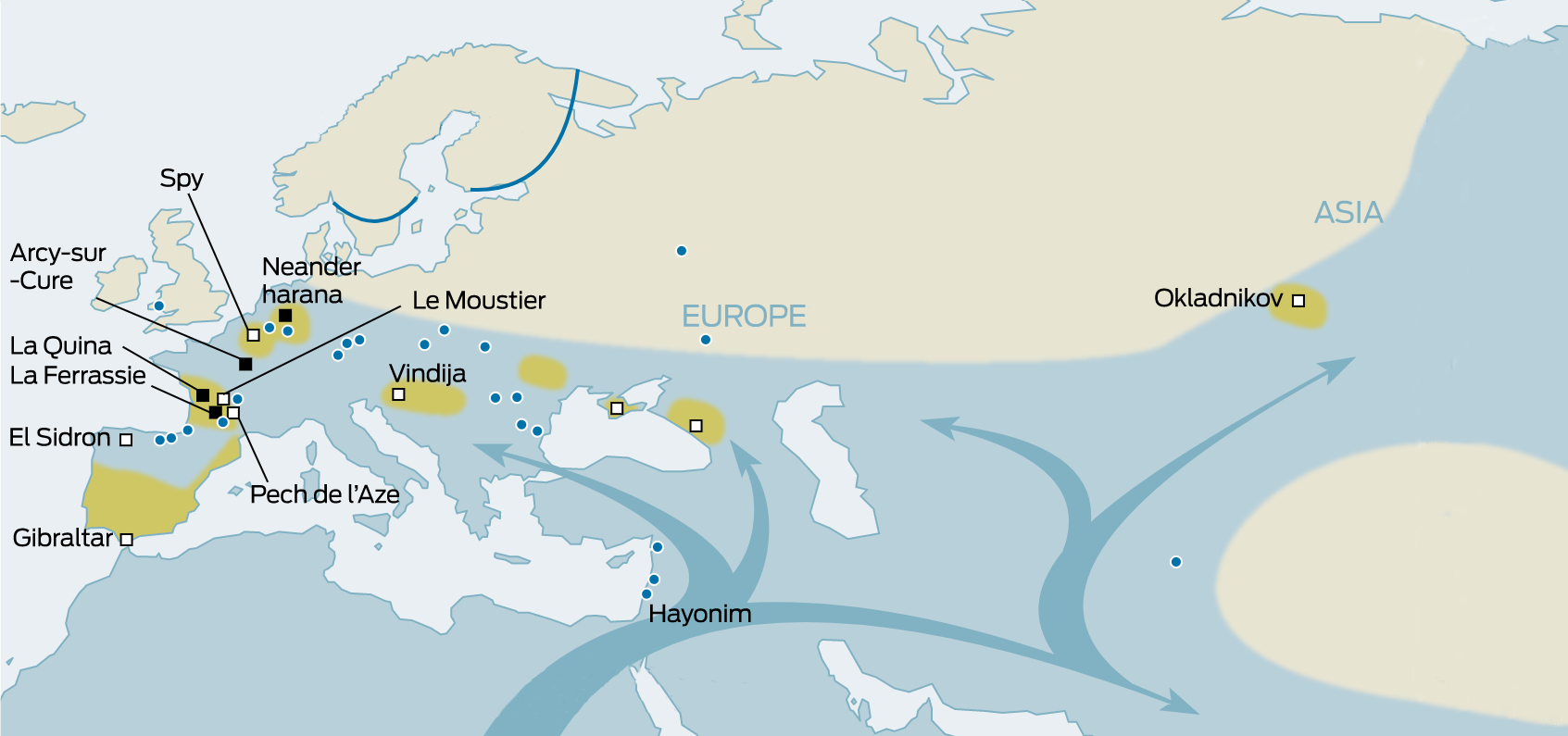
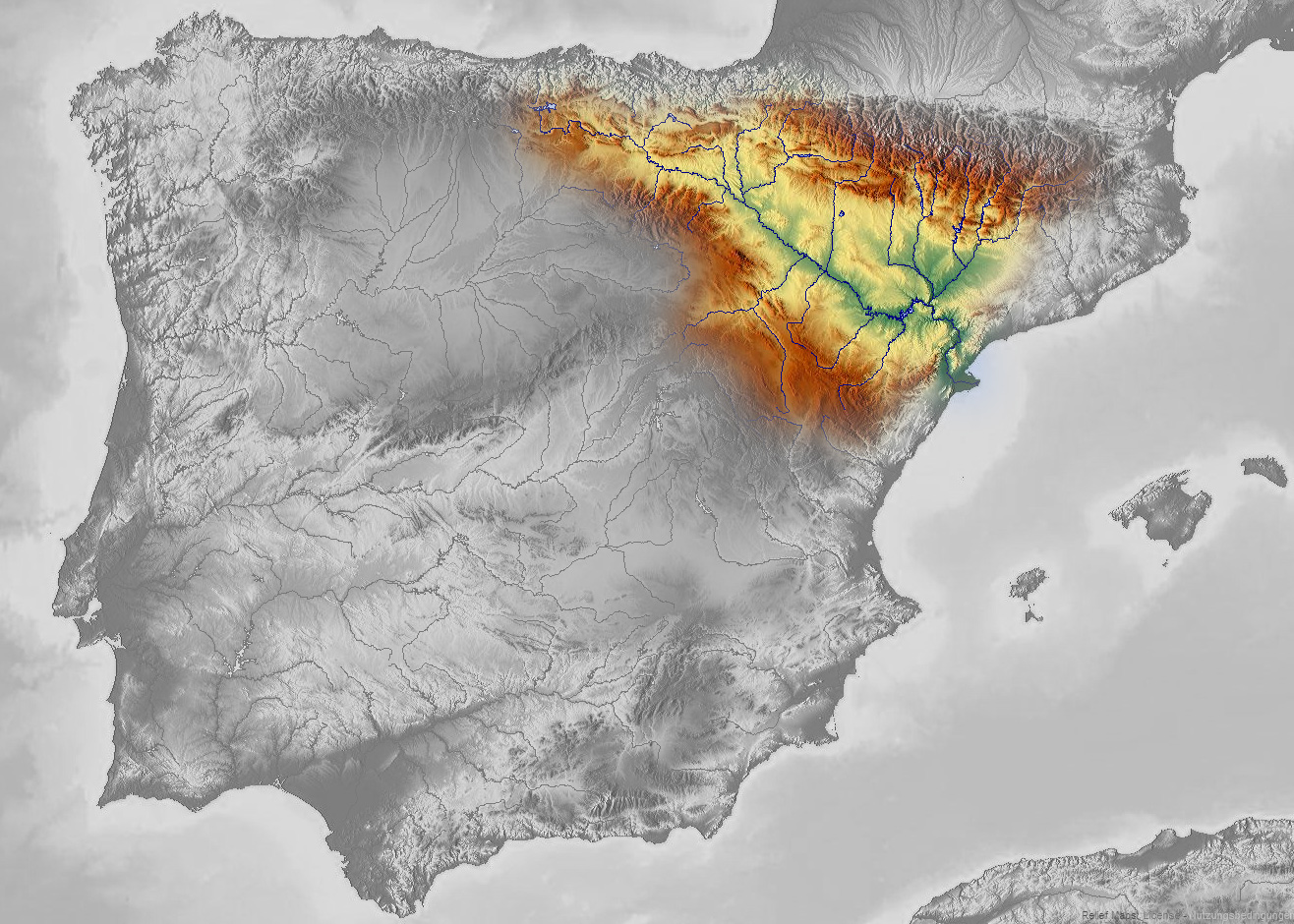
Replacement of Neanderthals by early modern humans./ Map emphasising the Ebro River in northern Spain
| Neanderthals became extinct around
40,000 years ago. Hypotheses on the causes of the extinction include
violence, transmission of diseases from modern humans which
Neanderthals had no immunity to, competitive replacement, extinction by
interbreeding with early modern human populations, natural
catastrophes, climate change and inbreeding depression. It is likely
that multiple factors caused the demise of an already low population. |
ネ
アンデルタール人は約4万年前に絶滅した。絶滅の原因については、暴力、ネアンデルタール人が免疫を持っていなかった現代人からの病気の伝染、競争的入れ
替わり、初期現代人集団との交配による絶滅、自然災害、気候変動、近親交配不況などの仮説がある。複数の要因が、すでに少人数であったネアンデルタール人
を絶滅させたと考えられる。 |
Possible coexistence before extinction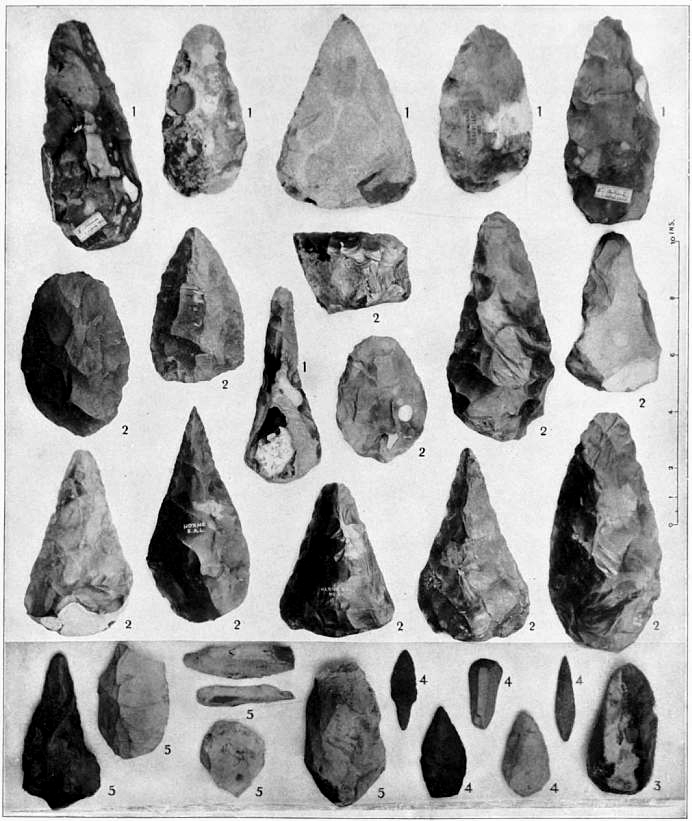 Neanderthal tools  Modern human tools In research published in Nature in 2014, an analysis of radiocarbon dates from forty Neanderthal sites from Spain to Russia found that the Neanderthals disappeared in Europe between 41,000 and 39,000 years ago with 95% probability. The study also found with the same probability that modern humans and Neanderthals overlapped in Europe for between 2,600 and 5,400 years.[1] Modern humans reached Europe between 45,000 and 43,000 years ago.[2] Improved radiocarbon dating published in 2015 indicates that Neanderthals disappeared around 40,000 years ago, which overturns older carbon dating which indicated that Neanderthals may have lived as recently as 24,000 years ago,[3] including in refugia on the south coast of the Iberian peninsula such as Gorham's Cave.[4] Zilhão et al. (2017) argue for pushing this date forward by some 3,000 years, to 37,000 years ago.[5] Inter-stratification of Neanderthal and modern human remains has been suggested,[6] but is disputed.[7] Stone tools that have been proposed to be linked to Neanderthals have been found at Byzovya (ru:Бызовая) in the polar Urals, and dated to 31,000 to 34,000 years ago,[8] but is also disputed.[9] At Mandrin Cave the French palaeolontologist Ludovic Slimak [fr] and colleagues developed a new method of analysing soot from fires. They were able to distinguish between fires made by Neanderthals and modern humans based on the differing food residues in the soot as a result of their different diets. The researchers found that the last layer of soot from Neanderthal fires was a year or less before the first made by modern humans, and in Slimak's view this shows that the two species met and supports the hypothesis that the Neanderthals disappeared due to competitive replacement. [10] |
絶滅前の共存の可能性 ネアンデルタール人の道具 現代人(ホモ・サピエンス?)の道具 2014年に『ネイチャー』誌に発表された研究では、スペインからロシアまでのネアンデルタール人遺跡40カ所の放射性炭素年代を分析した結果、ネアンデ ルタール人は95%の確率で41,000年前から39,000年前の間にヨーロッパで消滅したことが判明した。この研究はまた、現生人類とネアンデルター ル人がヨーロッパで2,600年から5,400年の間重複していたことも同じ確率で発見した[1]。現生人類は45,000年から43,000年前にヨー ロッパに到達した。 [2]2015年に発表された改良された放射性炭素年代測定法は、ネアンデルタール人がおよそ4万年前に姿を消したことを示しており、ゴーラム洞窟のよう なイベリア半島南岸の避難場所を含め、ネアンデルタール人が2万4千年前まで生息していた可能性を示していた古い炭素年代測定法を覆している[3]。 [4] Zilhãoら(2017年)は、この年代を約3,000年早めて37,000年前と主張している[5]。ネアンデルタール人と現生人類の遺跡の層間融合 が示唆されているが[6]、異論がある。 [7] ネアンデルタール人との関連が指摘されている石器は、ウラル極地のビゾヴィヤ(ru:Бызовая)で発見され、31,000年から34,000年前の ものとされているが[8]、これにも異論がある[9]。 マンドリン洞窟では、フランスの古生物学者ルドヴィク・スリマク(Ludovic Slimak)[fr]らが火災の煤を分析する新しい方法を開発した。研究者たちは、ネアンデルタール人と現生人類の食生活の違いによる煤に含まれる食物 残渣の違いから、ネアンデルタール人と現生人類の焚き火を区別することができた。研究者たちは、ネアンデルタール人が焚いた煤の最後の層が、現代人が焚い た最初の煤の1年かそれ以下前にあることを発見した。スリマクの見解では、これは2つの種が出会ったことを示しており、ネアンデルタール人が競争的な入れ 替わりによって消滅したという仮説を支持している。[10] |
| Possible causes of extinction Violence Kwang Hyun Ho discusses the possibility that Neanderthal extinction was either precipitated or hastened by violent conflict with Homo sapiens. Violence in early hunter-gatherer societies usually occurred as a result of resource competition following natural disasters. It is therefore plausible to suggest that violence, including primitive warfare, would have transpired between the two human species.[11] The hypothesis that early humans violently replaced Neanderthals was first proposed by French paleontologist Marcellin Boule (the first person to publish an analysis of a Neanderthal) in 1912.[12] Parasites and pathogens Infectious diseases carried by Homo sapiens may have passed to Neanderthals, who would have had poor protection to infections they had not previously been exposed to, leading to devastating consequences for Neanderthal populations. Homo sapiens were less vulnerable to Neanderthal diseases, partly because they had evolved to cope with the far higher disease load of the tropics and so were more able to cope with novel pathogens, and partly because the higher numbers of Homo sapiens meant that even devastating outbreaks would still have left enough survivors for a viable population.[13] If viruses could easily jump between these two similar species, possibly because they lived near together, Homo sapiens might have infected Neanderthals and prevented the epidemic from burning out as Neanderthal numbers declined. The same process may also explain Homo sapiens' resilience to Neanderthal diseases and parasites. Novel human diseases likely moved from Africa into Eurasia. This purported "African advantage" remained until the agricultural revolution 10,000 years ago in Eurasia, after which domesticated animals surpassed other primates as the most prevalent source of new human infections, replacing the "African advantage" with a "Eurasian advantage". The catastrophic impact of Eurasian viruses on Native American populations in the historical past offers a sense of how modern humans may have affected hominin predecessor groups in Eurasia 40,000 years ago. Human and Neanderthal genomes and disease or parasite adaptations may give insight on this.[14][15] Infectious illness interactions may express the prolonged period of stagnation before the modification, as per disease ecology. Mathematical models have been used to make forecasts for future investigations, giving information about inter-species interactions during the shift between the Middle and Upper Paleolithic eras. This can be useful given the sparse material record from this time and the potential of DNA sequencing and dating technology. Such modeling, together with modern technology and prehistoric archaeological methodologies, may provide a fresh understanding of this time in human origins.[15] Competitive replacement  Sapiens and Neanderthal skulls Species specific disadvantages Slight competitive advantage on the part of modern humans may have accounted for Neanderthals' decline on a timescale of thousands of years.[16][17] Generally small and widely dispersed fossil sites suggest that Neanderthals lived in less numerous and socially more isolated groups than contemporary Homo sapiens. Tools such as Mousterian flint stone flakes and Levallois points are remarkably sophisticated from the outset, yet they have a slow rate of variability and general technological inertia is noticeable during the entire fossil period. Artifacts are of utilitarian nature, and symbolic behavioral traits are undocumented before the arrival of modern humans in Europe around 40,000 to 35,000 years ago.[16][18][19] The noticeable morphological differences in skull shape between the two human species also have cognitive implications. These include the Neanderthals' smaller parietal lobes[20][21][22] and cerebellum,[23][24] areas implicated in tool use,[25] visuospatial integration,[26] numeracy,[27] creativity,[28] and higher-order conceptualization.[29] The differences, while slight, would have possibly been enough to affect natural selection and may underlie and explain the differences in social behaviors, technological innovation, and artistic output.[16] Jared Diamond, a supporter of competitive replacement, points out in his book The Third Chimpanzee that the replacement of Neanderthals by modern humans is comparable to patterns of behavior that occur whenever people with advanced technology clash with people with less developed technology.[30] Division of labor In 2006, two anthropologists of the University of Arizona proposed an efficiency explanation for the demise of the Neanderthals.[31] In an article titled "What's a Mother to Do? The Division of Labor among Neanderthals and Modern Humans in Eurasia",[32] it was posited that Neanderthal division of labor between the sexes was less developed than Middle paleolithic Homo sapiens. Both male and female Neanderthals participated in the single occupation of hunting big game, such as bison, deer, gazelles, and wild horses. This hypothesis proposes that the Neanderthal's relative lack of labor division resulted in less efficient extraction of resources from the environment as compared to Homo sapiens. Anatomical differences and running ability Researchers such as Karen L. Steudel of the University of Wisconsin have highlighted the relationship of Neanderthal anatomy (shorter and stockier than that of modern humans) and the ability to run and the requirement of energy (30% more).[33] Nevertheless, in the recent study, researchers Martin Hora and Vladimir Sladek of Charles University in Prague show that Neanderthal lower limb configuration, particularly the combination of robust knees, long heels, and short lower limbs, increased the effective mechanical advantage of the Neanderthal knee and ankle extensors, thus reducing the force needed and the energy spent for locomotion significantly. The walking cost of the Neanderthal male is now estimated to be 8–12% higher than that of anatomically modern males, whereas the walking cost of the Neanderthal female is considered to be virtually equal to that of anatomically modern females.[34] Other researchers, like Yoel Rak, from Tel-Aviv University in Israel, have noted that the fossil records show that Neanderthal pelvises in comparison to modern human pelvises would have made it much harder for Neanderthals to absorb shocks and to bounce off from one step to the next, giving modern humans another advantage over Neanderthals in running and walking ability. However, Rak also notes that all archaic humans had wide pelvises, indicating that this is the ancestral morphology and that modern humans underwent a shift towards narrower pelvises in the late Pleistocene.[35] Modern humans and alliance with dogs Pat Shipman argues that the domestication of the dog gave modern humans an advantage when hunting.[36] Evidence shows the oldest remains of domesticated dogs were found in Belgium (31,700 BP) and in Siberia (33,000 BP).[37][38] A survey of early sites of modern humans and Neanderthals with faunal remains across Spain, Portugal and France provided an overview of what modern humans and Neanderthals ate.[39] Rabbit became more frequent, while large mammals – mainly eaten by the Neanderthals – became increasingly rare. In 2013, DNA testing on the "Altai dog", a paleolithic dog's remains from the Razboinichya Cave (Altai Mountains), has linked this 33,000-year-old dog with the present lineage of Canis familiaris.[40] Interbreeding  Human-Neandertal mtDNA  Neanderthal DNA extraction Main article: Archaic human admixture with modern humans Further information: Neanderthal Genome Project The most vocal proponent of the hybridization hypothesis is Erik Trinkaus of Washington University in St. Louis.[41][42] Trinkaus claims various fossils as hybrid individuals, including the "child of Lagar Velho", a skeleton found at Lagar Velho in Portugal.[43] In a 2006 publication co-authored by Trinkaus, the fossils found in 1952 in the cave of Peștera Muierilor, Romania, are likewise claimed as hybrids.[44] Genetic studies indicate some form of hybridization between archaic humans and modern humans had taken place after modern humans emerged from Africa. An estimated 1–4% of the DNA in Europeans and Asians (e.g. French, Chinese and Papua probands) is non-modern, and shared with ancient Neanderthal DNA rather than with sub-Saharan Africans (e.g. Yoruba and San probands).[45] Interbreeding took place in western Asia between about 65,000 and 47,000 years ago.[46] Modern-human findings in Abrigo do Lagar Velho, Portugal allegedly featuring Neanderthal admixtures have been published.[47] However, the interpretation of the Portuguese specimen is disputed.[48] Jordan, in his work Neanderthal, points out that without some interbreeding, certain features on some "modern" skulls of Eastern European Cro-Magnon heritage are hard to explain. In another study, researchers have recently found in Peştera Muierilor, Romania, remains of European humans from ~37,000–42,000 years ago[49] who possessed mostly diagnostic "modern" anatomical features, but also had distinct Neanderthal features not present in ancestral modern humans in Africa, including a large bulge at the back of the skull, a more prominent projection around the elbow joint, and a narrow socket at the shoulder joint. The Neanderthal genome project published papers in 2010 and 2014 stating that Neanderthals contributed to the DNA of modern humans, including most humans outside sub-Saharan Africa, as well as a few populations in sub-Saharan Africa, through interbreeding, likely between 50,000 and 60,000 years ago.[50][51][52] Recent studies also show that a few Neanderthals began mating with ancestors of modern humans long before the large "out of Africa migration" of the present day non-Africans, as early as 100,000 years ago.[53] In 2016, research indicated that there were three distinct episodes of interbreeding between modern humans and Neanderthals: the first encounter involved the ancestors of non-African modern humans, probably soon after leaving Africa; the second, after the ancestral Melanesian group had branched off (and subsequently had a unique episode of interbreeding with Denisovans); and the third, involving the ancestors of East Asians only.[54]  Neanderthal DNA Comparison (SharedDNA) While interbreeding is viewed as the most parsimonious interpretation of the genetic discoveries, the authors point out they cannot conclusively rule out an alternative scenario, in which the source population of non-African modern humans was already more closely related to Neanderthals than other Africans were, due to ancient genetic divisions within Africa. Among the genes shown to differ between present-day humans and Neanderthals were RPTN, SPAG17, CAN15, TTF1 and PCD16. New evidence was discovered at Mandrin Cave in Malataverne, France, dating back by 10,000 years. Six of the individuals were recognized as Neanderthal, but a modern human upper molar was recovered in between Neanderthal sections. At Mandrin Cave, the existence of a modern human molar inside the Neronian layer prompted researchers to connect this stone tool manufacturing to Homo sapiens. The existence of the Homo sapiens molar beside the Neronian solidifies the narrative: Neanderthals and modern humans replaced each other multiple times in the same area. Finds at Mandrin Cave imply the Mediterranean region had a crucial importance in shaping humans' spread into Western Eurasia. [55] Recent research in northern Spain suggests that Neanderthals vanished earlier in Vasco-Cantabrian eastern and southern Iberia. The projected outcome will assist in assessing the consequences for regional systems of resource extraction, subsistence techniques, and environment-human connections in the Neanderthals' death and modern humans' evolutionary progress.[56] Recent genetic evidence has revealed kinship patterns among recovered Neanderthal remains that suggests inbreeding practices,[57] such as pairings between half-siblings and/or uncle/aunt and niece/nephew.[58] Researchers hypothesize that Neanderthals may have become isolated into small groups during harsh climatic conditions, which contributed to inbreeding behaviours.[59] Due to the lack of genetic diversity, Neanderthal populations would have become more vulnerable to climatic changes, diseases, and other stressors, which may have contributed to their extinction.[60][61] A similar model to the inbreeding hypothesis can be seen among endangered lowland gorillas. Their populations are so small that it has caused inbreeding, making them even more vulnerable to extinction.[62][63] Climate change See also: Neanderthals of Gibraltar § Lifestyle of the Gibraltar Neanderthals Neanderthals went through a demographic crisis in Western Europe that seems to coincide with climate change that resulted in a period of extreme cold in Western Europe. "The fact that Neanderthals in Western Europe were nearly extinct, but then recovered long before they came into contact with modern humans came as a complete surprise to us," said Love Dalén, associate professor at the Swedish Museum of Natural History in Stockholm. If so, this would indicate that Neanderthals may have been very sensitive to climate change.[64] The data reveal that sudden climatic change, although crucial locally, had a limited effect on the worldwide Neanderthal population. Interbreeding and assimilation, which were hypothesized as causes in the death of European Neanderthal populations, are successful only for low levels of food competition. Future research will examine models of interbreeding, and hybridization may be evaluated using genomic records from the last ice age (Fu et al., 2016).[65] Natural catastrophe Main article: Campanian Ignimbrite Eruption A number of researchers have argued that the Campanian Ignimbrite Eruption, a volcanic eruption near Naples, Italy, about 39,280 ± 110 years ago (older estimate ~37,000 years), erupting about 200 km3 (48 cu mi) of magma (500 km3 (120 cu mi) bulk volume) contributed to the extinction of Neanderthals.[66] The argument has been developed by Golovanova et al.[67][68] The hypothesis posits that although Neanderthals had encountered several Interglacials during 250,000 years in Europe,[69] inability to adapt their hunting methods caused their extinction facing H. sapiens competition when Europe changed into a sparsely vegetated steppe and semi-desert during the last Ice Age.[70] Studies of sediment layers at Mezmaiskaya Cave suggest a severe reduction of plant pollen.[68] The damage to plant life would have led to a corresponding decline in plant-eating mammals hunted by the Neanderthals.[68][71][72] |
絶滅の原因 暴力 クワン・ヒョンホは、ネアンデルタール人の絶滅はホモ・サピエンスとの暴力的な争いによって引き起こされたか、早められた可能性について論じている。初期 の狩猟採集社会における暴力は、通常、自然災害後の資源競争の結果として起こった。そのため、原始的な戦争を含む暴力が2つの人類種の間で起こったであろ うという仮説は、1912年にフランスの古生物学者マーセリン・ブール(ネアンデルタール人の分析を発表した最初の人物)によって初めて提唱された [12]。 寄生虫と病原体 ホモ・サピエンスが媒介する感染症がネアンデルタール人に伝染した可能性があり、ネアンデルタール人はそれまでかかったことのない感染症に対する防御力が 低かったため、ネアンデルタール人の集団に壊滅的な結果をもたらした。ホモ・サピエンスはネアンデルタール人の病気に対してそれほど脆弱ではなかったが、 その理由の一つは、ホモ・サピエンスは熱帯地方のはるかに高い疾病負荷に対処するように進化していたため、新しい病原体に対処する能力が高かったからであ り、また、ホモ・サピエンスの数が多かったため、壊滅的な大発生が発生しても、生存可能な集団に十分な数の生存者を残すことができたからである。 [13] もしウイルスがこの2つの類似した種の間を簡単に飛び越えることができたとしたら、おそらく近くに住んでいたために、ホモ・サピエンスがネアンデルタール 人に感染し、ネアンデルタール人の数が減少するにつれて伝染病が燃え尽きるのを防いだのかもしれない。同じプロセスは、ネアンデルタール人の病気や寄生虫 に対するホモ・サピエンスの回復力も説明できるかもしれない。新しい人類の病気は、アフリカからユーラシア大陸に移動した可能性が高い。この「アフリカの 優位性」は、1万年前にユーラシア大陸で農業革命が起こるまで維持され、その後、家畜化された動物が他の霊長類を凌いで、ヒトの新たな感染症の最も一般的 な感染源となった。歴史上、ユーラシアウイルスがアメリカ先住民の集団に与えた壊滅的な影響から、現代人が4万年前にユーラシア大陸の先住集団にどのよう な影響を与えたかを知ることができる。ヒトとネアンデルタール人のゲノムと病気や寄生虫の適応は、このことについて洞察を与えてくれるかもしれない [14][15]。 感染症の相互作用は、疾病生態学にあるように、改変前の長期停滞期間を表現しているのかもしれない。中期旧石器時代と後期旧石器時代との間の移行期におけ る種間相互作用に関する情報を与える数理モデルは、将来の調査の予測に使用されてきた。これは、この時代の物質的記録がまばらであることや、DNAの塩基 配列決定や年代測定技術の可能性を考慮すると、有用である。このようなモデリングは、現代の技術や先史時代の考古学的方法論とともに、人類の起源における この時期について新たな理解をもたらすかもしれない[15]。 競合的入れ替わり サピエンスとネアンデルタール人の頭蓋骨 種特有の欠点 ネアンデルタール人が数千年のタイムスケールで衰退したのは、現生人類側のわずかな競争優位性が原因かもしれない[16][17]。 ネアンデルタール人は、現代のホモ・サピエンスよりも数が少なく、社会的に孤立した集団で生活していたことが、一般的に小規模で広く分散した化石遺跡から 示唆されている。モウステリアン火打石やレヴァロワ・ポイントのような道具類は、当初から著しく洗練されていたが、その変動速度は遅く、化石の全期間を通 じて一般的な技術的慣性が顕著である。人工物は実用的な性質を持っており、約4万年から3万5千年前にヨーロッパに現生人類が到着する以前の象徴的な行動 特性は文書化されていない[16][18][19]。 ネアンデルタール人と現生人類の頭蓋骨の形状における顕著な形態学的差異は、認知的な意味合いも持っている。ネアンデルタール人は頭頂葉[20][21] [22]と小脳[23][24]が小さく、道具の使用、[25]視空間統合、[26]計算能力、[27]創造性、[28]高次概念化[29]に関与してい る。この違いはわずかではあるが、おそらく自然淘汰に影響を与えるのに十分なものであり、社会的行動、技術革新、芸術的成果の違いの根底にあり、説明でき るかもしれない。 競争的置換の支持者であるジャレド・ダイアモンドは、著書『第三のチンパンジー』の中で、ネアンデルタール人が現生人類に取って代わられたことは、高度な 技術を持つ人々が、それほど発達していない技術を持つ人々と衝突するたびに起こる行動パターンに匹敵すると指摘している[30]。 分業 2006年、アリゾナ大学の2人の人類学者がネアンデルタール人の滅亡について効率的な説明を提案した[31]。The Division of Labor among Neanderthals and Modern Humans in Eurasia(ユーラシア大陸におけるネアンデルタール人と現生人類の分業)」[32]と題された論文では、ネアンデルタール人の男女間の分業は中世旧 石器時代のホモ・サピエンスよりも発達していなかったと仮定されている。ネアンデルタール人は男女ともにバイソン、シカ、ガゼル、野生の馬などの大物の狩 猟という単一の職業に参加していた。この仮説は、ネアンデルタール人はホモ・サピエンスと比較して、分業が相対的に欠如していたため、環境からの資源の抽 出効率が低かったと提唱している。 解剖学的差異と走力 ウィスコンシン大学のKaren L. Steudelなどの研究者は、ネアンデルタール人の解剖学的構造(現代人より背が低く、がっしりしている)と、走る能力およびエネルギーの必要量(30%増)との関係を強調している[33]。 それにもかかわらず、プラハのカレル大学の研究者Martin HoraとVladimir Sladekは、最近の研究で、ネアンデルタール人の下肢の構成、特に頑丈な膝、長い踵、短い下肢の組み合わせが、ネアンデルタール人の膝と足首の伸筋の 有効な機械的利点を増加させ、その結果、ロコモーションに必要な力と消費されるエネルギーを大幅に減少させたことを示している。ネアンデルタール人男性の 歩行コストは、解剖学的に現代人男性のそれよりも8~12%高いと推定されているが、ネアンデルタール人女性の歩行コストは、解剖学的に現代人女性のそれ とほぼ等しいと考えられている[34]。 イスラエルのテルアビブ大学のヨエル・ラクのような他の研究者は、化石記録によれば、ネアンデルタール人の骨盤は現代人の骨盤に比べて、衝撃を吸収しにく く、一歩から次の一歩に跳ね返りにくくなっており、現代人はネアンデルタール人よりも走ったり歩いたりする能力でもう一つ優位に立っていると指摘してい る。しかしラックは、古代の人類はすべて骨盤が広かったとも述べており、これが祖先の形態であり、現生人類は更新世後期に骨盤を狭くする方向にシフトした ことを示している[35]。 現生人類と犬との同盟 パット・シップマンは、犬の家畜化が狩猟の際に現生人類に優位性を与えたと主張している[36]。その証拠に、家畜化された犬の最古の遺体はベルギー (31,700BP)とシベリア(33,000BP)で発見されている[37][38]。スペイン、ポルトガル、フランスにまたがる動物遺体を伴う現生人 類とネアンデルタール人の初期の遺跡の調査によって、現生人類とネアンデルタール人が何を食べていたかの概要が明らかになった[39]。2013年、ラズ ボイニチャ洞窟(アルタイ山脈)から出土した旧石器時代の犬の遺体である「アルタイ犬」のDNA鑑定によって、この33,000年前の犬と現在のイヌ科の 動物の血統が結びつけられた[40]。 交雑 ヒトとネアンデルタール人のmtDNA ネアンデルタール人のDNA抽出 主な記事 古代の人類と現生人類の混血 さらに詳しい情報 ネアンデルタール人ゲノムプロジェクト ハイブリッド仮説の最も有力な支持者は、セントルイスのワシントン大学のエリック・トリンカウスである[41][42]。トリンカウスは、ポルトガルのラ ガール・ヴェーリョで発見された「ラガール・ヴェーリョの子供」の骨格を含む様々な化石をハイブリッド個体であると主張している[43]。 2006年にトリンカウスが共著した出版物では、ルーマニアのペシュテラ・ムイエリロールの洞窟で1952年に発見された化石も同様にハイブリッド個体で あると主張している[44]。 遺伝学的研究は、現生人類がアフリカから出現した後、古人類と現生人類の間で何らかのハイブリダイゼーションが起こったことを示している。ヨーロッパ人と アジア人(フランス人、中国人、パプア人など)のDNAの推定1-4%は非現代人で、サハラ以南のアフリカ人(ヨルバ人、サン人など)ではなく、古代のネ アンデルタール人のDNAと共有されている[45]。 ポルトガルのアブリゴ・ド・ラガール・ヴェーリョで、ネアンデルタール人との混血が見られるとされる現生人類の所見が発表されている[47]。 しかし、ポルトガルの標本の解釈には異論がある[48]。 ジョーダンはその著作『ネアンデルタール人』の中で、東ヨーロッパのクロマニヨン人の血を引く「現代人」の頭蓋骨に見られるある種の特徴は、何らかの交雑 がなければ説明が難しいと指摘している。別の研究では、ルーマニアのペシュテラ・ムイエリロールで最近、約37,000~42,000年前のヨーロッパ人 の遺骨が発見された[49]。これらの遺骨は、ほとんど診断可能な「現代人」の解剖学的特徴を持っていたが、頭蓋骨の後部の大きな膨らみ、肘関節周辺の突 出した突起、肩関節の狭いソケットなど、アフリカの祖先である現代人には見られないネアンデルタール人特有の特徴も持っていた。 ネアンデルタール人ゲノムプロジェクトは2010年と2014年に論文を発表し、ネアンデルタール人がサハラ以南のアフリカ以外のほとんどの人類とサハラ 以南のアフリカのいくつかの集団を含む現生人類のDNAに、おそらく5万年から6万年前の間に交配を通じて寄与したと述べている[50][51] [52]。最近の研究はまた、少数のネアンデルタール人が現生人類の祖先と交配を始めたのは、現在の非アフリカ人の大規模な「アフリカ外移住」のずっと 前、早ければ10万年前であることを示している。 [最初の出会いは、おそらくアフリカを出て間もなくの非アフリカ現生人類の祖先が関与したものであり、2番目は、祖先のメラネシア人グループが枝分かれし た後(その後デニソワ人と交配したユニークなエピソードがある)、3番目は、東アジア人の祖先のみが関与したものである。 ネアンデルタール人のDNA比較(SharedDNA) 異種交配は遺伝学的発見の最も穏当な解釈であると考えられているが、著者らは、アフリカ内の古代の遺伝的分裂のために、アフリカ以外の現生人類の源となっ た集団が、他のアフリカ人よりもネアンデルタール人とすでに近縁であったという別のシナリオを決定的に否定することはできないと指摘している。現生人類と ネアンデルタール人との間で異なることが示された遺伝子の中には、RPTN、SPAG17、CAN15、TTF1、PCD16があった。 フランスのマラタヴェルヌにあるマンドリン洞窟で、1万年前にさかのぼる新たな証拠が発見された。そのうちの6人はネアンデルタール人と認められたが、ネ アンデルタール人の切片の間に現代人の上顎臼歯が発見された。マンドリン洞窟では、ネロン層の中に現代人の臼歯があったことから、研究者たちはこの石器製 作をホモ・サピエンスに関連づけることになった。ネロニアンの横にホモ・サピエンスの臼歯が存在することで、この説は確固たるものとなった: ネアンデルタール人と現生人類は、同じ地域で何度も入れ替わったのである。マンドリン洞窟での発見は、地中海地域が西ユーラシアへの人類の拡散を形成する 上で極めて重要であったことを示唆している。[55] スペイン北部における最近の研究は、ネアンデルタール人がヴァスコ=カンタブリア半島東部とイベリア半島南部でより早く消滅したことを示唆している。予測 される結果は、ネアンデルタール人の死と現生人類の進化の進展における、資源採取、自給自足の技術、環境と人間のつながりの地域システムに対する影響を評 価するのに役立つであろう[56]。 最近の遺伝学的証拠によって、回収されたネアンデルタール人の遺体から、異母兄妹や叔父・叔母と姪・甥のペアといった近親交配を示唆する親族関係のパター ンが明らかになっている[57]。 [遺伝的多様性の欠如により、ネアンデルタール人の集団は気候の変化、病気、その他のストレス要因に対してより脆弱になり、それが絶滅の一因となった可能 性がある[60][61]。近親交配仮説と同様のモデルは、絶滅の危機に瀕しているローランドゴリラにも見られる。彼らの個体数は非常に少ないため、近親 交配を引き起こし、絶滅に対してさらに脆弱になっている[62][63]。 気候変動 こちらも参照: ジブラルタルのネアンデルタール人 § ジブラルタルのネアンデルタール人の生活様式 ネアンデルタール人は西ヨーロッパで人口学的危機を経験したが、それは西ヨーロッパで極端な寒冷期をもたらした気候変動と一致しているようである。ストッ クホルムにあるスウェーデン自然史博物館のラブ・ダレン准教授は、「西ヨーロッパのネアンデルタール人が絶滅寸前であったにもかかわらず、現生人類と接触 するずっと前に回復したという事実は、私たちにとってまったくの驚きでした」と言う。もしそうだとすれば、ネアンデルタール人は気候変動に非常に敏感だっ た可能性があるということになる[64]。 このデータから、急激な気候変動は局所的には重要であったものの、全世界のネアンデルタール人の集団には限定的な影響しか及ぼさなかったことが明らかに なった。ヨーロッパのネアンデルタール人集団が滅亡した原因として仮定された異種交配と同化は、低レベルの食物競争でのみ成功する。今後の研究では、交雑 のモデルが検討され、最後の氷河期からのゲノム記録を使って交雑が評価されるかもしれない(Fu et al. 自然災害 主な記事 カンパニア・イグニンブライト噴火 多くの研究者が、約39,280±110年前(古い推定では~37,000年前)にイタリアのナポリ近郊で起きたカンパニアン火山噴火は、約200km3 (48立方メートル)のマグマ(バルク体積500km3(120立方メートル))を噴出し、ネアンデルタール人の絶滅に寄与したと主張している[66]。 [この仮説では、ネアンデルタール人はヨーロッパで25万年の間に何度か間氷期に遭遇していたが[69]、最後の氷河期にヨーロッパが植生のまばらな草原 や半砂漠に変化したときに、狩猟方法を適応させることができずにサピエンスとの競争に直面して絶滅したと仮定している[70]。 [70]。メズマイスカヤ洞窟の堆積層の研究は、植物の花粉が著しく減少したことを示唆している[68]。植物へのダメージは、ネアンデルタール人が狩猟 していた植物食の哺乳類の減少に対応することになったであろう[68][71][72]。 |
| List of hominina (hominid) fossils Quaternary extinction event – Extinctions of large mammals in the Late Pleistocene |
ホミニナ(ヒト科)化石のリスト 第四紀絶滅事件 - 更新世後期における大型哺乳類の絶滅 |
| https://en.wikipedia.org/wiki/Neanderthal_extinction |
|
| References Hortolà, Policarp; Martínez-Navarro, Bienvenido (May 8, 2013). "The Quaternary megafaunal extinction and the fate of Neanderthals: An integrative working hypothesis". Quaternary International. East meets West: First settlements and human evolution in Eurasia. 295: 69–72. Bibcode:2013QuInt.295...69H. doi:10.1016/j.quaint.2012.02.037. ISSN 1040-6182. Retrieved February 5, 2024 – via Elsevier Science Direct. Higham, T.; Douka, K.; Wood, R.; Ramsey, C. B.; Brock, F.; Basell, L.; Camps, M.; Arrizabalaga, A.; Baena, J.; Barroso-Ruíz, C.; C. Bergman; C. Boitard; P. Boscato; M. Caparrós; N.J. Conard; C. Draily; A. Froment; B. Galván; P. Gambassini; A. Garcia-Moreno; S. Grimaldi; P. Haesaerts; B. Holt; M.-J. Iriarte-Chiapusso; A. Jelinek; J.F. Jordá Pardo; J.-M. Maíllo-Fernández; A. Marom; J. Maroto; M. Menéndez; L. Metz; E. Morin; A. Moroni; F. Negrino; E. Panagopoulou; M. Peresani; S. Pirson; M. de la Rasilla; J. Riel-Salvatore; A. Ronchitelli; D. Santamaria; P. Semal; L. Slimak; J. Soler; N. Soler; A. Villaluenga; R. Pinhasi; R. Jacobi; et al. (2014). "The timing and spatiotemporal patterning of Neanderthal disappearance". Nature. 512 (7514): 306–309. Bibcode:2014Natur.512..306H. doi:10.1038/nature13621. hdl:1885/75138. PMID 25143113. S2CID 205239973. We show that the Mousterian [the Neanderthal tool-making tradition] ended by 41,030–39,260 calibrated years BP (at 95.4% probability) across Europe. We also demonstrate that succeeding 'transitional' archaeological industries, one of which has been linked with Neanderthals (Châtelperronian), end at a similar time. Higham, T. (2011). "European Middle and Upper Palaeolithic radiocarbon dates are often older than they look: problems with previous dates and some remedies". Antiquity. 85 (327): 235–249. doi:10.1017/s0003598x00067570. S2CID 163207571. Few events of European prehistory are more important than the transition from ancient to modern humans about 40,000 years ago, a period that unfortunately lies near the limit of radiocarbon dating. This paper shows that as many as 70 per cent of the oldest radiocarbon dates in the literature may be too young, due to contamination by modern carbon. Galván, B.; Hernández, C. M.; Mallol, C.; Mercier, N.; Sistiaga, A.; Soler, V. (2014). "New evidence of early Neanderthal disappearance in the Iberian Peninsula". Journal of Human Evolution. 75: 16–27. Bibcode:2014JHumE..75...16G. doi:10.1016/j.jhevol.2014.06.002. PMID 25016565. Agusti, J.; Rubio-Campillo, X. (2017). "Were Neanderthals responsible for their own extinction?". Quaternary International. 431: 232–237. Bibcode:2017QuInt.431..232A. doi:10.1016/j.quaint.2016.02.017. Devièse, Thibaut; Abrams, Grégory; Hajdinjak, Mateja; Pirson, Stéphane; De Groote, Isabelle; Di Modica, Kévin; Toussaint, Michel; Fischer, Valentin; Comeskey, Dan; Spindler, Luke; Meyer, Matthias; Semal, Patrick; Higham, Tom (March 23, 2021). "Reevaluating the timing of Neanderthal disappearance in Northwest Europe". Proceedings of the National Academy of Sciences of the United States of America. 118 (12) e2022466118. Bibcode:2021PNAS..11822466D. doi:10.1073/pnas.2022466118. ISSN 0027-8424. PMC 7999949. PMID 33798098. Zilhão, J.; Anesin, D.; Aubry, T.; et al. (2017). "Precise dating of the Middle-to-Upper Paleolithic transition in Murcia (Spain) supports late Neandertal persistence in Iberia". Heliyon. 3 (1) E00435. Bibcode:2017Heliy...300435Z. doi:10.1016/j.heliyon.2017.e00435. PMC 5696381. PMID 29188235. Morales, J. I; Cebrià, A.; Burguet-Coca, A.; et al. (2019). "The Middle-to-Upper Paleolithic transition occupations from Cova Foradada (Calafell, NE Iberia)". PLOS ONE. 14 (5) e0215832. Bibcode:2019PLoSO..1415832M. doi:10.1371/journal.pone.0215832. PMC 6522054. PMID 31095578. Cortés-Sánches, M.; Jiménez-Espejo, F. J.; Simón-Vallejo, M. D.; Stringer, C.; et al. (2019). "An early Aurignacian arrival in southwestern Europe". Nature Ecology & Evolution. 3 (2): 207–212. Bibcode:2019NatEE...3..207C. doi:10.1038/s41559-018-0753-6. hdl:10630/34212. PMID 30664696. S2CID 58571988. Anderson, L.; Reynolds, N.; Teyssandier, N. (2019). "No reliable evidence for a very early Aurignacian in Southern Iberia". Nature Ecology and Evolution. 3 (5): 713. Bibcode:2019NatEE...3..713A. doi:10.1038/s41559-019-0885-3. PMID 30988496. S2CID 115153460. de la Peña, P. (2019). "Dating on its own cannot resolve hominin occupation patterns". Nature Ecology and Evolution. 3 (5): 712. Bibcode:2019NatEE...3..712D. doi:10.1038/s41559-019-0886-2. PMID 30988497. S2CID 116861216. Cortés-Sánches, M.; Jiménez-Espejo, F. J.; Simón-Vallejo, M. D.; Stringer, C.; et al. (2019). "Reply to 'Dating on its own cannot resolve hominin occupation patterns' and 'No reliable evidence for a very early Aurignacian in Southern Iberia'". Nature Ecology and Evolution. 3 (5): 714–715. Bibcode:2019NatEE...3..714C. doi:10.1038/s41559-019-0887-1. PMID 30988498. S2CID 115153407. Fontugne, M.; Reyss, J. L.; Ruis, C. B.; Lara, P. M. (1995). "The Mousterian site of Zafarraya (Granada, Spain): dating and implications on the palaeolithic peopling processes of Western Europe". Comptes Rendus de l'Académie des Sciences. 321 (10): 931–937. Finlayson, C.; Pacheco, F. G. (2006). "Late survival of Neanderthals at the southernmost extreme of Europe". Nature. 443 (7, 113): 850–853. Bibcode:2006Natur.443..850F. doi:10.1038/nature05195. PMID 16971951. S2CID 4411186. Slimak, L.; Svendsen, J. I.; Mangerud, J.; Plisson, H. (2011). "Late Mousterian persistence near the Arctic Circle". Science. 332 (6031): 841–845. Bibcode:2011Sci...332..841S. doi:10.1126/science.1203866. JSTOR 29784275. PMID 21566192. S2CID 24688365. Zwyns, N. (2012). "Comment on Late Mousterian persistence near the Arctic Circle". Science. 335 (6065): 167. Bibcode:2012Sci...335..167Z. doi:10.1126/science.1209908. PMID 22246757. Pavlov, P.; Svendsen, J. I.; Indrelid, S. (2001). "Human presence in the European Arctic nearly 40,000 years ago". Nature. 413 (6, 851): 64–67. Bibcode:2001Natur.413...64P. doi:10.1038/35092552. PMID 11544525. S2CID 1986562. Pinhasi, R.; Higham, T. F. G.; Golovanova, L. V.; Doronichev, V. B. (2011). "Revised age of late Neanderthal occupation and the end of the Middle Palaeolithic in the northern Caucasus". Proceedings of the National Academy of Sciences. 108 (21): 8611–8616. Bibcode:2011PNAS..108.8611P. doi:10.1073/pnas.1018938108. PMC 3102382. PMID 21555570. The direct date of the fossil (39,700±1,100 14C BP) is in good agreement with the probability distribution function, indicating at a high level of probability that Neanderthals did not survive at Mezmaiskaya Cave after 39 kya cal BP. [...] This challenges previous claims for late Neanderthal survival in the northern Caucasus. [...] Our results confirm the lack of reliably dated Neanderthal fossils younger than ≈40 kya cal BP in any other region of Western Eurasia, including the Caucasus. Slimak, L.; Zanolli, C.; Higham, T.; et al. (2022). "Modern human incursion into Neanderthal territories 54,000 years ago at Mandrin, France". Science Advances. 8 (6) eabj9496. Bibcode:2022SciA....8J9496S. doi:10.1126/sciadv.abj9496. PMC 8827661. PMID 35138885. Hublin, J.-J.; Sirakov, N.; et al. (2020). "Initial Upper Palaeolithic Homo sapiens from Bacho Kiro Cave, Bulgaria" (PDF). Nature. 581 (7808): 299–302. Bibcode:2020Natur.581..299H. doi:10.1038/s41586-020-2259-z. hdl:11585/770553. PMID 32433609. S2CID 218592678. Benazzi, S.; Douka, K.; Fornai, C.; Bauer, C.C.; Kullmer, O.; Svoboda, J.Í.; Pap, I.; Mallegni, F.; Bayle, P.; Coquerelle, M.; Condemi, S.; Ronchitelli, A.; Harvati, K.; Weber, G.W. (2011). "Early dispersal of modern humans in Europe and implications for Neanderthal behaviour". Nature. 479 (7374): 525–528. Bibcode:2011Natur.479..525B. doi:10.1038/nature10617. PMID 22048311. S2CID 205226924. Higham, T.; Compton, T.; Stringer, C.; Jacobi, R.; Shapiro, B.; Trinkaus, E.; Chandler, B.; Gröning, F.; Collins, C.; Hillson, S.; o'Higgins, P.; Fitzgerald, C.; Fagan, M. (2011). "The earliest evidence for anatomically modern humans in northwestern Europe". Nature. 479 (7374): 521–524. Bibcode:2011Natur.479..521H. doi:10.1038/nature10484. PMID 22048314. S2CID 4374023. Ko, Kwang Hyun (2016). "Hominin interbreeding and the evolution of human variation". Journal of Biological Research-Thessaloniki. 23 17. doi:10.1186/s40709-016-0054-7. PMC 4947341. PMID 27429943. Boule, M 1920, Les hommes fossiles, Masson, Paris. Madison, P. (2020). "Characterized by Darkness: Reconsidering the Origins of the Brutish Neanderthal". Journal of the History of Biology. 53: 493–519. doi:10.1007/s10739-020-09623-4. Madison, Paige (2021). "The Mismeasure of Neanderthals". Evolutionary Anthropology. 30 (6): 366–374. doi:10.1002/evan.21918. Amorós, Gabriela; Carrión, José S. (2026). "Brutish Neanderthals: History of a merciless characterization". Earth History and Biodiversity. 7. doi:10.1016/j.hisbio.2025.100036. Greenbaum, Gili; Getz, Wayne M.; Rosenberg, Noah A.; Feldman, Marcus W.; Hovers, Erella; Kolodny, Oren (2019-11-01). "Disease transmission and introgression can explain the long-lasting contact zone of modern humans and Neanderthals". Nature Communications. 10 (1): 5003. Bibcode:2019NatCo..10.5003G. doi:10.1038/s41467-019-12862-7. ISSN 2041-1723. PMC 6825168. PMID 31676766. Kennedy, Jonathan (2023). Pathogenesis: how Germs Made History. London, UK: Torva. pp. 42–43. Houldcroft, Charlotte J.; Underdown, Simon J. (July 2016). "Neanderthal genomics suggests a pleistocene time frame for the first epidemiologic transition: Neanderthal Infectious Diseases Genetics". American Journal of Physical Anthropology. 160 (3): 379–388. doi:10.1002/ajpa.22985. PMID 27063929. Underdown, S. (2008). "A potential role for transmissible spongiform encephalopathies in Neanderthal extinction". Medical Hypotheses. 71 (1): 4–7. doi:10.1016/j.mehy.2007.12.014. PMID 18280671. Liberski, P. (2013). "Kuru: a journey back in time from Papua New Guinea to the Neanderthals' extinction". Pathogens. 2 (3): 472–505. doi:10.3390/pathogens2030472. PMC 4235695. PMID 25437203. Wynn, Thomas; Overmann, Karenleigh A; Coolidge, Frederick L (2016). "The false dichotomy: A refutation of the Neandertal indistinguishability claim". Journal of Anthropological Sciences. 94 (94): 201–221. doi:10.4436/jass.94022 (inactive 1 July 2025). PMID 26708102. Banks, William E.; d'Errico, Francesco; Peterson, A. Townsend; Kageyama, Masa; Sima, Adriana; Sánchez-Goñi, Maria-Fernanda (24 December 2008). Harpending, Henry (ed.). "Neanderthal Extinction by Competitive Exclusion". PLOS ONE. 3 (12) e3972. Bibcode:2008PLoSO...3.3972B. doi:10.1371/journal.pone.0003972. ISSN 1932-6203. PMC 2600607. PMID 19107186. "Homo neanderthalensis Brief Summary". EOL. Retrieved September 26, 2016. Peresani, M; Dallatorre, S; Astuti, P; Dal Colle, M; Ziggiotti, S; Peretto, C (2014). "Symbolic or utilitarian? Juggling interpretations of Neanderthal behavior: new inferences from the study of engraved stone surfaces". J Anthropol Sci. 92 (92): 233–55. doi:10.4436/JASS.92007 (inactive 1 July 2025). PMID 25020018. Bruner, Emiliano (2004). "Geometric Morphometrics and Paleoneurology: Brain Shape Evolution in the Genus Homo". Journal of Human Evolution. 47 (5): 279–303. Bibcode:2004JHumE..47..279B. doi:10.1016/j.jhevol.2004.03.009. PMID 15530349. Bruner, Emiliano (2010). "Morphological Differences in the Parietal Lobes with the Human Genus: A Neurofunctional Perspective". Current Anthropology. 51 (1): S77–S88. doi:10.1086/650729. S2CID 146587487. Bruner, Emiliano; Manzi, Giorgio; Arsuaga, Juan Luis (2003). "Encephalization and Allometric Trajectories in the Genus Homo: Evidence from the Neandertal and Modern Lineages". Proceedings of the National Academy of Sciences of the United States of America. 100 (26): 15335–15340. Bibcode:2003PNAS..10015335B. doi:10.1073/pnas.2536671100. PMC 307568. PMID 14673084. Hublin, Jean-Jacques; Neubauer, Simon; Gunz, Philipp (2015). "Brain Ontogeny and Life History in Pleistocene Hominins". Philosophical Transactions of the Royal Society of London. Series B, Biological Sciences. 370 (1663): 1–11. doi:10.1098/rstb.2014.0062. PMC 4305163. PMID 25602066. Weaver, Anne (2005). "Reciprocal Evolution of the Cerebellum and Neocortex in Fossil Humans". Proceedings of the National Academy of Sciences of the United States of America. 102 (10): 3576–3580. Bibcode:2005PNAS..102.3576W. doi:10.1073/pnas.0500692102. PMC 553338. PMID 15731345. Orban, Guy A; Caruana, Fausto (2014). "The Neural Basis of Human Tool Use". Frontiers in Psychology. 5: 310. doi:10.3389/fpsyg.2014.00310. PMC 3988392. PMID 24782809. Bruner, Emiliano; Iriki, Atsushi (2016). "Extending Mind, Visuospatial Integration, and the Evolution of the Parietal Lobes in the Human Genus". Quaternary International. 405: 98–110. Bibcode:2016QuInt.405...98B. doi:10.1016/j.quaint.2015.05.019. S2CID 127641606. Piazza, Manuela; Izard, Véronique (2009). "How Humans Count: Numerosity and the Parietal Cortex". Neuroscientist. 15 (3): 261–273. doi:10.1177/1073858409333073. PMID 19436075. S2CID 10271553. Vandervert, Larry R; Schimpf, Paul H; Liu, Hesheng (2007). "How Working Memory and the Cerebellum Collaborate to Produce Creativity and Innovation". Creativity Research Journal. 19 (1): 1–18. doi:10.1080/10400410709336873. S2CID 15247122. Balsters, Joshua H; Whelan, Christopher D; Robertson, Ian H; Ramnani, Narender (2013). "Cerebellum and Cognition: Evidence for the Encoding of Higher Order Rules". Cerebral Cortex. 23 (6): 1433–1443. doi:10.1093/cercor/bhs127. hdl:2262/72974. PMID 22617850. Diamond, J. (1992). The Third Chimpanzee: The Evolution and Future of the Human Animal. New York: Harper Collins, p. 45. Kuhn, Steven L.; Stiner, Mary C. (2006). "What's a Mother to Do? The Division of Labor among Neandertals and Modern Humans in Eurasia". Current Anthropology. 47 (6): 953–981. doi:10.1086/507197. S2CID 42981328. Steudel-Numbers, Karen L; Tilkens, Michael J (2004). "The Effect of Lower Limb Length on the Energetic Cost of Locomotion: Implications for Fossil Hominins". Journal of Human Evolution. 47 (1): 95–109. Bibcode:2004JHumE..47...95S. doi:10.1016/j.jhevol.2004.06.002. PMID 15288526. Hora, M; Sládek, V (2014). "Influence of lower limb configuration on walking cost in Late Pleistocene humans". Journal of Human Evolution. 67: 19–32. Bibcode:2014JHumE..67...19H. doi:10.1016/j.jhevol.2013.09.011. PMID 24485350. Lewin, Roger (27 April 1991). "Science: Neanderthals puzzle the anthropologists". New Scientist. Retrieved January 1, 2011. Shipman, P (2012). "Dog domestication may have helped humans thrive while Neandertals declined". American Scientist. 100 (3): 198. doi:10.1511/2012.96.198. Ovodov, ND; Crockford, SJ; Kuzmin, YV; Higham, TFG; Hodgins, GWL; et al. (2011). "A 33,000-Year-Old Incipient Dog from the Altai Mountains of Siberia: Evidence of the Earliest Domestication Disrupted by the Last Glacial Maximum". PLOS ONE. 6 (7) e22821. Bibcode:2011PLoSO...622821O. doi:10.1371/journal.pone.0022821. PMC 3145761. PMID 21829526. Germonpré, M.; Sablin, M.V.; Stevens, R.E.; Hedges, R.E.M.; Hofreiter, M.; Stiller, M.; Jaenicke-Desprese, V. (2009). "Fossil dogs and wolves from Palaeolithic sites in Belgium, the Ukraine and Russia: osteometry, ancient DNA and stable isotopes". Journal of Archaeological Science. 36 (2): 473–490. Bibcode:2009JArSc..36..473G. doi:10.1016/j.jas.2008.09.033. Druzhkova, AS; Thalmann, O; Trifonov, VA; Leonard, JA; Vorobieva, NV; et al. (2013). "Ancient DNA Analysis Affirms the Canid from Altai as a Primitive Dog". PLOS ONE. 8 (3) e57754. Bibcode:2013PLoSO...857754D. doi:10.1371/journal.pone.0057754. PMC 3590291. PMID 23483925. Fa, John E.; Stewart, John R.; Lloveras, Lluís; Vargas, J. Mario (2013). "Rabbits and hominin survival in Iberia". Journal of Human Evolution. 64 (4): 233–241. Bibcode:2013JHumE..64..233F. doi:10.1016/j.jhevol.2013.01.002. PMID 23422239. Li, Liming; et al. (12 July 2024). "Recurrent gene flow between Neanderthals and modern humans over the past 200,000 years". Science. 185 (158) eadi1768: 8. Bibcode:2024Sci...385i1768L. doi:10.1126/science.adi1768. PMID 38991054. Stringer, Chris; Crete, Lucia (2022). "Mapping Interactions of Homo neanderthalis and Homo sapiens From the Fossil and Genetic Records". PaleoAnthropology (2): 407. ISSN 1545-0031. Amadei, Andrea; Lin, Giulia; Fattorini, Simone (2025). "A simple analytical model for Neanderthal disappearance due to genetic dilution by recurrent small-scale immigrations of modern humans". Scientific Reports. 15 38593. doi:10.1038/s41598-025-22376-6. Ríos, L; Kivell, R.L; Lalueza-Fox, C; et al. (8 February 2019). "Skeletal Anomalies in The Neandertal Family of El Sidrón (Spain) Support A Role of Inbreeding in Neandertal Extinction". Sci Rep. 9 (1): 1697. Bibcode:2019NatSR...9.1697R. doi:10.1038/s41598-019-38571-1. PMC 6368597. PMID 30737446. Prüfer, K; et al. (5 Oct 2017). "A high-coverage Neandertal genome from Vindija Cave in Croatia". Science. 356 (6363): 655–658. Bibcode:2017Sci...358..655P. doi:10.1126/science.aao1887. PMC 6185897. PMID 28982794. Vasesen, K; Scherjob, F; Hemerik, L; Verpoorte, A (November 27, 2019). "Inbreeding, Allee effects and stochasticity might be sufficient to account for Neanderthal extinction". PLOS ONE. 14 (11) e0225117. Bibcode:2019PLoSO..1425117V. doi:10.1371/journal.pone.0225117. PMC 6880983. PMID 31774843. Ríos, L; Kivell, T.L; Lalueza-Fox, C; et al. (8 February 2019). "Skeletal Anomalies in The Neandertal Family of El Sidrón (Spain) Support A Role of Inbreeding in Neandertal Extinction". Sci Rep. 9 (1697): 1697. Bibcode:2019NatSR...9.1697R. doi:10.1038/s41598-019-38571-1. PMC 6368597. PMID 30737446. Vaesen, Krist (November 27, 2019). "Inbreeding, Allee effects and stochasticity might be sufficient to account for Neanderthal extinction". PLOS ONE. 14 (11) e0225117. Bibcode:2019PLoSO..1425117V. doi:10.1371/journal.pone.0225117. PMC 6880983. PMID 31774843. Hedrick, Philip W.; Kalinowski, Steven T. (2000). "Inbreeding Depression in Conservation Biology". Annual Review of Ecology and Systematics. 31 (1): 139–162. Bibcode:2000AnRES..31..139H. doi:10.1146/annurev.ecolsys.31.1.139. JSTOR 221728. Macdonald, James (January 28, 2019). "When Endangered Wildlife Gets Inbred". JSTOR Daily. Bradtmöller, M.; Pastoors, A.; Weninger, B.; Weninger, G. (2012). "The repeated replacement model – Rapid climate change and population dynamics in Late Pleistocene Europe". Quaternary International. 247: 38–49. Bibcode:2012QuInt.247...38B. doi:10.1016/j.quaint.2010.10.015. Wolf, D.; Kolb, T.; Alcaraz-Castaño, M.; Heinrich, S. (2018). "Climate deteriorations and Neanderthal demise in interior Iberia". Scientific Reports. 8 (1): 7048. Bibcode:2018NatSR...8.7048W. doi:10.1038/s41598-018-25343-6. PMC 5935692. PMID 29728579. Staubwasser, M.; Drăgușin, V.; Onac, B. P. (2018). "Impact of climate change on the transition of Neanderthals to modern humans in Europe". Proceedings of the National Academy of Sciences of the United States of America. 115 (37): 9116–9121. Bibcode:2018PNAS..115.9116S. doi:10.1073/pnas.1808647115. PMC 6140518. PMID 30150388. d'Errico, Francesco; Sánchez Goñi, Marı́a Fernanda (April 2003). "Neandertal extinction and the millennial scale climatic variability of OIS 3". Quaternary Science Reviews. 22 (8–9): 769–788. Bibcode:2003QSRv...22..769D. doi:10.1016/S0277-3791(03)00009-X. Retrieved March 14, 2024 – via Elsevier Science Direct. Timmermann, Axel (June 2020). "Quantifying the potential causes of Neanderthal extinction: Abrupt climate change versus competition and interbreeding". Quaternary Science Reviews. 238 106331. Bibcode:2020QSRv..23806331T. doi:10.1016/j.quascirev.2020.106331. Fisher, Richard V.; Giovanni Orsi; Michael Ort; Grant Heiken (June 1993). "Mobility of a large-volume pyroclastic flow – emplacement of the Campanian ignimbrite, Italy". Journal of Volcanology and Geothermal Research. 56 (3): 205–220. Bibcode:1993JVGR...56..205F. doi:10.1016/0377-0273(93)90017-L. Retrieved 2008-09-20. Golovanova, Liubov Vitaliena; Doronichev, Vladimir Borisovich; Cleghorn, Naomi Elansia; Koulkova, Marianna Alekseevna; Sapelko, Tatiana Valentinovna; Shackley, M. Steven (2010). "Significance of Ecological Factors in the Middle to Upper Paleolithic Transition". Current Anthropology. 51 (5): 655. doi:10.1086/656185. S2CID 144299365. Than, Ker (September 22, 2010). "Volcanoes Killed Off Neanderthals, Study Suggests". National Geographic. Archived from the original on September 24, 2010. Retrieved 23 September 2010. Gilligan, I (2007). "Neanderthal extinction and modern human behaviour: the role of climate change and clothing". World Archaeology. 39 (4): 499–514. Bibcode:2007WoArc..39..499G. doi:10.1080/00438240701680492. hdl:1885/28508. S2CID 162388264. Climate Change Killed Neandertals, Study Says, National Geographic News "Volcanoes wiped out Neanderthals, new study suggests (ScienceDaily)". University of Chicago Press Journals. 7 October 2010. Retrieved 7 October 2010. Neanderthal Apocalypse Archived 2017-11-20 at the Wayback Machine Documentary film, ZDF Enterprises, 2015. Retrieved 26 January 2016. Mukhopadhyay, Agnit; et al. (16 April 2025). "Wandering of the auroral oval 41,000 years ago". Science Advances. 11 (16) eadq7275. Bibcode:2025SciA...11.7275M. doi:10.1126/sciadv.adq7275. PMC 12002135. PMID 40238891. Tejero, José-Miguel; Sanz Borràs, Montserrat (19 June 2025). "Neanderthal extinction: a space physicist reopens the debate". The Conversation. |
参考文献 Hortolà, Policarp; Martínez-Navarro, Bienvenido (2013年5月8日). 「第四紀の巨大動物群の絶滅とネアンデルタール人の運命:統合的な作業仮説」. 『Quaternary International』. 『東と西の出会い:ユーラシアにおける最初の定住と人類の進化』. 295: 69–72. Bibcode:2013QuInt.295. ..69H. doi:10.1016/j.quaint.2012.02.037. ISSN 1040-6182. 2024年2月5日閲覧 – Elsevier Science Direct経由。 ハイアム, T.; ドゥカ, K.; ウッド, R.; ラムジー, C. B.; ブロック, F.; バセル, L.; キャンプス, M.; アリサバラガ, A.; バエナ, J.; Barroso-Ruíz, C.; C. Bergman; C. Boitard; P. Boscato; M. Caparrós; N.J. Conard; C. Draily; A. Froment; B. Galván; P. Gambassini; A. Garcia-Moreno; S. Grimaldi; P. Haesaerts; B. Holt; M.-J. Iriarte-Chiapusso; A. イェリネク;J.F. ホルダ・パルド;J.-M. マイヨ=フェルナンデス;A. マロム;J. マロト;M. メネンデス;L. メッツ;E. モラン;A. モローニ;F. ネグリノ;E. パナゴプーロウ;M. ペレサニ;S. ピルソン;M. デ・ラ・ラシージャ;J. リエル=サルヴァトーレ; A. ロンキテッリ; D. サンタマリア; P. セマル; L. スリマック; J. ソレール; N. ソレール; A. ビジャルエンガ; R. ピンハシ; R. ヤコビ; 他 (2014). 「ネアンデルタール人の消滅の時期と時空間的パターン」. 『ネイチャー』. 512 (7514): 306–309. Bibcode:2014Natur.512..306H. doi:10.1038/nature13621. hdl:1885/75138. PMID 25143113. S2CID 205239973. 我々は、ムステリアン[ネアンデルタール人の石器製作伝統]が、ヨーロッパ全域において校正年代で41,030~39,260年前(95.4%の確率)ま でに終焉を迎えたことを示した。また、それに続く「過渡期」の考古学的文化群(その一つであるシャテルペロニアンはネアンデルタール人と関連付けられてき た)も、同様の時期に終焉を迎えたことを実証した。 ハイアム, T. (2011). 「ヨーロッパの中期・後期旧石器時代の放射性炭素年代測定値は、見かけよりも古いことが多い:従来の年代測定における問題点と幾つかの改善策」. 『Antiquity』. 85 (327): 235–249. doi:10.1017/s0003598x00067570. S2CID 163207571. 約4万年前に起こった古人類から現代人への移行ほど、ヨーロッパ先史時代において重要な出来事はほとんどない。しかし、この期間は残念ながら放射性炭素年 代測定の限界に近い。本論文は、文献に記載されている最古の放射性炭素年代測定値の70パーセントものものが、現代の炭素による汚染のため、実際よりも若 く測定されている可能性があることを示している。 ガルバン, B.; エルナンデス, C. M.; マヨル, C.; メルシエ, N.; システィアガ, A.; ソレール, V. (2014). 「イベリア半島における初期ネアンデルタール人の消滅に関する新たな証拠」. 『Journal of Human Evolution』. 75: 16–27. Bibcode:2014JHumE..75...16G. doi:10.1016/j.jhevol.2014.06.002. PMID 25016565. アグスティ, J.; ルビオ=カンピージョ, X. (2017). 「ネアンデルタール人は自らの絶滅の原因となったのか?」. 『Quaternary International』. 431: 232–237. Bibcode:2017QuInt.431..232A. doi:10.1016/j.quaint.2016.02.017. デヴィエーズ, ティボー; アブラムス, グレゴリー; ハジニャク, マテヤ; ピルソン, ステファン; デ・グルート、イザベル;ディ・モディカ、ケヴィン;トゥーサン、ミシェル;フィッシャー、ヴァレンティン;カムスキー、ダン;スピンドラー、ルーク;マ イヤー、マティアス;セマル、パトリック;ハイアム、トム(2021年3月23日)。「北西ヨーロッパにおけるネアンデルタール人の消滅時期の再評価」。 『米国科学アカデミー紀要』。118 (12) e2022466118. Bibcode:2021PNAS..11822466D. doi:10.1073/pnas.2022466118. ISSN 0027-8424. PMC 7999949. PMID 33798098. Zilhão, J.; Anesin, D.; Aubry, T.; et al. (2017). " ムルシア(スペイン)における中旧石器時代から上旧石器時代への移行期の精密年代測定は、イベリア半島におけるネアンデルタール人の後期までの存続を裏付 ける」。『Heliyon』。3 (1) E00435。Bibcode:2017Heliy...300435Z。doi:10.1016/j.heliyon.2017.e00435。PMC 5696381. PMID 29188235. モラレス, J. I; セブリア, A.; ブルゲット=コカ, A.; 他 (2019). 「コバ・フォラダダ(イベリア半島北東部、カラフェル)における中旧石器時代から上旧石器時代への移行期の居住跡」. PLOS ONE. 14 (5) e0215832. Bibcode:2019PLoSO..1415832M. doi:10.1371/journal.pone.0215832. PMC 6522054. PMID 31095578. コルテス=サンチェス, M.; ヒメネス=エスペホ, F. J.; シモン=バレホ, M. D.; ストリンガー, C.; 他 (2019). 「南西ヨーロッパへのオーリニャック文化初期の到来」. Nature Ecology & Evolution. 3 (2): 207–212. Bibcode:2019NatEE...3..207C. doi:10.1038/s41559-018-0753-6. hdl:10630/34212. PMID 30664696. S2CID 58571988. Anderson, L.; Reynolds, N.; Teyssandier, N. (2019). 「イベリア半島南部における極初期オーリニャック文化の存在を示す信頼できる証拠はない」。『Nature Ecology and Evolution』. 3 (5): 713. Bibcode:2019NatEE...3..713A. doi:10.1038/s41559-019-0885-3. PMID 30988496. S2CID 115153460. デ・ラ・ペニャ, P. (2019). 「年代測定だけではヒト属の居住パターンを解明できない」。『Nature Ecology and Evolution』. 3 (5): 712. Bibcode:2019NatEE...3..712D. doi:10.1038/s41559-019-0886-2. PMID 30988497. S2CID 116861216. コルテス=サンチェス, M.; ヒメネス=エスペホ, F. J.; シモン=バレホ, M. D.; ストリンガー, C.; 他 (2019). 「『年代測定だけではヒト科の居住パターンを解明できない』および『イベリア半島南部における極めて初期のオーリニャック文化に関する信頼できる証拠はな い』への反論」. 『Nature Ecology and Evolution』. 3 (5): 714–715. Bibcode:2019NatEE...3..714C. doi:10.1038/s41559-019-0887-1. PMID 30988498. S2CID 115153407. フォントゥーニュ, M.; Reyss, J. L.; Ruis, C. B.; Lara, P. M. (1995). 「ザファラヤ(スペイン、グラナダ)のムステリアン遺跡:年代測定と西ヨーロッパにおける旧石器時代の人類定住過程への示唆」. 『Comptes Rendus de l'Académie des Sciences』. 321 (10): 931–937. フィンレイソン, C.; パチェコ, F. G. (2006). 「ヨーロッパ最南端におけるネアンデルタール人の後期存続」. 『ネイチャー』. 443 (7, 113): 850–853. Bibcode:2006Natur.443..850F. doi:10.1038/nature05195. PMID 16971951. S2CID 4411186. スリマック, L.; スヴェンセン, J. I.; マンゲルード, J.; プリソン, H. (2011). 「北極圏付近における後期ムステリアンの存続」. 『サイエンス』. 332 (6031): 841–845. Bibcode:2011Sci...332..841S. doi:10.1126/science.1203866. JSTOR 29784275. PMID 21566192. S2CID 24688365. ズウィンス, N. (2012). 「北極圏付近における後期ムステリアン文化の持続に関する論評」. Science. 335 (6065): 167. Bibcode:2012Sci...335..167Z. doi:10.1126/science.1209908. PMID 22246757. Pavlov, P.; Svendsen, J. I.; Indrelid, S. (2001) 。「約4万年前のヨーロッパ北極圏における人類の存在」。『Nature』. 413 (6, 851): 64–67. Bibcode:2001Natur.413...64P. doi:10.1038/35092552. PMID 11544525. S2CID 1986562. ピンハシ, R.; ハイアム, T. F. G.; ゴロヴァノヴァ, L. V.; ドロニチェフ, V. B. (2011). 「北コーカサスにおける後期ネアンデルタール人の居住および中旧石器時代の終焉に関する年代の見直し」. 『米国科学アカデミー紀要』. 108 (21): 8611–8616. Bibcode:2011PNAS..108.8611P. doi:10.1073/pnas.1018938108. PMC 3102382. PMID 21555570. 化石の直接年代測定値 (39,700±1,100 14C BP)は確率分布関数とよく一致しており、39 kya cal BP以降、メズマイスカヤ洞窟でネアンデルタール人が生存していなかった可能性が極めて高いことを示している。[...] これは、北コーカサスにおけるネアンデルタール人の後期生存に関する従来の主張に異議を唱えるものである。[...] 我々の結果は、コーカサスを含む西ユーラシアの他のいかなる地域においても、≈40 kya cal BPより新しい、信頼できる年代測定がされたネアンデルタール人の化石が存在しないことを裏付けている。 Slimak, L.; Zanolli, C.; Higham, T.; et al. (2022). 「54,000年前、フランス・マンドランにおけるネアンデルタール人の領土への現代人の侵入」 . Science Advances. 8 (6) eabj9496. Bibcode:2022SciA....8J9496S. doi:10.1126/sciadv.abj9496. PMC 8827661. PMID 35138885. Hublin, J.-J.; Sirakov, N.; et al. (2020). 「ブルガリアのバチョ・キロ洞窟から発見された初期上旧石器時代のホモ・サピエンス」 (PDF). Nature. 581 (7808): 299–302. Bibcode:2020Natur.581..299H. doi:10.1038/s41586-020-2259-z. hdl:11585/770553. PMID 32433609. S2CID 218592678. ベナッツィ, S.; ドゥカ, K.; フォルナイ, C.; バウアー, C.C.; クルマー, O.; スヴォボダ, J.Í.; パップ, I.; マッレニ, F.; ベイル, P.; コケレル, M.; コンデミ, S.; ロンキテッリ, A.; ハルヴァティ, K.; ウェーバー, G.W. (2011). 「ヨーロッパにおける現代人の初期の拡散とネアンデルタール人の行動への示唆」. 『ネイチャー』. 479 (7374): 525–528. Bibcode:2011Natur.479..525B. doi:10.1038/nature10617. PMID 22048311. S2CID 205226924. ハイアム, T.; コンプトン, T.; ストリンガー, C.; ヤコビ, R.; シャピロ, B.; トリンカウス, E.; チャンドラー, B.; グレーニング, F.; コリンズ, C.; ヒルソン, S.; オヒギンズ, P.; フィッツジェラルド, C.; フェイガン, M. (2011). 「北西ヨーロッパにおける解剖学的に現代的な人類の最古の証拠」. 『ネイチャー』. 479 (7374): 521–524. Bibcode:2011Natur.479..521H. doi:10.1038/nature10484. PMID 22048314. S2CID 4374023. コ、クァン・ヒョン (2016). 「ヒト科間の交雑とヒトの多様性の進化」. 『Journal of Biological Research-Thessaloniki』. 23 17. doi:10.1186/s40709-016-0054-7. PMC 4947341. PMID 27429943. ブーレ, M 1920, 『化石人類』, マッソン, パリ. マディソン, P. (2020). 「闇によって特徴づけられた:野蛮なネアンデルタール人の起源の再考」。『Journal of the History of Biology』. 53: 493–519. doi:10.1007/s10739-020-09623-4. Madison, Paige (2021). 「ネアンデルタール人の誤った測定」。『進化人類学』. 30 (6): 366–374. doi:10.1002/evan.21918. アモロス、ガブリエラ;カリオン、ホセ・S. (2026). 「野蛮なネアンデルタール人:容赦ない特徴付けの歴史」. 『地球史と生物多様性』. 7. doi:10.1016/j.hisbio.2025.100036. グリーンバウム, ギリ; ゲッツ, ウェイン・M.; ローゼンバーグ, ノア・A.; フェルドマン, マーカス・W.; ホーヴァーズ, エレラ; コロドニー, オレン (2019年11月1日)。「病気の伝播と遺伝子流入は、現代人とネアンデルタール人の長期にわたる接触地帯を説明できる」『Nature Communications』10 (1): 5003. Bibcode:2019NatCo..10.5003G. doi:10.1038/s41467-019-12862-7. ISSN 2041-1723. PMC 6825168. PMID 31676766. ケネディ、ジョナサン(2023年)。『病原性:病原体が歴史を形作った方法』。英国ロンドン:Torva。42–43頁。 ホールドクロフト、シャーロット・J.;アンダーダウン、サイモン・J.(2016年7月)。「ネアンデルタール人のゲノム解析は、最初の疫学的転換が更 新世に起こったことを示唆している:ネアンデルタール人の感染症遺伝学」。『American Journal of Physical Anthropology』。160 (3): 379–388。doi:10.1002/ajpa.22985. PMID 27063929. アンダーダウン, S. (2008). 「ネアンデルタール人の絶滅における伝染性海綿状脳症の潜在的な役割」. 『メディカル・ヒポセシス』. 71 (1): 4–7. doi:10.1016/j.mehy.2007.12.014. PMID 18280671. リバースキー, P. (2013). 「クル病:パプアニューギニアからネアンデルタール人の絶滅へと遡る旅」。『Pathogens』。2 (3): 472–505. doi:10.3390/pathogens2030472. PMC 4235695. PMID 25437203. ウィン, トーマス; オーバーマン, カレンリー・A; クーリッジ, フレデリック・L (2016). 「誤った二分法:ネアンデルタール人の区別不能説への反論」. 『Journal of Anthropological Sciences』. 94 (94): 201–221. doi:10.4436/jass.94022 (2025年7月1日現在、リンク切れ)。PMID 26708102。 バンクス, ウィリアム・E.; デ・エリコ, フランチェスコ; ピーターソン, A. タウンゼンド; 加賀山, マサ; シマ, アドリアナ; サンチェス=ゴニ, マリア=フェルナンダ (2008年12月24日). ハーペンディング, ヘンリー (編). 「競合排除によるネアンデルタール人の絶滅」。PLOS ONE。3 (12) e3972。Bibcode:2008PLoSO...3.3972B。doi:10.1371/journal.pone.0003972。ISSN 1932-6203。PMC 2600607. PMID 19107186. 「ホモ・ネアンデルタレンシスの概要」。EOL。2016年9月26日閲覧。 ペレサニ, M; ダラトーレ, S; アストゥティ, P; ダル・コッレ, M; ジッジョッティ, S; ペレット, C (2014). 「象徴的か、実用的か? ネアンデルタール人の行動に関する解釈のせめぎ合い:刻まれた石の表面の研究から得られた新たな推論」。『J Anthropol Sci』 92 (92): 233–55. doi:10.4436/JASS.92007 (2025年7月1日以降無効)。PMID 25020018. ブルーナー、エミリアーノ (2004). 「幾何学的形態計測学と古神経学:ホモ属における脳の形状の進化」. 『Journal of Human Evolution』. 47 (5): 279–303. Bibcode:2004JHumE..47..279B. doi:10.1016/j.jhevol.2004.03.009. PMID 15530349. ブルーナー、エミリアーノ(2010)。「ヒト属における頭頂葉の形態学的差異:神経機能学的観点から」。『Current Anthropology』. 51 (1): S77–S88. doi:10.1086/650729. S2CID 146587487. ブルーナー, エミリアーノ; マンツィ、ジョルジオ;アルスアガ、フアン・ルイス(2003)。「ホモ属における脳化とアロメトリックな軌跡:ネアンデルタール人および現代人の系統か らの証拠」。『米国科学アカデミー紀要』。100 (26): 15335–15340. Bibcode:2003PNAS.. 10015335B. doi:10.1073/pnas.2536671100. PMC 307568. PMID 14673084. ユブリン、ジャン=ジャック;ノイバウアー、サイモン;グンツ、フィリップ(2015)。「更新世ヒト科の脳の個体発生と生活史」。『ロンド ン王立協会哲学論文集』シリーズB、生物科学。370 (1663): 1–11. doi:10.1098/rstb.2014.0062. PMC 4305163. PMID 25602066. ウィーバー、アン (2005) . 「化石人類における小脳と新皮質の相互進化」。『米国科学アカデミー紀要』。102 (10): 3576–3580. Bibcode:2005PNAS..102.3576W. doi:10.1073/pnas.0500692102. PMC 553338. PMID 15731345. オーバン, ガイ・A; カルアナ, ファウスト (2014). 「ヒトの道具使用の神経基盤」. 『Frontiers in Psychology』. 5: 310. doi:10.3389/fpsyg.2014.00310. PMC 3988392. PMID 24782809. Bruner, Emiliano; Iriki, Atsushi (2016). 「拡張された心、視空間統合、およびヒト属における頭頂葉の進化」 。『Quaternary International』 405: 98–110. Bibcode:2016QuInt.405...98B. doi:10.1016/j.quaint.2015.05.019. S2CID 127641606. ピアッツァ、マヌエラ;イザール、ヴェロニク(2009) . 「人間はどのように数えるか:数性と頭頂葉皮質」. 『Neuroscientist』. 15 (3): 261–273. doi:10.1177/1073858409333073. PMID 19436075. S2CID 10271553. ヴァンダーヴァート, ラリー・R; シンプフ, ポール・H; リウ, ヘシェン (2007). 「作業記憶と小脳がどのように連携して創造性と革新を生み出すか」。『Creativity Research Journal』. 19 (1): 1–18. doi:10.1080/10400410709336873. S2CID 15247122. バルスターズ, ジョシュア・H; ウィーラン, クリストファー・D; ロバートソン, イアン・H; ラムナニ, ナレンダー (2013). 「小脳と認知:高次規則のエンコーディングに関する証拠」。『Cerebral Cortex』. 23 (6): 1433–1443. doi:10.1093/cercor/bhs127. hdl:2262/72974. PMID 22617850. ダイアモンド, J. (1992). 『第三のチンパンジー:人間という動物の進化と未来』. ニューヨーク:ハーパー・コリンズ, p. 45. クーン, スティーブン・L.; スタイナー, メアリー・C. (2006). 「母親は何をすべきか? ユーラシアにおけるネアンデルタール人と現代人の分業」. 『カレント・アンソロポロジー』. 47 (6): 953–981. doi:10.1086/507197. S2CID 42981328. シュテュデル=ナンバーズ, カレン・L; ティルケンス, マイケル・J (2004). 「下肢の長さが移動のエネルギー消費に及ぼす影響:化石ヒト科への示唆」. 『Journal of Human Evolution』. 47 (1): 95–109. Bibcode:2004JHumE..47...95S. doi:10.1016/j.jhevol.2004.06.002. PMID 15288526. ホラ, M; スラーデク, V (2014). 「後期更新世の人類における歩行コストに対する下肢の形態の影響」 。『Journal of Human Evolution』. 67: 19–32. Bibcode:2014JHumE..67...19H. doi:10.1016/j.jhevol.2013.09.011. PMID 24485350. ルーウィン、ロジャー(1991年4月27日)。「サイエンス:ネアンデルタール人は人類学者を困惑させている」。『ニュー・サイエンティスト』。2011年1月1日取得。 シップマン、P(2012年)。「犬の家畜化は、ネアンデルタール人が衰退する一方で、人類が繁栄する一因となった可能性がある」。『アメリカン・サイエンティスト』。100 (3): 198. doi:10.1511/2012.96.198. オヴォドフ、ND; Crockford, SJ; Kuzmin, YV; Higham, TFG; Hodgins, GWL; et al. (2011). 「シベリアのアルタイ山脈から発見された3万3000年前の初期の犬:最終氷期最盛期によって中断された最古の家畜化の証拠」。『PLOS ONE』。6 (7) e22821. Bibcode:2011PLoSO...622821O. doi:10.1371/journal.pone.0022821. PMC 3145761. PMID 21829526. ジェルモンプレ, M.; サブリン, M.V.; スティーブンス, R.E.; ヘッジズ, R.E.M.; ホフライター, M.; スティラー, M.; イェニッケ=デプレ, V. (2009). 「ベルギー、ウクライナ、ロシアの旧石器時代遺跡から出土したイヌおよびオオカミの化石:骨計測、古代DNAおよび安定同位体分析」. 『Journal of Archaeological Science』. 36 (2): 473–490. Bibcode:2009JArSc..36..473G. doi:10.1016/j.jas.2008.09.033. ドルジュコワ, AS; タルマン, O; トリフォノフ, VA; レナード, JA; ヴォロビエヴァ, NV; 他 (2013). 「古代DNA分析により、アルタイ産のイヌ科動物が原始的な犬であることが裏付けられた」。『PLOS ONE』。8 (3) e57754。Bibcode:2013PLoSO...857754D。doi:10.1371/journal.pone.0057754。PMC 3590291。PMID 23483925. Fa, John E.; Stewart, John R.; Lloveras, Lluís; Vargas, J. Mario (2013). 「イベリア半島におけるウサギとヒト科の生存」. Journal of Human Evolution. 64 (4): 233–241. Bibcode:2013JHumE..64..233F. doi:10.1016/j.jhevol.2013.01.002. PMID 23422239. Li, Liming; et al. (2024年7月12日) . 「過去20万年にわたるネアンデルタール人と現代人との間の反復的な遺伝子流動」. 『サイエンス』. 185 (158) eadi1768: 8. Bibcode:2024Sci...385i1768L. doi:10.1126/science.adi1768. PMID 38991054. ストリンガー、クリス;クレテ、ルシア(2022年)。「化石記録および遺伝的記録に基づくホモ・ネアンデルターリスとホモ・サピエンスの相互作用の解明」。『PaleoAnthropology』 (2): 407. ISSN 1545-0031. アマデイ、アンドレア;リン、ジュリア;ファットーリーニ、シモーネ(2025年)。「現代人による反復的な小規模な移住に伴う遺伝的希釈に よるネアンデルタール人の消滅に関する単純な解析モデル」。『Scientific Reports』 15 38593. doi:10.1038/s41598-025-22376-6. Ríos, L; Kivell, R.L; Lalueza-Fox, C; et al. (2019年2月8日). 「エル・シドロン(スペイン)のネアンデルタール人遺族に見られる骨格の異常は、ネアンデルタール人の絶滅における近親交配の役割を裏付ける」. Sci Rep. 9 (1): 1697. Bibcode:2019NatSR...9.1697R. doi:10.1038/s41598-019-38571-1. PMC 6368597. PMID 30737446. Prüfer, K; 他 (2017年10月5日). 「クロアチアのヴィンディヤ洞窟から発見された高カバレッジのネアンデルタール人ゲノム」. Science. 356 (6363): 655–658. Bibcode:2017Sci...358..655P. doi:10.1126/science.aao1887. PMC 6185897. PMID 28982794. Vasesen, K; Scherjob, F; Hemerik, L; Verpoorte, A (2019年11月27日)。「近親交配、アリー効果、および確率的要因だけでネアンデルタール人の絶滅を説明できる可能性がある」。『PLOS ONE』。14 (11) e0225117。Bibcode:2019PLoSO..1425117V。doi:10.1371/journal.pone.0225117. PMC 6880983. PMID 31774843. Ríos, L; Kivell, T.L; Lalueza-Fox, C; 他 (2019年2月8日). 「エル・シドロン(スペイン)のネアンデルタール人一家における骨格の異常は、ネアンデルタール人の絶滅における近親交配の役割を裏付ける」. Sci Rep. 9 (1697): 1697. Bibcode:2019NatSR.. .9.1697R. doi:10.1038/s41598-019-38571-1. PMC 6368597. PMID 30737446. Vaesen, Krist (2019年11月27日). 「近親交配、アリー効果、および確率的変動は、ネアンデルタール人の絶滅を説明するのに十分である可能性がある」。PLOS ONE. 14 (11) e0225117. Bibcode:2019PLoSO. .1425117V. doi:10.1371/journal.pone.0225117. PMC 6880983. PMID 31774843. ヘドリック、フィリップ・W.;カリノウスキー、スティーブン・T. (2000). 「保全生物学における近交衰退」. 『Annual Review of Ecology and Systematics』. 31 (1): 139–162. Bibcode:2000AnRES..31..139H. doi:10.1146/annurev.ecolsys.31.1.139. JSTOR 221728. マクドナルド、ジェームズ(2019年1月28日)。「絶滅危惧種の野生生物が近親交配に陥るとき」。『JSTOR Daily』。 ブラッドモラー、M.;パストールス、A.;ヴェニンガー、B.;ヴェニンガー、G.(2012年) 。「反復置換モデル――後期更新世ヨーロッパにおける急激な気候変動と個体群動態」。『Quaternary International』。247: 38–49。Bibcode:2012QuInt.247...38B。doi:10.1016/j.quaint.2010.10.015。 ウルフ, D.; Kolb, T.; Alcaraz-Castaño, M.; Heinrich, S. (2018). 「イベリア半島内陸部における気候の悪化とネアンデルタール人の絶滅」. Scientific Reports. 8 (1): 7048. Bibcode:2018NatSR...8.7048W. doi:10.1038/s41598-018-25343-6. PMC 5935692. PMID 29728579. Staubwasser, M.; Drăgușin, V.; Onac, B. P. (2018). 「ヨーロッパにおけるネアンデルタール人から現代人への移行に対する気候変動の影響」. Proceedings of the National Academy of Sciences of the United States of America. 115 (37): 9116–9121. Bibcode:2018PNAS..115.9116S. doi:10.1073/pnas.1808647115. PMC 6140518. PMID 30150388. d'Errico, Francesco; Sánchez Goñi, María Fernanda (2003年4月). 「ネアンデルタール人の絶滅とOIS 3における千年スケールの気候変動」. 『Quaternary Science Reviews』. 22 (8–9): 769–788. Bibcode:2003QSRv.. .22..769D. doi:10.1016/S0277-3791(03)00009-X. 2024年3月14日閲覧 – Elsevier Science Direct経由。 ティマーマン, アクセル (2020年6月) . 「ネアンデルタール人絶滅の潜在的な原因の定量化:急激な気候変動対競争および交雑」. 『Quaternary Science Reviews』. 238 106331. Bibcode:2020QSRv..23806331T. doi:10.1016/j.quascirev.2020.106331. フィッシャー, リチャード・V.; ジョヴァンニ・オルシ; マイケル・オルト; グラント・ハイケン (1993年6月). 「大容量火砕流の移動性――イタリアのカンパニアン期イグニムブライトの堆積」. 『Journal of Volcanology and Geothermal Research』. 56 (3): 205–220. Bibcode:1993JVGR...56..205F. doi:10.1016/0377-0273(93)90017-L。2008年9月20日閲覧。 ゴロヴァノヴァ、リュボフ・ヴィタリエナ;ドロニチェフ、ウラジーミル・ボリソヴィチ;クレグホーン、ナオミ・エランシア;クールコワ、マリ アナ・アレクセーエヴナ;サペルコ、タチアナ・ヴァレンティノヴナ; シャックリー、M・スティーブン(2010)。「中旧石器時代から上旧石器時代への移行における生態学的要因の重要性」。『カレント・アンソロポロ ジー』。51 (5): 655。doi:10.1086/656185。S2CID 144299365. タン、カー(2010年9月22日)。「火山活動がネアンデルタール人を絶滅させた可能性、研究が示唆」。『ナショナル・ジオグラフィック』。2010年9月24日にオリジナルからアーカイブされた。2010年9月23日に閲覧。 ギリガン, I (2007). 「ネアンデルタール人の絶滅と現代人の行動:気候変動と衣服の役割」. 『World Archaeology』. 39 (4): 499–514. Bibcode:2007WoArc..39..499G. doi: 10.1080/00438240701680492. hdl:1885/28508. S2CID 162388264. 「気候変動がネアンデルタール人を絶滅させた、と研究が示す」、ナショナルジオグラフィック・ニュース 「火山活動がネアンデルタール人を絶滅させた、と新たな研究が示唆 (ScienceDaily)」。シカゴ大学出版局ジャーナル。2010年10月7日。2010年10月7日閲覧。 『ネアンデルタール人の黙示録』(2017年11月20日、ウェイバックマシンにアーカイブ済み)。ドキュメンタリー映画、ZDFエンタープライズ、2015年。2016年1月26日閲覧。 Mukhopadhyay, Agnit; 他(2025年4月16日)。「41,000年前のオーロラ楕円帯の移動」。『Science Advances』。11 (16) eadq7275。Bibcode:2025SciA...11.7275M。doi:10.1126/sciadv.adq7275. PMC 12002135. PMID 40238891. テヘロ、ホセ=ミゲル;サンズ・ボラス、モンセラット(2025年6月19日)。「ネアンデルタール人の絶滅:宇宙物理学者が議論を再燃させる」。『The Conversation』。 |
| Further reading Slimak, Ludovic; et al. (2024). "Long genetic and social isolation in Neanderthals before their extinction". Cell Genomics. 4 (9) 100593. doi:10.1016/j.xgen.2024.100593. PMC 11480857. PMID 39265525. |
参考文献 Slimak, Ludovic; et al. (2024). 「ネアンデルタール人の絶滅に先立つ長期にわたる遺伝的・社会的孤立」. Cell Genomics. 4 (9) 100593. doi:10.1016/j.xgen.2024.100593. PMC 11480857. PMID 39265525. |
ネアンデルタール人のDNA比較(SharedDNA)
★化石ホモ属の類縁関係


Figure 1 Neanderthals ’evolutionary context as a member of the hominin family. from Kindred : Neanderthal life, love, death and art / Rebecca Wragg Sykes, p.35, Bloomsbury Sigma , 2020
リンク
文 献
そ の他の情報
Copyleft,
CC, Mitzub'ixi Quq Chi'j, 1996-2099
