
ユニヴァーシティを超えるプルリヴァーシティ
Pluriversity order
beyond
University order
| 宇宙の存在様式 |
価値・文化 |
言語 |
民族・ネーション |
| ユニヴァース(universe) |
統一的価値、普遍的知性(だが実際は西洋文化
中心主義あるいはヘゲモニーをもつ植民者の文化) |
統一言語(バベルの塔以前の言語) |
民族衝突を回避するために同化・同一化する。コスモポリタン志向 |
| プルリヴァース(pluriverse) |
多様な価値・文化をもつ。ただし極端な相対主義を持たない。価値の相違
については、調停機関があり、対話により解決をめざす。 |
多様言語使用状態だが価値の優劣がない。同一言語内における使用の洗練
の探求があると同時に、多言語間の翻訳にもつねに努力がなされる。 |
民族間に優劣な価値観を持ち込まない。極端な相対主義を回避し、コンフ
リクトには第三者機関による調整調停がある。 |
| Today, the
decolonizing project is back on the agenda worldwide. It has two sides.
The first is a critique of the dominant Eurocentric academic model –
the fight against what Latin Americans in particular call “epistemic
coloniality”, that is, the endless production of theories that are
based on European traditions; are produced nearly always by Europeans
or Euro-American men who are the only ones accepted as capable of
reaching universality; a particular anthropological knowledge, which is
a process of knowing about Others- but a process that never fully
acknowledges these Others as thinking and knowledge-producing subjects.
The second is an attempt at imagining what the alternative to this
model could look like. This is where a lot remains to be done. Whatever
the case, there is a recognition of the exhaustion of the present
academic model with its origins in the universalism of the
Enlightenment. Boaventura de Sousa or Enrique Dussel for instance make
it clear that knowledge can only be thought of as universal if it is by
definition pluriversal. They have also made it clear that at the end of
the decolonizing process, we will no longer have a university. We will
have a pluriversity. What is a pluriversity? A pluriversity is not
merely the extension throughout the world of a Eurocentric model
presumed to be universal and now being reproduced almost everywhere
thanks to commercial internationalism. By pluriversity, many understand
a process of knowledge production that is open to epistemic diversity.
It is a process that does not necessarily abandon the notion of
universal knowledge for humanity, but which embraces it via a
horizontal strategy of openness to dialogue among different epistemic
traditions. To decolonize the university is therefore to reform it with
the aim of creating a less provincial and more open critical
cosmopolitan pluriversalism – a task that involves the radical
re-founding of our ways of thinking and a transcendence of our
disciplinary divisions. The problem of course is whether the university
is reformable or whether it is too late. |
今
日、脱植民地化のプロジェクトは世界中で再び注目を集めている。これ
には二つの側面がある。第一に、支配的なヨーロッパ中心主義的な学術モデルへの批判――特にラテンアメリカの人々が「認識論的植民性」と呼ぶもの、すなわ
ちヨーロッパの伝統に基づいた理論が際限なく生み出されることへの闘いである;
それらは、普遍性に到達できる能力を持つと認められているのは彼らだけであるという前提のもと、ほぼ常にヨーロッパ人あるいは欧米の男性によって生み出さ
れている。これは特定の人類学的知識であり、他者について知ろうとするプロセスではあるが、その他者を思考し、知識を生み出す主体として完全に認めること
のないプロセスである。第二の側面は、このモデルに代わるものがどのようなものになり得るかを想像しようとする試みだ。ここにはまだ多くの課題が残されて
いる。いずれにせよ、啓蒙主義の普遍主義に起源を持つ現在の学術モデルの限界が認識されている。例えばボアベンチュラ・デ・ソウザやエンリケ・ドゥッセル
は、知識が定義上「多元的(pluriversal)」である場合に
のみ、普遍的であると見なすことができると明言している。彼らはまた、脱植民地化のプロセスの終わりに、もはや「大学(university)」は存在し
なくなるだろうとも明言している。そこにあるのは「プルリヴァーシティ=多元大学(pluriversity)」である。プルリヴァーシティとは何か。プ
ルリヴァーシティと
は、普遍的であると想定され、商業的国際主義のおかげで今や至る所で再現されている欧州中心主義的モデルを、単に世界中に拡大したものではない。プルリ
ヴァーシティと
は、多くの人が理解するように、認識論的多様性に開かれた知識生産のプロセスである。それは、人類のための普遍的知識という概念を必ずしも放
棄するものではないが、異なる認識論的伝統間の対話への開放という水平的な戦略を通じて、それを包含するプロセスである。したがって、大学を脱植民地化す
るということは、より閉鎖的ではなく、より開かれた批判的コスモポリタン的プルリバーサリズムを創造することを目指して大学を改革することである。これ
は、私たちの思考様式の抜本的な再構築と、学問分野の分断の超越を伴う課題だ。もちろん問題は、大学が改革可能なのか、それとも手遅れなのかということ
だ。 |
| - Achille Mbembe, Decolonizing Knowledge and the Question of the Archive, 2015 |
★ ユニヴァーシティを超えるプルリヴァーシティ(Pluriversity beyond University)
| A university, viewed
as an institution of tertiary education that is segmented into
specialties which do not interact, especially specialties that focus on
applications for external organizations. |
大学とは、相互に連携のない専門分野、とりわけ外部組織への応用を主眼
とする専門分野に分断された高等教育機関と見なされる。 |
| A multicultural learning
environment where one learns from multiple sources of knowledge, such
as the scientific, the traditional, and the spiritual. |
科学、伝統、精神性など、多様な知識の源から学ぶ多文化的な学習環境
だ。 |
| https://en.wiktionary.org/wiki/pluriversity |
|
| - Achille Mbembe, Decolonizing
Knowledge and the Question of the Archive, 2015 |
|
| This document was deliberately
written as a spoken text. It forms the basis of a
series of public lectures given at the Wits Institute for Social and
Economic
Research (WISER), University of the Witwatersrand (Johannesburg), at
conversations with the Rhodes Must Fall Movement at the University of
Cape Town
and the Indexing the Human Project, Department of Sociology and
Anthropology at
the University of Stellenbosch. The nature of the events unfolding in
South Africa,
the type of audience that attended the lectures, the nature of the
political and
intellectual questions at stake required an entirely different mode of
address – one
that could speak both to reason and to affect. |
この文書は、意図的に口語体で書かれたものである。これは、ウィット
ウォータースランド大学(ヨハネスブルグ)のウィッツ社会経済研究所(WISER)で行われた一連の公開講演、ケープタウン大学での「ローズ・マスト・
フォール運動」との対話、およびステレンボッシュ大学社会学・人類学部の「インデクシング・ザ・ヒューマン・プロジェクト」を基に作成されたものである。
南アフリカで展開されている出来事の性質、講演に参加した聴衆の層、そして争点となっている政治的・知的問題の性質は、理性と感情の両方に訴えかけること
のできる、全く異なる語り口を必要としていた。 |
| Introduction |
はじめに |
| Twenty one years after freedom,
we have now fully entered what looks
like a negative moment. This is a moment most African postcolonial
societies have experienced. Like theirs in the late 1970s, 1980s and
1990s, ours is gray and almost murky. It lacks clarity.
Today many want to finally bring white supremacy to its knees. But the
same seem to go missing when it comes to publically condemning the
extra-judicial executions of fellow Africans on the streets of our
cities
and in our townships. As Fanon intimated, they see no contradiction
between wanting to topple white supremacy and being anti-racist while
succumbing to the sirens of isolationism and national-chauvinism.
Many still consider whites as “settlers” who, once in a while, will
attempt
to masquerade as “natives”. And yet, with the advent of democracy and
the new constitutional State, there are no longer settlers or natives.
There are only citizens. If we repudiate democracy, what will we
replace
it with? Our white compatriots might be fencing off their privileges.
They might
be “enclaving” them and “off-shoring” them but they are certainly going
nowhere.
And yet they cannot keep living in our midst with whiteness’ old
clothes.
Fencing off one’s privileges, off-shoring them, living in enclaves does
not
in itself secure full recognition and survival.
Meanwhile, “blackness” is fracturing. “Black consciousness” today is
more and more thought of in fractions.
A negative moment is a moment when new antagonisms emerge while
old ones remain unresolved.
It is a moment when contradictory forces - inchoate, fractured,
fragmented – are at work but what might come out of their interaction
is
anything but certain.
It is also a moment when multiple old and recent unresolved crises seem
to be on the path towards a collision.
Such a collision might happen - or maybe not. It might take the form of
outbursts that end up petering out. Whether the collision actually
happens or not, the age of innocence and complacency is over.
When it comes to questions concerning the decolonization of the
university - and of knowledge - in South Africa now, there are a number
of clear-cut political and moral issues – which are also issues of
fairness
and decency – many of us can easily agree upon. |
解放から21年が経ち、我々は今や、一見すると暗い局面に完全に突入し
ている。これは、アフリカの多くの脱植民地化後の社会が経験してきた局面だ。1970年代後半、1980年代、1990年代のそれらの社会と同様、我々の
社会も灰色で、ほとんど濁っている。そこには明快さが欠けている。今日、多くの人々が白人至上主義を遂に屈服させたいと願っている。しかし、都市の路地や
タウンシップで起こる、同じアフリカ人に対する法外な処刑を公に非難することとなると、そうした人々の姿は見当たらないようだ。ファノンが示唆したよう
に、彼らは白人至上主義を打倒し、反人種差別主義者でありたいと願うことと、孤立主義やナショナリズムの誘惑に屈することとの間に、何の矛盾も感じていな
いのだ。多くの者は依然として白人を、時折「先住民」の仮面を被ろうとする「入植者」と見なしている。しかし、民主主義と新憲法国家の到来により、もはや
入植者も先住民も存在しない。あるのは市民だけだ。もし我々が民主主義を否定するなら、それを何で置き換えるというのか?
我々の白人の同胞たちは、自らの特権を囲い込もうとしているのかもしれない。彼らは特権を「囲い込み」、それを「オフショア化」しているかもしれないが、
決してどこかへ消え去ることはない。それでも、彼らは「白さ」という古い衣をまとったまま、我々の間に居続けることはできない。特権を囲い込み、オフショ
ア化し、エンクレーブで暮らすこと自体が、完全な承認と生存を保証するわけではない。一方、「黒さ」は分裂しつつある。今日の「黒人意識」は、ますます断
片的に捉えられるようになっている。否定的な局面とは、古い対立が未解決のまま残る一方で、新たな対立が浮上する局面である。それは、未成熟で、分裂し、
断片化した矛盾する諸勢力が作用している局面だが、それらの相互作用から何が生まれるかは全く不確実だ。また、古くからのものと最近の未解決の危機が、衝
突へと向かっているように見える局面でもある。そのような衝突は起こるかもしれないし、起こらないかもしれない。それは、やがて勢いを失って消え去るよう
な爆発的な動きをとるかもしれない。衝突が実際に起こるか否かにかかわらず、無垢と安逸の時代は終わった。現在の南アフリカにおける大学――そして知識
――の脱植民地化に関する問いにおいては、公正さと良識の問題でもある、明確な政治的・道徳的課題が数多く存在し、私たちの多くはそれらについて容易に合
意できる。 |
| Demythologizing whiteness |
白人性の脱神話化 |
| One such issue has just been
dealt with – and successfully - at the
University of Cape Town.
To those who are still in denial, it might be worth reiterating that
Cecil
Rhodes belonged to the race of men who were convinced that to be black
is a liability.
During his time and life in Southern Africa, he used his considerable
power – political and financial - to make black people all over
Southern
Africa pay a bloody price for his beliefs. His statue – and those of
countless others who shared the same
conviction - has nothing to do on a public university campus 20 years
after freedom.
The debate therefore should have never been about whether or not it
should be brought down. All along, the debate should have been about
why did it take so long to do so.
To bring Rhodes’ statue down is far from erasing history, and nobody
should be asking us to be eternally indebted to Rhodes for having
“donated” his money and for having bequeathed “his” land to the
University. If anything, we should be asking how did he acquire the
land
in the first instance.
Arguably other options were available and could have been considered,
including that which was put forward late in the process by retired
Judge
Albie Sachs whose contribution to the symbolic remaking of what is
today Constitution Hill is well recognized.
But bringing Rhodes’ statue down is one of the many legitimate ways in
which we can, today in South Africa, demythologize that history and put
it to rest – which is precisely the work memory properly understood is
supposed to accomplish.
For memory to fulfill this function long after the Truth and
Reconciliation paradigm has run out of steam, the demythologizing of
certain versions of history must go hand in hand with the
demythologizing of whiteness.
This is not because whiteness is the same as history. Human history, by
definition, is history beyond whiteness.
Human history is about the future. Whiteness is about entrapment.
Whiteness is at its best when it turns into a myth. It is the most
corrosive
and the most lethal when it makes us believe that it is everywhere;
that
everything originates from it and it has no outside.
We are therefore calling for the demythologization of whiteness because
democracy in South Africa will either be built on the ruins of those
versions of whiteness that produced Rhodes or it will fail.In other
words, those versions of whiteness that produced men like
Rhodes must be recalled and de-commissioned if we have to put history
to rest, free ourselves from our own entrapment in white mythologies
and open a future for all here and now.
It might then be that the statue of Rhodes and the statues of countless
men of his ilk that are littering the South African landscape properly
belong to a museum - an institution that, with few exceptions, has
hardly been subjected to the kind of thorough critique required by
these
times of ours in South Africa.
Yet, a museum properly understood is not a dumping place. It is not a
place where we recycle history’s waste. It is first and foremost an
epistemic space.
A stronger option would therefore be the creation of a new kind of
institution, partly a park and partly a graveyard, where statues of
people
who spent most of their lives defacing everything the name “black”
stood
for would be put to rest. Putting them to rest in those new places
would
in turn allow us to move on and recreate the kind of new public spaces
required by our new democratic project. |
そのような問題の一つが、ケープタウン大学でつい先ごろ、そして見事に
解決された。いまだに現実を認めようとしない人々には、セシル・ローズが「黒人であることは欠点だ」と確信していた人種の一員であったことを改めて強調し
ておく価値があるだろう。南アフリカでの在任中および生涯を通じて、彼はその莫大な政治的・経済的権力を駆使し、自らの信念のために南アフリカ全土の黒人
たちに血塗られた代償を払わせた。彼の像――そして同じ信念を共有した無数の人々の像――は、自由が勝ち取られてから20年が経った今、公立大学のキャン
パスに存在するべきではない。したがって、議論は像を撤去すべきかどうかという点に終始すべきではなかったのだ。当初から、議論すべきはなぜこれほど長く
かかったのかという点であった。ローズの像を撤去することは、歴史を抹消することとは程遠い。また、ローズが金を「寄付」し、「彼の」土地を大学に遺贈し
たからといって、我々が彼に永遠の恩義を負うべきだと誰かが求めるべきではない。むしろ、そもそも彼がどのようにしてその土地を手に入れたのかを問うべき
である。議論の余地はあるが、他にも選択肢はあり、検討されるべきだった。その中には、現在のコンスティテューション・ヒルの象徴的な再構築への貢献が広
く認められているアルビー・サックス元判事が、プロセスの終盤に提示した案も含まれる。しかし、ローズの像を撤去することは、今日の南アフリカにおいて、
その歴史の神話を解体し、決着をつけるための数ある正当な手段の一つである。これこそが、正しく理解された「記憶」が果たすべき役割そのものだ。真実和解
のパラダイムが勢いを失った後も、記憶がこの機能を果たし続けるためには、特定の歴史観の脱神話化は、白人性の脱神話化と並行して進められなければならな
い。これは、白人性が歴史と同義だからではない。人類の歴史とは、定義上、白人性を超えた歴史である。人類の歴史は未来に関するものだ。白人性は閉じ込め
に関するものだ。白人性は、神話へと変容した時にこそその真価を発揮する。それが至る所に存在し、万物はそこから生まれ、その外側など存在しないと私たち
に信じ込ませた時、白人性は最も腐食的で、最も致命的なものとなる。したがって我々は、「白さ」の脱神話化を求めている。なぜなら、南アフリカの民主主義
は、ローズを生み出したような「白さ」の諸形態の廃墟の上に築かれるか、さもなければ失敗するからだ。言い換えれば、歴史に決着をつけ、白人神話による自
らの囚われから解放され、今ここですべての人々のための未来を切り開くためには、ローズのような男を生み出した「白さ」の諸形態を想起し、その役割を終え
させなければならないのだ。そうすれば、ローズの像や、南アフリカの風景を埋め尽くす彼と同類の無数の男たちの像は、本来、博物館に属するべきものとなる
かもしれない。博物館とは、ごく一部の例外を除き、現在の南アフリカが求めるような徹底的な批判にほとんどさらされてこなかった機関である。しかし、正し
く理解された博物館は、廃棄物の置き場ではない。歴史の廃棄物をリサイクルする場所でもない。それは何よりもまず、認識論的な空間である。したがって、よ
り有力な選択肢は、新たな種類の施設を創設することだろう。それは一部は公園であり、一部は墓地であり、生涯の大半を「黒人」という名が象徴するあらゆる
ものを貶めることに費やした人々の像を、そこに安置する場所である。それらを新たな場所に安置することで、我々は前に進み、新たな民主主義プロジェクトが
求めるような新しい公共空間を再構築することができるようになるだろう。 |
| Architecture, public spaces and
the common |
アーキテクチャ、公共圏、そしてコモン(共同時空間) |
| Now, many may ask: “What does
bringing down the statue of a late 19th
century privateer has to do with decolonizing a 21st century
university?”
Or, as many have in fact been asking: “Why are we so addicted to the
past”?
Are we simply, as Ferial Haffajee, the editor of the weekly City Press
argues, fighting over the past because of our inability to build a
future
which, in her eyes, is mostly about each of us turning into an
entrepreneur, making lots of money and becoming a good consumer?
Is this the only future left to aspire to – one in which every human
being
becomes a market actor; every field of activity is seen as a market;
every
entity (whether public or private, whether person, business, state or
corporation) is governed as a firm; people themselves are cast as human
capital and are subjected to market metrics (ratings, rankings) and
their
value is determined speculatively in a futures market? Decolonizing the
university starts with the de-privatization and
rehabilitation of the public space – the rearrangement of spatial
relations Fanon spoke so eloquently about in the first chapter of The
Wretched of the Earth.
It starts with a redefinition of what is public, i.e., what pertains to
the
realm of the common and as such, does not belong to anyone in
particular because it must be equally shared between equals.
The decolonization of buildings and of public spaces is therefore not a
frivolous issue, especially in a country that, for many centuries, has
defined itself as not of Africa, but as an outpost of European
imperialism
in the Dark Continent; and in which 70% of the land is still firmly in
the
hands of 13% of the population.
The decolonization of buildings and of public spaces is inseparable
from
the democratization of access.
When we say access, we are naturally thinking about a wide opening of
the doors of higher learning to all South Africans. For this to happen,
SA
must invest in its universities. For the time being, it spends 0.6% of
its
GDP on higher education. The percentage of the national wealth invested
in higher education must be increased.
But when we say access, we are also talking about the creation of those
conditions that will allow black staff and students to say of the
university: “This is my home. I am not an outsider here. I do not have
to
beg or to apologize to be here. I belong here”.
Such a right to belong, such a rightful sense of ownership has nothing
to
do with charity or hospitality.
It has nothing to do with the liberal notion of ‘tolerance’.
It has nothing to do with me having to assimilate into a culture that
is
not mine as a precondition of my participating in the public life of
the
institution.
It has all to do with ownership of a space that is a public, common
good. It has to do with an expansive sense of citizenship itself
indispensable for
the project of democracy, which itself means nothing without a deep
commitment to some idea of public-ness.
Furthermore – especially for black staff and students - it has to do
with
creating a set of mental dispositions. We need to reconcile a logic of
indictment and a logic of self-affirmation, interruption and
occupation.
This requires the conscious constitution of a substantial amount of
mental capital and the development of a set of pedagogies we should
call
pedagogies of presence.
Black students and staff have to invent a set of creative practices
that
ultimately make it impossible for official structures to ignore them
and
not recognize them, to pretend that they are not there; to pretend that
they do not see them; or to pretend that their voice does not count.
The decolonization of buildings and public spaces includes a change of
those colonial names, iconography, ie., the economy of symbols whose
function, all along, has been to induce and normalize particular states
of
humiliation based on white supremacist presuppositions.
Such names, images and symbols have nothing to do on the walls of a
public university campus more than 20 years after Apartheid. |
さて、多くの人がこう問うかもしれない。「19世紀後半の私掠船船長の
像を撤去することが、21世紀の大学の脱植民地化と何の関係があるのか?」あるいは、実際に多くの人が問いかけているように、「なぜ私たちはこれほどまで
に過去に執着しているのか?」と。週刊紙『シティ・プレス』の編集長フェリアル・ハファジーが主張するように、私たちは単に、未来を築くことができないが
ゆえに過去をめぐって争っているのだろうか。彼女にとっての未来とは、主に私たち一人ひとりが起業家となり、大金を稼ぎ、良き消費者になることにあるとい
うのだが。これこそが、私たちが目指すべき唯一の未来なのだろうか――すべての人間が市場の主体となり、あらゆる活動分野が市場と見なされ、あらゆる主体
(公的か私的か、個人、企業、国家、法人を問わず)が企業として統治され、人々自身が人的資本として位置づけられ、市場の指標(評価、ランキング)に服従
し、その価値が先物市場で投機的に決定されるような未来を。大学の脱植民地化は、公共空間の非私有化と再生、すなわちファノンが『地に呪われたる者たち』
の第1章で雄弁に論じた空間関係の再編から始まる。それは「公共」とは何か、すなわち「共有の領域」に属するものであり、平等な者同士で等しく分かち合わ
なければならないため、特定の誰のものでもないものだと再定義することから始まるのだ。したがって、建物や公共空間の脱植民地化は、決して軽視できる問題
ではない。とりわけ、何世紀にもわたり、自国をアフリカの一部ではなく、「暗黒大陸」における欧州帝国主義の前哨基地と定義してきた国において、そして国
土の70%が依然として人口の13%の手に堅く握られている国においてはなおさらである。建物や公共空間の脱植民地化は、アクセスの民主化と切り離せな
い。アクセスと言うとき、我々は当然、すべての南アフリカ人に対して高等教育の扉を広く開くことを念頭に置いている。これを実現するためには、南アフリカ
は大学への投資を行わなければならない。現状、同国はGDPの0.6%を高等教育に費やしている。国民富のうち高等教育に投資される割合は引き上げられな
ければならない。しかし、アクセスと言うとき、我々はまた、黒人の教職員や学生が大学についてこう言えるような条件の創出についても語っているのだ。「こ
こは私の家だ。私はここでよそ者ではない。ここにいるために懇願したり、謝罪したりする必要はない。私はここに属している」。このような「ここに属する権
利」、正当な帰属意識は、慈善やもてなしとは何の関係もない。リベラルな「寛容」という概念とも無関係だ。私がその機関の公共生活に参加するための前提条
件として、自分とは異なる文化に同化しなければならないということとも無関係だ。それはすべて、公共の共有財である空間に対する所有権に関わる問題なの
だ。それは、民主主義というプロジェクトに不可欠な、広義の市民権そのものに関わるものであり、公共性という概念への深いコミットメントなしには、民主主
義自体も何の意味も持たない。さらに――特に黒人の教職員や学生にとっては――それは一連の精神的な姿勢を形成することに関わる。我々は、告発の論理と自
己肯定の論理、中断と占拠の論理を調和させなければならない。これには、相当量の精神的資本の意識的な構築と、「プレゼンスの教育法」と呼ぶべき一連の教
育法の開発が必要だ。黒人の学生や職員は、公式な構造が彼らを無視し、認めず、彼らがそこにいないふりをし、彼らを見ていないふりをし、あるいは彼らの声
が重要ではないかのように振る舞うことを、最終的に不可能にするような創造的な実践の体系を編み出さなければならない。建物や公共空間の脱植民地化には、
そうした植民地時代の名称や図像、すなわち、白人至上主義の前提に基づいて特定の屈辱状態を誘発し、それを正常化するという機能をずっと果たしてきた「記
号の経済」の変更が含まれる。アパルトヘイトから20年以上が経過した今、そのような名称、画像、記号が公立大学のキャンパスの壁に存在することには何の
意味もない。 |
| Classrooms without walls and
different forms of intelligence |
壁のない教室と知性の異なったかたち |
| Another site of decolonization
is the university classroom. We cannot
keep teaching the way we have always taught.
Number of our institutions are teaching obsolete forms of knowledge
with obsolete pedagogies. Just as we decommission statues, we should
decommission a lot of what passes for knowledge in our teaching.
In an age that more than ever valorizes different forms of
intelligence,
the student-teacher relationship has to change.
In order to set our institutions firmly on the path of future
knowledges,
we need to reinvent a classroom without walls in which we are all
colearners; a university that is capable of convening various publics
in
new forms of assemblies that become points of convergence of and
platforms for the redistribution of different kinds of knowledges. |
脱植民地化のもう一つの場は、大学の教室だ。これまで通りの教え方を続
けてはならない。多くの教育機関が、時代遅れの教育法を用いて、時代遅れの知識を教えている。像を撤去するように、我々の教育において「知識」と見なされ
ているものの多くも撤去すべきだ。異なる知性がこれまで以上に重視される時代において、学生と教師の関係は変革を迫られている。教育機関を未来の知識への
道筋にしっかりと据えるためには、私たち全員が共に学ぶ「壁のない教室」を再構築する必要がある。そして、異なる人々を新たな集会の形で招集し、そこを異
なる種類の知識の交差点かつ再分配のプラットフォームとできる大学を築かなければならない。 |
| The quantified subject |
定量化された対象 |
| Universities have always been
organizational structures with certified
and required programs of study, grading system, methods for the
legitimate accumulation of credits and acceptable and non acceptable
standards of achievement.
Since the start of the 20th century, they have been undergoing internal
changes in their organizational structure.
Today, they are large systems of authoritative control,
standardization,
gradation, accountancy, classification, credits and penalties.
We need to decolonize the systems of management insofar as they have
turned higher education into a marketable product bought and sold by
standard units.
We might never entirely get rid of measurement, counting, and rating.
We nevertheless have to ask whether each form of measurement,
counting and rating must necessarily lead to the reduction of
everything
to staple equivalence.
We have to ask whether there might be other ways of measuring,
counting and rating which escape the trap of everything having to
become a numerical standard or unit.
We have to create alternative systems of management because the
current ones, dominated by statistical reason and the mania for
assessment, are deterring students and teachers from a free pursuit of
knowledge. They are substituting this goal of free pursuit of knowledge
for another, the pursuit of credits.
The system of business principles and statistical accountancy has
resulted in an obsessive concern with the periodic and quantitative
assessment of every facet of university functioning.
An enormous amount of faculty time and energy are expended in the
fulfillment of administrative demands for ongoing assessment and
reviews of programs and in the compilation of extensive files
demonstrating, preferably in statistical terms, their productivity –
the
number of publications, the number of conference papers presented, the
number of committees served on, the number of courses taught, the
number of students processed in those courses, quantitative measures of
teaching excellence.
Excellence itself has been reduced to statistical accountancy.
We have to change this if we want to break the cycle that tends to turn
students into customers and consumers.
We have to change this – and many other sites - if the aim of higher
education is to be, once again, to redistribute as equally as possible
a
capacity of a special type – the capacity to make disciplined inquiries
into those things we need to know, but do not know yet; the capacity to
make systematic forays beyond our current knowledge horizons. |
大学は常に、認定された必修の学習プログラム、評定制度、単位を正当に
取得する方法、そして達成基準の可否を定める組織構造であった。20世紀初頭以来、大学はその組織構造において内部的な変化を遂げてきた。今日、大学は権
威的な統制、標準化、段階的評価、会計処理、分類、単位、そして罰則からなる巨大なシステムとなっている。高等教育を標準単位で売買される商品へと変えて
しまったという点において、我々は管理システムを脱植民地化する必要がある。測定、計数、評価を完全に排除することは決してできないかもしれない。それで
もなお、あらゆる測定、計数、評価の形式が、必ずしも万物を画一的な等価物へと還元することにつながるのかどうかを問わなければならない。あらゆるものが
数値的な基準や単位にならなければならないという罠を回避する、測定・計数・評価の別の方法が存在し得るのか、問わなければならない。統計的合理性と評価
への執着に支配された現行の管理システムは、学生や教員が自由に知識を追求することを阻んでいる。それらは、知識の自由な追求という目標を、単位取得とい
う別の目標に置き換えてしまっているのだ。ビジネス原理と統計的会計のシステムは、大学運営のあらゆる側面に対する定期的かつ定量的な評価への執拗な関心
を招いている。教員の膨大な時間とエネルギーが、継続的な評価やプログラムの見直しといった管理上の要求への対応、そして(できれば統計的な用語を用い
て)自身の生産性――出版物の数、学会発表の数、委員会の参加数、担当した授業の数、それらの授業で処理した学生数、教育の優秀さを示す定量的指標――を
証明するための膨大な資料の作成に費やされている。優秀さそのものが、統計的な会計処理へと矮小化されてしまったのだ。学生を単なる顧客や消費者に変えて
しまう傾向にあるこの悪循環を断ち切りたいのであれば、我々はこれを変えなければならない。高等教育の目的が、再び、ある特殊な能力を可能な限り平等に再
分配することにあるのであれば――すなわち、我々が知る必要がありながらまだ知らない事柄について、規律ある探究を行う能力、そして現在の知識の地平線を
超えて体系的に踏み込む能力を――我々はこれを、そして他の多くの側面をも変えなければならない。 |
| The philosophical challenge |
哲学的な挑戦 |
| Let me now move to the most
important part of this lecture. While
preparing it, it became clear to me that the questions we face are of a
profoundly intellectual nature.
They are also colossal. And if we do not foreground them intellectually
in
the first instance; if we do not develop a complex understanding of the
nature of what we are actually facing, we will end up with the same old
techno-bureaucratic fixes that have led us, in the first place, to the
current cul-de-sac.
To be perfectly frank, I have to add that our task is rendered all the
more
complex because there is hardly any agreement as to the meaning, and
even less so the future, of what goes by the name “the university” in
our
world today.
The harder I tried to make sense of the idea of “decolonization” that
has
become the rallying cry for those trying to undo the racist legacies of
the
past, the more I kept asking myself to what extent we might be fighting
a
complexly mutating entity with concepts inherited from an entirely
different age and epoch. Is today’s university the same as yesterday’s
or
are we confronting an entirely different apparatus, an entirely
different
rationality – both of which require us to produce radically new
concepts?
We all agree that there is something anachronistic, something
fundamentally wrong with a number of institutions of higher learning in
South Africa. There is something fundamentally cynical when
institutions whose
character is profoundly ethno-provincial keep masquerading as replicas
of Oxford and Cambridge without demonstrating the same productivity
as the original places they are mimicking.
There is something profoundly wrong when, for instance, syllabi
designed to meet the needs of colonialism and Apartheid continue well
into the post-Apartheid era.
We also agree that part of what is wrong with our institutions of
higher
learning is that they are “Westernized”.
But what does it mean “they are westernized”?
They are indeed “Westernized” if all that they aspire to is to become
local
instantiations of a dominant academic model based on a Eurocentric
epistemic canon.
But what is a Eurocentric canon?
A Eurocentric canon is a canon that attributes truth only to the
Western
way of knowledge production.
It is a canon that disregards other epistemic traditions.
It is a canon that tries to portray colonialism as a normal form of
social
relations between human beings rather than a system of exploitation and
oppression.
Furthermore, Western epistemic traditions are traditions that claim
detachment of the known from the knower.
They rest on a division between mind and world, or between reason and
nature as an ontological a priori.
They are traditions in which the knowing subject is enclosed in itself
and
peeks out at a world of objects and produces supposedly objective
knowledge of those objects. The knowing subject is thus able, we are
told, to know the world without being part of that world and he or she
is
by all accounts able to produce knowledge that is supposed to be
universal and independent of context. The problem – because there is a
problem indeed – with this tradition is
that it has become hegemonic.
This hegemonic notion of knowledge production has generated
discursive scientific practices and has set up interpretive frames that
make it difficult to think outside of these frames. But this is not
all.
This hegemonic tradition has not only become hegemonic. It also
actively represses anything that actually is articulated, thought and
envisioned from outside of these frames.
For these reasons, the emerging consensus is that our institutions must
undergo a process of decolonization both of knowledge and of the
university as an institution.
The task before us is to give content to this call – which requires
that we
be clear about what we are talking about. |
それでは、この講演の最も重要な部分に移ろう。準備を進める中で、私た
ちが直面している問題は極めて知的な性質のものであることが明らかになった。それらはまた、途方もない規模のものだ。もし私たちがまず第一に、これらを知
的に前面に押し出さず、私たちが実際に直面している事象の本質について複雑な理解を深めなければ、結局は、そもそも私たちを現在の行き詰まりへと導いたの
と同じ、古臭い技術官僚的な対処法に終始することになるだろう。率直に言えば、今日の世界において「大学」と呼ばれるものの意味について合意がほとんどな
く、その未来についてはなおさら合意が得られていないため、我々の課題は一層複雑になっていると言わざるを得ない。過去の差別的な遺産を解体しようとする
人々の合言葉となっている「脱植民地化」という概念を理解しようとすればするほど、私たちは、全く異なる時代や時代から受け継いだ概念を用いて、いかに複
雑に変化し続ける実体と戦っているのか、と自問せずにはいられなくなった。今日の大学は昨日の大学と同じなのか、それとも我々は全く異なる機構、全く異な
る合理性と対峙しているのか――そのいずれにせよ、我々は根本的に新しい概念を生み出すことを求められているのではないか。南アフリカの多くの高等教育機
関には、時代錯誤的な何か、根本的に間違った何かがあるという点では、我々は皆同意している。その性格が深く民族的・地方的な機関が、模倣対象である本場
のオックスフォードやケンブリッジと同等の生産性を示すこともなく、それらの複製であるかのように装い続けることには、根本的な皮肉がある。例えば、植民
地主義やアパルトヘイトのニーズを満たすために設計されたシラバスが、アパルトヘイト後の時代になってもなお継続していることには、根本的な問題がある。
また、我々の高等教育機関の問題点の一部は、それらが「西洋化」されていることにあるという点でも意見が一致している。しかし、「西洋化されている」とは
どういう意味か。もし、それらの機関が目指すのが、ヨーロッパ中心主義的な認識論的規範に基づく支配的な学術モデルの現地版になることだけであるならば、
それらは確かに「西洋化」されていると言える。では、ヨーロッパ中心主義的な規範とは何か。それは、知識の生産において真実を西洋の方法にのみ帰属させる
規範である。他の認識論的伝統を無視する規範である。植民地主義を、搾取と抑圧のシステムではなく、人間同士の社会関係の「正常な形態」として描こうとす
る規範である。さらに、西洋の認識論的伝統とは、知られるものと知る者との分離を主張する伝統である。それらは、心と世界、あるいは理性と自然との間の分
断を、存在論的なア・プリオリ条件として据えている。これらは、知の主体が自己の中に閉じこもり、対象の世界を覗き込み、それらの対象について客観的とさ
れる知識を生み出す伝統である。したがって、知の主体は、その世界の一部となることなく世界を知ることができ、あらゆる点において、普遍的であり文脈に依
存しないはずの知識を生み出すことができるとされている。この伝統の問題点――確かに問題はあるのだが――は、それがヘゲモニー的になってしまったことに
ある。この知識生産に関するヘゲモニー的な概念は、言説的な科学的実践を生み出し、その枠組みの外で考えることを困難にする解釈の枠組みを確立してしまっ
た。しかし、それだけではない。このヘゲモニックな伝統は、単に支配的になっただけではない。それはまた、これらの枠組みの外側から実際に表明され、考え
られ、構想されるあらゆるものを積極的に抑圧している。こうした理由から、私たちの制度は、知識と大学という制度の両方において脱植民地化のプロセスを経
なければならないというコンセンサスが形成されつつある。我々の前にある課題は、この呼びかけに具体性を持たせることである――そのためには、我々が何に
ついて語っているのかを明確にしなければならない。 |
| Is ‘decolonization’ the same
thing as ‘Africanization’? |
「脱植民地化」は「アフリナイゼーション(アフリカ化)」と同じもの
か? |
| Calls to “decolonize” are not
new. Nor have they gone uncontested
whenever they have been made. We all have in mind African postcolonial
experiments in the 1960s and 1970s. Then, “to decolonize” was the same
thing as “to Africanize”. To decolonize was part of a nation-building
project.
Frantz Fanon was extremely critical of the project of “Africanization”.
His critique of “Africanization” (The Wreched of the Earth, chapter 3)
was entirely political.
First, he did not believe that it “nation-building” could be achieved
by
those he called “the national middle class” or the “national
bourgeoisie”.
Fanon did not trust the African postcolonial middle class at all.
He thought the African postcolonial middle class was lazy,
unscrupulous,
parasitic and above all lacking spiritual depth precisely because it
had
“totally assimilated colonialist thought in its most corrupt form”.
Not engaged in production, nor in invention, nor building, nor labour,
its
innermost vocation, he thought, was not to transform the nation. It was
merely to “keep in the running and be part of the racket”. For instance
it
constantly demanded the “nationalization of the economy” and of the
trading sectors. But nationalization quite simply meant “the transfer
into
native hands of those unfair advantages which were a legacy of the
colonial past”.
He also thought that in the aftermath of colonialism, the middle class
manipulated the overall claim to self-determination as a way of
preventing the formation of an authentic national consciousness.
In order to preserve its own interests, the middle class turned the
national project into an “an empty shell, a crude and fragile travesty
of
what might have been”. In this context, the discourse of
“Africanization”
mostly performed an ideological work. “Africanization” was the ideology
masking what fundamentally was a “racketeering” or predatory project –
what we call today “looting”.
More ominously, Fanon took a certain discourse of “Africanization” to
be
akin to something he called “retrogression” – retrogression when “the
nation is passed over for the race, and the tribe is preferred to the
state”.
“Retrogression” too when, behind a so-called nationalist rhetoric,
lurks
the hideous face of chauvinism – the “heart breaking return of
chauvinism in its most bitter and detestable form”, he writes.
In the aftermath of independence, Fanon witnessed events similar to
what we in South Africa call “xenophobic” or “Afrophobic” attacks
against fellow Africans. He witnessed similar events in the Ivory
Coast,
in Senegal, in the Congo where those we call, in the South African
lexicon
“foreigners” controlled the greater part of the petty trade.
These Africans of other nations were rounded up and commanded to
leave. Their shops were burned and their street stalls were wrecked.
Fanon was ill at ease with calls for “Africanization” because calls for
“Africanization” are, in most instances, always haunted by the dark
desire to get rid of the foreigner - a dark desire which, Fanon
confesses,
made him “furious and sick at heart”.
It made him furious and sick at heart because the foreigner to be
gotten
rid of was almost always a fellow African from another nation. And
because the objective target of “Africanization” was a fellow African
from another nation, he saw in “Africanization” the name of an inverted
racism – self-racism if you like.
As far as I know, Fanon is the most trenchant critique of the
“decolonization-as-Africanization” paradigm.
He is its most trenchant critique because of his conviction that very
often, especially when the “wrong” social class is in charge, there is
a
shortcut from nationalism “to chauvinism, and finally to racism”.
In other words, we topple Cecil Rhodes statue only to replace it with
the
statue of Hitler. |
「脱植民地化」を求める声は、決して新しいものではない。また、そうし
た声が上がるたびに、異論がなかったわけでもない。1960年代から70年代にかけてのアフリカにおけるポストコロニアルな試みを、我々は皆、記憶してい
る。当時、「脱植民地化」とは「アフリカ化」と同義であった。脱植民地化は国家建設プロジェクトの一部であった。フランツ・ファノンは「アフリカ化」とい
うプロジェクトに対して極めて批判的だった。彼の「アフリカ化」に対する批判(『地の底の人々』第3章)は、完全に政治的なものであった。第一に、彼は、
自身が「国民的中産階級」あるいは「国民的ブルジョワジー」と呼んだ者たちによって、その「国家建設」が達成されるとは信じていなかった。ファノンは、ア
フリカのポストコロニアル中産階級を全く信用していなかった。彼は、アフリカのポストコロニアル中産階級は怠惰で、不埒で、寄生的であり、何よりも「最も
腐敗した形態の植民地主義的思想を完全に同化」していたがゆえに、精神的な深みを欠いていると考えていた。生産にも、発明にも、建設にも、労働にも携わら
ない彼らの、最も内なる使命は、国民を変革することではないと彼は考えた。それは単に「競争に生き残り、利権の輪に加わること」に過ぎなかった。例えば、
彼らは絶えず「経済の国有化」や貿易部門の国有化を要求した。しかし、国有化とは単に「植民地時代の遺産である不公正な特権を、現地人の手に移すこと」を
意味していたに過ぎない。また彼は、植民地主義の余波において、中産階級が真の国民意識の形成を阻む手段として、自決権という大義名分を操作したと考えて
いた。自らの利益を守るため、中産階級は国家プロジェクトを「空っぽの殻、本来あり得たはずのものに対する粗雑で脆いパロディ」へと変質させた。こうした
文脈において、「アフリカ化」という言説は、主にイデオロギー的な役割を果たしていた。「アフリカ化」とは、本質的に「恐喝」あるいは略奪的なプロジェク
ト――今日我々が「略奪」と呼ぶもの――を覆い隠すイデオロギーであった。さらに不吉なことに、ファノンはある種の「アフリカ化」の言説を、彼が「退行」
と呼んだものに近いものと見なした。すなわち、「国家が人種に置き換えられ、国家よりも部族が優先される」という退行である。いわゆるナショナリスト的レ
トリックの背後に、排外主義の醜悪な顔が潜んでいるときもまた「退行」である――彼は「最も苦く、忌まわしい形態での排外主義の、胸が張り裂けるような復
活」と記している。独立後の混乱期、ファノンは、南アフリカで我々が「外国人排斥」あるいは「アフリカ人排斥」と呼ぶような、同胞アフリカ人に対する攻撃
と同様の出来事を目の当たりにした。彼はコートジボワール、セネガル、コンゴでも同様の出来事を目撃した。そこでは、南アフリカの用語で言うところの「外
国人」たちが、小規模な商取引の大部分を支配していた。他国のアフリカ人たちは一斉に集められ、立ち去るよう命じられた。彼らの店は焼き払われ、露店は破
壊された。ファノンは「アフリカ化」の呼びかけに居心地の悪さを感じていた。なぜなら、「アフリカ化」の呼びかけは、ほとんどの場合、常に「外国人」を排
除したいという暗い欲望に付きまとわれているからだ。ファノンが告白するように、その暗い欲望は彼を「激怒させ、心を病ませた」。排除されるべき「外国
人」が、ほとんど常に他国の同胞アフリカ人であったからこそ、彼は激怒し、心を病んだのだ。そして、「アフリカ化」の客観的な標的が他国のアフリカ人同胞
であったからこそ、彼は「アフリカ化」の中に、逆転した人種主義――いわば自己人種主義――の名を見出したのだ。私の知る限り、ファノンは「脱植民地化=
アフリカ化」というパラダイムに対する最も鋭い批判者である。彼が最も鋭い批判者であるのは、特に「間違った」社会階級が権力を握っている場合、ナショナ
リズムから「排外主義へ、そして最終的には人種主義へと」至る近道が存在するという彼の確信によるものだ。言い換えれば、我々はセシル・ローズの像を倒し
ただけで、その代わりにヒトラーの像を据え直すことになるのだ。 |
| Difference and repetition |
差異と反復 |
| Now, if Africanization and
decolonization are not the same thing, what
then is the true meaning of decolonization?.
For Fanon, struggles for decolonization are first and foremost about
selfownership. They are struggles to repossess, to take back, if
necessary by
force that which is ours unconditionally and, as such, belongs to us.
As a theory of self-ownership, decolonization is therefore relational,
always a bundle of innate rights, capabilities and claims made against
others, taken back from others and to be protected against others –
once
again, by force if necessary.
In his eyes, self-ownership is a precondition, a necessary step towards
the creation of new forms of life that could genuinely be characterized
as
fully human.
Becoming human does not only happen “in” time, but through, by means
of, almost by virtue of time. And time, properly speaking, is creation
and
self-creation – the creation of new forms of life. And if there is
something we could call a Fanonian theory of decolonization, that is
where it is, in the dialectic of time, life and creation – which for
him is
the same as self-appropriation.
Decolonization is not about design, tinkering with the margins. It was
about reshaping, turning human beings once again into craftsmen and
craftswomen who, in reshaping matters and forms, needed not to look at
the pre-existing models and needed not use them as paradigms.
Thus his rejection of “imitation” and “mimicry”. Thus his call to
“provincialize” Europe; to turn our backs on Europe; to not take Europe
as a model – and this for all sorts of reasons:
[1] The first was that “the European game has finally ended; we must
find something different”; that “We today can do everything, so long as
we do not imitate Europe …” (WoE, 312); or “today we are present at the
stasis of Europe” (314);
[2] The second was that “It is a question of the Third World starting a
new history of Man” (315); we must “try to set afoot a new man” (316).
The time of decolonization had a double character. It was the time of
closure as well as the time of possibility. As such it required a
politics of
difference as opposed to a politics of imitation and repetition.
It is not very difficult to understand why for Fanon, decolonization
came
to be so closely associated with these fundamental facts about being,
time and self-creation, and ultimately difference as opposed to
repetition.
The reason is that colonization itself was a fundamental negation of
time.
[1] Negation of time in the sense that, from the colonial point of
view,
natives were not simply people without history. They were people
radically located outside of time; or whose time was radically out of
joint.
[2] Negation of time also in the sense that that essential category of
time
we call “the future” – that essential human quality we call the
disposition
towards the future and the capacity for futurity – all of these were
the
monopoly of Europe and had to be brought to the natives from outside,
as a magnanimous gift of civilization – a gift that turned colonial
violence and plunder into a benevolent act supposed to absolve those
such as Rhodes who engaged in it.
[3] Thirdly, negation of time in the sense that, in the colonial mind,
the
native was ontologically incapable of change and therefore of creation.
The native would always and forever be a native. It was the belief that
if she or he were to change, the ways in which this change would occur
and
the forms that this change would take or would bring about – all of
this
would always end in a catastrophe.
In other words, the “native principle” was about repetition -
repetition
without difference. Native time was sheer repetition - not of events as
such, but the instantiation of the very law of repetition.
Fanon understands decolonization as precisely a subversion of the law
of
repetition. In order for this to happen, decolonization had to be :
[1] An event that could radically redefine native being and open it up
to
the possibility of becoming a human form rather than a thing;
[2] An historical event in the sense that it could radically redefine
native
time as the permanent possibility of the emergence of the not yet.
[3] To the colonial framework of pre-determination, decolonization
opposes the framework of possibility – possibility of a different type
of
being, a different type of time, a different type of creation,
different
forms of life, a different humanity – the possibility to reconstitute
the
human after humanism’s complicity with colonial racism.
“Decolonization, he says, is always a violent phenomenon” whose goal is
“the replacing of a certain ‘species’ of men by another ‘species’ of
men”
(35).
The Latin term ‘species’ derives from a root signifying “to look”, “to
see”.
It means “appearance”, or “vision”. It can also mean “aspect”. The same
root is found in the term ‘speculum’, which means ‘mirror’; or
‘spectrum’, which means ‘image’; in ‘specimen’ which means ‘sign’, and
‘spectaculum’ which refers to ‘spectacle’.
When Fanon uses the term ‘a new species of men’, what does he have in
mind?
A new species of men is a new category of “men” who are no longer
limited or predetermined by their appearance, and whose essence
coincides with their image – their image not as something separate from
them; not as something that does not belong to them; but insofar as
there is no gap between this image and the recognition of oneself, the
property of oneself. A new species of men is also a category of men who
can create new forms
of life, free from the shock realization that the image through which
they
have emerged into visibility (race) is not their essence.
Decolonization is the elimination of this gap between image and
essence. It is about the “restitution” of the essence to the image so
that
that which exists can exist in itself and not in something other than
itself,
something distorted, clumsy, debased and unworthy |
さて、もし「アフリカ化」と「脱植民地化」が同じものではないとするな
ら、脱植民地化の真の意味とは何だろうか。ファノンにとって、脱植民地化のための闘争は、何よりもまず「自己所有権」に関するものである。それは、無条件
に我々のものとして、それゆえに我々のものであるべきものを、必要とあれば武力によってでも、取り戻し、再取得するための闘争なのである。自己所有の理論
として、脱植民地化はしたがって関係性に基づくものであり、常に生来の権利、能力、そして他者に対して主張し、他者から取り戻し、他者から守るべき要求の
束である――繰り返しになるが、必要であれば武力によって。彼の目には、自己所有は、真に「完全な人間」と特徴づけられる新たな生活様式の創造に向けた前
提条件であり、不可欠な一歩である。人間になることは、単に「時間の中」で起こるだけでなく、時間を通じて、時間によって、あるいは時間そのものによって
起こるのだ。そして時間とは、厳密に言えば、創造であり自己創造――すなわち新しい生活様式の創造である。もしファノンの脱植民地化理論と呼べるものが存
在するならば、それはまさにそこ、時間と生命と創造の弁証法の中にあり――彼にとってそれは自己の再獲得と同義である。脱植民地化とは、デザインや、境界
をいじくり回すことではない。それは再形成であり、人間を再び職人や女性職人に変えることだった。彼らは物事や形態を再形成するにあたり、既存のモデルに
目を向ける必要も、それらをパラダイムとして用いる必要もなかった。ゆえに彼は「模倣」や「擬態」を拒絶したのだ。それゆえ、彼はヨーロッパを「地方化」
せよと訴えた。ヨーロッパに背を向けよと。ヨーロッパをモデルとすべきではないと――その理由は多岐にわたる:[1]
第一に、「ヨーロッパのゲームはついに終わった。我々は異なる何かを見つけなければならない」ということ。「我々は今日、ヨーロッパを模倣しない限り、何
でもできる……」 (『ヨーロッパの終焉』312頁);あるいは「今日、我々はヨーロッパの停滞を目の当たりにしている」(314頁);[2]
第二に、「第三世界が人類の新たな歴史を始動させることこそが問題である」(315頁);我々は「新たな人間を立ち上げるよう努めなければならない」
(316頁)。脱植民地化の時代は二重の性格を持っていた。それは終焉の時代であると同時に、可能性の時代でもあった。それゆえ、模倣や反復の政治とは対
極にある、異なる政治を必要としたのである。ファノンにとって、脱植民地化が、存在、時間、自己創造、そして究極的には反復に対置される差異というこれら
の根本的事実と、これほど密接に結びつくようになった理由は、理解するのがそれほど難しくない。その理由は、植民地化そのものが、時間に対する根本的な否
定であったからである。[1]
時間の否定とは、植民地主義の観点からすれば、先住民は単に歴史を持たない人々ではなかったという意味だ。彼らは時間から根本的に切り離された人々であ
り、あるいはその時間が根本的に狂わされていた人々であった。[2]
また、時間の否定とは、私たちが「未来」と呼ぶ時間の本質的なカテゴリー――未来への志向や未来性という人間の本質的な資質――のすべてがヨーロッパの独
占物であり、文明の寛大な贈り物として外部から先住民にもたらされねばならなかったという意味でもある。それは、植民地主義的な暴力や略奪を、それに加担
したローズのような者たちを赦すはずの慈悲深い行為へと変える贈り物であった。[3]
第三に、植民地主義的思考において、先住民は存在論的に変化することができず、したがって創造もできないという意味での時間の否定である。先住民は常に、
そして永遠に先住民であり続ける。もし彼または彼女が変化したとしても、その変化が起きる方法や、変化がとる形態、あるいはもたらす結果――これらすべて
は常に破滅に終わるという信念であった。言い換えれば、「先住民原理」とは反復、すなわち差異なき反復に関するものであった。先住民の時間は純粋な反復で
あり、それは単なる出来事の反復ではなく、反復の法則そのものの具現化であった。ファノンは脱植民地化を、まさにこの反復の法則の転覆として理解してい
る。これを実現するためには、脱植民地化は以下のものとならなければならなかった: [1]
先住民の存在を根本的に再定義し、物ではなく人間的な形態となる可能性へと開くことのできる出来事;[2]
「まだ来ぬもの」の出現という恒常的な可能性として、先住民の時間を根本的に再定義しうるという意味での歴史的出来事。[3]
植民地主義による「あらかじめ決定された枠組み」に対し、脱植民地化は「可能性の枠組み」を対置する――異なる種類の存在、異なる種類の時間、異なる種類
の創造、異なる生命形態、異なる人間性――ヒューマニズムが植民地主義の人種主義と共犯関係にあった後に、人間を再構成する可能性である。「脱植民地化と
は、常に暴力的な現象である」と彼は言う。その目的は「ある『種』の人間を、別の『種』の人間に置き換えること」にある(35)。ラテン語の
『species』は、「見る」「視る」を意味する語根に由来する。それは「外観」や「視覚」を意味する。また「様相」を意味することもある。同じ語根
は、「鏡」を意味する『speculum』や、「像」を意味する『spectrum』、また「徴」を意味する『specimen』、そして「光景」を指す
『spectaculum』にも見られる。ファノンが「新たな人類の種」という用語を用いるとき、彼は何を念頭に置いているのか。新たな人類の種とは、も
はやその外見によって制限されたり、あらかじめ決定づけられたりすることのない、「人間」の新たなカテゴリーであり、その本質が自らのイメージと一致する
ものである。そのイメージとは、彼らから切り離されたものでも、彼らに属さないものでもない。むしろ、このイメージと、自己の認識、すなわち自己の属性と
の間に隔たりが存在しないという点において、一致するものである。「新たな人類の種」とはまた、自分たちが可視性へと現れた媒体(人種)が自らの本質では
ないという衝撃的な気づきから解放され、新たな生活様式を創造しうる人々のカテゴリーでもある。脱植民地化とは、イメージと本質との間のこの隔たりを解消
することだ。それは、本質をイメージへと「回復」させることであり、それによって、存在するものが、それ自体として、そしてそれ自体以外の何か――歪めら
れ、不器用で、貶められ、価値のない何か――としてではなく、存在できるようにすることである。 |
| Seeing oneself clearly |
自分自身をはっきりと見つめる |
| Now, let’s invoke another
tradition represented by Ngugi wa Thiong’o
(Decolonizing the Mind,
1981) for whom to “Africanize” has a slightly
different meaning.
For Ngugi, to “Africanize” is part of a larger politics – not the
politics of
racketeering and looting, but the politics of language – or has he
himself
puts it, of “the mother tongue”.
It is also part of a larger search - the search for what he calls “a
liberating perspective”.
What does he mean by this expression? He mainly means a perspective
which can allow us “to see ourselves clearly in relationship to
ourselves
and to other selves in the universe” (87). It is worth noting that
Ngugi
uses the term “decolonizing” – by which he means not an event that
happens once for all at a given time and place, but an ongoing process
of
“seeing ourselves clearly”; emerging out of a state of either blindness
or
dazziness.
We should note, too, the length to which Ngugi goes in tying up the
process of “seeing ourselves clearly” (which in his mind is probably
the
same as “seeing for ourselves”) to the question of relationality (a
trope so
present in various other traditions of Black thought, in particular
Glissant).
We are called upon to see ourselves clearly, not as an act of secession
from the rest of the humanity, but in relation to ourselves and to
other
selves with whom we share the universe.
And the term “other selves” is open ended enough to include, in this
Age
of the Anthropocene, all sorts of living species and objects, including
the
biosphere itself.
Let me add that Ngugi is, more than Fanon, directly interested in
questions of writing and teaching – writing oneself, teaching oneself.
He believes that decolonization is not an end point. It is the
beginning of
an entirely new struggle. It is a struggle over what is to be taught;
it is
about the terms under which we should be teaching what - not to some
generic figure of the student, but to the African “child”, a figure
that is
very much central to his politics and to his creative work.
Let me briefly recall the core questions Ngugi is grappling with, and
it is
pretty obvious that they are also ours.
“What should we do with the inherited colonial education system and the
consciousness it necessarily inculcated in the African mind? What
directions should an education system take in an Africa wishing to
break
with neo-colonialism? How does it want the “New Africans” to view
themselves and their universe and from what base, Afrocentric or
Eurocentric? What then are the materials they should be exposed to, and
in what order and perspective? Who should be interpreting that material
to them, an African or non-African? If African, what kind of African?
One who has internalized the colonial world outlook or one attempting
to break free from the inherited slave consciousness?”
If “we are to do anything about our individual and collective being
today”, Ngugi argues, “then we have to coldly and consciously look at
what imperialism has been doing to us and to our view of ourselves in
the universe” (88).
In Ngugi’s terms, “decolonization” is a project of “re-centering”. It
is
about rejecting the assumption that the modern West is the central root
of Africa’s consciousness and cultural heritage. It is about rejecting
the
notion that Africa is merely an extension of the West.
Indeed it is not. The West as such is but a recent moment of our long
history. Long before our encounter with the West in the 15th century
under the sign of capital, we were relational, worldly beings. Our
geographical imagination extended far beyond the territorial limits
of this colossal Continent. It encompassed the trans-Saharian vast
expanses and the Indian Ocean shores. It reached the Arabian Peninsula
and China Seas.
Decolonizing (à la Ngugi) is not about closing the door to European or
other traditions. It is about defining clearly what the centre is.
And for Ngugi, Africa has to be placed at the centre.
“Education is a means of knowledge about ourselves. .. After we have
examined ourselves, we radiate outwards and discover peoples and
worlds around us. With Africa at the centre of things, not existing as
an
appendix or a satellite of other countries and literatures, things must
be
seen from the African perspective”. “All other things are to be
considered
in their relevance to our situation and their contribution towards
understanding ourselves. In suggesting this we are not rejecting other
streams, especially the western stream. We are only clearly mapping out
the directions and perspectives the study of culture and literature
will
inevitably take in an African university”.
I have spent this amount of time on Ngugi because he is arguably the
African writer who has the most popularized the concept of
“decolonizing” we are today relying upon to foster the project of a
future
university in South Africa. Ngugi drew practical implications from his
considerations and we might be wise to look into some of these as we
grapple with what it might possibly mean to decolonize our own
institutions. Most of these implications had to do with the content and
extent of what was to be taught (curriculum reform).
Crucial in this regard was the need to teach African languages. A
decolonized university in Africa should put African languages at the
center of its teaching and learning project.
Colonialism rimes with mono-lingualism.
The African university of tomorrow will be multilingual.
It will teach (in) Swahili, isiZulu, isiXhosa, Shona, Yoruba, Hausa,
Lingala, Gikuyu and it will teach all those other African languages
French, Portuguese or Arabic have become while making a space for
Chinese, Hindu etc. It will turn these languages into a creative
repository
of concepts originating from the four corners of the Earth.
A second implication of Ngugi’s position is that Africa expands well
beyond the geographical limits of the Continent. He wanted “to pursue
the African connection to the four corners of the Earth” – to the West
Indies, to Afro-America.
The lesson is clear. Decolonizing an African university requires a
geographical imagination that extends well beyond the confines of the
nation-state.
A lot could be said here in view of the segregationist and isolationist
histories of South Africa.
Recent scholarship on the many versions of black internationalism and
its intersections with various other forms of internationalisms could
help
in rethinking the spatial politics of decolonization in so far as true
decolonization, as Dubois intimated in 1919, necessarily centers on
“the
destiny of humankind” and not of one race, color or ethnos. |
さて、ここで、ングギ・ワ・ティオンゴ(『精神の脱植民地化』、
1981年)に代表される別の伝統に言及しよう。彼にとって、「アフリカ化」という言葉は、少し異なる意味を持つ。ングギにとって、「アフリカ化」とは、
より大きな政治の一部である――それは恐喝や略奪の政治ではなく、言語の政治、あるいは彼自身の言葉を借りれば「母語」の政治である。それはまた、より大
きな探求の一部でもある――彼が「解放的な視点」と呼ぶものを探求することだ。この表現は何を意味しているのだろうか。彼は主に、私たちが「自分自身との
関係において、また宇宙における他の自己との関係において、自分自身を明確に捉える」ことを可能にする視点を指している(87)。注目すべきは、ングギが
「脱植民地化」という用語を用いている点だ。彼がここで意味するのは、特定の時と場所で一度きり起こる出来事ではなく、盲目や眩惑の状態から抜け出し、
「自分自身を明確に捉える」という継続的なプロセスである。また、ングギが「自分自身を明確に見る」というプロセス(彼にとってはおそらく「自ら見る」こ
とと同義だろう)を、関係性という問い(黒人思想の他の様々な伝統、特にグリッサンの思想において極めて顕著なトポス)と結びつけるために、どれほど深く
踏み込んでいるかにも留意すべきだ。我々は、人類の他の者たちからの分離という行為としてではなく、自分自身との関係、そして宇宙を共有する他の自己たち
との関係において、自分自身を明確に見るよう求められている。そして「他の自己」という用語は、この「人新世」において、生物圏そのものを含め、あらゆる
種類の生物種や物体を包含するほどに、その意味の範囲が広い。付け加えるならば、ングギはファノン以上に、執筆と教育――すなわち、自らを書き、自らを教
えること――の問題に直接関心を寄せている。彼は、脱植民地化が終着点ではないと信じている。それは全く新しい闘争の始まりである。それは何を教えるべき
かという闘争であり、どのような条件の下で何を教えるべきかという問題である――それは漠然とした「学生」という存在に対してではなく、アフリカの「子
供」に対してである。この「子供」という存在は、彼の政治思想と創作活動において極めて中心的な位置を占めている。ここで、ングギが取り組んでいる核心的
な問いを簡単に振り返ってみよう。それらが私たち自身の問いでもあることは、明らかである。「受け継がれた植民地教育制度と、それが必然的にアフリカ人の
心に植え付けた意識をどうすべきか? 新植民地主義との決別を望むアフリカにおいて、教育制度はどのような方向性を取るべきか?
それは『新しいアフリカ人』に、自分自身と彼らの世界をどのように見てもらいたいと望んでいるのか、そしてその基盤はアフリカ中心主義か、それともヨー
ロッパ中心主義か?
では、彼らが触れるべき教材とは何か、またどのような順序と視点で教えるべきか?その教材を彼らに解釈するのは誰であるべきか、アフリカ人か、それとも非
アフリカ人か。もしアフリカ人なら、どのようなアフリカ人か。植民地的な世界観を内面化した者か、それとも受け継がれた奴隷的意識から脱却しようとしてい
る者か?」ングギは、「もし『今日、我々の個人的かつ集団的な存在について何かを行う』のであれば」と論じる。「我々は、帝国主義が我々に対して、そして
宇宙における我々の自己認識に対して何をしてきたのかを、冷静かつ意識的に見つめなければならない」
(88)。ングギの用語で言えば、「脱植民地化」とは「再中心化」のプロジェクトである。それは、近代的な西洋こそがアフリカの意識と文化的遺産の中心的
な根源であるという前提を拒絶することである。それは、アフリカが単に西洋の延長に過ぎないという観念を拒絶することである。実際、そうではないのだ。西
洋そのものは、我々の長い歴史におけるごく最近の出来事に過ぎない。15世紀に資本という名のもとに西洋と遭遇するはるか以前から、我々は関係性を重んじ
る、世界的な存在であった。我々の地理的想像力は、この巨大な大陸の領土的境界をはるかに超えていた。それはサハラ砂漠を越えた広大な地域やインド洋の沿
岸を包含していた。アラビア半島や中国海にまで及んでいたのだ。(ングギ流の)脱植民地化とは、ヨーロッパやその他の伝統への扉を閉ざすことではない。そ
れは、中心とは何かを明確に定義することである。そしてングギにとって、アフリカこそが中心に置かれなければならない。「教育とは、私たち自身を知るため
の手段である……。自らを省みた後、私たちは外へと放射状に広がり、周囲の人々や世界を発見するのだ。アフリカを万物の中心に据え、他国や他文学の付属物
や衛星として存在させるのではなく、物事はアフリカの視点から捉えられなければならない」。
「他のあらゆる事柄は、我々の状況との関連性や、自己理解への貢献という観点から検討されるべきだ。これを提唱するにあたり、我々は他の潮流、特に西洋の
潮流を拒絶しているわけではない。我々がしているのは、アフリカの大学において文化や文学の研究が必然的にとることになる方向性と視点を、明確に描き出し
ているに過ぎない」。私がこれほど長くングギについて論じたのは、彼が、今日の南アフリカにおける未来の大学構想を推進するために我々が依拠している「脱
植民地化」という概念を、おそらく最も広く普及させたアフリカの作家だからだ。ングギは自身の考察から実践的な示唆を導き出しており、我々が自らの機関を
脱植民地化することの意味を模索する中で、そのいくつかを検討することは賢明だろう。これらの示唆のほとんどは、何を、どの程度教えるべきか(カリキュラ
ム改革)に関わるものであった。この点で極めて重要だったのは、アフリカ諸語を教える必要性である。アフリカにおける脱植民地化された大学は、教育・学習
プロジェクトの中心にアフリカ諸語を据えるべきだ。植民地主義は単一言語主義と表裏一体である。明日のアフリカの大学は多言語制となるだろう。スワヒリ
語、ズールー語、コサ語、ショナ語、ヨルバ語、ハウサ語、リンガラ語、キクユ語で(あるいはそれらを用いて)教育を行い、フランス語、ポルトガル語、アラ
ビア語がそうであったように、その他のあらゆるアフリカ言語を教えると同時に、中国語やヒンディー語などのための場も設けるだろう。そして、これらの言語
を、地球の四隅から生まれた概念の創造的な貯蔵庫へと変えていくのだ。ングギの立場の第二の含意は、アフリカが大陸の地理的限界をはるかに超えて広がって
いるということだ。彼は「地球の四隅――西インド諸島やアフリカ系アメリカ人社会――とのアフリカ的つながりを追求したい」と望んだ。その教訓は明らか
だ。アフリカの大学を脱植民地化するには、国民国家の枠をはるかに超えた地理的想像力が必要となる。南アフリカの分離主義的かつ孤立主義的な歴史を踏まえ
ると、ここには多くのことが言える。黒人国際主義の多様な形態や、それが他の様々な形態の国際主義と交差する点に関する近年の研究は、脱植民地化の空間的
政治を再考する上で役立つだろう。なぜなら、1919年にデュボアが示唆したように、真の脱植民地化は必然的に「人類の運命」に焦点を当てており、単一の
人種、肌の色、あるいは民族の運命に留まらないからである。 |
| Decolonizing in the future tense |
未来形の脱植民地化 |
| Today,
the decolonizing project
is back on the agenda worldwide.
It has two sides. The first is a critique of the dominant Eurocentric
academic model – the fight against what Latin Americans in particular
call “epistemic coloniality”, that is, the endless production of
theories
that are based on European traditions; are produced nearly always by
Europeans or Euro-American men who are the only ones accepted as
capable of reaching universality; a particular anthropological
knowledge,
which is a process of knowing about Others- but a process that never
fully acknowledges these Others as thinking and knowledge-producing
subjects.
The second is an attempt at imagining what the alternative to this
model
could look like.
This is where a lot remains to be done. Whatever the case, there is a
recognition of the exhaustion of the present academic model with its
origins in the universalism of the Enlightenment. Boaventura de Sousa
or Enrique Dussel for instance make it clear that knowledge can only be
thought of as universal if it is by definition pluriversal.
They have also made it clear that at the end of the decolonizing
process,
we will no longer have a university. We will have a pluriversity.
What is a pluriversity?
A pluriversity is not merely the extension throughout the world of a
Eurocentric model presumed to be universal and now being reproduced
almost everywhere thanks to commercial internationalism.
By pluriversity, many understand a process of knowledge production
that is open to epistemic diversity.
It is a process that does not necessarily abandon the notion of
universal
knowledge for humanity, but which embraces it via a horizontal strategy
of openness to dialogue among different epistemic traditions.
To decolonize the university is therefore to reform it with the aim of
creating a less provincial and more open critical cosmopolitan
pluriversalism – a task that involves the radical re-founding of our
ways
of thinking and a transcendence of our disciplinary divisions.
The problem of course is whether the university is reformable or
whether
it is too late. |
今 日、脱植民地化のプロジェクトは世界中で再び注目を集めている。これ には二つの側面がある。第一に、支配的なヨーロッパ中心主義的な学術モデルへの批判――特にラテンアメリカの人々が「認識論的植民性」と呼ぶもの、すなわ ちヨーロッパの伝統に基づいた理論が際限なく生み出されることへの闘いである; それらは、普遍性に到達できる能力を持つと認められているのは彼らだけであるという前提のもと、ほぼ常にヨーロッパ人あるいは欧米の男性によって生み出さ れている。これは特定の人類学的知識であり、他者について知ろうとするプロセスではあるが、その他者を思考し、知識を生み出す主体として完全に認めること のないプロセスである。第二の側面は、このモデルに代わるものがどのようなものになり得るかを想像しようとする試みだ。ここにはまだ多くの課題が残されて いる。いずれにせよ、啓蒙主義の普遍主義に起源を持つ現在の学術モデルの限界が認識されている。例えばボアベンチュラ・デ・ソウザやエンリケ・ドゥッセル は、知識が定義上「多元的(pluriversal)」である場合に のみ、普遍的であると見なすことができると明言している。彼らはまた、脱植民地化のプロセスの終わりに、もはや「大学(university)」は存在し なくなるだろうとも明言している。そこにあるのは「プルリヴァーシティ=多元大学(pluriversity)」である。プルリヴァーシティとは何か。プ ルリヴァーシティと は、普遍的であると想定され、商業的国際主義のおかげで今や至る所で再現されている欧州中心主義的モデルを、単に世界中に拡大したものではない。プルリ ヴァーシティと は、多くの人が理解するように、認識論的多様性に開かれた知識生産のプロセスである。それは、人類のための普遍的知識という概念を必ずしも放 棄するものではないが、異なる認識論的伝統間の対話への開放という水平的な戦略を通じて、それを包含するプロセスである。したがって、大学を脱植民地化す るということは、より閉鎖的ではなく、より開かれた批判的コスモポリタン的プルリバーサリズムを創造することを目指して大学を改革することである。これ は、私たちの思考様式の抜本的な再構築と、学問分野の分断の超越を伴う課題だ。もちろん問題は、大学が改革可能なのか、それとも手遅れなのかということ だ。 |
| The age of global Apartheid |
グローバル・アパルトヘイト時代 |
| We need not to be blind to the
limits of the various approaches I have
just sketched.
As I said at the start of this talk, my fear is that we might be
fighting
battles of the present and the future with outdated tools.
A more profound understanding of the situation we find ourselves in
today if we are to better rethink the university of tomorrow.
There are a number of things we can do and alone. For instance, turning
our universities into safe spaces for black students and staff has an
economic cost.
We can keep toppling the statues of those who were firmly convinced
that to be black is a liability and to a certain extent we must. We can
change the names of infamous buildings, remake the
iconography of their interiors, reform the curriculum, desegregate the
dormitories. Transformation will not happen without a recapitalization
of our institutions of higher learning.
To better design the higher education landscape of tomorrow, we also
need to pay close attention to deeper, systemic global dynamics.
We cannot lose sight of the political economy of knowledge production
in the contemporary world of higher education and pretend to
decolonize either the university or knowledge itself for that matter.
The flows and linkages in the production, distribution and consumption
of knowledge are global. They are not global in the same way
everywhere, but they are definitely global and the world of higher
education itself is made up of different forms of geo-political
stratifications.
The university as we knew it is dead.
Unaware of this fact, many countries might elect to keep living in the
midst of its ruins for a long time to come.
Spearheaded by global markets, notably speculation-driven finance and
a push for hyper-profits, the global restructuring of higher education
initiated at the beginning of the 20th century in America has now
reached
its final stage.
Late orthodoxy has it that universities are too expensive, too
fragmented
and too nation-state-centric at a time when economic integration at a
planetary level must become the new norm.
The urgency, we are told, is to move towards a post-national or
partially
denationalized higher education space that would increase the
availability of a skilled labor force and foster the transferability
and
compatibility of skills across boundaries while helping to set up
intensive
research collaborations between universities and transnational
corporations.
Within this paradigm, the new mission assigned to universities is to
produce innovations that are necessary for the interests of
transnationally mobile capital. To this effect, a small number of élite
universities must train tomorrow’s
creative classes.
These are people whose economic interests will be globally linked;
whose
bonds as citizens of a particular nation-state will be weakened while
those resting on being the member of a transnational class will be
strengthened. They are destined to share similar lifestyles and
consumption habits.
The rescaling of the university is meant to achieve one single goal -
to
turn it into a springboard for global markets in an economy that is
increasingly knowledge and innovation-based and therefore requires
specialized knowledge in advanced mathematics, complex systems and
technologies and intricate organizational formats.
A consequence of the denationalization and transnationalisation has
been the de-funding of major public institutions in the West and the
intensification of the competition among universities throughout the
world.
The brutality of this competition is such that it has opened a new era
of
global Apartheid in higher education. In this new era, winners will
graduate to the status of “world class” universities and losers will be
relegated and confined to the category of global bush colleges.
Global bush colleges will keep churning out masses of semi-qualified
students saddled with massive debts and destined to join the growing
ranks of the low-income workers, of the unemployed and of the growing
number of people expelled from the core social and economic orders of
our times.
This is what is called zoning or warehousing.
Zoning is fuelled by the tremendous expansion of higher education on a
global scale.
The latter has opened the way to an unprecedented era of student
mobility and educational migration.
China alone had a staggering 419,000 students pursuing higher
education outside the country’s borders in 2008. Today, Africans
constitute 7% of the international student body in Chinese
universities. They are present in virtually every province. According
to the World
Trade Organization, outward student mobility is increasing faster from
Africa than from any other continent.
Why is China comparatively well positioned to attract African students?
Well, partly because of its moderate tuition fees, low living costs,
welcoming visa policies as compared to most Western destinations and,
more and more, South Africa. At Wits, non-national African students pay
more than 700% what South African students pay annually. The other
factor is the extent to which African students in China are able to
combine studies with business activities, especially to engage in
trade.
In SA, contrary to the United States, a non-national staff member with
tenure is not guaranteed a permanent work permit. His or her work
permit must not only be subjected to renewal periodically. Whenever he
moves from one institution to another, he must reapply for an entirely
new work permit. Furthermore, there is no correlation between
permanent job tenure and access to permanent residence.
The paradigm of the “world class university” has become attractive to
many countries, especially in Asia where national governments are
copying the Anglo-American based model in order to restructure their
higher education sector.
The world’s largest and most populous nations outside the Western
world such as China, India, Brazil, Indonesia and Pakistan are
educating
large skilled workforces. Malaysia, the Gulf States, Singapore are
increasingly supporting the development of regional institutions while
establishing themselves as major hubs for new waves of globalized
higher education.
The developments sketched above partly explain why universities have
become large systems of authoritative control and standardization.
Indeed higher education has been turned into a marketable product. The
free pursuit of knowledge has been replaced by the free pursuit of
credits. Worldwide not much differentiates students from customers and
consumers.
Can we and should we fight against this trend? Are there aspects of
this
process of denationalization that can be maximized for our own
objectives?
If the university has been effectively turned into a springboard for
global
markets, what do terms such as “decolonizing knowledge” possibly
mean?
Can we compete with China in attracting African students to our shores?
Yes, if we fully embrace our own location in the African continent and
stop thinking in South-Africa-centric terms.
Yes, if we entirely redesign our curricula and our tuition systems,
revamp
our immigration policy and open new paths to citizenship for those who
are willing to tie their fate with ours.
Of all African nations, we are in the best position to set up diasporic
knowledge networks which would enable scholars of African descent in
the rest of the world to transfer their skills and expertise to our
students
without necessarily settling here permanently.
This is what China has done through its 111 program whose aim is to
recruit overseas Chinese intellectuals to mainland universities on a
periodic basis.
We are also in the best position to set up study in Africa programs for
our students and to foster new intra-continental academic networks
through various connectivity schemes. This is how we will maximize the
benefits of brain circulation.
The speed, scale and volume of the phenomenon of transnational talent
mobility will only increase and with it, the emergence of the new
reality
of knowledge diasporas. The constitution of these knowledge diasporas
is encouraged, supported and necessitated by globalization.
We need to take this phenomenon seriously and stop thinking about it in
terms of theories of migration. The complexity of the current motion
defies the labels of brain drain and brain gain. We live in an age in
which
most relations between academics are increasingly de-territorialized.
Let’s do like other countries. Take, for instance, China. In 2010,
Chinese
scholars in the USA represented 25.6% of all the international
scholars.
In China itself, they are regarded not only as knowledge carriers and
producers but also as cultural mediators capable of interrogating the
global through the local, precisely because they inhabit in-between
spaces not bound by nation-states.
We will foster a process of decolonization of our universities if we
invest
in these diasporic intellectual networks and if we take seriously these
spaces of transnational engagement, with the goal of harnessing for
South Africa and Africa the floating resources freed by the process of
globalised talent mobility. In order to achieve such a goal, we cannot
afford to think exclusively in South-African-centric terms.
There will be no decolonization of our universities without a better
understanding of the complex dynamics of global movement to which we
must respond through Africa-centered, pro-active projects.
The aim of higher education in emerging democracies is to redistribute
as equally as possible the capacity to make disciplined inquiries into
those things we need to know, but do not know yet.
Our capacity to make systematic forays beyond our current knowledge
horizons will be severely hampered if we rely exclusively on those
aspects
of the Western archive that disregard other epistemic traditions.
Yet the Western archive is singularly complex. It contains within
itself
the resources of its own refutation. It is neither monolithic, nor the
exclusive property of the West. Africa and its diaspora decisively
contributed to its making and should legitimately make foundational
claims on it.
Decolonizing knowledge is therefore not simply about deWesternization.
As writer Ngugi wa Thiong’o reminds us, it mostly means developing a
perspective which can allow us to see ourselves clearly, but always in
relationship to ourselves and to other selves in the universe,
nonhumans included. |
私が先ほど概説した様々なアプローチの限界に、目を背けてはならない。
この講演の冒頭でも述べたように、私が懸念しているのは、私たちが時代遅れの道具で現在や未来の戦いを戦っているのではないかということだ。明日の大学を
より良く再考するためには、私たちが今日置かれている状況をより深く理解する必要がある。私たちにできることはいくつかある。例えば、大学を黒人の学生や
教職員にとって安全な場所に変えることには、経済的なコストが伴う。黒人であることが欠点であると固く信じていた人々の像を倒し続けることは可能であり、
ある程度はそうしなければならない。悪名高い建物の名称を変更し、内部の装飾を刷新し、カリキュラムを改革し、学生寮の人種隔離を撤廃することもできる。
高等教育機関の資本再構築なしには、変革は起こらない。明日の高等教育のあり方をより良く設計するためには、より深く、体系的なグローバルな力学にも細心
の注意を払う必要がある。現代の高等教育の世界における知識生産の政治経済学を見失ってはならず、大学や知識そのものを脱植民地化できるかのように振る舞
うこともできない。知識の生産、流通、消費における流れと連関はグローバルなものだ。そのグローバル性は場所によって様相が異なるが、間違いなくグローバ
ルであり、高等教育の世界そのものが、様々な形態の地政学的階層化によって構成されている。我々が知っていたような大学は死んだ。この事実に気づかぬま
ま、多くの国々は今後も長い間、その廃墟の中で生き続けることを選ぶかもしれない。世界市場、とりわけ投機主導の金融と超利益追求に牽引され、20世紀初
頭にアメリカで始まった高等教育の世界的な再編は、今や最終段階に達している。近年の通説によれば、地球規模での経済統合が新たな規範とならなければなら
ない時代にあって、大学は費用がかかりすぎ、分断されすぎ、そしてナショナリズム的すぎるとされる。緊急の課題は、ポストナショナルあるいは部分的に脱国
家化された高等教育空間へと移行することだと説かれる。それにより、熟練労働力の供給が増え、国境を越えたスキルの移転性と互換性が促進されると同時に、
大学と多国籍企業との間の緊密な研究協力体制の構築が助長されるというのだ。このパラダイムにおいて、大学に課せられた新たな使命は、国境を越えて移動す
る資本の利益に必要なイノベーションを生み出すことである。この目的のために、少数のエリート大学が明日の創造的階級を育成しなければならない。彼らは、
経済的利益がグローバルに結びつき、特定の国民国家の市民としての絆は弱まる一方で、トランスナショナリティの階級の構成員であることに基づく絆は強まる
人々である。彼らは、似たようなライフスタイルや消費習慣を共有する運命にある。大学の再編は、ただ一つの目標を達成するためのものである。すなわち、知
識とイノベーションを基盤とする経済において、高度な数学、複雑系、技術、そして精巧な組織形態に関する専門知識が求められる中、大学をグローバル市場へ
の跳躍台に変えることだ。脱国家化と越境化の結果として、西側諸国では主要な公的機関への資金提供が削減され、世界中の大学間の競争が激化している。この
競争の苛烈さは、高等教育における「グローバル・アパルトヘイト」の新たな時代を切り開くほどである。この新時代において、勝者は「世界トップクラス」の
大学としての地位を獲得し、敗者は「グローバル・ブッシュ・カレッジ」というカテゴリーへと追いやられ、閉じ込められることになる。「グローバル・ブッ
シュ・カレッジ」は、巨額の負債を背負い、低所得労働者や失業者、そして現代の社会的・経済的秩序の核心から排除される人々の増え続ける列に加わる運命に
ある、半人前の学生を大量に輩出し続けるだろう。これが「ゾーニング」あるいは「ウェアハウジング」と呼ばれるものだ。ゾーニングは、世界規模での高等教
育の驚異的な拡大によって助長されている。この拡大は、学生の移動と教育移民という前例のない時代の道を開いた。2008年、中国だけでも、国外で高等教
育を受ける学生が驚異的な41万9000人に達した。今日、中国の大学における留学生の7%をアフリカ人が占めている。彼らは事実上すべての省に存在して
いる。世界貿易機関(WTO)によると、アフリカからの留学生の流出は、他のどの大陸よりも急速に増加している。なぜ中国はアフリカ人学生を惹きつける上
で比較的有利な立場にあるのか。その理由の一つは、手頃な授業料、低い生活費、そして欧米の多くの国や、ますます顕著になっている南アフリカと比較して寛
容なビザ政策にある。ウィッツ大学では、アフリカ出身の非南アフリカ人学生が支払う年間学費は、南アフリカ人学生の700%以上にも上る。もう一つの要因
は、中国にいるアフリカ人学生が、学業とビジネス活動、特に貿易活動をどの程度両立させられるかという点だ。南アフリカでは、米国とは異なり、終身在職権
を持つ外国人教職員であっても、永住権が保証されるわけではない。その就労許可は定期的に更新される必要があるだけでなく、機関を異動するたびに、全く新
しい就労許可を再申請しなければならない。さらに、終身在職権と永住権の取得との間には何の関連性もない。「世界クラスの大学」というパラダイムは多くの
国々、特にアジア諸国にとって魅力的なものとなっている。同地域では、各国政府が高等教育セクターの再構築を図るため、英米型のモデルを模倣している。中
国、インド、ブラジル、インドネシア、パキスタンといった、西洋諸国以外で世界最大かつ人口の多い国々は、大規模な熟練労働力を育成している。マレーシ
ア、湾岸諸国、シンガポールは、地域機関の発展をますます支援しつつ、グローバル化した高等教育の新たな波における主要なハブとしての地位を確立しつつあ
る。上述した動向は、大学が権威的な統制と標準化の巨大なシステムとなった理由の一部を説明している。実際、高等教育は市場で取引可能な商品へと変貌し
た。知識の自由な探求は、単位の自由な取得に取って代わられた。世界的に見れば、学生と顧客や消費者との間に大きな違いはない。我々はこの傾向に抗うこと
ができるのか、また抗うべきなのか。この脱国家化のプロセスには、我々の目的のために最大限に活用できる側面はあるのか。もし大学が事実上、グローバル市
場への踏み台へと変貌したのであれば、「知識の脱植民地化」といった用語は一体何を意味するのだろうか。アフリカの学生を自国に呼び込むという点で、我々
は中国と競争できるのか。答えはイエスだ。ただし、アフリカ大陸における我々の位置づけを全面的に受け入れ、南アフリカ中心の思考をやめるならば、の話で
ある。そう、もし我々がカリキュラムと授業料制度を全面的に再設計し、移民政策を見直し、自らの運命を我々と結びつける意思のある者たちのために市民権へ
の新たな道を開くなら、可能だ。アフリカ諸国の中で、我々はディアスポラ知識ネットワークを構築するのに最も適した立場にある。これにより、世界中のアフ
リカ系学者が、必ずしも永住することなく、自らのスキルや専門知識を我々の学生に伝授できるようになる。これは中国が「111計画」を通じて行ってきたこ
とであり、その目的は海外の中国人知識人を定期的に本土の大学に招へいすることにある。また、我々は学生のための「アフリカ留学プログラム」を設立し、様
々な連携スキームを通じて大陸内の新たな学術ネットワークを育成する上でも、最も有利な立場にある。これこそが、人材循環の恩恵を最大化する道である。国
境を越えた人材移動の現象は、その速度、規模、量においてますます増大し、それに伴い「知識ディアスポラ」という新たな現実が出現するだろう。こうした知
識ディアスポラの形成は、グローバル化によって促進され、支えられ、そして必然化されている。我々は、この現象を真剣に受け止め、もはや移民理論の枠組み
で捉えるのをやめる必要がある。現在の動きの複雑さは、「頭脳流出」や「頭脳流入」といったレッテルでは説明しきれない。我々は、学者間の関係の多くがま
すます脱地域化している時代に生きているのだ。他国に倣おう。例えば中国を例に挙げよう。2010年、米国における中国人研究者は、全外国人研究者の
25.6%を占めていた。中国国内において、彼らは知識の担い手や生産者であるだけでなく、まさに国民国家に縛られない「中間領域」に身を置くからこそ、
ローカルを通じてグローバルを問い直すことのできる文化的仲介者として見なされている。こうしたディアスポラ的な知的ネットワークに投資し、国境を越えた
関与の場を真剣に捉え、グローバル化した人材流動の過程によって解放された流動的な資源を南アフリカおよびアフリカのために活用することを目標とすれば、
我々の大学における脱植民地化のプロセスを促進できるだろう。そのような目標を達成するためには、南アフリカ中心の視点だけで考えるわけにはいかない。ア
フリカ中心の積極的なプロジェクトを通じて対応すべき、グローバルな移動の複雑な力学をより深く理解しなければ、我々の大学における脱植民地化は実現しな
い。新興民主主義国における高等教育の目的は、知る必要がありながらまだ知らない事柄について、体系的な探究を行う能力を可能な限り平等に再分配すること
にある。他の認識論的伝統を無視する西洋のアーカイブの側面のみに依存すれば、現在の知識の地平を越えて体系的に踏み込む能力は著しく阻害されるだろう。
しかし、西洋のアーカイブは極めて複雑である。そこには、それ自体を反証する資源が含まれている。それは一様でもなければ、西洋の独占物でもない。アフリ
カとそのディアスポラはその形成に決定的な貢献をしており、それに対して正当な基礎的権利を主張すべきである。したがって、知識の脱植民地化とは、単に西
洋化からの脱却を意味するものではない。作家ングギ・ワ・ティオンゴが指摘するように、それは主に、自分自身を明確に、しかし常に自分自身との関係性、そ
して宇宙における他の「自己」――非人間を含む――との関係性の中で捉えることができる視点を育むことを意味するのだ。 |
| Deep time |
ディープ・タイム |
| Finally we can no longer think
about “the human” in the same terms we
were used to until quite recently.
At the start of this new century, three processes force us to think the
human in entirely new ways.
The first is the recognition of the fact that an epoch-scale boundary
has
been crossed within the last two centuries of human life on Earth and
that we have, as a consequence, entered an entirely new deep,
geological
time, that of the Anthropocene.
The concept of the Anthropocene itself denotes a new geological epoch
characterized by human-induced massive and accelerated changes to the
Earth’s climate, land, oceans and biosphere.
The scale, magnitude and significance of this environmental change – in
other words the future evolution of the biosphere and of Earth’s
environmental life support systems particularly in the context of the
Earth’s geological history - this is arguably the most important
question
facing the humanity since at stake is the very possibility of its
extinction.
We therefore have to rethink the human not from the perspective of its
mastery of the Creation as we used to, but from the perspective of its
finitude and its possible extinction.
This kind of rethinking, to be sure, has been under way for some time
now. The problem is that we seem to have entirely avoided it in Africa
in
spite of the existence of a rich archive in this regard.
This rethinking of the human has unfolded along several lines and has
yielded a number of preliminary conclusions I would like to summarize.
The first is that humans are part of a very long, deep history that is
not
simply theirs; that history is vastly older than the very existence of
the
human race which, in fact, is very recent. And they share this deep
history with various forms of other living entities and species.
Our history is therefore one of entanglement with multiple other
species.
And this being the case, the dualistic partitions of minds from bodies,
meaning and matter or nature from culture can no longer hold.
The second – and this is crucial for the renewed dialogue the
humanities
must have with life and natural sciences - is that matter has
morphogenetic capacities of its own and does not need to be commanded
into generating form.
It is not an inert receptacle for forms that come from the outside
imposed by an exterior agency.
This being the case, the concept of agency and power must be extended
to non-human nature and conventional understandings of life must be
called into question.
The third is that to be a subject is no longer to act autonomously in
front
of an objective background, but to share agency with other subjects
that
have also lost their autonomy.
We therefore have to shift away from the dreams of mastery.
In other words, a new understanding of ontology, epistemology, ethics
and politics has to be achieved. It can only be achieved by overcoming
anthropocentrism and humanism, the split between nature and culture.
The human no longer constitutes a special category that is other than
that of the objects. Objects are not a pole opposed to humans.
At the heart of the efforts at reframing the human is the growing
realization of our precariousness as a species in the face of
ecological
threats and the outright possibility of human extinction opened up by
climate change.
We are witnessing an opening up to the multiple affinities between
humans and other creatures or species. We can no longer assume that
there are incommensurable differences between us, tool makers, sign
makers, language speakers and other animals or between social history
and natural history.
Our world is populated by a variety of nonhuman actors. They are
unleashed in the world as autonomous actors in their own right,
irreducible to representations and freed from any constant reference to
the human. |
もはや、私たちは「人間」について、つい最近まで慣れ親しんでいたのと
同じ枠組みで考えることはできなくなった。この新しい世紀の幕開けにあたり、三つのプロセスが、私たちに「人間」について全く新しい視点から考えることを
迫っている。第一に、地球上における人類の生活において、過去2世紀の間に時代規模の境界線が越えられ、その結果として、我々は「アントロポセン」と呼ば
れる、全く新しい深遠な地質学的時間へと突入したという事実の認識である。アントロポセンという概念そのものは、人間によって引き起こされた地球の気候、
陸地、海洋、そして生物圏への大規模かつ加速的な変化を特徴とする、新たな地質時代を指す。この環境変化の規模、大きさ、そして意義――言い換えれば、特
に地球の地質史という文脈における生物圏および地球の環境生命維持システムの将来的な進化――は、人類の絶滅そのものの可能性がかかっている以上、人類が
直面する最も重要な問題であると言える。したがって、我々は人間について、かつてのように「創造物に対する支配」という視点からではなく、その有限性と絶
滅の可能性という視点から再考しなければならない。確かに、このような再考はすでにしばらく前から進められている。問題は、この点に関する豊富な資料が存
在しているにもかかわらず、アフリカではこの再考が完全に回避されてきたように見えることだ。人間に関するこの再考はいくつかの軸に沿って展開され、いく
つかの予備的な結論を導き出している。それらを要約したい。第一に、人間は、単に人間だけのものではない、非常に長く深い歴史の一部であるということだ。
その歴史は、実のところごく最近に現れた人類の存在よりもはるかに古い。そして人間は、他の様々な形態の生物や種とこの深い歴史を共有している。したがっ
て、私たちの歴史は、他の多くの種との絡み合いの歴史なのである。そうである以上、心と身体、意味と物質、あるいは自然と文化を二分する二元論的な区分
は、もはや成り立たない。第二に――これは、人文学が生命科学や自然科学と再び対話するために極めて重要だが――物質には独自の形態形成能力があり、形を
生み出すよう命令される必要はないということだ。物質は、外部の主体によって押し付けられた形を受け入れるだけの無機質な容器ではない。そうである以上、
主体性や力の概念は非人間的な自然へと拡張されなければならず、生命に関する従来の理解は問い直されなければならない。第三に、主体であるということは、
もはや客観的な背景の前で自律的に行動することではなく、同じく自律性を失った他の主体と能動性を共有することである。したがって、我々は支配の夢から脱
却しなければならない。言い換えれば、存在論、認識論、倫理学、政治学に関する新たな理解が達成されなければならない。それは、人間中心主義とヒューマニ
ズム、すなわち自然と文化の分裂を克服することによってのみ達成され得る。人間はもはや、物とは異なる特別なカテゴリーを構成するものではない。物は人間
と対立する極ではない。人間を再定義しようとする取り組みの核心にあるのは、生態学的脅威や、気候変動によって開かれた人類絶滅の明白な可能性に直面した
際、私たちという種が抱える危うさに対する認識の高まりである。我々は、人間と他の生物や種との間に存在する多様な親和性への扉が開かれつつあるのを目の
当たりにしている。道具を作り、記号を作り、言語を話す我々人間と他の動物との間、あるいは社会史と自然史との間に、共約不可能性が存在するとはもはや想
定できない。我々の世界は、多様な非人間的な主体によって構成されている。それらは、独自の自律的な主体として世界に解き放たれ、表象に還元されることな
く、人間への絶え間ない言及から解放されている。 |
| Conclusion |
結論 |
| Race has once again re-entered
the domain of biological truth, viewed
now through a molecular gaze. A new molecular deployment of race has
emerged out of genomic thinking.
Worlwide, we witness a renewed interest in terms of the identification
of
biological differences.
Fundamental to ongoing re-articulations of race and recoding of racism
are developments in the life sciences, and in particular in
genomics, in our understanding of the cell, in neuroscience and in
synthetic biology.
This process has been rendered even more powerful by its convergence
with two parallel developments.
The first is the digital technologies of the information age and the
second
is the financialization of the economy.
This has led to two sets of consequences. On the one hand is a renewed
preoccupation with the future of life itself. The corporeal is no
longer construed as the mystery it has been for a very long time. It
is now read as a molecular mechanism. This being the case,
organisms – including human organisms – seem “amenable to
optimization by reverse engineering and reconfiguration”. In other
words, life defined as a molecular process is understood as
amenable to intervention.
This in turn has revitalized fantasies of omnipotence – the Second
Creation (vs Apocalypse)
A second set of consequences has to do with the new work capital is
doing under contemporary conditions.
Thanks to the work of capital, we are no longer fundamentally different
from things. We turn them into persons. We fall in love with them. We
are no longer only persons or we have never been only persons.
Furthermore we now realize that there is probably more to race than we
ever imagined.
New configurations of racism are emerging worldwide. Because
racethinking increasingly entails profound questions about the nature
of
species in general, the need to rethink the politics of racialisation
and the
terms under which the struggle for racial justice unfolds here and
elsewhere in the world today has become ever more urgent.
Racism here and elsewhere is still acting as a constitutive supplement
to
nationalism and chauvinism. How do we create a world beyond
nationalchauvinism?
Behind the veil of neutrality and impartiality, racial power still
structurally depends on various legal regimes for its reproduction. How
do we radically transform the law?
Even more ominously, race politics is taking a genomic turn.
At stake in the contemporary reconfigurations and mutations of race and
racism is the splitting of humanity itself into separate species and
subspecies as a result of market libertarianism and genetic technology.
At stake are also, once again, the old questions of who is whom, who
can
make what kinds of claims on whom and on what grounds, and who is to
own whom and what. In a contemporary neoliberal order that claims to
have gone beyond the racial, the struggle for racial justice must take
new
forms.
In order to invigorate anti-racist thought and praxis and to reanimate
the project of a non-racial university, we particularly need to explore
the
emerging nexus between biology, genes, technologies and their
articulations with new forms of human destitution.
But simply looking into past and present local and global
re-articulations
of race will not suffice.
To tease out alternative possibilities for thinking life and human
futures
in this age of neoliberal individualism, we need to connect in entirely
new ways the project of non-racialism to that of human mutuality.
In the last instance, a non-racial university is truly about radical
sharing
and universal inclusion. It is about humankind ruling in common for a
common which includes
the non-humans, which is the proper name for democracy.
To reopen the future of our planet to all who inhabit it, we will have
to
learn how to share it again amongst the humans, but also between the
humans and the non-humans. |
人種は再び生物学的真実の領域に足を踏み入れ、今や分子の視点を通じて
捉えられている。ゲノム思考から、人種をめぐる新たな分子的展開が生まれている。世界中で、生物学的差異の特定に対する関心が再び高まっている。人種の再
定義と人種主義の再構築が進む背景には、生命科学、とりわけゲノミクス、細胞理解、神経科学、そして合成生物学における進展がある。このプロセスは、二つ
の並行する動向との融合によって、さらに強力なものとなっている。第一に情報化時代のデジタル技術、第二に経済の金融化である。これにより、二つの結果が
生じている。一方で、生命そのものの未来に対する関心が再び高まっている。身体は、長い間そうであったような神秘として捉えられなくなった。今やそれは分
子メカニズムとして解読される。そうである以上、生物――人間を含む――は「リバースエンジニアリングや再構成による最適化が可能である」ように見える。
言い換えれば、分子プロセスとして定義された生命は、介入が可能であると理解されている。これがひいては、全能の幻想――「第二の創造」(対「黙示録」)
――を再活性化させた。第二の結果は、現代の条件下で資本が行っている新たな働きに関わる。資本の働きのおかげで、我々はもはや物と根本的に異なる存在で
はない。我々は物を人格へと変える。我々はそれらに恋をする。我々はもはや単なる人間ではない、あるいはそもそも単なる人間であったことはない。さらに、
人種には我々が想像していた以上に多くの側面があることに今や気づいている。人種主義の新たな形態が世界中で台頭している。人種思考が、種というものの本
質に関する深遠な問いをますます含意するようになったため、人種化の政治、そして今日、ここや世界の他の場所で展開される人種的正義をめぐる闘争の条件を
再考する必要性は、かつてないほど切迫したものとなっている。ここでも、そして世界の他の場所でも、人種主義は依然としてナショナリズムや排外主義を構成
する補完的要素として機能している。どうすればナショナリズムや排外主義を超えた世界を創り出せるのか。中立性や公平性のベールの裏で、人種的権力は依然
として、その再生産のために様々な法的体制に構造的に依存している。どうすれば法を根本的に変革できるのか。さらに不吉なことに、人種政治はゲノム的な転
回を遂げつつある。人種と人種主義の現代的な再構成と変容において懸かっているのは、市場リバタリアニズムと遺伝子技術の結果として、人類そのものが別々
の種や亜種へと分裂することだ。また、誰が誰なのか、誰が誰に対してどのような根拠に基づいてどのような主張をすることができるのか、そして誰が誰や何を
所有するのかという、古くからの問いも、再び懸かっている。人種的なものを超越したと主張する現代の新自由主義的秩序において、人種的正義のための闘争は
新たな形態をとらなければならない。反人種主義の思想と実践を活性化し、非人種的な大学というプロジェクトを再興させるためには、特に、生物学、遺伝子、
技術、そしてそれらが新たな形態の人間の困窮と結びつく新興の接点を探求する必要がある。しかし、過去および現在における、地域的・世界的な人種の再構築
を単に考察するだけでは不十分だ。この新自由主義的個人主義の時代に、生命と人類の未来を思考するための代替的可能性を導き出すためには、非人種主義のプ
ロジェクトと人間の相互性というプロジェクトを、全く新しい方法で結びつける必要がある。究極的に言えば、非人種的な大学とは、真の意味での急進的な共有
と普遍的な包摂に他ならない。それは、非人間を含む「共通の利益」のために人類が共に統治することであり、これこそが民主主義の真の名である。この惑星の
未来を、そこに住むすべての人々に向けて再び開くためには、人間同士の間で、そして人間と非人間の間に、いかにしてそれを分かち合うかを学び直さなければ
ならない。 |
| - Achille Mbembe, Decolonizing Knowledge and the Question of the Archive, 2015 | -
アキレ・ムベンベ『知識の脱植民地化とアーカイブの問題』、2015年 |
☆ 『研究』という言葉自体が、先住民の言語の中で最も汚れた言葉の一つである——リンダ・トゥヒワイ・スミス『脱植民地化の方法論:研究と先住民』 1999.
☆ (ポスロコロニアルな条件とは)「異なる文化的・民族的背景、肌の色や生まれた場所や状況によって、この世界 でどのような人生を送るのか、特権的で楽しい人生なのか、抑圧され搾取さ れる人生なのかが決まる」ことだ——ロバート・ヤ ング.
★ バージニア工科大学がイニシアチブをとる、アビヤ・ヤラ・プルリヴァーシティのネットワーク

| WHAT DOES THE ABYA YALA PLURIVERSITY DO? | アビヤ・ヤラ・プルリバーシティはどのような活動を行っているのでしょ
うか? |
| We
facilitate the exchange of pluriversal knowledges in universities in
Abya Yala (the Americas), to counterpoint epistemic erasures in
academia, with a focus on Indigenous, Black and Maroon peoples and
knowledges, currently vivid in villages ---aldeias, aldeas -- maroons
-- quilombos, palenques, cumbes -- and urban territories. |
私
たちは、アビア・ヤラ(アメリカ大陸)の大学において、多元的な知識の交流を促進し、学界における認識の抹消に対抗しています。特に、現在も村々――アル
デイアス、アルデアス――やマローン、キロンボ、パレンケ、クンベといった地域、そして都市部において生き生きと息づく先住民、黒人、マローンの人々とそ
の知識に焦点を当てています。 |
| The Abya Yala Pluriversity
(Pluriversidad•e Abya Yala) is a network of Indigenous universities and
traditional universities in Abya Yala (the Americas) that aim to
counterpoint epistemic erasures in academia by supporting the
circulation of Indigenous people and knowledges in the affiliated
institutions, as well as Black people and knowledges that honor the
alliances between Indigenous and Black people against settler
colonialism and the history of bodies and territories of resistance in
villages (aldeias, aldeas), cumbes, palenques, quilombos, etc., and
urban territories. |
アビア・ヤラ・プルリベルシダッド(Pluriversidad•e
Abya Yala)は、アビア・ヤラ
(アメリカ大陸)に位置する先住民族大学および伝統的大学のネットワークであり、加盟機関における先住民族の人々と知識の交流を支援することで、学術界に
おける認識論的抹殺に対抗することを目的としています。また、入植者による植民地主義に抗して先住民族と黒人との間に結ばれた同盟を尊重する黒人およびそ
の知識、ならびに村落(アルデイアス、アルデアス)、クンベス、パレンケス、キロンボスなど、および都市部における抵抗の歴史と身体・領土の記憶を称える
ことも目的としています。 |
| This initiative has been
inspired by the emergence of Indigenous universities, in specific the
Centro Universitario del Pueblo Xhidza, a Zapoteco university which
first steps started in 2012 where we now call Santa Maria Yaviche, in
Oaxaca, México, and whose call for the first cohort in communal
engineering (enginería comunal) started in 2017. While the inclusion of
Black and Indigenous people in western universities is an urgent step
in decolonizing academia, there is the crucial need of reverting
epistemic hierarchies to learn with Black and Indigenous science and
technology, oral traditions, arts, literature and other forms of
knowledges. |
この取り組みは、先住民族大学、特に2012年にメキシコ・オアハカ州
のサンタ・マリア・ヤビチェ(現称)で設立の第一歩を踏み出したサポテコ族の大学「セントロ・ウニベルシタリオ・デル・プエブロ・シズァ(Centro
Universitario del Pueblo
Xhidza)」の出現に触発されたものです。同大学では2017年より、「共同体工学(enginería
comunal)」の第一期生募集を開始しました。西洋の大学における黒人や先住民族の受け入れは、学界の脱植民地化に向けた緊急の措置ではありますが、
黒人や先住民族の科学技術、口承伝統、芸術、文学、その他の知識形態と共に学ぶために、認識論的なヒエラルキーを覆すことが極めて重要です。 |
| https://abyayalapluriversity.org/ | |
| The Abya Yala Pluriversity was
launched in the first week of April 2024, with the Abya Yala
Pluriversity Week in the Department of Science, Technology, and Society
at Virginia Tech, in the lands of Tutelo and Monacan people, with a
series of events around the visit of Yunuen Torres Ascencio, from where
we call today Cherán, México. |
アビア・ヤラ・プルリバーシティは、2024年4月の第1週、バージニ
ア工科大学の科学・技術・社会学部において、「アビア・ヤラ・プルリバーシティ・ウィーク」として発足しました。このイベントは、トゥテロ族とモナカン族
の土地である同大学を、現在メキシコのチェランと呼ばれる地から訪れたユヌエン・トレス・アセンシオ氏を招いて行われた一連の催しを皮切りに始まりまし
た。 |
| This initiative has received the
support of the Social Science Research Council Just Tech Fellowship,
with funds of the Ford Foundation, MacArthur Foundation, Surdna
Foundation, and Democracy Fund. |
本プロジェクトは、フォード財団、マッカーサー財団、サードナ財団、お
よびデモクラシー・ファンドからの資金提供を受け、社会科学研究評議会(SSRC)の「ジャスト・テック・フェローシップ」の支援を受けています。 |
| https://abyayalapluriversity.org/university/ufam/ |
★知識の脱植民地化(Decolonization of knowledge 脱 植民地化論、脱植民地化主義とも)とは、脱植民地化研究において提唱されている概念であり、西洋の知識体系の支配を批判するものである。代替となる認識 論、存在論、方法論を探求することで、他の知識体系を構築し、正当化しようとするものである。また、知識と真理の客観的な追求とはほとんど関係がないと考 えられている学術活動を「消毒」することを目的とした知的プロジェクトでもある。カリキュラム、理論、知識が植民地化されているということは、それらが政 治、経済、社会、文化的な考慮事項から部分的に影響を受けていることを意味する、という前提がある。脱植民地化知識の視点は、哲学(特に認識論)、科学、 科学史、社会科学におけるその他の基礎的なカテゴリーなど、幅広い分野をカバーしている。
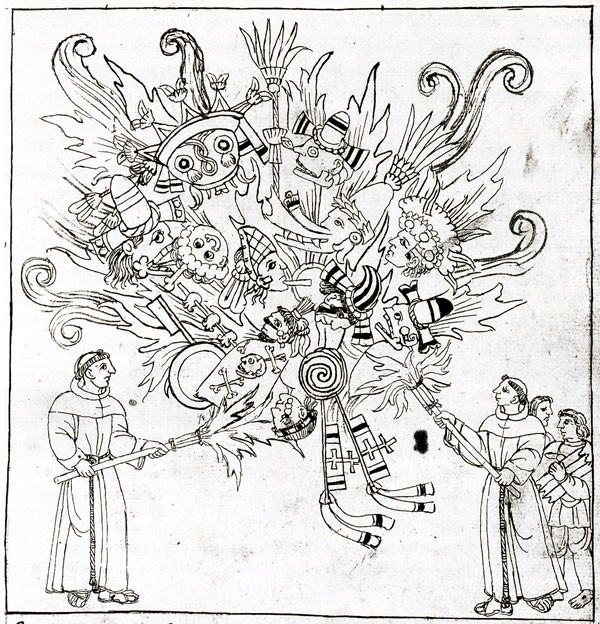
☆
「ラテンアメリカ」における「ポストコロニアリティ」の「発見」
| En
su nivel más simple, lo postcolonial es simplemente el producto de la
experiencia humana, pero experiencia humana del tipo que no se ha
registrado ni representado típicamente a ningún nivel institucional.
Más concretamente, es el resultado
de diferentes orígenes culturales y
nacionales, de las formas en que el color de tu piel o tu lugar y
circunstancia de nacimiento definen el tipo de vida, privilegiada y
placentera, u oprimida y explotada, que tendrás en este mundo.
Las
preocupaciones del postcolonialismo se centran en zonas geográficas de
intensidad que han permanecido en gran medida invisibles, pero que
suscitan o implican cuestiones de historia, etnicidad, identidades
culturales complejas y cuestiones de representación, de refugiados,
emigración e inmigración, de pobreza y riqueza, pero también, y esto es
importante, la energía, la vitalidad y la dinámica cultural creativa
que emergen de forma muy positiva de circunstancias tan exigentes. El
postcolonialismo ofrece un lenguaje de y para los que no tienen lugar,
los que parecen no pertenecer, aquellos cuyos conocimientos e historias
no se les permite contar. Es sobre todo esta preocupación por los
oprimidos, por las clases subalternas, por las minorías de cualquier
sociedad, por las preocupaciones de los que viven o proceden de otros
lugares, lo que constituye la base de la política postcolonial y sigue
siendo el núcleo que genera su continuo poder. (Robert
Young) https://postcolonial.net/2019/04/what-is-postcolonial-studies/ +++++++++++++++++++++++++++++++++++++ ★ポストコロニアルとは、ポスト(後の、という時間的 概念)、コロニアル (植民地的、という空間的ならびに精神的概念)という造語法によるできた形容詞で、植民地主義以降の、あるいは脱植民地状態(コロニアルな状況の後に/終 焉 後の)という意味がある。つまり、植民地主義(コロニアリズム)後の、以降の秩序や状態、その後に生じる出来事一般などをさす(→「ポストコロニアリズ ム」)。 このポストの本来的意味は、時間的経過の概念として の、「植民地後の〜」というものに他ならない。しかし、植民地後に は、さまざまな意味が含まれており、「植民地後の独立」「主権/主体の確立」「植民地状況が終 わった」「植民地状況を脱却した/しようとする」などの意味の派生が生じており、ポストコロニアルという用語を意識的に使う人たちは、そのようなポストコ ロニアルという用語が、多義的に使われることを承知で、あるいは確信犯的に、この用語を使っている。 ☆そこから転じて、政治的議論としての(1)ポストコロニアリズム(postcolonialism) とは、コロニアリズム(植民地主義,colonialism) あるいは帝国主義(imperialism) の伝統が、その後(post-)の歴史的展開なかでも、さまざまな形を通して継続しているという、時間的、空間的、そして精神的概念をめぐる議論のことを さす。そしてポストコロニアル をめぐる学術的議論としての(2)「ポストコロニアリズ ム(ポ ストコロニアル理論:Postcolonialismと も)とは、植民地主義や帝国主義の文化的、政治的、経済的遺産を批判的に学術的に研究するもので、植民地化された人々とその土地に対する人間の支配と搾取 の影響に焦点を当てている。この分野は1960年代に台頭し始め、植民地支配を受けた国の学者たちが植民地支配の残存する影響について論文を発表し、(通 常はヨーロッパの)帝国権力の歴史、文化、文学、言説に対する批判的理論分析を展開した」という。 したがって、ポストコロニアルとは、(1)コロニア ル(植民地状況)な状況や支配が終わった後の秩序や世界のことを意味すると同時に、ポストという時間性を引き受けて、現象面から(2)コロニアル(植民地 状況)な状 況や条件、あるいは支配の形態が現在もなお引き続き存続している、時代ならびに社会概念のことを意味する。 そして、例えば「私たちはポストコロニアルな存在になれるのか?」という審問は、上掲の「コロニアル(植民地状況)な状 況や条件、あるいは支配の形態が現在もなお引き続き存続している」状況のなかで、「コロニア ル(植民地状況)な状況や支配が終わった後の秩序や世界」を創造し、そのなかで生きるためには、「今何が求めれらているのか?」という、実 践上の課題を我々に突きつけるのである。 ☆「ポストコロニアリティ」とは? 「ポストコロニアル」とは、上掲のように植民地後をあらわす形容詞が、名詞化したもので、植民地後の時間的社会的位相をさすと同時に、そのような時間的社 会的位相の「性質」をあらわすと同時に、そのような時間的社会的位相が、到来しているのか?という「批判的分析」が含まれ、次第に「ポストコロニアリズ ム」における議論に接続していく過程でもある。ポストコロニアル の名詞化であり、その内実や正確性を表現する「ポストコロニアリティ」とは、ポストコロニアルとはなにか?その具体的事象やより抽象化した概念化そのもの をさす用語である。 +++++++++++++++++++++++++++++++++++++ +++++++++++++++++++++++++++++++++++++ アニバル・キハノは次の ように述べている。 事実上、すべての経験、歴史、資源、文化的な成果は、ヨーロッパまたは西洋の覇権を中心とする一つのグローバルな文化秩序に収束した。ヨーロッパの新しい グローバルパワーモデルに対する覇権は、主観、文化、特に知識とその生産のあらゆる形態をその支配下に集中させた。彼らは、植民地化された知識生産の形 態、意味の生産モデル、象徴的な世界観、表現と客観化、主観のモデルを可能な限り抑圧した。 [10]Ivanovic, Mladjo (2019). "Echoes of the Past: Colonial Legacy and Eurocentric Humanitarianism". The Rest Write Back: Discourse and Decolonization. BRILL. pp. 82–102 [98]. doi:10.1163/9789004398313_005. ISBN 978-90-04-39831-3. S2CID 203279612. リンダ・トゥヒワイ・スミスは著書『脱植民地化の方法論: リンダ・トゥヒワイ・スミスは著書『脱植民地化の方法論:研究と先住民』の中で次のように述べている。 帝国主義と植民地主義は、植民地化された人々を完全に混乱に陥れ、彼らを自分たちの歴史、風景、言語、社会関係、そして世界に対する独自の考え方、感じ 方、関わり方から切り離した[11]。 [11]Rohrer, J. (2016). Staking Claim: Settler Colonialism and Racialization in Hawai'i. Critical Issues in Indigenous Studies. University of Arizona Press. p. 35. ISBN 978-0-8165-0251-6. この見解によると、植民地主義は法的・政治的な意味では終わったが、その遺産は歴史的に植民地化された場所に住む個人やグループが疎外され搾取される多く の「植民地状況」の中で続いている。脱植民地化学者たちは、植民地主義の遺産として今も続く植民地主義を「コロニアリティ」と呼び、植民地主義が残した抑 圧と搾取を、主観や知識の領域など、相互に関連したさまざまな領域で説明している[4]。 [4]Dreyer, Jaco S. (2017). "Practical theology and the call for the decolonisation of higher education in South Africa: Reflections and proposals". HTS Theological Studies. 73 (4): 1–7 [2, 3, 5]. https://en.wikipedia.org/wiki/Decolonization_of_knowledge |
最
も単純なレベルでは、ポストコロニアルとは、通常、いかなる制度レベルでも記録されたり表現されたりすることのない、人間の経験の産物である。より具体的
には、異なる文化的・民族的背景、肌の色や生まれた場所や状況に
よって、この世界でどのような人生を送るのか、特権的で楽しい人生なのか、抑圧され搾取さ
れる人生なのかが決まる。ポストコロニアル主義の関心は、これまでほとんど目に見えなかったが、歴史、民族、複雑な文化的アイデンティ
ティ、表現の問題、
難民、移民、貧困や富の問題などを喚起したり、それらに関与したりする、地理的に集中した地域を中心としている。しかし、それだけでなく、そのような厳し
い状況から非常に前向きな形で生まれるエネルギー、活気、創造的な文化のダイナミズムも重要である。ポストコロニアル主義は、居場所のない人々、所属して
いないように見える人々、知識や歴史が尊重されない人々のための言語を提供する。それは何よりも、あらゆる社会における被抑圧者、下層階級、少数民族、他
地域から移住してきた人々、他地域出身者に対する関心であり、ポストコロニアル政治の基礎をなし、その継続的な力を生み出す核となっている。
(ロバート・ヤング) https://postcolonial.net/2019/04/what-is-postcolonial-studies/ +++++++++++++++++++++++++++++++++++++ Poscolonial es un adjetivo acuñado a partir del concepto temporal de poscolonial y del concepto espacial y mental de colonial, que significa después del colonialismo o del estado decolonial (después de la situación colonial/después de su fin). En otras palabras, se refiere al orden poscolonial o al estado de cosas después del colonialismo (poscolonialismo ), o a los acontecimientos que ocurren después en general (→ « poscolonialismo »). El significado original de post no es otro que « poscolonial » como concepto del paso del tiempo. Sin embargo, poscolonial tiene diversos significados, con derivaciones como «independencia poscolonial», «establecimiento de la soberanía/sujeto», «fin de la situación colonial», «superación/intento de superación de la situación colonial», etc. Quienes utilizan conscientemente el término poscolonial utilizan el término a sabiendas o con la convicción de que puede utilizarse en múltiples sentidos. En el debate político (1) postcolonialismo se refiere a la continuación de la tradición del colonialismo o imperialismo en diversas formas en desarrollos (post)históricos posteriores, y (2) postcolonialismo como debate político. Se refiere al debate sobre la concepción temporal, espacial y espiritual de la continuidad de la tradición colonial o imperialista a través de diversas formas en desarrollos (post)históricos posteriores. (2) « El Postcolonialismo (también Teoría Postcolonial) es el estudio académico crítico de los legados culturales, políticos y económicos del colonialismo y el imperialismo, y del impacto de la dominación y la explotación humanas sobre los pueblos colonizados y sus tierras». Se centra en los efectos de la dominación y la explotación humanas. El campo empezó a surgir en la década de 1960, cuando estudiosos de países colonizados publicaron artículos sobre los efectos residuales del dominio colonial y desarrollaron análisis teóricos críticos de la historia, la cultura, la literatura y el discurso del poder imperial (normalmente europeo)». Así pues, postcolonial significa (1) el orden y el mundo posteriores al fin de las condiciones y la domin ación coloniales, y al mismo tiempo, asumiendo la temporalidad de lo post, (2) un periodo y una concepción social en los que aún persisten las condiciones, las condiciones o las formas de dominación coloniales desde un punto de vista fenomenológico. (3) el tiempo y la concepción social en los que aún persisten las condiciones coloniales, las condiciones o formas de dominación en el presente. Y, por ejemplo, «¿Podemos ser postcoloniales? ». La pregunta «¿Podemos ser poscoloniales?» es una pregunta práctica: «¿Qué se requiere de nosotros ahora?» para crear y vivir en un « orden y mundo poscoloniales “ en el que ”aún persisten las condiciones y las condiciones o formas de dominación coloniales», como se ha mencionado anteriormente. La cuestión de la «poscolonialidad» nos plantea a todos un reto práctico. ¿Qué es la poscolonialidad? El término «poscolonialidad» es una nominalización del adjetivo «poscolonial», como ya se ha dicho, y se refiere a la fase temporal y social del periodo poscolonial, así como a la «naturaleza» de dicha fase temporal y social y al «análisis crítico» de si ha llegado dicha fase temporal y social. El proceso implica un «análisis crítico» de la «naturaleza» de tales fases temporales y sociales, y está gradualmente conectado con el debate sobre el «postcolonialismo». La «postcolonialidad», que es la nominalización del postcolonialismo y expresa su interioridad y precisión, es un proceso de preguntar: ¿qué es la postcolonialidad? El término se refiere al hecho concreto y a su propia conceptualización más abstracta. +++++++++++++++++++++++++++++++++++++ +++++++++++++++++++++++++++++++++++++ Afirmó Aníbal Quijano: En efecto, todas las experiencias, historias, recursos y productos culturales fueron a parar a un orden cultural global que giraba en torno a la hegemonía europea u occidental. La hegemonía de Europa sobre el nuevo modelo de poder global concentró bajo su hegemonía todas las formas de control de la subjetividad, la cultura y, especialmente, el conocimiento y la producción de conocimiento... Reprimieron al máximo las formas colonizadas de producción de conocimiento, los modelos de producción de sentido, su universo simbólico, el modelo de expresión y de objetivación y subjetividad[10]. En su libro Metodologías descolonizadoras: La Investigación y los Pueblos Indígenas, Linda Tuhiwai Smith escribe El imperialismo y el colonialismo desordenaron por completo a los pueblos colonizados, desconectándolos de sus historias, sus paisajes, sus lenguas, sus relaciones sociales y sus propias formas de pensar, sentir e interactuar con el mundo[11]. Según este punto de vista, el colonialismo ha terminado en el sentido jurídico y político, pero su legado continúa en muchas «situaciones coloniales» en las que se margina y explota a individuos y grupos de lugares históricamente colonizados. Los eruditos descoloniales se refieren a este legado continuado del colonialismo como «colonialidad», que describe la opresión y explotación dejadas por el colonialismo en una variedad de ámbitos interrelacionados, incluido el ámbito de la subjetividad y el conocimiento[4]. |
 Decolonizing methodologies : research and indigenous
peoples (3ed. ed.) / Linda Tuhiwai Smith, Zed Books , 2021,. Decolonizing methodologies : research and indigenous
peoples (3ed. ed.) / Linda Tuhiwai Smith, Zed Books , 2021,.To the colonized, the term 'research' is conflated with European colonialism; the ways in which academic research has been implicated in the throes of imperialism remains a painful memory. This essential volume explores intersections of imperialism and research - specifically, the ways in which imperialism is embedded in disciplines of knowledge and tradition as 'regimes of truth.' Concepts such as 'discovery' and 'claiming' are discussed and an argument presented that the decolonization of research methods will help to reclaim control over indigenous ways of knowing and being. Now in its eagerly awaited third edition, this bestselling book includes a co-written introduction and features contributions from indigenous scholars on the book's continued relevance to current research. It also features a chapter with twenty-five indigenous projects and a collection of poetry. Introduction to the Third Edition Foreword Introduction 1. Imperialism, History, Writing and Theory 2. Research through Imperial Eyes 3. Colonizing Knowledges 4. Research Adventures on Indigenous Land 5. Notes from Down Under 6. The Indigenous People's Project: Setting a New Agenda 7. Articulating an Indigenous Research Agenda 8. Twenty-Five Indigenous Projects 9. Responding to the Imperatives of an Indigenous Agenda: A Case Study of Maori 10. Towards Developing Indigenous Methodologies: Kaupapa Maori Research 11. Choosing the Margins: The Role of Research in Indigenous Struggles for Social Justice 12. Getting the Story Right, Telling the Story Well: Indigenous Activism, Indigenous Research Conclusion: A Personal Journey Twenty Further Indigenous Projects Poems Index |
Para
los colonizados, el término «investigación» se confunde con el
colonialismo europeo; las formas en que la investigación académica se
ha visto implicada en los estertores del imperialismo siguen siendo un
doloroso recuerdo. Este volumen esencial explora las intersecciones
entre imperialismo e investigación, en concreto, las formas en que el
imperialismo está incrustado en las disciplinas del conocimiento y la
tradición como «regímenes de verdad». Se debaten conceptos como
«descubrimiento» y «reivindicación» y se presenta el argumento de que
la descolonización de los métodos de investigación ayudará a reclamar
el control sobre las formas indígenas de conocer y ser. Ahora, en su
esperada tercera edición, este libro superventas incluye una
introducción coescrita y presenta contribuciones de estudiosos
indígenas sobre la continua relevancia del libro para la investigación
actual. También incluye un capítulo con veinticinco proyectos indígenas
y una colección de poesía. 植民地化された人々にとって、「研究」という言葉はヨーロッパの植民地主義と結びつけられ、学術研究が帝国主義の苦悩に関与してきたことは、今もなお痛ま しい記憶として残っている。 この重要な本は、帝国主義と研究との交差点を探求している。特に、帝国主義が「真実の体制」として知識と伝統の分野に組み込まれている方法を探求してい る。「発見」や「主張」といった概念が議論され、研究方法の脱植民地化が、先住民の知と存在に対する支配権を取り戻すのに役立つという主張が提示されてい る。待望の第三版となったこのベストセラーには、共著による序文が収録され、先住民の学者による寄稿が掲載されている。寄稿では、この本が現在の研究に引 き続き関連性を持つことが述べられている。また、25の先住民のプロジェクトを紹介する章や詩のコレクションも収録されている。 第3版への序文 まえがき はじめに 1. 帝国主義、歴史、記述、理論 2. 帝国主義の視点による研究 3. 知識の植民地化 4. 先住民居住地における研究冒険 5. オーストラリアからのメモ 6. 先住民プロジェクト:新たな課題の設定 7. 先住民の研究課題の明確化 8. 25の先住民プロジェクト 9. 先住民の課題の緊急性への対応: マオリ族の事例研究 10. 先住民の方法論の開発に向けて:カウパマオリ研究 11. 境界線を選ぶ:先住民の社会正義を求める闘いにおける研究の役割 12. 物語を正しく伝え、上手に語る:先住民の活動、先住民の研究 結論:個人的な旅 20のさらなる先住民プロジェクト 詩 索引 |
 リンダ・トゥヒワイ・テ・リ
ナ・スミス(旧
姓ミード、1950年生)は、以前はニュージーランド・ハミルトンにあるワイカト大学の先住民教育学の教授だった
が[2][3][4]、現在はテ・ワハレ・ワナング・オ・アワヌアランギの名誉教授である。スミスの学術的貢献は、知識とシステムの脱植民地化に関するも
のである。王立協会テ・アパランギは、スミスが教育に与えた影響について、「学生や研究者がアイデンティティを受け入れ、支配的な物語を乗り越えるための
知的空間」を創出したと説明している[5]。 リンダ・トゥヒワイ・テ・リ
ナ・スミス(旧
姓ミード、1950年生)は、以前はニュージーランド・ハミルトンにあるワイカト大学の先住民教育学の教授だった
が[2][3][4]、現在はテ・ワハレ・ワナング・オ・アワヌアランギの名誉教授である。スミスの学術的貢献は、知識とシステムの脱植民地化に関するも
のである。王立協会テ・アパランギは、スミスが教育に与えた影響について、「学生や研究者がアイデンティティを受け入れ、支配的な物語を乗り越えるための
知的空間」を創出したと説明している[5]。生い立ちと教育 スミスはニュージーランドのワカタネで生まれた[6]。父親は同じく教授のNgāti Awaのシドニー・モコ・ミード、母親はNgāti Porouのジュン・テ・リナ・ミード(旧姓ウォーカー)である[7]。彼女は成人後にトゥヒワイという名を与えられた[7]。スミスは、ニュージーラン ド北島の東端にあるマオリ族の部族、Ngāti AwaとNgāti Porouの出身である[5]。 スミスが10代の頃、父親が博士号取得のためにアメリカに滞在していたため、スミスもアメリカに移住した。彼女の家族はイリノイ州南部に住んでおり、彼女 はカーボンデール・コミュニティ高校に通っていた。アメリカで教育を受けたことで、スミスは学習者としての新たな自信を手に入れた[6]。スミスはその後 マサチューセッツ州セーラムに移り、セーラム・ピーボディ博物館で地下のラベル入力の助手として働いていた[8]。ニュージーランドに戻った後、彼女は ニュージーランドの学生、特にマオリ族の学生たちに、学生としての自信という価値観を応用した。 1970年代、スミスは活動家グループ「Ngā Tamatoa」の創設メンバーであった[9]。彼女はマルコムXとフランツ・ファノンの著作に影響を受けた。Ngā Tamatoaにおける彼女の役割は、マオリ族の人々とワイタンギ条約についてコミュニケーションをとることだった。スミスは、マオリ族の自由を求める闘 いにおいて、教育が最も重要な要素であると考えていた[6]。彼女は大学生時代にNgā Tamatoaのメンバーであった[7]。 スミスはオークランド大学で学士号、修士号(優等)、博士号を取得した。1996年の論文のタイトルは「Ngā aho o te kakahu matauranga: the multiple layers of struggle by Maori in education(マオリ族の教育における闘いの重層性)」であった[10][11]。 経歴 スミスは、ワイカト大学マオリ族副学長、マオリ族・太平洋開発学部長、テ・コタヒ研究所所長である[12]。 スミスの著書『Decolonising Methodologies, Research and Indigenous Peoples』は1999年に初めて出版された[13]。 2013年の新年叙勲で、スミスはマオリ族と教育への貢献により、ニュージーランド勲章コンパニオン章を授与された マオリ族と教育への貢献が認められたためである[14]。2017年、スミスはニュージーランドにおける知識への女性の貢献を称えるロイヤル・ソサエ ティ・テ・アパランギの「150人の女性150の言葉」の1人に選ばれた[15]。 2016年11月、彼女はワイタンギ裁判所のメンバーに任命された[16]。同年、彼女はマオリ族副学長を退任し、新たに設立されたマオリ族・先住民学部 でマオリ族・先住民学教授として短期契約を結んだ[17]。 マオリ族副学長を退任し、新たに設立されたマオリ族・先住民学部でマオリ族・先住民学教授として短期契約を結んだ[17]。 2020年9月、スミスが教育における人種差別について教育省に公開書簡を書いた学者グループの一員であったこと[18]、そして彼女の契約が更新されな いというニュースが報じられた際、#BecauseOfLindaTuhiwaiSmithというハッシュタグが話題となった。手紙の主張についてワイカ ト大学が委託した報告書では、同大学が構造的にマオリ族に対して差別的であることが明らかになった[19]が、手紙の他の主張については支持しなかった [19]。 2021年、スミスはテ・ワレ・ワナンガ・オ・アワヌアランギの名誉教授に就任した[20]。彼女は2021年にアメリカ芸術科学アカデミーに選出された 初のマオリ族学者となった[1]。2021年に、 王立協会から最高の名誉であるラザフォード・メダルがスミスに授与された。このメダルは、「Te Ao Māori(マオリ族の教育と研究の発展における彼女の卓越した役割、研究方法論の脱植民地化における彼女の画期的な研究、そして先住民族のための研究を 世界的に変革する彼女の先駆的な貢献)」に対して贈られたものである[21]。スミスは、この受賞について次のように述べている。 「マオリ族や先住民族にとって、自分たちの知識が認められ、大きな知識の機関の中に自分たちの居場所を確保し、創造していくことはとても重要なことだと思 う。」(リンダ・トゥヒワイ・スミス、2023年)[22] 脱植民地化の方法論 メイン記事:脱植民地化の方法論 スミスは『Decolonising Methodologies, Research and Indigenous Peoples』(Zed Books、1999年、2012年、2021年)の著者であり、この本は、先住民族文化の植民地化プロセスにおいて西洋の学術研究が果たした役割を批判 的に分析したものである。この作品は、社会正義研究における研究手法への大きな貢献とみなされている[13][23][24]。2023年のニュース記事 で、王立協会テ・アパランギは、この作品が5言語に翻訳され、これまでに28万3千回の引用があるとしている[5]。 私生活 スミスは、同じ学者のグラハム・スミスと結婚している[4]。 主な著作 スミス、リンダ・トゥヒワイ。 Decolonizing methodologies: Research and indigenous peoples. Zed Books Ltd., 2013. デンジン、ノーマン・K、イヴォンナ・S・リンカーン、リンダ・トゥヒワイ・スミス編。 Handbook of critical and indigenous methodologies. Sage, 2008. スミス、リンダ・トゥヒワイ。 On tricky ground: 不確かな時代における先住民の研究。N. Denzin & Y. Lincoln (Eds.) The Landscape of Qualitative Research." (2008): 113–143. Smith, Linda Tuhiwai. Kaupapa Māori research: Reclaiming indigenous voice and vision (2000): 225–247. Cram, Fiona, Linda Smith, and Wayne Johnstone. マオリ族の健康に関する話題のマッピング。 (2003) Smith, Linda Tuhiwai. Building a research agenda for indigenous epistemologies and education. Anthropology & education quarterly 36, no. 1 (2005): 93–95. https://en.wikipedia.org/wiki/Linda_Tuhiwai_Smith |
『脱植民地化の方法論:研究と先住民』は、ニュージーランドの学者リンダ・トゥヒワイ・スミスによる著書である。1999年
に初版が発行された『脱植民地化の方法論』は、先住民研究の基礎となるテキストであり、植民地主義と研究方法論の交差点を探求している。 概要 この本は、「『研究』という言葉自体が、先住民の言語の中で最も汚れた言葉の一つである」という一文で始まる。スミスは、西洋の研究パラダイムは「ヨー ロッパ帝国主義と植民地主義と密接不可分」であると主張している。 この本には、マオリ文化の価値観と態度の発展を概説し、マオリの学者によるマオリのテーマの研究を支援する研究フレームワークを作成するためのマオリ研究 の概要が記載されている[1]。 スミスは、カウパマオリの研究方法をどのように実施できると考えているかを説明し、この本を締めくくっている。 影響と評価 『脱植民地化の方法論』は、非常に大きな影響力を持つカウパマオリ研究の方法論のビジョンを示している。Ranginui Walkerは、この本を「支配、闘争、解放の力関係をダイナミックに解釈したもの」と評した[2]。Laurie Anne Whittは、この本を「支配的な研究手法に対する強力な批判」と賞賛した[2]。 Linda Tuhiwai Smithは、2023年にニュージーランド科学アカデミーRoyal Society Te Apārangiから最高栄誉であるラザフォードメダルを授与された[3]。彼らは次のように述べた。 『脱植民地化の方法論、研究、先住民』(1999年)は社会科学全般に多大な影響を与えた。(王立協会 Te Apārangi 2023) この本は5言語に翻訳されている[3]。 他の学者たちからも広く引用されており、2023年末までに28万3,000回引用されている[3]。 0回であった[3]。 ニュージーランドの歴史家ピーター・マンズは、この本の政治的意図を非難し、「著者が「植民地化」と呼ぶ研究は、文化の偏狭な自己イメージを批判的に精査 すること以上のものではない。このような研究は、古い習慣や信念を弱め、偏狭な社会が広く、おそらくはグローバルなコミュニティへと円滑に移行することを 促すという意味で、解放的である。それを「植民地化」と呼ぶのは、感情的な政治に他ならない。 ニュージーランド政府機関である社会開発省のカールラ・ウィルソンによる書評では、先住民ではない研究者やパケハの研究者が先住民コミュニティの研究を行 う際に、どのような指針となるかを考察している。ウィルソンの書評によると、この本の主な焦点は「先住民コミュニティ内の「内部者」による研究」であり、 この問題については詳しく触れていない[1]。 この本は、自身の文化、価値観、思い込み、信念について考え、批判的に捉え、それらが「普通」ではないことを認識する必要性について、貴重な気づきを与え てくれる。(カーラ・ウィルソン 2001年) 2021年、LOM社から出版された同書のスペイン語訳『脱植民地化の方法論』は、エリサ・ロンコンによってチリ憲法制定会議の「多民族図書館」に届けら れた[5]。 批判理論 脱植民地化 知識の脱植民地化 マオリの伝統 |
 【より詳しくは】→ア
ニバル・キハノへ 【より詳しくは】→ア
ニバル・キハノへAníbal Quijano (17 November 1928 – 31 May 2018) was a Peruvian sociologist and humanist thinker, known for having developed the concepts of "coloniality of power" and "coloniality of knowledge".[1] His body of work has been influential in the fields of decolonial studies and critical theory. https://en.wikipedia.org/wiki/An%C3%ADbal_Quijano |
【より詳しくは】→ア
ニバル・キハノへ ア ニバル・キハノ(Aníbal Quijano、1928年11月17日 - 2018年5月31日)は、ペルーの社会学者、人文主義思想家であり、「権力の植民地主義」と「知の植民地主義」の概念を提唱したことで知られる[1]。 彼の業績は、脱植民地化研究や批判理論の分野に影響を与えている。 |
| Coloniality
of knowledge Coloniality of knowledge is a concept that Peruvian sociologist Anibal Quijano developed and adapted to contemporary decolonial thinking. The concept critiques what proponents call the Eurocentric system of knowledge, arguing the legacy of colonialism survives within the domains of knowledge. For decolonial scholars, the coloniality of knowledge is central to the functioning of the coloniality of power and is responsible for turning colonial subjects into victims of the coloniality of being, a term that refers to the lived experiences of colonized peoples. Origin and development Fregoso Bailón and De Lissovoy argue that Hatuey, a Taíno warrior from La Española (which contains Haiti and the Dominican Republic), was among the first to recognize "Western knowledge as a colonial discourse".[2] Inspired by Hatuey, Antonio de Montesinos began his career as an educator in 1511, teaching Bartolomé de las Casas critical thinking.[2] In the contemporary era, Frantz Fanon is considered an influential figure for his critique of the intellectual aspects of colonialism. According to Fanon, "colonialism is a psychic and epistemological process as much as a material one." Quijano built on this insight, advancing the critique of colonialism's intellectual dimensions.[2] The concept of coloniality of knowledge comes from coloniality theories,[note 1] encompassing coloniality of power, coloniality of being, and coloniality of knowledge.[note 2] Peruvian sociologist Anibal Quijano introduced the concept of coloniality of knowledge in 1992,[note 3] discussing global power systems, knowledge, racial hierarchy, and capitalism in Latin American history from the fourteenth century to the present.[note 4] Decolonial thinkers like Walter Mignolo, Enrique Dussel, and Santiago Castro-Gómez later expanded on the concept.[7] Background According to Quijano, colonialism has had a particular influence on colonized cultures' modes of knowing, knowledge production, perspectives, visions; and systems of images, symbols, and modes of signification; along with their resources, patterns, and instruments of formalized and objectivised expression. For Quijano, this suppression of knowledge accompanied the annihilation of indigenous populations throughout the continent, as well as indigenous societies and traditions. Quijano said the patterns of suppression, expropriation, and imposition of knowledge created during the colonial period, as refracted through conceptions of race and racial hierarchy, persisted after colonialism was overturned as "an explicit political order".[8] This persists in numerous "colonial situations" in which individuals and groups in historically colonized regions are excluded and exploited. Decolonial scholars refer to this ongoing legacy of colonialism as "coloniality", which describes colonialism's perceived legacy of oppression and exploitation across many inter-related domains, including knowledge. Ndlovu-Gatsheni cites Quijano, referring to "control of economy; control of authority, control of gender and sexuality; and, control of subjectivity and knowledge".[9] |
知識の植民地性 知識の植民地性は、ペルーの社会学者アニバル・キハノが開発し、現代の脱植民地化思想に適応させた概念である。この概念は、知識の分野に植民地主義の遺産 が残存していると主張する支持者たちが「ヨーロッパ中心主義的知識体系」と呼ぶものを批判している。脱植民地化学者にとって、知識の植民地性は権力の植民 地性の機能にとって中心的なものであり、植民地化された人々が生きた経験を表す「存在の植民地性」の犠牲者に植民地化された人々を変化させる原因となって いる。 起源と発展 Fregoso BailónとDe Lissovoyは、ラ・エスパニョーラ(ハイチとドミニカ共和国を含む)出身のタイノ族の戦士ハトゥエイが、「西洋の知識は植民地的な言説である」と最 初に認識した人物の一人であったと主張している[2]。 現代では、フランツ・ファノンが植民地主義の知的側面を批判した人物として影響力を持つ人物とされている。ファノンによれば、「植民地主義は物質的なもの だけでなく、精神的かつ認識論的なプロセスでもある」[2]。キハノは、この洞察に基づいて、植民地主義の知的側面に対する批判を進めた[2]。 知識の植民地主義の概念は、植民地主義理論から生まれた[注釈 1]もので、権力の植民地主義、存在の植民地主義、知識の植民地主義を包含している[注釈 2]。ペルーの社会学者アニバル・キハノは、 1992年に「知識の植民地主義」の概念を導入し、14世紀から現在に至るラテンアメリカ史におけるグローバルな権力システム、知識、人種的ヒエラル キー、資本主義について論じた[注4]。ウォルター・ミニョーロ、エンリケ・ドゥッセル、サンティアゴ・カストロ=ゴメスといった脱植民地主義思想家たち が、後に この概念を発展させた。 背景 キハノによると、植民地主義は被植民地の文化における認識の仕方、知識の生産、視点、ビジョン、イメージ、シンボル、意味づけのシステム、そしてそれらの 資源、パターン、形式化され客観化された表現の手段に特別な影響を与えてきた。キハノ氏によると、この知識の抑圧は、大陸全域における先住民人口の絶滅、 先住民の社会や伝統の消滅を伴っていた。キハノは、植民地時代に形成された知識の抑圧、収奪、押し付けのパターンが、人種や人種的ヒエラルキーの概念を通 して屈折し、植民地主義が「明白な政治的秩序」として覆された後も続いていると述べた[8]。これは、歴史的に植民地化された地域の個人やグループが排除 され搾取される数多くの「植民地状況」で続いている。脱植民地化論の学者たちは、この植民地主義の遺産を「コロニアルシティ」と呼び、知識を含む多くの相 互に関連する領域における植民地主義の遺産として認識されている抑圧と搾取を表現している。ンドロヴ・ガツェニはキハノの言葉を引用し、「経済、権威、 ジェンダーとセクシュアリティ、そして主観と知識のコントロール」を挙げている[9]。 |
 Walter D. Mignolo Walter D. MignoloWalter D. Mignolo (born May 1, 1941) is an Argentine semiotician (School for Advanced Studies in the Social Sciences) and professor at Duke University, US, who has published extensively on semiotics and literary theory, and worked on different aspects of the modern and colonial world, exploring concepts such as decoloniality, global coloniality, the geopolitics of knowledge, transmodernity, border thinking, and pluriversality. He is one of the founders of the modernity/coloniality critical school of thought.[1] |
ウォルター・D・ミニョーロ→詳しくは、ワルター・ミグノーロ、で解説 ウォルター・D・ミニョーロ(Walter D. Mignolo、1941年5月1日生まれ)は、アルゼンチン出身の記号論学者(School for Advanced Studies in the Social Sciences)であり、デューク大学(米国)の教授である。記号論と文学理論について多くの著作を発表しており、脱植民地主義、グローバル植民地主 義、知識の地政学、トランスモダニティ、ボーダー思考、多元的宇宙論などの概念を探求しながら、近代と植民地時代のさまざまな側面について研究している。 彼は近代性/植民地主義批判学派の創設者の一人である[1]。 |
 Enrique Domingo
Dussel Ambrosini Enrique Domingo
Dussel AmbrosiniEnrique Domingo Dussel Ambrosini (24 December 1934 – 5 November 2023) was an Argentine-Mexican academic, philosopher, historian and theologian. He served as the interim rector of the Universidad Autónoma de la Ciudad de México from 2013 to 2014. |
エンリケ・ドミンゴ・ドゥセル・アンブロシーニ→くわしくは、 エンリケ・ドゥッセル、で解説 エンリケ・ドミンゴ・ドゥセル・アンブロシーニ(Enrique Domingo Dussel Ambrosini、1934年12月24日 - 2023年11月5日)は、アルゼンチン系メキシコ人の学者、哲学者、歴史学者、神学者。2013年から2014年まで、メキシコシティ自治大学の暫定学 長を務めた。 |
 Santiago
Castro-Gómez Santiago
Castro-GómezSantiago Castro-Gómez (born 1958, Bogotá, Colombia) is a Colombian philosopher, a professor at the Pontificia Universidad Javeriana and the director of the Pensar Institute in Bogotá.[1][2] Career and Work Castro-Gómez began studying philosophy at Santo Tomás University in Bogotá, Colombia with members of the "Bogotá Group."[3] He received his M.A. in Philosophy at the University of Tübingen and his Ph.D at the Goethe University Frankfurt am Main in Germany.[4] In addition to his academic positions in Colombia, he has served as visiting professor at Duke University, Pittsburgh University and the Goethe University of Frankfurt. Castro-Gómez is a public intellectual in Colombia whose work has been the subject of conferences and books,[5] debates over Colombian identity,[6] research on Latin American philosophy,[7][8] as well as artistic installations.[9] He is the author or co-editor of more than ten books, many of which have been reissued in new editions.[10] As director of the Pensar Institute in Bogotá, he has led an initiative to engage the public, and specifically early public education, on the effects of racism and colonization in Colombian society.[11] Alongside Aníbal Quijano, Walter Mignolo, Enrique Dussel, Ramón Grosfoguel, Catherine Walsh, Arturo Escobar, Edgardo Lander and Nelson Maldonado-Torres, Castro-Gómez was part of the "Modernity/Coloniality" group, a circle of Latin American critical theorists formed at the beginning of the 21st century.[12][13] Castro-Gómez's work develops alternatives to dominant approaches and figures in Latin American Philosophy, an intervention he makes explicit in Critique of Latin American Reason (1996).[14][15] In addition to colleagues like Aníbal Quijano and Walter Mignolo, his major influences include the Frankfurt School, Friedrich Nietzsche, Michel Foucault and Gilles Deleuze.[16][17] The work of Castro-Gómez explores the "frontiers" between sociology, anthropology, literary studies and cultural studies, while also reflecting on methodological and epistemological problems within the social sciences.[18] In Zero-Point Hubris, Castro-Gómez characterizes Rene Descartes' 1637 famous statement of "I think, therefore I am" as "the moment white Europeans installed themselves above God as the sole arbiters of knowledge and truth. With this turning point, they began to think of themselves as observers whose scientific methods, morals and ethics overrode those of other cultures."[19][20] Books in Spanish El tonto y los canallas: Notas para un republicanismo transmoderno (Bogotá: Universidad Javeriana, 2019). Historia de la gubernamentalidad II. Filosofía, cristianismo y sexualidad en Michel Foucault (Bogotá: Siglo del Hombre Editores, 2016) Revoluciones sin sujeto. Slavoj Zizek y la crítica del historicismo posmoderno. D.F. (México: AKAL 2015). Historia de la gubernamentalidad. Razón de estado, liberalismo y neoliberalismo en Michel Foucault (Bogotá: Siglo del Hombre Editores, 2010). Tejidos Oníricos. Movilidad, capitalismo y biopolítica en Bogotá, 1910-1930 (Bogotá: Universidad Javeriana 2009). Genealogías de la colombianidad: formaciones discursivas y tecnologías de gobierno en los siglos XIX y XX, editores Santiago Castro-Gómez y Eduardo Restrepo (2008). Reflexiones para una diversidad epistémica más allá del capitalismo global, editores Santiago Castro-Gómez y Ramón Grosfoguel (Siglo del Hombre Editores, 2007). La poscolonialidad explicada a los niños (Editorial Universidad del Cauca, Popayán, 2005). La hybris del punto cero. Ciencia, raza e ilustración en la Nueva Granada, 1750-1816 (Bogotá: Universidad Javeriana, 2005). Teorías sin disciplina: Latinoamericanismo, poscolonialidad y globalización en debate. Santiago Castro-Gómez y Eduardo Mendieta (1998). Crítica de la razón latinoamericana (Barcelona: Puvill Libros, 1996; segunda edición: Bogotá, Editorial Pontificia Universidad Javeriana, 2011). Writings in English Critique of Latin American Reason, translated by Andrew Ascherl (Columbia University Press, 2021).[21] Zero-Point Hubris: Science, Race, and Enlightenment in 18th-Century Latin America, translated by Don T. Deere and George Ciccariello-Maher (Rowman & Littlefield International, 2021).[22][23] "The Missing Chapter of Empire: Postmodern Reorganization of Coloniality and Post-Fordist Capitalism" in Globalization and the Decolonial Option (Routledge 2009), pp. 282–302. "(Post)Coloniality for Dummies: Latin American Perspectives on Modernity, Coloniality, and the Geopolitics of Knowledge" in Coloniality at Large: Latin America and the Postcolonial Debate, edited by Mabel Moraña, Enrique Dussel, Carlos A. Jáuregui (Duke University Press, 2008). "Latin American philosophy as critical ontology of the present: Themes and motifs for a 'critique of Latin American reason,'” In Eduardo Mendieta (ed.), Latin American Philosophy: Currents, Issues, Debates (Indiana University Press, 2003), pp. 68–79. "The Social Sciences, Epistemic Violence, and the Problem of the 'Invention of the Other,'" trans. Desiree A. Martin, in Nepantla: Views from South (Duke University Press) Volume 3, Issue 2, 2002, pp. 269–285. "The Cultural and Critical Context of Postcolonialism" in Philosophia Africana (Volume 5, Issue 2, August 2002), pp. 25–34.[24] "The Convergence of World-Historical Social Science, or Can There Be a Shared Methodology for World-Systems Analysis, Postcolonial Theory and Subaltern Studies?" (with Oscar Guardiola-Rivera) in The Modern/Colonial/Capitalist World-System In The Twentieth Century (Westport Conn.: Greenwood Press, 2002), pp. 237–249. “The Challenge of Postmodernity to Latin American Philosophy" in Latin America and Postmodernity: A Contemporary Reader, edited by Pedro Lange-Churion, Eduardo Mendieta (Amherst: Humanity Books, 2001). "Traditional and Critical Theories of Culture" in Nepantla: Views From South (Duke University Press, 2000), pp. 503–518. "Traditional vs. Critical Cultural Theory," trans. Francisco González and Andre Moskowitz, in Cultural Critique No. 49, Critical Theory in Latin America (Autumn, 2001), pp. 139–154. "Latin American Postcolonial Theories" in Peace Review (Taylor and Francis, 1998), pp. 27–33. |
サンティアゴ・カストロ=ゴメス サンティアゴ・カストロ=ゴメス(1958年、コロンビア、ボゴタ生まれ)は、コロンビアの哲学者であり、ポンティフィシア・ウニベルシダ・ハベリアーナ の教授、ボゴタのペンサル研究所の所長である[1][2]。 経歴と業績 カストロ=ゴメスは、コロンビアのボゴタにあるサント・トマス大学で、「ボゴタ・グループ」のメンバーとともに哲学の研究を始めた[3]。「ボゴタ・グ ループ」のメンバーとともに、コロンビアのボゴタにあるサント・トマス大学で哲学の勉強を始めた[3]。彼はドイツのテュービンゲン大学で哲学の修士号 を、フランクフルト・アム・マインのゲーテ大学で哲学の博士号を取得した[4]。コロンビアでの学術的立場に加え、デューク大学、ピッツバーグ大学、フラ ンクフルト・ゲーテ大学の客員教授も務めている。 カストロ=ゴメス氏は、コロンビアの公共知識人であり、彼の研究は学会や書籍で取り上げられ、[5]コロンビアのアイデンティティをめぐる議論や、[6] ラテンアメリカの哲学の研究、[7][8]芸術作品の展示でも取り上げられている。特に、コロンビア社会における人種差別と植民地化の影響について、一般 市民、特に初期の公教育に働きかけるイニシアティブを主導した[11]。 アニバル・キハノ、ウォルター・ミニョーロ、エンリケ・ドゥッセル、ラモン・グロスフォゲル、キャサリン・ウォルシュ、アルトゥロ・エスコバル、エドガル ド・ランデル、ネルソン・マルドナド=トーレスらとともに、カストロ=ゴメスも「モダニティ/コロニアリティ」グループの一員であった。21世紀初頭に結 成されたラテンアメリカの批評理論家のサークルである。[12][13] カストロ=ゴメスの研究は、ラテンアメリカ哲学における支配的なアプローチや概念に代わるものを開発しており、その介入は『ラテンアメリカ的理性批判』 (1996年)で明示されている。[14][15] アニバル・キハノやウォルター・ミニョロのような同僚に加えて、彼の主な影響源にはフランクフルト学派、フリードリヒ・ニーチェ、ミシェル・フーコー、ジ ル・ドゥルーズなどが含まれる。 カストロ=ゴメスの研究は、社会学、人類学、文学研究、文化研究間の「境界」を探求すると同時に、社会科学における方法論的・認識論的問題についても考察 している[18]。『ゼロポイント・ハブリス』の中で、カストロ=ゴメスは、ルネ・ デカルトの1637年の有名な言葉「我思う、ゆえに我あり」を「白人ヨーロッパ人が知識と真理の唯一の裁定者として神の上に君臨した瞬間」と特徴づけてい る。この転換点をもって、彼らは科学的方法、道徳、倫理が他の文化のそれを凌駕する観察者として自らを捉えるようになった」[19] [20]。 スペイン語による著書 El tonto y los canallas: Notas para un republicanismo transmoderno (ボゴタ: Universidad Javeriana, 2019). Historia de la gubernamentalidad II. ミシェル・フーコーにおける哲学、キリスト教、セクシュアリティ(ボゴタ:Siglo del Hombre Editores、2016年) 主体なき革命。 スラヴォイ・ジジェクとポストモダニズムの歴史主義批判。 D.F. (メキシコ:AKAL 2015年) 統治性の歴史。国家の論理、自由主義、新自由主義:ミシェル・フーコー論(Bogotá: Siglo del Hombre Editores, 2010)。 夢織物:移動、資本主義、生物政治学:1910-1930年のボゴタ(Bogotá: Universidad Javeriana 2009)。 『コロンビア性の系譜:19世紀と20世紀における言説の形成と統治技術』Santiago Castro-GómezとEduardo Restrepo編(2008年)。 『グローバル資本主義を超えた認識論的多様性への考察』Santiago Castro-GómezとRamón Grosfoguel編(Siglo del Hombre Editores、2007年)。 La poscolonialidad explicada a los niños (Editorial Universidad del Cauca, Popayán, 2005). La hybris del punto cero. Ciencia, raza e ilustración en la Nueva Granada, 1750-1816 (Bogotá: Universidad Javeriana, 2005). Teorías sin disciplina: Latinoamericanismo, poscolonialidad y globalización en debate. サンティアゴ・カストロ=ゴメスとエドゥアルド・メンディエタ著(1998年)。 ラテンアメリカの理性の批判』(バルセロナ:プヴィル・リブロス、1996年、第2版:ボゴタ、Pontificia Universidad Javeriana出版社、2011年)。 英語による著作 ラテンアメリカの理性の批判』(アンドリュー・アッシャーレル訳)(コロンビア大学出版、2021年)。[21] ゼロポイントの傲慢: 18世紀ラテンアメリカの科学、人種、啓蒙』(ドン・T・ディアとジョージ・チッカリエロ=マーハー訳、ローマン・アンド・リトルフィールド・インターナ ショナル、2021年)[22][23] 「帝国の失われた章: 『グローバリゼーションと脱植民地化への選択』(Routledge 2009年)所収「帝国主義の欠落した章:ポストモダンにおける植民地主義の再編成とポストフォード主義資本主義」282-302ページ。 『(ポスト)植民地主義入門:ラテンアメリカにおける近代、植民地主義、知識の地政学』『Coloniality at Large: ラテンアメリカとポストコロニアル論争』(Mabel Moraña、Enrique Dussel、Carlos A. Jáuregui編、デューク大学出版、2008年)所収。 「ラテンアメリカの哲学:現在における批判的実在論」『ラテンアメリカの哲学:潮流、課題、論争』(Eduardo Mendieta編、インディアナ大学出版、2003年)所収、68-79ページ。(インディアナ大学出版、2003年)、68~79ページ。 「社会科学、認識論的暴力、そして『他者の発明』の問題」、『ネパントラ:南からの視点』(デューク大学出版)第3巻第2号、2002年、269~285 ページ。 「ポストコロニアリズムの文化的・批判的背景」『Philosophia Africana』(第5巻第2号、2002年8月)25-34ページ。 「世界史的社会科学の収束、あるいは世界システム分析、ポストコロニアリズム理論、サバルタン研究に共通の方法論は可能か?(オスカー・グアルディオラ= リベラとの共著)『20世紀における近代/植民地/資本主義的世界システム』(コネチカット州ウエストポート:グリーンウッドプレス、2002年) 237~249ページ。 「ポストモダニティがラテンアメリカ哲学に投げかける課題」『ラテンアメリカとポストモダニティ:現代文学選集』(ペドロ・ランゲ=チュリオン、エドゥア ルド・メンディエタ編) (アマースト:ヒューマニティ・ブックス、2001年)所収。 「ネパントラ:南からの視点」(デューク大学出版、2000年)所収の「文化の伝統的・批判的理論」pp.503-518。 「伝統的対批判的文化理論」フランシスコ・ゴンザレス、アンドレ・モスコウィッツ訳、Cultural Critique No.49, Critical Theory in Latin America(2001年秋)pp.139-154。 「ラテンアメリカのポストコロニアル理論」『ピース・レビュー』(Taylor and Francis、1998年)、27-33ページ。 |
 Robert J. C.
Young Robert J. C.
YoungRobert J. C. Young FBA (born 1950) is a British postcolonial theorist, cultural critic, and historian. Life Young was educated at Repton School and Exeter College, Oxford, where he read for a B.A. and D.Phil., taught at the University of Southampton, and then returned to Oxford University where he was Professor of English and Critical Theory and a fellow of Wadham College. In 2005, he moved to New York University where he is Julius Silver Professor of English and Comparative Literature.[1] From 2015 - 2018, he was Dean of Arts & Humanities at NYU Abu Dhabi. As a graduate student at Oxford, he was one of the founding editors of the Oxford Literary Review, the first British journal devoted to literary and philosophical theory. Young is Editor of Interventions: International Journal of Postcolonial Studies which is published eight times a year.[2] His work has been translated into over twenty languages.[3] In 2013 he was elected a Corresponding Fellow of the British Academy,[4] in 2017 he was elected to an honorary life fellowship at Wadham College, Oxford.[5] Young is currently President of the AILC/ICLA Research Committee on Literary Theory.[6] Works Young's work has been described as being 'at least partially instrumental in the radicalisation of postcolonialism'.[2] His first book, White Mythologies: Writing History and the West (1990)[7] argues that Marxist philosophies of history had claimed to be world histories but had really only ever been histories of the West, seen from a Eurocentric—even if anti-capitalist—perspective. Offering a detailed critique of different versions of European Marxist historicism from Lukács to Jameson, Young suggests that a major intervention of postcolonial theory has been to enable different forms of history and historicisation that operate outside the paradigm of Western universal history. While postcolonial theory uses certain concepts from post-structuralism to achieve this, Young argues that post-structuralism itself involved an anti-colonial critique of Western philosophy, pointing to the role played by the experience of the Algerian War of Independence in the lives of many French philosophers of that generation, including Derrida, Cixous, Lyotard, Althusser, and Bourdieu. White Mythologies was the first book to characterise postcolonial theory as a field in itself, and to identify the work of Edward W. Said, Gayatri Chakravorty Spivak, Homi K. Bhabha and the Subaltern Studies historians as its intellectual core.[citation needed] In Colonial Desire (1995)[8] Young examined the history of the concept of 'hybridity', showing its genealogy through nineteenth-century racial theory and twentieth-century linguistics, prior to its counter-appropriation and transformation into an innovative cultural-political concept by postcolonial theorists in the 1990s. Young demonstrates the extent to which racial theory was always developed in historical, scientific and cultural terms, and argues that this complex formation accounts for the ability of racialised thinking to survive into the modern era despite all the attempts made since 1945 to refute it. The most significant mistake that has been made, he suggests, involves the assumption that race was developed in the nineteenth-century purely as a 'science' which can be challenged on purely scientific grounds. Having deconstructed 'white Marxism' through the lens of postcolonial theory in White Mythologies, in Postcolonialism: An Historical Introduction (2001),[9] Young charted the genealogy of postcolonial theory in the very different trajectory of Marxism as the major ideological component of twentieth-century anti-colonial struggles. The book provides the first genealogy of the anticolonial thought and practice which form the roots of postcolonialism,[10] tracing the relation of the history of the national liberation movements to the development of postcolonial theory.[11] Stressing the significance of the work of the Third International, as well as Mao Zedong's reorientation of the landless peasant as the revolutionary subject, Young points to the importance of the Havana Tricontinental of 1966 as the first independent coming together of the three continents of the South—Africa, Asia and Latin America—in political solidarity, and argues that this was the moment in which what is now called 'postcolonial theory' was first formally constituted as a specific knowledge-base of non-Western political and cultural production. In Postcolonialism: A Very Short Introduction (2003)[12] Young links this genealogy of postcolonialism to the contemporary activism of the New Social Movements in non-Western countries. Intended as an introduction to postcolonialism for the general reader, the book is written in a highly accessible style and unorthodox format, mixing history with fiction, cultural analysis with moments of poetic intensity that stage and evoke postcolonial experience rather than merely describe it. Instead of approaching postcolonialism through its often abstract and esoteric theories, the book works entirely out of particular examples. These examples emphasise issues of migration, gender, language, indigenous rights, 'development' and ecology as well as addressing the more usual postcolonial ideas of ambivalence, hybridity, orientalism and subalternity. In The Idea of English Ethnicity (2008)[13] Young returned to the question of race to address an apparent contradiction—the idea of an English ethnicity. Why does ethnicity not seem to be a category applicable to English people? To answer this question, Young reconsiders the way that English identity was classified in historical and racial terms in the nineteenth century. He argues that what most affected this was the relation of England to Ireland after the Act of Union of 1800–1. Initial attempts at excluding the Irish were followed by a more inclusive idea of Englishness which removed the specificities of race and even place. Englishness, Young suggests, was never really about England at all,[14] but was developed as a broader identity, intended to include not only the Irish (and thus deter Irish nationalism) but also the English diaspora around the world—North Americans, South Africans, Australians and New Zealanders, and even, for some writers, Indians and those from the Caribbean. By the end of the nineteenth century, this had become appropriated as an ideology of empire. The delocalisation of the country England from ideas of Englishness (Kipling's "What do they know of England who only England know?") could account for why recent commentators have found Englishness so hard to define—while at the same time providing an explanation of why some of the most English of Englishmen have been Americans. On the other hand, Young argues, its broad principle of inclusiveness also helps to explain why Britain has been able to transform itself into one of the more integrated, or hybridized, of modern multiethnic nations.[15] In 2015, together with Jean Khalfa, Young published a 680-page collection of writings by Frantz Fanon, the first new work by Fanon to be published in over 50 years, Écrits sur l’aliénation et la liberté[16] which includes two previously unpublished plays, together with psychiatric and political essays, letters, editorials from the weekly journals at the hospitals at Saint Alban (Trait d'union) and Blida (Notre Journal), as well as a complete list of Fanon's library and his annotations to his books.[17] |
ロバート・J・C・ヤング ロバート・J・C・ヤング FBA(1950年生まれ)は、イギリスのポストコロニアル理論家、文化評論家、歴史学者である。 経歴 ヤングはレプトン校とオックスフォード大学エクセター・カレッジで教育を受け、そこで文学士号と博士号を取得した。サザンプトン大学で教鞭をとった後、 オックスフォード大学に戻り、英語と批評理論の教授、ワドハム・カレッジのフェローとなった。2005年、ニューヨーク大学に移り、ジュリアス・シルバー 英語・比較文学教授に就任した[1]。2015年から2018年まで、ニューヨーク大学アブダビ校の芸術・人文科学学部長を務めた。 オックスフォード大学の大学院生だった頃、文学と哲学理論を専門とする英国初の学術誌『オックスフォード・リテラリー・レビュー』の創刊編集者の一人と なった。ヤングは、『Interventions: 年に8回発行される『Interventions: International Journal of Postcolonial Studies』の編集者でもある[2]。彼の作品は20以上の言語に翻訳されている[3]。2013年には英国学士院の通信会員に選出された[4]。 2017年にはオックスフォード大学ワドハム・カレッジの名誉終身会員に選出された[5]。オックスフォード大学ワドハム・カレッジの名誉終身研究員に選 出された[5]。ヤングは現在、AILC/ICLA文学理論研究委員会の委員長を務めている[6]。 著作 ヤングの著作は、「ポストコロニアリズムの急進化に少なくとも部分的に貢献した」と評されている[2]。彼の最初の著書『White Mythologies: (1990年)[7]では、マルクス主義の歴史哲学は世界史であると主張しているが、実際には反資本主義的視点を持つヨーロッパ中心主義の観点から見た西 洋の歴史にすぎない、と論じている。ルーカスからジェイムソンに至るヨーロッパのマルクス主義の歴史主義のさまざまなバージョンについて詳細な批判を展開 したヤングは、ポストコロニアル理論の主な介入は、西洋の普遍的な歴史というパラダイムの外で機能するさまざまな形式の歴史と歴史化を実現することだった と示唆している。ポストコロニアル理論は、ポスト構造主義の概念を援用してこれを達成しているが、ヤングは、ポスト構造主義自体が西洋哲学に対する反植民 地主義的批判を含んでいたと主張している。その根拠として、デリダ、シクスー、リオタール、アルチュセール、ブルデューなど、同世代の多くのフランス人哲 学者の人生において、アルジェリア独立戦争の経験が果たした役割を挙げている。『White Mythologies』は、ポストコロニアル理論をひとつの分野として特徴づけた最初の著作であり、エドワード・W・サイード、ガヤトリ・チャクラヴォ ルティ・スピヴァク、ホミ・K・ババ、サバルタン・スタディーズの歴史学者の業績をその知的中核として特定した[要出典]。 『Colonial Desire』(1 1995年)[8] ヤングは「ハイブリッド性」という概念の歴史を検証し、19世紀の人種理論や20世紀の言語学を通じてその系譜を示し、1990年代にポストコロニアル理 論家たちによってその概念が革新的な文化政治的概念として再解釈・再構築されるまでの経緯を明らかにした。ヤングは、人種理論が常に歴史的、科学的、文化 的な観点から発展してきたことを示し、この複雑な形成が、1945年以降、人種差別的思考を否定する試みがなされてきたにもかかわらず、それが現代まで生 き延びている理由であると主張している。彼が指摘する最も重大な過ちは、人種が19世紀に純粋に「科学」として発展し、純粋に科学的根拠に基づいて反論で きるという考えに基づいていることである。 『White Mythologies』でポストコロニアル理論の観点から「白人マルクス主義」を解体した後、ヤングは『Postcolonialism: An Historical Introduction』(2001年)[9]で、20世紀の反植民地闘争における主要なイデオロギー的要素であるマルクス主義の全く異なる軌跡の中 で、ポストコロニアル理論の系譜を明らかにした。この本は、ポストコロニアリズムのルーツとなる反植民地主義思想と実践の最初の系譜を提供しており、 [10] 民族解放運動の歴史とポストコロニアリズム理論の発展との関係を追跡している[11]。第三インターナショナルの活動と、毛沢東による土地を持たない農民 を革命の主題として再方向づけることの重要性を強調し、 ヤングは、1966年のハバナ・トライコンティネンタルが、南アフリカ、アジア、ラテンアメリカの3大陸が初めて政治的連帯のもとに集まった独立イベント であったことの重要性を指摘し、これが「ポストコロニアル理論」と呼ばれるものが、非西洋の政治・文化生産の特定の知識基盤として初めて正式に構成された 瞬間であったと主張している。 『ポストコロニアリズム:超入門』(2003年)[12]で、ヤングはポストコロニアリズムの系譜を、非西洋諸国の新しい社会運動の現代的活動と結びつけ ている。一般読者向けのポストコロニアリズム入門として書かれたこの本は、非常に読みやすく、型にはまらないスタイルで書かれており、歴史とフィクショ ン、文化分析と詩的な表現を織り交ぜ、ポストコロニアリズムの経験を単に描写するのではなく、それを舞台化し、喚起するような構成となっている。この本 は、抽象的で難解な理論を通してポストコロニアリズムを論じるのではなく、具体的な事例をすべて取り上げて論じている。これらの事例は、移住、ジェン ダー、言語、先住民の権利、「開発」、エコロジーの問題を強調するとともに、両義性、ハイブリッド性、オリエンタリズム、サブオルタナリティといった、よ り一般的なポストコロニアリズムの概念にも言及している。 『The Idea of English Ethnicity』(2008年)[13]でヤングは、人種というテーマに立ち返り、一見矛盾してい るように見える「イングランド民族」という概念につ いて考察している。 なぜイングランド民族という概念は、イングランド人にとって当てはまらないカテゴリーであるように見えるのだろうか? この疑問に答えるため、ヤングは19世紀にイングランド人のアイデンティティが歴史的、人種的な観点からどのように分類されていたかを再考している。彼 は、1800年から1801年の連合法以降、イングランドとアイルランドの関係がこの考え方に最も影響を与えたと主張している。当初、アイルランド人を排 除しようとする動きがあったが、その後、人種や場所といった特定の要素を排除した、より包括的なイングランド人としての考え方が生まれた。ヤングは、イン グランドらしさとは実際にはイングランドについてのことでは決してなかったと主張している[14]。イングランドらしさは、より広範なアイデンティティと して発展し、アイルランド人(そしてアイルランド民族主義の抑止)だけでなく、北米、南アフリカ、オーストラリア、ニュージーランド、さらには一部の作家 にとってはインドやカリブ海諸国の人々も含むことを意図していた。19世紀末までに、これは帝国のイデオロギーとして定着した。イングランドという国を、 イングランドらしさという概念から切り離す(キップリングの「イングランドを知る者はイングランドを知るのみ」という一節)ことで、最近の論評家たちがイ ングランドらしさを定義するのが難しいと感じている理由を説明できる。一方、ヤングは、その包括的な原則が、イギリスが現代多民族国家の中でもより統合さ れた、あるいはハイブリッド化された国家へと変貌を遂げることができた理由も説明していると主張している[15]。 2015年、ヤングはジャン・カルファとともに、50年ぶりに出版されたファン・ファノンの新作『 50年ぶりに出版された『隷属と自由についての諸論考』[16]には、2つの未発表戯曲、精神医学や政治に関するエッセイ、手紙、サン・アルバン病院 (Trait d'union)とブリダ病院(Notre Journal)の週刊誌に掲載された論説、ファノンの蔵書リスト、ファノンが書籍に付けた注釈などが含まれている[17]。 |
| https://en.wikipedia.org/wiki/Robert_J._C._Young |
★ 類似項目:「知識のコロニアリティ=知識の植民地性」
知 識のコロニアリティ=知識の植民地性は、ペルーの社会学者アニバル・キハノが開発し、現代の脱植民地化思想に適応させた概念である。この概念は、知識の 分野に植民地主義の遺産が残存していると主張する支持者たちが「ヨーロッパ中心主義的知識体系」と呼ぶものを批判している。脱植民地化学者にとって、知識 の植民地性は権力の植民地性を機能させる上で中心的なものであり、植民地化された人々を植民地化された存在の犠牲者に変える原因となっている。植民地化さ れた人々の生活経験を指す言葉である。
| Coloniality
of knowledge Coloniality of knowledge is a concept that Peruvian sociologist Anibal Quijano developed and adapted to contemporary decolonial thinking. The concept critiques what proponents call the Eurocentric system of knowledge, arguing the legacy of colonialism survives within the domains of knowledge. For decolonial scholars, the coloniality of knowledge is central to the functioning of the coloniality of power and is responsible for turning colonial subjects into victims of the coloniality of being, a term that refers to the lived experiences of colonized peoples. |
知識のコロニアリティ(Coloniality
of knowledge) 知識のコロニアリティ=知識の植民地性は、ペルーの社会学者アニバル・キハノが開発し、現代の脱植民地化思想に適応させた概念である。この概念は、知識の 分野に植民地主義の遺産が残存していると主張する支持者たちが「ヨーロッパ中心主義的知識体系」と呼ぶものを批判している。脱植民地化学者にとって、知識 の植民地性は権力の植民地性を機能させる上で中心的なものであり、植民地化された人々を植民地化された存在の犠牲者に変える原因となっている。植民地化さ れた人々の生活経験を指す言葉である。 |
 In his 1585 Descripción de Tlaxcala, Diego Muñoz Camargo illustrated the book burning of pre-Columbian codices by Franciscan friars.[1] Fig. 1: Destruction of Mexican Codices. Diego Muñoz Camargo, “Descripción de la ciudad y provincia de Tlaxcala” (c. 1585). Sp Coll MS Hunter 242 (U.3.15) folio 242r (Glasgow University). Source: Andreas Beer/Gesa Mackenthun, eds. Fugitive Knowledge 14.(coloniality of knowledge) |
1585年に出版された『トラスカラ州誌』の中で、ディエゴ・ムニョス・カマルゴは、フランシスコ会の修道士によるコロンブス以前の写本の焼却について述 べている[1]。 図1:メキシコの写本の破壊。ディエゴ・ムニョス・カマルゴ 「Descripción de la ciudad y provincia de Tlaxcala」(1585年頃)。Sp Coll MS Hunter 242 (U.3.15) folio 242r(グラスゴー大学)。出典:Andreas Beer/Gesa Mackenthun, eds. Fugitive Knowledge 14.(coloniality of knowledge) |
| Origin and development Fregoso Bailón and De Lissovoy argue that Hatuey, a Taíno warrior from La Española (which contains Haiti and the Dominican Republic), was among the first to recognize "Western knowledge as a colonial discourse".[2] Inspired by Hatuey, Antonio de Montesinos began his career as an educator in 1511, teaching Bartolomé de las Casas critical thinking.[2] In the contemporary era, Frantz Fanon is considered an influential figure for his critique of the intellectual aspects of colonialism. According to Fanon, "colonialism is a psychic and epistemological process as much as a material one." Quijano built on this insight, advancing the critique of colonialism's intellectual dimensions.[2] The concept of coloniality of knowledge comes from coloniality theories,[note 1] encompassing coloniality of power, coloniality of being, and coloniality of knowledge.[note 2] Peruvian sociologist Anibal Quijano introduced the concept of coloniality of knowledge in 1992,[note 3] discussing global power systems, knowledge, racial hierarchy, and capitalism in Latin American history from the fourteenth century to the present.[note 4] Decolonial thinkers like Walter Mignolo, Enrique Dussel, and Santiago Castro-Gómez later expanded on the concept.[7] |
起源と発展 フレゴソ・バイロンとデ・リソヴォイは、ハイチとドミニカ共和国を含むラ・エスパニョーラ出身のタイノ族戦士ハトゥエイが、「植民地としての西洋の知識」 を最初に認識した人物の一人であったと主張している[2]。ハトゥエイに感化された 現代では、フランツ・ファノンが植民地主義の知的側面を批判した人物として影響力を持つ人物とされている。ファノンによれば、「植民地主義は物質的なもの だけでなく、精神的かつ認識論的なプロセスでもある」[2]。キハノは、この洞察に基づいて、植民地主義の知的側面に対する批判を進めた[2]。 知識の植民地主義の概念は、植民地主義理論から生まれた[注釈 1]もので、権力の植民地主義、存在の植民地主義、知識の植民地主義を包含している[注釈 2]。ペルーの社会学者アニバル・キハノは、1992年に知識の植民地主義の概念を導入し 1992年に知識の植民地主義の概念を導入し、14世紀から現在までのラテンアメリカ史におけるグローバルな権力システム、知識、人種的ヒエラルキー、資 本主義について論じた[注3][注4]。その後、ウォルター・ミニョロ、エンリケ・ドゥッセル、サンティアゴ・カストロ=ゴメスといった脱植民地主義思想 家たちがこの概念を発展させた[7]。 |
| Background According to Quijano, colonialism has had a particular influence on colonized cultures' modes of knowing, knowledge production, perspectives, visions; and systems of images, symbols, and modes of signification; along with their resources, patterns, and instruments of formalized and objectivised expression. For Quijano, this suppression of knowledge accompanied the annihilation of indigenous populations throughout the continent, as well as indigenous societies and traditions. Quijano said the patterns of suppression, expropriation, and imposition of knowledge created during the colonial period, as refracted through conceptions of race and racial hierarchy, persisted after colonialism was overturned as "an explicit political order".[8] This persists in numerous "colonial situations" in which individuals and groups in historically colonized regions are excluded and exploited. Decolonial scholars refer to this ongoing legacy of colonialism as "coloniality", which describes colonialism's perceived legacy of oppression and exploitation across many inter-related domains, including knowledge. Ndlovu-Gatsheni cites Quijano, referring to "control of economy; control of authority, control of gender and sexuality; and, control of subjectivity and knowledge".[9] |
背景 キハノによると、植民地主義は、植民地化された文化の認識方法、知識の生産、視点、ビジョン、イメージ、シンボル、意味づけのシステム、そして形式化され 客観化された表現の資源、パターン、手段に特別な影響を与えてきた。キハノにとって、この知識の抑圧は、大陸全体にわたる先住民人口の絶滅、先住民の社会 や伝統の消滅を伴っていた。キハノは、植民地時代に形成された知識の抑圧、収奪、押し付けのパターンが、人種や人種的ヒエラルキーの概念を通して屈折し、 植民地主義が「明白な政治的秩序」として覆された後も続いていると述べた[8]。これは、歴史的に植民地化された地域の個人やグループが排除され搾取され る数多くの「植民地状況」で続いている。脱植民地化論の学者たちは、この植民地主義の遺産を「コロニアルシティ」と呼び、知識を含む多くの相互に関連する 領域における植民地主義の遺産として認識されている抑圧と搾取を表現している。ンドロヴ・ガツェニはキハノの言葉を引用し、「経済、権威、ジェンダーとセ クシュアリティ、そして主観と知識のコントロール」を挙げている[9]。 |
| Theoretical perspective For Nelson Maldonado-Torres, coloniality denotes the long-standing power structures that developed as a result of colonialism but continue to have an impact on culture, labor, interpersonal relations, and knowledge production that extends far beyond the formal boundaries of colonial administrations. It lives on in literature, academic achievement standards, cultural trends, common sense, people's self-images, personal goals, and other aspects of modern life.[10] Anibal Quijano described this power structure as "coloniality of power" that is predicated on the idea of "coloniality of knowledge",[11] which is "central to the operation of the coloniality of power".[12] While the term coloniality of power refers to the inter-relationship between "modern forms of exploitation and domination", the term coloniality of knowledge concerns the influence of colonialism on domains of knowledge production.[13] Karen Tucker identifies the "coloniality of knowledge" as "one of multiple, intersecting forms of oppression" within a system of "global coloniality".[14] The coloniality of knowledge "appropriates meaning" in the same manner as coloniality of power "takes authority, appropriates land, and exploits labor".[15] The coloniality of knowledge raises epistemological concerns such as who creates what knowledge and for what purpose, the relevance and irrelevance of knowledge, and how specific knowledges disempower or empower certain peoples and communities.[16] The thesis directly or implicitly questions fundamental epistemological categories and attitudes such as belief and the pursuit of objective truth, the concept of the rational subject, the epistemological distinction between the knowing subject and the known object, the assumption of "the universal validity of scientific knowledge, and the universality of human nature". According to this theory, these categories and attitudes are "Eurocentric constructions" that are intrinsically infused with what may be called the "colonial will to dominate".[17] Decolonial theorists refer to "Eurocentric knowledge system", which they believe had assigned the creation of knowledge to Europeans and prioritized the use of European methods of knowledge production. According to Quijano, the hegemony of Europe over the new paradigm of global power consolidated all forms of control over subjectivity, culture and, in particular, knowledge and the creation of knowledge under its hegemony. This resulted in the denial of knowledge creation to conquered peoples on the one hand, and the repression of traditional forms of knowledge production on the other, based on the hierarchical structure's superiority/inferiority relationship.[18] Quijano characterizes Eurocentric knowledge as a "specific rationality or perspective of knowledge that was made globally hegemonic" through the intertwined operation of colonialism and capitalism. It works by constructing binary hierarchical relationships between "the categories of object" and symbolizes a specific secular, instrumental, and "technocratic rationality" that Quijano contextualizes in reference to the mid-seventeen century West European thought and the demands of nineteenth-century global capitalist expansion.[8] For Quijano, it codifies relations between Western Europe and the rest of the world using categories such as "primitive-civilized", "irrational-rational", and "traditional-modern"; and creates distinctions and hierarchies between them so "non-Europe" is aligned with the past and is thus "inferior, if not always primitive".[8] Similarly, it codifies the relationship between Western Europe and "non-Europe" as one between subject and object, perpetuating the myth that Western Europe is the only source of reliable knowledge.[19] For Quijano, the "Western epistemological paradigm" suggests: only European culture is rational, it can contain "subjects" – the rest are not rational, they cannot be or harbor "subjects". As a consequence, the other cultures are different in the sense that they are unequal, in fact inferior, by nature. They only can be "objects" of knowledge or/and of domination practices. From that perspective, the relation between European culture and the other cultures was established and has been maintained, as a relation between "subject" and "object". It blocked, therefore, every relation of communication, of interchange of knowledge and of modes of producing knowledge between the cultures, since the paradigm implies that between "subject" and "object" there can be but a relation of externality.[20] — Anibal Quijano quoted in Paul Anthony Chambers, Epistemology and Domination, 2020 The subject-object dualism proposed by Quijano and other decolonial thinkers such as Enrique Dussel is based on a particular reading of René Descartes' idea of cogito. The "I" in the iconic expression "I think, therefore I am" is an imperial "I" that, according to Quijano, "made it possible to omit every reference to any other 'subject' outside the European context".[20][21] Before Lyotard, Vattimo and Derrida in Europe, the Argentine Enrique Dussel signalled the consequences of Heidegger's critique of Western metaphysics and drew attention to the intrinsic relation between the modern subject of the Enlightenment and European colonial power. Behind the Cartesian ego cogito, which inaugurates modernity, there is a hidden logocentrism through which the enlightened subject divinizes itself and becomes a kind of demiurge capable of constituting and dominating the world of objects. The modern ego cogito thus becomes the will to power: "I think" is equivalent to "I conquer", the epistemic foundation upon which European domination has been based since the 16th century.[21] — Santiago Castro-Gómez quoted in Paul Anthony Chambers, Epistemology and Domination, 2020 According to the decolonial perspective, coloniality of knowledge thus refers to historically entrenched and racially driven intellectual practices that continuously elevate the forms of knowledge and "knowledge-generating principles" of colonizing civilizations while downgrading those of colonized societies. It stresses the role of knowledge in the "violences" that defined colonial rule, as well as the function of knowledge in sustaining the perceived racial hierarchization and oppression that were created over this time period.[14] |
理論的観点 ネルソン・マルドナド=トーレスにとって、コロニシティとは、植民地主義の結果として形成されたが、植民地行政の公式な境界をはるかに超えて文化、労働、 対人関係、知識生産に影響を与え続けている、長年にわたる権力構造を意味する。それは文学、学術的業績の基準、文化的な傾向、常識、人々の自己イメージ、 個人的な目標、そして現代生活の他の側面にも生き続けている[10]。アニバル・キハノは、この権力構造を「権力の植民地性」と表現し、それは「知識の植 民地性」という概念に基づいている[11]。権力の植民地主義」の運用に不可欠である[12]。権力の植民地主義という用語は、「近代的な搾取と支配の形 態」間の相互関係を指すのに対し、知識の植民地主義という用語は、知識生産の領域における植民地主義の影響に関するものである[13]。カレン・タッカー は、「知識の植民地主義」を、「グローバルな植民地主義」のシステムにおける「複数の重なり合う抑圧形態のひとつ」として特定している 「グローバルな植民地主義」のシステム内における「知識の植民地主義」は、「権力を奪い、土地を占有し、労働力を搾取する」という植民地主義の「意味を盗 用」するものである[15]。 知識の植民地主義は、誰がどのような目的でどのような知識を作り出すのか、知識の関連性と非関連性、特定の知識が特定の民族やコミュニティにどのような力 を与え、どのような力を奪うのかといった認識論上の懸念を引き起こす[16]。特定の民族やコミュニティを無力化したり、力づけたりする方法などである [16]。この論文は、信念や客観的真理の追求、理性的主体の概念、知覚主体と知覚対象との認識論的区別、「科学的知識の普遍的妥当性、および人間性の普 遍性」の前提など、認識論の基本的なカテゴリーや態度を直接または間接的に問うている。この理論によると、これらのカテゴリーや態度は本質的に「植民地支 配の意志」とも呼べるものが組み込まれた「ヨーロッパ中心主義的な構築物」である[17]。脱植民地化理論家は「ヨーロッパ中心主義的な知識体系」につい て言及しており、この体系は知識の創造をヨーロッパ人に割り当て、ヨーロッパの知識生産方法を優先的に使用していたと彼らは考えている。キハノによると、 ヨーロッパがグローバルな権力の新しいパラダイムを支配することで、その支配下にある主観性、文化、特に知識と知識の創造に対するあらゆる形態の統制が強 化された。その結果、被征服民族の知識創造が否定される一方で、ヒエラルキー構造に基づく優越/劣位の関係に基づいて、伝統的な知識生産形態が抑圧される こととなった[18]。 キハノは、植民地主義と資本主義の絡み合った作用を通じて「グローバルな覇権となった知識の特定の合理性または視点」として、ヨーロッパ中心主義的な知識 を特徴付けている。それは「対象カテゴリー」の間に二項対立的な上下関係を構築することで機能し、特定の世俗的、道具的、そして「テクノクラート的合理 性」を象徴している。キハノはこれを、17世紀半ばの西欧思想と19世紀の世界的な資本主義の拡大の要求を参照しながら説明している[8]。キハノにとっ て、それは西欧と 「未開文明-文明」、「非合理-合理」、「伝統-近代」などのカテゴリーを用いて、西欧とそれ以外の地域との関係を体系化し、両者の間に区別と階層を作り 出す。これにより、「非ヨーロッパ」は過去と結びつけられ、「常に未開というわけではないが、劣っている」とされる。[8] 同様に、西欧と「非ヨーロッパ」との関係も、主客の関係として体系化され、西欧だけが信頼できる知識の源であるという神話が永続する。「非ヨーロッパ」を 主体と客体の関係として規定し、西洋だけが信頼できる知識の源であるという神話を永続させている[19]。キハノにとって、「西洋の認識論的パラダイム」 は次のことを示唆している。 ヨーロッパ文化だけが合理的であり、「主体」を含むことができる。それ以外には合理性がなく、「主体」を持つことも抱えることもできない。その結果、他の 文化は本質的に不平等であり、実際劣っているという意味で異なっている。それらは知識または/および支配慣行の「客体」にすぎない。その観点から、ヨー ロッパ文化と他の文化の関係は、「主体」と「客体」の関係として確立され、維持されてきた。このパラダイムは、「主体」と「客体」の間には外部性としての 関係しか成り立たないことを意味するため、文化間のコミュニケーション、知識の交換、知識の生産様式など、あらゆる関係を妨げてきた。 — アニバル・キハノ、ポール・アンソニー・チェンバース『Epistemology and Domination』(2020年)より引用 ポール・アンソニー・チェンバース著『認識論と支配』2020年 キハノやエンリケ・ドゥセルなどの脱植民地主義思想家が提唱する主客二元論は、ルネ・デカルトの「我思う、ゆえに我あり」の解釈に基づいている。「我思 う、ゆえに我あり」という象徴的な表現における「我」は、ヨーロッパの文脈の外にある他の「主体」への言及をすべて省略することを可能にした、帝国主義的 な「我」であるとキハノは述べている[20][21]。 ヨーロッパのリオタール、ヴァティモ、デリダに先立ち、アルゼンチンのエンリケ・ドゥッセルは、ハイデガーによる西洋形而上学批判の帰結を示唆し、啓蒙主 義の近代的主体とヨーロッパの植民地支配者との本質的な関係に注目した。近代の幕開けとなったデカルトの自我「我思う」の背後には、隠されたロゴス中心主 義があり、それによって啓蒙された主体は自らを神格化し、物体の世界を創造し支配する一種のデミウルゴスとなる。こうして近代の自我「我思う」は、権力へ の意志となる。「我思う」は「我征服す」と同義であり、16世紀以来、ヨーロッパの支配の基盤となってきた認識論的基盤である[21]。 — サンティアゴ・カストロ=ゴメス、ポール・アンソニー・チェンバース『認識論と支配』(2020年)より引用 と支配、2020 脱植民地化の視点によれば、知識の植民地主義とは、植民地化文明の知識の形態と「知識生成の原理」を絶えず高め、植民地化社会の知識の形態と「知識生成の 原理」を低下させる、歴史的に定着し人種差別的な知的実践を指す。それは、植民地支配を特徴づけた「暴力」における知識の役割、また、この時代に生まれた 人種的ヒエラルキーと抑圧の認識を維持する知識の機能に重点を置いている[14]。 |
| Aspects Sarah Lucia Hoagland identified four aspects of the coloniality of "Anglo-European knowledge practice":[22] 1 The coloniality of knowledge entails Anglo-Eurocentric practices, in which "the only discourse for articulating Third World women's lives is a norming and normative Anglo-European one".[23] For Hoagland, Western researchers evaluate their non-Western subjects through the lens of the Western conception of "woman". In so doing, Western feminists interpret their subjects through Western categories and ideals by interpolating them into Western semiotics and practices. Many Western feminist researchers, she said, perceive their subjects through cultural constructs that only see them as deficient to Western notions of womanhood and hence in desperate "need of enlightened rescue".[23] 2. The research subject is analyzed solely through the perspective of rationality as defined by modern epistemology. Hoagland cites Anibal Quijano, who argues the coloniality of knowledge practices began with the Spanish colonization of the Americas in the fifteenth century, making it "unthinkable to accept the idea that a knowing subject was possible beyond the subject of knowledge postulated by the very concept of rationality" enshrined in modern epistemology.[24] 3. Research methodologies assume "knowing (authorized) subjects" are the sole agents in research activities, and it is their "prerogative" to interpret and package information inside authorizing institutions.[25] Consequently, "Western scientific practice"[25] establishes the researcher "as a judge of credibility and a gatekeeper for its authority", which she identifies as "a discursive enactment of colonial relations".[25] Such an approach is based on the assumption Western academics are disciplined to perceive "interpretation and packaging of information" as the domain of "the knowing subject", the researcher, rather than the "subject of knowing, the one being researched".[26] Because only the researcher is thought to have the rightful agency to do so.[26] According to Hoagland, the knowing subject must be examined with the same degree of care as the subjects of knowledge that the knowing subjects scrutinize.[27] A conversation of "us" with "us" about "them" is a conversation in which "them" is silenced. "Them" always stands on the other side of the hill, naked and speechless, barely presence in its absence.[25] — Trinh T. Minh-ha, Woman, Native, Other quoted in Sarah Lucia Hoagland, Aspects of the Coloniality of Knowledge, 2020 4. The coloniality of knowledge "presumes commensurability with Western discourse", and is the practice of "translating and rewriting other cultures, other knowledges, and other ways of being" into Western system of thought.[28] Hoagland said reframing indigenous claims to make them understandable inside Western institutions amounts to rewriting to the point of eliminating indigenous culture. Because such a subject of knowing of research is not "approached as a knowing subject on her own terms" as "she falls short as a knowing subject on Western terms", she is not "rational" and does not function with and embrace individuality.[29] |
側面 サラ・ルシア・ホーグランドは、「アングロ・ヨーロッパの知識実践」の植民地主義的側面を4つ挙げている[22]。 1.知識の植民地主義は、アングロ・ヨーロッパ中心主義的実践を伴い、「第三世界の女性の生活を表現する唯一の言説は、規範化され規範的なアングロ・ヨー ロッパのものである」[23]。ホーグランドによれば、西洋の研究者は西洋の「女性」概念というレンズを通して、西洋以外の対象を評価する。そうすること で、西洋のフェミニストたちは西洋の記号論や慣習に当てはめることで、西洋のカテゴリーや理想を通して対象を解釈する。多くの西洋のフェミニスト研究者 は、西洋のフェミニスト研究者は対象を西洋の女性の概念に欠けているものとしてのみとらえ、そのため「啓発された救済」を必死に求めているという文化的構 築物を通して対象を認識していると、彼女は述べた[23]。 2.研究対象は、近代認識論によって定義された合理性の観点のみを通して分析される。ホグランドは、知識の実践における植民地主義は15世紀のスペインに よるアメリカ大陸の植民地化に端を発し、近代認識論に根ざす「合理性の概念によって規定された知識の対象の外側に、知識を持つ主体が存在しうるという考え を受け入れることは考えられない」[24]と主張するアニバル・キハノを引き合いに出している。 3. 研究方法論では、「(公認の)知の主体」のみが研究活動の主体であり、公認された機関の内部で情報を解釈し、まとめるのは彼らの「特権」であると想定され ている[25]。その結果、「西洋の科学的実践」[25]は、研究者を「信頼性の判断者、権威の門番」として確立し、彼女はそれを 「植民地関係についての議論的な実践」であると彼女は指摘している[25]。このようなアプローチは、西洋の学者は「解釈と情報のパッケージ化」を「知る 主体」、すなわち研究者ではなく「知ることの主体」、すなわち研究対象者の領域として認識するように訓練されているという前提に基づいている[26]。そ うする正当な権限を持つのは研究者だけだと考えられているためである[26]。ホーグランドによると、知的な主体は、知的な主体が精査する知識の主体と同 じ程度の注意を払って検証されなければならない[27]。 「私たち」が「彼ら」について「私たち」と交わす会話は、「彼ら」が沈黙させられる会話である。「彼ら」は常に丘の向こう側に立ち、裸で無言のまま、その 不在の中でかろうじて存在している[25]。 — Trinh T. Minh-ha, Woman, Native, Other, Sarah Lucia Hoagland, Aspects of the Coloniality of Knowledge, 2020 4. 知識の植民地主義は「西洋の言説との等価性を前提」しており、西洋の思考体系に「他文化、他知識、他在り方を翻訳し書き換える」実践である[28]。ホグ ランドは、先住民の主張を西洋の制度内で理解できるように言い換えることは、先住民の文化を排除するほどの書き換えに等しいと述べた。このような研究対象 は、「西洋の観点では知的な主体として不十分」であるため、「西洋の観点で知的な主体として」ではなく、「彼女自身の観点で知的な主体として」アプローチ されていない。そのため、彼女は「合理的」ではなく、個性を発揮したり受け入れたりすることができない[29]。 |
| According to Nick Shepherd, the
coloniality of knowledge has three dimensions; structural and
logistical, epistemological, and ethical and moral.[30] For Shepherd,
data or information flowed in one direction and were essentially
extractive in nature. Information, observations, and artifacts were
transported from the global south and east to Europe and North America,
where they were processed and published. Scholars in metropolitan
institutions were eventually given precedence in the discipline's rank
and hierarchy, while those in the global south were considered as
"local enablers or collaborators on the ground".[30] They were
frequently referred to as "informants", "diggers", or simply
"boys".[30] Although this has been defined as a historical situation,
Shepherd said this practice continues, and forms the structural and
logistical aspects of the coloniality of knowledge.[30] In its epistemological dimension, Shepherd said coloniality of knowledge calls into question the commonly held categories and notions that characterize the intellectual process, as well as an understanding of what knowledge is and how it works. It entails comprehending how the conjoined settings of colonialism and modernity manifest themselves in the ways knowledge is conceptualized and formed in various disciplines.[30] In its ethical and moral dimensions, coloniality of knowledge refers to the rights and entitlements that disciplinary practitioners acquire as part of their training, allowing them to interfere in locations and circumstances as a scientific right and as a moral act. Shepherd cites examples from archaeology, in which extractions were carried out in sacred places revered by the locals.[30] Similarly, Aram Ziai et al identified the "problem of coloniality" in three distinct but interconnected levels of knowledge production. |
ニック・シェパードによると、知識の植民地主義には構造的・物流的、認
識論的、倫理的・道徳的という3つの側面がある[30]。シェパードにとって、データや情報は一方向に流れ、本質的に搾取的な性質を持っていた。情報、観
察、成果物は、グローバルな南半球や東アジアからヨーロッパや北米に運ばれ、そこで処理・出版された。大都市圏の学者は、最終的に学問の序列と階層におい
て優先権を与えられ、一方、グローバルサウス(地球の南半球)の学者は「現地での協力者または協力者」と見なされた[30]。彼らは「情報提供者」、「掘
り出し屋」、あるいは単に「ボーイ」と呼ばれることが多かった[30]。これは歴史的な状況として定義されているが、
歴史的な状況として定義されているが、シェパードは、この慣習は現在も続いており、知識の植民地主義の構造的・物流的側面を形成していると述べた
[30]。 認識論的次元において、シェパードは、知識の植民地主義は、知的プロセスを特徴づける一般的に受け入れられているカテゴリーや概念、そして知識とは何か、 どのように機能するのかについての理解に疑問を投げかけると述べた。それは、植民地主義と近代性が結びついた状況がいかにして、さまざまな学問分野におけ る知識の概念化や形成に表れているかを理解することを伴う[30]。倫理的・道徳的側面において、知識の植民地主義とは、学問分野の実践者が訓練の一環と して獲得する権利や資格を指し、科学的な権利や道徳的行為として場所や状況に関与することを可能にする。シェパードは、考古学の事例を挙げている。その事 例では、地元住民が崇拝する神聖な場所で採掘が行われた。 同様に、アラム・ジアイらは、知識生産の3つの異なるが相互に関連したレベルにおいて「植民地主義の問題」を特定した。 |
| On the level of knowledge
orders, we see it in epistemology (Whose experience and knowledge
counts as valid, scientific knowledge? How is a theory of universally
valid knowledge linked to the depreciation and destruction of other
knowledge?) as well as in ontology (Which elements constitute our world
and form the basis of our research and which are seen as irrelevant?
Has this been influenced by the legitimation of domination? Do we
perceive our units of analysis as individual and discrete or as always
historically interwoven and entangled?). On the level of research
methodology, we see it in the relations of power existing between
subjects and objects of research (Who is seen as capable of producing
knowledge? Who determines the purpose of research? Who provides the
data for the research and who engages in theory building and career
making on this basis?). On the level of the academia, we see it in the
curricula (Which type of knowledge and which authors are being taught
in the universities?) as well as in the recruitment of scholars (Which
mechanisms of exclusion persist in the education system determining who
will become a producer of knowledge in institutions of higher
education?).[31] — Bendix, D.; Müller, F.; Ziai, A., Beyond the Master's Tools?: Decolonizing Knowledge Orders, Research Methods and Teaching, 2020 |
知識の秩序のレベルでは、認識論(誰の経験と知識が有効な科学的知識と
して認められるのか?普遍的に有効な知識の理論は、他の知識の価値低下や破壊とどのように結びついているのか?)だけでなく、存在論(私たちの世界を構成
し、私たちの研究の基礎となる要素と、無関係と見なされる要素は何か?支配の正当化が影響を与えているのか?分析単位を個別かつ独立したものと捉えるか、
常に歴史的に絡み合い、複雑に絡み合っているものと捉えるか)。研究方法論のレベルでは、研究の主題と対象の間に存在する権力関係にそれが表れている(知
識を生み出す能力があるとみなされるのは誰か? 研究の目的を決定するのは誰か?
研究のためのデータを提供する者は誰か?また、そのデータに基づいて理論構築やキャリア形成を行う者は誰か?)。学問のレベルでは、カリキュラム(大学で
はどのような知識と著者が教えられているのか)や学者の採用(高等教育機関で知識の生産者となる人材を決定する教育システムにどのような排除メカニズムが
根強く残っているのか)に見られる。高等教育機関における知識の生産者となるのは誰か?)[31] — Bendix, D.; Müller, F.; Ziai, A., Beyond the Master's Tools?: Decolonizing Knowledge Orders, Research Methods and Teaching, 2020 |
| Effects According to William Mpofu, the coloniality of knowledge transforms colonial subjects into "victims of the coloniality of being", "a condition of inferiorisation, peripheralization, and dehumanization", which makes "primary reference to the lived experience of colonization and its impact on language".[32][13] The coloniality of knowledge thesis asserts educational institutions reflect "the entanglement of coloniality, power, and the epistemic ego-politics of knowledge",[3] which explains the "bias" that promotes Westernized knowledge production as impartial, objective, and universal while rejecting knowledge production influenced by "sociopolitical location, lived experience, and social relations" as "inferior and pseudo-scientific".[3] Poloma et al said the worldwide domination of the Euro-American university model epitomizes coloniality of knowledge, which is reinforced through the canonization of Western curricula, the primacy of English language in instruction and research, and the fetishism of global rankings and Euro-American certification in third world countries.[3] Silova et al said the coloniality of knowledge production has unwittingly formed academic identities, both socializing "non-Western or not-so-Western" researchers into Western ways of thought and marginalizing them in knowledge creation processes,[33] resulting in "academic mimetism" or "intellectual mimicry".[34] The coloniality of knowledge has led to the formation of a knowledge barrier that prevents students and academics from generating new knowledge by adopting non-Western concepts. It also has a significant impact on the mainstream curriculum, which is founded on the same Western notions and paradigms, making it difficult for students to advance beyond the Western epistemological framework.[35] |
影響 ウィリアム・ムポフによると、知識の植民地主義は植民地化された人々を「植民地主義的であることの犠牲者」に変え、「劣等化、周辺化、非人間化の状態」を 作り出し、それは「植民地化の実体験とその言語への影響」を第一義的に意味するという。[32][13] 知識の植民地主義の理論は、教育機関が「植民地主義、権力、知識の認識論的エゴポリティックスの絡み合い」を反映していると主張している。 「知識の植民地性、権力、そして知識の認識論的エゴポリティクスが絡み合っている」[3]と主張し、西洋化された知識の生産を公平で客観的、普遍的なもの として推進する「偏り」を説明している。一方、「社会政治的な位置、生活体験、社会関係」に影響を受けた知識の生産を「劣った、疑似科学的な」ものとして 否定している[3]。Polomaらは、世界中で 欧米の大学モデルの世界的な支配は、知識の植民地主義を象徴しており、欧米のカリキュラムの標準化、教育と研究における英語優先主義、第三世界諸国におけ る世界ランキングや欧米の資格の偶像化を通じて強化されている[3]。 Silova らは、知識生産の植民地主義は、知らず知らずのうちに学術的アイデンティティを形成しており、 「非西洋的」または「あまり西洋的ではない」研究者を西洋的な思考様式に同化し、知識創造のプロセスから排除することで、結果的に「学術的模倣」や「知的 模倣」を引き起こしている[34]。知識の植民地主義は、学生や学者が西洋以外の概念を採用して新しい知識を生み出すことを妨げる知識の壁の形成につな がっている。また、同じ西洋の概念やパラダイムに基づいて構築された主流のカリキュラムにも大きな影響を与え、学生たちが西洋の認識論的枠組みを越えて前 進することを困難にしている[35]。 |
| Criticism In a 2020 article, Paul Anthony Chambers said the theory of the coloniality of knowledge, which proposes a link between the legacy of colonialism and the production, validation, and transfer of knowledge, is "problematic" in some respects, particularly in its critique of Cartesian epistemology.[36] An example of the latter is a 2012 chapter by Sarah Lucia Hoagland that cites Quijano and says that Cartesian methodology practices "the cognitive dismissal of all that lies outside of its bounds of sense ... resulting in a highly sophisticated Eurocentrism".[37] For Hoagland, this tradition maintains "power relations by denying epistemic credibility to objects/subjects of knowledge who are marginalized, written subaltern, erased, criminalized ... and thereby denying relationality".[37] (Chambers and Hoagland both cite Quijano but do not cite each other.) While Chambers agreed with much of what the theory of the coloniality of knowledge asserts, he critiqued it for "fail[ing] to adequately demonstrate" how Cartesian/Western epistemology is tied to inequitable patterns of global knowledge production as well as larger forms of dominance and exploitation.[38] Chambers recognized "the problematic political and sociological dimensions of knowledge production", which he said the decolonial thinkers also emphasized, but he objected to some of the underlying arguments of the thesis, which blamed Cartesian epistemology for "unjust structures of global knowledge production"; he argued that this thesis fails to explain how Cartesian epistemology has had the impact claimed by the decolonial thinkers.[39] Chambers said: Quijano's claims are based on a questionable connection between the Cartesian epistemological categories of subject and object and the ideological and racist belief that Europeans were naturally superior to Indians and other colonized peoples who were deemed – although not by all Europeans, e.g. Las Casas – to be inferior because incapable of rational thought and hence more akin to children and therefore effectively non-autonomous "objects".[40] He also said: "While such a view is infamously to be found in Kant, there is no evidence of it in Descartes".[40] |
批判 2020年の記事で、ポール・アンソニー・チェンバースは、植民地主義の遺産と知識の生産、検証、伝達との関連性を提唱する「知識の植民地主義」理論は、 特にデカルトの認識論に対する批判において、いくつかの点で「問題がある」と述べた[36]。後者の例として、サラ・ルシア・ホーグランドによる2012 年の章がある この章では、キハノの言葉を引用し、デカルトの方法論は「感覚の境界の外にあるものすべてを認知的に排除し、高度に洗練されたヨーロッパ中心主義をもたら す」と主張している[37]。ホグランドにとって、この伝統は「疎外され、書き残された従属者、抹消され、犯罪視された知識の対象/主体に対する認識論的 信頼性を否定することで、力関係を維持し、それにより関係性を否定する」[ 37](チェンバースとホーグランドはともにキハノを引用しているが、互いに引用はしていない)。 チェンバースは、知識の植民地主義理論の主張の多くに同意しているが、デカルト的/西洋的認識論が、不平等なグローバルな知識生産のパターンや、より大き な支配と搾取の形態と結びついていることを「適切に証明できていない」として批判している[38]。チェンバースは 知識生産の政治学的・社会学的側面における問題」を認識しており、脱植民地主義思想家たちも強調していると述べたが、この論文の根底にある議論のいくつか に異議を唱えた。この議論では、デカルトの認識論が「グローバルな知識生産における不公正な構造」の原因であると非難されていたが、彼は、この論文ではデ カルトの認識論が脱植民地主義思想家たちが主張するような影響を与えた理由を説明できていないと主張した[39]。 チャンバースは次のように述べている。 キハノの主張は、デカルトの認識論における主体と客体のカテゴリーと、ヨーロッパ人がインド人やその他の植民地化された人々よりも当然に優れているとい う、ヨーロッパ人全員の意見ではないにせよ、ラス・カサスなどが考えるような、合理的な思考ができないため劣っており、したがって子供に近い存在であり、 したがって事実上自律的ではない「客体」であるという、イデオロギー的かつ人種差別的な信念との疑わしい関連に基づいている。 また、彼は次のようにも述べている。「カントにはそのような見解が散見されるが、デカルトにはそのような証拠はない」[40]。 |
| Sources Beer, Andreas; Mackenthun, Gesa, eds. (2015). "Introduction". Fugitive Knowledge. The Loss and Preservation of Knowledge in Cultural Contact Zones (PDF). Waxmann Verlag GmbH. doi:10.31244/9783830982814. ISBN 978-3-8309-3281-9. Bendix, D.; Müller, F.; Ziai, A. (2020). Beyond the Master's Tools?: Decolonizing Knowledge Orders, Research Methods and Teaching. Kilombo: International Relations and Colonial Questions. Rowman & Littlefield Publishers. ISBN 978-1-78661-360-8. Benyera, E.; Sithole, T.; Jazbhay, A.H.; Tom, T.; Tomy, K.; Mazorodze, W.; Xaba, M.B.; Odok, G.E.; Pfukwa, C.; Mude, T. (2020). Breaking the Colonial "Contract": From Oppression to Autonomous Decolonial Futures. Lexington Books. ISBN 978-1-7936-2274-7. Chambers, Paul Anthony (2020). "Epistemology and Domination: Problems with the Coloniality of Knowledge Thesis in Latin American Decolonial Theory". Dados. 63 (4). FapUNIFESP (SciELO). doi:10.1590/dados.2020.63.4.221. ISSN 1678-4588. S2CID 229267050. Conway, J.M. (2013). Edges of Global Justice: The World Social Forum and Its "others". Online access with subscription: Proquest Ebook Central. Routledge. ISBN 978-0-415-50621-2. Dreyer, Jaco S. (2017). "Practical theology and the call for the decolonisation of higher education in South Africa: Reflections and proposals". HTS Theological Studies. 73 (4): 1–7. doi:10.4102/hts.v73i4.4805. ISSN 0259-9422. Fregoso Bailón, Raúl Olmo; De Lissovoy, Noah (2018). "Against coloniality: Toward an epistemically insurgent curriculum". Policy Futures in Education. 17 (3). SAGE Publications: 355–369. doi:10.1177/1478210318819206. ISSN 1478-2103. S2CID 150034890. Haynes, J. (2020). Peace, Politics, and Religion. MDPI AG. ISBN 978-3-03936-664-4. Retrieved 2021-10-20. Hoagland, Sarah Lucia (2020). "Aspects of the Coloniality of Knowledge". Critical Philosophy of Race. 8 (1–2). The Pennsylvania State University Press: 48–60. doi:10.5325/critphilrace.8.1-2.0048. ISSN 2165-8684. S2CID 212859120. Hoagland, Sarah Lucia (2012). "Denying Relationality". In Sullivan, S.; Tuana, N. (eds.). Race and Epistemologies of Ignorance. SUNY series, Philosophy and Race. State University of New York Press. ISBN 978-0-7914-8003-8. Ibarra-Colado, Eduardo (2006). "Organization Studies and Epistemic Coloniality in Latin America: Thinking Otherness from the Margins". Organization. 13 (4). SAGE Publications: 463–488. doi:10.1177/1350508406065851. ISSN 1350-5084. S2CID 16218442. Maldonado-Torres, Nelson (2007). "On Coloniality of Being". Cultural Studies. 21 (2–3). Informa UK Limited: 240–270. doi:10.1080/09502380601162548. ISSN 0950-2386. S2CID 151309019. Mamukwa, E.; Lessem, R.; Schieffer, A. (2016). Integral Green Zimbabwe: An African Phoenix Rising. Integral Green Society and Economy. Taylor & Francis. ISBN 978-1-317-11551-9. Mpofu, William (2020). "Coloniality and the Myth of Universalism in the Westernized University". In Mpofu, William; Ndlovu-Gatsheni, S. (eds.). The Dynamics of Changing Higher Education in the Global South. Cambridge Scholars Publisher. ISBN 978-1-5275-5553-2. Ndlovu-Gatsheni, Sabelo J. (2013). "Decolonial Epistemic Perspective and Pan-African Identity in the 21st Century". In Muchie, M.; Lukhele-Olorunju, P.; Akpor, O.B. (eds.). The African Union Ten Years After: Solving African Problems with Pan-Africanism and the African Renaissance. Africa Institute of South Africa. ISBN 978-0-7983-0387-3. Ndlovu, Morgan (2018). "Coloniality of Knowledge and the Challenge of Creating African Futures". Ufahamu: A Journal of African Studies. 40 (2). California Digital Library (CDL). doi:10.5070/f7402040944. ISSN 2150-5802. Poloma, Asabe W.; Szelényi, Katalin (2018). "Coloniality of knowledge, hybridisation, and indigenous survival: exploring transnational higher education development in Africa from the 1920s to the 1960s". Compare: A Journal of Comparative and International Education. Informa UK Limited: 1–19. doi:10.1080/03057925.2018.1445962. ISSN 0305-7925. S2CID 149112783. Quijano, Aníbal (2000). "Coloniality of Power and Eurocentrism in Latin America". International Sociology. 15 (2). SAGE Publications: 215–232. doi:10.1177/0268580900015002005. ISSN 0268-5809. S2CID 144941229. Salazar, E.M. (2012). Global Coloniality of Power in Guatemala: Racism, Genocide, Citizenship. Latin American studies. Sociology. Lexington Books. ISBN 978-0-7391-4122-9. Retrieved 2021-10-20. Silova, Iveta; Millei, Zsuzsa; Piattoeva, Nelli (2017). "Interrupting the Coloniality of Knowledge Production in Comparative Education: Postsocialist and Postcolonial Dialogues after the Cold War". Comparative Education Review. 61 (S1). University of Chicago Press: S74–S102. doi:10.1086/690458. ISSN 0010-4086. S2CID 152179473. Steyn, M.; Mpofu, W. (2021). Decolonising the Human: Reflections from Africa on difference and oppression. Wits University Press. ISBN 978-1-77614-655-0. Tucker, Karen (2018). "Unraveling Coloniality in International Relations: Knowledge, Relationality, and Strategies for Engagement". International Political Sociology. 12 (3). Oxford University Press (OUP): 215–232. doi:10.1093/ips/oly005. hdl:1983/8295837d-c242-4659-b365-51d09bccf808. ISSN 1749-5679. Further reading Angel Baquero, Sergio; Caicedo Ortiz, Julián Andrés; Rico Noguera, Juan Carlos (2015-09-01). "Coloniality of Knowledge and Social Science: A Methodology to Apprehend the Imaginaries". Análisis Político. 28 (85). Universidad Nacional de Colombia: 76–92. doi:10.15446/anpol.v28n85.56248. ISSN 0121-4705. Lowe, Lisa; Manjapra, Kris (2019). "Comparative Global Humanities After Man: Alternatives to the Coloniality of Knowledge". Theory, Culture & Society. 36 (5). SAGE Publications: 23–48. doi:10.1177/0263276419854795. ISSN 0263-2764. S2CID 199779277. Keating, Clara (2019). "Coloniality of knowledge, Ch'ixinakax utxiwa, and intercultural translation". Language, Culture and Society. 1 (1). John Benjamins Publishing Company: 141–146. doi:10.1075/lcs.00010.kea. hdl:10316/87009. ISSN 2543-3164. S2CID 150766677. Krabbe, Julia Suárez (2009). "Introduction: Coloniality of Knowledge and Epistemologies of Transformation". KULT. Postkolonial Temaserie. 6 (Special Issue): 1–10. ISSN 1904-1594. Pickren, Wade E. (2020). "Coloniality of being and knowledge in the history of psychology". Psychologie und Kritik. Wiesbaden: Springer Fachmedien Wiesbaden. pp. 329–343. doi:10.1007/978-3-658-29486-1_15. ISBN 978-3-658-29485-4. S2CID 214552628. Mpofu, William Jethro (2017). "Coloniality in the Scramble for African Knowledge: A Decolonial Political Perspective". Africanus. 43 (2). UNISA Press: 105–117. doi:10.25159/0304-615x/2305. ISSN 2663-6522. Schubring, Gert (2021). "On processes of coloniality and decoloniality of knowledge: notions for analysing the international history of mathematics teaching". ZDM Mathematics Education. 53 (7). Springer Science and Business Media LLC: 1455–1469. doi:10.1007/s11858-021-01261-2. ISSN 1863-9690. S2CID 236565723. Tlostanova, Madina (2015). "Can the post-Soviet think? On coloniality of knowledge, external imperial and double colonial difference". Intersections. 1 (2). doi:10.17356/ieejsp.v1i2.38. ISSN 2416-089X. |
出典 Beer, Andreas; Mackenthun, Gesa, eds. (2015). 「Introduction」. Fugitive Knowledge. The Loss and Preservation of Knowledge in Cultural Contact Zones (PDF). Waxmann Verlag GmbH. doi:10.31244/9783830982814. ISBN 978-3-8309-3281-9. Bendix, D.; Müller, F.; Ziai, A. (2020). Beyond the Master's Tools?: Decolonizing Knowledge Orders, Research Methods and Teaching. Kilombo: International Relations and Colonial Questions. Rowman & Littlefield Publishers. ISBN 978-1-78661-360-8. Benyera, E.; Sithole, T.; Jazbhay, A.H.; Tom, T.; Tomy, K.; Mazorodze, W.; Xaba, M.B.; Odok, G.E.; Pfukwa, C.; Mude, T. (2020). Breaking the Colonial 「Contract」: From Oppression to Autonomous Decolonial Futures. Lexington Books. ISBN 978-1-7936-2274-7. Chambers, Paul Anthony (2020). 「Epistemology and Domination: Problems with the Coloniality of Knowledge Thesis in Latin American Decolonial Theory」. Dados. 63 (4). FapUNIFESP (SciELO). doi:10.1590/dados.2020.63.4.221. ISSN 1678-4588. S2CID 229267050. Conway, J.M. (2013). Edges of Global Justice: The World Social Forum and Its 「others」. Online access with subscription: Proquest Ebook Central. Routledge. ISBN 978-0-415-50621-2. Dreyer, Jaco S. (2017). 「実践神学と南アフリカにおける高等教育の脱植民地化の呼びかけ:考察と提案」『HTS Theological Studies』73 (4): 1–7. doi:10.4102/hts.v73i4.4805. ISSN 0259-9422. Fregoso Bailón, Raúl Olmo; De Lissovoy, Noah (2018). 「植民地主義に抗して:認識論的蜂起カリキュラムを目指して」。Policy Futures in Education. 17 (3). SAGE Publications: 355–369. doi:10.1177/1478210318819206. ISSN 1478-2103. S2CID 150034890. ヘインズ, J. (2020). 平和、政治、宗教。MDPI AG。ISBN 978-3-03936-664-4。2021年10月20日取得。 Hoagland, Sarah Lucia (2020). 「Aspects of the Coloniality of Knowledge」. Critical Philosophy of Race. 8 (1–2). The Pennsylvania State University Press: 48–60. doi:10.5325/critphilrace.8.1-2.0048. ISSN 2165-8684. S2CID 212859120. Hoagland, Sarah Lucia (2012). 「Denying Relationality」. In Sullivan, S.; Tuana, N. (eds.). Race and Epistemologies of Ignorance. SUNYシリーズ、哲学と人種。ニューヨーク州立大学出版。ISBN 978-0-7914-8003-8。 Ibarra-Colado, Eduardo (2006). 「Organization Studies and Epistemic Coloniality in Latin America: Thinking Otherness from the Margins」. Organization. 13 (4). SAGE Publications: 463–488. doi:10.1177/1350508406065851. ISSN 1350-5084. S2CID 16218442. Maldonado-Torres, Nelson (2007). 「On Coloniality of Being」. Cultural Studies. 21 (2–3). Informa UK Limited: 240–270. doi:10.1080/09502380601162548. ISSN 0950-2386. S2CID 151309019. Mamukwa, E.; Lessem, R.; Schieffer, A. (2016). Integral Green Zimbabwe: An African Phoenix Rising. Integral Green Society and Economy. Taylor & Francis. ISBN 978-1-317-11551-9. Mpofu, William (2020). 「Coloniality and the Myth of Universalism in the Westernized University」. In Mpofu, William; Ndlovu-Gatsheni, S. (eds.). The Dynamics of Changing Higher Education in the Global South. Cambridge Scholars Publisher. ISBN 978-1-5275-5553-2。 Ndlovu-Gatsheni, Sabelo J. (2013). 「Decolonial Epistemic Perspective and Pan-African Identity in the 21st Century」. In Muchie, M.; Lukhele-Olorunju, P.; Akpor, O.B. (eds.). The African Union Ten Years After: 汎アフリカ主義とアフリカのルネサンスでアフリカの問題を解決する。 南アフリカアフリカ研究所。 ISBN 978-0-7983-0387-3。 Ndlovu, Morgan (2018). 「Coloniality of Knowledge and the Challenge of Creating African Futures」. Ufahamu: A Journal of African Studies. 40 (2). カリフォルニアデジタルライブラリー(CDL)。doi:10.5070/f7402040944。ISSN 2150-5802。 Poloma, Asabe W.; Szelényi, Katalin (2018). 「Coloniality of knowledge, hybridisation, and indigenous survival: exploring transnational higher education development in Africa from the 1920s to the 1960s」. Compare: A Journal of Comparative and International Education. Informa UK Limited: 1–19. doi:10.1080/03057925.2018.1445962. ISSN 0305-7925. S2CID 149112783. Quijano, Aníbal (2000). 「ラテンアメリカにおける権力の植民地主義とヨーロッパ中心主義」『国際社会学』第15巻第2号。SAGE Publications: 215–232. doi:10.1177/0268580900015002005. ISSN 0268-5809. S2CID 144941229. Salazar, E.M. (2012). Global Coloniality of Power in Guatemala: Racism, Genocide, Citizenship. Latin American studies. Sociology. Lexington Books. ISBN 978-0-7391-4122-9. Retrieved 2021-10-20. Silova, Iveta; Millei, Zsuzsa; Piattoeva, Nelli (2017). 「比較教育学における知識生産の植民地主義を中断する:冷戦後のポスト社会主義とポストコロニアルの対話」『比較教育学レビュー』61(S1)。シカゴ大 学出版局:S74–S102。doi:10.1086/690458。ISSN 0010-4086。S2CID 152179473。 Steyn, M.; Mpofu, W. (2021). Decolonising the Human: Reflections from Africa on difference and oppression. Wits University Press. ISBN 978-1-77614-655-0. Tucker, Karen (2018). 「Unraveling Coloniality in International Relations: Knowledge, Relationality, and Strategies for Engagement」. International Political Sociology. 12 (3). オックスフォード大学出版局 (OUP): 215–232. doi:10.1093/ips/oly005. hdl:1983/8295837d-c242-4659-b365-51d09bccf808. ISSN 1749-5679. さらに読む エンジェル・バケーロ、セルジオ、カイセド・オルティス、フリアン・アンドレス、リコ・ノゲラ、フアン・カルロス (2015年9月1日). 「知識の植民地主義と社会科学:想像力を理解するための方法論」. Análisis Político. 28 (85). コロンビア国立大学: 76–92. doi:10.15446/anpol.v28n85.56248. ISSN 0121-4705. Lowe, Lisa; Manjapra, Kris (2019). 「Comparative Global Humanities After Man: Alternatives to the Coloniality of Knowledge」. Theory, Culture & Society. 36 (5). SAGE Publications: 23–48. doi:10.1177/0263276419854795. ISSN 0263-2764. S2CID 199779277. Keating, Clara (2019). 「Coloniality of knowledge, Ch'ixinakax utxiwa, and intercultural translation」. Language, Culture and Society. 1 (1). John Benjamins Publishing Company: 141–146. doi:10.1075/lcs.00010.kea. hdl:10316/87009. ISSN 2543-3164. S2CID 150766677. Krabbe, Julia Suárez (2009). "Introduction: 知識の植民地主義と変革の認識論」『KULT. Postkolonial Temaserie』第6号(特別号):1-10頁。ISSN 1904-1594。 Pickren, Wade E. (2020). 「Coloniality of being and knowledge in the history of psychology」. Psychologie und Kritik. Wiesbaden: Springer Fachmedien Wiesbaden. pp. 329–343. doi:10.1007/978-3-658-29486-1_15. ISBN 978-3-658-29485-4. S2CID 214552628. Mpofu, William Jethro (2017). "Coloniality in the Scramble for African Knowledge: 「脱植民地化政治の視点」。『Africanus』43 (2). UNISA Press: 105–117. doi:10.25159/0304-615x/2305. ISSN 2663-6522. シュブリング、ゲルト(2021年)。「知識の植民地主義と脱植民地主義のプロセスについて:数学教育の国際史を分析するための概念」『ZDM Mathematics Education』53 (7). Springer Science and Business Media LLC: 1455–1469. doi:10.1007/s11858-021-01261-2. ISSN 1863-9690. S2CID 236565723。 Tlostanova, Madina (2015). 「Can the post-Soviet think? On coloniality of knowledge, external imperial and double colonial difference」. Intersections. 1 (2). doi:10.17356/ieejsp.v1i2.38. ISSN 2416-089X. |
| https://en.wikipedia.org/wiki/Coloniality_of_knowledge |
|
| Coloniality
of Knowledge by Gesa Mackenthun, 04/19/2016. Summary “Coloniality of knowledge” is a theoretical concept adapted from the Latin American intellectual Aníbal Quijano into recent decolonial thinking in North America. It is based on the insight that colonial societies have systematically banished indigenous forms of knowledge from their archives, together with rejecting the media in which this knowledge was (and is) transported. Our project is particularly concerned with the coloniality of archaeological knowledge about the ancient human presence in North America – with the ways in which the formation of knowledge in the space-related sciences was (often unwittingly) inflected by the colonial relationships between the Anglo-Saxon majority and indigenous peoples. The purpose of the decolonial project is to bring together new evidence from various fields – such as visual studies, material studies, and oral studies – to help reinstall epistemologies that were formerly hidden due to the colonial dominance. One such area of knowledge is the growing field of Traditional Ecological Knowledge (TEK). |
知識の植民地主義(Coloniality of Knowledge) 著者:ゲサ・マッケンサウン、2016年4月19日 概要 「知識の植民地主義」は、ラテンアメリカの知識人アニバル・キハノの理論概念を、北米における脱植民地化思想に取り入れたものである。この概念は、植民地 社会が体系的に先住民の知識形態をアーカイブから排除し、その知識が(そして今も)伝達されるメディアを拒否するという洞察に基づいている。私たちのプロ ジェクトは、特に北米における古代の人類の存在に関する考古学的知識の植民地主義性に注目している。すなわち、空間科学における知識の形成が、アングロサ クソン系多数派と先住民との植民地関係によって(しばしば無意識のうちに)影響を受けてきた方法である。脱植民地化プロジェクトの狙いは、視覚研究、物質 研究、口承研究など、さまざまな分野から新たな証拠を収集し、植民地支配によって隠蔽されていた認識論を再構築することである。そのような知識の分野のひ とつに、伝統生態学知識(TEK)という新たな研究領域がある。 |
| The project “Constructions of
American Antiquity” is crucially concerned with the ways in which
knowledge is produced in situations of colonial encounter – in this
case how the distant, pre-colonial past has been variously constructed
or invented at different points in history and under the conditions of
ongoing colonial relations between colonizing (especially
Anglo-American) societies and indigenous peoples. Except for very early
contacts, colonial encounters have been characterized by “radically
asymmetrical relations of power,” as Mary Louise Pratt points out.[1]
Political hegemony has been achieved by direct control of territories,
human bodies, and the social interaction between human beings, but
also, significantly, by the control of human minds. Early modern
colonizers were well aware of this fact and made sure that indigenous
epistemological traditions were destroyed, denounced, and interrupted. The Colonial Destruction of Indigenous Knowledge The destruction of Mexican codices by Franciscan friars, documented by the first‑generation mestizo Diego Muñoz Camargo in his Descripción de Tlaxcala of 1585, illustrates this process.  |
「アメリカ古代の建設」プロジェクトは、植民地化に遭遇した状況下で知
識がどのように生み出されるかに深く関わっている。つまり、植民地化(特にアングロサクソン)社会と先住民社会との間の植民地関係が続いている状況下で、
歴史上のさまざまな時点において、植民地化以前の遠い過去がどのように構築または創作されてきたかということである。メアリー・ルイーズ・プラットが指摘
するように、初期の接触を除いて、植民地化による出会いは「根本的に非対称な力関係」によって特徴づけられてきた[1]。政治的覇権は、領土、人間の身
体、人間同士の社会的相互作用を直接的に支配することによって達成されたが、それだけでなく、人間の心を支配することによっても達成された。近世の植民者
たちはこの事実をよく認識しており、先住民の認識論的伝統を破壊し、非難し、中断することを確実なものとしていた。 先住民の知識を破壊する植民地 フランシスコ会の修道士によるメキシコの写本の破壊は、1585年にディエゴ・ムニョス・カマルゴ(Diego Muñoz Camargo)が著した『トラスカラ(Descripción de Tlaxcala)』で記録されており、この過程を如実に示している。 |
| The image can be seen to
visualize a competition for epistemic hegemony, with the deities and
ancient rulers angered and potentially liberated from textual control
by the friars’ firebrands. They seem to come to life in the flames of
the auto‑da‑fé, as so many demons liberated by the sorcerer’s
apprentice. Camargo’s drawing also reminds us of the strange tendency
of colonial powers to document their acts of devastation, thereby
leaving a trace of the former existence of the knowledges they have
gone to such lengths to repress. From a diachronic perspective, such
traces – such knowledge of the destruction of knowledge – can be the
starting point for critically re-examining established
historiographies, myths, and narratives. The image shows that the friars were very conscious of the fact that these codices were indeed texts – thus contradicting later assertions that textual media were completely unknown to and not produced by indigenous Americans. This contention was later expanded into the claim, made under the influence of Hegel’s nexus between textuality and historicity, that Native Americans, and other ‘primitive’ peoples, had no history because they had no texts. Until quite recently, Western scholarship was almost slavishly dependent on the existence of (printed) texts as the only medium considered to be reliable. While visual media, material artifacts, architectural forms, archaeological findings, and spatial structures are now beginning to enjoy a certain degree of respectability in historical scholarship, the same cannot be said about indigenous oral traditions. These sources are only just beginning to receive the attention they deserve in historical and, just as importantly, juridical contexts (see Cruikshank; Finnegan; Brown; Echo-Hawk; Southwest Aboriginal Land and Sea Council). The destruction of non‑European archives and the denial of non‑European forms of communication was often explained with the claims that these knowledges were primitive, naive, irrational, obscure and incoherent – in other words, just a series of myths and fairy tales. Such colonial prejudices need to be unpicked and rejected by careful re-examining the existing data – from archaeological sites to oral traditions. Descriptions of fabulous places which were considered unreliable may turn out to be less untrustworthy if corroborated by archaeological evidence (see, for example, Neil Safier’s essay on early colonial reports about ancient settlements in the Amazon basin whose existence was doubted for many centuries but is now proven with the help of archaeological evidence). The asymmetrical preservation and transmission of knowledge in cultural contact zones, then, is the result of indigenous forms of knowledge having been disarticulated, belittled, and demonized. Such methods are not unique to colonial contact situations. The history of Europe provides abundant material for the disarticulation of certain forms of knowledge as well. The history from below is concerned with retrieving what Michel Foucault has called “subjugated knowledges.”[2] But, like indigenous knowledge effaced by colonial science, the “savoir des gens” should not be considered as a ready‑made and continuous counter‑hegemonic archive waiting to be uncovered. Rather, it is available to us in often fragmentary and elusive form, provoking manifold attempts at intelligent gap-filling (see Beer/Mackenthun). |
この絵は、知識の覇権をめぐる競争を視覚化したものである。神々や古代
の支配者たちは怒りを覚え、修道士たちの扇動によってテキストによる支配から解放される可能性があった。彼らは、魔術師の弟子によって解放された多くの悪
魔たちのように、火炙りの炎の中で生き返ったかのようだ。また、カマルゴの絵は、植民地支配者たちが自分たちの破壊行為を記録するという奇妙な傾向を思い
出させる。彼らは、自分たちの抑圧の限りを尽くした知識の痕跡を残そうとしているのだ。通時的な観点から見ると、このような痕跡、つまり知識の破壊に関す
る知識は、確立された歴史学、神話、物語を批判的に再検証する出発点となり得る。 この画像から、修道士たちがこれらの写本が文字で書かれたものであることを強く意識していたことがわかる。これは、文字媒体が先住民アメリカ人にまったく 知られておらず、彼らによって作成されたものでもなかったとする後世の主張と矛盾するものである。この主張は、後にヘーゲルの「テクスト性」と「歴史性」 の関連性という影響を受けて、先住民アメリカ人やその他の「未開」民族には文字が存在しないため、彼らに歴史はないとする主張へと発展した。ごく最近ま で、西洋の学術研究は、(印刷された)テキストの存在にほとんど盲従し、それが唯一信頼できる媒体であると考えていた。視覚メディア、物質的な人工物、建 築様式、考古学的発見、空間構造は、歴史研究において一定の評価を得るようになってきているが、先住民の口承伝統については同じことが言えない。これらの 資料は、歴史的、そして同様に重要な法的文脈において、ようやく正当な評価を受け始めたばかりである(Cruikshank、Finnegan、 Brown、Echo-Hawk、Southwest Aboriginal Land and Sea Councilを参照)。 ヨーロッパ以外の地域の記録の破壊や、ヨーロッパ以外のコミュニケーション形態の否定は、しばしば、これらの知識は原始的、素朴、非論理的、不明瞭、一貫 性がない、つまり、神話や童話の寄せ集めにすぎないという主張によって説明されてきた。このような植民地時代の偏見は、考古学的遺跡から口承伝承に至るま で、既存のデータを慎重に再検証することで、解きほぐされ、否定される必要がある。信頼性に欠けると考えられていた素晴らしい場所についての記述は、考古 学的証拠によって裏付けられれば、それほど信頼性に欠けるものではなくなるかもしれない(例えば、何世紀もの間その存在が疑われていたアマゾン流域の古代 集落に関する初期の植民地時代の報告について、ニール・サフィアーが書いた論文を参照。 文化接触地帯における知識の不均衡な保存と伝達は、土着の形式の知識が切り離され、軽視され、悪者扱いされた結果である。このような方法は、植民地時代の 接触状況に限ったことではない。ヨーロッパの歴史は、特定の形式の知識を切り離すための豊富な材料を提供している。下からの歴史は、ミシェル・フーコーが 「従属知」と呼んだものの再発見に関わっている[2]。しかし、植民地時代の科学によって消された先住民の知識と同様に、「サヴォワール・デ・ザン」は、 発見を待つ既製かつ連続的な反支配的アーカイブとして考えるべきではない。むしろ、それはしばしば断片的かつ捉えどころのない形で私たちに利用可能であ り、知的なギャップを埋めるための多様な試みを促している(Beer/Mackenthunを参照)。 |
| Colonialidad del poder: The
Latin American Origins of the Concept In his book The Darker Side of Modernity (2011), Walter Mignolo has suggested the term “coloniality of knowledge” to capture this phenomenon. Referring to Aníbal Quijano’s essay “Colonialidad del poder, cultura y conocimiento in America Latina” (1997) and later texts in which Quijano develops his concept, Mignolo (and other former members of the Latin American Subaltern Studies Group collective) use the term “coloniality” to describe the ongoing colonial access to, as well as the distribution, production, and reproduction of knowledge, an often subtle process that ultimately excludes and occludes alternative epistemes (or ways of knowing). Against the dominance of the colonial episteme they promote a “decolonial option”[3] – attempts to uncover the hidden knowledges of colonized peoples that were systematically effaced by colonial science. For scholars working within the academy, this project – which is analogous to Chakrabarty’s project to “provincialize” Western knowledge – involves a significant amount of self-critique because it demands of them to ‘decolonize’ the epistemic systems within which they work: the canons of knowledge which their profession has generated, as well as the theories and methods of scientific knowledge-making which they have learned to employ. Walter Mignolo and other adherents of the “decolonial option” are deeply suspicious of what they see as colonial theories and thinkers (e.g. race theory; theories of civilizational hierarchies), and they attempt to replace them with supposedly indigenous concepts which, they argue, can be fruitful in efforts to unhinge the modern colonial world system. Often these ideas come from Latin America, but Mignolo has underlined that other world regions, like China and India, also offer alternative epistemic concepts.[4] Apart from the fact that it is questionable in our age of globalization whether a complete escape from the colonial world of knowledge is possible, decolonial thinkers have received some critiques from feminist and postcolonial scholars for their lack of opening themselves up toward non-male and non-academic forms of knowledge (see Rivera Cusicanqui). Any endeavor to repair the damaged cross‑cultural archive can only be successful if it includes the strengths of diverse epistemic communities and disciplinary fields – if it actually attempts to bridge the chasms that were dug by the Western educational system – and moves toward a more holistic approach of knowledge acquisition. Education – whether “aesthetic” or more general – is the means for doing so (Spivak). This project of interdisciplinary ‘decolonization’ represents an enormous challenge for scholars who trained for years, or even decades, in their respective fields and within institutions designed to uphold the barriers between these fields. The critical investigation and demystification of colonial knowledge works in tandem with initiatives to resuscitate indigenous knowledge, for example in the growing field of Traditional Ecological Knowledge (TEK). The existence of this alternative knowledge in the area of ecological management is owing to its preservation by indigenous bearers of knowledge. Through its constant adaptation to new environmental situations, traditional ecological knowledge is valuable for attempts to prevent the continuing destruction of precious habitats and the environment in general (see Menzies; Peat). |
権力のコロニアリティ(Colonialidad del
poder):概念のラテンアメリカ起源 ウォルター・ミニョーロは、著書『近代の暗い側面』(2011年)の中で、この現象を表す言葉として「知識の植民地主義」という用語を提案している。アニ バル・キハノの論文「ラテンアメリカにおける権力、文化、知識の植民地主義」(1997年)や、キハノがその概念を展開した後の文章を参照し、ミグノロ (およびラテンアメリカ・サバルタン研究グループに所属していた他のメンバー)は、知識へのアクセスや流通、生産、再生産に対する植民地主義的な介入を 「コロニアル性」という言葉で表現している。ラテンアメリカ従属研究グループ」の共同研究者であったミニョーロ(および他の元メンバー)は、「コロニアル 性」という用語を用いて、知識へのアクセス、知識の流通、生産、再生産といった、現在も続く植民地支配を記述している。これはしばしば微妙なプロセスであ り、最終的には代替的な認識論(あるいは知のあり方)を排除し、閉ざしてしまう。植民地エピステーメの支配に対抗し、彼らは「脱植民地化」の選択肢を提唱 している[3]。これは、植民地科学によって組織的に抹消された植民地の人々の隠された知識を明らかにしようとする試みである。学界で働く学者にとって、 このプロジェクトは、チャクラバルティが西洋の知識を「地方化」しようとしたプロジェクトに類似しており、彼ら自身が従事する認識論的システムを「脱植民 地化」することを要求するため、かなりの自己批判を伴う。すなわち、彼らの職業が生み出した知識の規範、そして彼らが習得した科学的知識形成の理論と方法 である。 ウォルター・ミニョーロや「脱植民地化」の支持者たちは、植民地主義的な理論や思想(人種理論、文明階層の理論など)を深く疑っており、それらを、近代の 植民地世界システムから脱却する努力において有益であると主張される、土着の概念に置き換えようとしている。これらの考え方はしばしばラテンアメリカから 生まれるが、ミニョーロは、中国やインドなど、他の地域でも代替となる認識論的概念が提示されていることを強調している[4]。グローバル化が進む現代に おいて、植民地時代の知識体系から完全に脱却できるかどうか疑問であるという事実はさておき、脱植民地主義の思想家たちは、男性やアカデミズム以外の知識 形態に心を開いていないという理由で、フェミニストやポストコロニアルの学者たちから批判を受けている(リベラ・クシカンキを参照)。損傷した異文化アー カイブを修復する試みは、多様な認識論的コミュニティと学問分野の強みを盛り込み、西洋の教育システムによって掘り下げられた溝を実際に埋めることで、よ り包括的な知識習得のアプローチへと向かう場合にのみ成功する。教育(「美的」なものか、より一般的なものかは問わない)は、それを実現するための手段で ある(スピヴァック)。学際的な「脱植民地化」プロジェクトは、それぞれの分野や、これらの分野間の障壁を維持することを目的とした機関で何年も、あるい は何十年も研究を続けてきた学者たちにとって、非常に大きな挑戦である。 植民地時代の知識に対する批判的な調査と神秘性の除去は、例えば、伝統生態学知識(TEK)という成長分野における先住民の知識の復活を目指す取り組みと 並行して行われる。生態系管理分野におけるこの代替知識の存在は、先住民の知識保持者たちによるその保存によるものである。絶えず新たな環境状況に適応し ていくことで、伝統的な生態系に関する知識は、貴重な生息地や環境全般の破壊を食い止める試みにおいて貴重なものである(Menzies、Peatを参 照)。 |
| NOTES [1] Pratt, Imperial Eyes 7. [2] Michel Foucault, “Two Lectures” 81, 83. See Hock/Mackenthun, Entangled Knowledge 8-16; for “history from below,” see Sharpe. [3] Mignolo, Darker Side xv-xvi et passim. [4] Mignolo, Darker Side 321. WORKS CITED Beer, Andreas, and Gesa Mackenthun, eds. Fugitive Knowledge. The Preservation and Loss of Knowledge in Cultural Contact Zones. Münster: Waxmann, 2014. Brown, Brian Edward. Religion, Law, and the Land. Native Americans and the Judicial Interpretation of Sacred Land. Westport: Greenwood Press, 1999. Chakrabarty, Dipesh. Provincializing Europe: Postcolonial Thought and Historical Difference. 2000. Princeton; Oxford: Princeton University Press, 2008. Cruikshank, Julie. Do Glaciers Listen? Local Knowledge, Colonial Encounters, and Social Imagination. Vancouver: British Columbia University Press, 2005. Echo-Hawk, Walter R. In the Courts of the Conqueror. Golden: Fulcrum, 2010. Finnegan, Ruth. Oral Tradition and the Verbal Arts. London: Routledge, 1991. Foucault, Michel. “Two Lectures.” Power/Knowledge. Selected Interviews and Other Writings 1972-1977. Ed. Colin Gordon. London: Harvester Wheatsheaf, 1980. 78-108. Hock, Klaus, and Gesa Mackenthun, eds. Entangled Knowledge. Scientific Discourse and Cultural Difference. Münster: Waxmann, 2012. Menzies, Charles R., ed. Traditional Ecological Knowledge and Natural Resource Management. Lincoln: University of Nebraska Press, 2006. Mignolo, Walter. Local Histories/Global Designs: Coloniality, Subaltern Knowledges, and Border Thinking. Princeton: Princeton University Press, 2012. ---. The Darker Side of Western Modernity: Global Futures, Decolonial Options. Durham: Duke University Press, 2011. Peat, F. David. The Pari Dialogues. Essays in Indigenous Knowledge and Western Science. Pari (Italy): Pari Publishing, 2013. Pratt, Mary Louise. Imperial Eyes. Travel and Transculturation. London/New York: Routledge, 1992. Quijano, Aníbal. “Colonialidad del poder, cultura y conocimiento in America Latina.” Anuario Mariateguiano 9 (1997): 113-21. Rivera Cusicanqui, Silvia. Ch’ixinakax Utxiwa: Una Reflexión Sobre Prácticas Y Discursos Descolonizadores. Buenos Aires: Tinta Limón Ediciones, 2010. Safier, Neil. “Fugitive El Dorado: The Early History of an Amazonian Myth.”Fugitive Knowledge. The Preservation and Loss of Knowledge in Cultural Contact Zones. Ed. Andreas Beer and Gesa Mackenthun.Münster: Waxmann, 2014. 51-62. Sharpe, Jim. “History From Below.” New Perspectives on Historical Writing. Ed. Peter Burke. Cambridge: Polity Press, 1991. 24-41. Southwest Aboriginal Land and Sea Council. “‘It’s Still in My Heart, This is My Country’. The Single Noongar Claim History.” N.p., Australia. UWA Publishing, 2009. Spivak, Gayatri Chakravorty. An Aesthetic Education in the Era of Globalization. Cambridge: Harvard University Press, 2012. https://x.gd/BkNt7 |
注 [1] プラット『インペリアル・アイズ』7頁。 [2] ミシェル・フーコー「二つの講義」81、83頁。ホック/マッケンサン『エンタングルド・ナレッジ』8-16頁を参照。「下からの歴史」についてはシャー プを参照。 [3] ミグノロ『ダークサイド』xv-xvi頁および随所。 [4] ミニョーロ、『ダークサイド』321頁。 参考文献 ビール、アンドレアス、およびゲサ・マッケンタン編。『逃亡する知識。文化接触地帯における知識の保存と喪失』。ミュンスター:ワックスマン、2014 年。 ブラウン、ブライアン・エドワード。『宗教、法、そして土地。ネイティブ・アメリカンと聖地の司法的解釈』。ウェストポート:グリーンウッド・プレス、 1999年。 チャクラバルティ、ディペシュ。『ヨーロッパの地方化:ポストコロニアル思想と歴史的差異』。2000年。プリンストン;オックスフォード:プリンストン 大学出版局、2008年。 クルイクシャンク、ジュリー。『氷河は耳を傾けるか? ローカル・ナレッジ、植民地主義的遭遇、そして社会的想像力』。バンクーバー:ブリティッシュ・コロンビア大学出版局、2005年。 エコー・ホーク、ウォルター・R. 『征服者の法廷にて』. ゴールデン:フルクラム、2010年。 フィネガン、ルース. 『口承伝統と言語芸術』. ロンドン:ラウトリッジ、1991年。 フーコー、ミシェル. 「二つの講義」. 『権力/知識:選集 1972-1977』. 編:コリン・ゴードン. ロンドン:ハーベスター・ウィートシーフ、1980年。78-108頁。 ホック、クラウス、およびゲサ・マッケンサン編。『絡み合う知識。科学的言説と文化的差異』。ミュンスター:ワックスマン、2012年。 メンジーズ、チャールズ・R. 編。『伝統的生態学的知識と天然資源管理』。リンカーン:ネブラスカ大学出版局、2006年。 ミグノロ、ウォルター。『ローカル・ヒストリーズ/グローバル・デザインズ:コロニアル性、サバルタンの知識、そしてボーダー・シンキング』。プリンスト ン:プリンストン大学出版局、2012年。 ---。『西洋近代性の暗い側面:グローバルな未来、脱植民地化の選択肢』。ダーラム:デューク大学出版局、2011年。 ピート、F・デイヴィッド。『パリ・ダイアローグズ:先住民の知識と西洋科学に関するエッセイ』。パリ(イタリア):パリ・パブリッシング、2013年。 プラット、メアリー・ルイーズ。『帝国の眼:旅行とトランスカルチュレーション』。ロンドン/ニューヨーク:ラウトリッジ、1992年。 キハノ、アニバル。「ラテンアメリカにおける権力、文化、知識のコロニアル性」。『アヌアリオ・マリアテギアーノ』9号(1997年):113-21頁。 リベラ・クシカンキ、シルビア。『チシナカックス・ウチワ:脱植民地化の実践と言説に関する考察』。ブエノスアイレス:ティンタ・リモン・エディシオーネ ス、2010年。 サフィアー、ニール。「逃亡するエル・ドラド:アマゾンの神話の初期史」。『逃亡する知識。『文化接触地帯における知識の保存と喪失』アンドレアス・ビー ル、ゲサ・マッケンサン編。ミュンスター:ワックスマン、2014年。51-62頁。 シャープ、ジム。「下からの歴史」。『歴史記述の新たな視点』ピーター・バーク編。ケンブリッジ:ポリティ・プレス、1991年。24-41頁。 南西先住民陸海評議会。「『それは今も私の心にある、ここは私の国だ』。ヌーンガー族の単一請求の歴史」。発行地不明、オーストラリア。UWAパブリッシ ング、2009年。 スピヴァク、ガヤトリ・チャクラヴォルティ。『グローバリゼーション時代の美的教育』。ケンブリッジ:ハーバード大学出版局、2012年。 https://x.gd/BkNt7 |
| THE DARKER SIDE OF WESTERN
MODERNITY Global Futures, Decolonial Options. By Walter D. Mignolo DUKE UNIVERSITY PRESS, 2011 Chapter One The Roads to the Future Rewesternization, Dewesternization, and Decoloniality When one puts objectivity in parenthesis, all views, all verses in the multiverse are equally valid. Understanding this, you lose the passion for changing the other. One of the results is that you look apathetic to people. Now, those who do not live with objectivity in parentheses have a passion for changing the other. So they have this passion and you do not. For example, at the university where I work, people may say, "Humberto is not really interested in anything," because I don't have the passion in the same sense that the person that has objectivity without parentheses. And I think that this is the main difficulty. To other people you may seem too tolerant. However, if the others also put objectivity in parentheses, you discover that disagreements can only be solved by entering a domain of coinspiration in which things are done together because the participants want to do them. With objectivity in parentheses, it is easy to do things together because one is not denying the other in the process of doing them. HUMBERTO R. MATURANA, "Biologie der Sozialität," 1985 IN THE SECOND EDITION of The Nomos of the Earth in the International Law of the Jus Publicum Europaeum (1974), Carl Schmitt traces three possible future scenarios. His vision of the future is, naturally and correctly, grounded on his view of the past: the history of nomos and linear global thinking (see chapter 2 in this book). The history of nomos is divided into two distinct eras: before 1500 and after 1500. "There always has been some kind of nomos of the earth," observes Schmitt in a sweeping view of planetary history before 1500: "In all the ages of mankind, the earth has been appropriated, divided and cultivated. But before the age of the great discoveries, before the sixteenth century of our system of dating, men had no global concept of the planet on which they lived. Certainly, they had a mythical image of heaven and earth, and of land and sea, but the earth still was not measured as a globe, and men still had not ventured onto the great oceans." I agree with Schmitt on this count. But instead of linking and anchoring this period in planetary history to the Greek nomos, I prefer the decolonial version of "a polycentric world in which no one civilization is imposed over all the rest." There are many explanations for such state of affairs, but the fact remains that, in the sixteenth century, European men reached, for the first time in the history of humankind, a planetary view as depicted by, among many others, the Flemish cartographer Rumold Mercator, in 1587. Before 1500 there was no reference point to which "alternatives" could be imagined. There were many options and interactions among people from different languages, religions, and territories. There were conflicts, of course. But the conflicts remained at local levels. Briefly stated: before 1500 the world order was polycentric and noncapitalist. After 1500 the world order entered into a process in which polycentrism began to be displaced by an emerging monocentric civilization (e.g., Western civilization). Western civilization emerged not just as another civilization in the planetary concert, but as the civilization destined to lead and save the rest of the world from the Devil, from barbarism and primitivism, from underdevelopment, from despotism, and to turn unhappiness into happiness for all and forever. In the name of modernity (the Renaissance version), colonization of space first and of time later (see chapter 4) were the two main strategies (or technologies if you wish) of management and control. Tied to both colonization of space and time, the colonial and imperial differences came into being. Through a long process, over five hundred years (1500–2000, roughly), a monocentric world order took precedence over the polycentric one. How did that happen? According to Schmitt, The first nomos of the Earth was destroyed about 500 years ago, when the great oceans of the world were opened up. The earth was circumnavigated; America, a completely new, unknown, not even suspected continent was discovered. A second nomos of the earth arose from such discoveries of land and sea. The discoverers were not invited. They were made without visas issued by the discovered peoples. The discoverers were Europeans, who appropriated, divided and utilized the planet. Thus, the second nomos of the Earth became Euro-centric. The newly discovered continent of America first was utilized in the form of colonies. The Asian landmasses could not be appropriated in the same way. The Eurocentric structure of nomos extended only partially, as open land-appropriation, and otherwise as protectorates, leases, trade agreements and spheres of interests; in short, in more elastic forms of utilization. Only in the nineteenth century did the land-appropriating European powers divide up Africa. There are several issues with which decolonial perspectives would be in harmony with Schmitt's narrative. The difference lies in the geo- and body-politics of knowing and knowledge. That is, the concerns of a given scholar, politician, activist, banker, journalist, farmer, former slave, and so on do not meet in the universal house of knowledge where truth without parenthesis is disputed and conflict of interpretations arises. Geo-historical and biographical locations are not naturally ranked in their privilege, but they are located by the colonial matrix of power and the imperial/colonial differential order of knowledge. For example, during the same years that Schmitt published the books and the articles added to the second edition, Edmundo O'Gorman, in Mexico (precisely between 1950 and 1960), published two equally groundbreaking books: La idea del descubrimiento de América (1952) and La invención de América (1958). In both cases, the basic and strong argument is that America was not discovered, because there was no such entity thus named, but invented. It is as if Schmitt and O'Gorman were facing each other at two ends of the Atlantic, looking at how things had happened since the sixteenth century. One was looking at dwelling in the imperial history of Europe, while the other was dwelling in the colonial history of the Americas and the Caribbean. This argument has been familiar in the South American history of thought for six decades, and I have stressed the point on several occasions. You may prefer Schmitt's option; but at this point it would be difficult to deny that O'Gorman has an equally valid option that has been obscured by the coloniality of knowledge that made Schmitt the quantitatively preferred option. More relevant, however, is what one can call "Schmitt's trick," although I am persuaded that it was not intentional. That means that Schmitt took for granted that once the "new nomos" emerged, all the others vanished. He was taking for granted the very modern idea that history is singular, that there is only one historical line so that once something new appears, what existed before is superseded and relegated to the past—to history, precisely. But even if we accept this view, we have to account for two different types of erasure: first, the new nomos erased the previous nomos that had been incorporated in the history of Europe (that is, the Greek nomos); but, second, the Incas and the Aztecs did not belong to that trajectory, and their nomos (if you wish to look at their sense of territoriality in this term) was negated and discarded, not incorporated. Today we see that "the first nomos" of the earth was not "destroyed." Because they were not destroyed they are reemerging in the twentieth-first century in different guises: as religious and ancestral identities re-articulated in responses to and confrontation with Western global designs (globalism rather than globalization). This is not, of course, to propose a return to the past but, precisely, to open up the roads toward global futures. So, let's get back to Schmitt's trick, which is in part responsible for our blindness regarding the co-existence of global histories hidden under the illusion (Schmitt's trick) that once the second nomos of the earth came, the first ceased to exist, or was left out of history and put into the museum. First Schmitt tells us that there were many nomos, which he reduces to "the first nomos." That is, he aligned the diversity of the polycentric world with a single line of Western history. For that reason, when he was imagining the future he was unable to imagine that "the first nomos" (in plural) had never been destroyed, had always coexisted alongside the "new nomos," and that now they have reemerged. Beyond the linearization of nomos diversity before 1500 that is Schmitt's story, there is in front of him (like O'Gorman) the view of the coexistence of non-European nomos with the linearization of time (global linear thinking) and the empty space (in the Americas and in Africa, but not in India and China—"The Asian landmasses could not be appropriated in the same way"). These nomos that never were destroyed (e.g., think of the persistence of Tawantinsuyu in Bolivia today, grounding the revival of indigenous political society; or the reframing of Confucius's legacy in modern China; or in the attempts by Muslim intellectuals to decolonize Western translations of Shari'a and Jihad and to restore them as a proper foundation for Muslim ways of life), and they never vanished either. Thus, we all are returning to a polycentric world order only that today—contrary to the world before 1500—it is polycentric and capitalist. Decolonizing the Second Nomos of the Earth The future is bound to the chains of the past. Thus, Schmitt states, The main characteristics of this second nomos of the earth lay first in its Eurocentric structure and second in that, different from the first, in its mythical image of the world, it encompassed the oceans.... The Eurocentric nomos of the earth lasted until World War I (1914–1918). It was based on a dual balance; first, the balance of land and sea. England alone dominated the sea, and allowed no balance of sea power. By contrast, on the European continent there existed a balance of land powers. Its guarantor was the sea power of England. The Eurocentric nomos may have lasted until the First World War, but its agony extended until the Second World War, when Europe suffered the consequences of its own imperial history: the vacuum left by the collapse of jus publicum Europaeum was taken up by Adolf Hitler, who, as Aimé Césaire noted, applied to white men the same racial principles that Europe has applied, for five centuries, to the non-European population. The entry of the United States as an emerging world leader after the Second World War initiated the Cold War with the Soviet Union. In that context, Schmitt was forecasting the future. If the second nomos ended, what would be the new nomos? He saw, as I have mentioned, three possible scenarios. The first scenario, according to Schmitt, would depend on who succeeds and comes out of the Cold War as the new hegemony. The divide between East (at that time, the Soviet Union) and West would be the last stage before the unification of the world—a possibility celebrated by Francis Fukuyama immediately after the collapse of the Soviet Union. But, apparently, this scenario did not obtain. Schmitt saw a second possibility based on the concept of balance of the nomos previously described: "That would mean that England's former domination of the oceans be expanded to a joint domination of sea and air, which only the United States is capable of doing. America is, so to speak, the great island that could administer and guarantee the balance of the rest of the world." One could say that this is the scenario that was viable, particularly from the Reagan-Thatcher years, until the combined collapse of events that were contributed to by the Bush administration (the invasion of Iraq and the collapse of Wall Street) showed this scenario as unviable. The third scenario, for Schmitt, was no longer based on a viable and possible balance of England and the United States (which would have required a sort of transnational and transimperial hegemony), but from a combination and balance "of several independent Großraume or that blocs could constitute a balance, and thereby could precipitate a new order of the earth." This seems to be the situation today. But it complicates the question of a "new nomos." Therefore, I turn now to explore this scenario from a decolonial perspective. What follows is the overall historico-theoretical frame in which the following chapters are connected. Let's start in agreement with Schmitt and say that the Eurocentered nomos of the earth between 1500 and 1914–18/1945 was indeed the result of a project of Westernization (which went hand in hand with the process of building on the idea of Western civilization) that grew and expanded consistently for four and a half centuries. The process and project of Westernization did not stop with the crisis of the second nomos of the earth, between the First and Second World Wars. It continued not by appropriating land, but by managing finances and natural resources through the project of development and modernization, in two stages: from 1950 to 1970, when the project collapsed, and from 1980 to 2008, when the project revived. In the second stage, development was translated into globalism, the conceptual tool of neo-liberal designs. However, by 2000, the world was changing and those changes are clear today. The world order in which we are living is polycentric, as it was before 1500, but unlike that world order, today the various centers share the same economic principles: capitalism. You can say that U.S. capitalism is not the same as European or Chinese capitalism, but the fact remains that the differences are superficial, not of the deep structure; the economic rules and principles continue to be oriented to the horizon of accumulation of wealth, which anchors the power of decisions. Some are attempting to impose, and others reject, the imposition (e.g., China's recent recasting of international relations; the Egyptian people reaching the limit of state imposition). Which means that—in the sphere of the state and the corporations—the struggle that is being fought is located in the domain and control of authority and the control of knowledge (political and epistemic struggles). "Capitalism" is not only a domain of economic transactions and exploitation of labor, but of control and management of knowledge and subjectivities. A second significant change was the emergence and growth of a global political society (often referred to as social movements) unknown during the second half of the twentieth century. During the Cold War, industrial-worker struggles beyond the United States and the Soviet Union were the most visible manifestation of dissent with governments and industries. Today, claims for economic and other material benefits go hand in hand with claims for dignity and the rights (human rights) to re-inscribe the active participation of the political society and to be in and out of the colonial matrix of power, like La Via Campesina, moving toward decolonial horizons. Decolonial horizons in the domain of the state have been at work in Bolivia under the presidency of Evo Morales, and appear in the written constitution of both Bolivia and Ecuador. In both cases the very concept of a plurinational state (with all the complications that it entails) is a clear decolonial formulation, since modern/colonial states outside Europe (where the modern/imperial state was founded) intend to displace the ethno-class of European descent that created and managed the modern/colonial state (since its inception in the early nineteenth century), and that lived behind and outside citizenship in the vast population of Indians and Afro descendants. Bolivia and Ecuador are the only two states, to my knowledge, that opened up the decolonization of the modern/imperial model of the state by introducing the crucial concept of a "plurinational state." In these two cases, certain collaboration exists (amid many conflicts) between the political society and the state. |
ワルター・ミニョーロ『西洋近代の暗黒面:グローバルな諸相・脱植民地
的オプション』 デューク大学出版局、2011 第一章 未来への道 リウェスタン化、デウェスタン化、脱植民地化 客観性を括弧でくくってしまうと、多元宇宙におけるあらゆる見解、あらゆる詩句が等しく正当なものになってしまう。それを理解してしまうと、他者を変えた いという情熱が失われてしまう。その結果、他人に対して無関心に見えるようになる。一方、客観性を括弧でくくらずに生きている人々は、他者を変えたいとい う情熱を持っている。つまり、彼らは情熱を持っているが、あなたは持っていない。例えば、私が勤務する大学では、私が「ハンベルトは何も興味を持っていな い」と言われることがある。それは、私が客観性を持ちながら、括弧付きの情熱を持っていないからだ。そして、これが最大の難しさだと思う。他の人から見る と、あなたは寛容すぎるように見えるかもしれない。しかし、もし他者も客観性を括弧でくくれば、意見の相違は、参加者がそれを望んでいるからこそ行われる 共同作業という領域に入ることでしか解決できないことがわかる。客観性を括弧でくくれば、物事を進める過程で他者を否定することがないため、共同作業を行 いやすくなる。フンベルト・R・マチュラーナ著『社会性の生物学』1985年 カール・シュミットは『ヨーロッパ公法における国際法における地球のノモス』(1974年)の第2版で、3つの可能な未来シナリオを描いている。彼の描く 未来は、当然のことながら、ノモスと直線的なグローバル思考の歴史(本書第2章参照)という彼の過去に対する見解に基づいており、正しい。 ノモス(法)の歴史は、1500年以前と1500年以降という2つの時代に分けられる。1500年以前の地球の歴史を概観した上で、シュミットは「常に何 らかのノモス(法)が存在していた」と指摘している。「人類のすべての時代において、地球は占有され、分割され、耕作されてきた。しかし、大発見の時代、 すなわち西暦16世紀以前の時代には、人々は自分たちの住む惑星について地球規模の概念を持っていなかった。確かに、彼らは天と地、陸と海について神話的 なイメージを持っていたが、地球は球体として測られておらず、人々はまだ大海原に足を踏み入れていなかった。 私はこの点についてシュミットに同意する。しかし、この時代を地球の歴史の中でギリシャのノモスに結びつけ、固定化するのではなく、私は「他の文明に支配 されることなく、複数の文明が共存する世界」という脱植民地主義的な解釈を好む。このような状況にはさまざまな説明があるものの、16世紀にヨーロッパ人 が、1587年にフランドルの地図製作者ルモルド・メルカトルが描いたような、人類史上初めて地球規模の視野に到達したという事実は変わらない。1500 年以前には、「選択肢」を想像できる参照点が存在しなかった。異なる言語、宗教、領土を持つ人々には、多くの選択肢と相互作用があった。もちろん、そこに は対立もあった。しかし、対立はあくまで局所的なレベルにとどまっていた。簡単に言えば、1500年以前は世界秩序は多中心主義で非資本主義的であった。 1500年以降は、多中心主義が台頭しつつある単一中心文明(西洋文明など)に取って代わられる過程に入った。西洋文明は、地球上の他の文明の一つとして 生まれたのではなく、世界を悪魔、野蛮、未開、未発達、専制政治から救い、世界のすべての人々が永遠に幸福になるよう導く運命にある文明として生まれた。 近代(ルネサンス版)の名のもとに、宇宙の植民地化(第4章参照)と時間の植民地化(後に)という2つの主要な戦略(あるいは、望むなら技術)が、管理と 支配の手段として用いられた。宇宙と時間の植民地化に紐づいて、植民地と帝国主義の違いが生まれた。500年(1500年~2000年)という長いプロセ スを経て、多極的世界秩序は単極的世界秩序に取って代わられた。では、なぜそのようなことが起こったのか?シュミットによると、 地球の最初のノモス(法)は、世界の広大な海が開かれた約500年前に破壊された。地球は周航され、アメリカという、まったく新しい未知の、そして疑われ ることすらなかった大陸が発見された。そのような陸地と海の発見から、地球の第二のノモスが生まれた。発見者は招待されていなかった。彼らは発見された人 々によってビザが発給されることなく、発見されたのだ。発見者はヨーロッパ人であり、彼らは地球を独占し、分割し、利用した。こうして、地球の第二のノモ ス(支配体制)はヨーロッパ中心主義となった。新たに発見されたアメリカ大陸は、まず植民地という形で利用された。アジア大陸は、同じ方法で独占すること はできなかった。ノモスにおけるヨーロッパ中心主義の構造は、開かれた土地収奪、あるいは保護領、租借地、通商協定、利益圏など、より弾力的な利用形態と して部分的にしか拡大されなかった。土地収奪を行うヨーロッパ列強がアフリカを分割したのは、19世紀になってからのことである。 脱植民地化の視点とシュミットの物語が一致する点はいくつかある。相違点は、知ることと知識の地理的・身体的政治学にある。つまり、特定の学者、政治家、 活動家、銀行家、ジャーナリスト、農民、元奴隷などの関心は、括弧のない真実が議論され、解釈の対立が生じる普遍的な知識の殿堂で交わることはない。 地理的・歴史的・伝記的な位置付けは、当然のことながら特権的にランク付けされるのではなく、植民地支配の権力構造と帝国/植民地的な知識の差別的秩序に よって位置づけられる。例えば、シュミットが2版に追加した書籍や論文を出版した同じ年に、メキシコのエドムンド・オゴーマンは、2つの画期的な書籍『ア メリカ大陸発見の思想』(1952年)と『アメリカ大陸の発明』(1958年)を出版した。いずれの場合も、アメリカ大陸は発見されたのではなく、発明さ れたという主張が基本であり、また強い主張となっている。 シュミットとオゴーマンは、大西洋の両端に立ち、16世紀以来の出来事を眺めているかのようだ。一方はヨーロッパの帝国史に、もう一方はアメリカ大陸とカ リブ海の植民地史に目を向けている。この議論は、南米の思想史において60年にわたって親しまれてきたものであり、私も何度かこの点を強調してきた。シュ ミットの考えを支持する人もいるかもしれないが、現時点では、シュミットが量的優位性によって選ばれたのは、知識の植民地主義によってシュミットの考えが 覆い隠されてきたからだと考えるのが妥当だろう。 しかし、より関連性の高いのは、意図的ではなかったと私は確信しているが、「シュミットのトリック」と呼べるものだ。つまり、シュミットは、「新しいノモ ス」が出現すれば、それ以外はすべて消滅するということを当然のことと考えていた。彼は、歴史は単一であり、歴史的路線は一つだけなので、新しいものが出 現すれば、それ以前に存在していたものは時代遅れとなり、過去、つまり歴史に退けられるという、きわめて近代的な考え方を当然のこととしていた。しかし、 この見解を受け入れるとしても、2つの異なるタイプの「抹消」を説明しなければならない。まず、新しいノモスによって、ヨーロッパの歴史に組み込まれてい た以前のノモス(つまりギリシャのノモス)が抹消された。しかし、インカやアステカは、その軌跡に属しておらず、彼らのノモス(この用語で彼らの領土意識 を捉えるのであれば)は否定され、排除されただけで、組み込まれたわけではない。今日、私たちは地球の「最初のノモス」が「破壊」されなかったことを理解 している。破壊されなかったからこそ、21世紀にさまざまな形で再び姿を現しているのだ。西洋のグローバルな構想(グローバリズムではなくグローバリゼー ション)への反応や対立の中で、宗教や先祖のアイデンティティが再構築されている。もちろん、これは過去への回帰を提唱するものではない。むしろ、グロー バルな未来への道を開くものである。では、シュミットのトリックに戻ろう。このトリックは、地球に第二のノモス(規範)が到来した時点で、第一のノモスは 消滅し、歴史から取り残されて博物館に展示されたという幻想(シュミットのトリック)によって、私たちは地球史の共存について盲目になっている一因となっ ている。まずシュミットは、ノモス(規範)は多数存在し、それを「第一のノモス」に還元すると述べている。つまり、多中心的世界における多様性を西洋史の 一本の線上に並べるのである。そのため、シュミットが未来を想像するとき、「最初のノモス」(複数形)が破壊されたことはなく、「新しいノモス」と共存し 続けており、今再び出現しているということを想像できなかった。シュミットが語る1500年以前のノモス多様性の線形化を超えて、彼の前には(オゴーマン のように)時間(グローバルな線形思考)の線形化と非ヨーロッパのノモスの共存という見解がある(アメリカ大陸とアフリカではそうだが、インドと中国では そうではない。「アジアの大陸は同じように取り込むことができなかった」)。これらのノモス(例えば、ボリビアにおけるタワンティンスーユの永続性を考え てみよう。それは土着の政治社会の復活の基盤となっている。あるいは、現代中国における孔子思想の枠組みの再構築、あるいはイスラム教の知識人によるシャ リーアとジハードの西洋語訳の脱植民地化と、イスラム教徒の生き方の基盤としての復活の試みなど)は決して消滅したわけでもなく、また消滅することもな い。こうして、私たちは皆、多極的世界秩序へと回帰しつつある。ただし、1500年以前の世界とは対照的に、今日のそれは多極的かつ資本主義的である。 地球の第二のノモスを脱植民地化 未来は過去の鎖に縛られている。シュミットは次のように述べている。 この第二の地球のノモス(法)の主な特徴は、第一にヨーロッパ中心主義的な構造にあり、第二に、第一とは異なり、神話的な世界像として海洋を含んでいたこ とにある。ヨーロッパ中心主義的な地球のノモスは、第一次世界大戦(1914年~1918年)まで続いた。それは二重のバランスに基づいていた。第一に、 陸と海のバランスである。イギリスだけが海を支配し、海上権力の均衡は認められなかった。それとは対照的に、ヨーロッパ大陸では陸権力の均衡が存在してい た。その保証者はイギリスの海上権力であった。 ヨーロッパ中心のノモス(支配の法)は第一次世界大戦まで続いたが、その苦悩は第二次世界大戦まで続いた。ヨーロッパは自らの帝国主義の歴史の帰結に苦し んだ。ヨーロッパ公共法の崩壊によって生じた空白をアドルフ・ヒトラーが埋めた。エイメ・セゼールが指摘したように、ヒトラーはヨーロッパが5世紀にわ たって非ヨーロッパ人に対して適用してきた人種的原理を白人に対して適用した。第二次世界大戦後の新興世界リーダーとしての米国の登場は、ソビエト連邦と の冷戦を引き起こした。その文脈において、シュミットは未来を予測していた。もし第二のノモスが終わるのであれば、新しいノモスは何か?彼は、私が述べた ように、3つの可能なシナリオを想定していた。 シュミットによると、最初のシナリオは、誰が冷戦に勝利し、新たな覇権国として台頭するかによって決まるだろう。東側(当時ソ連)と西側の分断は、世界の 統一に至る最終段階であり、ソ連崩壊直後にフランシス・フクヤマが唱えたような可能性を秘めていた。しかし、どうやらこのシナリオは実現しなかった。シュ ミットは、先に述べたノモス(法)の均衡という概念に基づいて、第2の可能性を見出していた。「それは、かつてイギリスが海洋を支配していたように、アメ リカだけが成し遂げられる海と空の共同支配へと拡大することを意味する。アメリカは、いわば世界のバランスを管理し、保証できる偉大な島なのだ」 特にレーガンとサッチャーの時代から、ブッシュ政権による一連の出来事(イラク侵攻とウォール街の崩壊)が、このシナリオの実現可能性を否定するまで、こ れは実現可能なシナリオだったといえる。シュミットにとっての第3のシナリオは、もはやイギリスとアメリカの実現可能で可能な均衡(これは一種の超国家的 かつ超帝国的な覇権を必要としたであろう)に基づくものではなく、いくつかの独立した大圏またはブロックの組み合わせと均衡から成り、「それにより地球の 新たな秩序をもたらす可能性がある」というものであった。これは今日の状況にも当てはまるように思われる。しかし、それは「新たなノモス」という問いをよ り複雑なものにする。そこで、私は脱植民地化の観点からこのシナリオを探求することにしよう。以下は、以降の章が関連づけられる歴史的・理論的枠組み全体 である。 シュミットの見解に同意して、1500年から1914年~1945年までのヨーロッパ中心の「地球のノモス」は、西洋文明の概念を基盤とするプロセスと並 行して発展し、4世紀半にわたって拡大を続けた西洋化プロジェクト(Westernization)の成果であったとしよう。西洋化というプロセスとプロ ジェクトは、第一次世界大戦と第二次世界大戦の間に起こった第二のノモス(地球の秩序)の危機で止まることはなかった。それは土地の収奪によってではな く、開発と近代化というプロジェクトを通じて、財政と天然資源を管理することで継続された。プロジェクトは1950年から1970年までの2つの段階を経 て崩壊し、1980年から2008年までの2つの段階を経て復活した。第2段階では、開発は新自由主義の概念的ツールであるグローバリズムへと転換され た。 しかし、2000年までに世界は変化し、その変化は今日明らかである。私たちが生活している世界秩序は、1500年以前のように多極的であるが、その世界 秩序とは異なり、今日ではさまざまな中心が資本主義という同じ経済原則を共有している。米国の資本主義は欧州や中国の資本主義とは異なるということができ るが、その違いは表面的なものであり、深い構造の違いではないという事実がある。経済ルールや原則は富の蓄積という地平線に向けられ、意思決定の力を支え る。その押し付けをしようとする者もいれば、拒否する者もいる(例えば、中国の最近の国際関係の再構築、国家の押し付けの限界に達したエジプトの人々)。 つまり、国家と企業の領域において、戦われている闘いは、権威の領域と支配、知識の支配(政治的・認識論的闘争)の領域にある。資本主義」は、経済取引と 労働搾取の領域であるだけでなく、知識と主観性の支配と管理でもある。2つ目の重要な変化は、20世紀後半には存在しなかったグローバルな政治社会(しば しば社会運動と呼ばれる)の出現と成長である。冷戦時代、米国とソ連以外の国々における産業労働者の闘いは、政府や産業に対する異議申し立ての最も顕著な 表れであった。今日、経済的利益やその他の物質的利益を求める声は、尊厳や権利(人権)を求める声と表裏一体となっている。それは、政治社会への積極的な 参加を再構築し、植民地支配の権力構造の中にも外にも属すること、ラ・ビア・カンペシーナのように脱植民地化の地平線に向かって前進することである。国家 の領域における脱植民地化の地平線は、エボ・モラレス大統領の下、ボリビアで機能しており、ボリビアとエクアドルの両国の憲法にも明記されている。いずれ の場合も、多民族国家という概念(それがもたらすすべての複雑さを伴う)は、ヨーロッパ以外の近代/植民地国家(近代/帝国国家が創設された場所)が、近 代/植民地国家を創設し運営してきたヨーロッパ系民族階級(19世紀初頭に創設)を排除し、広大なインディアンやアフリカ系住民の市民権の外側に追いやろ うとしているため、明確な脱植民地化政策である。ボリビアとエクアドルは、私の知る限りでは、「多民族国家」という重要な概念を導入することで、近代/帝 国型の国家の脱植民地化を開拓した2つの国家である。これらの2つのケースでは、(多くの対立がある中で)政治社会と国家の間に一定の協力関係が存在す る。 |
旧
ク
レジット:池田光穂「ラテンアメリカにおけるポストコロニア
リティの発見(Discovery_of_Postcolonialism.html)」
リ ンク
文 献
そ の他の情報
Copyleft, CC, Mitzub'ixi Quq Chi'j, 1996-2099

Acknowledgement; This work was supported by JSPS KAKENHI Grant Number 25K04689.
